REVIEW · HIMEJI
Himeji Half-Day Private Tour with Government-Licensed Guide
Book on Viator →Operated by Japan Guide Agency · Bookable on Viator
Himeji is best with a local in your ear.
This private half-day tour lets you choose your pace and your sights, guided by a government-licensed English-speaking expert. I love the custom 2–3 stop plan, and I especially like that people consistently praise guides by name, like Norio, Yama-san, Hiro, Hiromi, Chiyuki, and Rie-san.
You’ll also appreciate the focus on the big hitters without turning it into a blur: Himeji Castle plus nearby gardens or temples is an efficient way to get the feeling of the city in about four hours. One thing to consider: it’s a walking tour, and some choices depend on entry lines and seasonal access—especially the Mt. Shosha ropeway, which has scheduled suspensions.
In This Review
- Key highlights worth planning around
- A private guide turns Himeji into more than castle photos
- Price and logistics: what’s included, what you’ll budget for
- How the half day flows (and how to choose your best mix)
- Himeji Castle: the main event, the stairs, and the shoe rules
- Koko-en Garden: the easy win next to the castle
- Engyō-ji on Mt. Shosha: classic temple views, real scheduling risk
- Nadagiku Shuzo sake brewery: how a beer-like story becomes cultural
- Hiromine Shrine and the Shinto-Buddhist connection
- Egret Himeji: the rooftop viewpoint that saves time
- Himeji City Museum of Art: a red-brick culture break
- Guide quality: why people keep using names like Norio, Yama-san, and Hiro
- Who should book this private Himeji half-day tour?
- Should you book this private Himeji half-day tour?
- FAQ
- What is included in the Himeji half-day private tour?
- Are entrance fees, food, and transport included?
- Is this tour a walking tour?
- Which sites can I choose from?
- Will the Mt. Shosha ropeway be operating during my visit?
- What are the cancellation terms?
Key highlights worth planning around
- Government-licensed English guide who can answer questions on the spot
- Custom itinerary: you pick 2–3 stops from a ready list
- Walking-friendly half day that chains famous sights with less wasted time
- Crowd-smart castle time (digital tickets are commonly mentioned as part of a smooth visit)
- Flexible stop mix from Himeji Castle and Koko-en to sake breweries and viewpoints
- Mt. Shosha ropeway maintenance can affect temple access during specific dates
A private guide turns Himeji into more than castle photos
Himeji’s reputation is real. The castle is famous for a reason. But what makes this tour stand out is the way the guide helps you connect the dots: defense design, city layout, and the feel of the historic neighborhoods, all in a half day.
In practice, you get two big wins. First, you’re not stuck on a one-size-fits-all route. Second, you can ask questions while you’re standing in the right place. That is how “I took a photo” becomes “I understood what I was looking at.”
The other smart point: you’re choosing 2–3 sites, not sprinting through ten. That matters in Himeji because the castle area can be busy, with lots of stairs, turns, and lines.
You can also read our reviews of more guided tours in Himeji

Price and logistics: what’s included, what you’ll budget for
The price is $109.43 per person for a private tour lasting about 4 hours. For that, you get a licensed local English-speaking guide and a customized plan selecting 2–3 sites. Pickup is offered, but it’s a walking pickup within a designated area.
What’s not included is important for your budget:
- Transportation fees
- Entrance fees
- Lunch
- Other personal expenses
Also note this: guide entry fees are covered only for the sights listed in the plan. So if you add extra stops (or swap to options not in your chosen list), you should expect additional costs.
Is it good value? Usually, yes—if you care about getting your money’s worth in time. Himeji is compact, but the castle is the kind of place where a good guide helps you see more than just the surface. If you’re going to spend hours anyway, paying for a guide to help you prioritize and interpret is a sensible way to spend your limited Japan time.
How the half day flows (and how to choose your best mix)
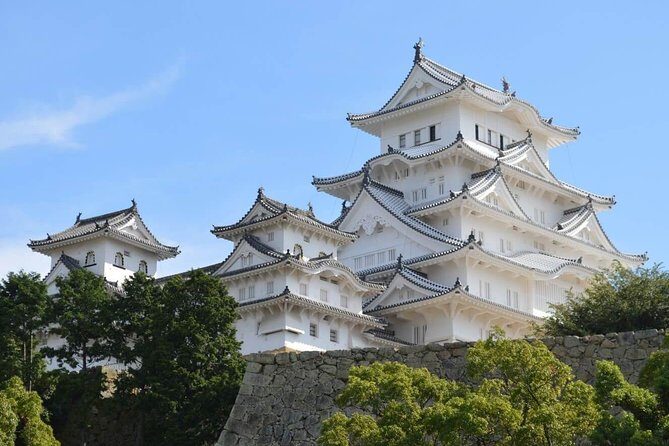
The tour is designed like a sampler with a brain. You’ll typically start with Himeji Castle, then pair it with nearby options such as Koko-en or a temple visit up on the Shosha mountain area.
The ideal mix depends on your priorities:
- If you love architecture and history: castle + Koko-en is a classic pairing.
- If you want religion and views: castle + Engyō-ji on Mt. Shosha is memorable.
- If you like local food and brewing: castle + Nadagiku Shuzo sake brewery is a fun contrast.
- If you want a quieter break from walking: add a shrine or a viewpoint stop that doesn’t eat your whole day.
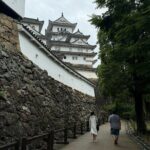
One planning consideration: the tour is walking-based, and the castle route involves stairs and shoe rules once you’re inside. That doesn’t mean you’ll be miserable. It just means you should dress for it.
Himeji Castle: the main event, the stairs, and the shoe rules
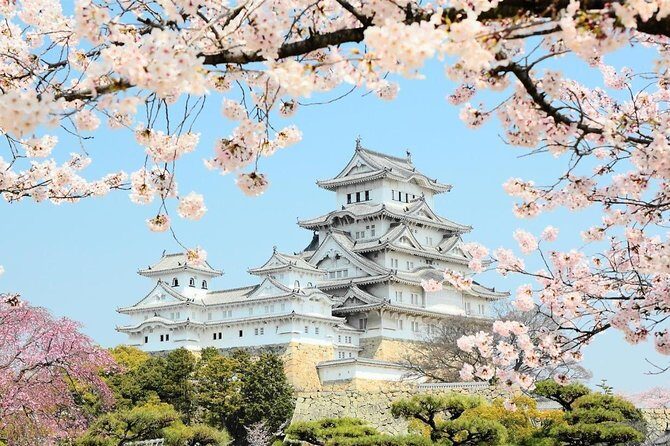
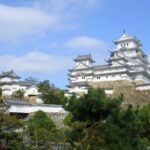
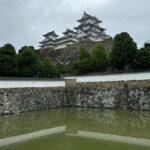
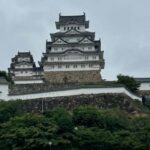
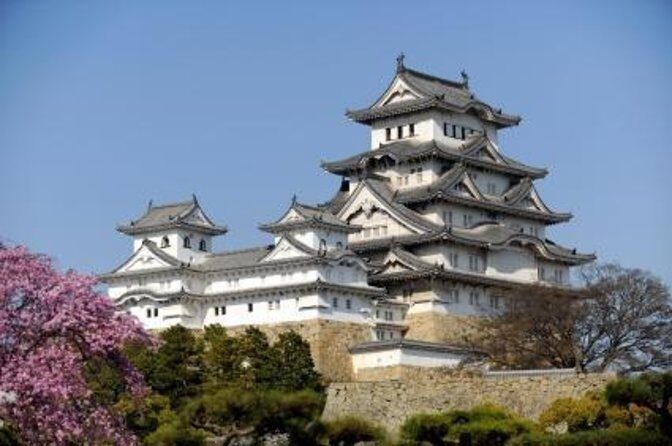
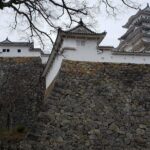
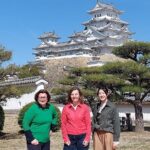
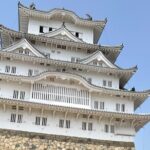
Himeji Castle is a World Heritage site (registered in 1993), and the architecture is the star. The guide’s job here is to make the castle’s design feel logical—especially the castle’s defensive sophistication and how everything funnels movement.
What you’ll feel on arrival: the place is popular. Even on a busy day, guides have a knack for helping you keep momentum. One common detail from guides’ communications is the use of digital tickets in advance, which can help you explore more smoothly when it’s crowded.
Inside the main keep, plan for a few practical moments:
- You’ll be dealing with stairs and multiple levels.
- The floors are meant to be protected, so you’ll face shoe removal once inside certain areas.
- Wear good socks or consider bringing something comfortable for slip risk.
- If you don’t want to juggle your shoes, bring a small bag so you’re not holding everything in your hands.
This is also where a strong guide makes the visit “click.” In multiple guide stories, people talk about how guides pointed out key architectural features tied to defense, and also flagged the best spots for photos of the complex.
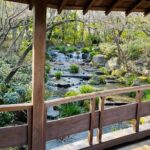
Koko-en Garden: the easy win next to the castle
If you want your feet to recover a bit after castle climbing, Koko-en is the move. It’s right by the castle and it changes the mood from fortifications to strolling.
Here’s what makes Koko-en special in this half-day format:
- It was constructed for the 100th anniversary of the city.
- It covers about 3.5 hectares.
- Part of its land was originally tied to the castle area, and excavation work is noted as happening in 1618.
You don’t need to be an expert in gardens. You just need time to walk slowly and look. This tour gives you that breathing room by treating Koko-en as a real stop, not a rushed photo break.
Also, it’s a great place for family groups and mixed-age travelers. Many tour experiences describe Koko-en as a lighter pace while still feeling meaningful.
You can also read our reviews of more private tours in Himeji
Engyō-ji on Mt. Shosha: classic temple views, real scheduling risk
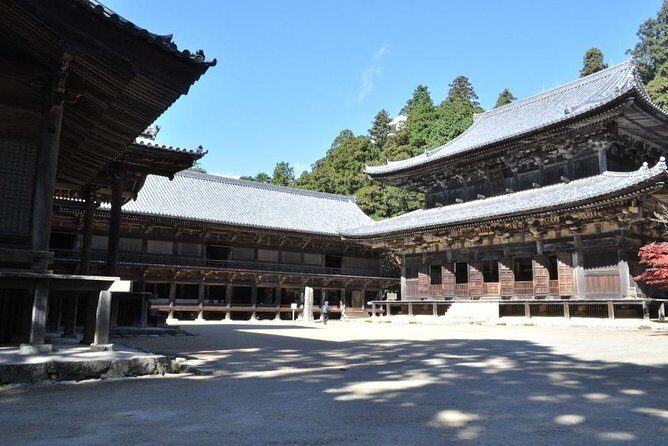
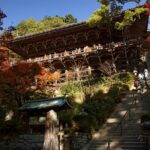
Engyō-ji is a Tendai sect temple located on top of Mount Shosha, on the north side of Himeji. The temple is described as very authentic, and the construction is noted as dating to 970.
This stop is about more than buildings. It’s about location and atmosphere—temple stillness with a city view energy.
Now, the big caution: the access plan can change because the Mt. Shosha Ropeway is suspended during scheduled maintenance periods:
- Jan 20, 2025 to Mar 23, 2025
- Feb 5, 2026 to Mar 18, 2026
(These are listed maintenance windows, so plan around them.)
What that means for you: if you’re traveling during a maintenance period, your route for reaching the area may differ. Your guide can still help you make the best of the time, but you should understand that ropeway timing is not something you should assume will be running.
If your goal is the temple plus mountain scenery, it’s worth checking your travel dates early and being flexible about how you get up there.
Nadagiku Shuzo sake brewery: how a beer-like story becomes cultural
Pairing the castle with sake is a smart contrast. After all the stone and defense thinking, you get something human and sensory.
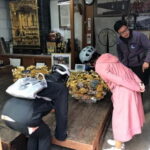
This tour option includes Nadagiku Shuzo. It’s tied to a long note that Himeji has roots as a birthplace of Japanese sake, based on a very old manuscript. The brewery is also described as having many female staff involved in making sake, which adds a modern feel to a traditional craft setting.
A couple practical takeaways based on guide-led experiences you’ll see:
- You can often expect sake tasting and the chance to purchase bottles you like.
- The brewery visit is usually framed as both process and place—how sake is made and how the story of Himeji shows up in the craft.
Even if you’re not a huge sake person, this stop helps the day feel less like a museum tour. It’s a real local product story.
Hiromine Shrine and the Shinto-Buddhist connection
If you want a quieter spiritual stop that isn’t just a photo, Hiromine Shrine fits well. It was built in 733 on top of Hiromine Mountain.
What makes it stand out in this itinerary is the note that Shinto and Buddhism are studied together at this shrine. That’s a clear cultural theme you can spot in how the guide explains the site.
In a half day, a shrine stop works best when you treat it as a pause—something to slow down between the castle and garden or before you head back toward station-area meals.
Egret Himeji: the rooftop viewpoint that saves time
When you want a castle view without the full effort of another long site, Egret Himeji is listed as a public building with shops, restaurants, public halls, and a rooftop view that’s free to enjoy.
Why this works in the half-day window:
- It gives you an angle on the castle area even when it’s hard to see from where you’re walking.
- It’s also a natural “reset point” if you want food options nearby later.
This is the kind of stop that’s easy to skip—until you’re standing there and realize it’s a practical way to wrap your Himeji day.
Himeji City Museum of Art: a red-brick culture break
If you want something different from temples and fortresses, the Himeji City Museum of Art is a solid option within the 2–3 stop plan.
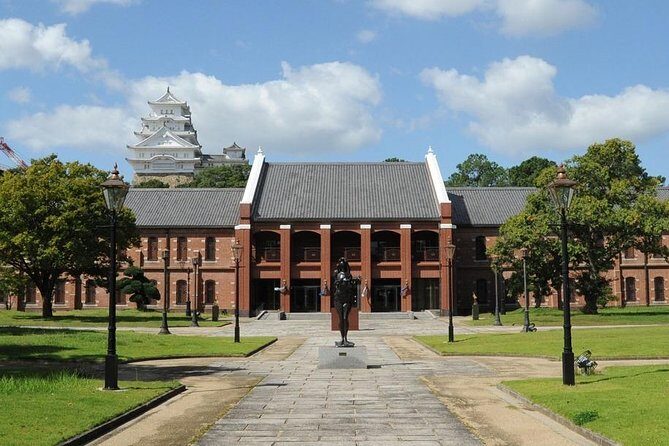
The museum building is described as a former old army headquarters, with a unique red brick construction. It also highlights European art, which can be a welcome shift from Japanese historic sites—especially if you’ve been moving between cities and want variety.
In a half-day tour, think of the museum as a temperature change. You still get culture, but it’s not another hill walk or another set of castle stairs.
Guide quality: why people keep using names like Norio, Yama-san, and Hiro
Private tours rise or fall on the guide. This one gets high marks for a reason, and it shows up in specific details.
Common themes from guide experiences include:
- Guides mapping routes and taking photos along the way.
- Guides explaining the castle defenses and architecture in a way that feels structured.
- Guides staying patient when weather is rough or when groups move slower than planned.
- English ability that makes it easy to ask questions and actually get answers.
Several named guides come up repeatedly in written feedback—Norio, Yama-san, Hiro, Hiromi, Chiyuki, and Rie-san. That’s a helpful clue: this isn’t just one great day. People are reporting consistent quality.
One very practical tip that pops up in castle-focused experiences: when you’re inside, you’ll be dealing with shoe removal. Guides often help you avoid mistakes by telling you what to expect and how to move comfortably.
Who should book this private Himeji half-day tour?
This tour fits you if:
- You want maximum meaning per hour, not just sightseeing.
- You’re the type who likes to understand what you’re looking at—defense design, architecture, and culture links.
- You’re traveling with kids, teens, or multi-age groups and want someone to set pace and keep it engaging.
It may be less ideal if:
- You want a totally no-walking day. It’s a walking tour, and the castle itself includes stairs.
- You’re visiting during Mt. Shosha ropeway maintenance windows and you’re only interested in getting there the ropeway way.
Should you book this private Himeji half-day tour?
Yes, with a smart caveat: book it if you can commit to the big half-day core—Himeji Castle plus one nearby theme (garden, temple access, sake, or a viewpoint).
Before you confirm, do two quick checks:
- Pick your 2–3 stops based on your walking tolerance and interests. Castle + Koko-en is the safest bet for most people.
- Check your dates for Mt. Shosha ropeway suspensions (those maintenance windows are real), especially if Engyō-ji is your must-see.
If you hit those two points, you’ll likely end up with exactly what you came for: a smooth, guided Himeji day where the highlights feel connected, not random.
FAQ
What is included in the Himeji half-day private tour?
You get a licensed local English-speaking guide, a customizable itinerary choosing 2–3 sites, and you meet the guide on foot within the designated area of Himeji.
Are entrance fees, food, and transport included?
No. Entrance fees, lunch, transportation fees, and other personal expenses are not included.
Is this tour a walking tour?
Yes. It’s listed as a walking tour, and pickup is on foot within the designated area.
Which sites can I choose from?
You can choose 2–3 stops from the provided list, including Himeji Castle, Engyō-ji (Mt. Shosha area), Koko-en, Nadagiku Shuzo sake brewery, Hiromine Shrine, Egret Himeji, and Himeji City Museum of Art.
Will the Mt. Shosha ropeway be operating during my visit?
The tour data lists planned suspensions for ropeway maintenance, including Jan 20, 2025 to Mar 23, 2025 and Feb 5, 2026 to Mar 18, 2026. If your dates overlap, access may be affected.
What are the cancellation terms?
You can cancel for a full refund if you cancel up to 24 hours in advance of the experience start time. Canceling less than 24 hours before the start time is not refunded.