REVIEW · AICHI PREFECTURE
Nagoya Full-day Private Custom Tour with National Licensed Guide
Book on Viator →Operated by Japan Guide Agency · Bookable on Viator
Nagoya clicks into place fast with your own stops. This full-day-feeling private 6-hour walking tour lets you choose 3–4 sights (from castles and shrines to towers and shopping streets) with a national licensed, English-speaking guide. And instead of marching with a big group, you get to follow your interests—whether that’s history, views, or local food stops suggested along the way.
I especially like how guides handle the small, stressful parts. Guides such as Hisato, Toshie, Lily, and Ryo come across as on time and practical, with real help for using public transportation and staying on schedule. Another big win: you can adjust on the fly, including food choices, so the day feels less like a checklist and more like a smooth Nagoya day you can actually enjoy.
One consideration: entrance fees, lunch, and transportation are not included, and it’s still a walking tour. If you want lots of museums, deep time inside each site, or low-walking days, you’ll want to plan your picks carefully (and be ready for weather).
In This Review
- Key Takeaways Before You Go
- How This 6-Hour Private Walking Tour Actually Works
- Picking Your 3–4 Stops: Make Nagoya Personal
- Nagoya Castle and Atsuta Jingu: Two Stops That Set the Tone
- Nagoya Castle (shachihoko first, details second)
- Atsuta Jingu (free, forested, and very real)
- Science Museum, Mirai Tower, and Art: Choose Your Culture Level
- Chubu Electric MIRAI TOWER (views as a quick payoff)
- Nagoya City Science Museum (planetarium and hands-on imagination)
- Nagoya City Art Museum (architecture matters here)
- Toyota Industry, Samurai Alternatives, and the Museum-Time Problem
- Toyota Commemorative Museum of Industry and Technology
- If you want extra industry credibility
- Tokugawa Art Museum, Tokugawa Garden, and Shirotori Garden Calm
- Tokugawa Garden
- Tokugawa Art Museum
- Shirotori Garden (old Japan atmosphere, time-timed scenery)
- Osu Shopping Street, Shikemichi, and the Sakae Sword Museum
- Osu Shopping Street
- Shikemichi merchant town (1610 history, walkable texture)
- Nagoya Sword Museum (in Sakae)
- Sky-Promenade at Midland Square: A High-View Finisher
- Price and Value: What You’re Really Paying For
- Who This Tour Fits Best (and Who Should Reconsider)
- Should You Book It? My Practical Take
- FAQ
- How long is the Nagoya private custom tour?
- Is this a private tour or a group tour?
- Can I choose which sites to visit?
- Is pickup included, and is it from my hotel?
- Are entrance fees and lunch included in the price?
- Will transportation between stops be handled for me?
Key Takeaways Before You Go
- Private, customizable flow: pick 3–4 stops from a ready-made list so the day matches your interests
- National licensed English guide support: help with timing, directions, and public transit so you don’t waste time wandering
- Big “must-see” power in short stops: Nagoya Castle, Atsuta Jingu, and major museums fit into a single 6-hour plan
- Food and local errands are part of the experience: guides often recommend good lunch spots and transit-smart routes
- Not everything is paid for: you’ll budget extra for admissions, lunch, and transit since those aren’t included
How This 6-Hour Private Walking Tour Actually Works
This isn’t a “show up and get carried around” tour. It’s a private experience for your party where the guide meets you on foot within a designated area in Nagoya and then works with you as you move city-to-city on public transit and walking.
The big rule for making it work: you choose 3–4 sites from the available options. That’s the secret sauce. With only a handful of stops, your guide can spend time explaining what you’re seeing (and how to do it efficiently) without the day turning into a speed-run.
You’ll also feel the benefit in the logistics. In guides’ reviews, the theme is consistent: they help you figure out trains and stations, and they keep an eye on timing. One guide helped a group manage coin lockers and keep the train window right. Another stayed with the group until they boarded for the return trip. That kind of support matters in Nagoya, where you want to spend your energy on the sites, not on route math.
So yes, it’s a walking tour. But the guide reduces the friction so you can keep moving with confidence—and still have moments to stop, look, and take photos.
You can also read our reviews of more guided tours in Aichi Prefecture
Picking Your 3–4 Stops: Make Nagoya Personal
The list of possible stops gives you a lot of angles on the city. You can build a day around classic landmarks, science and tech, traditional culture, shopping streets, or views from high up.
If you like structure, start with one “anchor” sight (like Nagoya Castle or Atsuta Jingu), then add one “interest block” (science, art, Toyota/industry, or Noritake ceramics). Finish with either a neighborhood stop for shopping or a garden for calm.
Here’s a useful way to think about it:
- Castle/shrine stops give you the historical identity of Nagoya.
- Museum stops give you context for modern industry and how the city became what it is today.
- Shopping street or garden stops give you breathing room and local texture.
Because the itinerary is built from fixed options, you can also plan around what you care about most. If you’re not into swords, skip the sword museum and add an extra shrine, garden, or ceramics stop. If you love modern design, consider the art museum or the sky-promenade area instead.
Just remember admissions aren’t included for most sites, so if ticket cost matters to you, check what you’re paying for in your choices before you lock it in.
Nagoya Castle and Atsuta Jingu: Two Stops That Set the Tone
Most Nagoya days should start with something big. Two top candidates in the list are Nagoya Castle and Atsuta Jingu, and they balance each other nicely.
Nagoya Castle (shachihoko first, details second)
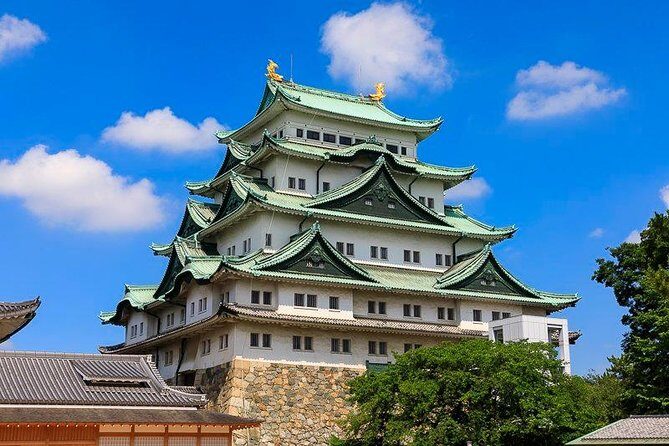
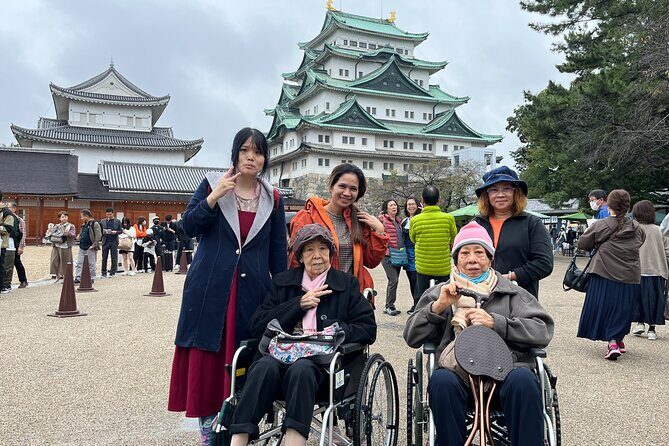
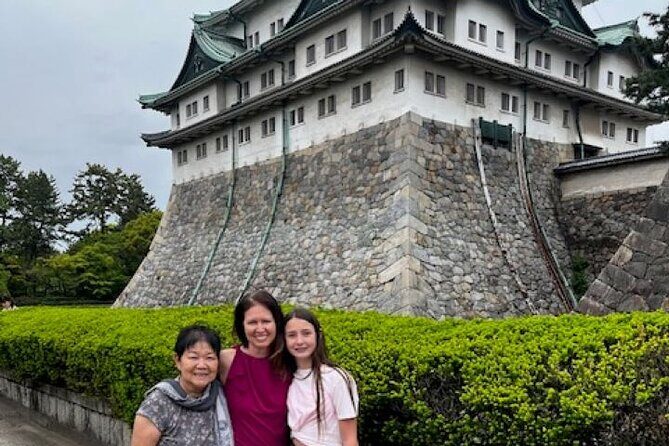
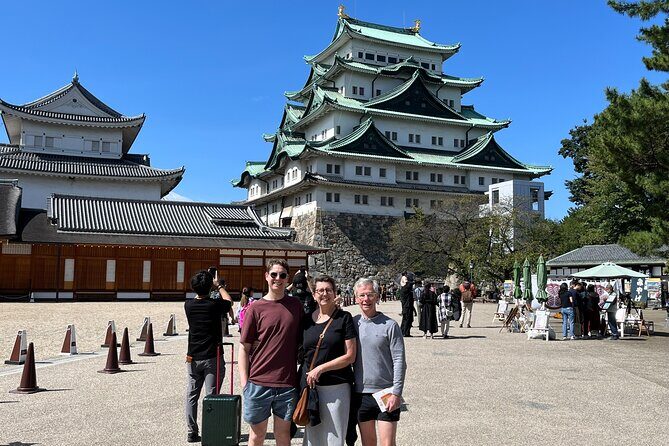
Nagoya Castle is famous for its golden shachihoko—those mythical roof creatures with a tiger head and carp body. Even if you don’t know the backstory, you’ll spot them right away, and they’re the kind of detail that turns a photo into something you actually understand.
Your best approach here is to treat it like orientation for the city’s story. The guide can connect the castle to the Tokugawa era through the site’s role and legends. The short time slot means you’ll likely focus on key viewpoints and the “wow” roof features rather than wandering for hours.
Possible drawback: the castle stop has no included admission ticket in the info, so you’ll pay that extra if you want in. If you’re budget-conscious, choose whether you want the interior versus saving time and money for another museum.
Atsuta Jingu (free, forested, and very real)
Atsuta Jingu is a major shrine, described as the second highest rank shrine of Japan, founded in the 8th century. It also has that immediate feeling of stepping into a wooded area, which is a good mood reset after busy streets.
In the itinerary details, admission is free, which is always a plus. You’ll still want to accept that you’ll be sharing the space with plenty of visitors—this is a popular stop, and it’s easy to lose time if you get stuck behind slow-moving crowds.
Your guide can help here, too: how to move through key areas efficiently, what to look for, and how to frame what you’re seeing so it doesn’t feel like you’re just walking past buildings.
Science Museum, Mirai Tower, and Art: Choose Your Culture Level
Not everyone wants the same kind of Nagoya on the same day. That’s where the tour’s flexibility helps. You can go artsy, go science-y, or mix both.
Chubu Electric MIRAI TOWER (views as a quick payoff)
The Chubu Electric MIRAI TOWER—still often called Nagoya TV Tower—is a clear city landmark. It works well when you want a break from walking and want an easy point on the skyline to anchor your day.
This stop has a time-boxed visit, and since admission isn’t included, you’ll want to decide if the tower experience itself is worth the extra cost for you. If you’re mainly after location and photos, you might treat it as a quick skyline moment rather than a long ticketed block.
Nagoya City Science Museum (planetarium and hands-on imagination)
The Nagoya City Science Museum is highlighted for having the largest planetarium in the world. If you like hands-on learning or you’re traveling with kids (or just like being a little science-nerdy yourself), it’s a strong choice.
Again, admission isn’t included, so budget for tickets. The stop is listed at about 30 minutes, so your guide will likely steer you toward the best planetarium route or the most efficient exhibit choices.
Nagoya City Art Museum (architecture matters here)
The Nagoya City Art Museum is another stand-out option, partly because the building is tied to a notable Japanese architect (Kisho Kurokawa), constructed from 1983 to 1987.
If you’re the kind of person who reads about architecture without meaning to, this stop is enjoyable because the museum space itself becomes part of the experience. It also gives a more modern contrast to the shrine-and-castle vibe.
No admission is included in the tour info for this stop, so you’ll pay entry if you want into the galleries. With only a short time window, you’ll be selecting highlights rather than doing the whole museum.
Toyota Industry, Samurai Alternatives, and the Museum-Time Problem
Nagoya’s identity isn’t only old temples and castles. It’s also industry. The Toyota Commemorative Museum of Industry and Technology is where that side comes into focus.
Toyota Commemorative Museum of Industry and Technology
This museum is described as being established in June 1994, marking 100 years after Toyoda Kiichiro’s birth. It’s a good stop if you want a clearer picture of how Toyota’s story fits into Nagoya’s modern life.
In the itinerary it’s a shorter stop (about 20 minutes), so the guide’s role becomes important: they can steer you toward the most meaningful exhibits without losing your whole day in reading.
One real-world consideration: museum closures can happen. In reviews, a guide named Yoko handled the situation with an alternative—shifting from a closed Toyota museum to a samurai-focused option instead. That’s the kind of adjustment that keeps the day enjoyable even when plans change.
If you want extra industry credibility
Another guide, Matt, is noted as a former Toyota employee, which tells you you’re likely to get clearer explanations of the industry angle. If that’s your priority, this is the stop to keep on your short list.
Tokugawa Art Museum, Tokugawa Garden, and Shirotori Garden Calm
If you want Nagoya to feel less like a checklist and more like a stroll through mood, add a garden stop.
Tokugawa Garden
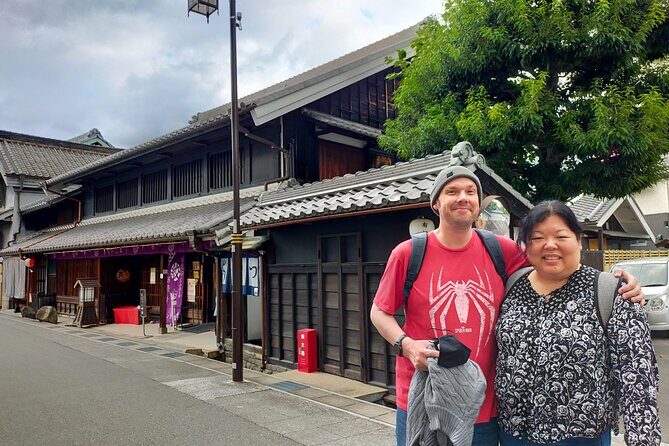
Tokugawa Garden is listed as a Japanese garden with highlights around a pond and described as a mainstream style of daimyo gardens during the Edo period. The time at this stop is short (around 10 minutes), so it’s best as a calm visual break, not a full garden tour.
This works especially well if you pair it with the Tokugawa Art Museum nearby in the day flow. One gives you a family legacy; the other gives you a landscape style from the same cultural world.
Tokugawa Art Museum
The Tokugawa Art Museum is described as a private museum on a former Ōzone Shimoyashiki compound, with a collection of more than 12,000 items. That’s a lot, so in your short time you’ll want the guide to point you toward the best samples rather than trying to see everything.
Admissions aren’t included in the info, so factor that in when you decide whether the art museum is your ticketed highlight.
Shirotori Garden (old Japan atmosphere, time-timed scenery)
Shirotori Garden, or White Bird Gardens, covers about 3.7 hectares and is described as having scenery changes tied to tidal flows. The stop is about 20 minutes, which is long enough for you to feel the peaceful atmosphere and get a sense of the design logic.
It also pairs well with a shrine stop earlier, since both let you slow down. If you’re visiting during a season with great visuals, your guide can often help you decide what to prioritize quickly when the light and scenery are at their best.
Osu Shopping Street, Shikemichi, and the Sakae Sword Museum
Nagoya shopping works best when it’s not random. The tour helps you hit the right neighborhoods without wasting your energy.
Osu Shopping Street
Osu is described as Nagoya’s No. 1 entertainment quarter from earlier days, with shopping arcades and a mix of items like electrical goods and second-hand clothing. It’s a great stop if you want everyday Nagoya street life—loud in a friendly way, and easy to browse slowly.
Admission isn’t required for this stop, so it’s one of the easiest ways to add time without adding ticket costs.
Shikemichi merchant town (1610 history, walkable texture)
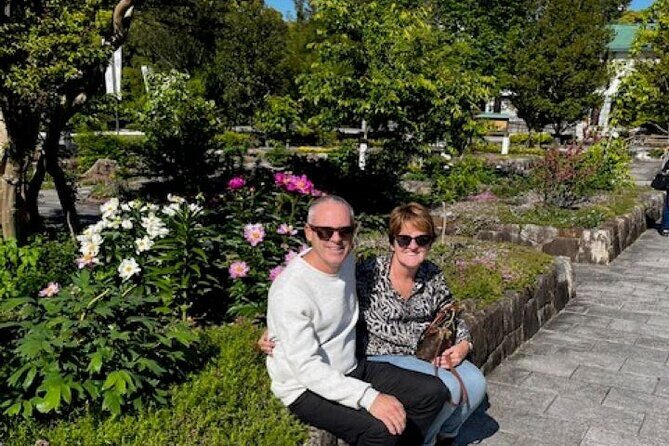
Shikemichi is a merchant town on the west bank of Horikawa River, built in 1610 when the whole town of Kiyosu moved. The stop is short (around 20 minutes), but it can add a “side streets of old Nagoya” feel that you don’t get if you only pick castles and museums.
Nagoya Sword Museum (in Sakae)
If you want a focused cultural object category, the Nagoya Sword Museum in Sakae is listed with up to 200 swords, including national treasures and Important Cultural Properties. That’s a strong thematic choice if swords and craft matter to you.
The time slot is short (about 10 minutes), and admission isn’t included, so plan to prioritize the most important displays and let the guide frame the craft and context.
Sky-Promenade at Midland Square: A High-View Finisher
A lot of people like ending with a viewpoint. The sky-promenade option at Midland Square is listed at about 20 minutes and tied to the Chubu region symbol—Midland Square reaches 47 floors and about 247 meters.
It’s a good closer because you can see how all the day’s neighborhoods fit into the bigger Nagoya picture. If you choose it, I’d put it near the end of your 3–4 stops so you don’t lose your best energy to ticket lines mid-day.
Admissions aren’t included, so again: decide if the view experience is worth it for you, not just for the skyline photos.
Price and Value: What You’re Really Paying For
At $155.22 per person for about 6 hours, the price can feel high at first glance—especially because entrance fees, lunch, and transit aren’t included.
But you’re not only paying for someone to escort you. You’re paying for a licensed local English-speaking guide and a private plan that you control. In reviews, the most praised value is the guide support that prevents time waste: getting you on the right train, explaining what to look for, and even handling timing so you don’t miss your connection.
This is also a smart option if you’re on a cruise schedule. One review highlighted it as a cruise-friendly choice because it was half the cost of a ship’s version and offered a more personalized pace. Another review described how the operator worked with limited time and arranged a precise schedule to avoid being left behind.
Here’s how to judge value for yourself:
- If you’ll use the guide for transit help + smart site selection + food guidance, it usually feels worth it.
- If you just want a few photos and don’t care about explanations or logistics, a cheaper self-guided approach might be better.
One more practical note: the tour is often booked about 74 days in advance on average, so if you’re visiting at a popular time, don’t wait until the last minute.
Who This Tour Fits Best (and Who Should Reconsider)
This tour style fits best if you want:
- A private day where you choose the sights
- A guide who can help with public transportation so you’re not stuck figuring it out alone
- A mix of culture and local life—shrines, museums, gardens, and shopping streets
- A family-friendly pace where your interests include teenagers and adults together (guides were praised for matching what would appeal to different ages)
You might reconsider if:
- You want a lot of museum time for heavy ticketed attractions, since the plan is built for 3–4 stops in about 6 hours
- You dislike walking for a few hours straight, since the tour is described as a walking tour
- Weather makes long outdoor walks unpleasant. Rain can cut into sight time, and one review mentioned that the day’s sightseeing was affected by rain.
Should You Book It? My Practical Take
Book this tour if you want Nagoya to feel efficient and personal. The guides—like Hisato, Toshie, Lily, Ryo, Yoko, Sammy, Maki, Hiroshi, Matt, and Kiyoshi—show up in reviews as punctual, flexible, and ready to handle the practical stuff (transit, timing, and where to go for a good meal).
Skip it or rethink your stop choices if you’re hoping for a long museum marathon or you’re trying to pack too much into one day. Because the tour is built around 3–4 sights, you’ll get the most out of it by choosing one anchor landmark, one main interest block, and one optional neighborhood or view.
If you’re going for a first Nagoya visit—or you only have a limited time window like a cruise day—this is one of the easiest ways to make the city make sense fast.
FAQ
How long is the Nagoya private custom tour?
The tour duration is about 6 hours.
Is this a private tour or a group tour?
It’s a private tour/activity. Only your group will participate.
Can I choose which sites to visit?
Yes. Your tour is customizable, and you choose 3–4 sites from the listed options.
Is pickup included, and is it from my hotel?
Pickup is offered, but the tour notes that meet up is on foot within a designated area in Nagoya. You should expect a walking meet-up rather than a private vehicle pickup.
Are entrance fees and lunch included in the price?
No. Entrance fees, lunch, and transportation fees are not included.
Will transportation between stops be handled for me?
The tour is a walking tour and pickup is on foot. Transportation fees are not included, so you’ll be using public transportation as part of the day.