REVIEW · ONNA SON
Blue Cave Area Experience Diving!Free feeding & photo images Chinese guide available!1 group with a dedicated instructor
Book on Viator →Operated by モルダイブ (MalDive) · Bookable on Viator
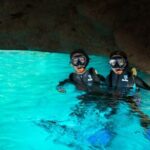
Blue Cave has a way of making Okinawa feel unreal. This scuba session in Onna-son focuses on comfort and first-timer confidence, with a dedicated instructor and time to practice before you head into the cave area. The payoff is the Blue Cave glow, where sunlight slips in and makes the water look electric blue.
I especially like the all-in gear setup (rental + insurance are included), and the fact that you get photo/video data after the session without extra hassle. I also appreciate that fish feeding is built in, so you’re not just staring at equipment and learning to breathe.
One consideration: the schedule depends on sea conditions. If conditions aren’t right for the Blue Cave, you’ll switch to a nearby spot (commonly Maeda Beach), and you’ll still need to follow safety rules for health and fitness.
In This Review
- Key things to know before you go
- The Onna location: why this Blue Cave session works
- Gear, insurance, and what’s actually included
- Meeting Island Club: the small details that save time
- Before you go underwater: shallow water practice that builds confidence
- Stop 1: The Blue Cave and why it looks blue
- Fish feeding underwater: the moment that makes it stick
- Underwater photos and getting your data fast
- Stop 2: Onna-son and how the timing usually feels
- Weather, waves, and the backup plan you should understand
- Price and value: what $46.12 really gets you
- Who this is for (and who should skip)
- A few practical tips that make the day smoother
- Should you book the Blue Cave Area scuba experience?
Key things to know before you go
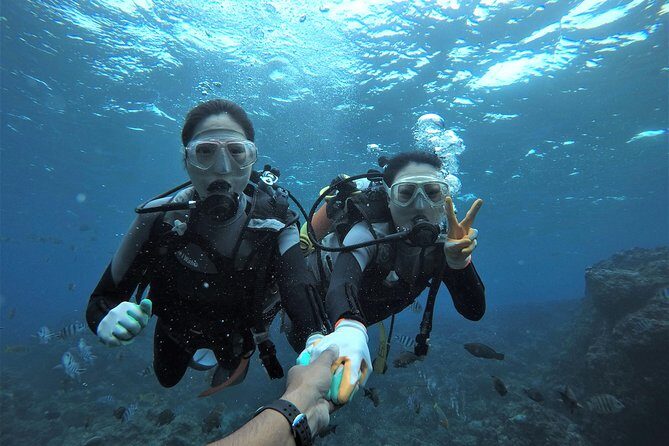
- One group, one instructor: you get guided practice at a pace that suits your level.
- 45–60 minutes in the water: you’re not stuck forever; the session is long enough to feel the magic.
- Blue Cave light effect: the cave’s limited entrance lets sunlight turn the water a striking blue.
- Fish feeding is included: it’s a simple way to make the underwater moment more memorable.
- Photos/videos after: you receive underwater photo data on your smartphone the same day, then visuals are provided after.
- Extra fee on site (cash): there’s a 300 yen facility usage fee for items like parking/shower/hair dryer access.
The Onna location: why this Blue Cave session works
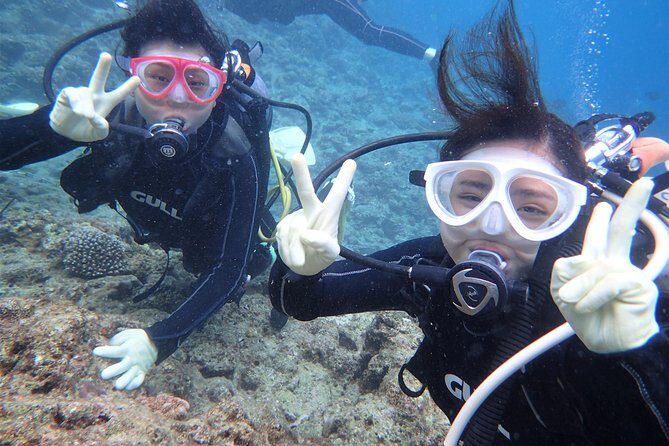
Onna-son is a practical base for hitting the Blue Cave area. What you’re booking here is designed to be a straightforward, beginner-friendly “go underwater” experience rather than a technical, long-boat ordeal. You’ll meet at (Ltd.) Island Club (615-2 Yamada, Onna), which keeps everything simple: check in, get your gear, and head out.
A big value point is that this is set up as a private group activity. That means fewer interruptions and more direct coaching, which matters when you’re learning buoyancy and breathing underwater for the first time.
Timing is also realistic. Expect about 2 hours total, with roughly 45 minutes to 1 hour in the ocean. That’s enough time to learn, see the cave area, and still feel like you did something fun instead of spending half your day in gear.
You can also read our reviews of more guided tours in Onna son
Gear, insurance, and what’s actually included
This package is built around convenience: diving equipment is included, plus insurance and fish feed. That removes the annoying parts—figuring out sizing, renting at the last minute, or worrying about what’s covered.
You’ll also be given food for feeding fish with provided feed. That matters more than it sounds. For first-timers, feeding gives you a clear, fun task underwater, so your brain has something concrete to focus on besides fear or “Am I doing this right?”
On the photo side, the wording can be confusing until you know how it tends to work in practice. The session includes photo image during diving, and you’re told that photos and videos will be provided after, free of charge. In addition, the experience flow mentions that underwater photo data is transferred to your smartphone on the spot. Some guides also offer paid upgrade options for more videos or more extensive photo sets (one person mentioned a ¥1000/person upgrade, and another mentioned an offer around ¥3000 for recording). My advice: ask what’s included in your exact plan before you start, then decide if you want extras.
Meeting Island Club: the small details that save time
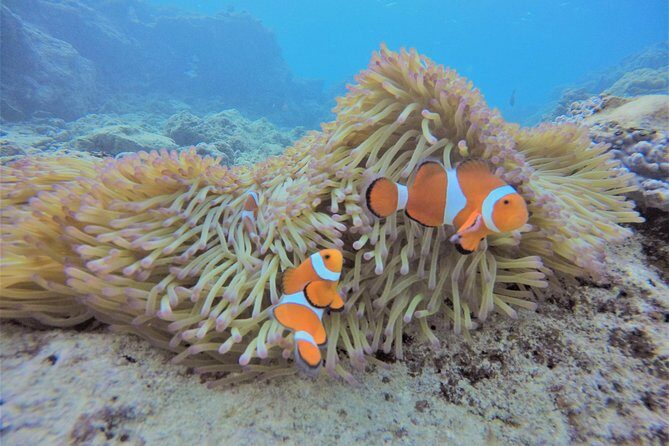
You’ll meet at the Island Club parking area. Plan to arrive about 15 minutes early. If you show up late, you risk missing the start and the activity can’t wait around.
Check-in involves filling out an application form first. Then comes your equipment and breathing instruction. This is where the whole experience earns its “beginner-friendly” reputation: you’re taught how to use the gear and how to breathe underwater in an easy-to-understand way.
If you’re the type who gets anxious about procedural steps, this is a good sign. Clear prep beats last-minute chaos, especially in a place like Okinawa where sea conditions can change quickly.
Before you go underwater: shallow water practice that builds confidence
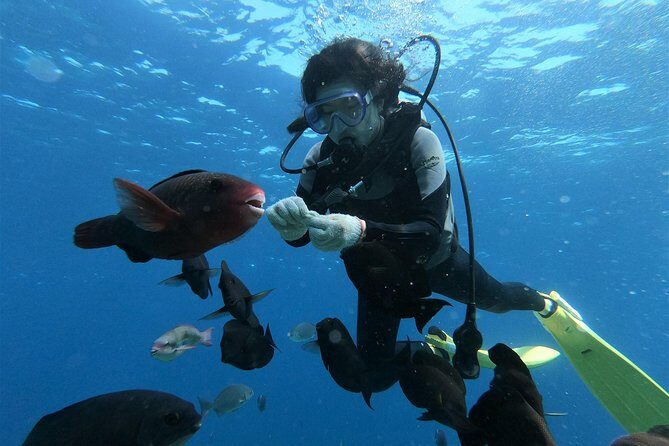
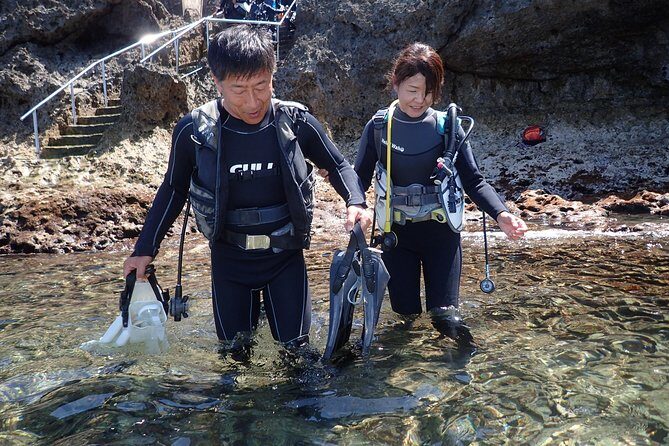
You’ll start in shallow water to practice the basics. The goal isn’t to rush. It’s to get you comfortable with the equipment and the breathing rhythm so that when you’re in the Blue Cave area, you can actually look around.
This part is also where you’ll learn:
- how to handle the mask and regulator while staying calm
- how to move underwater with help from the instructor
- what to do if you need guidance or feel off-balance
In several accounts, instructors named Aka, Go, Naoki, Shota, Hank, and John were praised for being patient and explaining clearly. The consistent theme is that you’re not expected to magically “get it” instantly. You’re coached until you can do the basics without fighting your own body.
Stop 1: The Blue Cave and why it looks blue
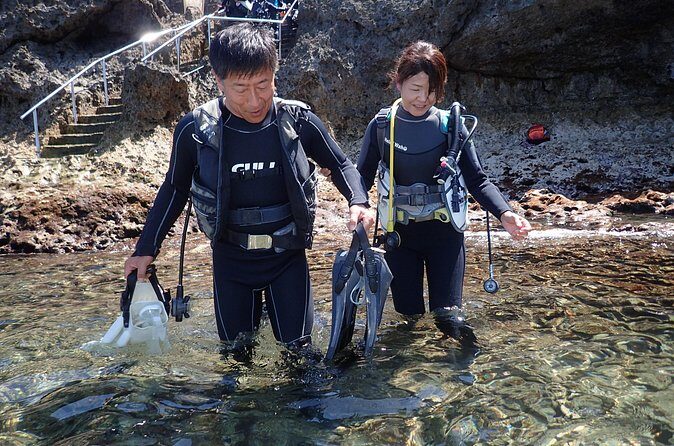
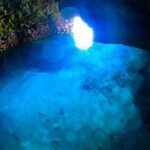
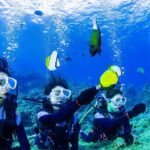
The Blue Cave is popular for a reason: the cave interior has a light effect. You’ll hear it described as a long cave section and an air dome, where sunlight from the limited entrance illuminates the seawater. The result is that “glow blue” look that makes people stop breathing—even when they’re literally breathing underwater.
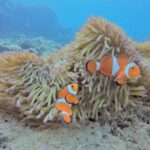
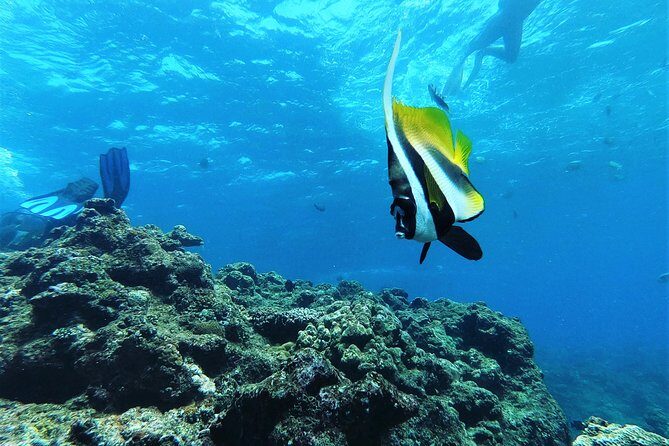
You’re in the water long enough to enjoy it without feeling like you’re rushing through a checklist. Expect fish and other sea life, plus the special “blue” lighting effect near the cave area.
One more practical note: access can depend on sea conditions and channel rules. If swimming is prohibited in the Cape area, you won’t go to the Blue Cave that day. Instead, the operator guides you at a nearby alternative, typically Maeda Beach. This is one of those cases where the plan is flexible so you still get a full experience.
You can also read our reviews of more scuba diving tours in Onna son
Fish feeding underwater: the moment that makes it stick
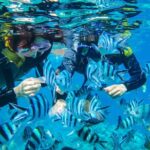
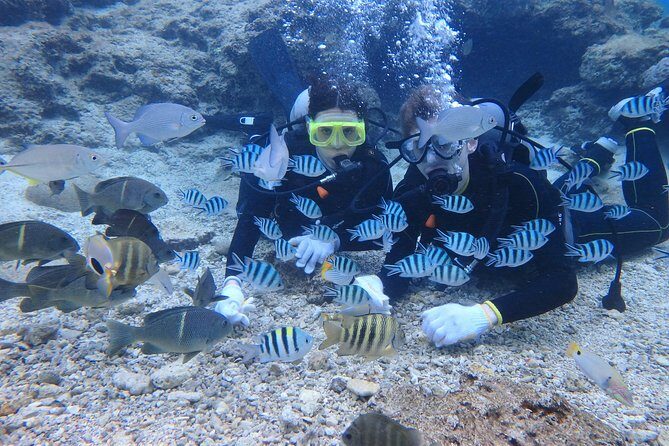
Fish feeding is one of the most memorable parts because it changes the underwater experience from passive sightseeing to active interaction. You’ll be given food, and the instructor helps you position yourself so you can watch the fish come close.
This is also where “first-time” divers often relax the fastest. When fish are around you, you stop thinking as hard about gear and start paying attention to what’s in front of your eyes.
There’s another hidden benefit: feeding gives you a natural reason to slow down and look carefully. That’s exactly what you want in the Blue Cave area, where the light effect is at its best when you’re paying attention instead of moving nonstop.
Underwater photos and getting your data fast
The experience includes photo output, and the flow notes that underwater photo data is transferred to your smartphone on the spot after the session, with visuals provided after, free of charge.
If you’re hoping to capture the cave glow and fish feeding, this is a strong point of value. Trying to photograph underwater yourself on your first day is hard work. Here, you can focus on staying calm and letting the guide and camera plan do its job.
Paid add-ons can exist for bigger collections or extra video formats. Since prices mentioned in accounts vary (examples include ¥1000/person for more photos/video options and ¥3000 for added video recording), I’d treat this as optional, not automatic. Decide after you know what you’ll receive in the included package.
Stop 2: Onna-son and how the timing usually feels
Along with the Blue Cave area, the experience also includes time connected to Onna-son. In practice, that usually means your schedule and local transfer between meeting point and coastal locations stays efficient, with the whole session wrapped into the roughly 2-hour block.
What you should expect is less “tour bus sightseeing” and more “coastal activity logistics done right.” This isn’t a day-long itinerary. It’s built for people who want the Blue Cave experience without stacking extra stops that eat your energy.
Weather, waves, and the backup plan you should understand
This is an experience that requires good sea conditions. If conditions are poor, you’ll be offered a different date or a full refund. That’s fair, because when waves or wind pick up, the underwater part simply isn’t safe or comfortable.
Also remember the spot-change rule: the Blue Cave might not run if swimming is prohibited in the Cape area. In those cases, you’ll be guided at a nearby alternative like Maeda Beach.
One more reality check: crowds can affect the vibe. Some accounts mention that certain days can feel busy, with lots of divers and snorkeling activity in the same area. The upside is that the dedicated instructor format usually helps you manage your attention and move at a safer pace. If you want a quieter feel, early timing can make a difference.
Price and value: what $46.12 really gets you
The listed price is about $46.12 per person for a roughly 2-hour activity. On paper, that sounds simple. But the best value is in what’s included:
- equipment set rental fee
- insurance fee
- fish feed fee
- photo image during diving
Then there’s the one clear extra cost: 300 yen per person facility usage fee, payable in cash on site. The facility usage fee covers parking, shower, hair dryer usage, and related access.
So your “true cost” is usually the base price plus that 300 yen cash. If you’re the type who likes to keep money planning tight, I’d bring the cash ahead of time. It’s small, but it avoids awkward on-site moments.
Also keep in mind that there can be optional upgrades for additional video or photo packages. Those extras aren’t required, but they can be tempting if you want more footage than what’s included.
Who this is for (and who should skip)
This is designed as a beginner-friendly underwater activity, including instruction in shallow water and an instructor staying with you. If you’re curious about scuba-like breathing and want a guided start, it’s a solid choice.
It’s especially a good fit if you:
- want a controlled, coached first session
- like the idea of fish feeding as a confidence-builder
- want photos/video without handling cameras yourself
But skip it if you fall into the listed restrictions. The experience info says you shouldn’t participate if you have health conditions such as heart disease, diabetes, hypertension, ear/nose/throat issues, epilepsy, or if you’re pregnant. It also notes restrictions related to asthma and high or low blood pressure, including people taking relevant medication.
There are also hard limits:
- Over 59 years old cannot participate (and the note says not to reserve if you’re 60).
- If you have a flight scheduled on the day, you cannot participate.
If you’re unsure, you should share any concerns when applying so the organizer can respond.
A few practical tips that make the day smoother
- Wear something easy underneath your gear. You’ll be changing and then showering after.
- Bring swim-ready comfort. You’ll be in the ocean for about 45–60 minutes.
- Have a backup mindset. Plan for the possibility of a Blue Cave swap to Maeda Beach if access depends on sea conditions.
- Ask about photo/video options before you commit to any extra purchase. Some upgrades exist beyond the included package.
And if you wear glasses, don’t stress. One account mentioned powered goggles being provided to help with visibility underwater. So at minimum, ask what support exists for eyewear.
Should you book the Blue Cave Area scuba experience?
Yes, if you want a guided, first-timer-friendly way to see the Blue Cave glow without turning it into a complicated logistics day. The biggest reasons to book are the included gear, the instructor-led shallow-water coaching, and the fish feeding that makes the underwater time feel alive.
Hold off or ask questions first if you’re sensitive to sea-condition changes, have any listed health restrictions, or you want to be 100% certain the Blue Cave itself will run. The backup beach plan is there for safety, not for disappointment, so it works best when you treat it as part of the deal.
If you want Blue Cave photos and you don’t want to wrestle with underwater camera gear, this is also a strong value move—just remember the 300 yen facility fee in cash, and consider optional photo/video upgrades only if the included set doesn’t satisfy you.