REVIEW · KYOTO
Kyoto Food Tour of 10 Tastings with Wagyu, Mochi & More Surprises
Book on Viator →Operated by Secret Food Tours · Bookable on Viator
Food tastes better on foot. This Kyoto small-group tour turns a simple walk from Karasuma toward Gion into a flavor route, with a memorable yuba tofu presentation and standout wagyu sushi along the way. The one thing to keep in mind: it’s an all-day taste-and-walk style experience, so if you expect lots of deep historical commentary (or super fluent, loud explanations), you might find the pacing and guide talk level a bit calmer than you want.
If you like practical sightseeing, you’ll enjoy how the route is built for views too. You’ll see parts of downtown Kyoto, then shift into the Gion area, with stops that connect food to place—Nishiki Market first, then the old-town streets by the Kamo River and Pontocho.
In This Review
- Key Things to Know Before You Go
- Karasuma to Gion: A Kyoto food route that also gives you views
- Nishiki Market tastings: where Kyoto flavor rules by instinct
- Katsudon and Kyoto tonkatsu: comfort food with a sweet Kyoto twist
- Wagyu sushi and the tour’s 10-taste strategy
- Gion time: okonomiyaki and old-street walking (without the pressure)
- Matcha tea tasting in Kyoto: hot or cold, with a serious Kyoto stop
- Beer, sake, and mochi: how the sweetness and drinks shape the pacing
- Price and value: what $142 buys you (and what to watch)
- Who should book this Kyoto food tour (and who should skip)
- Practical tips so you enjoy every stop
- Should you book this Kyoto Karasuma to Gion Food Tour?
- FAQ
- What’s included in the 10 tastings?
- How long is the Kyoto food tour?
- Where do we meet and where does the tour end?
- Is there a group size limit?
- Can dietary requirements be accommodated?
- What’s the cancellation window for a full refund?
Key Things to Know Before You Go
- Easy meeting point by Karasuma Oike: meet in front of Starbucks across from Subway Karasuma Oike Station exit 5, and look for the guide with an orange umbrella
- 10 tastings, not just samples: expect Kyoto specialties plus extras like sake/beer and a tea tasting
- Nishiki Market is the food anchor: you spend real time there learning about artisans and trying bites in a classic market setting
- Wagyu sushi + yuba tofu are the headline moments: two Kyoto staples show up early and mid-tour
- Max 10 travelers keeps it relaxed: small-group feel with less crowd friction while you walk
- Comfortable shoes are a must: it’s a fair amount of walking, and you’ll want to stay happy for 3.5 hours
Karasuma to Gion: A Kyoto food route that also gives you views
This tour is built like a straight line through Kyoto’s personality: start near Karasuma Oike, then work your way toward Gion. Total time is about 3 hours 30 minutes, and yes, you do walk the whole way—so treat it like a light day out, not a sit-down meal crawl.
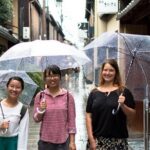
The meeting point is simple: Starbucks (Sanjo Karasuma area), right across from Subway Karasuma Oike Station exit 5. Your guide introduces things there and wears an orange umbrella, which makes it easy to find each other fast (and move on with your appetite).
What I like about this approach is the flow. You’re not just chasing food in random directions—you’re moving along a route where the scenery helps you understand why Kyoto eats the way it does. Expect to spend time around downtown Kyoto and then shift into the Gion side, including views of the Kamo River and the Pontocho area as you head toward Gion streets.
You can also read our reviews of more food & drink experiences in Kyoto
Nishiki Market tastings: where Kyoto flavor rules by instinct
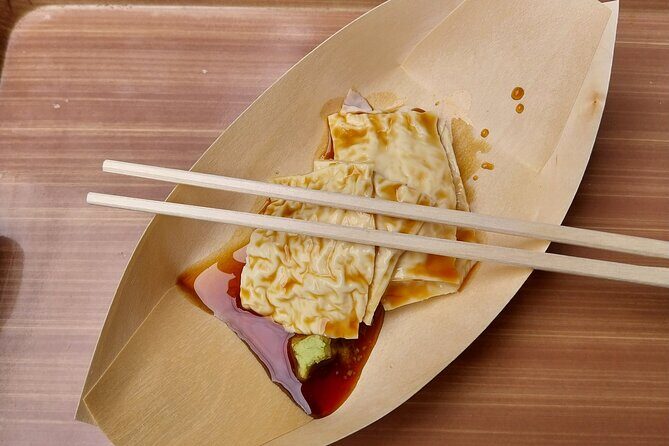
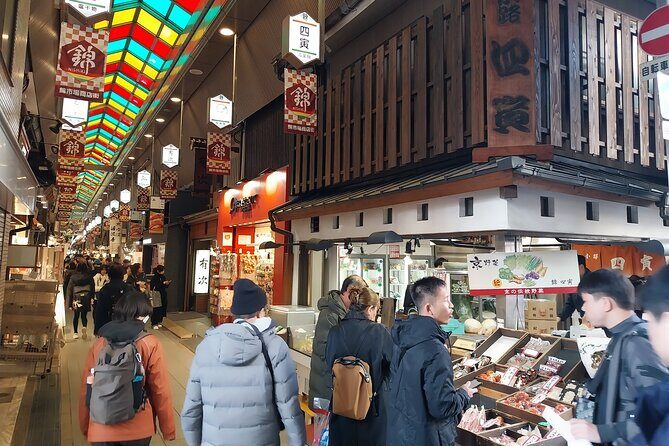
Your biggest food block happens at Nishiki Market, where you get about 1.5 hours along the market street. Nishiki is famous for a reason: it’s dense with stalls and smells, and you can tell what’s popular just by what people keep lining up for.
On this tour, the market segment isn’t only about grabbing bites. You get a guided look at local trades—think artisans and the kinds of products they’re known for—while you taste Kyoto specialties as you walk.
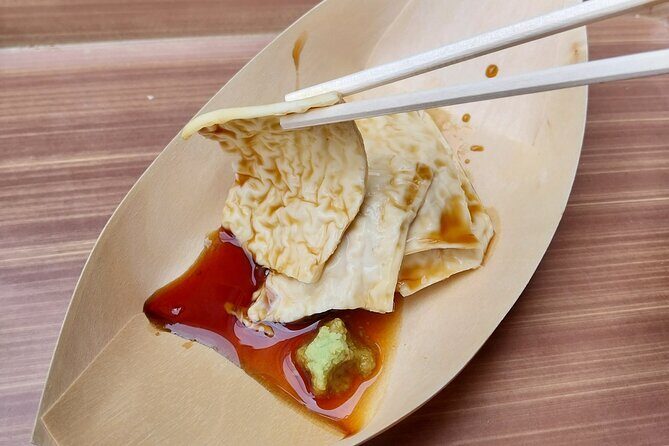
From the included items, you should expect yuba tofu (a Kyoto signature) to show up during this market time. You’ll also have a chance to try local sake, plus fresh fish cakes in different flavors—an easy win if you like variety without having to commit to a full meal.
Here’s a practical tip: pace yourself in the market. Nishiki can tempt you from every angle, but you’re also working through an organized tasting set. If you’re the type who snacks aggressively, you can end up too full too early and miss the later stops like okonomiyaki and mochi.
Katsudon and Kyoto tonkatsu: comfort food with a sweet Kyoto twist
Before you hit the market, you start with a classic Japanese comfort dish at Kyoto Tonkatsu Katsuda Shijo Kawaramachi. This stop lasts about 30 minutes, and it’s your first real taste-brightening moment.
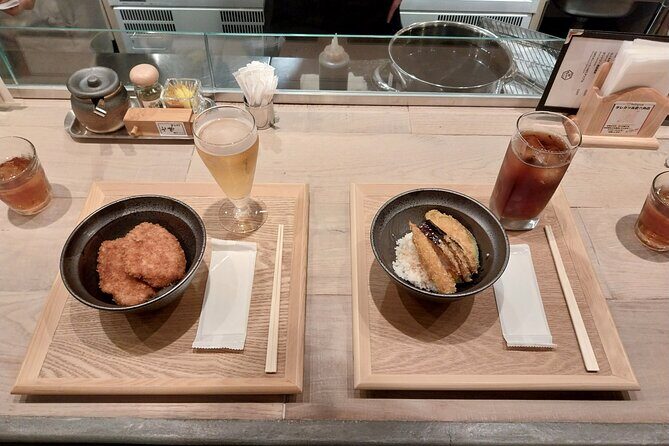
The tour includes katsudon with a sweet local twist. That Kyoto twist matters because tonkatsu/katsu bowls can taste similar across Japan, but regional sauce and seasoning habits can shift the whole vibe—from sweeter to tangier to more balanced. It’s a good starter because it’s filling without being complicated.
Why I think this works for most first-timers: katsudon gives you a baseline. Once you’ve had the pork cutlet + rice + sauce combo, you’ll be better at noticing how the market items differ—especially lighter bites like yuba tofu and different textures like fish cakes.
Wagyu sushi and the tour’s 10-taste strategy
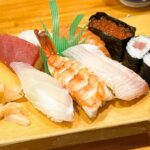
One of the best parts of this tour is the way it mixes “wow food” with “I can’t believe this is so Kyoto” food. Included highlights list wagyu sushi, described as seared to perfection, plus a Secret Dish that’s part of the structured tasting count.
That matters when you’re paying $142 per person. You’re not just paying for one showpiece item—you’re paying for a planned set of experiences that hit multiple Kyoto food categories: savory rice bites, tofu-based specialties, fried and grilled comfort, and sweets.
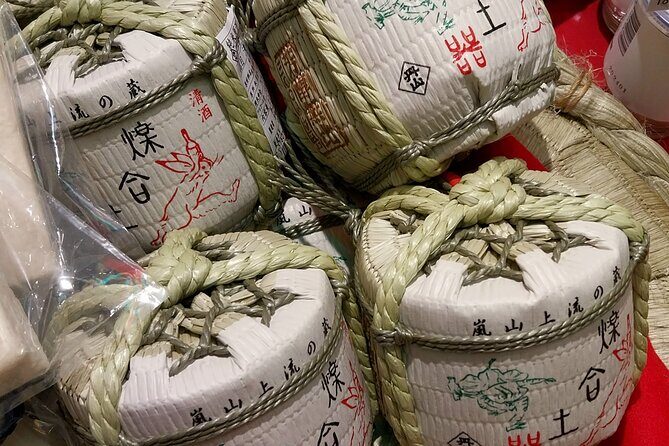
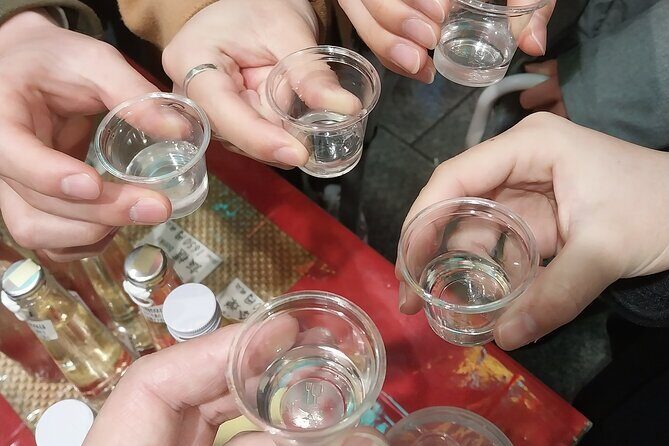
Also, you’re not drinking only water. Included in the set are a glass of draft beer plus sake tastings from Kyoto. This is the kind of tasting add-on that often costs extra on your own. When it’s included, the value is easier to justify, even if you’re not a hard-core sake person.
Potential drawback: if you personally don’t enjoy fried foods, you may feel a bit cautious here. The tour includes multiple items that lean savory and sometimes fried, and at least some visitors have complained about that balance. If you’re sensitive to heavier textures, go in expecting that this is not a light salad-only tour.
Gion time: okonomiyaki and old-street walking (without the pressure)
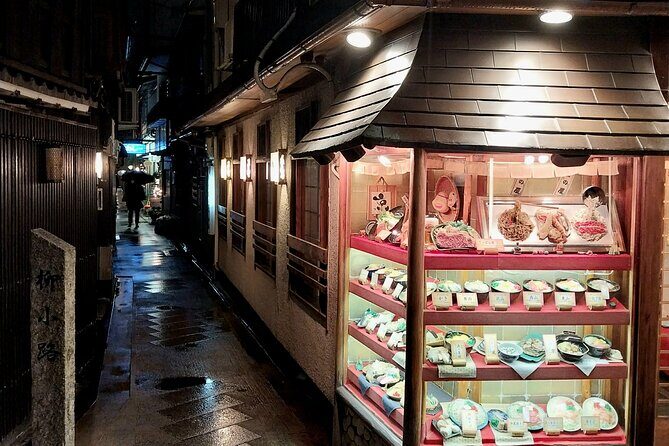
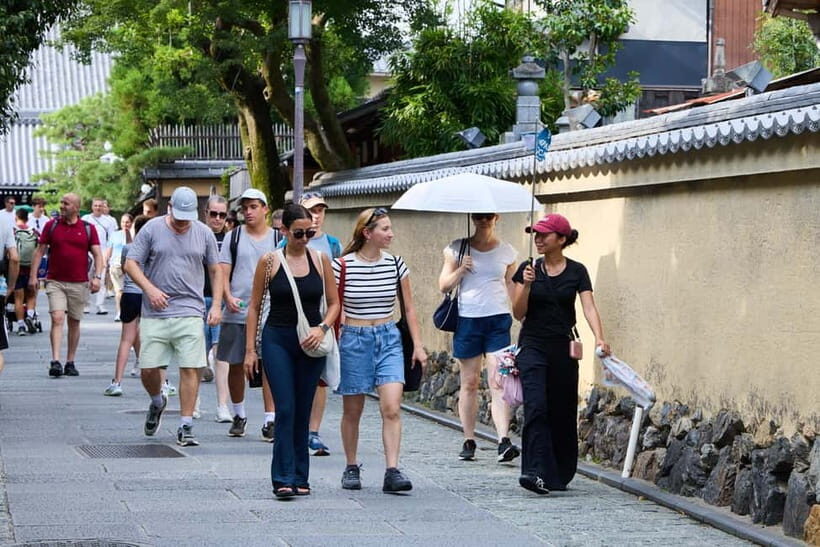
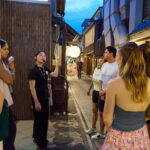
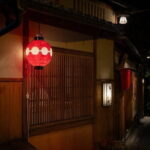
After the market, the route shifts into sightseeing mode. You walk through the streets with views of Pontocho and the Kamo River, then head into the Gion area.
This is where the tour earns points for being more than eating. You’re moving through Kyoto neighborhoods, not only hopping between shops. And because it’s a small group (max 10 travelers), the walking feels paced rather than rushed.
Then you get a well-earned break with okonomiyaki prepared the Kyoto way at a quaint restaurant in the Gion area. This stop is also about 30 minutes. Okonomiyaki is one of those foods that can be very different depending on regional methods, so a Kyoto version is a smart choice for travelers who want local specificity, not just a generic pancake.
If you want a tip for timing: this is a good point to slow down and reset. After market snacks and a katsudon start, okonomiyaki is satisfying, so don’t chase extra random bites until you finish the tour’s included set.
A few more Kyoto tours and experiences worth a look

Matcha tea tasting in Kyoto: hot or cold, with a serious Kyoto stop
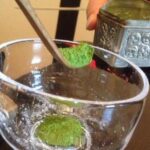
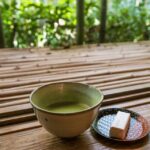
The final food experience centers on tea. The tour includes Japanese tea tasting and specifically mentions a matcha venue, with a seasonal hot or cold tea option depending on when you go.
Tea stops in Kyoto aren’t just about flavor—they’re about ritual. Even if you’re not a tea-history nerd, this is the part of the tour that helps you land the overall “Kyoto twist.” By the time you reach the matcha stop, you’ve already done salty and savory bites, so tea works like a palate reset.
Practically, this is also the part where comfort matters. If weather is warm, the cold tea option can be a lifesaver. If it’s cool, a hot cup gives you a final cozy moment before you head out near the Gion sights.
Beer, sake, and mochi: how the sweetness and drinks shape the pacing
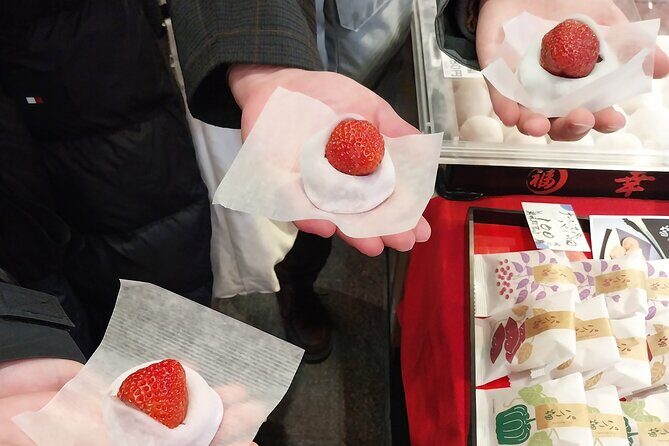
The tour includes multiple ways to end food chapters on a different note: Daifuku mochi with a seasonal fruit filling and the included sake/beer tastings.
Dango/mochi-style sweets can be hit-or-miss if you’ve had too many. The key here is that the mochi is part of the organized 10-tasting flow, so it arrives when your appetite has already been trained to keep going. Daifuku mochi is also a strong “Kyoto connection” because sweets here often lean into seasonal and refined fruit flavors.
As for alcohol, draft beer and sake tastings can make the experience feel more like an evening out than a daytime snack. You don’t have to be a serious drinker to enjoy it. Even a small pour helps you understand how sake pairs with salty bites, and it adds variety to the tour without adding extra stops.
Price and value: what $142 buys you (and what to watch)
At $142 per person, this isn’t the cheapest way to eat in Kyoto. The value comes from three things the tour bundles together:
- A tight tasting list: Kyoto foods like yuba tofu, wagyu sushi, katsudon, okonomiyaki, fish cakes, and daifuku mochi, plus a Secret Dish
- Drinks included: draft beer and a sake tasting set, plus Japanese tea tasting
- Small-group structure: max 10 travelers, with a guided route that also includes sights like Pontocho/Kamo River and Gion
If you tried to replicate it yourself, you’d likely pay separately for multiple tastings, then add in the market shopping time you’d spend figuring out what to buy. The tour saves decision fatigue.
Where value can feel weaker: if your personal taste leans heavily toward fresh, light, non-fried foods, you might feel the selection doesn’t match your ideal plate. Also, some people have mentioned the guide being on the quieter side or giving less meal-by-meal detail. If you want lots of explanatory depth, you should manage expectations that this is still first and foremost a walking tasting tour.
One more note: this tour is popular enough that it’s commonly booked around 44 days in advance. If your dates are fixed, you’ll have better luck booking early.
Who should book this Kyoto food tour (and who should skip)
This is a great fit if you’re:
- New to Kyoto food and want Kyoto-specific staples like yuba tofu and matcha, not just generic Japanese eats
- Interested in Nishiki Market but don’t want to guess what to order
- Traveling solo or as a couple and like the small-group feel (max 10)
It may be less ideal if you:
- Hate fried foods or want a strictly light menu
- Need very detailed, high-volume explanations in fluent English (the guide’s talk level has been a noted point for some visitors)
- Have limited walking tolerance, since you’ll cover a fair amount on foot
Practical tips so you enjoy every stop
First: wear shoes you can walk in without thinking. This route is not “mostly standing.”
Second: arrive ready to eat and drink. The tour includes draft beer, sake tastings, and tea, so plan your day around it and don’t schedule something right before that requires full focus.
Third: if you have dietary needs, reach out in advance. The tour explicitly notes that dietary requirements should be contacted ahead of time so they can cater as best they can.
Finally: if you want to take photos, do it between bites. Market lights and narrow shop entrances can make it awkward to stop in the middle of tastings.
Should you book this Kyoto Karasuma to Gion Food Tour?
Yes—if your goal is a Kyoto-first tasting route that mixes market food with real neighborhood sights, this tour makes a lot of sense. The combination of yuba tofu, wagyu sushi, a Nishiki Market walk, plus Gion views and a matcha tea stop is a strong lineup for first-timers.
Skip or reconsider if you need a lighter, less fried menu, or if you strongly prefer highly detailed, loud narration. In that case, look for a more specialized food tour style or plan to spend extra time planning your own market stops.
FAQ
What’s included in the 10 tastings?
The tour includes yuba tofu, katsudon with a sweet local twist, okonomiyaki, wagyu sushi, fresh fish cakes, daifuku mochi with seasonal fruit filling, a secret dish, a glass of draft beer, a tasting of various Kyoto sakes, and a Japanese tea tasting (hot or cold).
How long is the Kyoto food tour?
It runs for about 3 hours 30 minutes.
Where do we meet and where does the tour end?
You meet at the Starbucks across from exit 5 of Subway Karasuma Oike Station, and the tour ends at the entrance of Minami Gion, near Yasaka Shrine (closest subway station listed is Gion Shijo Station on the Keihan Line).
Is there a group size limit?
Yes. The tour has a maximum of 10 travelers.
Can dietary requirements be accommodated?
You’re asked to contact the tour in advance about dietary requirements so they can cater as best they can.
What’s the cancellation window for a full refund?
You can cancel for a full refund up to 24 hours before the experience’s start time (local time). If you cancel within 24 hours, the amount paid is not refunded.