REVIEW · KYOTO
Private Japanese Calligraphy in Kyoto – Learn Shodō with a Master
Book on Viator →Operated by SAKURA Experience Japanese Culture Nijo Home · Bookable on Viator
Japanese calligraphy feels calming for a reason. In central Kyoto, you get a private Shodō lesson in a home studio, led by Aya, a calligraphy master with over 55 years of experience. You’ll practice the brush movements that make kanji look right, then choose a character and add your name in Japanese on the paper you’ll take home.
I especially like two things here: the focus of a private class (you’re not sharing the teacher’s attention), and the chance to go beyond copying. Aya explains how correct strokes work and ties it to the way an artist approaches the moment—so your results improve without you needing to be a “creative type.”
One thing to consider: the timing is tight at about 1 hour, and the session has a hard start if you’re late (more than 15 minutes). If you want a slow, open-ended workshop or you’re bringing kids under 12, this may not match your expectations.
In This Review
- Key Things to Know Before You Go
- A Kyoto Calligraphy Class That Feels Like a Home Studio
- Meet Aya and Your Instructor-Host Setup
- The 1-Hour Itinerary: What Happens From Start to Finish
- Step 1: Arrive, Get Settled, and Start Clean
- Step 2: Pick Your Kanji and Learn the Stroke Movements
- Step 3: Write Your Name in Japanese
- Step 4: Take Home Your Artwork
- How the Private Format Changes Everything
- Tools, Paper, and the Keepsake You’ll Actually Want
- Price and Value: Is $77.51 Worth It?
- Finding the Location Near Nijo Castle (Without Stress)
- Who Should Book This Class (And Who Might Want Another Option)
- FAQ
- FAQ
- How long is the private calligraphy class?
- Where does the class meet in Kyoto?
- Is this a private class or a group class?
- Do I need to bring anything like socks?
- Do kids get to join?
- What languages are used during the lesson?
- Should You Book Private Japanese Calligraphy in Kyoto?
Key Things to Know Before You Go
- Private with Aya (55+ years of Shodō): real instruction, not a rushed demonstration.
- Tatami etiquette matters: you need clean socks when entering the tatami room.
- You choose the kanji: then add your name in Japanese for a personal keepsake.
- Tools and paper are included: you don’t have to hunt down supplies in Kyoto.
- English and Japanese instruction: so you can follow the steps and the meaning.
- Central Kyoto meeting point: near Nijo Castle, but the exact entrance can be tricky if you only trust a map pin.
A Kyoto Calligraphy Class That Feels Like a Home Studio
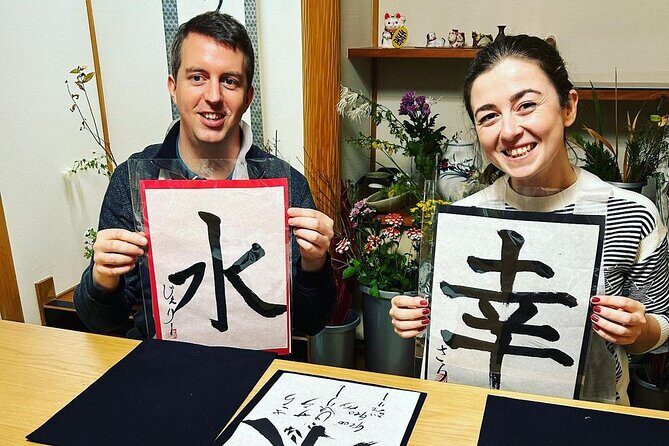
Kyoto has no shortage of cultural activities, but this one stands apart because it’s not staged like a museum stop. The lesson happens in a welcoming Kyoto home setting, with a studio room set up for class. That matters because calligraphy isn’t about speed or performance. It’s about control: where your brush touches, how much ink you carry, and how your strokes flow.
Aya’s teaching style shows up again and again in feedback: she’s patient, encouraging, and practical about beginners. Even people who start with zero brush experience tend to leave with calligraphy that feels like something you could frame and live with. And because it’s private, you can ask what you’re actually confused about instead of nodding along and hoping.
This is also a good “rainy day” plan. One of the best things about Kyoto is that it can be charming in bad weather, too—when you have something indoor that still feels authentic.
You can also read our reviews of more private tours in Kyoto


Meet Aya and Your Instructor-Host Setup
The class is led by Aya, the calligraphy master. Her husband, Manabu, is part of the hosting setup, and it shows in the way the experience runs smoothly as a shared home welcome.
Expect a calm pace and lots of hands-on guidance. In many sessions, people mention Aya being attentive with posture, brush control, and stroke order. That’s the core of Shodō: the brush is a tool, but the character comes from technique. If you go in thinking you’ll just copy pictures, you’ll still succeed, but you’ll get more out of the class if you treat it like guided practice.
You’ll also get some explanation along the way. Not just “do this, then that.” Aya tends to connect the character-building process to the broader idea of calligraphy as a disciplined art form—quiet, focused, and very deliberate.
The 1-Hour Itinerary: What Happens From Start to Finish
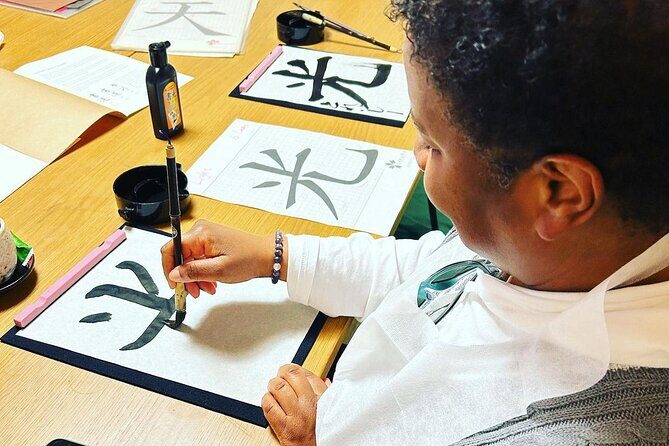
Even though the tour lists one stop, the experience has clear phases once you’re inside.
Step 1: Arrive, Get Settled, and Start Clean
Your meeting point is SAKURA Experience Japanese Culture Nijo Home, at 660 Izumichō, Nakagyo Ward, Kyoto, 604-0015. You’ll end back at the meeting point after the lesson.
Before anything artistic happens, there’s a cultural practical step: socks. You should wear or bring clean socks, because entering the tatami room without them is considered impolite (and barefoot isn’t permitted in this setup). This is one of those details that sounds minor until you’re standing at the doorway in Kyoto weather thinking, Why didn’t I pack socks?
Step 2: Pick Your Kanji and Learn the Stroke Movements
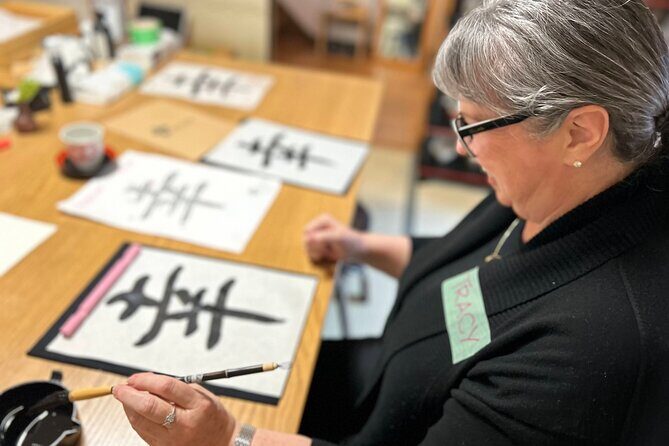
Once you’re seated, Aya guides you through the correct brush movements. The class focuses on kanji stroke order and control, because that’s what makes the characters look authentic rather than “close enough.”
What’s useful here is that the lesson doesn’t assume you already know what the strokes mean. You’ll learn how to hold and move the brush so your lines have the right character. This is also where Aya’s experience shows: she can correct your instinct quickly, without making beginners feel silly.





Step 3: Write Your Name in Japanese
After you choose a favorite kanji, you’ll add your name in Japanese. This turns the class from a fun activity into something personal. It’s also a satisfying moment because you can see your own identity represented in a writing system that feels very different from the Latin alphabet.
One practical note: in a short class, your name length might affect how much you can finish smoothly. The lesson is designed for a good keepsake result, but it’s not a full calligraphy marathon.
Step 4: Take Home Your Artwork
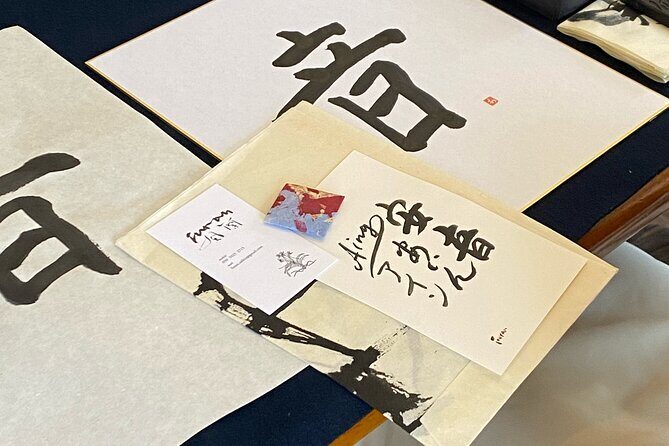
You finish with a piece of calligraphy you can take home. Tools and paper are included, so you don’t need to bring supplies. Many people also leave with extra written pieces from practice (depending on how the session flows), which is handy if you want options for framing or gifting.
How the Private Format Changes Everything
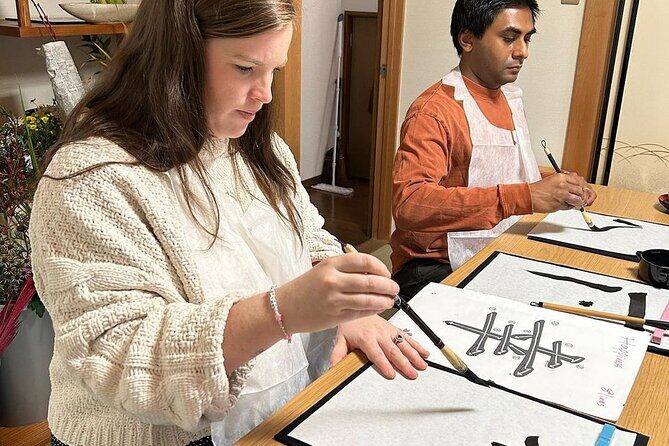
A big reason people rate this class so highly is the private setup. In a small, home-based studio, you can’t hide behind other participants. That can sound stressful, but it usually works the other way: Aya watches your strokes as you write and adjusts quickly.
You also don’t lose time repeating basic steps that someone else already mastered. If you’re a beginner, that matters. If you’ve tried calligraphy before, it still matters, because you can focus on corrections instead of starting over.
This is also a meaningful difference from a “look and listen” workshop. Calligraphy is physical. Your wrist, your pressure, and the direction of each stroke all matter. The private format makes those things learnable.
Tools, Paper, and the Keepsake You’ll Actually Want
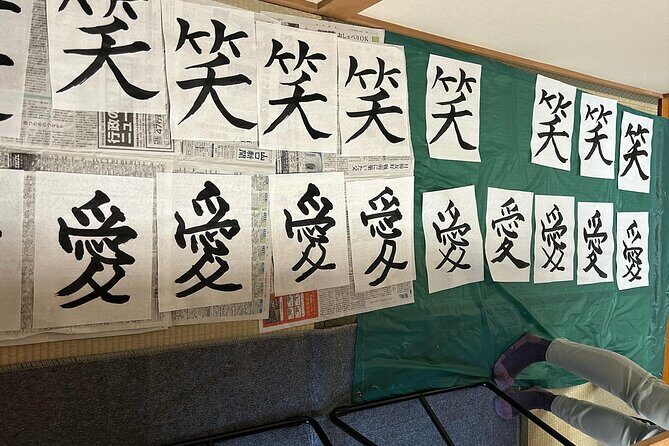
The class includes calligraphy tools rental and paper, plus guidance on selecting your favorite kanji. That inclusion is good value because it prevents a common Kyoto problem: you do the lesson, then realize you still need supplies to continue practicing at home.
In many sessions, the experience also feels welcoming beyond the instruction. People mention tea and traditional Japanese sweets being offered, plus extra kindness like taking photos of the class and sharing them later. That’s not what “calligraphy” usually promises on paper, but it adds warmth—and it turns the lesson into a memory.
What you take home is the real payoff: your own written character and name. Even if you don’t become a serious calligrapher, it’s a keepsake you can display without feeling like you paid for a souvenir sticker.
Price and Value: Is $77.51 Worth It?
At $77.51 per person for about 1 hour, this isn’t the cheapest activity in Kyoto. It’s also not trying to be.
You’re paying for:
- A private lesson with a master instructor
- Included tools and paper
- A personalized keepsake (your kanji and name)
- Instruction in English and Japanese
That combination is what makes it reasonable. In other words, you’re not just buying a “thing.” You’re buying time with a teacher plus a finished art object. If you’ve ever bought a craft workshop where you leave with something nice but forgettable, this is the opposite style: you leave with something specific to you.
My rule of thumb: if you value guided instruction and you want a Kyoto memory you can hang on your wall, this is good value. If you mainly want a quick photo moment with minimal effort, you might find it doesn’t match that goal.
Finding the Location Near Nijo Castle (Without Stress)
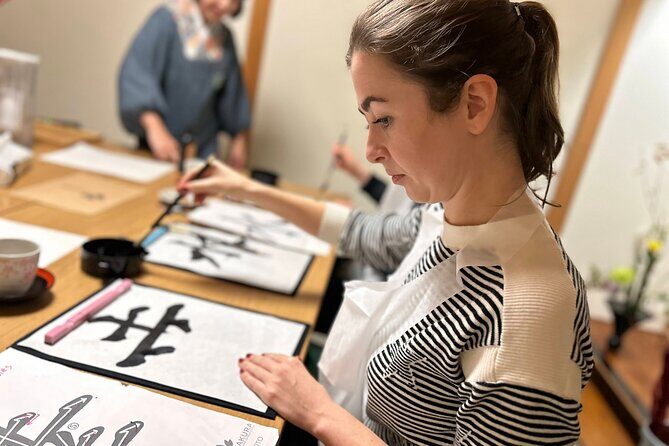
The meeting point is near Nijo Castle. Some guidance you can use right away: the home is described as about 200 meters straight west from the front of Nijo Castle.
The only snag is navigation. Multiple people note that the map pin or street view can mislead you if you walk using photos alone. So do yourself a favor:
- Use the exact meeting address
- Arrive early enough to handle Kyoto’s similar-looking streets
- If you’re stuck, contact the host as soon as possible
Kyoto is beautiful, but the streets can feel repetitive if you’re trusting the wrong visual cue.
Who Should Book This Class (And Who Might Want Another Option)
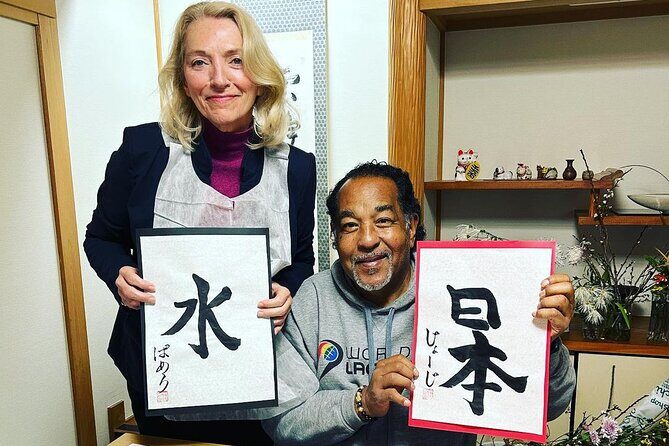
This is a strong fit if you want:
- A quiet, culturally grounded activity in central Kyoto
- Beginner-friendly instruction
- A real keepsake created during the class
- Private teacher attention
It’s less ideal if:
- You’re traveling with children under 12 (they can’t be accommodated)
- You know you’ll likely be late (arriving more than 15 minutes late can prevent the class from starting)
- You need a long, slow session for heavy practice
One more “fit” point: calligraphy is not loud entertainment. It’s focused. If you go in expecting big sightseeing stories every five minutes, you might feel like you’re in a studio—because you are. That calm is part of the appeal.
FAQ
FAQ
How long is the private calligraphy class?
It runs for about 1 hour.
Where does the class meet in Kyoto?
The start point is さくら日本文化体験 二条城教室 / SAKURA Experience Japanese Culture Nijo Home, 660 Izumichō, Nakagyo Ward, Kyoto, 604-0015, Japan.
Is this a private class or a group class?
It’s a private class. Only your group participates.
Do I need to bring anything like socks?
Yes. You should wear or bring clean socks for the tatami room. Barefoot entry is not permitted in this setting.
Do kids get to join?
Children under 12 cannot be accommodated, to maintain a quiet learning environment.
What languages are used during the lesson?
The class is offered in English and Japanese.
Should You Book Private Japanese Calligraphy in Kyoto?
If you want one Kyoto activity that feels both traditional and personally meaningful, I’d book this. The private format, the included tools and paper, and the fact that you take home your own kanji and Japanese name are a strong package for the price.
Book it if you can show up on time, you’re okay with a calm indoor setting, and you want real instruction (not just watching). Skip it if you’re bringing a young child, you need a longer-than-one-hour workshop, or you’re likely to run late due to transportation.
If you do book, pack clean socks, give yourself extra time to find the entrance near Nijo Castle, and come ready to slow down for an hour. That’s when Shodō clicks.