REVIEW · KYOTO
Kyoto: Gion Geisha District & Sake-in-Hand Walking Tour
Book on Viator →Operated by Otatrip Guide · Bookable on Viator
Lantern-lit Gion turns a walk into a story. You’ll cover Kyoto’s most famous geisha area at night, guided through narrow lanes, key shrines, and Higashiyama slopes—while holding a sake tasting along the way.
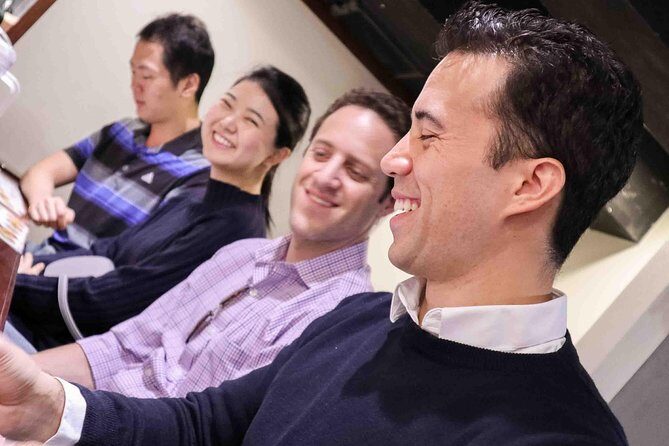
I love the small-group size (max 10) because you can actually hear the guide and ask questions, and I love the sake-in-hand format because it makes the whole route feel like a night out, not a textbook tour.
One possible drawback: this is still a lot of walking, and if your group stays quiet or is very small, some of the conversation may feel lighter than you expected.
In This Review
- Key Highlights You’ll Care About
- Gion Geisha District at Night: Why This Walk Works
- Price and Value: Is $27.84 Fair for a 1–1.5 Hour Tour?
- Where You Start (Kikunoi Roan) and Where You End (Yasaka Shrine)
- Walking the Route: Gion Backstreets to Higashiyama Slopes
- The Kamo River
- Gion (10 minutes)
- Hanamikoji Street (10 minutes)
- Yasui-Konpiragu Shrine (15 minutes)
- Hokan-ji Temple, the Yasaka Pagoda (15 minutes)
- Sannenzaka and Ninenzaka area (5 minutes) + Sanneizaka (5 minutes)
- Nene-no-Michi (10 minutes)
- Yasaka Shrine (20 minutes) — Tour Finale
- What the Guide Adds: More Than Directions
- Sake in Hand: How to Enjoy It Without Turning the Night Into a Mess
- Who This Tour Is Best For (and Who Should Rethink It)
- Should You Book This Gion Geisha District & Sake-in-Hand Walking Tour?
- FAQ
- How long is the Kyoto Gion Geisha District & Sake-in-Hand walking tour?
- What is the group size limit?
- What does the tour include besides the walking?
- Where does the tour start and end?
- Are there admission fees for the stops?
- Is this tour suitable for younger travelers?
- What’s the cancellation window for a full refund?
Key Highlights You’ll Care About

- Max 10 people keeps the vibe intimate and lets the guide keep an eye on the group.
- Sake tasting included gives you a fun reason to slow down and pay attention to details.
- Backstreets of Gion help you avoid the chaos and still see the traditional lanes people come for.
- From Gion to Yasaka Shrine means one smooth route through classic Kyoto neighborhoods.
- Guide commentary on geisha culture includes practical tips on what you might notice—and where.
Gion Geisha District at Night: Why This Walk Works
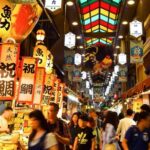
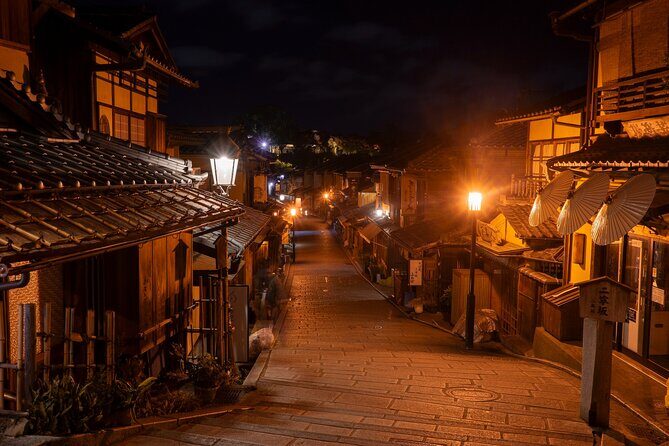
Kyoto has a way of changing mood after dark, and Gion is where that shift really hits. The streets feel narrower, the lantern light softens everything, and you get a sense of the district as a place where life happens—not just a place people photograph.
This tour is built for that street-level experience. You’re not just staring at landmarks from the sidewalk. You’re moving through the narrow lanes and stopping at the places that help you understand what you’re seeing: tea house districts, shrine entrances, and the Higashiyama approach leading toward Yasaka Shrine.
You’ll also get practical context for the geisha culture you’re watching. The guide shares cultural commentary and tips on where you might spot geiko along the way, plus stories that connect Gion to wider themes in Kyoto, like samurai-era influence and Zen meditation ideas that show up in the city’s traditions.
You can also read our reviews of more walking tours in Kyoto

Price and Value: Is $27.84 Fair for a 1–1.5 Hour Tour?

$27.84 sounds like a small number—until you translate it into what you actually get. You’re paying for three things that cost time (and sometimes confusion) on your own: a route plan through Gion at night, cultural context as you walk, and a sake tasting included in the experience.
The time value is real here. Gion can be easy to wander in circles, especially at night when the lanes feel maze-like. A guide helps you keep momentum and still hit the key areas in about 1 to 1.5 hours.
Then there’s the sake tasting value. Alcohol is provided as part of the tour, and the tone is different once you have that sake in hand. One review-style takeaway that really stands out is that the sake isn’t just a random add-on—it helps set the mood, and it’s a big reason people call this tour worth it.
One thing to weigh: you’re also signing up for “walking tour” as the main activity. If you’re hoping for lots of sitting-down experiences or lots of long temple time, you may feel rushed.
Where You Start (Kikunoi Roan) and Where You End (Yasaka Shrine)
The meeting point is at Kikunoi Roan (600-8012 Kyoto, Shimogyo Ward). The tour finishes at Yasaka Shrine in Gionmachi Kitagawa (Higashiyama Ward). That start-and-finish setup matters more than it seems.
Starting near Kikunoi Roan keeps you close to your first streets in the Gion area, so you don’t spend the early part of the tour stuck in transit. Ending at Yasaka Shrine is convenient because you’re dropping out right at a major landmark area where it’s easier to continue exploring or grab transport. The tour also notes that if you want help catching a taxi, they can assist—bus service may have slowed down by the time you finish.
Two practical notes I’d keep in mind:
- You’re walking through residential areas at night, so keep your voices down and move respectfully.
- Wear shoes you trust. The route includes slopes (Higashiyama streets) and a lot of continuous foot time.
Walking the Route: Gion Backstreets to Higashiyama Slopes
Think of this as one connected night stroll: you start near the river area, work your way through Gion’s core lanes, then angle into Higashiyama for iconic shrines and stone-paved pedestrian streets. You’ll also get frequent short stops, so you’re not stuck in one location too long.
The Kamo River
You begin with the Kamo River, a scenic waterway that runs through central Kyoto. It’s known for historical significance and the feeling of calm right in the middle of a city that can otherwise feel busy. In springtime especially, those cherry blossom-lined banks add a soft backdrop.
A small downside: on busy evenings, you’ll still be sharing space with foot traffic. The guide’s job is to keep you moving so you don’t lose time.
You can also read our reviews of more food & drink experiences in Kyoto


Gion (10 minutes)
Next is Gion, Kyoto’s best-known geisha district. You’ll see the traditional look and feel of the area, including the wooden machiya style that makes Gion recognizable. Walking here with a guide helps because the lanes are narrow and easy to misread.
If your goal is to understand why the district looks the way it does, this is the first “orientation stop.” If your goal is pure photos, you’ll still get chances, but the real value is context.
Hanamikoji Street (10 minutes)
Hanamikoji Street is one of the most famous lanes in Gion. It’s praised for its preserved traditional wooden machiya houses and its enchanting, old-style atmosphere.
This is often where you start noticing how the district works visually: small details, storefront rhythms, and the way pedestrian flow changes at night. The stop is short, so be ready to look quickly and move with the group.
Yasui-Konpiragu Shrine (15 minutes)
Then you reach Yasui-Konpiragu Shrine, a Shinto shrine known for its power to sever bad relationships and bring good ones. It’s famous for its large Enki feature—something you’ll likely be seeing mentioned widely because it’s visually noticeable.
If you’re the type who likes reading what you’re looking at, this stop helps you connect shrine symbolism to daily life. If you want a quieter temple moment, remember this is a group walk, so you won’t control the pace.
Hokan-ji Temple, the Yasaka Pagoda (15 minutes)
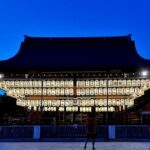
You’ll also stop at Hokan-ji Temple, commonly called Yasaka Pagoda. This five-story pagoda is an iconic view in Higashiyama and dates back to the 6th century.
The pagoda is a great checkpoint on this route: it’s a landmark your eyes can lock onto. At night, those sightlines feel extra cinematic, and it’s a strong spot for photos—without needing to compete for attention at multiple places.
Sannenzaka and Ninenzaka area (5 minutes) + Sanneizaka (5 minutes)
You’ll then shift into the pedestrian street zones: Sannenzaka and Ninenzaka, followed by Sanneizaka. These areas are known for stone-paved steps, traditional wooden buildings, and the slow sloping feel that makes Higashiyama famous.
These are short stops, which is good if you don’t want to lose the flow. The drawback is you’ll want to return later on your own if you love wandering through atmosphere. This tour is more about giving you the route and the meaning than about letting you spend half a day here.
Nene-no-Michi (10 minutes)
Next is Nene-no-Michi, a stone-paved path named after Nene, the beloved wife of Toyotomi Hideyoshi. It’s described as serene and picturesque, and it connects major temple areas in the Higashiyama zone.
This is one of those stops where you benefit from the guide’s pacing. The lane is quieter than the main busy streets, but it can still feel crowded depending on the night.
Yasaka Shrine (20 minutes) — Tour Finale
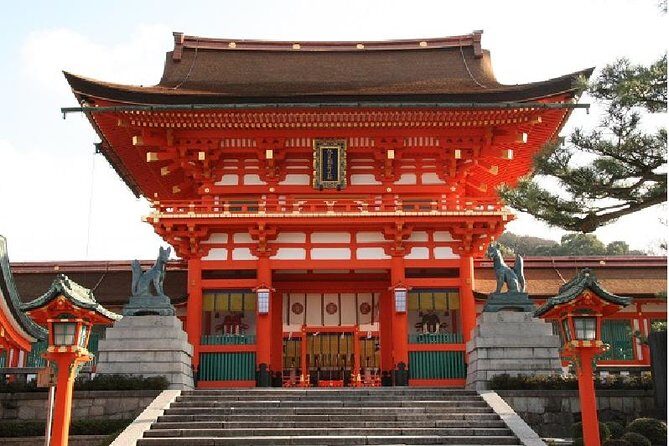
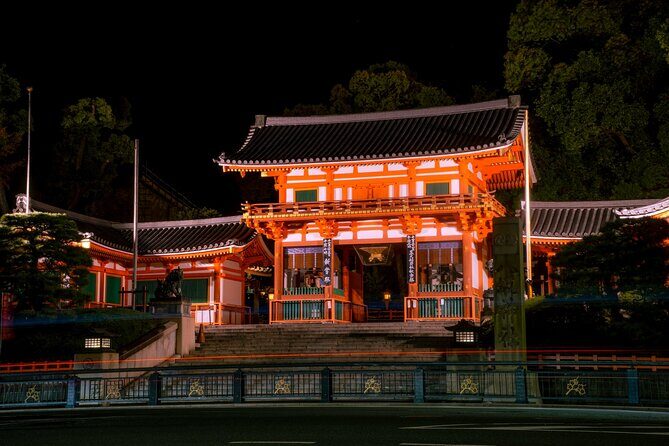
Finally, you end at Yasaka Shrine, also known as Gion Shrine. It dates back to 656 AD and is one of Kyoto’s most important Shinto shrines. This is a satisfying finish because it ties together the Gion identity with the broader Higashiyama spiritual center.
You get about 20 minutes here, which is enough to soak in the atmosphere and take in the main shrine feel, even if you don’t have time for a long, slow visit.
What the Guide Adds: More Than Directions

A normal walking tour gets you from A to B. This one tries to change what A and B mean.
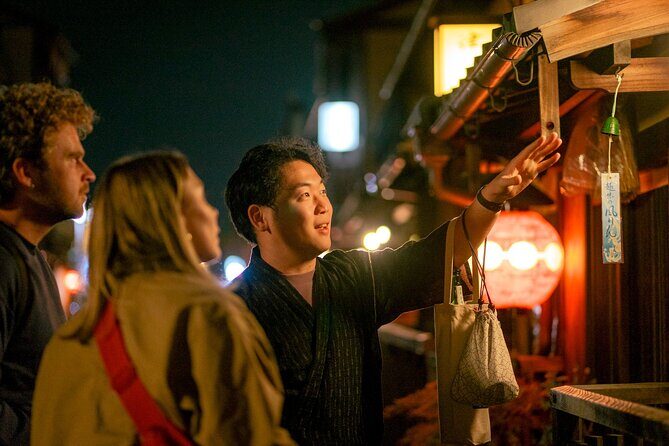
You’ll hear cultural commentary tied to what you’re seeing in Gion: geisha culture basics, tips on where you might notice geiko, and stories that connect the district to historical themes like samurai culture and Zen meditation ideas. That matters because Kyoto’s streets can look similar if you don’t have context.
You might also notice that some guides lean warm and conversation-friendly. Names that show up in guide feedback include Shumpei / Shunpei and Mune, praised for friendliness and for answering questions about everyday life and culture beyond just the monuments. If you get a guide in that style, you’ll likely feel more like you’re walking with a knowledgeable local than following a scripted checklist.
One caution, based on what people have mentioned: in smaller groups, or when the night is rainy and fewer people join, interaction can feel lighter. The itinerary stays solid either way, but your personal experience may depend on group energy and how chatty you are.
Sake in Hand: How to Enjoy It Without Turning the Night Into a Mess
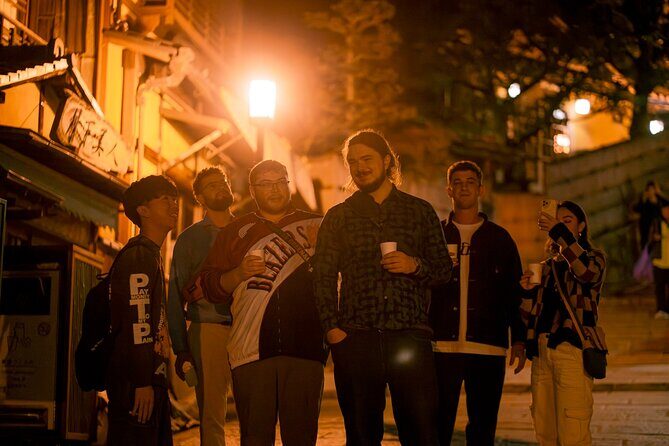
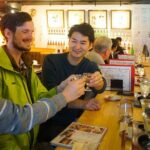
This tour includes alcohol, with the sake tasting treated as a built-in part of the walk. That’s not just for fun; it changes how you experience the streets. Holding the sake while moving through lantern-lit lanes makes the evening feel intentional.
The tour info also asks you to drink responsibly, which is the smart rule here. Since you’re doing a lot of walking, pace yourself and treat sake like an accompaniment, not a race.
A few practical ways to make the tasting work for you:
- Take small sips while you’re listening to the guide, not big gulps during transitions.
- If you’re sensitive to alcohol, tell the guide upfront and slow down.
- Use the sake moments as your reset breaks—when you’re holding the cup, you’re less likely to rush past details.
Some guests have also mentioned snacks along the way. Even if you’re not expecting a full meal, plan to eat before you go so you’re not relying on the tasting alone.
Who This Tour Is Best For (and Who Should Rethink It)

This is a strong fit for you if you want:
- A guided route through Gion at night so you don’t get lost in the lanes.
- Cultural context that helps you understand what geisha-related districts look like and how to read the signs of the place.
- A light, social walking experience with a sake tasting included.
- A time-efficient way to hit shrines and famous Higashiyama streets in about 1 to 1.5 hours.
It’s less ideal if:
- You want minimal walking or lots of seated time.
- You need a highly interactive experience where the guide constantly sparks conversation, regardless of group size.
- You’re under 20, since the tour requires participants to be 20 years old or older.
And one last thing that matters: because you’ll be walking through residential areas at night, you’ll get the best experience if you match the tone—quiet voices, respectful behavior, and awareness of where locals live.
Should You Book This Gion Geisha District & Sake-in-Hand Walking Tour?
Book it if you’re going to Kyoto and you want Gion with structure. The small-group size, the sense of moving through backstreets, and the sake tasting together are the main reasons this tour earns its high ratings—and they’re not just marketing points. You’re buying time saved, context added, and a night vibe that’s hard to replicate on your own.
Skip it or choose a different style of tour if you’d rather control your pace completely without alcohol involved, or if you’re traveling with mobility limitations that make slopes and continuous walking difficult. This route is meant for steady feet.
If you’re on the fence, here’s my simple decision rule: if you’ll happily walk for an hour-plus and you like the idea of learning while you stroll, this is a solid value at $27.84 for what it bundles.
FAQ
How long is the Kyoto Gion Geisha District & Sake-in-Hand walking tour?
It runs about 1 hour to 1 hour 30 minutes.
What is the group size limit?
The tour has a maximum of 10 travelers.
What does the tour include besides the walking?
You get guide commentary about geisha culture and related stories, and a sake tasting with alcohol provided.
Where does the tour start and end?
It starts at Kikunoi Roan (600-8012 Kyoto, Shimogyo Ward) and ends at Yasaka Shrine (625 Gionmachi Kitagawa, Higashiyama Ward).
Are there admission fees for the stops?
The tour lists admission tickets for the stops as free.
Is this tour suitable for younger travelers?
Participants must be 20 years old or older.
What’s the cancellation window for a full refund?
You can cancel up to 24 hours in advance for a full refund, and the experience may be rescheduled or refunded if poor weather cancels it.
If you want, tell me your travel month and your pace (easy stroll vs. you love steps), and I’ll suggest the best time to do this route and what to wear.