REVIEW · KYOTO
Nishiki Market Brunch Walking Tour (7 Tastings + Brunch)
Book on Viator →Operated by MagicalTrip Inc. · Bookable on Viator
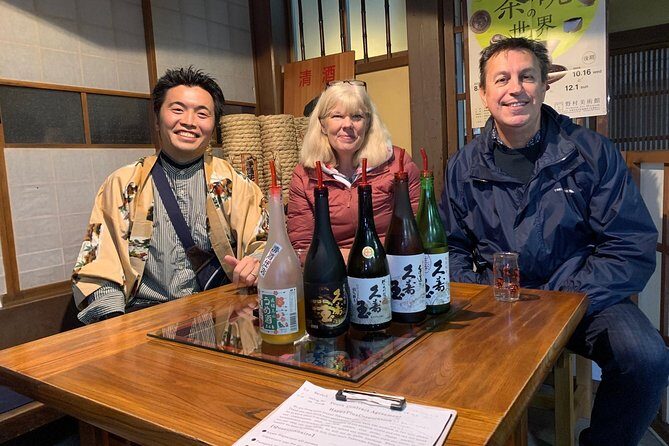
Nishiki Market in a half-morning of snacks. This small-group brunch walk threads through Kyoto’s food heart—starting near Shijo Bridge and Pontocho, pausing at Nishiki Tenmangu, then spending big time inside Nishiki Market. I love the small group feel and the built-in 7 tastings (plus brunch), which means you’re eating instead of scanning menus and second-guessing stalls. Guides like Yuki and Takaya also show up often for making the walk feel easy, with food tips and Kyoto stories you can actually use.
One caution: gluten-free requests can’t be accommodated, and allergy-free dining can’t be guaranteed since some tastings come from kitchens outside the tour operator. Also, plan for Kyoto weather swings; summer can top 40°C (110°F) and winter can dip below freezing, so bring water and dress for comfort.
Small-group attention (up to 10 people): personalized pacing so you’re not lost in the crowd.
7 tastings + brunch in the price: you’ll eat your way through Nishiki without playing menu roulette.
Photo help, not camera juggling: you keep the walk relaxed while photos are provided.
A route that matches the mood: Shijo Bridge and Pontocho set the scene before you hit the market.
A real shrine stop, not just shopping: Nishiki Tenmangu gives you a quiet reset before the food frenzy.
In This Review
- Why Nishiki Market brunch tours feel worth it
- Starting near Shijo Bridge and Pontocho’s alley vibes
- Nishiki Tenmangu: the calm pause before the market
- Nishiki Market time: 2 hours 15 minutes of focused eating
- What to expect while you’re in the market
- The main drawback: market shopping pressure
- Brunch at the restaurant: included, but don’t expect it to replace the market
- Guides, stories, and the photo factor that changes the feel
- What to know about food limits, allergies, and substitutions
- Price and logistics: getting your money’s worth
- Who should book this Nishiki Market brunch walk
- Should you book this Nishiki Market Brunch Walking Tour?
- FAQ
- How long is the Nishiki Market brunch walking tour?
- How many tastings are included, and is brunch part of the price?
- How big is the group?
- Can I request a gluten-free option?
- Are allergies accommodated safely?
- What should I do about weather?
Why Nishiki Market brunch tours feel worth it
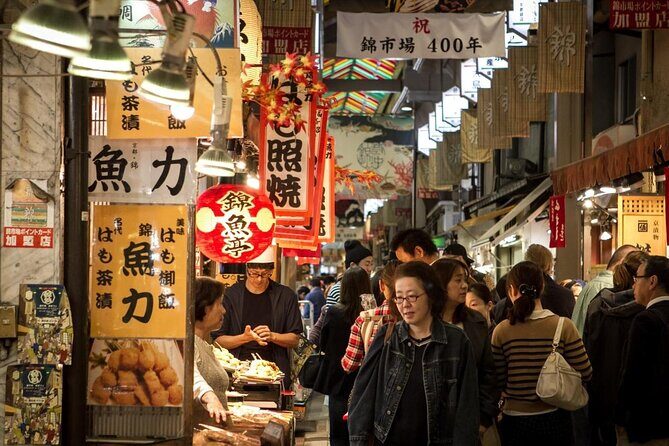
Nishiki Market is famous for a reason, but it can also mess with your brain. You walk in thinking you’ll do a few “just because” bites, and suddenly it’s shoulder-to-shoulder and you’re trying to remember what looked good five minutes ago. This tour style solves that with a planned route and a set of tastings, so you’re not standing around reading labels in Japanese while deciding what’s worth your money.
Value-wise, the price looks reasonable for what you get: about 3 hours, 7 included tastings, and a brunch at the end, plus a certified guide and photos during the tour. You can absolutely spend less by going solo, but you’d likely spend more time wandering blindly—and in Nishiki, that can mean paying for your own trial-and-error.
I also like that it’s not just a “walk fast, buy later” concept. The route includes short, meaningful stops (like a shrine) before the market portion, so the day feels like Kyoto, not only commerce.
Starting near Shijo Bridge and Pontocho’s alley vibes
You’ll meet at the Statue of Izumo-no-Okuni in Higashiyama. It’s a good jump-off point if you want an easy start without battling complicated transit connections.
From there, you get a short look at Shijo Bridge—just enough time to orient yourself and appreciate the classic urban photo spot without turning the first part into a long lecture. Next comes Pontocho District, where the tour slows down and lets you wander an alley section. That stop matters because Pontocho’s narrow lanes feel like a different Kyoto from the open market area you’ll see later.
Practical tip: this portion is on foot, so start hydrated. If you’re sensitive to heat, you’ll be happiest with light layers and a bottle you can refill later.
You can also read our reviews of more walking tours in Kyoto



Nishiki Tenmangu: the calm pause before the market
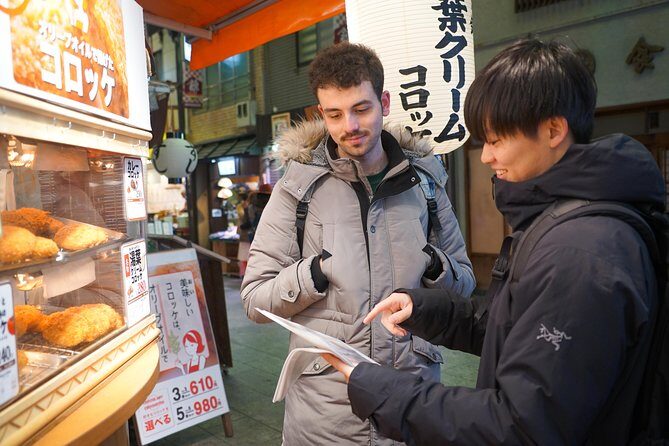
The tour then reaches Nishiki Tenmangu, where you’ll spend about 15 minutes at the shrine. This isn’t a detour that feels disconnected; it gives you a breather before the sensory overload of Nishiki Market.
A shrine stop also helps you understand the neighborhood rhythm. Kyoto isn’t one big tourist strip—it’s a patchwork of daily life, places of worship, and food culture side by side. Even if you’re mainly there for snacks, this moment helps the whole experience feel grounded.
If you prefer fast and food-only, you might see this part as optional. But in practice, those 15 minutes can save your energy for the market, where you’ll do the most standing and tasting.
Nishiki Market time: 2 hours 15 minutes of focused eating
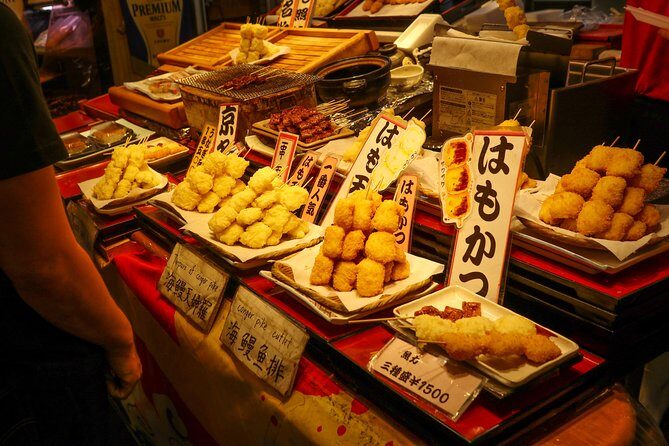
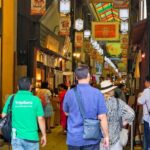
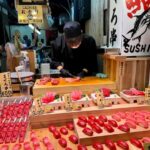
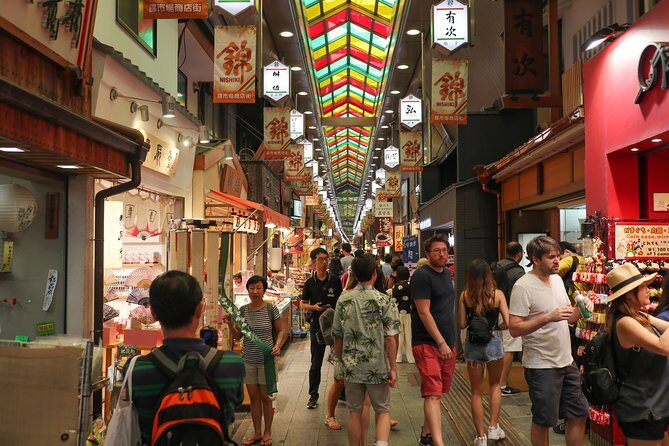
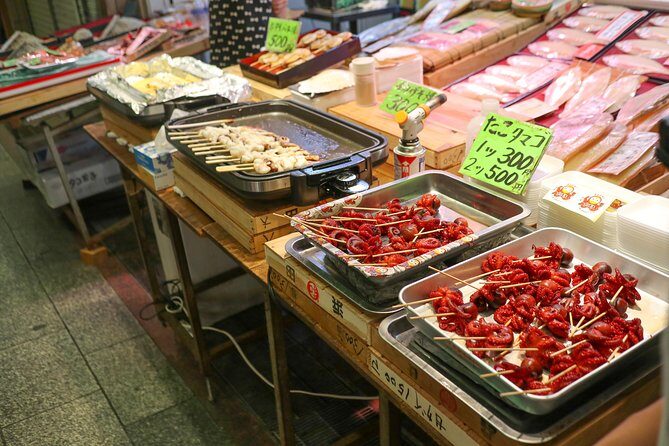
This is where the tour earns its keep. You’ll spend around 2 hours 15 minutes inside the Nishiki Market shopping area, guided from stall to stall so you get a variety of Japanese bites instead of only the obvious bestsellers.
The big advantage is how the tastings are handled. You’re set up with 7 included tastings, and the tour nudges you toward foods you might not pick on your own—especially if you’re unsure what something is or how to order it. Also, the tour format tells you to put your camera away and focus on the food, because photos are provided. That sounds small, but it changes how you experience the market: less fiddling, more eating.
What to expect while you’re in the market
You’ll likely go past different shop types—some more snacky, some more “stop and look” shops—and you’ll be pulled into tastings rather than wandering aimlessly. The crowd can be intense, so having a guide who keeps your group moving helps you avoid the dead-end loop of people staring at the same counter.
The main drawback: market shopping pressure
Nishiki Market is busy, and even with a group, you’ll feel the push of people around you. If you’re the type who likes to browse slowly and compare options for 20 minutes per stall, you may find this segment a little structured. Also, your included tastings may not feel identical in size—some included bites can be more sample-like than meal-like, depending on what’s available at each stop.
My advice: come hungry, but not starving. If you go with an empty stomach, it’s easier to overdo early tastings and then feel full before the best part of the market.
You can also read our reviews of more shopping tours in Kyoto
Brunch at the restaurant: included, but don’t expect it to replace the market
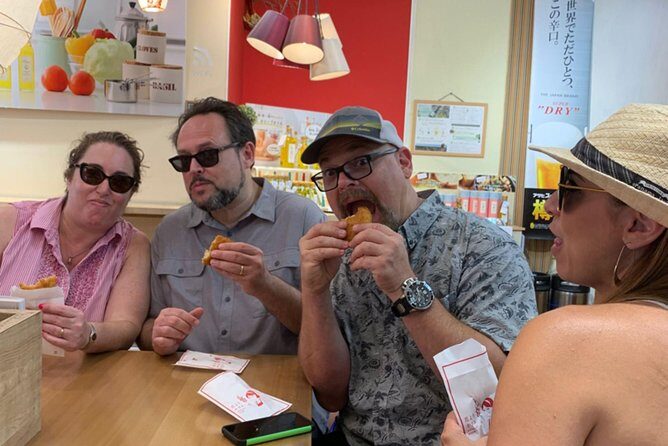
After the market time, you’ll get brunch at a restaurant. Your included meal is part of the overall package, and the tasting count is designed to wrap around this sit-down portion rather than replace it.
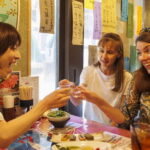
Here’s the key value: the brunch is a payoff. It gives you a chance to slow down, sit, and recover a bit from market walking. Multiple guide styles show up in the reviews—people highlight guides like Emi, Reiki, Hikaru, and Jimmy for pairing good storytelling with an easy, well-paced meal experience.
The main consideration is that brunch time can shift the balance away from eating in the market. If you’re hoping the whole tour turns into nonstop market bites, a restaurant meal may feel like a switch to a different vibe. And since additional food and drinks are available for purchase, you’ll still have the option to add more if the included portion isn’t enough for you.
Guides, stories, and the photo factor that changes the feel
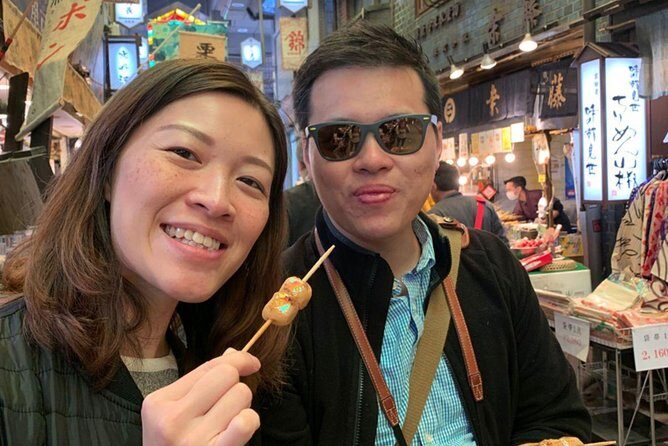
A tour like this lives or dies on the guide. The best ones don’t just point and translate—they help you understand what you’re eating and why it matters in Kyoto.
You’ll hear plenty of cultural context too, including stories tied to geisha culture, and religious background like Shinto and Buddhism. That context isn’t there to sound academic; it’s there to help you make sense of why certain places look the way they do and why certain foods show up in this part of town.
The photo support is also a smart touch. You’re encouraged to put your camera away, since photos will be provided during the tour. That helps if you’re traveling with a group and you don’t want to spend half your time trying to coordinate shots in crowded lanes.
What to know about food limits, allergies, and substitutions
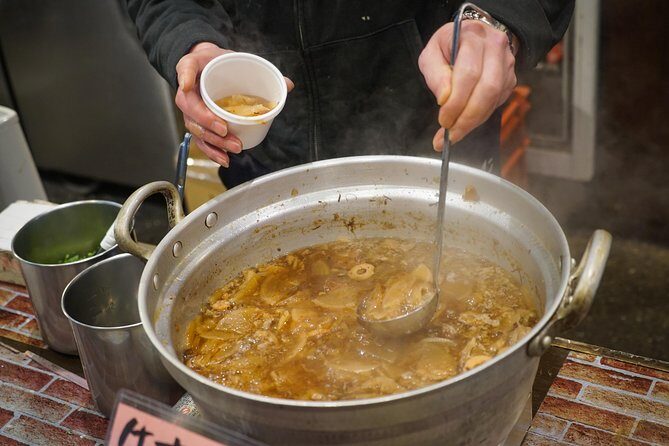
This tour is a food sampling experience, not a strict dietary program. The data is clear: gluten-free requests can’t be accommodated. If gluten is a non-negotiable issue for you, you’ll want a different food tour with a confirmed gluten-free process.
Allergy handling is another important detail. Allergy-free dining can’t be guaranteed because some foods are prepared in kitchens that don’t belong to the tour operator. The tour also notes that substitutions might not be possible at certain stops, though they’ll try to compensate at other places.
If you have any dietary requests or allergies, tell them at least one day before the tour. Don’t assume “a little adjustment” will work on the day—this is the kind of experience where the only safe plan is to communicate early and be flexible about what might be swapped.
Price and logistics: getting your money’s worth
At $68.31 per person for about 3 hours, you’re paying for more than food. You’re paying for:
- a guide to manage the route and crowd flow,
- 7 included tastings,
- brunch at a restaurant,
- and photos during the walk.
If you were doing this solo, you could probably build your own Nishiki snack plan. But the trade-off is time and confidence. The tour helps you avoid the biggest solo frustrations: not knowing what to order, getting stuck in the wrong lane, and accidentally spending money on items you don’t enjoy.
The added bonus is the itinerary gives you a “Kyoto morning arc,” not only a market stop. Shijo Bridge and Pontocho add context, and Nishiki Tenmangu gives you a brief reset.
Who should book this Nishiki Market brunch walk
This is a strong choice if you want:
- a guided way into Nishiki Market without feeling intimidated,
- a set food plan that guarantees you won’t leave hungry,
- and cultural context without going full lecture mode.
It also fits well if you like small-group pacing. The experience is capped at a maximum of 10, with the tour format emphasizing a very small group size, so you get more personal attention than you would on a bigger bus-style walking tour.
You might reconsider if:
- you need gluten-free food,
- you have serious allergies that require a fully controlled kitchen setup,
- you prefer eating only inside markets and dislike restaurant meal time,
- or you’ve already done multiple Kyoto food tours and want a brand-new market-only experience.
Should you book this Nishiki Market Brunch Walking Tour?
I’d book it if your goal is simple: eat your way through Nishiki Market with structure, get a real brunch payoff, and walk away with practical food knowledge you can use the rest of your Kyoto trip. The 7 tastings plus brunch, combined with a short sightseeing route and photo support, makes the time feel efficient.
I’d pass or switch plans if gluten-free is required or if you rely on strict allergy-free handling that can’t be guaranteed here. Also, if you’re the type who wants maximum market time and hates restaurant stops, know that part of the included value is the sit-down meal.
If you want a Kyoto morning that’s part food, part place, this tour is an easy “yes” for the right traveler.
FAQ
How long is the Nishiki Market brunch walking tour?
The tour lasts about 3 hours.
How many tastings are included, and is brunch part of the price?
You get 7 kinds of included tastings, plus brunch at a restaurant. Additional food and drinks are available for purchase.
How big is the group?
The experience is limited to a maximum of 10 travelers, with the small-group format emphasizing very personalized attention.
Can I request a gluten-free option?
No. The tour states it is unable to accommodate gluten-free requests.
Are allergies accommodated safely?
The tour can’t guarantee allergy-free dining or guarantee substitutions for dietary restrictions. You should inform the operator at least one day before the tour if you have dietary requests or allergies to mention.
What should I do about weather?
The tour requires good weather. If it’s canceled due to poor weather, you’ll be offered a different date or a full refund, and you should dress for Kyoto’s potential temperature extremes.