REVIEW · KYOTO
Private Pewter Sake Cup Experience with a Kyoto Artisan
Book on Viator →Operated by Saluk · Bookable on Viator
Your souvenir gets real weight. In Kyoto, pewter hammering turns into a hands-on sake cup you’ll actually use, not just display. I love the small-group privacy with artisan Kanako, and I love that you can personalize it with letters or numbers; the only drawback is the workshop sits outside central Kyoto, so you’ll want to plan extra transit time.
This is one of those crafts where the process is the point. You get to strike metal on an anvil, shape the rim for drinking comfort, and leave with a finished cup packaged as a proper keepsake. If you want a quieter slice of Japan, away from the nonstop downtown pace, this fits.
No need to bring anything—materials are provided, and you’ll get clear guidance. You’ll still want to set aside about 2.5 hours and be ready for focused handwork, not a quick photo stop.
Key Highlights
- Hand-hammered pewter patterns using different hammer types on an anvil
- Personalize the base with letters, numbers, initials, or a date
- A small private group led by artisan Kanako at Craft Gallery SALUK
- Comfort-focused finishing of the rim, with safety polishing done by the craftsman
- Use-it-afterward design: works for sake, whiskey, chilled green tea, and more
In This Review
- Why Pewter Still Wins for Sake Cups
- Getting to Craft Gallery SALUK (and Why It’s Worth Leaving the Center)
- The Workshop Flow: From Choosing a Hammer to Holding Your Cup
- Step 1: Pick Your Hammer and Make the First Strikes
- Step 2: Optional Stamping for Names and Dates
- Step 3: Shape the Rim So It Drinks Well
- What Makes Your Finished Cup Feel Special
- You Might Get to Sip From It Right Away
- Packaging and Keepsake Value: A Cup That Arrives Ready to Gift
- Price and Value: Is $144.96 Actually Fair?
- Who Should Book This Workshop (and Who Might Not)
- Tips to Get the Most From Your Session
- Should You Book the Pewter Sake Cup Experience?
- FAQ
- How long is the Private Pewter Sake Cup Experience?
- Do I need to bring anything with me?
- Can I personalize the sake cup?
- Is this a private tour?
- Where does the workshop start?
- What is the cancellation policy?
Why Pewter Still Wins for Sake Cups
Pewter has a reputation in Japan for a reason: it feels good in the hand and works well as a drinking vessel. Here, it’s not treated like a fragile souvenir. It’s made into a cup you’ll reach for, whether that’s for sake at home or a fancy pour of chilled green tea.
The most practical part is that the cup is built around comfort. It’s formed in a shape that fits your hand, then the rim gets adjusted and beveled so it’s pleasant to drink from. That’s a big difference from many “craft” experiences where you decorate something flat and call it done.
Kanako also shared that pewter can have a benefit related to water cleanliness—especially relevant for flowers and ikebana. Even if you don’t care about ikebana, it’s a nice reminder that traditional materials were chosen for everyday use, not just aesthetics.
Getting to Craft Gallery SALUK (and Why It’s Worth Leaving the Center)
Your workshop starts at Craft Gallery SALUK in Sakyo Ward, Kyoto: 35-2 Shizuichinonakachō, Sakyo Ward, Kyoto 601-1122. It’s near public transportation, and you’ll end back where you started.
This isn’t in the densest tourist core. One review described it as about an hour from Kyoto Station by scenic train, and the surrounding area felt peaceful, with a stream running nearby. That matters because it changes the mood of the whole workshop. You’re not squeezing craft time into a frantic schedule. You’re stepping into a calmer pocket of Kyoto where you can slow down and make something properly.
Practical tip: if you’re planning your day around buses, trains, and walking, give yourself a little buffer. Even though the time commitment is only about 2 hours 30 minutes, travel time is what can surprise you.
Service animals are allowed, and most people can participate. If you’ve never hammered metal before, you’re still in the right place.
You can also read our reviews of more food & drink experiences in Kyoto

The Workshop Flow: From Choosing a Hammer to Holding Your Cup
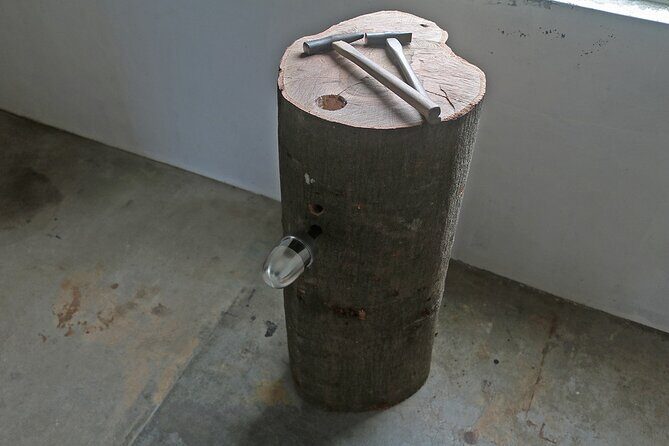
The experience runs like a guided craft class with real technique. You’re not just watching someone else work. Your hands do the key step, and the outcome is shaped by your choices.
Step 1: Pick Your Hammer and Make the First Strikes
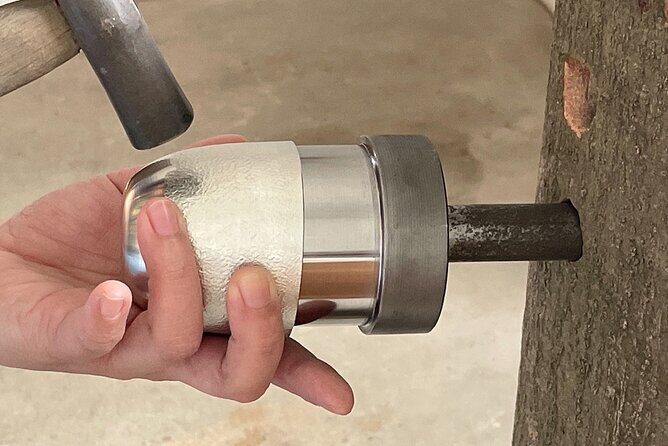
You’ll start by selecting your favorite hammer from several options. Then you place the pewter cup on the anvil and strike it while rotating the cup to build patterns. You can stick to one hammer or combine different types, which is how you get variety in texture—some hits create crisp marks, while others create softer effects.
This is one of the most satisfying parts because you can see the pattern forming right away. If you like control, you’ll feel in charge. If you like improvising, the metal will still reward you. Even when people go a little off-script, Kanako helps them land on a finished cup that looks intentional.
Step 2: Optional Stamping for Names and Dates
Once the main hammering work is shaped, you can personalize the cup. You can add letters, numbers, initials, or even a date on the base.
This matters for gift value. A handmade cup with your own name—or your travel date—reads differently than a generic souvenir. It’s personal without feeling cheesy, because the rest of the surface already looks one-of-a-kind.
Step 3: Shape the Rim So It Drinks Well
After the pattern work, you move into finishing. You’ll use a file to adjust the height and bevel the rim at an angle. That bevel is what turns a metal cup into something comfortable to sip from instead of just something to look at.
One thing to know: the final polishing is done by the craftsman using a rotary machine for safety. So you get the hands-on satisfaction of the main steps, and the polish is handled professionally so the rim feels right and safe.
Kanako’s instruction is a key reason this works. Multiple people specifically praised how clear the guidance was, including for beginners. If you’re worried about being clumsy with tools, that worry usually shrinks fast once you start.
You can also read our reviews of more private tours in Kyoto






What Makes Your Finished Cup Feel Special
You leave with a functional pewter cup that’s designed to match real drinking habits. The size is about 64 mm in diameter and 53 mm in height, holding about 90 ml normally (about 115 ml when filled to the rim).
Those numbers may look small, but that’s part of the charm. A sake cup is meant to be a thoughtful pour, not a giant tumbler. And because your rim is beveled for comfort, it’s not awkward to drink from.
Also, the workshop doesn’t treat the cup as a single-purpose object. It can be used for sake, whiskey, chilled green tea, and other drinks. That flexibility is why I think this souvenir feels more useful than many typical Kyoto mementos.
You Might Get to Sip From It Right Away
Some people described enjoying drinks out of their finished cups—sake tasting in some cases, and green tea for those who don’t drink alcohol. So even if you’re not planning to drink sake, you should still expect at least a simple tea moment using your cup.
That’s a small detail, but it makes the experience feel complete. You’re not just collecting a craft. You’re using it while it’s fresh and real.
Packaging and Keepsake Value: A Cup That Arrives Ready to Gift
The final result comes with thoughtful packaging. One review mentioned the cups being packed in wood boxes, which helps protect the cup and makes it gift-ready.
If you’re bringing something home for someone who cares about process and meaning, this is the kind of souvenir that lands well. Handmade pewter with your hammer marks is easy to explain, and it’s hard to fake.
Plus, you’re not just taking home decoration—you’re taking home something functional. That’s the line between a good photo souvenir and a souvenir you’ll keep using.
Price and Value: Is $144.96 Actually Fair?
At $144.96 per person, this isn’t a bargain craft. But when you break down what’s included, it starts to make sense.
You’re paying for:
- an artisan-led, hands-on class (not self-guided)
- access to a workshop setting that’s not described as open to the public in the usual way
- materials for a finished pewter cup
- personalization options (letters, numbers, initials, dates)
- the safety-first finishing process handled by the craftsman
Two and a half hours of direct instruction in a private setting is also part of the value equation. You’re not competing for attention with dozens of people. The class structure supports beginners, and Kanako’s patience is repeatedly praised.
If you’re the type of traveler who hates buying souvenirs you’ll forget in a drawer, this is a strong match. If you’re short on time and only want something quick, the cost and time might feel heavier.
Who Should Book This Workshop (and Who Might Not)
I think this suits people who:
- want a real handmade souvenir with personal marks
- enjoy crafts, even if you’re a beginner
- like learning from artisans in a calmer setting outside the loud parts of Kyoto
- want something functional, not just decorative
You might want to reconsider if:
- you dislike hands-on activities or metalworking entirely
- you only have a tight schedule and can’t spare transit time outside central areas
- you want a major sightseeing day instead of a craft-focused afternoon
The good news is the process is built so most visitors can participate. And Kanako’s approach sounds deliberately beginner-friendly, with clear instructions and help when mistakes happen.
Tips to Get the Most From Your Session
Here are a few smart moves based on how the workshop works and what people consistently praised:
- Treat the hammering as the main event. Your best patterns usually come from experimenting with hammer choice and how you rotate and strike.
- Plan a simple personalization plan. If you want letters or a date, decide before you start hammering so it’s less stressful later.
- Wear comfortable clothes for a workshop setting. You’ll be standing and using your hands, and you don’t want to think about clothing.
- Use the moment to ask questions. People noted that Kanako’s hospitality includes conversation about craft and Japanese culture, not just instructions.
And if you’re planning your Kyoto day: build in travel time. This workshop is worth the trip, but it isn’t “hop on a tram and you’re there in five minutes” either.
Should You Book the Pewter Sake Cup Experience?
If you want one Kyoto activity that feels like a real memory, not just a stop, book it. The combination of hand-hammered pewter, personalization at the base, and an artisan you can learn from is exactly the kind of experience that makes a trip feel personal.
I’d especially recommend it if you’re traveling with a partner or friend and want something you can share and laugh about. The workshop format lets you each create a cup that’s uniquely yours, even when you follow the same guidance.
If you’re only looking for city sights, you might feel the time away from downtown. But if your goal is authentic craft and a souvenir you’ll keep using, this is a very strong choice.
FAQ
How long is the Private Pewter Sake Cup Experience?
It runs for about 2 hours 30 minutes.
Do I need to bring anything with me?
No. Materials are provided, and you don’t need to bring anything.
Can I personalize the sake cup?
Yes. You can stamp letters, numbers, initials, or a date on the base.
Is this a private tour?
Yes. It’s private, so only your group participates.
Where does the workshop start?
The meeting point is Craft Gallery SALUK, 35-2 Shizuichinonakachō, Sakyo Ward, Kyoto, 601-1122, Japan.
What is the cancellation policy?
You can cancel for a full refund if you cancel at least 24 hours before the experience’s start time. If you cancel less than 24 hours before, the amount paid is not refunded.