REVIEW · KYOTO
Kyoto: Japanese Koto & Shamisen Concert and Koto Class
Book on GetYourGuide →Operated by Gen · Bookable on GetYourGuide
A small house, big sound. In Kyoto, this koto and shamisen concert puts you close to professional musicians in an old, cozy home setting, far from the usual temple-and-townhouse vibe. Programs run the gamut from classic pieces to contemporary material and even original compositions, and you may meet performers and hosts like Aoi and Kyoko-san who make the instruments easier to understand.
What I love most is the intimacy. After the music, you get time for a Q&A and photo-taking, not just a quick bow-and-go.
One more reason to book: at the end, you can try playing the koto with an instructor right there beside you. The only real drawback is logistics: the house is in a residential area, and finding it can be tricky when the laneways are dark, so give yourself extra time to arrive.
In This Review
- Key takeaways before you go
- Kyoto Koto and Shamisen in a Real Neighborhood Home
- The 1 Hour to 100 Minutes Flow: Intro, Concert, Q&A, Photos, and Koto Tryout
- First stop: a fast, friendly instrument introduction
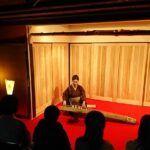
- Then: the live performance by professionals
- After the music: Q&A close up (and yes, photos)
- Final act: trying the koto yourself
- Why the Music-Score Explanation Makes the Concert Easier to Enjoy
- The Koto Tryout: Real Feedback for First-Timers
- What You’ll Really See and Hear: Classic, Contemporary, and Original Works
- Who This Kyoto Koto Class Fits Best
- Price and Value: Is $38 Worth It?
- How to Plan It With Kyoto Sightseeing (Arashiyama, Nijo, Kinkakuji, Nishiki)
- Practical Tips That Actually Matter Here
- Should You Book This Kyoto Koto and Shamisen Concert and Class?
- FAQ
- How long is the Kyoto Koto & Shamisen Concert and Koto Class?
- How much does it cost?
- Is this only a performance, or do I try playing the koto?
- What’s included in the experience?
- What languages are supported?
- Does the program include time to ask questions?
- Is it suitable for young children?
Key takeaways before you go
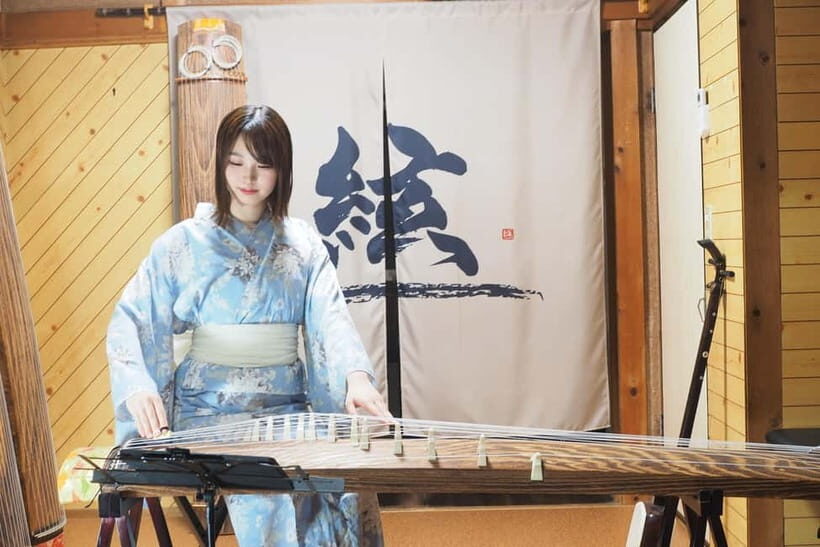
- A concert in an old Japanese house that feels like a private visit, not a big venue show
- A full program arc: intro to instruments, live performance, Q&A, photos, then a hands-on koto moment
- Beginner-friendly, even if you know zero music and want to learn how to listen
- Classical to contemporary, plus original works, with seasonal/perfomer variations
- English and Japanese support from an instructor/interpreter during the class and explanation
Kyoto Koto and Shamisen in a Real Neighborhood Home
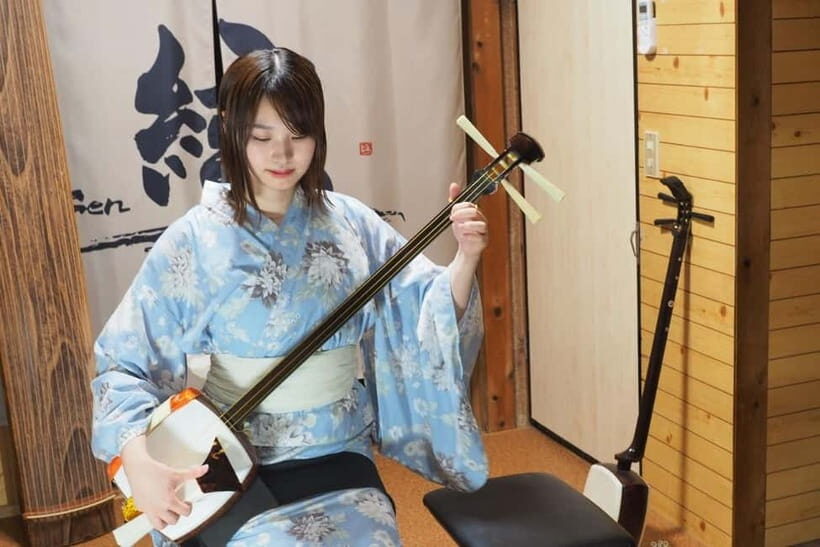
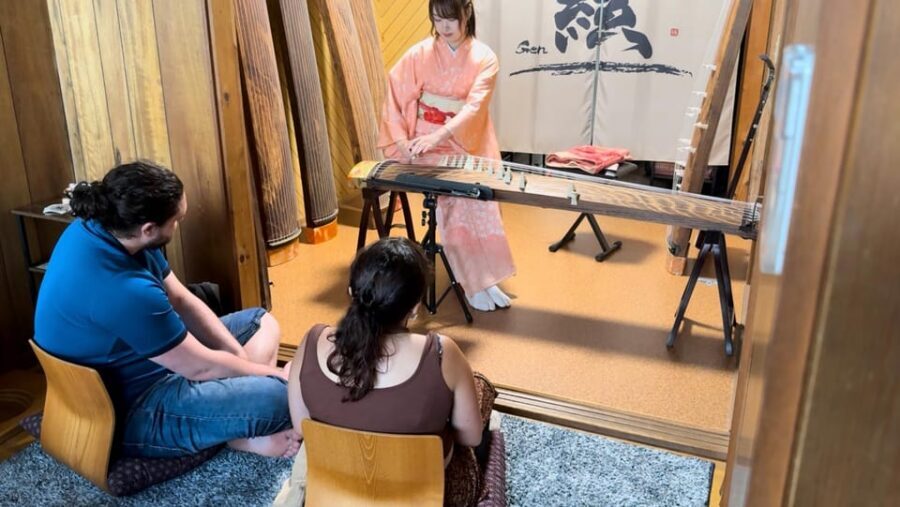
Most Kyoto music experiences happen in temples, theaters, or other formal settings. This one happens in a small, older Japanese house—the kind of place where the sounds feel close to your shoulders. That changes everything. You stop thinking of koto and shamisen as museum pieces and start hearing them as living instruments in a human room.
You’ll also get a different kind of comfort. The whole setup feels warm and homey, so it’s easier to ask questions without worrying you’ll slow down a schedule. That vibe matters because the instruments themselves can be unfamiliar at first—especially the sheet music basics and the way each instrument makes its tone.
As for finding the place, plan smart. Even if you arrive by taxi, you may still need to locate a tiny address in a residential area. One practical theme in the experience is that people often wait outside until close to start time, then go in shortly before the performance. So don’t treat the start time like a hard sprint.
A few more Kyoto tours and experiences worth a look
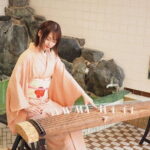
The 1 Hour to 100 Minutes Flow: Intro, Concert, Q&A, Photos, and Koto Tryout
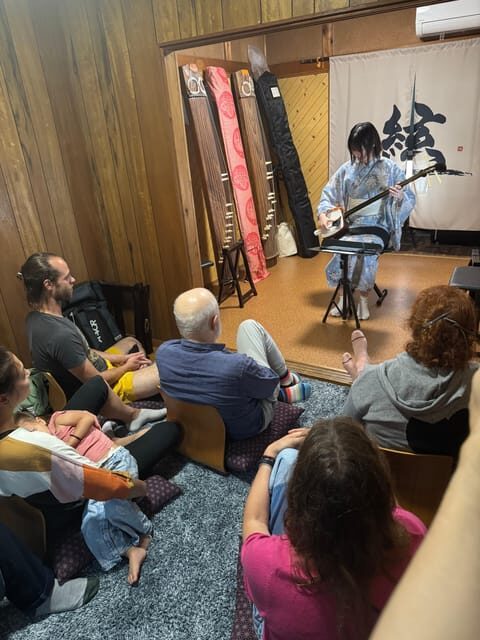
This experience runs about 1 hour to 100 minutes, and the timing depends on the session. The format is consistent, though the exact program can vary by season and performer.
First stop: a fast, friendly instrument introduction
You start with an explanation of the koto and shamisen and how you read their music score. This isn’t heavy theory. The point is to help you listen. Once someone maps what you’re hearing—patterns, textures, and how the instruments work—you pick up details you’d miss on a recording.
Even if you’re not musically trained, this intro sets you up for the rest of the evening. You’ll know what’s worth watching for when the performer changes techniques or shifts the feel of a piece.
Then: the live performance by professionals
Next comes the concert itself. The repertoire can include classical selections, contemporary pieces, and original works. That mix is valuable because it shows the instruments in two modes:
- traditional sound and structure
- modern expression and new compositions
If you think you only like one side—old-school or modern—this program gently breaks that rule. The contemporary pieces also help you understand that traditional music isn’t stuck in the past.
After the music: Q&A close up (and yes, photos)
When the performance ends, you don’t just leave. You get a close-up Q&A session with the performer and the host/interpreter, plus time for photos. That is the part that turns a concert into an experience.
Ask about technique, tuning, the music score, or even how a piece is shaped. Because the room is small, you can actually hear the explanations and build context right away.
A few more Kyoto tours and experiences worth a look




Final act: trying the koto yourself
At the end, you get to try playing the koto under professional guidance. You’ll play a simple piece, with help as needed. This isn’t about walking away as a performer—it’s about understanding the instrument’s feel and why players make the choices they do.
In fact, multiple participants have highlighted that even people with no musical background feel supported and encouraged. That’s exactly what you want from a hands-on cultural class: confidence, not intimidation.
Why the Music-Score Explanation Makes the Concert Easier to Enjoy
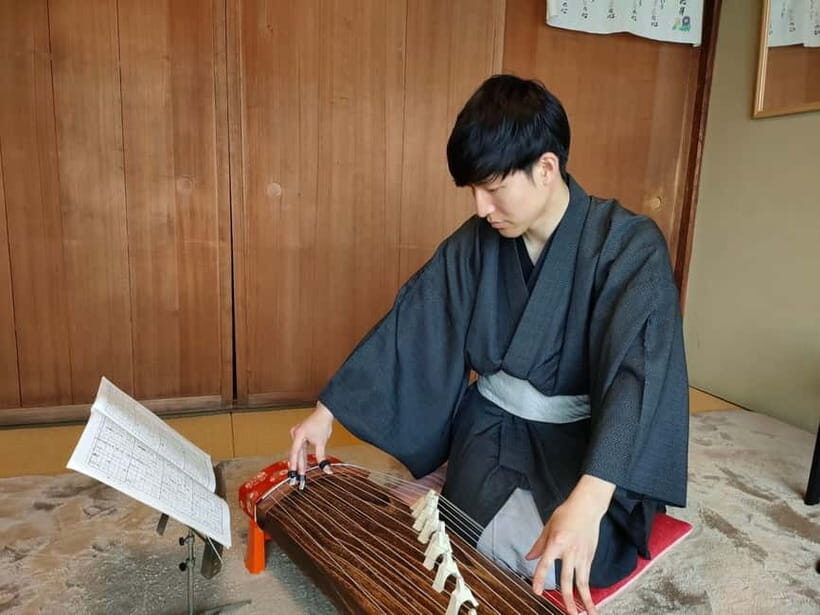
The koto and shamisen each create sound in a way that can feel abstract if you’ve never seen the notation system. This experience tackles that head-on during the introduction. You’ll learn what the sheet music is communicating, and what to listen for as the performer moves through a piece.
Why this matters: when you understand just a little, the performance becomes interactive. You stop passively watching hands and start noticing how timing, tone changes, and phrasing work together. That makes the whole concert more memorable, even if you can’t read the score perfectly.
Also, the explanation is part of the performance rhythm. The instructor/interpreter isn’t treating the room like a lecture hall. It’s more like translating what the musician is doing into everyday language.
The Koto Tryout: Real Feedback for First-Timers
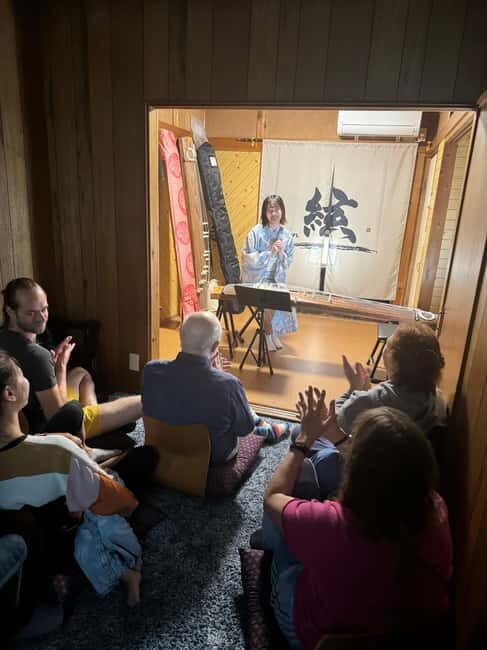
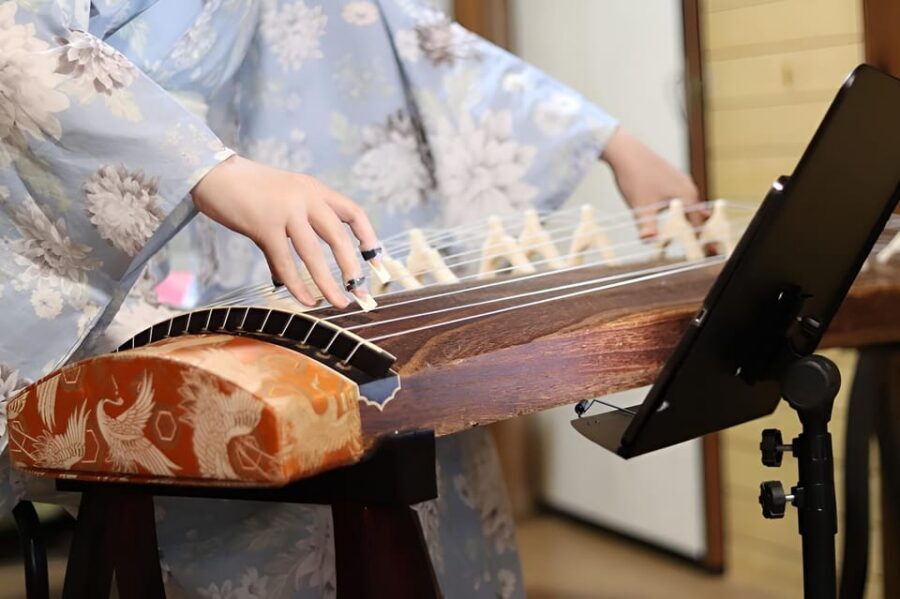
Trying an instrument in a group setting is usually awkward. Not here. The koto tryout is guided, and the instructor is close enough to correct small things quickly.
The big value isn’t the number of notes you play. It’s learning how to:
- hold the instrument in the way it’s meant to be played
- approach the technique for a simple piece
- connect what you just heard during the concert to what your fingers feel now
Many people have called out that the teaching style is patient and encouraging. That’s a strong sign the class is built for beginners, not just for serious musicians.
You’ll also get photos of your experience included. That’s useful because your brain will be busy during the class, and photos help you remember what you actually did and what the room looked like.
What You’ll Really See and Hear: Classic, Contemporary, and Original Works
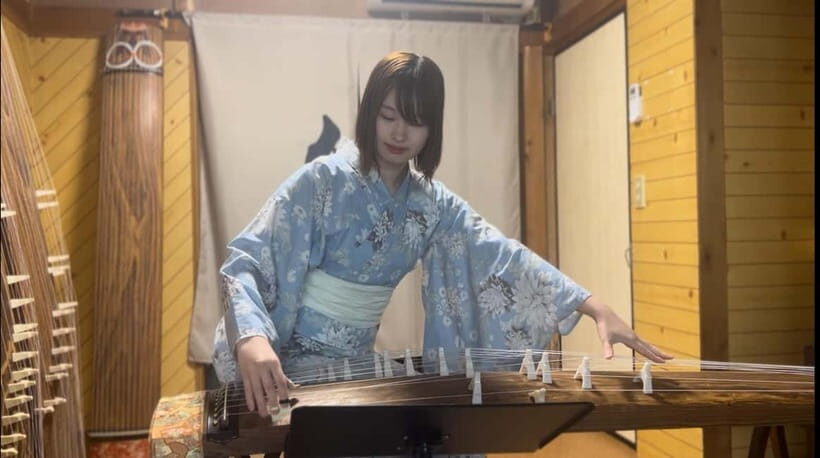
One of the strongest promises of this concert is range. You’ll hear traditional pieces, but the program also includes contemporary compositions and original works.
For me, that’s the difference between a nice cultural event and a memorable one. A narrow program can feel like background music. A mixed program teaches you something: these instruments can tell old stories and new ones, using the same core craft.
You’ll likely notice how the performer shifts timbre and energy between pieces. In a small room, those changes feel physical. The room doesn’t swallow sound the way a big theater does.
If you’re the type who collects or researches traditional instruments, this kind of performance can also scratch a deeper itch. You’re not just hearing songs—you’re getting explanations and technique context tied to what you hear live.
Who This Kyoto Koto Class Fits Best
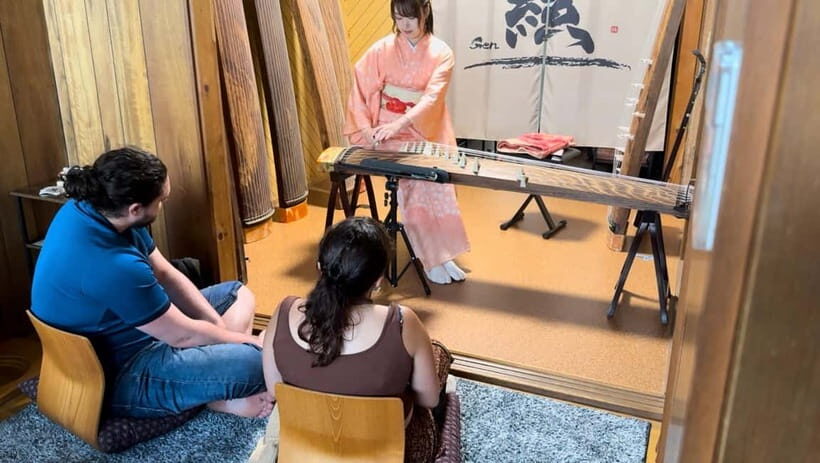
This is a good match for anyone who wants an intimate, hands-on cultural evening. It’s especially appealing if you:
- like traditional instruments but want clear explanations
- want a beginner-friendly experience with real guidance
- enjoy Q&A and learning the background behind what you hear
- want a family-friendly activity for older kids
It’s also a strong option if you’re traveling with a smaller group or want a more personal format. The experience is described as private or small groups available, with a private session for your group included.
One important note on ages: it is not suitable for children under 4 years (and it also lists restrictions for babies and younger kids). If you’re traveling with toddlers, look for an alternative.
Price and Value: Is $38 Worth It?
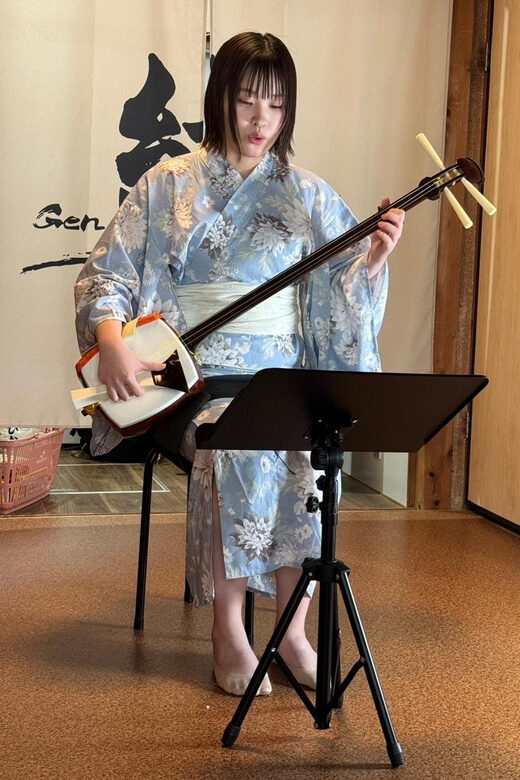
At $38 per person, you’re paying for more than a one-hour concert. The experience includes:
- all necessary materials and tools
- use of the koto
- skilled instructor guidance
- a brief history and cultural introduction
- a private session for your group
- photos of your experience
That combination is the value story. Many music tickets get you the concert only. Here, you also get explanation, Q&A, and a chance to play. If you’ve ever wished you could turn a show into a skill, this format is built for that.
There is also mention of a performance-only option in some cases, which can make it cheaper if you mainly want the concert and not the hands-on part. If that’s true for your booking, compare the options before you commit.
How to Plan It With Kyoto Sightseeing (Arashiyama, Nijo, Kinkakuji, Nishiki)
This is the practical part: you can slot it into a day that also hits major Kyoto stops. The good news is the provided timing makes it easy to pair with popular areas.
You can combine it with:
- Arashiyama: about 25 minutes by train & on foot
- Nijo Castle: about 20 minutes by train & on foot
- Kinkakuji (Golden Pavilion): about 20–25 minutes by bus & on foot
- Nishiki Market: about 25 minutes by train & on foot
Here’s how I’d plan it: book this toward late afternoon or early evening, then use it as your calmer cultural stop after sightseeing. You’ll want time to find the small house, and you don’t want to rush your arrival.
Also, because the meeting point can vary by option booked, make sure you double-check the exact location details tied to your reservation. Leaving a cushion of time for walking and looking around is smart.
Practical Tips That Actually Matter Here
A few things can make your night smoother.
First: arrive on time. Late arrivals may shorten the experience time. Since the flow includes intro, performance, Q&A, and the koto tryout, cutting time can mean missing a key segment.
Second: tell the organizers about physical limitations or allergies ahead of time. The experience notes this as something to share in advance, and it’s worth doing so the instructor can plan accordingly.
Third: expect English and Japanese support. If you don’t read Japanese, you can still follow the explanation and ask questions. The interpreter/instructor role is a major part of why beginners feel comfortable.
Finally: if you’re worried about finding a tiny place, you’re not alone. People have described waiting outside until shortly before the show and navigating a dark alley. So build time into your route.
Should You Book This Kyoto Koto and Shamisen Concert and Class?
If you want a Kyoto night that feels personal and hands-on, I think this is an easy yes. The biggest reasons are the same ones that keep showing up in the experience details: intimacy, a real Q&A, and the chance to play the koto with professional guidance.
Book it if you:
- want traditional Japanese music explained in plain language
- like learning by listening and then trying
- are traveling with family or a small group and want a shared memory
- want to go beyond just watching and take something practical with you
Skip it if you:
- are traveling with very young kids who fall under the age limits listed
- hate situations where you might need help finding a residential address
- only want a short, passive concert and don’t care about Q&A or hands-on playing
FAQ
How long is the Kyoto Koto & Shamisen Concert and Koto Class?
It lasts about 1 hour to 100 minutes. You can check available starting times to match your schedule.
How much does it cost?
The price is $38 per person.
Is this only a performance, or do I try playing the koto?
You get to try playing the koto at the end of the program under guidance. Some options may also offer a performance-only course.
What’s included in the experience?
Included items are all necessary materials and tools, use of the koto instrument, instructor guidance, a brief history and cultural introduction, a private session for your group, and photos of your experience.
What languages are supported?
The instructor offers English and Japanese.
Does the program include time to ask questions?
Yes. After the live performance, there is a close-up Q&A session with the professional musician.
Is it suitable for young children?
It lists not suitable for children under 4 years (including babies under 1 year and children under 2 and under 3 as well).