REVIEW · KYOTO
Kyoto: Ramen Cooking Class at a Ramen Factory with Souvenir
Book on GetYourGuide →Operated by Factory Alliance · Bookable on GetYourGuide
Ramen in 90 minutes, from scratch. What makes this Kyoto class fun is that you’re not just tasting ramen. You’re making it, step by step, including noodles from flour and mixing your own miso, salt, and soy sauce blend.
My second favorite part: the team runs it like a real workshop, with clear instruction and lots of energy (Sakura, Moeka, Fuku, Akemi, Maya, Kazuki, and others all show up in different classes). One thing to consider first: the entrance is in the basement, and the Google Maps route can be misleading, so you’ll want to read the meeting-point directions carefully.
In This Review
- Quick hits before you go
- Why the Ramen Factory class feels different in Kyoto
- Finding the basement near Demachiyanagi (and avoiding the common wrong turn)
- The 90-minute flow: what you do from start to finish
- Handmade noodles from flour: the part everyone talks about
- The sauce trio: build flavor with miso, salt, and soy
- Soup base, oils, toppings: the assembly that teaches balance
- Recipe email and souvenirs: the take-home value
- Price and value: is $127 for 90 minutes fair?
- Who this Kyoto ramen class suits best
- Should you book this Ramen Factory ramen cooking class?
- FAQ
- How long is the ramen cooking class?
- What’s included with the price?
- Do you get a recipe to cook ramen at home?
- Can the class accommodate dietary options?
- Where is the meeting point?
- Will there be photos or video taken during the class?
Quick hits before you go
- Handmade noodles from flour, not dry noodles poured into broth
- Three featured sauces (miso, salt, soy) for your custom flavor mix
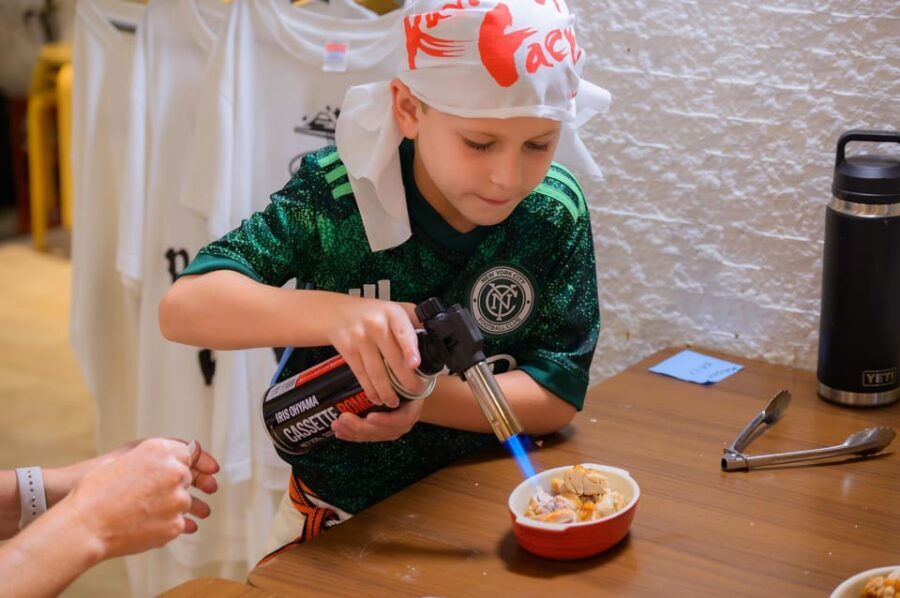
- Soup base and oils choice so your bowl tastes like you built it
- Recipe sent by email so you can try ramen at home after the trip
- Souvenir selection (choose from 4 types) to take the experience with you
- English or Japanese instruction, with staff helping with photos and videos
Why the Ramen Factory class feels different in Kyoto
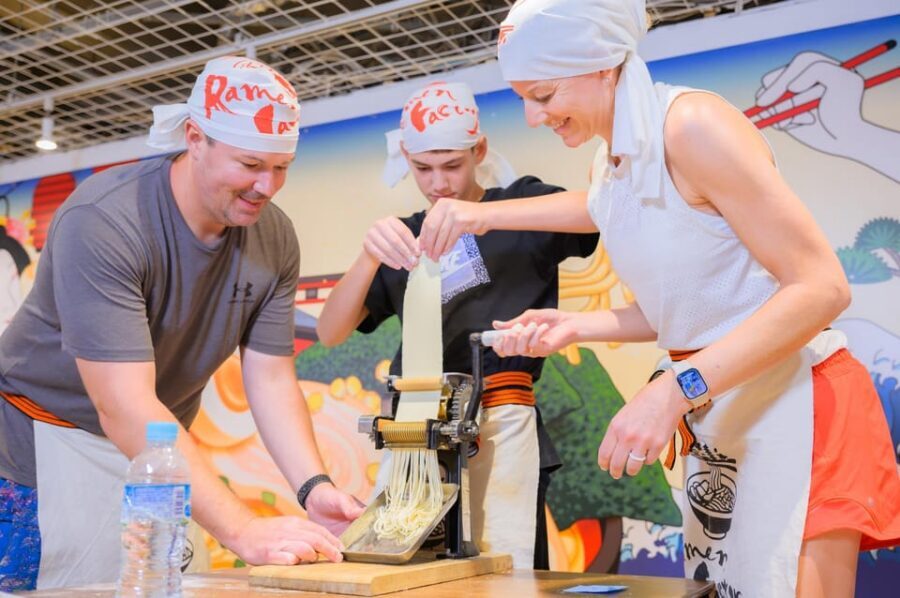
Kyoto is famous for food, but this is one of those rare activities where the meal becomes the souvenir. You’re learning ramen technique at a ramen school connected to Menbaka Fire Ramen, one of the popular names in Kyoto. That matters because the class isn’t built like a generic cooking demo. It’s built like a production line you get to operate for a short time.
The format is also ideal for a day with sightseeing. The session is 90 minutes, and once you’re seated, you’ll move through the same core ramen workflow: seasoning, noodle making, broth/soup-base decisions, sauce mixing, toppings, and then eating the bowl you assembled. You’re not stuck planning a whole day around a class, and you’re not stuck hunting for ingredients and cookware later.
Another reason it works: the instructors keep things practical and repeatable. The goal isn’t just wow-factor. It’s leaving with a method you can reproduce. That’s why so many people talk about trying again at home, with the recipe provided after.
You can also read our reviews of more cooking classes in Kyoto
Finding the basement near Demachiyanagi (and avoiding the common wrong turn)
Meet-up is about a five-minute walk from Demachiyanagi Station (Keihan-line). Once you arrive, the key detail is the entrance: you go to the basement floor. You take the staircase to the right of the supermarket, then go down.
A couple of reviews also point out the biggest real-world gotcha: the entrance may not match what you see in Google Maps. One person mentioned stairs behind the bus stop and a street-side entry that isn’t obvious from the map view. So treat this as a “slow down and follow the directions” situation, not a “speed-run the shortcut” situation.
If you arrive early, great. You’ll use the extra time to confirm you’ve got the right staircase and level before the class starts. That one small check saves stress later.
The 90-minute flow: what you do from start to finish
This is a chef-led course, and you’ll feel that immediately once you’re in your station. You typically start by dressing for the part—apron and headscarf—and getting a quick overview video that shows the process. Then you roll up your sleeves and get moving fast, but not chaotic.
Here’s the sequence you should expect:
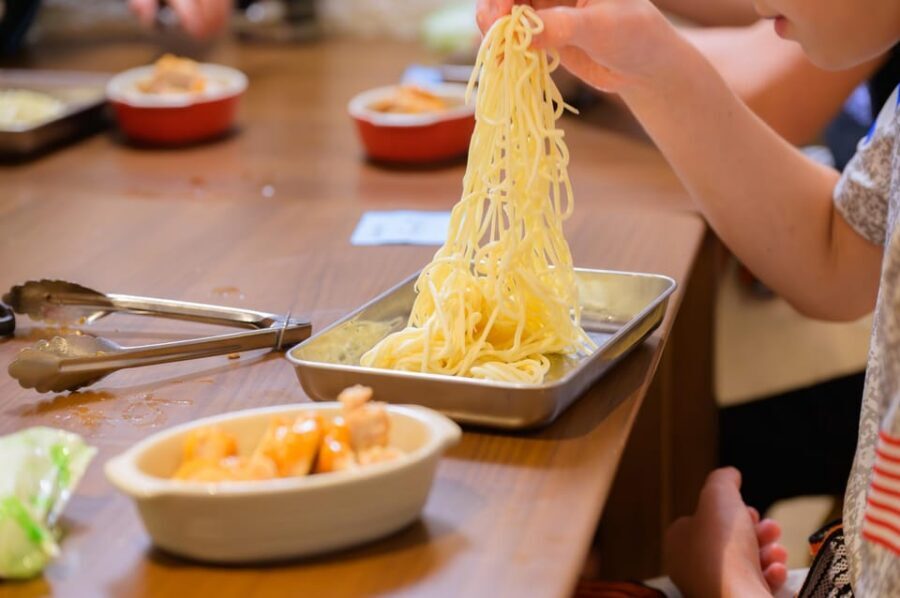
First, you season the chicken with ramen seasonings. The class uses a short-cut approach so it works within the time window, meaning you’re not waiting days for broth. Then you jump into the noodle workflow: mixing and working dough made from flour, with steps like draining and shaking as part of the texture process.
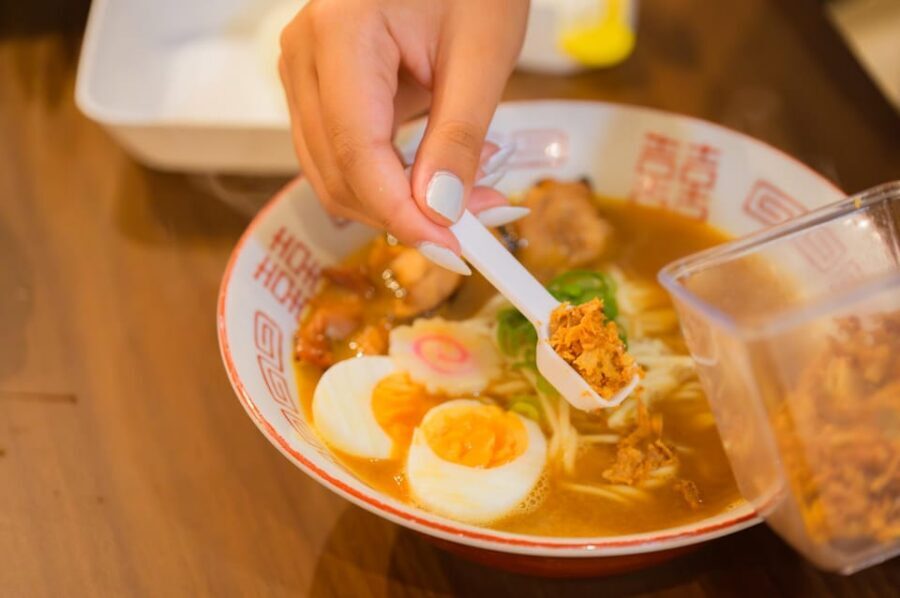
Next comes the fun decision-making: you’ll choose a soup base and oil combo and pick toppings, including egg and condiments. Your bowl becomes personal here, not generic. Finally, you assemble, display your ramen bowl, and eat it while you still feel proud it came from your own hands.
Throughout, the instructors teach in a way that works for different ages and skill levels. Many classes are described as beginner-friendly, with staff clearly walking you through each step and helping with photos/videos so you don’t feel like you have to choose between cooking and documenting.
Handmade noodles from flour: the part everyone talks about
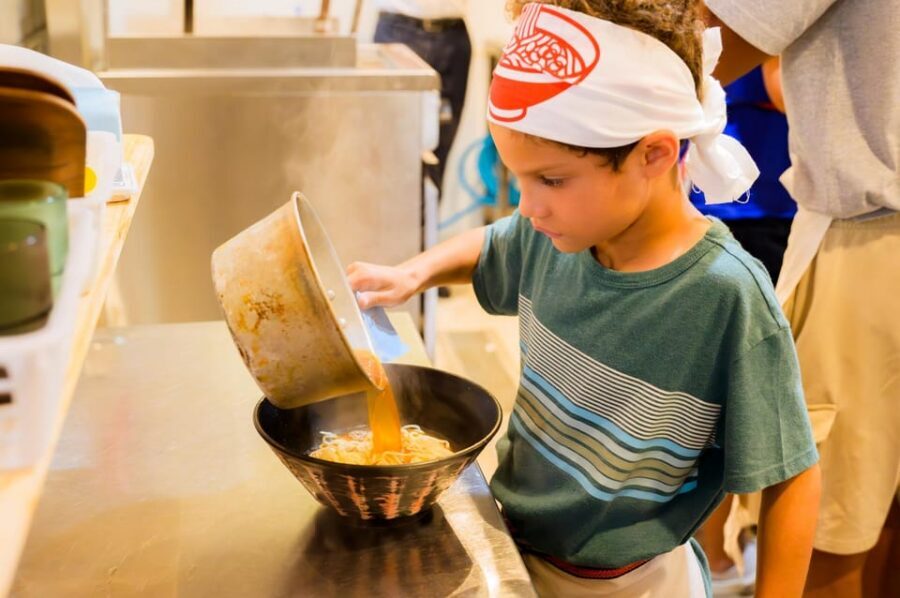
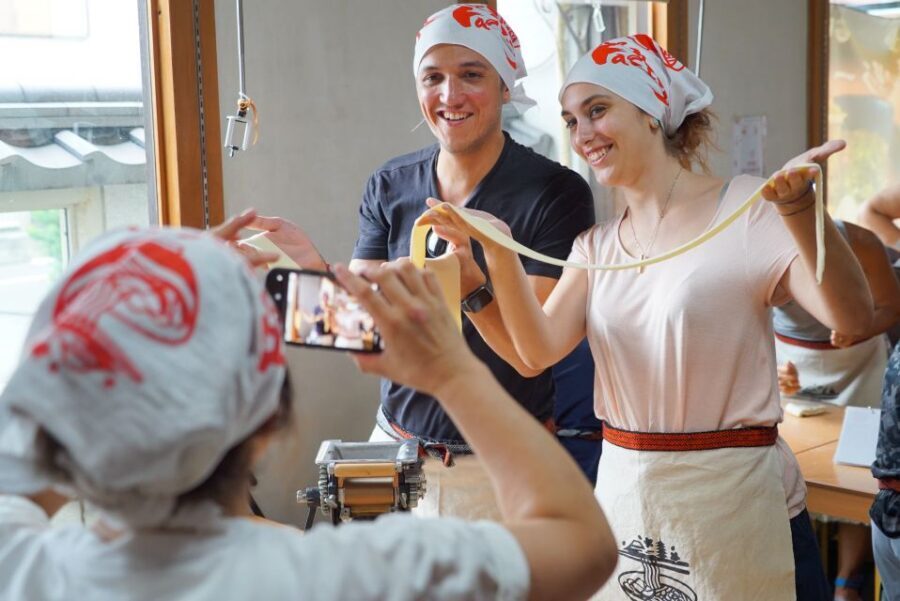
The headline skill is exactly that: making noodles completely from flour. This isn’t “follow the recipe and end up with something edible” cooking. It’s learning why ramen noodles have their character, with technique-driven steps.
One of the most specific details given is the folding method. You’ll fold the noodle dough over 100 times. That sounds like a workout, and it kind of is, but the reason it matters is texture. The repeated folding and handling helps develop structure so the noodles hold up and have the right bite.
You’ll also go through the core physical steps: mix to dough, knead and punch, drain, then shake as part of the noodle-making process. By the time you’re rolling and finishing, you’re not just watching noodles happen. You’re controlling the outcome.
What I like about this for you is that it gives ramen a human scale. After doing it once, the next time you order ramen, you’ll understand what you’re paying for. And if you cook at home later, you’ll know what steps in noodle-making actually create the difference.
Potential drawback in practice: this part is hands-on. If you’re the kind of person who dislikes sticky dough or doesn’t want to get messy, you might feel more friction than at a hands-off tasting. But the room is set up for it, and staff are there with guidance.
The sauce trio: build flavor with miso, salt, and soy
Where a lot of ramen experiences stop at taste, this one goes into control. You mix and taste three types of featured ramen sauces: miso, salt, and soy. Then you choose how your bowl will land flavor-wise.
That gives you a real understanding of why Japanese ramen can taste so different even when the noodles are similar. Miso often brings a warmer, deeper feel. Salt tends to be cleaner and lighter. Soy can add classic savory depth. Your bowl becomes an experiment you actively design, not a menu item you passively accept.
You’ll also get to flavor chicken with seasonings earlier in the process, so the noodle and the filling work together. The end result is that your final bowl tastes like it matches your own decisions, which is exactly why people rave about how good the ramen tastes after making it.
If you’re a picky eater, this customization is also your safety net. You can choose a combination that matches your preferences, rather than hoping the ramen shop’s “house favorite” fits your taste.
A few more Kyoto tours and experiences worth a look





Soup base, oils, toppings: the assembly that teaches balance
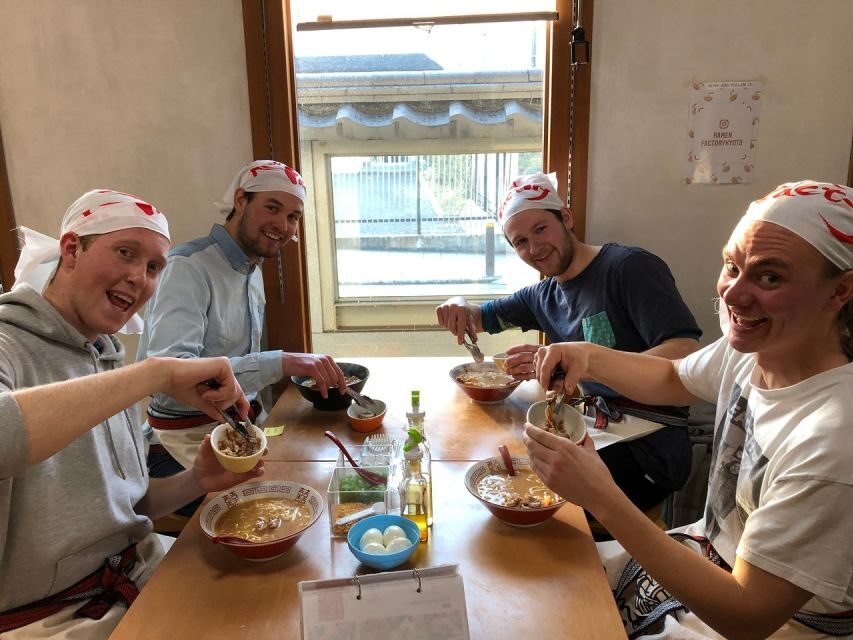
After noodles and sauce, the class shifts from making to building. You’ll choose your soup and sauce combination and complete your bowl with topping, egg, and condiments based on your taste.
This matters because ramen is a balance dish: broth richness, sauce intensity, noodle texture, and the saltiness/creaminess of toppings all need to work together. When you make the choices yourself, you learn that ramen isn’t one flavor. It’s layers.
The class also specifically mentions choosing the best soup base and oils to finish your special ramen. Even if you’re not a cooking expert, you can still notice how oils change the mouthfeel and aroma of broth. You’ll walk out with a clearer idea of what to look for when you shop for ingredients later.
Then comes the “show and eat” moment. You display your bowl, build it up with your chosen extras, and enjoy what you made while looking back at the process. That little pause is more important than it sounds. You get to connect the technique you did with the flavor you’re tasting.
Recipe email and souvenirs: the take-home value
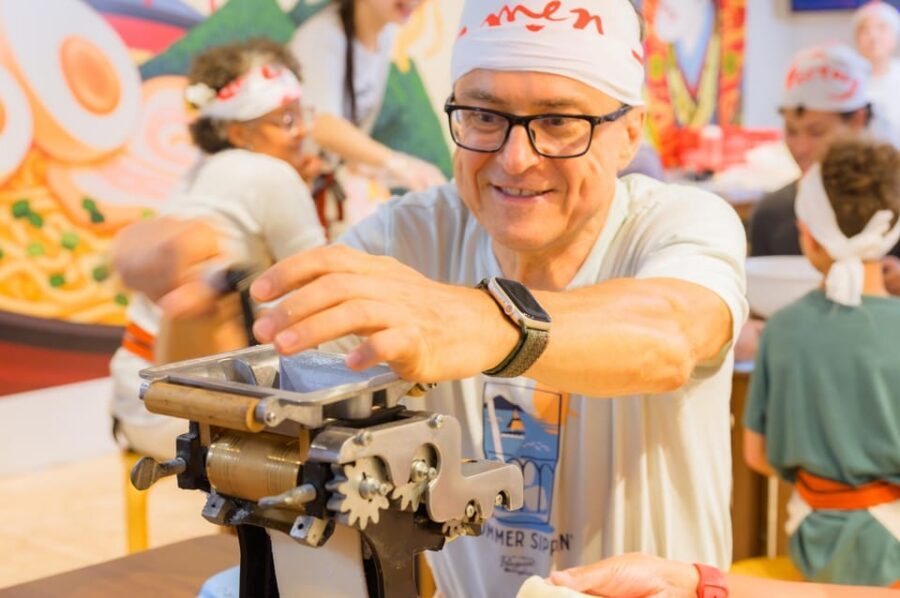
You don’t just leave full. You also leave with a plan to recreate the experience.
The highlights note that you get the full recipe sent via email to cook ramen at home. That’s a big value add for a cooking class. Cooking schools can give you a memory; this one gives you something you can use later, when the excitement has cooled down and you actually want to reproduce the results.
On top of that, there’s the souvenir part. You can choose from 4 different types of souvenirs, and you’ll also wear the apron/headscarf during the class. Some reviews mention extra photo moments, and a printed photo or certificate has shown up in certain sessions. Even when you ignore the extras, the souvenir selection makes the experience feel complete.
One more practical point: drinks are not included. So if you know you’ll want a beverage with your meal, plan to buy one nearby on your own.
Price and value: is $127 for 90 minutes fair?
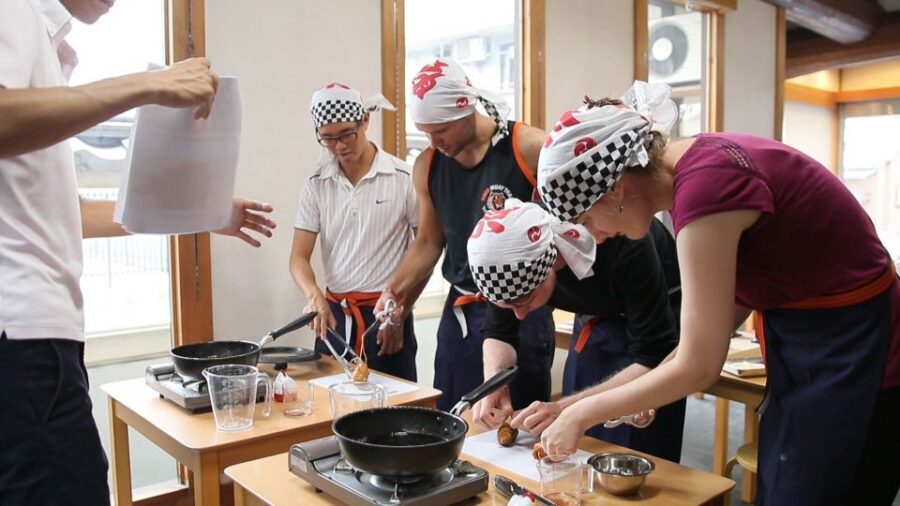
At $127 per person for a 90-minute class, this is not a budget activity. But it’s also not only about the final bowl of ramen. You’re paying for:
- A structured chef course that guides you through noodles from flour
- Ingredients and equipment handled by the school so you’re not doing prep work
- A chance to make and eat your own ramen, then take home a souvenir
- The recipe emailed to you so the class keeps paying off after you return home
- Instruction in English or Japanese
In other words, you’re buying technique, time, and ingredients in one package. For many people, that’s worth it because learning ramen at home from scratch is harder than it looks, especially the noodle part. Here, someone else does the setup and keeps you on track.
The cost also makes sense as a short Kyoto activity. If your itinerary already has plenty of walking and museums, this gives you a meal-focused payoff without taking over your whole day.
Who this Kyoto ramen class suits best
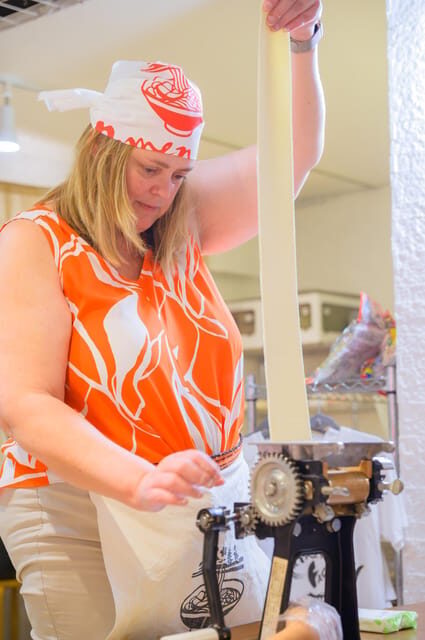
This works especially well if you want something hands-on and food-centered that doesn’t require advanced cooking skills. Reviews repeatedly highlight that the instruction is clear and the result is genuinely delicious, even for first-timers.
It’s also a good family option. Some visitors mention doing it with kids and say it’s fun for the whole group. The workflow is structured enough that kids can participate, while adults get the technique and customization.
Food preferences can be handled on request. One review notes accommodations for pescatarian needs with tofu and fish broth. Another mentions alternatives like chicken char siu (as a way to keep the class moving and reduce pork-based choices). So if you have dietary restrictions, contact the local supplier after booking to ask for the right option.
If you’re the kind of traveler who only wants to eat ramen quickly, a class might feel like effort. But if you enjoy cooking, curiosity, and the satisfaction of repeating something at home, this is exactly your lane.
Should you book this Ramen Factory ramen cooking class?
Yes, if your idea of a great Kyoto day is learning a craft and ending with a meal you built yourself. This is one of those activities that turns ramen from “something I ate” into “something I can make.” The noodle-from-flour focus is the standout, and the sauce customization plus soup-base choices make your bowl feel personal.
You might skip it if you’re on a tight budget, or if the idea of folding dough and assembling a bowl sounds like work you’d rather avoid. Also, because the meeting spot is a basement and the entrance can be tricky, be ready to spend a few minutes finding it.
If you go in with the mindset of learning one practical technique, you’ll get your money’s worth in the most satisfying way: you leave full, with a souvenir, and with a recipe you can actually use.
FAQ
How long is the ramen cooking class?
The class runs for 90 minutes.
What’s included with the price?
You get the 90-minute chef course and a selective souvenir. Drinks are not included.
Do you get a recipe to cook ramen at home?
Yes. You receive the full recipe by email after the class.
Can the class accommodate dietary options?
You can request a dietary option by contacting the local supplier after booking. The class indicates dietary accommodations are possible.
Where is the meeting point?
The location is about a five-minute walk from Demachiyanagi Station on the Keihan-line. The classroom is on the basement floor, reached by taking the staircase to the right of the supermarket and going down.
Will there be photos or video taken during the class?
The activity includes a media shooting notice, meaning you may be filmed or photographed as part of professional media recordings or promotions.