REVIEW · TOKYO
Japanese flower arranging (Ikebana) Experience/Workshop in Tokyo
Book on Viator →Operated by Ruby · Bookable on Viator
Tokyo can exhaust you fast. This small-group ikebana workshop gives you a calmer rhythm for 90 minutes, and it comes with personal coaching plus provided flowers and tools. The big plus for me is that the instructor encourages a more playful style, so you are not stuck copying rigid rules. One thing to consider: your price covers the materials used during class, but containers and kenzan are extra if you want to buy them.
I like that you also learn the why behind the art, not just the how. You’ll get a talk on ikebana history and why flowers mattered to people, then you’ll put that thinking into practice. It is also practical for a tight schedule in Tokyo since it runs about 1 hour 30 minutes and ends back where you start. Plus, pets and kids are welcome, and you’ll receive photos from the session to help you remember the shapes you made.
In This Review
- Key highlights you’ll actually feel during class
- First Stop: Kōjimachi, a real flower studio, and getting oriented fast
- What you’ll learn in 90 minutes of ikebana
- Tools, flowers, and why the workshop avoids the rigid “copy this” trap
- The mindful rhythm: turning off Tokyo noise with placement and asymmetry
- Photos shared after the workshop: a memory you can keep
- Price and what you’re really paying for at $100 per person
- Who should book this ikebana workshop (and who might skip it)
- Instructor style: what you can expect from Ruby and Aki
- Should you book this Tokyo ikebana workshop?
- FAQ
- How long is the Japanese flower arranging (Ikebana) workshop in Tokyo?
- How many people are in the group?
- Where is the meeting point?
- What is included in the price?
- Are the containers or kenzan included?
- Will I get photos from the workshop?
- Can kids, families, pets, or service animals join?
- What is the cancellation policy?
Key highlights you’ll actually feel during class
- Small-group instruction that keeps you from guessing what to do next
- Mindful, low-stress pace that helps you switch off city noise
- History + technique together, so the art has meaning, not just decoration
- Provided tools and flowers, which removes the hassle of figuring out supplies
- Photo sharing after the workshop, useful for remembering what you created
First Stop: Kōjimachi, a real flower studio, and getting oriented fast
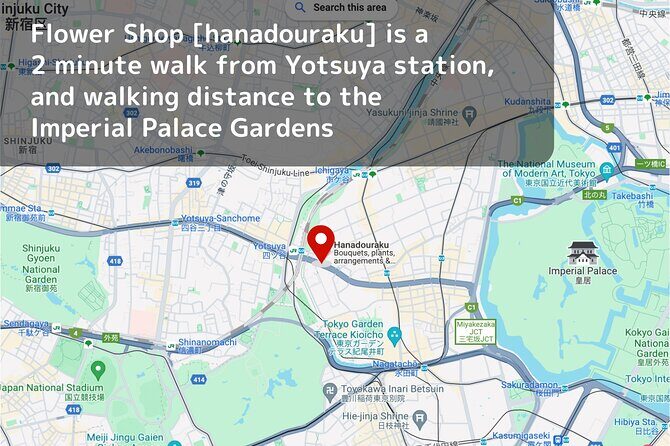
The meeting point is in Chiyoda City, Kōjimachi area, at Japan, 102-0083 Tokyo, Chiyoda City, Kōjimachi, 6-chōme46. The class ends back at that same meeting point, which matters in Tokyo. You do not have to plan a second commute afterward; you can hop back into the rest of your day.
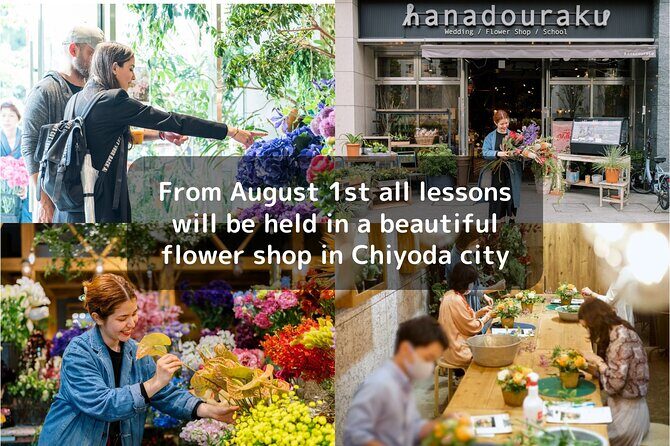
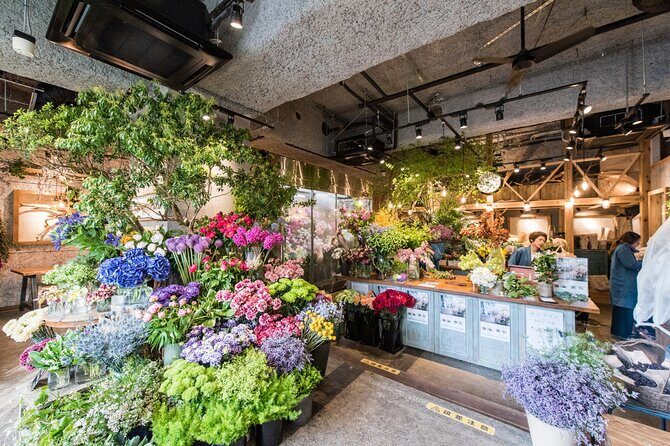
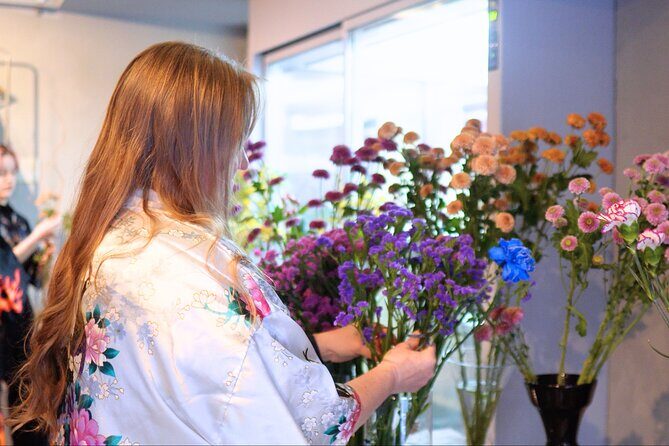
This workshop happens in a florist studio called Hanadouraku, and that setting changes the vibe. You are not learning ikebana in a generic classroom. You are surrounded by the real materials and the real atmosphere of a working flower shop. That makes the experience feel more grounded, and it is easier to focus when you are not distracted by too many unrelated details.
Also, the workshop is near public transportation. So if you are bouncing between neighborhoods, this is one of those “slot it in without stress” activities. You will use a mobile ticket, and you get confirmation at booking.
A few more Tokyo tours and experiences worth a look



What you’ll learn in 90 minutes of ikebana
The lesson is hands-on from start to finish. Expect about 1 hour 30 minutes, plus time to get settled and receive guidance.
You start with an introduction that covers ikebana history and why flowers have been important to humans across time. That part matters more than it sounds. Even if you have zero background, you get a lens for what you are doing with each stem. One of the instructor-led themes you’ll hear is that ikebana is not just decoration. It is a way to express something human through living materials.
Then you move into the practical part. The workshop is designed to feel friendly rather than intimidating. In other words, it is not about strict, ultra-precise rules you have to fear. You will use the same tools and basic approach, but you are invited to work more freely and playfully.
From the teaching style people highlighted in past sessions, here’s what that looks like in practice:
- The instructor guides you step-by-step without making it feel like a test.
- They talk about different types of flowers and what they bring to a design.
- They encourage you to notice each bloom’s character as you place it.
And yes, some people are surprised by how much focus it takes. One review note I liked in particular: the class can look simple, but it takes real attention once you start placing stems on the kenzan. If you are the type who enjoys hands-on concentration, you will probably love that aspect.
Tools, flowers, and why the workshop avoids the rigid “copy this” trap
All tools and necessary equipment are provided, along with the flowers used in your arrangement. That is a practical win. In Tokyo, it is easy to assume you’ll need to track down supplies on your own. Here, you do not. You show up, you create.
The workshop also gives you a sense of what matters in ikebana without making you memorize a rulebook on day one. You’ll learn through making: place stems, adjust angles, and refine shape with the instructor’s feedback.
A detail I think you’ll appreciate: the experience is not just about technical correctness. It also leans into expression. That matches the way people described their instructors, especially when the guidance focused on creativity and connection to each bloom. If you have ever felt frustrated by classes where you have to produce a near-perfect end result, this style is a relief.
You should also know that containers used in the arrangement and the kenzan are not included in the price. Both are available for purchase. That means you can treat the class like a try-it-first session, then decide whether you want your own setup afterward.
The mindful rhythm: turning off Tokyo noise with placement and asymmetry
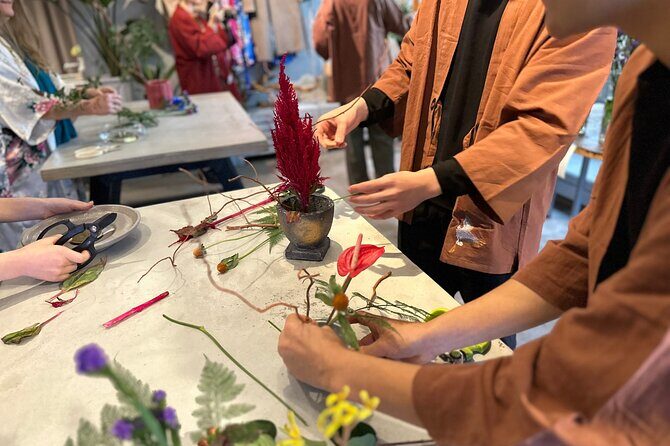
This workshop is built around winding down. The pitch is simple: use a mindful activity to get away from the chaos of the city. But what makes it real is what you do with your hands.
In ikebana, small changes create big visual shifts. A few degrees of angle can change the whole mood. That forces you into a quiet kind of attention. You stop thinking about your next station on the subway map and start thinking about how the stems relate to each other.
People also mention practicing asymmetry, including arranging on a kenzan. That part is especially satisfying if you like designs that feel natural rather than overly symmetrical. Asymmetry helps your arrangement look alive, like it is reacting to space instead of sitting there like a photo prop.
And if you are traveling with kids, this experience can work because it is not only about rigid rules. Kids and families are welcome, and the class framing encourages self expression. That said, it still sounds like you will learn real technique. So adults get a proper lesson too, not just a casual craft.
Photos shared after the workshop: a memory you can keep
You get photos taken during the event. Sharing of those photos is included. In practical terms, this is useful because:
- You get a reminder of what you made, even if your arrangement stayed in the studio setup.
- You have pictures of your group in action, not only the final object.
If you have ever tried to take artsy workshop photos and spent half the time fighting your camera while your hands were busy, you will be happy with this. Someone else handles the documentation.
And based on the stories people shared from earlier sessions, those photos matter because the instructor experience feels personal. The coaching is tailored, and the class tone is welcoming. Photos help you capture that feel when you are later telling friends what you did in Tokyo.



Price and what you’re really paying for at $100 per person
At $100 per person for about 1 hour 30 minutes, the price is not just paying for a bouquet and a table. You’re paying for:
- An instructor-led lesson (including history and technique)
- Provided ikebana tools
- Provided flowers used in your arrangement
- Photos shared from the session
- A small-group format (the maximum is 15 travelers)
Value-wise, that pricing can make sense if you compare it to other Tokyo experiences that either charge heavily for guide time or require you to bring your own materials. Here, you arrive with nothing but yourself and your attention.
The catch is the extras. Containers used in the arrangement and kenzan are not included in the price, but they are available for purchase. If you know you want a finished setup to take home as a lasting piece, plan for that add-on. People who bought vases and successfully transported them noted that the purchase helped them keep enjoying their arrangement after class.
So think of it like this: the $100 buys the lesson, the materials you use during class, and the memory photos. Any collector-style finishing piece is optional.
Who should book this ikebana workshop (and who might skip it)
This is a great fit if you want something:
- Creative but not stressful
- Short enough to fit into a tight Tokyo plan
- Mindful, with instructor guidance
- Hands-on, with provided flowers and tools
- Culturally specific, but explained in an approachable way
It is also smart for people who want a break from sightseeing momentum. If your Tokyo days involve temples, neighborhoods, and long walks, your brain will probably welcome an experience where you slow down and focus on form.
It may be less ideal if you are looking for a big guided tour of Tokyo sights or a fast “see everything” activity. This is a focused art workshop, not a city walkthrough.
And one more thing: while the workshop is designed to be accessible, ikebana still asks for patience. It can feel harder than it looks once you begin arranging stems on the kenzan. If you dislike concentrating on one task for a stretch of time, you may find it slower than you expected.
Instructor style: what you can expect from Ruby and Aki
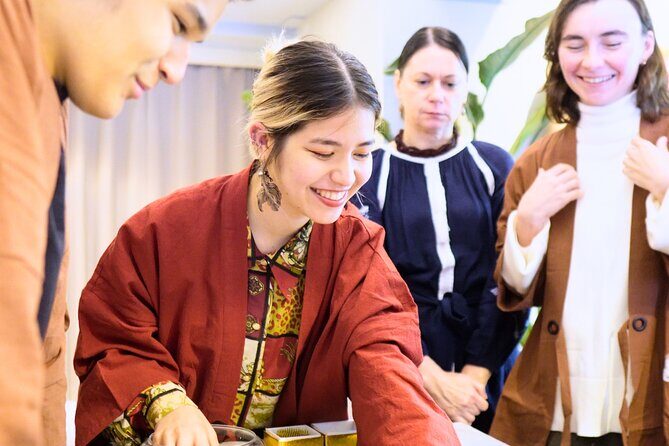
The experience is hosted by Ruby, and past sessions also mention Aki as an instructor. In the feedback, both instructors were described as kind, attentive, and effective in English. People highlighted how the instructors explain history alongside technique, and how they give helpful, practical coaching while you’re working.
One repeated theme is encouragement. Instead of focusing only on correctness, instructors push you to connect with the bloom itself. That advice shows up as placement guidance: angle choices, stem relationships, and how to refine what you’ve already started.
That teaching style is a big part of why people rate this so highly. In a craft workshop, you can have good flowers and still feel confused. Here, the guidance seems to prevent that.
Should you book this Tokyo ikebana workshop?
If you want a meaningful creative break in Tokyo, I would book it. The combination is strong: small-group instruction, provided materials, and a mindful pace that feels doable even with limited time. The $100 price also feels grounded because it covers tools, flowers, and the photos, not just the instructor’s time.
I’d only hesitate if you know you want a fully finished take-home setup with specific vases or a kenzan and you do not plan to spend extra. Since containers and the kenzan are available for purchase but not included, budget a little for that if it matters to you.
If you like hands-on learning, you enjoy quiet focus, and you want a Tokyo activity that feels distinctly Japanese without being intimidating, this is a solid call.
FAQ
How long is the Japanese flower arranging (Ikebana) workshop in Tokyo?
It lasts about 1 hour 30 minutes.
How many people are in the group?
The workshop has a maximum of 15 travelers.
Where is the meeting point?
The start is at Japan, 102-0083 Tokyo, Chiyoda City, Kōjimachi, 6-chōme46. The activity ends back at the meeting point.
What is included in the price?
The price includes use of ikebana tools, flowers used in the arrangement, and sharing of photos taken during the event.
Are the containers or kenzan included?
Containers used in the arrangement and the kenzan are not included in the price, but they are available for purchase.
Will I get photos from the workshop?
Yes. Photos taken during the event are shared with you.
Can kids, families, pets, or service animals join?
Kids and families are welcome. Pets are welcome too. Service animals are allowed.
What is the cancellation policy?
You can cancel for a full refund if you cancel up to 24 hours in advance of the experience’s start time. If you cancel less than 24 hours before, you do not get a refund.