REVIEW · TOKYO
Tokyo: Mt. Fuji Tour, Hakone Ropeway, Owakudani, Lake Ashi
Book on GetYourGuide →Operated by TAIHOU CO,LTD · Bookable on GetYourGuide
One red gate, and you’re already in Japan. I love the Lake Ashi Torii views and the geothermal stop at Owakudani for the black eggs. The one catch: Mt. Fuji visibility depends on the weather, so you need a backup mindset.
This is a tight, packed day trip built for first-time Fuji fans who don’t want to figure out transfers all day. You’ll ride an air-conditioned bus out of Tokyo, hit the major Hakone sights, then finish with Fuji Five Lakes scenery and Oshino Hakkai ponds.
Because it’s a shared tour with a live multilingual guide (English, Japanese, Chinese, and Korean), the rhythm is efficient. That also means time is real—if you’re slow at photo stops, the schedule won’t wait.
In This Review
- Key Moments I’d Prioritize
- Why This Hakone–Mt. Fuji Route Feels Worth It
- From Tokyo to Hakone: How to Survive the 2 Hours
- Heiwa no Torii and Hakone Shrine: The Lake Ashi Photo That Starts the Day
- Pirate Ship on Lake Ashi (Optional): Pay Extra Only If Your Schedule Works
- Hakone Ropeway: The Included Panoramas (And the Weather Reality)
- Owakudani Volcanic Valley: Black Eggs and Real Geothermal Power
- Lake Yamanaka Swan Shore and Oshino Hakkai Ponds
- Food, Timing, and What to Pack for a 10-Hour Day
- Price and Value: Is $54 a Smart Deal?
- Who This Tour Suits—and Who Might Want Another Plan
- Should You Book This Mt. Fuji and Hakone Tour?
- FAQ
- Is the pirate ship cruise included?
- Does the tour include the Hakone Ropeway?
- Is lunch included in the tour price?
- What if the ropeway closes due to weather or maintenance?
- How long is the tour?
- Where are pickup and drop-off locations?
Key Moments I’d Prioritize
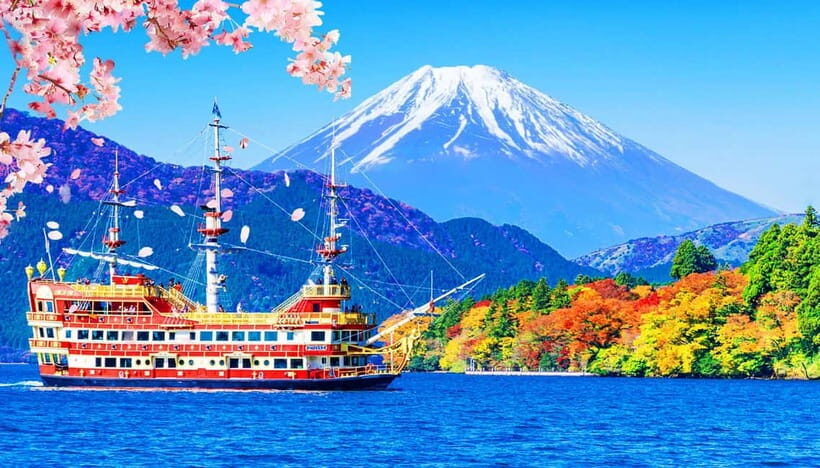
- Lake Ashi Heiwa no Torii photos with Mt. Fuji framing the scene (when skies cooperate)
- Hakone Ropeway for big panorama angles you can’t get by foot
- Owakudani volcanic valley and the famous black eggs boiled in hot spring water
- Lake Yamanaka Swan Lake Shore for Mt. Fuji-style photos without the long hike
- Oshino Hakkai ponds fed by Mt. Fuji snowmelt—eight clear, scenic basins to slow down
Why This Hakone–Mt. Fuji Route Feels Worth It
This tour works because it chains together three kinds of Fuji magic: sacred views, active volcano scenery, and calm water reflections. Most one-day Fuji plans either over-focus on one area or leave you stuck with transit time. Here, the stops are spaced so you get variety without the stress of planning.
I also like that the most scenic transport is included: the Hakone Ropeway fare is part of the price. That matters in Japan, where a lot of “cheap” tours suddenly get expensive once you start paying for each ride.
The guides can make or break a day like this. On this route, people commonly mention names like Captain Jack, Kousei, Tom, Sato, Andrew, and Leonard for clear instructions and keeping everyone moving on time. You won’t just get place names—you’ll get what to look for at each stop and how to stay on schedule.
You can also read our reviews of more tours and experiences in Tokyo.



From Tokyo to Hakone: How to Survive the 2 Hours
You’ll start with pickup at one of two points in Tokyo: Tokyo Station or Shinjuku, then board a comfortable, air-conditioned bus heading to Hakone. The ride is about 2 hours, so the best move is to use the time strategically.
Bring what you’ll need before you roll out: water, snacks, and a camera you can grab fast. Food is not allowed on the vehicle, so don’t count on eating during the bus ride. If you’re someone who always gets hungry, eat something beforehand and keep a snack ready for later.
One more practical note: traffic and weather can shift timing. The tour runs about 10 hours total from morning meeting to evening drop-off, but the exact flow can move when queues are heavy or conditions change.
Heiwa no Torii and Hakone Shrine: The Lake Ashi Photo That Starts the Day
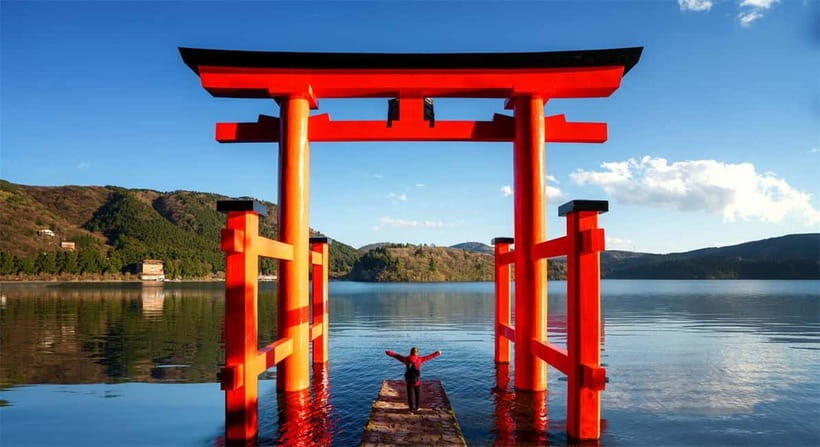
Hakone’s big visual moment hits early at Heiwa no Torii—a red torii gate standing over Lake Ashi. This is one of those scenes where the whole frame depends on weather and light. If Mt. Fuji is visible, the day instantly feels like a win.
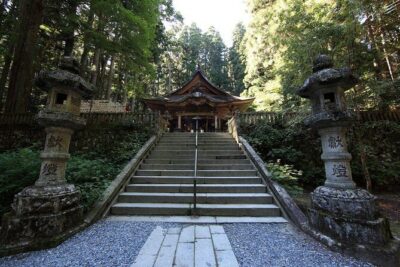
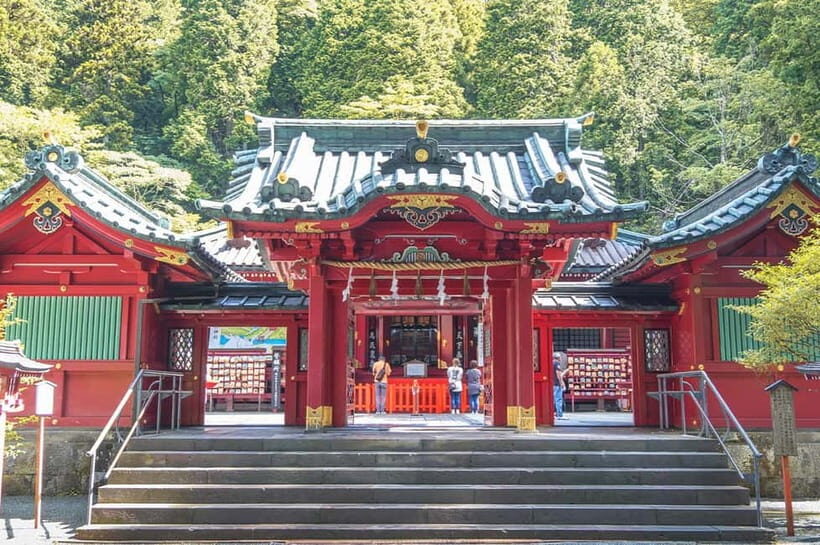
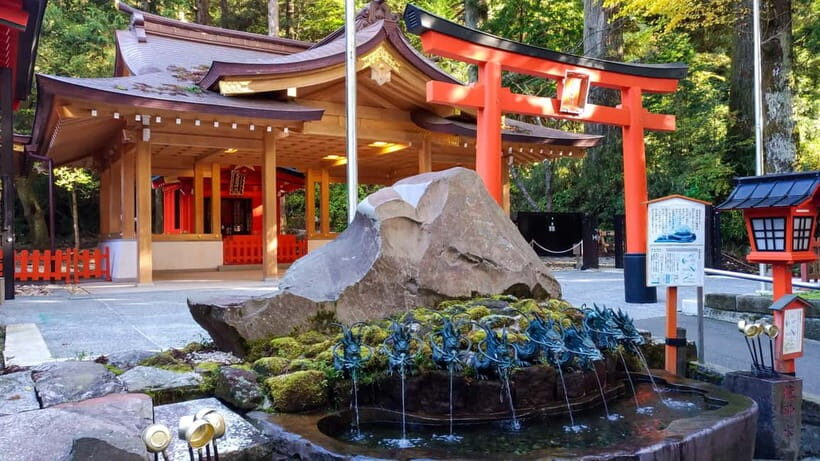
Right after that, you’ll visit the Hakone Shrine (founded in 757). It’s not just a quick stop-and-snap. The area has a calmer, more grounded feeling than a typical roadside viewpoint, and it helps you understand why people come here beyond the photos.
Important seasonal heads-up: the Torii gate is closed from Dec. 28 to Feb. 10, 2026. If your trip lands in that window, you’ll still get the Hakone setting, but your iconic gate shots may be different.
Time-wise, you’ll have short, focused windows at these spots. That’s good for first-timers. Just don’t treat it like a leisurely stroll—set your photo plan early.
Pirate Ship on Lake Ashi (Optional): Pay Extra Only If Your Schedule Works
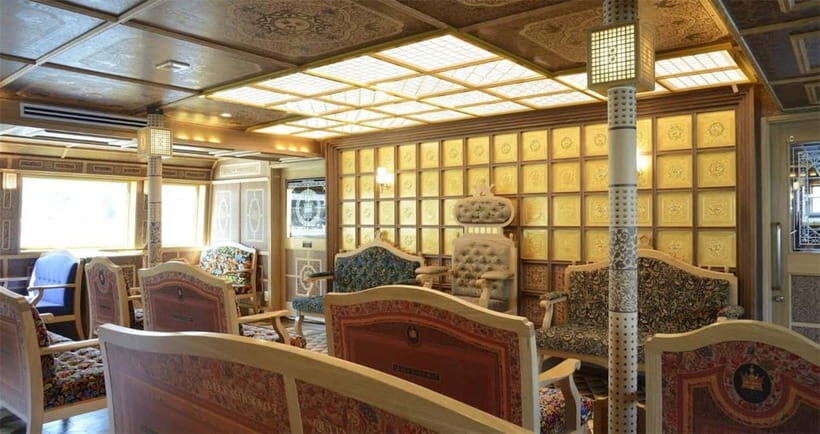
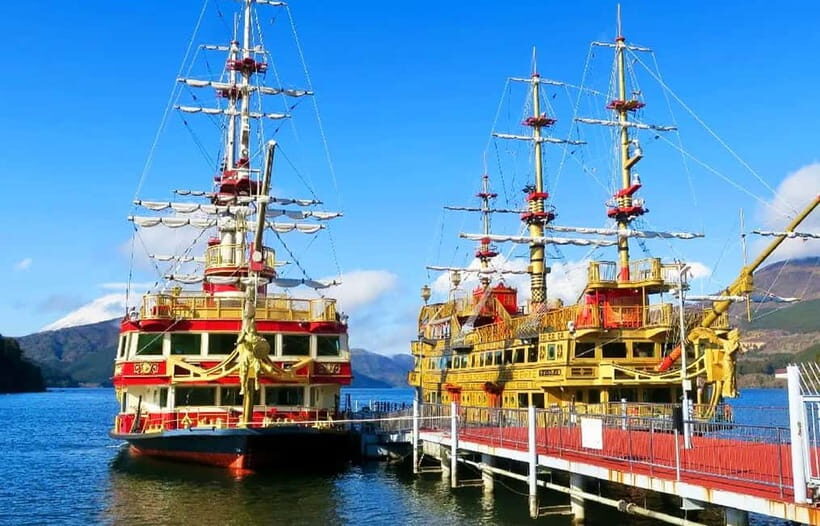
Lake Ashi isn’t only for the torii. You’ll also have the option of a pirate ship cruise across the lake. It’s self-paid (around 1700 JPY) and usually about 25 minutes once you’re aboard.
What you’re buying here is angle. From the water, you get a wider view of the Torii gate area and more space for Mt. Fuji framing. The tour uses themed ships (Royal II, Victory, and Queen Ashinoko), so you’re not stuck on a boring “standard ferry” vibe.
When is it worth it? If you’re on a clear-sky day, it can be one of the best photo moments of the trip. If visibility is poor, the cruise can still feel scenic, but you won’t get that crisp Fuji payoff.
If you’d rather skip the boat, you can travel by vehicle to the ropeway station instead. That flexibility is a real plus for travelers who hate queues or want to protect their time for the volcanic stop.
Hakone Ropeway: The Included Panoramas (And the Weather Reality)
Next up is the Hakone Ropeway, included in the tour price. This is where you trade a little time for a lot of altitude and perspective—views across Lake Ashi and (when conditions allow) Mt. Fuji.
You’ll have about 30 minutes for ropeway sightseeing, which usually means enough time to catch the key viewpoints without turning it into a two-hour saga.
Now the reality check: ropeways can be affected by weather or maintenance. If it closes, the ticket refund mentioned is 1000 JPY per person, handled via email. Also, Mt. Fuji visibility is not guaranteed, period. Clear skies are luck. Planning around that is wisdom.
If you’re the kind of traveler who gets frustrated by weather-dependent sights, set expectations early: you’re here for the experience of changing elevations and angles, not a guaranteed Fuji postcard.





Owakudani Volcanic Valley: Black Eggs and Real Geothermal Power
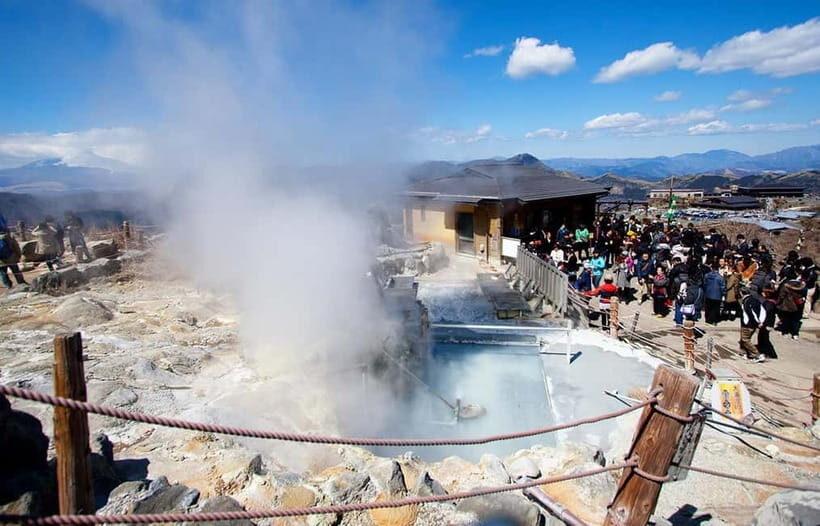
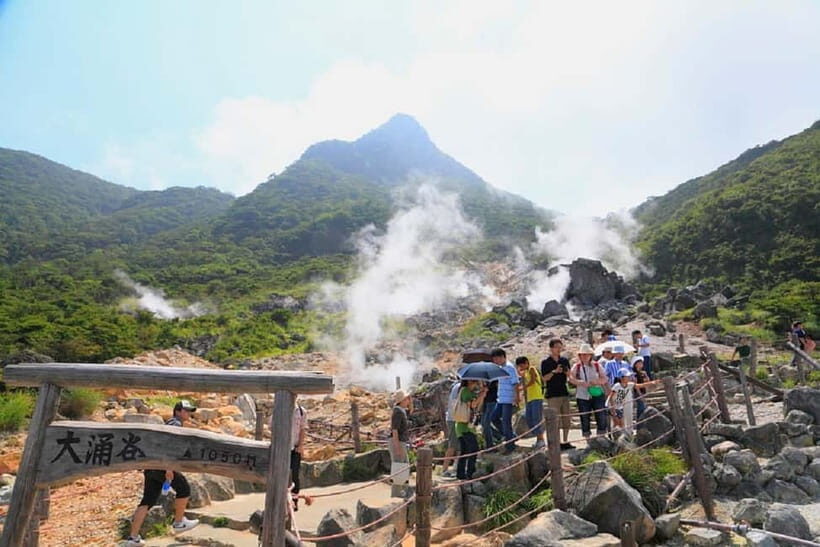
Then you’ll reach Owakudani, the geothermal valley tied to Mt. Hakone’s past eruption (about 4,000 years ago). The vibe here is different from the lake scenery—more active, more dramatic, and very “this is a living system” in a way that photos can’t fully explain.
You’ll have guided time for about 50 minutes, which matters because the area is fascinating but can feel confusing if you don’t know what you’re looking at. The guide helps you connect the heat, the rock, and the steam to the volcanic story.
The headliner snack is the local specialty: black eggs, boiled in volcanic spring water. Even if you’re not an egg person, try one. It’s a fun, hands-on bite-size experience tied directly to the place.
This is also a good point in the day to slow down just a bit. The tour is fast-moving overall, but Owakudani is one stop where your senses can catch up.
Lake Yamanaka Swan Shore and Oshino Hakkai Ponds
After the volcano, the itinerary shifts to calmer water scenery—Fuji Five Lakes territory.
At Lake Yamanaka, you’ll make a photo stop at Swan Lake Shore with free time (about 20 minutes). The key draw is the combination of swans and a possible Mt. Fuji backdrop. It’s a calmer scene than Owakudani, and it’s a nice change of pace late in the day.
Finally, you’ll visit Oshino Hakkai, known for eight ponds formed from Mt. Fuji’s snowmelt. This is where you get reflections and clarity again. If Hakone feels like “Fuji as a character in motion,” Oshino Hakkai feels like Fuji as a mirror.
You’ll have about 40 minutes for sightseeing and photos. This isn’t a place to rush. Take your time walking between pond views. Even if Mt. Fuji isn’t crystal-clear, the water and the overall setting still deliver.
Food, Timing, and What to Pack for a 10-Hour Day
Lunch is not included. You’ll stop at a local restaurant for a break (about 40 minutes), but you’ll pay for your meal there or bring your own food. Since food isn’t allowed on the vehicle, the only safe plan is to eat before pickup and carry small snacks.
Here’s my practical packing list:
- Comfortable shoes (you’ll do enough walking for it to matter)
- Camera (bring a strap so you’re not fumbling mid-queue)
- Snacks + water (food is not on the bus)
- Weather-appropriate clothing (you’re chasing views, not just scenery)
Because Mt. Fuji visibility changes quickly, dress for temperature shifts. In Japan, you can start cool near the water and end colder on higher viewpoints.
Also, pace yourself. You’ll have multiple short stops rather than one long wandering block. That’s great for efficiency, but it rewards travelers who keep moving.
Price and Value: Is $54 a Smart Deal?
At $54 per person, this tour can be excellent value if you want the main Hakone sights plus Fuji-area stops in one day.
What you’re getting for that price:
- Round-trip transport by air-conditioned coach with pickup and drop-off at two Tokyo points
- A live multilingual guide (English/Japanese/Chinese/Korean)
- Hakone Ropeway fare included
- Parking fees included
- A full sequence of scenic stops: torii, shrine, optional cruise, ropeway, Owakudani, swans, and Oshino Hakkai
What’s not included:
- Lunch and drinks
- The optional pirate ship cruise (about 1700 JPY)
So the value depends on whether you buy the boat. If you skip the pirate cruise, you’re still getting most of the “big visuals” through the torii and ropeway. If you love water views and timing works for you, the cruise can add real photo variety.
In short: for a first-time Fuji trip from Tokyo, this is priced like a starter plan that still includes one major transport ticket. That’s a good deal.
Who This Tour Suits—and Who Might Want Another Plan
This is best for:
- First-timers who want a structured day without planning every leg
- Travelers who like mixed scenery: shrine views, lake photos, volcano energy, then ponds
- People who don’t mind a packed schedule and short stop times
It’s not a great fit for:
- People with mobility impairments
- People with respiratory issues
And if you’re extremely sensitive to weather uncertainty, remember: Mt. Fuji visibility is not guaranteed. You’ll still see Hakone and the Fuji-region scenery, but the iconic mountain may be absent on some days.
Should You Book This Mt. Fuji and Hakone Tour?
I’d book it if you want an efficient, high-coverage day that hits the classic sights with minimal hassle. The included ropeway plus the guided Owakudani stop make it feel more than just a sightseeing bus tour.
Skip it (or choose carefully) if:
- You need long free time at each stop
- You can’t handle weather-dependent views
- You strongly prefer food to be included (here it isn’t)
If you do book, go in with two goals: get your best Lake Ashi torii photos early, and treat Owakudani as the tactile, memorable center of the day. Do that, and even a cloudier Mt. Fuji day won’t feel wasted.
FAQ
Is the pirate ship cruise included?
No. The pirate ship cruise on Lake Ashi is optional and self-paid, about 1700 JPY.
Does the tour include the Hakone Ropeway?
Yes. The Hakone Ropeway fare is included.
Is lunch included in the tour price?
No. Lunch is not included. You’ll have a break at a local restaurant, but you will pay for your meal.
What if the ropeway closes due to weather or maintenance?
If the ropeway closes, you can email for a ticket refund of 1000 JPY per person.
How long is the tour?
The duration is about 10 hours from the morning meeting time to the evening drop-off, depending on traffic and conditions.
Where are pickup and drop-off locations?
Pickup and drop-off are at two designated points in Tokyo (Tokyo Station or Shinjuku). The exact meeting point can vary by option booked.