REVIEW · TOKYO
Official Japan Go-Kart Through Shibuya / Shinjuku
Book on GetYourGuide →Operated by JAPANKART · Bookable on GetYourGuide
Tokyo on a go-kart feels like cheating. You get wind-in-your-hair street driving, including the famous Shibuya Scramble photo moment, plus stops around the Tokyo landmarks most people only see from trains. I really liked how the crew keeps things smooth and fun, and I especially appreciated the extra confidence you get from solid guidance before you roll out.
The second thing I loved was the attention to being camera-ready: costumes on board, plus photos and video support that help you remember the ride without turning the whole day into a chore. One drawback to consider is the paperwork: to drive, you’ll need the right license setup in the correct format, and they’re strict about it.
In This Review
- Key Things That Make This Tokyo Go-Kart Ride Worth It
- Road-Ready Go-Karts on Real Tokyo Streets
- Picking the Right Route: 90 Minutes vs. the Longer Landmarks Loop
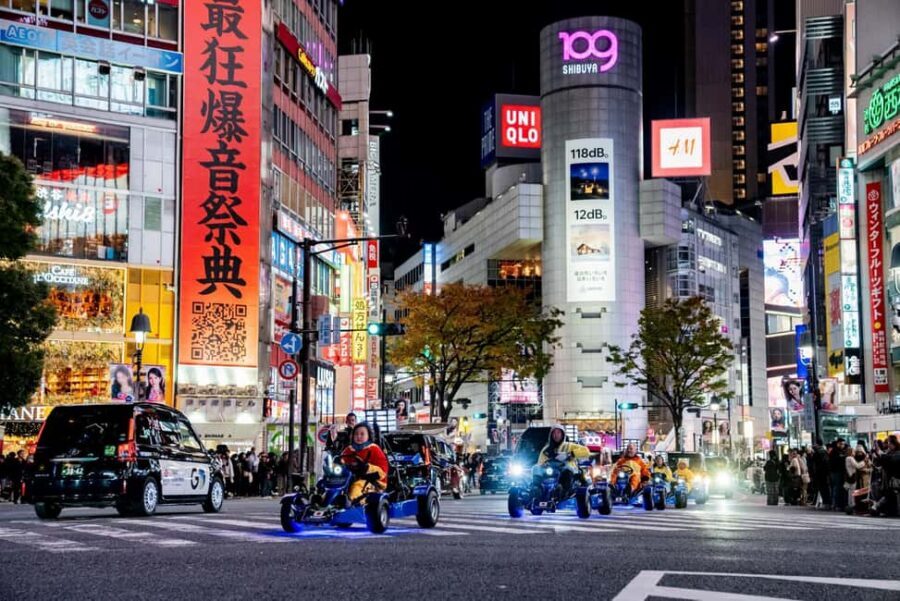
- Shibuya Scramble: The Intersection Moment You Actually Feel
- Tokyo Tower and Tokyo Station: Classic Landmarks, Go-Kart Perspective
- Passing Through the City: Roppongi and the “Where Am I?” Factor
- Ginza, Ueno, and Asakusa: When Tokyo Slows Down
- Costumes, Jackets, and the Fun Factor (Without the Chaos)
- Photos and Video: The Keep-Longer-Than-You-Think Part
- Safety and Confidence for First-Time Drivers
- The Paperwork Reality: Your Right to Drive
- Timing, Traffic, and What to Expect When the City Gets Busy
- Weather and Comfort: Bring the Right Mindset
- Price and Value: Why $122 Can Make Sense
- Who This Tour Fits Best
- Should You Book This Tokyo Go-Kart Tour?
- FAQ
- What is the duration of the Japan go-kart tour?
- How much does this go-kart experience cost?
- What documents do I need to drive in Japan?
- Is a Vienna Convention 1968 IDP accepted in Japan?
- What language do the instructors speak?
- What is included in the tour price?
- Can I wear sandals or flip-flops?
- Is there an age limit?
- What happens if it rains or bad weather cancels the tour?
- Is alcohol allowed during the ride?
Key Things That Make This Tokyo Go-Kart Ride Worth It
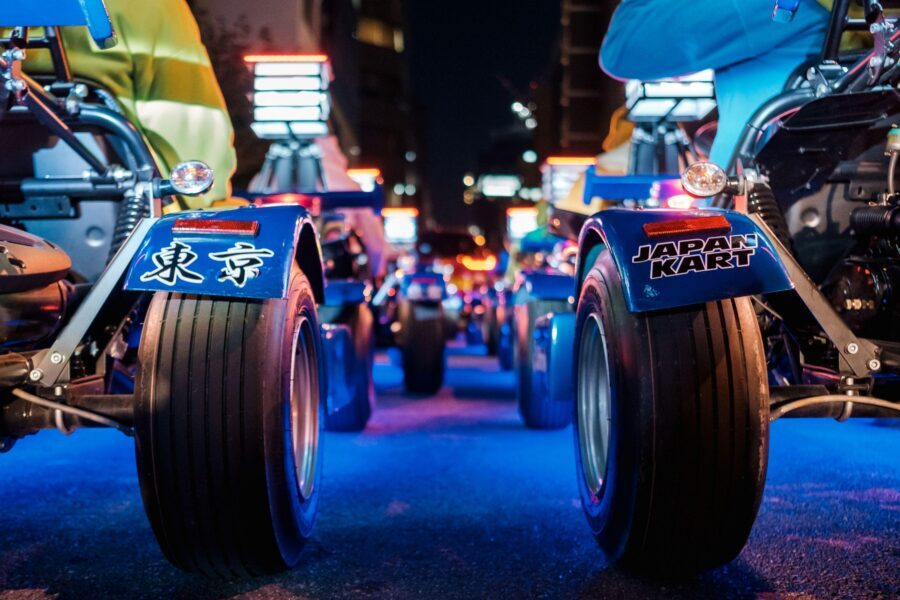
- Shibuya Scramble: you get an up-close photo stop where the crossing’s energy is real, not just screen-famous
- Road-driving karts: these are built for city streets, not a closed-track vibe
- Crew support you can feel: lead car and follow support help you stay oriented through intersections
- Costumes and photo energy: you’ll likely look out of place in the best way, and you’ll have keepsakes
- Real Tokyo highlights: Shinjuku, Shibuya, Tokyo Tower/Station areas, plus stops tied to Ginza and the older districts
Road-Ready Go-Karts on Real Tokyo Streets
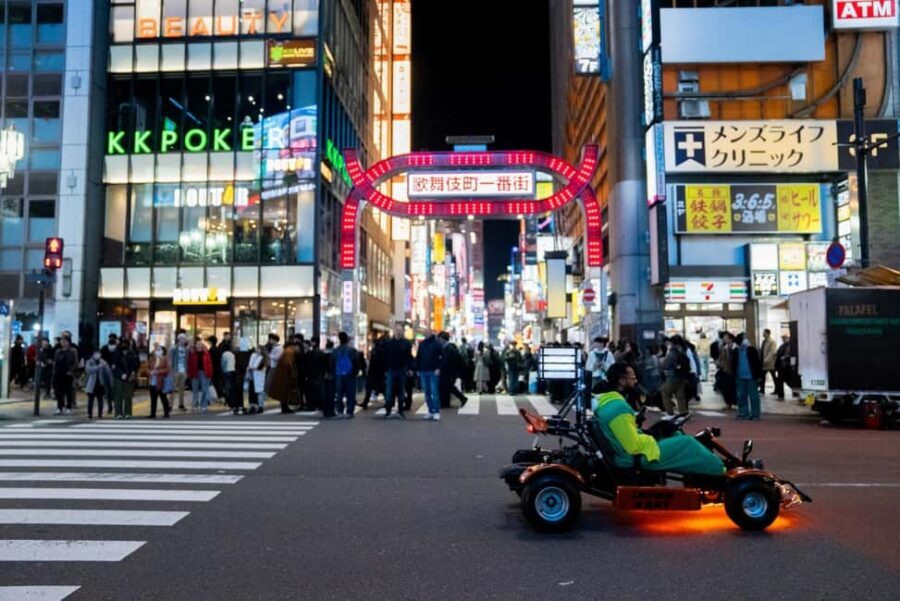
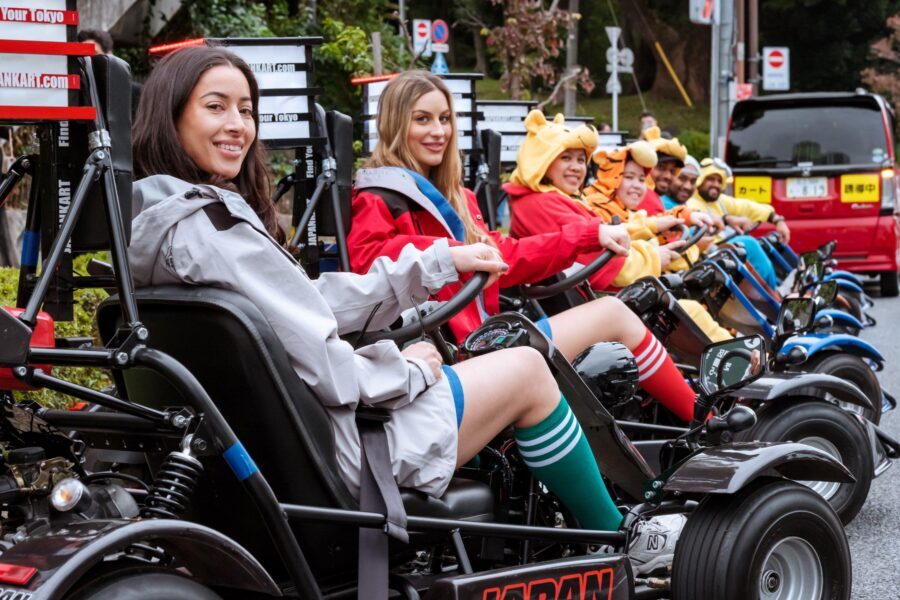
This is not the kind of go-kart you do on a quiet track. You’ll be driving on Tokyo roads, with carts designed for street driving, so the experience feels like a fast, silly shortcut to seeing the city at ground level.
That street aspect changes everything. From a typical sightseeing day, you mostly watch Tokyo pass by. Here, you’re physically part of the traffic rhythm—accelerating when you can, creeping through congestion when you must, and feeling the city through sound, wind, and close-up street scenes.
You can also read our reviews of more tours and experiences in Tokyo.



Picking the Right Route: 90 Minutes vs. the Longer Landmarks Loop
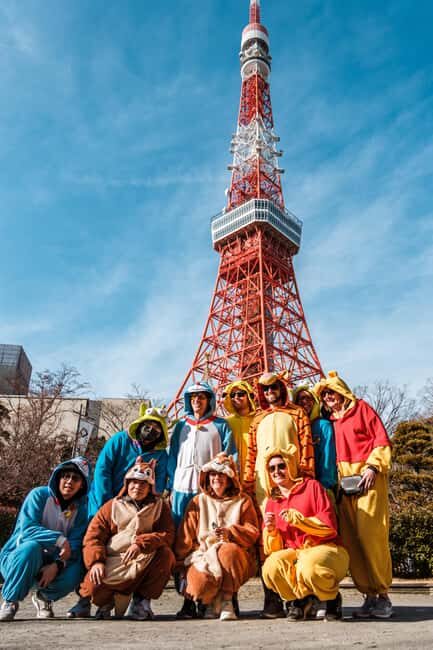
The ride comes in two main lengths, and which one you choose changes what you’ll spend time on. A shorter option focuses on West Tokyo icons like Shibuya Scramble and areas tied to Harajuku/Omotesando, plus a Shinjuku Kabukicho-style stop. The longer option adds major landmarks like Tokyo Tower, Imperial Palace areas, and a Tokyo Station photo stop.
My practical advice: if you’re here for a first taste of Tokyo and you like punchy, high-impact sights, the shorter loop can fit nicely. If you want more variety and more famous “Tokyo postcard” spots, the longer route gives you extra anchors for photos.
Shibuya Scramble: The Intersection Moment You Actually Feel
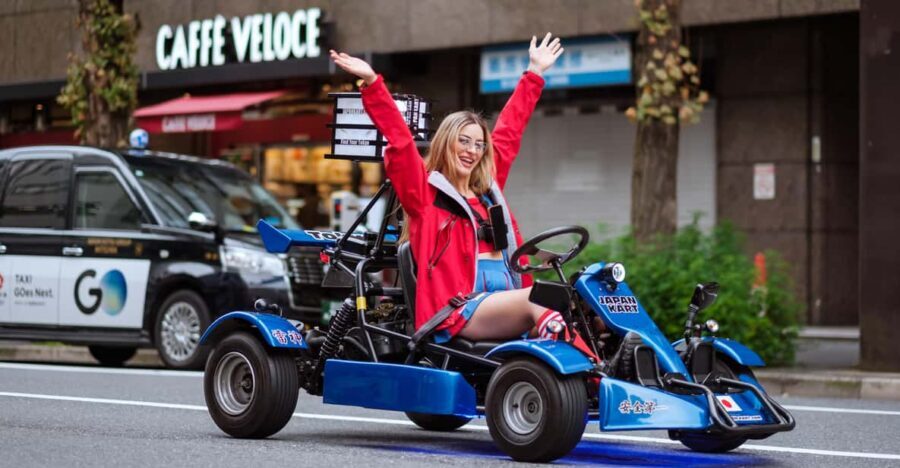
Shibuya Scramble is the headline for a reason. Even with a photo stop rather than constant time in the thick of it, it’s the kind of place where you immediately understand why it’s famous.
You’ll be down at street level while crowds and cars do their thing above and around you. The feeling is fast, loud, and a little surreal—like you’re watching the city’s choreography from inside the performance. It’s also a great moment for your brain to reset: you’ll get your bearings, take photos, and then roll into the next stretch with more confidence.
Tokyo Tower and Tokyo Station: Classic Landmarks, Go-Kart Perspective
On the longer version, you’ll hit a break and photo stop at Tokyo Tower. That’s a smart pairing with go-karting because the tower is one of those Tokyo icons that looks best when you’re standing close, not just peeking from far away through a window.
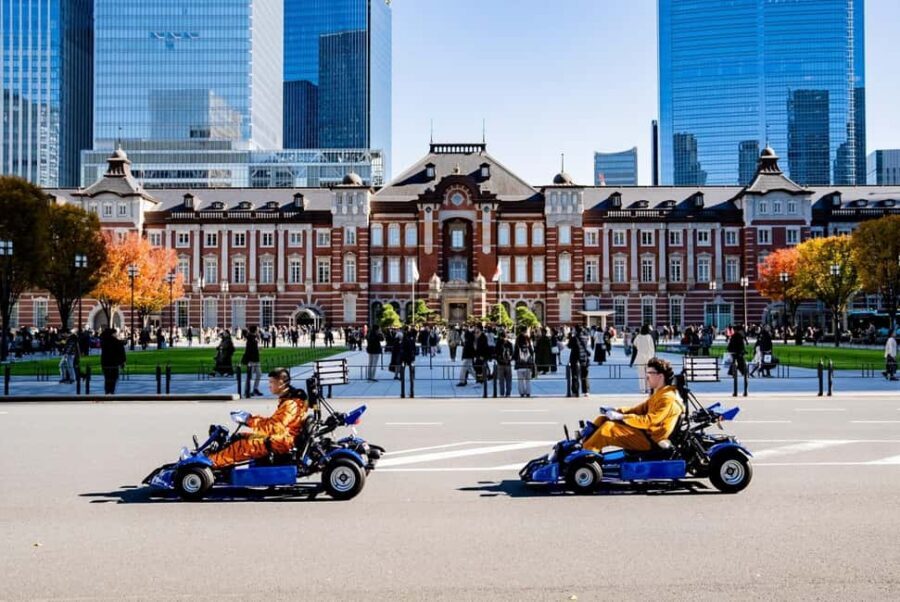
Tokyo Station works the same way. From trains it’s just your transit hub. From the road, with a photo stop, it becomes part of the story—grand architecture, busy entrances, and a totally different tempo than Shibuya.
Passing Through the City: Roppongi and the “Where Am I?” Factor
The ride includes passes through major districts such as Roppongi on the longer option. Those moments matter more than you might think. Tokyo is huge, and seeing these districts from the road helps you connect neighborhoods to routes you’ll likely walk later.
This is where the pacing helps. You’re not sitting in a bus waiting for the next landmark. You’re moving, stopping occasionally for photos, and then moving again—so your sense of direction gets better fast.





Ginza, Ueno, and Asakusa: When Tokyo Slows Down
The highlights also point to Ginza’s shopping atmosphere, plus visits tied to Ueno and Asakusa for that older-side Tokyo feeling. This blend is the value: you get shiny modern Tokyo energy in the central zones, and then you’re reminded that Tokyo has layers you’d miss if you only chase one type of scene.
If you like variety—big-city flash plus older streets—you’ll probably appreciate this. It gives your day a little arc instead of being just one repeating kind of skyline.
Costumes, Jackets, and the Fun Factor (Without the Chaos)
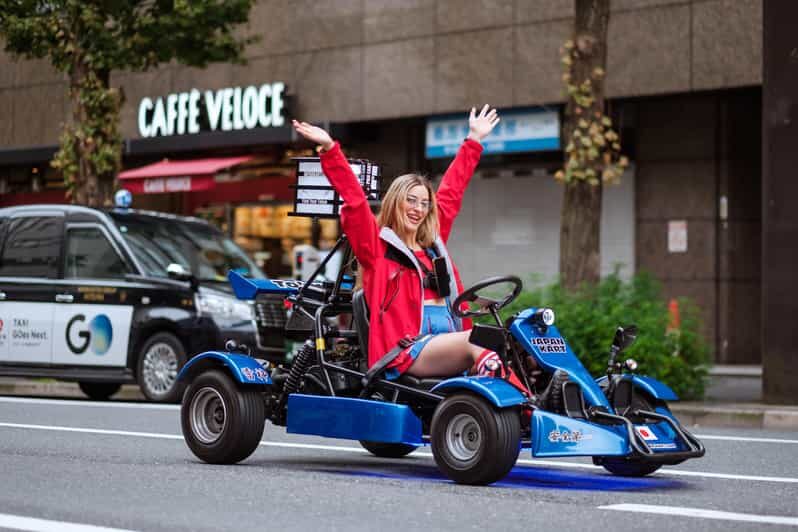
Included with the experience are costumes and (during colder months) jackets. In practice, that means you don’t have to plan for a “what will I wear?” scramble right before your ride. You can focus on driving and enjoying it.
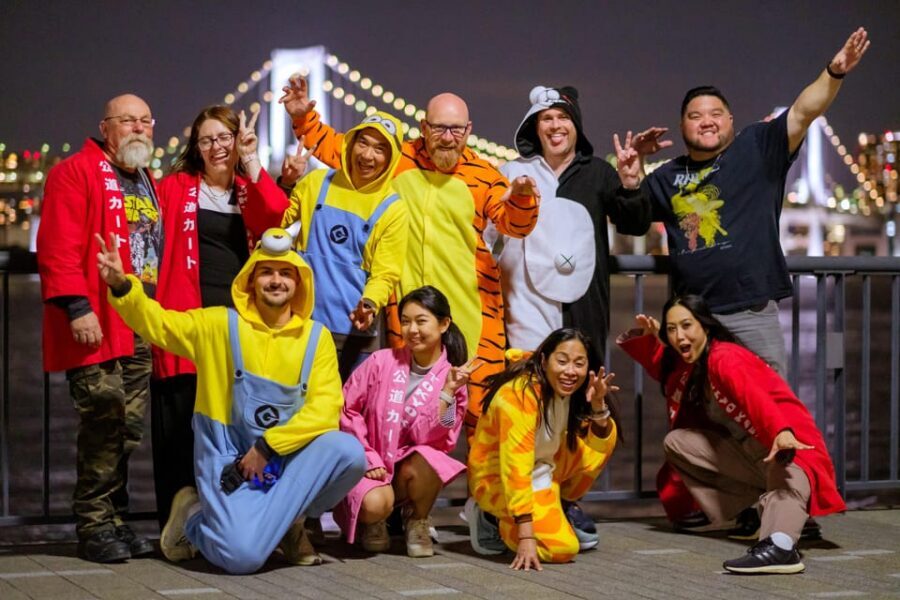
The costumes also serve a real purpose: they make the experience social. In the street, you’ll draw attention, and that attention mostly lands as smiles and waves. One guide mentioned by name in the feedback, Adele, and others like Maui and Mandy show up as part of that friendly, organized vibe—so it doesn’t feel like costuming turns into a mess.
Photos and Video: The Keep-Longer-Than-You-Think Part
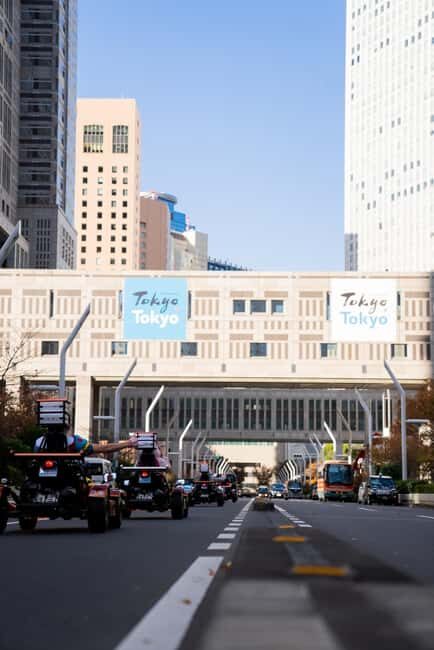
A big reason this stands out is that the crew helps you document the ride. Many riders note that free photos and quality pictures are part of the deal, and video support is handled in a way that doesn’t cost extra after the ride.
One helpful detail: there are mounts ready if you want to strap a phone or GoPro-like device to stay hands-free. If you’re the type who always wants proof you were there, you’ll like that this tour doesn’t make you do all the work yourself.
Safety and Confidence for First-Time Drivers
Go-karting in a city sounds scary until you realize how methodical the operation is. You’ll get a full safety briefing before you drive, and the instruction style seems consistent: clear explanations and patient support, with an English-speaking instructor.
In the feedback, riders described that there’s a lead vehicle in front and follow support from behind—sometimes with a motorcycle—so you aren’t expected to navigate like a local. Another rider even described how you might briefly get separated at intersections due to traffic and street behavior, but staff in support vehicles help you get back with the group.
This is one of the most important parts of the value. If you’re nervous, that safety structure helps you relax sooner. You’ll spend less energy worrying and more energy noticing the city around you.
The Paperwork Reality: Your Right to Drive
Here’s the make-or-break part: you must have the right documents to drive in Japan, and you need them in the correct format.
You’ll need:
- Your home driving license
- An International Driving Permit (IDP) issued under the Geneva Convention 1949 (issued by your local issuing authority in your country, not bought online)
- Your passport
Important detail: if your license is from Switzerland, Germany, France, Taiwan, Belgium, Estonia, or Monaco, you also need your original driving license plus an official Japanese translation. Another key point: Vienna Convention 1968 IDPs are not accepted in Japan here.
Also, they explicitly say you must show a hard copy of your IDP on the day. If you don’t, you won’t be able to participate.
My advice is simple: plan this like you’re doing airport check-in. Double-check the IDP type (Geneva 1949 only), the booklet form requirement, and that you have paper copies.
Timing, Traffic, and What to Expect When the City Gets Busy
Tokyo traffic is Tokyo traffic. Even with a well-run operation, you’ll spend time at lights and moving more slowly at certain hours.
One rider described a 4pm departure where it was heavy traffic and lots of stopping at lights, but they still called it amazing. That lines up with what you should expect: it’s not a racetrack, and your “speed thrill” will come and go.
So if your main fantasy is constant wide-open acceleration, your expectations should be flexible. If your main goal is seeing Shibuya, Tokyo Tower, and big districts from the road while driving your own little piece of Tokyo energy, you’re likely to be happy.
Weather and Comfort: Bring the Right Mindset
Cold weather gets covered with jackets during colder months. Rides can also happen in less-than-ideal conditions, and one rider noted it was raining and that the crew was very helpful while keeping things manageable.
Your best move: dress for street driving comfort—closed-toe shoes—and layer in a way that you can handle wind. Also note that sandals or flip-flops are not allowed.
If you hate getting chilly, plan for that wind factor, especially around open intersections and where you’re not slowing down as much.
Price and Value: Why $122 Can Make Sense
At about $122 per person for a roughly 2–3 hour experience, the value depends on what you want out of your Tokyo day. This isn’t just “rent a kart.” You’re paying for a guided street-driving setup: safety briefing, the road-ready carts, gas, costumes, and the crew support structure that keeps you from feeling lost.
If you already planned to do a photo-heavy Tokyo day, this gives you more than photos. You get a unique mobility experience—your own hands on the controls—plus the chance to interact with the street crowd. In that sense, it can feel like one of the few tours that trades sightseeing time for a genuine “do it, feel it” memory.
Who This Tour Fits Best
This is a great match if:
- You want a different way to see Tokyo beyond walking and train rides
- You’re comfortable with city driving rules and quick instructions
- You like social moments like costuming and street photo stops
- You want a well-run experience with English support and safety guidance
It might be a weaker fit if:
- You don’t want to handle the driving documentation process
- You’re hoping for nonstop high speed
- You’re very uncomfortable with busy city traffic and frequent stops
Also, it’s not suitable for drivers under 18.
Should You Book This Tokyo Go-Kart Tour?
I’d book it if you’re planning a classic Tokyo sightseeing week and want one day that’s genuinely different. The Shibuya Scramble photo moment, plus landmark passing like Tokyo Tower and Tokyo Station, gives you strong “I did Tokyo” proof. Add costumes, strong guidance from staff like Maui, Mandy, and Adele (named in rider notes), and you’ve got an experience that feels both playful and organized.
But don’t book it last-minute if you still need to sort paperwork. For this activity, the documents matter as much as the fun. If your IDP situation is solid and you’re ready for city pacing, this is one of those rare Tokyo activities that stays memorable long after the pictures fade.
FAQ
What is the duration of the Japan go-kart tour?
The experience is listed as about 2 to 3 hours, with ride options that include a shorter loop and a longer landmarks-focused route.
How much does this go-kart experience cost?
The price is $122 per person.
What documents do I need to drive in Japan?
You need your home country driving license, an International Driving Permit issued under the Geneva Convention 1949, and your passport. If your license is from Switzerland, Germany, France, Taiwan, Belgium, Estonia, or Monaco, you also need an official Japanese translation plus your original driving license.
Is a Vienna Convention 1968 IDP accepted in Japan?
No. International Driving Permits issued under the Vienna Convention 1968 are not accepted for this activity.
What language do the instructors speak?
The instructor is English.
What is included in the tour price?
Included are a full safety briefing, costumes, jackets during colder months, and the gas fee.
Can I wear sandals or flip-flops?
No. Sandals or flip-flops are not allowed.
Is there an age limit?
Drivers under 18 years old are not suitable for the activity.
What happens if it rains or bad weather cancels the tour?
If the tour is canceled due to bad weather, you’re eligible for a full refund or the option to reschedule depending on availability.
Is alcohol allowed during the ride?
No. Alcohol and drugs are not allowed, and alcoholic drinks in the vehicle are also not allowed.