REVIEW · TOKYO
Tokyo: Full-Day Tour of the Six Majestic Spots of Mt Fuji
Book on GetYourGuide →Operated by JRT Group · Bookable on GetYourGuide
Six Fuji spots in one busy day.
What makes this tour fun is the mix: morning Lake Yamanaka reflections plus easy photo wins like the Higashikawa street shot and the Arakurayama pagoda viewpoint. I also like that you’re not stuck doing just one type of sightseeing; you get water, village walkways, and seasonal flower fields in a single itinerary. One drawback to keep in mind: Mount Fuji visibility depends on the weather, and if the sky is cloudy, the day still feels worthwhile but the “Fuji payoff” can drop.
You’re paying $45 for transport plus a guide and driver, which is a solid deal for getting out of Tokyo fast and hitting multiple areas around the Fuji lakes. Guides like Tim, Agnes, and Sakuragi came through in different ways, from clear site notes to helping people with unexpected situations. That said, plan your own lunch and snacks since food and drinks are not included, and there’s no hotel pickup or drop-off.
In This Review
- Key things I’d bank on
- Why This Six-Spots Mt Fuji Route Works From Tokyo
- Hirano Beach at Lake Yamanaka: Morning-Only Mirror Shots with Swans
- Higashikawa Clock Shop & Lawson: The Fuji-Facing Convenience-Store Moment
- Arakurayama Sengen Park and the Pagoda Steps: Fuji Framed by Seasons
- Oshino Hakkai Springs: UNESCO Clarity and a Traditional Village Walk
- Oishi Park on Lake Kawaguchi: Match the Flower Calendar to Fuji
- How the Day Actually Feels: Timing, Crowds, and When Cloud Changes Everything
- Value and Comfort for $45: What You Get and What You Don’t
- Who This Tour Fits Best (and Who Might Skip It)
- Should You Book This Tokyo to Fuji Six Majestic Spots Tour?
- FAQ
- How much is the Tokyo to Mount Fuji full-day tour?
- What’s included in the tour price?
- Do they pick you up from your hotel?
- When should I plan to visit Hirano Beach for Fuji reflections?
- What if Mount Fuji is cloudy or an attraction closes due to weather?
- Is the tour wheelchair accessible?
Key things I’d bank on
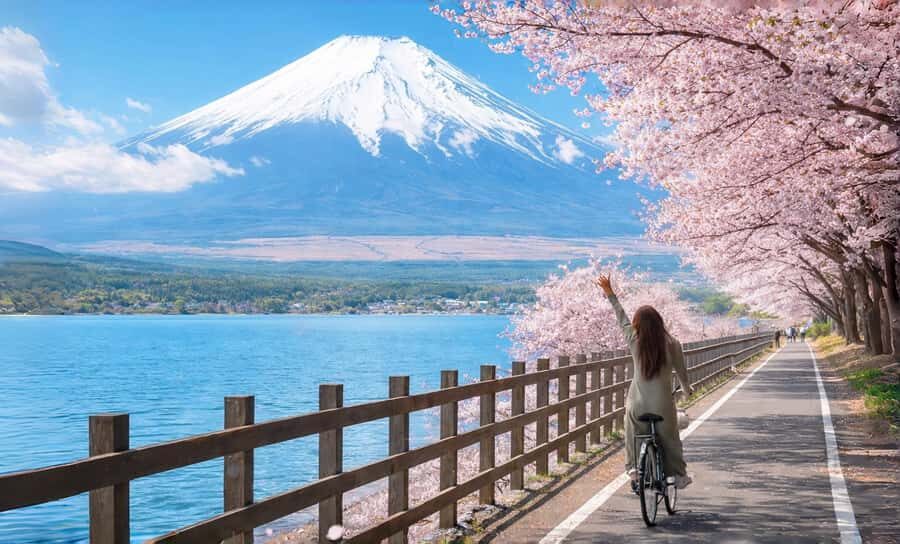
- Morning at Hirano Beach for mirror-like Fuji reflections on the lake surface
- Higashikawa Clock Shop area for that long straight-road feeling toward Fuji
- Arakurayama pagoda views with seasonal color framing the mountain
- Oshino Hakkai’s eight springs and the traditional village walk
- Oishi Park flower seasons built for changing color palettes across the year
Why This Six-Spots Mt Fuji Route Works From Tokyo
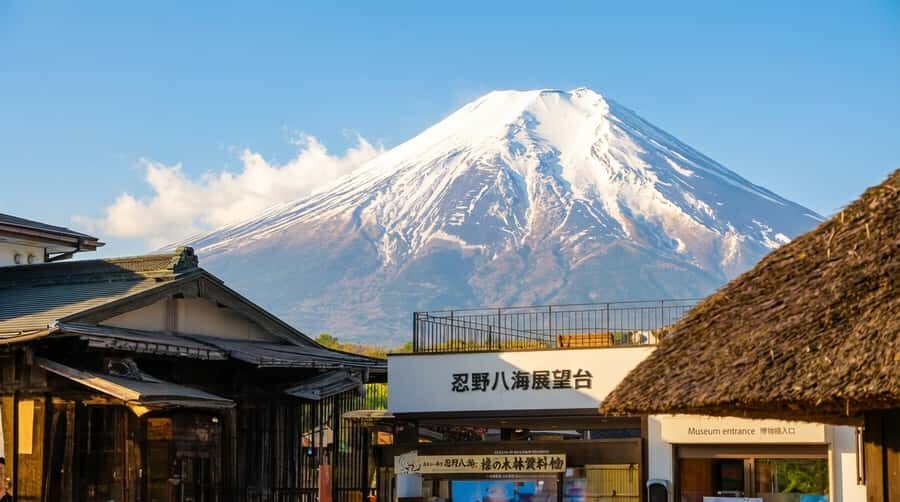
This tour is built for people who want to do “greatest hits” without spending your whole trip commuting between train transfers and timed tickets. From Tokyo, you’re basically buying one full day that turns into multiple lookouts and photo setups around Mount Fuji.
The route also makes sense visually. You’ll see Fuji reflected in water, framed by a pagoda silhouette, and backed by flower fields that change throughout the year. If your main goal is photography, the itinerary gives you several angles and scenery types instead of repeating the same view all day.
And because the tour includes air-conditioned vehicle transport plus a guide and driver, you get a smoother day than DIY-ing it on your own, especially during hot months when sitting in traffic can drain your energy fast.
A few more Tokyo tours and experiences worth a look
Hirano Beach at Lake Yamanaka: Morning-Only Mirror Shots with Swans
This is the first stop where you’ll feel why timing matters. Hirano Beach sits at the northeastern part of Lake Yamanaka, and it’s known for a gravel shoreline that can produce a stunning “dual shot” when Mount Fuji is visible and the water is calm. The highlight here is the morning-only reflection opportunity, when you’re most likely to catch that mirror effect.
There’s also a nature bonus: resident swans. If you’re the type who likes small moments between big-photo targets, this is where the day can slow down a little. Early morning light plus birds near the shoreline is a nice contrast to the more structured viewpoints later.
Practical reality check: if it’s cloudy, you may not get the full Fuji-and-reflection effect. I’d still treat this stop as worth it because it’s part of what makes the tour feel like more than just “bus sightseeing,” but it’s smart to keep expectations flexible.
Higashikawa Clock Shop & Lawson: The Fuji-Facing Convenience-Store Moment
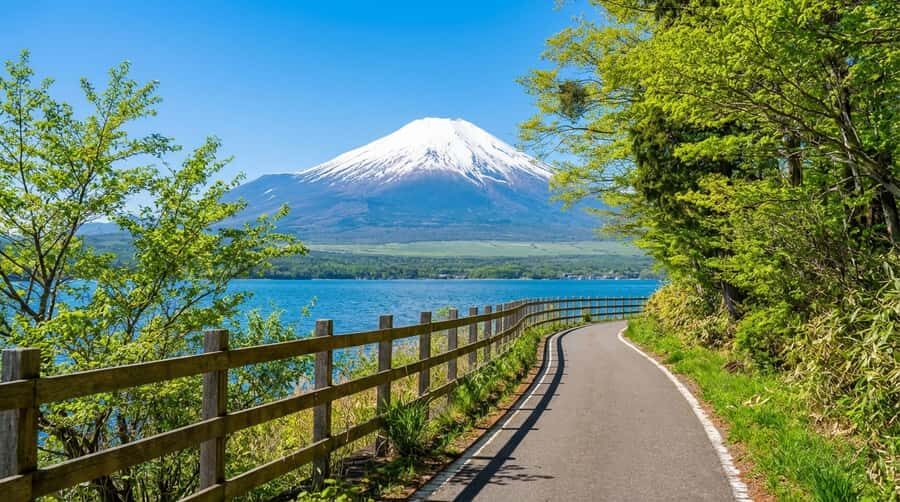
After the lake morning, the tour pivots into a more cinematic streetscape. The Higashikawa Clock Shop area is often described as the Sky Ladder Town feeling, with a quiet road that stretches straight and creates a strong sense of distance toward Mount Fuji. Even when you’re not actually reaching the mountain in person, the geometry does a lot of the work for your photos.
Then comes the stop that many people end up loving for how low-effort it is: a Lawson store. It’s famous here not just for snacks, but for photo timing. The minimalist store look and Fuji-facing windows make it a simple “grab your shot, move on” kind of moment, the kind you can repeat quickly without losing daylight.
One more thing I’d plan for: your time goes faster than you think at places like this. Bring your camera ready, pick your angle quickly, and don’t burn ten minutes searching for the best light when the day moves on.
Arakurayama Sengen Park and the Pagoda Steps: Fuji Framed by Seasons
Arakurayama Sengen Park is a must if you want Mount Fuji framed by something iconic. You can walk to the viewpoint area from Shimoyoshida Station, and the main experience centers on the red five-story pagoda at the top of stone steps.
What I like about this stop is that it’s built for seasonal storytelling:
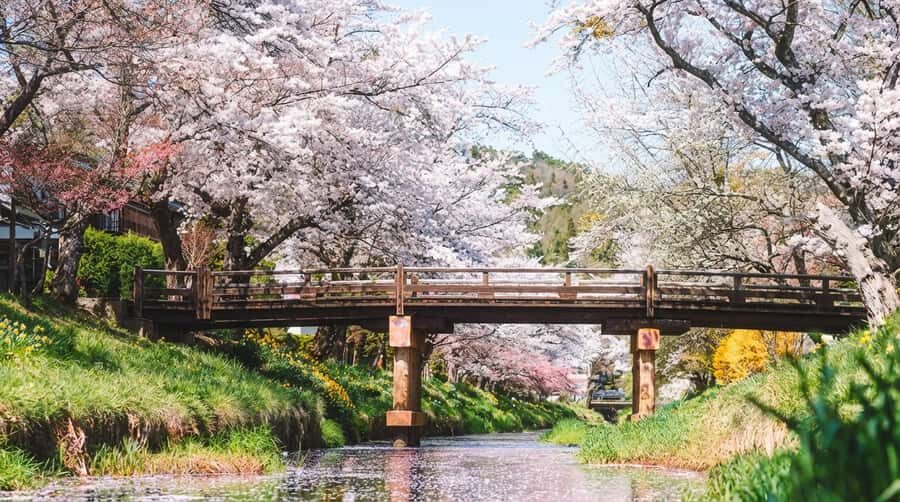
- In spring, cherry blossoms frame the scene.
- In autumn, you get big color changes from falling and lingering leaves.
It also gives you options. You can climb up for the pagoda-and-Fuji composition, then come back down to the village area for a coffee moment. That mix is helpful if you’re not only traveling for photos but also for a real change of pace.
Mobility note: Arakurayama’s pagoda steps can be a problem. The tour information says all stops are wheelchair accessible except the pagoda steps, and it also lists wheelchair users as not suitable. So if you have mobility limitations, this is the part to think about first.
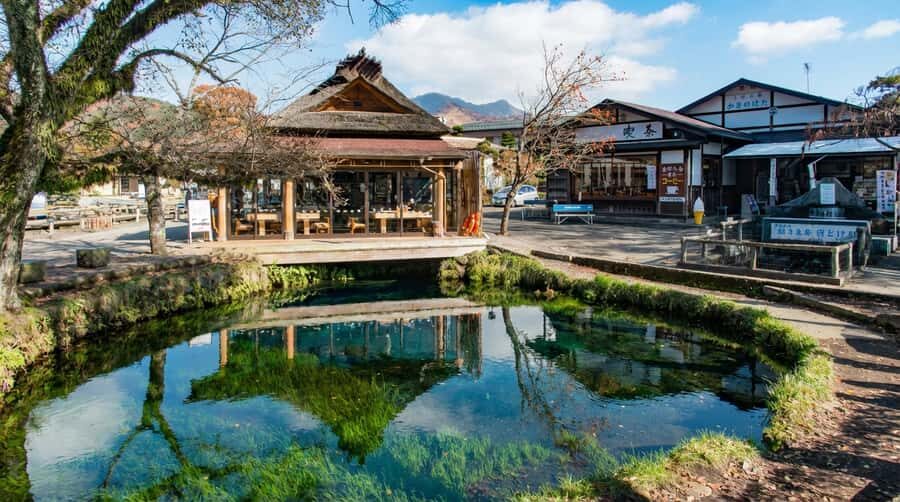
Oshino Hakkai Springs: UNESCO Clarity and a Traditional Village Walk
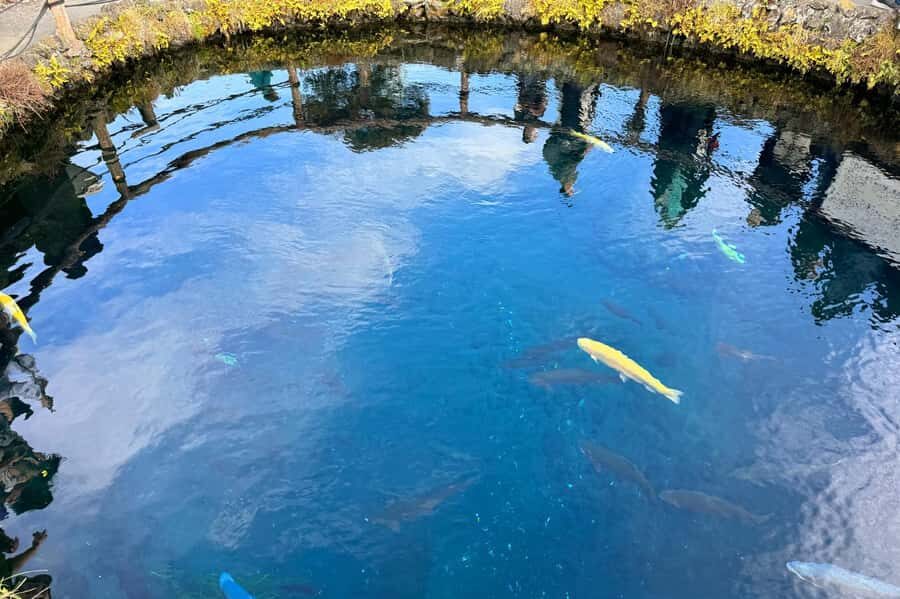
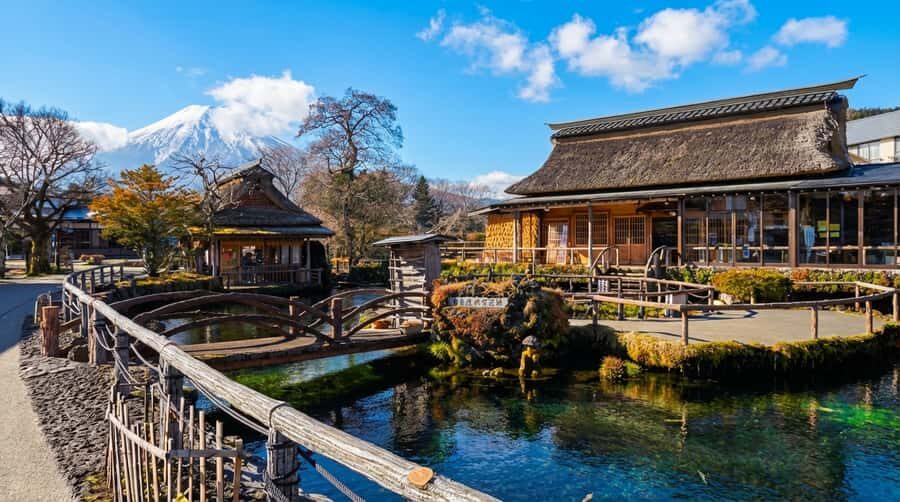
Oshino Hakkai is the “slow-walk” stop in the middle of the day’s photo push. You’ll see eight springs fed by melted snow from Mount Fuji. The idea is simple but powerful: clear water, a traditional village setting, and a mountain-fed water system you can actually experience by walking among it.
In practical terms, you’re moving along paths and crossing wooden bridges while looking at turquoise water and small views that feel very Fuji-adjacent without needing giant climb-ups. The traditional thatched-roof village helps too; this doesn’t feel like a theme park, and it reads as a living village scene.
Why I think this stop is a smart use of time: after you’ve chased reflections and photographed streets, Oshino Hakkai resets your eyes. Instead of hunting for the “perfect frame,” you get to follow the water.
And because this part is noted as wheelchair accessible (the steps issue is specifically tied to the Arakurayama pagoda), it’s often a workable choice for people who still want nature and culture.






Oishi Park on Lake Kawaguchi: Match the Flower Calendar to Fuji
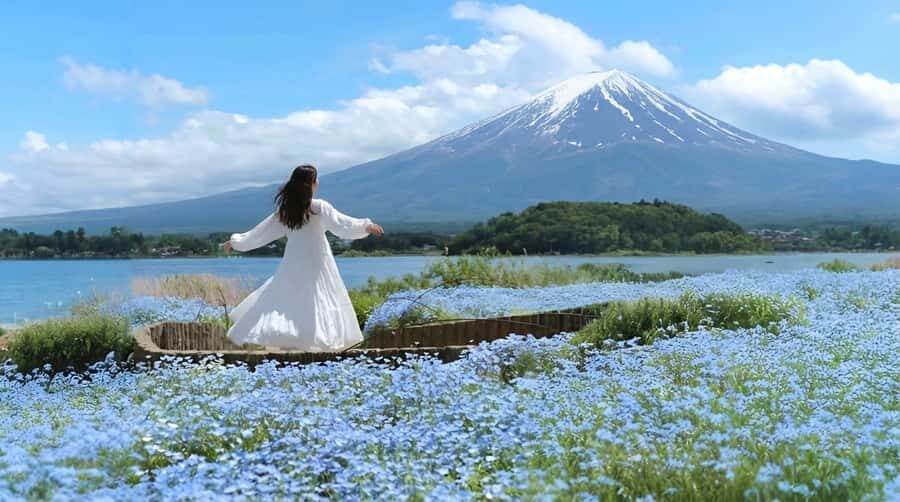
Then you shift again—from springs and village paths to Lake Kawaguchi flower fields. Oishi Park is where you bring your camera and expect color. The big benefit here is that the scenery changes by season, so the same Fuji backdrop can feel completely different depending on when you go.
Here’s the seasonal breakdown provided for the park:
- April: tulips, daffodils, and rapeseed flowers
- May: carpet-like moss phlox
- June–July: lavender (linked to the Kawaguchiko Herb Festival)
- August–October: begonias
- November: scarlet maple leaves
This is a stop you’ll enjoy even if you’re not obsessed with photography. Flower fields pull you into “wandering mode,” and you can pick a path that gives you your favorite Fuji placement.
One reality check: flower timing can shift slightly depending on conditions, so treat it as “season-driven” rather than “guaranteed exact bloom dates.” If your travel dates are fixed, it’s worth checking recent updates before you commit so you’re not disappointed.
How the Day Actually Feels: Timing, Crowds, and When Cloud Changes Everything
Even when the itinerary looks tight on paper, the day on the road can breathe or squeeze depending on weather and traffic. On weekends and holidays, timing can shift because of traffic jams or early attraction closures. If something closes due to weather, the tour information says the plan switches to other spots, and there are no refunds for changes caused by force majeure.
That matters because Mount Fuji visibility is the headline reward, and clouds are the thing you can’t fight. One review described a day where it was cloudy the whole time; the views weren’t great, but the trip still worked as a way to escape city heat and enjoy beautiful places anyway. I’d take that as a fair expectation: the day can still be enjoyable, but your “Fuji shots” may vary.
Crowds also show up at the most famous stops. Arakurayama in particular can get busy, especially in peak seasons when everyone wants the same pagoda framing.
Small-group format can also shape your experience. The tour notes say for small daily groups, the driver doubles as a guide with limited English commentary while driving, and multilingual services are provided for international guests on board (not single-language). In reviews, guides like Tim delivered high-energy commentary, including photo help, while other feedback pointed out bus audio volume issues. If you’re sensitive to sound, you might want to bring something simple like earplugs.
Finally, one genuine perk: guides have been proactive with comfort and problem-solving. There was a story where the guide and driver helped a guest who felt faint due to stomach pain and even helped locate medicine. That’s not why you book a tour, but it’s reassuring to know support is part of the operation.
Value and Comfort for $45: What You Get and What You Don’t

Let’s talk value in real terms. At $45 per person, you’re getting:
- air-conditioned vehicle transportation
- a tour guide
- a driver
For many people, that’s the biggest savings. These Fuji-lake areas are spread out, and one day of efficient transport can cost more than you expect when you factor in taxis or multiple separate rides.
What’s not included is also clear, and you should plan around it:
- no hotel pickup or drop-off
- no food or drinks
- personal expenses
Also, insurance for travel or accidents is not included.
One small comfort detail from reviews: the bus can be comfortable, but there was a complaint about the air-conditioning not working. That’s not typical of every trip, but on a hot day it’s still worth noting. Bring light layers that help you adjust, and keep an eye on comfort needs if you’re heat sensitive.
Who This Tour Fits Best (and Who Might Skip It)
This tour suits you if you want a structured day of Mount Fuji viewpoints without the stress of DIY logistics. I’d especially recommend it for:
- first-timers who want multiple Fuji “settings” (water, pagoda, springs, flowers)
- people who care about photography and timing, especially the morning lake reflections
- anyone who wants out of Tokyo’s pace for a full-day nature-and-culture change
On the other hand, the tour is listed as not suitable for:
- pregnant women
- wheelchair users
- people with high blood pressure
- people over 70
So if any of those apply, you’ll want to choose a different format that better matches your needs and mobility level.
Should You Book This Tokyo to Fuji Six Majestic Spots Tour?
Book it if your priorities are big Fuji viewpoints, seasonal scenery, and a day trip that handles transport for you. The best reason to go is the combination: Hirano Beach morning reflections, the pagoda framing at Arakurayama, the traditional walk at Oshino Hakkai, and the flower-field color at Oishi Park.
Don’t book it expecting a guaranteed clear-sky Fuji photo every single minute. Weather can change the results, and the tour can’t control cloud cover. Still, even on a cloudy day, the nature stops and village atmosphere can make the day feel like more than a photo hunt.
If you’re considering it, I’d do three things before you go: wear comfortable walking shoes, plan to buy your own lunch and drinks at stops, and be ready for crowds at the most famous viewpoints. If you can handle those basics, this $45 day is an efficient way to experience the Fuji area without burning your trip on logistics.
FAQ
How much is the Tokyo to Mount Fuji full-day tour?
The price is $45 per person.
What’s included in the tour price?
It includes transportation in an air-conditioned vehicle, a tour guide, and a driver.
Do they pick you up from your hotel?
No. Hotel pickup and drop-off are not included. The meeting point varies depending on the option booked.
When should I plan to visit Hirano Beach for Fuji reflections?
Morning departure is recommended because Hirano Beach’s Mount Fuji reflections are best in the morning.
What if Mount Fuji is cloudy or an attraction closes due to weather?
If attractions close due to weather, the itinerary switches to other spots. The tour notes say there are no refunds for changes or cancellations from force majeure (traffic/weather).
Is the tour wheelchair accessible?
The notes say all stops are wheelchair-accessible except Arakurayama Sengen Park’s pagoda steps, but the tour is also listed as not suitable for wheelchair users. The pagoda steps are the key limitation to keep in mind.