REVIEW · TOKYO
From Tokyo: Must-Visit Mount Fuji Highlight Full-Day Tour
Book on GetYourGuide →Operated by JTOURSTORY · Bookable on GetYourGuide
Fuji in one day is a mission. This full-day tour gives you a real shot at classic Mount Fuji views plus lakeside scenery, with two different routes so you can choose more photo spots or more calm nature. It’s an easy way to get out of Tokyo traffic and into Fuji country without planning every turn.
I especially like two things. First, the day is built around proven “Fuji-from-every-angle” stops such as Arakurayama Sengen Park and the Chureito Pagoda, then adds supporting scenery like Lake Kawaguchi and Oshino Hakkai. Second, the guides (often people like Kei, Goldie, Yui, and Jun) are praised for staying upbeat, explaining what you’re seeing, and keeping the schedule moving even when weather plays games.
The main drawback is simple: it’s an 11-hour day with short visits, and meals aren’t included. If you want a slow, long sit-down kind of trip, plan to bring snacks and expect tight timing at popular viewpoints.
In This Review
- Quick hits you should know before you go
- Choosing Course A vs Course B: two ways to see Fuji
- The real logistics: 11 hours, big coach, and why timing matters
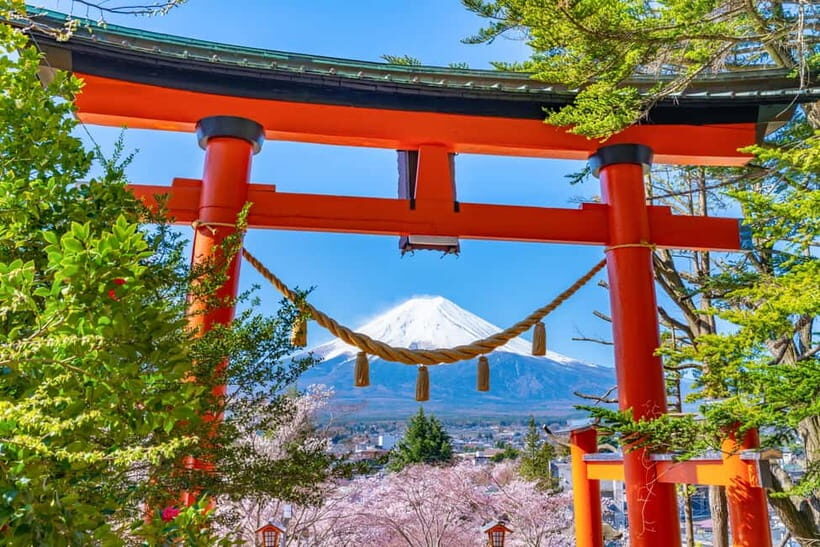
- Arakurayama Sengen Park and the Chureito Pagoda: the postcard moment
- Fuji photos beyond the pagoda: Honcho Street and Lawson Fujikawaguchiko
- Course A highlights: Lake Kawaguchi, Oishi Park, Shiraito Waterfall, Obuchi Sasaba
- Course B highlights: Mt. Fuji Museum, Oshino Hakkai, Lake Yamanaka
- When weather turns: how the guide handles visibility
- Price and value: is $69 worth it?
- Who should book this Fuji day trip (and who shouldn’t)
- Should you book Mount Fuji Highlight Full-Day Tour from Tokyo?
- FAQ
- How long is the Mount Fuji tour?
- How much does the tour cost?
- What’s included in the price?
- Are meals included?
- What are the two route options?
- What major places will I see?
- Where do I meet the tour?
- Is the tour stroller-friendly?
- Is it wheelchair accessible?
- What should I bring for the day?
Quick hits you should know before you go
- Two route styles: Course A leans classic photo stops, Course B adds museum/culture and quieter lakes.
- Chureito Pagoda has a climb: you’ll do a short steep hike with steps to get the postcard angle.
- Fuji visibility depends on weather: the guide may adjust the order to chase clear views.
- Multiple lakes and viewpoints: Lake Kawaguchi, Oishi Park, Oshino Hakkai, and Lake Yamanaka all show Fuji differently.
- Bring snacks: lunch is a break, but meals aren’t included.
- Bus photo tips matter: sit on the left side if you want a better angle for shots while cruising.
Choosing Course A vs Course B: two ways to see Fuji
The biggest decision is which route matches your mood. If you want the “I came to Japan and I need the Fuji photo” energy, pick Course A (Highlight Photo Spots). If you’d rather mix in more hands-on learning and a calmer, rural feel, Course B (Signature Scenic Spots) fits better.
Course A centers on the obvious hits first: Arakurayama Sengen Park / Honcho Street, then the Lake Kawaguchi area and Oishi Park, and it includes Shiraito Waterfall with a short lunch break. It also finishes with Obuchi Sasaba, a tea plantation viewpoint that feels more countryside than tourist strip.
Course B starts in similar Fuji territory but spreads out in a different way. After Arakurayama Sengen Park / Honcho Street, you get Mt. Fuji Museum (or an optional matcha café stop), then shift to Oshino Hakkai and finish with a more relaxed lakeside walk at Lake Yamanaka / Hirano Beach. This route tends to feel less like a photo sprint and more like a day in Fuji’s backyard.
Either way, the tour’s real value is that you’re not just going to one famous spot and calling it done. You see Fuji against water, flowers, historic sights, and misty falls—each changes how the mountain looks.
A few more Tokyo tours and experiences worth a look

The real logistics: 11 hours, big coach, and why timing matters
This is a full-day trip, and you should treat it like one. From central Tokyo you’re on the bus for a while—about 2.5 hours at the start—then you spend the rest of the day hopping between viewpoints with frequent short stops.
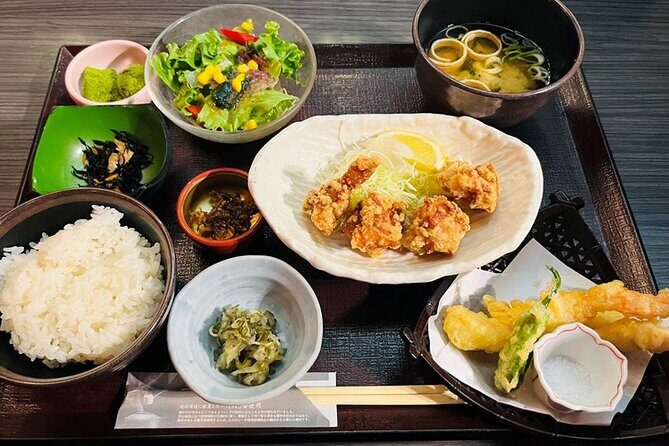
Most of the stops aren’t “wander for hours” situations. You get photo time, walking time, and quick breaks, then move on. That’s why snacks are worth it. Lunch is described as a break at the waterfall stop, but meals aren’t included, so you’ll want something in your bag to avoid getting hungry at the wrong moment.
Group size is up to 49 people, so you’ll be on a larger coach rather than a tiny van. That can actually be a comfort win on a long day: reviews frequently note plenty of legroom and a steady, professional ride.
One more logistics note that’s easy to overlook: Japanese law limits how long vehicles can operate in a single stretch. The guide can also adjust the plan based on real-time traffic and weather, so don’t expect a perfectly rigid minute-by-minute script.
Arakurayama Sengen Park and the Chureito Pagoda: the postcard moment
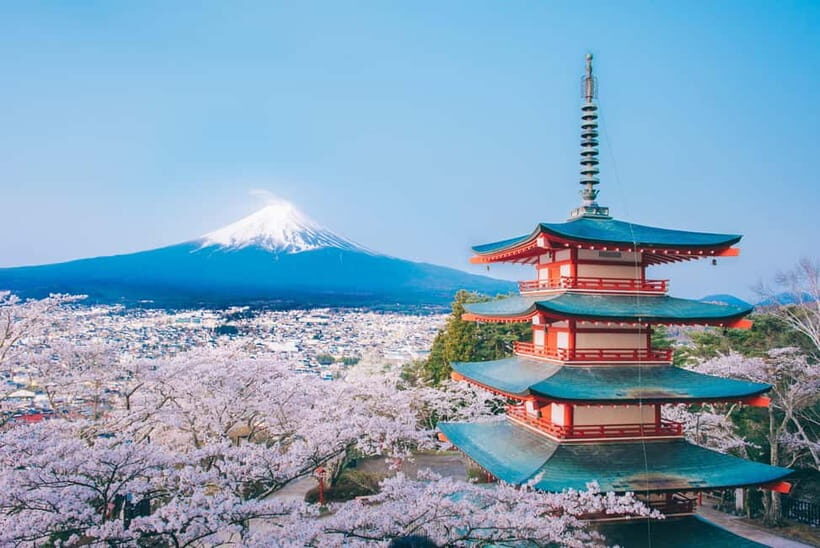
No matter which route you choose, the day’s emotional high point is Arakurayama Sengen Park and the Chureito Pagoda. It’s the famous composition people recognize from postcards: the pagoda layered below Fuji, with the park’s stairway and trees framing the view.
Here’s the practical part. The pagoda visit includes a short steep hike with steps. One review notes it’s around 400 steps up and down, so bring shoes you’re comfortable in and move at your own pace. It’s not wheelchair-friendly, so if mobility is an issue, you’ll want to be realistic about what you can handle.
What I like about this stop is that it’s not just a look-from-the-bus moment. You get into the viewpoint area, you can angle your photos from different spots, and the guide can help the group time the climb so you’re not rushing right at the worst moment for crowds.
And yes, weather matters. When skies cooperate, Fuji can appear sharply even from a distance. When visibility is poor, you’ll still be in a beautiful park setting—but you’ll be judging the day on “partial views” instead of a crystal-clear summit shot.
Fuji photos beyond the pagoda: Honcho Street and Lawson Fujikawaguchiko
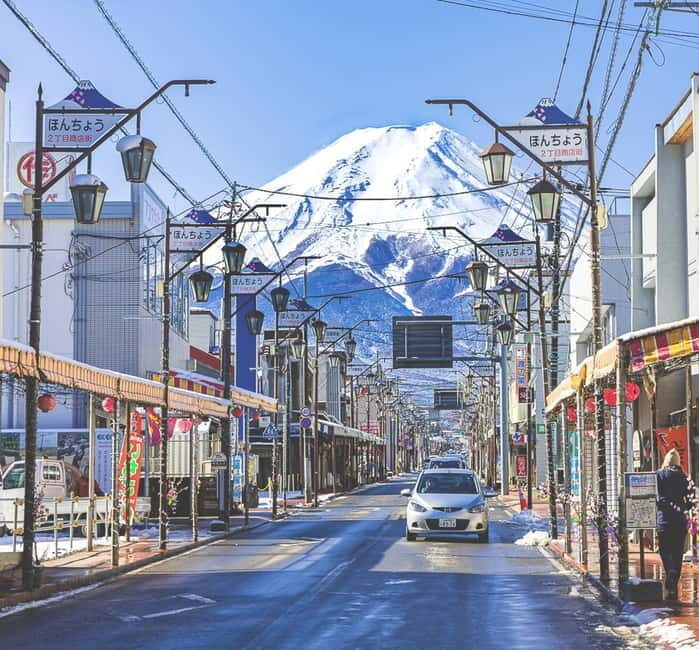
After the park, both routes pull you toward Honcho Street (Shimoyoshida Honcho Street), the nostalgic shopping area where overhead Fuji views can pop between buildings. It’s a nice contrast to the more scenic spots because it gives you a human-scale slice of the region—shops, snacks, and that classic “small-town Japan” feel.
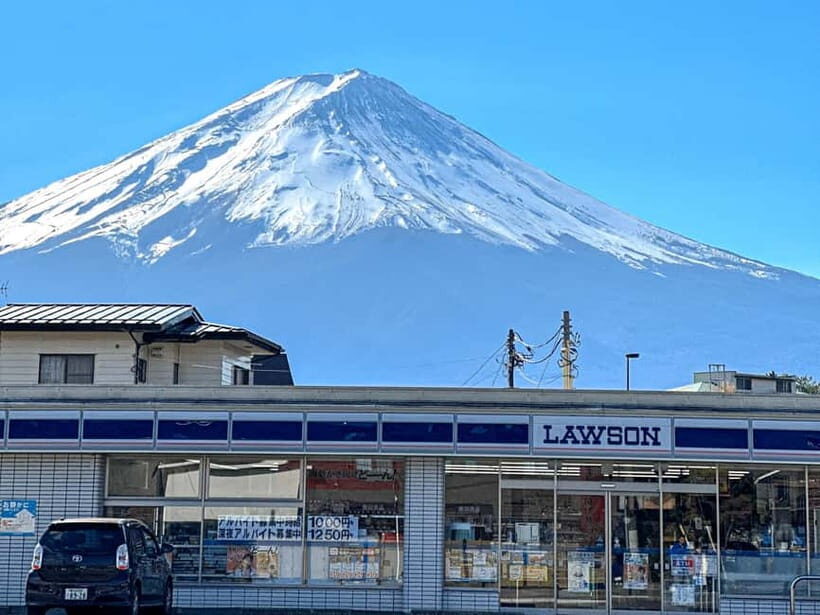
Course B includes Lawson Fujikawaguchiko Town Hall for a break and photo time, and this is where you can catch Fuji rising in the distance if the weather allows. Course A also includes a Lawson Fujikawaguchiko stop, but with a shorter visit. Either way, these combini stops are less about buying and more about having a convenient reference point for photos and stretching your legs.
One smart photo tip from the ride: if you care about views from the bus, sit on the left side. It can make a noticeable difference in how the mountain lines up through the windows while you’re traveling.
Course A highlights: Lake Kawaguchi, Oishi Park, Shiraito Waterfall, Obuchi Sasaba
Course A is built for travelers who want Fuji framed in the classics. The sequence keeps feeding you new “versions” of the mountain.
Lake Kawaguchi and Oishi Park is where the water/flowers combo happens. Lake Kawaguchi is known for reflections, so when the air is clear and calm, you can get that mirror-like effect. Oishi Park adds color with flowerbeds, which changes Fuji from a cold, distant silhouette into a warmer, postcard scene.
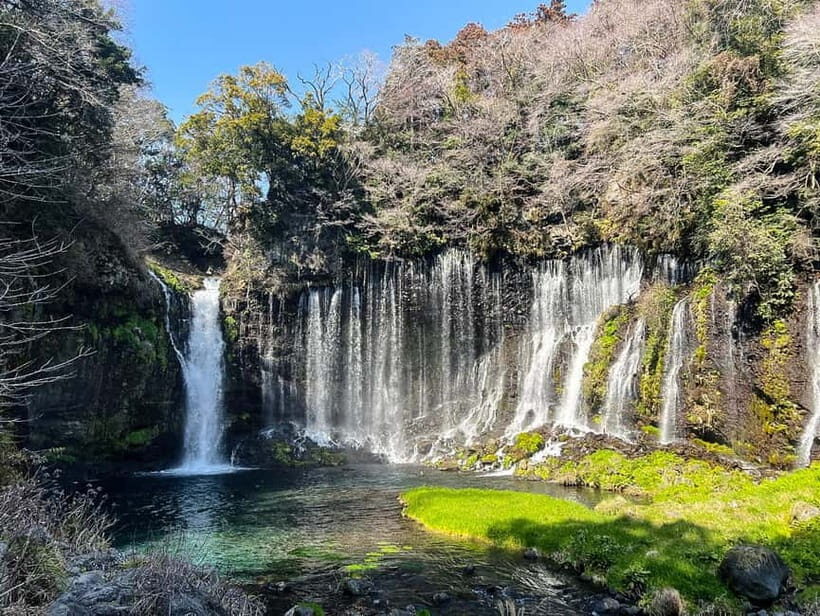
Then the tour hits Shiraito Waterfall (Shiraito no Taki). Expect mist and a cooling walk near the falls. It’s also the stop that includes the lunch break. Since meals aren’t included, think of this as your easiest chance to buy something quick on-site—snacks, noodles, or an ice cream if the line moves fast.
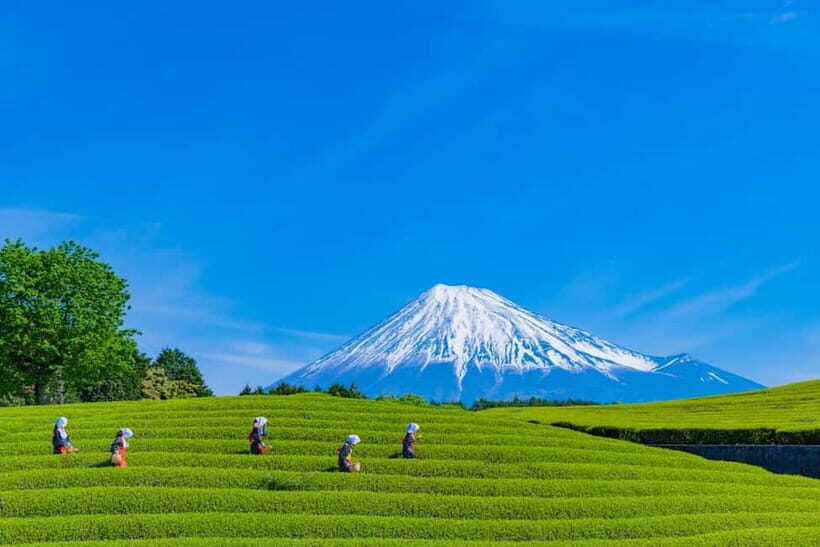
Finally, Obuchi Sasaba brings you to a tea plantation viewpoint. It’s a calmer scene than the busiest photo stops, and it gives Fuji a different mood: rolling green fields with a distant snowcapped peak. If you like images that look less like a theme-park set and more like “this is actually rural Japan,” this is one of the best course choices.
A small drawback to keep in mind: since all these stops are popular, your time at each place is limited. If you’re the kind of person who wants to stay until the sky changes color, you’ll be happier with Course B’s more relaxed pacing.






Course B highlights: Mt. Fuji Museum, Oshino Hakkai, Lake Yamanaka
Course B gives you a slightly more grounded feel: a mix of learning, historic water features, and lakeside relaxation.
The Mt. Fuji Museum is there for a reason. Even if you just skim, it helps connect Fuji with the region’s geology and culture—so the day’s scenery stops feeling random. The alternative here is an optional matcha café visit, so you can choose the vibe you want: learn or slow down.
Next comes Oshino Hakkai, famous for its eight crystal-clear spring ponds. This is the stop that often surprises people. Instead of chasing yet another “Fuji in the background” shot, you get a close-up view of water that feels almost unreal because it’s so clear. The ponds and nearby watermill-style features make it feel historically rooted, and it’s a welcome break from pure walking-on-stairs photo hunting.
The day finishes with Lake Yamanaka / Hirano Beach. This is the payoff for travelers who want to breathe after a busy day. You get lakeside walking time and open views where Fuji can appear reflected in calmer waters—when conditions allow.
If you’re worried about weather, Course B can feel more forgiving. Even on a cloudy day, you’ll still enjoy the pond setting and the lakeside scenery. You might not get the summit shot you hoped for, but you won’t be stuck with only disappointment.
When weather turns: how the guide handles visibility
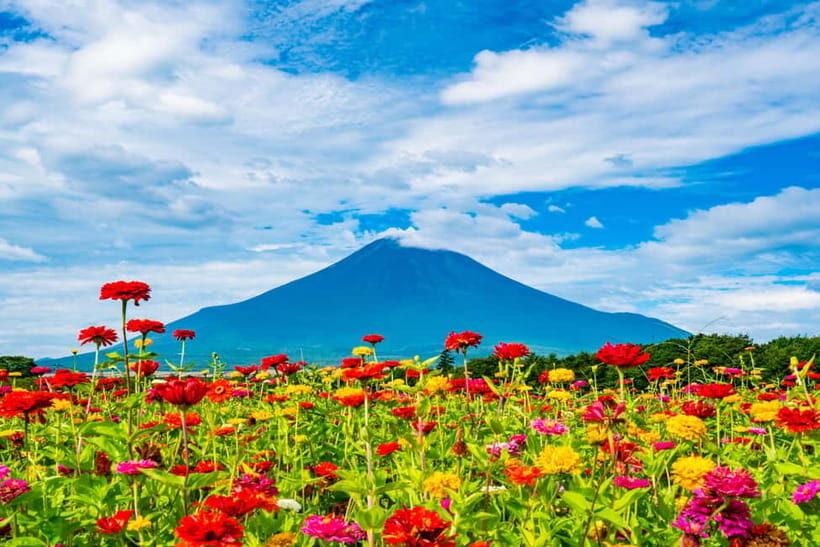
Mount Fuji is famous for being there and also famously for hiding. Clear skies can change the whole day, and the tour is designed to deal with that reality.
What’s worth noting is that the guide may adjust the order based on real-time conditions. One review specifically described a guide recommending changes so they could catch clearer views and even reflections. That’s the difference between a rigid itinerary and a smart one.
My advice: don’t treat Fuji visibility as something you can control. Treat it as a bonus. If you spot Fuji early, take your photos, enjoy the moment, then keep your head up for the other stops where it might reappear. This tour is set up so the scenery still works even if Fuji plays hide-and-seek.
Price and value: is $69 worth it?
For $69 per person, the value is strongest if you compare it to the cost and hassle of going solo.
You’re getting round-trip transportation from central Tokyo, plus an English- and Korean-speaking guide (and guides also operate in Chinese). That matters because getting to Lake Kawaguchi and Oshino Hakkai efficiently is the hard part when you’re not driving.
Also, the tour covers multiple major stops in one day. Instead of paying for separate tickets or spending half the day figuring out trains and buses, you’re buying convenience: someone plans the route, times the stops, and keeps the group moving.
Are there limits? Yes. Lunch isn’t included, and each stop is time-boxed. So if you want “maximum time per location,” you might feel the squeeze. Still, for a first Fuji day trip, $69 can be a fair deal—especially because the day includes several headline sights that are difficult to combine on your own without extra planning.
Who should book this Fuji day trip (and who shouldn’t)
This tour is a great fit if you want:
- A one-day Mount Fuji highlights circuit without DIY logistics.
- Multiple viewpoints such as Chureito Pagoda, lakes, and Oshino Hakkai.
- A guide to help you understand what you’re seeing and keep the day on track.
You might want to skip it (or at least choose Course B thoughtfully) if you:
- Want long, slow exploration at fewer places.
- Have mobility limits and know the pagoda area involves stairs.
- Are strongly focused on getting one perfect summit photo only. Weather can still decide that.
For most people in Japan for a short stay, this tour hits a sweet spot: it’s structured, efficient, and designed around the places you’ve already seen on postcards, while still giving you enough variety to feel like you left Tokyo for real.
Should you book Mount Fuji Highlight Full-Day Tour from Tokyo?
If it’s your first time seeing Fuji, I’d book it—especially if you pick the course that matches your style. Choose Course A if you’re chasing the classic photo lineup and tea plantation views. Choose Course B if you want a calmer pace with Oshino Hakkai ponds and a more relaxed lakeside finish.
Book with a realistic mindset: you’re buying a well-organized day with a good shot at Fuji, not guaranteed clear-sky conditions. Bring comfortable shoes, pack snacks, and if you care about photo angles, try sitting on the left side of the bus.
If that sounds like your kind of day, this is one of the easier ways to turn a Tokyo visit into a true Mount Fuji experience.
FAQ
How long is the Mount Fuji tour?
It runs for about 11 hours.
How much does the tour cost?
The price is listed as $69 per person.
What’s included in the price?
You get round-trip transportation and an English- and Korean-speaking guide.
Are meals included?
No. Meals are not included, and you’ll have lunch time as a break during the day.
What are the two route options?
Course A is a Highlight Photo Spots route focused on classic photo stops. Course B is a Signature Scenic Spots route that includes the Mt. Fuji Museum area and ends at Lake Yamanaka after Oshino Hakkai.
What major places will I see?
Across the routes, expect Arakurayama Sengen Park / Chureito Pagoda, Honcho Street, and scenery around the Lake Kawaguchi / Oishi Park area, Shiraito Waterfall, Oshino Hakkai, Lake Yamanaka, and Obuchi Sasaba depending on the course.
Where do I meet the tour?
The meeting point can vary by option. One listed option includes Starbucks Coffee at Shinjuku L Tower near Tokyo Station Marunouchi North Exit 2.
Is the tour stroller-friendly?
Yes, it is stroller-friendly. You should inform the provider if you’ll bring a stroller.
Is it wheelchair accessible?
No, the tour is not wheelchair-accessible.
What should I bring for the day?
Bring comfortable shoes and snacks.