REVIEW · TOKYO
IKEBANA experience
Book on Viator →Operated by Hiromi’s IKEBANA · Bookable on Viator
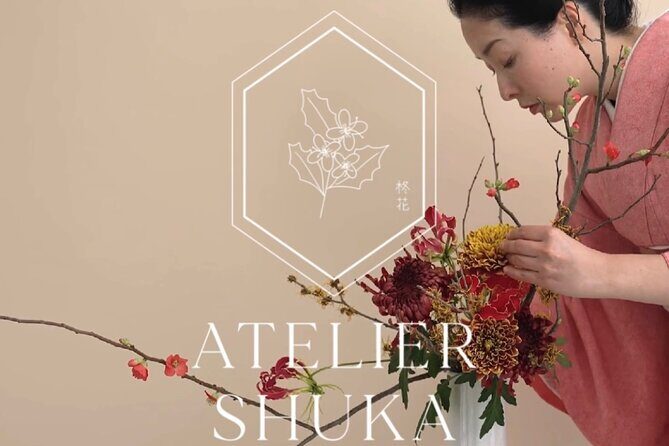
Quiet flowers, clear instructions in Tokyo. This private Ikebana class with Hiromi in her Meguro home is a calm, hands-on way to learn how Japanese flower arranging actually works, from the first rules to your finished piece. I especially liked the patient English teaching and the fact that you make a real arrangement step by step, not just watch. Another big win is the relaxed ending with matcha and Japanese sweets that feels like an authentic break, not an add-on.
You’ll also get a window into Japanese home life, including Japanese-style rooms in the house and a serene studio setting. The one possible drawback is that this experience can be weather-dependent, so if you’re visiting on a tight schedule, you’ll want a little flexibility in your plan.
In This Review
- Key Highlights I’d Prioritize
- Ikebana Lesson in a Real Meguro Home Studio
- What You Learn: Line, Water, and the Basics
- Your Hands-On Creation: The Sample, Then Your Own Arrangement
- Matcha, Wagashi, and a Tatami-Tea Moment After Class
- Price and Logistics: What $115.31 Buys You
- Who This Is Best For (And Who Might Hesitate)
- Practical Tips for Your First Ikebana Day
- Should You Book Hiromi’s Ikebana Class?
Key Highlights I’d Prioritize
- Private home lesson in Meguro, not a generic classroom
- English instruction that’s described as careful, gentle, and easy to follow
- Step-by-step structure: sample first, then your own arrangement
- Instructor feedback + photo after you build your flowers
- Matcha and Japanese sweets after the lesson
- Optional basics of tea ceremony if you want to go further
Ikebana Lesson in a Real Meguro Home Studio
This class is set in a private house in Meguro, in a quieter slice of Tokyo (not the usual rush). The meeting point is Toritsu-daigaku Station (1-chōme-5-1 Nakane, Meguro City), and the experience ends back there, so you’re not stranded after 90 minutes. It’s a private tour, meaning only your group participates, which is ideal if you want questions answered without feeling rushed.
What I like about the home-studio format is that it changes the whole vibe. You’re not just learning Ikebana as a craft project; you’re learning it in a setting that already follows Japanese ideas of space and calm. The experience also highlights Japanese-style rooms in Japanese houses, including an end-of-class moment in a tatami room in several reviews.
A small but practical detail: one review notes that Hiromi can guide you from the station and even handle the walk with an umbrella if needed. That kind of thoughtful arrival helps a lot when you’re navigating Tokyo in a foreign language.
You can also read our reviews of more tours and experiences in Tokyo.



What You Learn: Line, Water, and the Basics
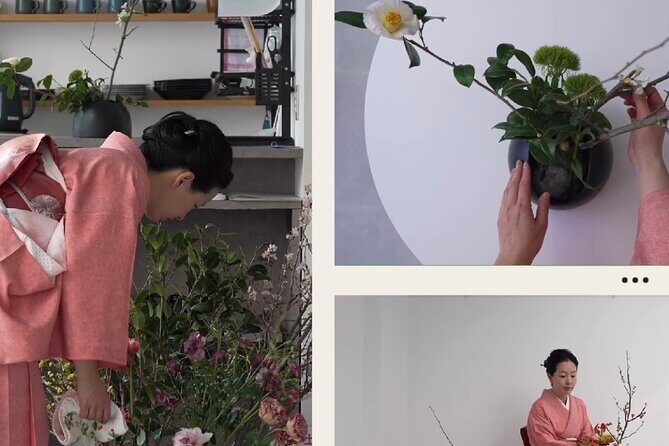
Ikebana has a reputation for being complicated. This is not that. The structure here is beginner-friendly, and you’ll get a clear path from the start.
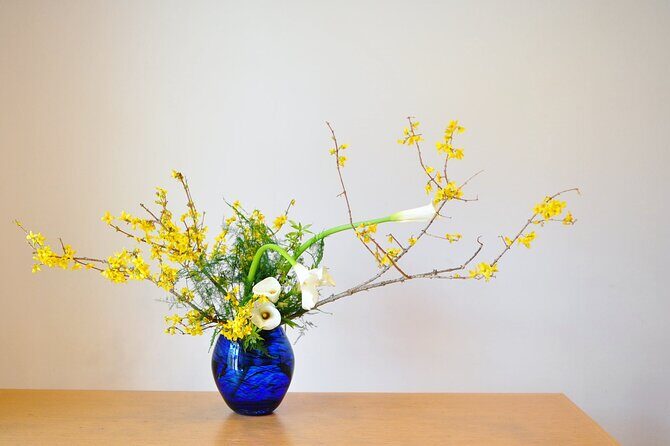
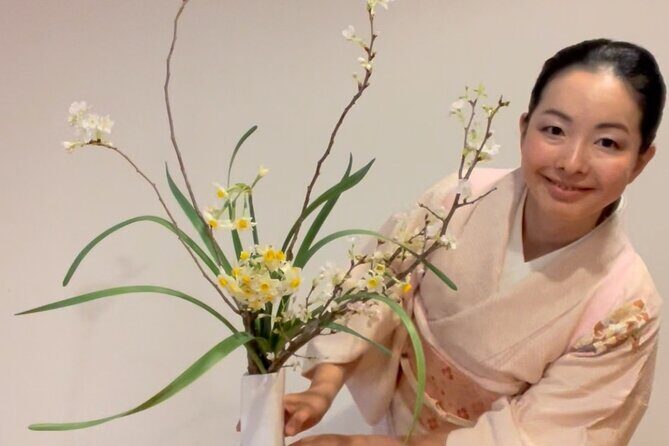
The teaching approach is described as careful and gentle in English. Hiromi will make a sample while referencing the textbook, then guide you as you create something living and personal yourself. You won’t just get vague inspiration. You’ll get the basic thinking behind the art—how to place flowers with attention to form and flow.
One review calls out that Ikebana focuses on the beauty of the flower’s line and water, and that you won’t use many flowers. That matters if you’re a first-timer who thinks you need a huge bouquet budget. It also helps keep the class moving at the right pace during your 1 hour 30 minutes.
Another plus: you’re invited to ask questions, not only about the flowers but also about Tokyo and Japan. In a lesson like this, those small conversations often turn into the most memorable parts, because you’re learning a culture from someone who lives it—not from a script.
Your Hands-On Creation: The Sample, Then Your Own Arrangement
Here’s the rhythm you should expect:
- Hiromi creates a sample arrangement while working through the textbook.
- Then it’s your turn to build your own arrangement.
- She comments or revises as you go, so you can correct mistakes early instead of finishing with a big doubt.
That feedback step is more valuable than it sounds. Many workshops stop at instructions. This one includes guidance that helps your piece look intentional, even if it’s your first time touching the materials.
After you finish, you’ll take a photo. In a craft class, that’s not a gimmick. It’s how you can actually remember proportions, spacing, and the choices you made. You’ll also have something to show later—especially if you’re traveling with family, a partner, or a kid who wants proof they did something real.
Also, the class is described as fun and patient. Multiple reviews highlight that Hiromi is good at explaining clearly in English, so the learning curve stays manageable. If you’re the kind of person who panics when you don’t know the terminology, you’ll likely feel more comfortable here because the instruction is paced for real beginners.
Matcha, Wagashi, and a Tatami-Tea Moment After Class

The lesson doesn’t end when you finish your flowers. If you have time after, Hiromi prepares Japanese sweets and matcha. Reviews mention wagashi and enjoy the setup in a tatami room, which helps the whole experience feel cohesive—teach, create, then slow down.
This is where the class feels especially authentic. Matcha and sweets in Japan aren’t only snacks; they’re a pause that matches the idea behind Ikebana: attention, not speed. You’ll likely appreciate it more than a rushed bow at the end of a tour.
If you’re interested in tea ceremony, the experience also notes that basic tea ceremony can be taught when there’s time after the lesson. Even a short overview can give context for why tea and flower arranging often sit close together in Japanese culture. The key point: it’s offered as an optional add-on, not something that crowds your main lesson.
Price and Logistics: What $115.31 Buys You
At $115.31 per person for about 1 hour 30 minutes, you’re paying for more than a craft. You’re paying for private instruction in a home setting, in English, with feedback as you create, plus matcha and Japanese sweets afterward.
Compared with many Tokyo activities, this offers strong value because:
- It’s private (only your group), so the teaching time is yours.
- It includes hands-on creation with instructor guidance, not just observation.
- You get the cultural wraparound: Japanese-style rooms, tatami atmosphere, and the matcha/sweets break.
- Reviews repeatedly mention the ability to keep learning at home because supplies can be purchased.
The mobile ticket is a simple touch. You won’t be digging for paper paperwork. And since the class is near public transportation, you’re not stuck with a complicated last-mile puzzle.
One practical note for planning: the experience requires good weather. If weather cancels your date, you’ll be offered a different date or a full refund. If your Tokyo schedule is extremely tight, build in a little flexibility so you’re not gambling with your one free afternoon.






Who This Is Best For (And Who Might Hesitate)
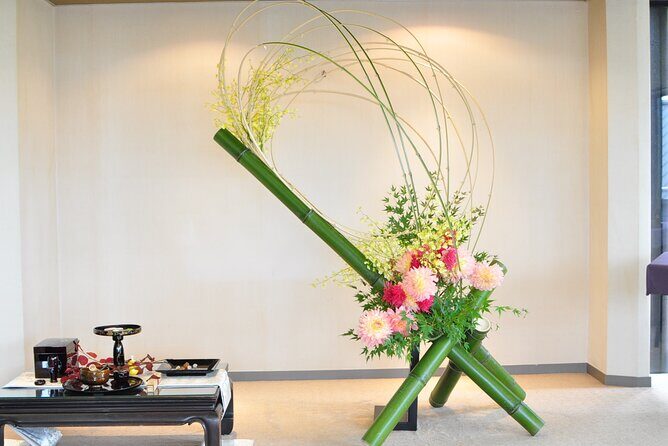
This is a great match for:
- Beginners who want clear steps and patience
- People who want something calm and meaningful, not another crowded checklist
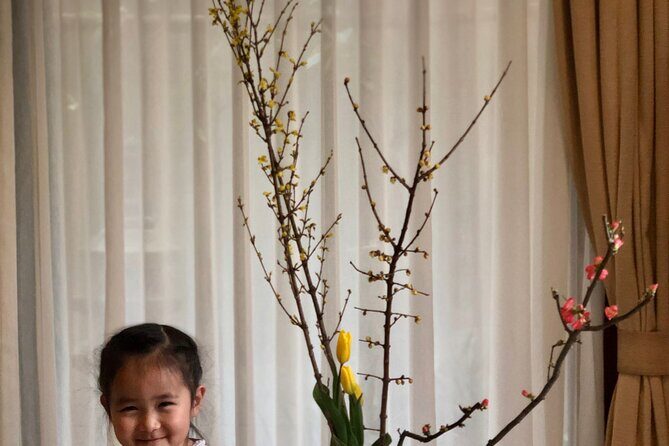
- Families and mixed ages: one review mentions a 3-year-old enjoying freestyle Ikebana, and another mentions three generations sharing the experience
- Anyone who enjoys culture through real daily-life settings, like Japanese home rooms and a quiet studio
If you’re traveling with someone who thinks they hate “arts and crafts,” this class still has a good chance of landing. The guidance is described as flexible and encouraging, and the results are something you can actually take home (or at least document with that photo). One review even describes it as a highlight that helped end the trip on a relaxed note.
The main reason someone might hesitate is comfort level with a private-home environment. You’re stepping into a Japanese house and sitting in Japanese-style spaces. If you’re extremely uncomfortable in that kind of setting, you may prefer a public studio.
Practical Tips for Your First Ikebana Day
To get the most from your lesson, treat it like a small, personal workshop, not a sightseeing stop.
First, arrive ready to ask questions. Since you can ask about Tokyo or Japan alongside Ikebana basics, you’ll get extra value from those conversations. If you’ve got a specific interest—like how tea culture connects to flowers—mention it.
Second, plan to slow down. This class is designed for careful pacing. You’ll watch a sample, then build your own arrangement with feedback. That takes focus, and the best outcome comes when you let the instructor guide you step by step.
Third, bring a mindset for gentle improvement. Multiple reviews highlight that Hiromi is patient and helpful, leaving room for your own creativity. That means your piece doesn’t need to look like a magazine photo. It needs to feel like yours.
Finally, if you want to continue at home, ask about buying supplies. One review specifically notes the ability to purchase supplies so you can keep practicing after you return. If you like your first arrangement, this is the most direct route to turning a one-time memory into a new hobby.
Should You Book Hiromi’s Ikebana Class?
If you want one memorable Tokyo experience that’s quiet, hands-on, and culturally grounded, this is an easy yes. The biggest reasons: private English instruction, step-by-step guidance that leads to a real arrangement, and the thoughtful finishing touch of matcha and Japanese sweets in a Japanese-style setting.
Book it if you:
- enjoy learning through doing
- want something intimate and not crowded
- have even a basic interest in Japanese culture and want it explained clearly
Consider passing if you:
- need a strictly outdoors-only plan
- hate the idea of a home-studio atmosphere
- cannot afford the small risk of weather-based changes
If you do book, you’ll likely leave with more than a photo. You’ll leave with a way to look at flowers differently, and a calmer kind of souvenir than the usual shopping bag.