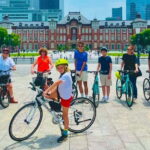
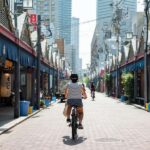
Tokyo by bike beats tour buses. I love the small-group ride through everyday neighborhoods and how it keeps you moving past the usual crowd magnets, plus the lunch is included so you’re not hunting for food mid-tour. One thing to plan for: vegetarian choices can be limited at lunch.
The vibe is old-school Tokyo meets practical touring. You’ll start at Asakusabashi Station, get a quick traffic-rules talk, then roll with an English-speaking guide—one guide name you’ll hear in the reviews is Shogun, praised for keeping a strong pace without making it feel rushed.
The best part for many people is the mix of sights and context: a Shinto shrine, a Buddhist temple, and an Edo-era museum stop that helps the streets make sense. Just know this is not a kids’ tour (minimum age is 15) and you’ll need comfortable shoes.
In This Review
- Key Things You’ll Notice on This Tour
- Why This Bike Tour Feels Like Tokyo, Not Just Sightseeing
- Starting Point at Asakusabashi Station: Get Your Bearings Fast
- Bandai and Asakusa: Toy-Figure Photos Meet Edo-Era Streets
- Riding the Sumida River Toward Ryōgoku: Views Without the Wait
- Ryōgoku Lunch and Sumo History Stops
- Naritasan Fukagawa Fudōdō: Buddhist-Style Worship in Daily Life
- Fukagawa Edo Museum: Making the Edo Period Feel Real
- Local Café Stop: A Soft Landing After the Riding
- Price and Value: What $96 Actually Buys You
- Group Size and Guide Style: Small Means Better
- Getting the Most Out of It: Practical Tips Before You Go
- Who This Tour Suits Best
- Should You Book This Tokyo Bike Tour?
- FAQ
- Where does the tour start and where do I meet the guide?
- How long is the tour?
- Is the tour in English?
- What’s included in the price?
- What should I bring?
- Are vegetarian meals available?
- What are the age requirements?
- What if the weather is unsafe?
Key Things You’ll Notice on This Tour
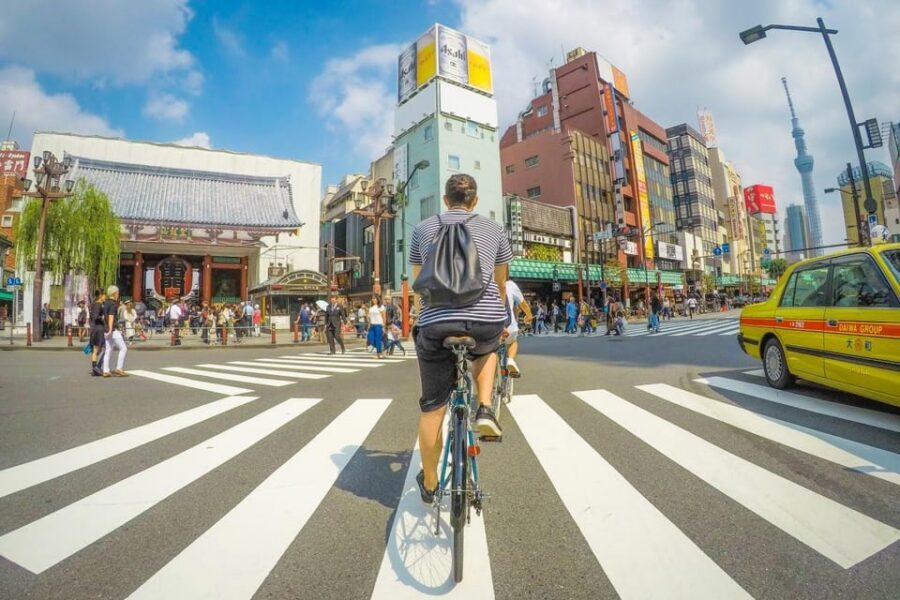
- Small group (up to 5): easier conversation with your guide and less waiting around
- Crowd-skipping by cycling: you spend time where locals live, not just where the tour buses park
- Shrine + temple contrast: you get both Shinto and Buddhist experiences in one loop
- Edo Museum stops for context: you see what daily life looked like during the Edo era
- Lunch and entry fees included: more value than the typical piecemeal sightseeing day
Why This Bike Tour Feels Like Tokyo, Not Just Sightseeing
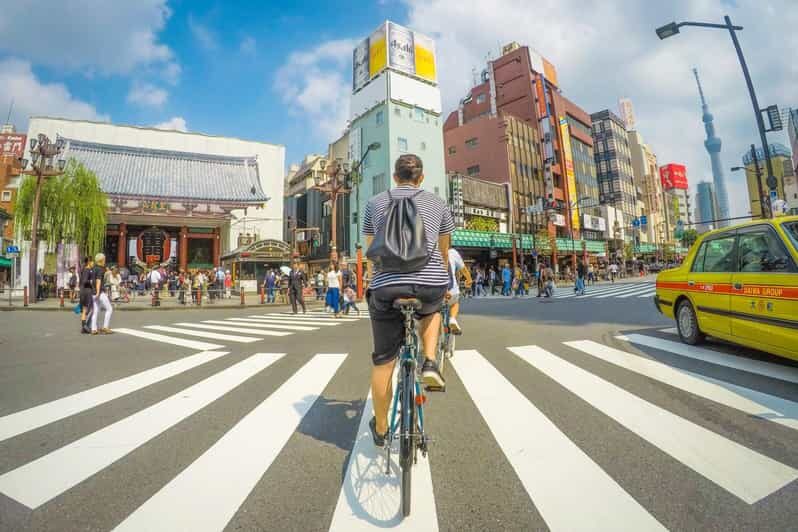
This tour works because it’s built around movement. Instead of standing in line for every photo, you cycle between neighborhoods, with short, focused stops where you actually need to get off the bike. The route is designed to show you the Edo-era Tokyo vibe without turning the day into one long crush of people.
You also get structure that helps a first-time visitor. Early on, the guide covers Japanese traffic rules—small stuff like how to handle intersections and where to ride matters a lot when you’re on a rental bike. That talk makes the rest of the ride feel smoother and more confident.
And yes, the lunch being included is a real quality-of-life win. When food is part of the plan, you’re less stressed about timing, and the day stays on rhythm.
You can also read our reviews of more cycling tours in Tokyo
Starting Point at Asakusabashi Station: Get Your Bearings Fast
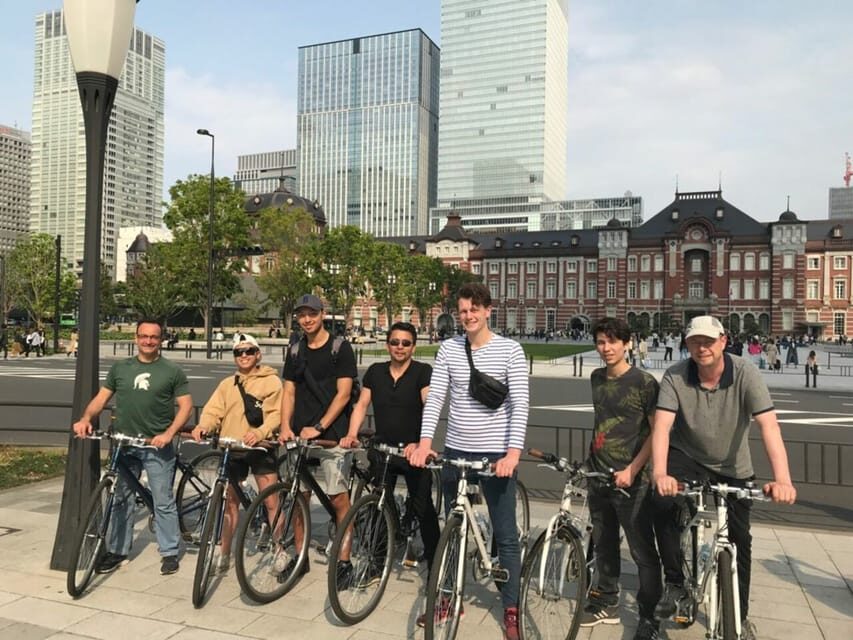
You meet at Asakusabashi Station Exit A3 (Toei Asakusa Line). The guide waits outside that exit, which is helpful on a city morning when stations can feel like mazes.
Before you roll, you’ll also get a short lecture on traffic rules in Japan. This is the kind of detail that turns a bike tour from mildly exciting to genuinely comfortable, especially if you’re not used to cycling in big-city traffic patterns.
One practical note: you’ll want comfortable shoes. The day includes temple areas and walking around stops, and Tokyo sidewalks are not the place to wear brand-new footwear.
Bandai and Asakusa: Toy-Figure Photos Meet Edo-Era Streets
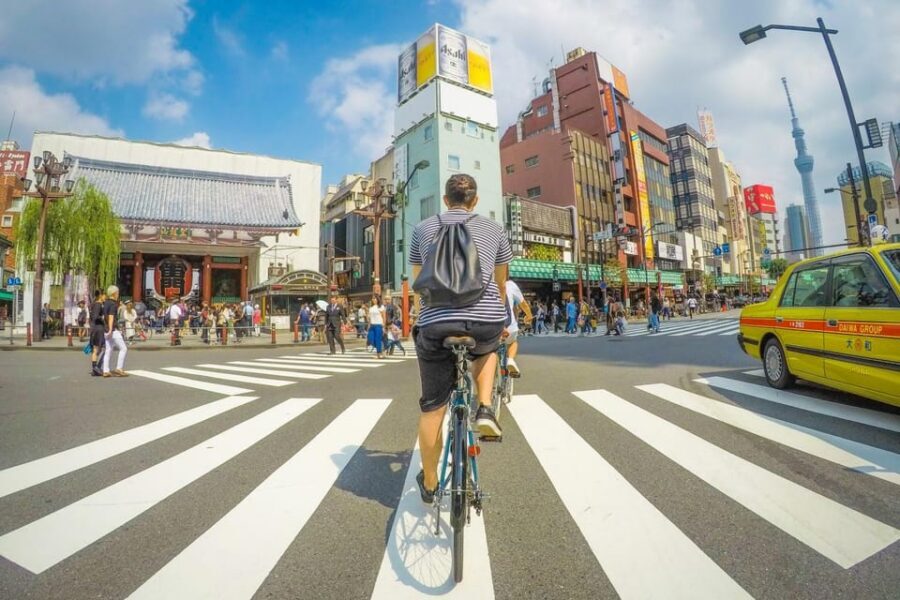
After meeting up, you head toward Asakusa, an area that’s been popular since the Edo period (1603–1868). That matters, because you’re not just touring random stops—you’re moving through places that have long been part of the city’s visitor flow.
A fun first pivot comes at the Bandai CO., LTD. head office stop. You’ll have around 20 minutes here, with the chance to see big anime figures such as Dragon Ball and Doraemon. It’s light and modern, but it also fits Tokyo: pop culture is layered over older city habits.
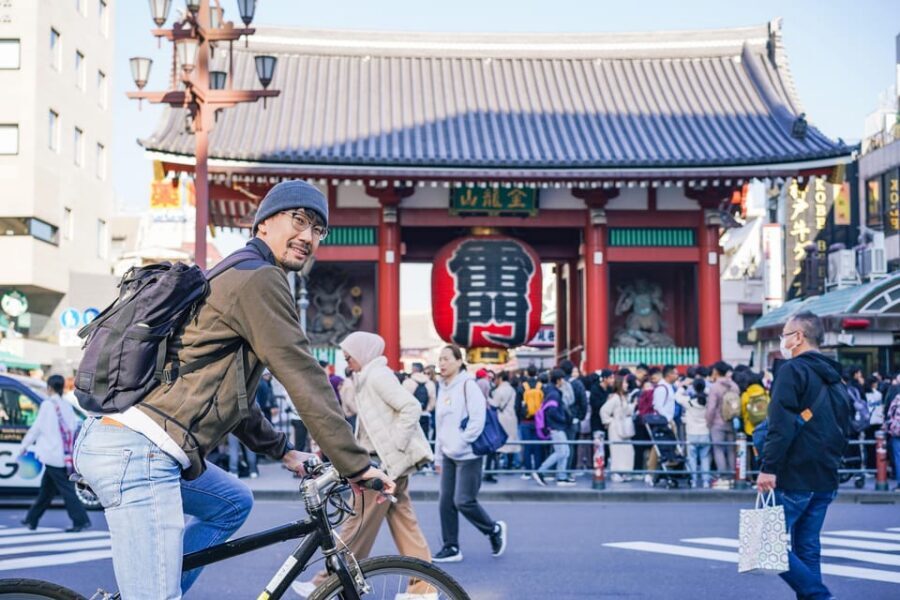
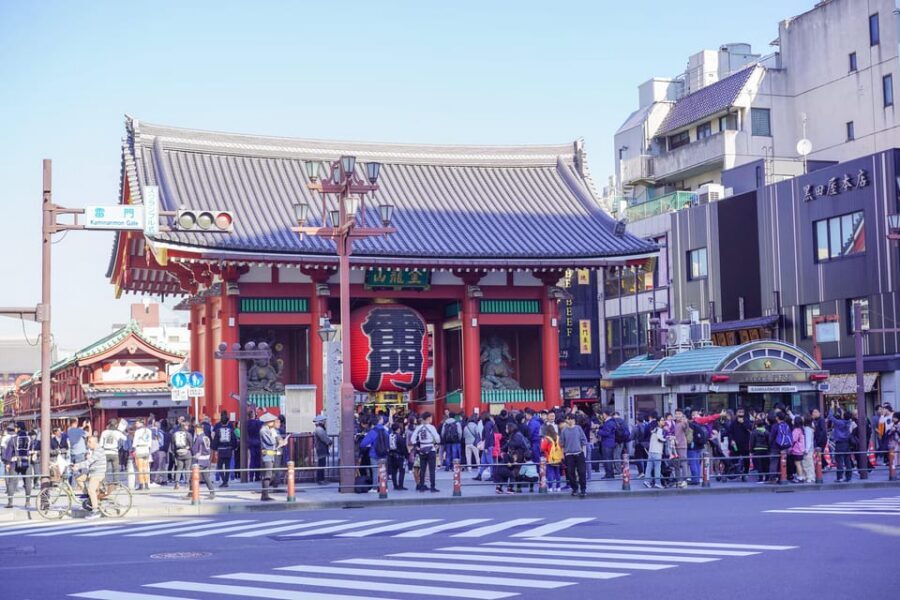
Next comes Kaminarimon, the famous gate area often seen in photos. The stop is short (about 10 minutes), which is smart for this kind of day. You get the landmark without spending the whole morning fighting the crowds.
After that, you spend time at Sensō-ji Temple (about 30 minutes). Even if you’ve seen temple photos before, standing there longer helps you notice details—the textures, the flow of visitors, and the fact that this is still a working spiritual space.
Riding the Sumida River Toward Ryōgoku: Views Without the Wait
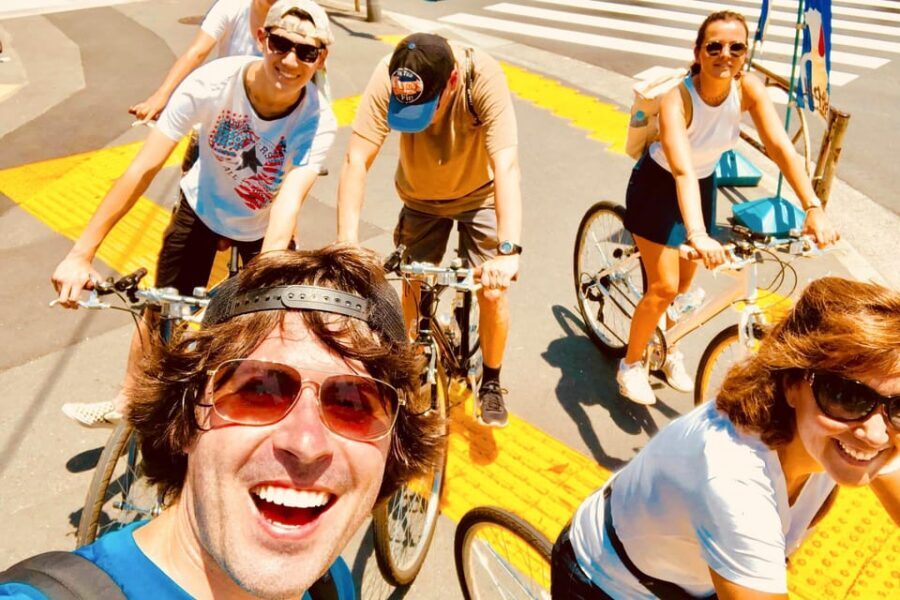
Cycling along the Sumida River is where the day starts to feel like a real Tokyo experience. There’s a noticeable shift from stop-and-go sightseeing to the steady pace of a bike ride, with skyline views that you simply don’t get from inside a bus.
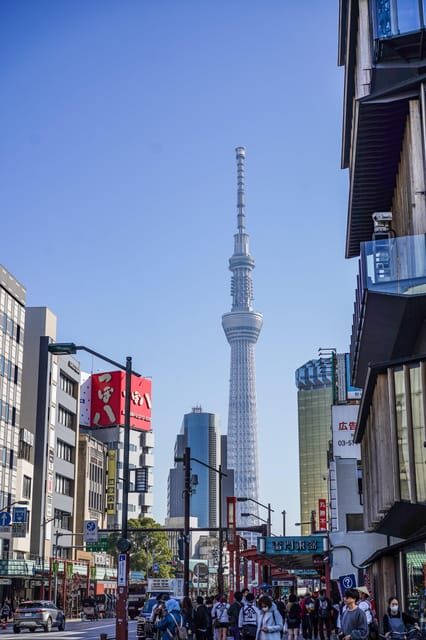
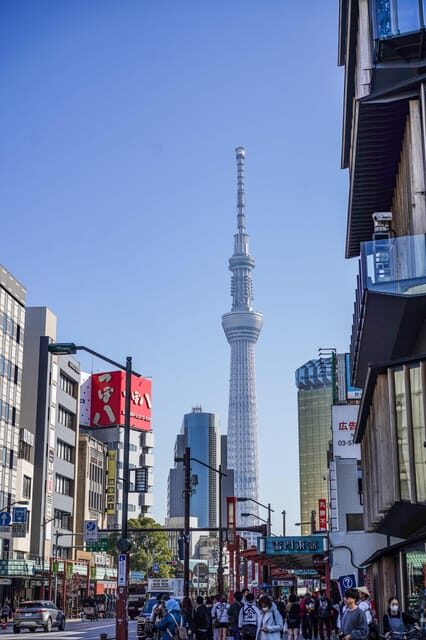
You’ll also cross a bridge where you can see Tokyo Skytree. The height gets cited as 634 meters, and even if you’ve seen it on postcards, it hits differently when it’s framed by the river and surrounding streets.
As you continue toward Ryōgoku, the scenery and the theme start to change. Ryōgoku is known as the Sumo area, so the tour naturally moves from general Edo-era tourism energy into something more specific.
Ryōgoku Lunch and Sumo History Stops
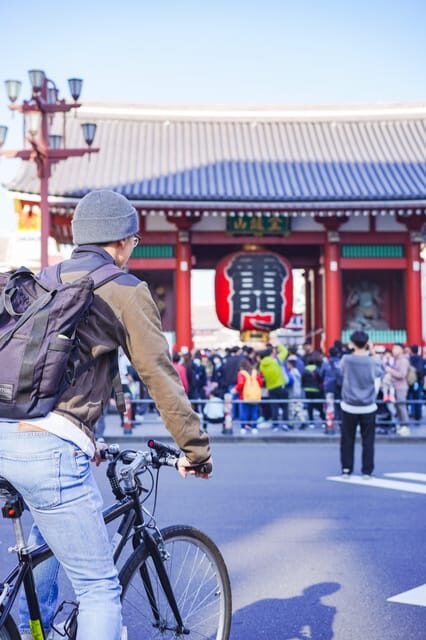
Once you arrive in Ryōgoku, you’ll walk around a bit to learn about the history of sumo. This is a good stop for people who like context, because sumo isn’t just a sport here—it’s part of local identity.
Then comes lunch at a local restaurant. The scheduled meal time is about 45 minutes, which gives you enough room to eat without feeling like you were dropped in and left to figure things out.
A practical consideration: vegetarian menus aren’t always fully available at Japanese restaurants, so vegetarian choices on this tour are limited. If you eat vegetarian, it’s worth planning around that and deciding what you feel comfortable ordering ahead of time.
You can also read our reviews of more guided tours in Tokyo

Naritasan Fukagawa Fudōdō: Buddhist-Style Worship in Daily Life
After lunch, you cycle to the Fukagawa area and first visit Naritasan Fukagawa Fudōdō (about 35 minutes). This stop brings you deeper into Buddhist temple life, and it also changes the pace again—from landmark sightseeing to a quieter, more devotional atmosphere.
This is the kind of place where your guide’s presence matters. Without a guide, you might focus only on what’s visually obvious. With one, you’re more likely to notice what people do there as part of daily worship and how that differs from what you saw earlier at the Shinto side of the route.
If you enjoy Japanese religious sites as living culture rather than just architecture, this is a highlight.
Fukagawa Edo Museum: Making the Edo Period Feel Real
Next is Fukagawa Edo Museum (about 45 minutes). The point here is not just viewing artifacts—it’s understanding how people lived during the Edo era, described as about 150 years ago.
This stop is valuable because it ties the rest of the day together. You’ve walked temple grounds, seen a major gateway area, moved through the Sumida river corridor, and touched pop culture at Bandai. The museum gives your brain a way to connect those pieces into a timeline.
It’s also a good indoor break, especially if the weather turns hot, rainy, or too bright to enjoy walking.
Local Café Stop: A Soft Landing After the Riding
You finish with a short local café stop (about 15 minutes). This is not a full meal replacement, but it’s a nice buffer to transition out of the museum and back into “I’m leaving Tokyo soon” mode.
Think of it as a simple way to settle the day. You’ll be back near the meeting point after the last riding segment, and the café stop helps keep energy steady for the final stretch.
Price and Value: What $96 Actually Buys You
At $96 per person for about 5 hours, the value is strongest for two reasons: everything is grouped into a single price, and the day includes access plus logistics.
You get bike rental, a live English guide, lunch, Edo Museum entry, and insurance. For Tokyo, adding those pieces individually usually costs more and takes more time to arrange yourself—especially the bike and museum entry parts.
The items not included are also clear, which helps you budget honestly:
- Shoes (you bring your own)
- Cycling clothing (you wear what you’re comfortable in)
- Additional food and drink beyond lunch (available for purchase)
For most people, this is priced like a focused, guided half-day with real add-ons, not just a narration walk.
Group Size and Guide Style: Small Means Better
This tour caps at 5 participants. In practice, that usually means you can ask questions without feeling like the group is always waiting on you or that the guide is talking only to a few fast walkers.
In the reviews, the guide name Shogun comes up as an example of someone who kept the pace going to cover the historical areas efficiently. That’s exactly what you want in a bike tour: enough momentum to make the riding feel worth it, with enough time at stops to actually see things.
Also, the tour is praised for avoiding the hard-sell feel that some guided days can have. That matters if you want your time to stay on sightseeing and not shopping.
Getting the Most Out of It: Practical Tips Before You Go
Here’s how to make the day go smoothly:
- Wear comfortable shoes because you’ll do temple/museum walking.
- Carry minimal luggage. You cannot leave luggage at the rental bike office, so use coin lockers before the tour.
- Arrive on time. If you miss the start and the group leaves, there’s no joining late.
- If you’re sensitive to weather, keep a flexible mindset. The tour can be canceled for safety if conditions aren’t suitable.
All levels are welcome, and there’s no special requirement beyond being comfortable enough to ride. There’s also a height rule: anyone over 150 cm can join.
Who This Tour Suits Best
This is a great match if you want:
- A guided day that mixes temples, history, and city views in one loop
- A bike tour that skips some crowd-heavy wandering by moving between areas
- A schedule that includes lunch and two museum/learning-style stops (temple + Edo museum)
It may feel less ideal if:
- You need guaranteed vegetarian options with wide variety
- You strongly prefer very slow, long stops (this tour balances riding and visits over a total 5-hour window)
It’s also not designed for kids under 15, so families with younger children will need to look elsewhere.
Should You Book This Tokyo Bike Tour?
I think you should book this if you want a high-efficiency Tokyo day that still feels local. The combination of cycling along the Sumida River, two different religious sites, and an Edo-era museum stop gives you context fast, and the included lunch plus museum entry makes the value hard to argue with.
I’d hesitate if your vegetarian options are non-negotiable, or if you’re uncomfortable with the idea of arriving on time and riding a set route even when you’d rather linger in one place.
FAQ
Where does the tour start and where do I meet the guide?
You meet outside Asakusabashi Station Exit A3. The guide is waiting there before you begin cycling.
How long is the tour?
The tour runs for 5 hours.
Is the tour in English?
Yes, the live tour guide speaks English.
What’s included in the price?
The price includes bike rental, the guide, lunch, Edo Museum entry fee, and insurance.
What should I bring?
Bring comfortable shoes. You also should plan to store luggage in lockers since you cannot leave it at the bike rental office.
Are vegetarian meals available?
Vegetarian menus are not fully guaranteed at all Japanese restaurants, so vegetarian options are limited on this tour.
What are the age requirements?
The tour is not suitable for children under 15 years.
What if the weather is unsafe?
The tour may be canceled in unsuitable weather for safety reasons.