REVIEW · KYOTO
Nara 8hr Private Tour – Kyoto DEP. with Licensed Guide
Book on Viator →Operated by Japan Guide Agency · Bookable on Viator
Nara is a great use of one day. This private 8-hour trip from Kyoto puts you in front of Todai-ji and Nara Park’s free-roaming deer, then keeps the story moving with a multilingual, government-licensed guide who helps you understand what you’re seeing. I also love the flexibility to choose 3 to 4 sites that match your interests instead of rushing through a fixed checklist, with deer, shrines, temples, and old-town streets as the main ingredients. The main drawback is that it’s mostly a walking day with public-transit connections and popular sights can feel crowded, especially around Todai-ji.
Meet up is on foot within a designated Kyoto area, and the tour is designed as a true walking experience rather than a private-vehicle day. Budget for entrance tickets and lunch, because they’re not included, and you’ll want comfortable shoes because the schedule assumes you’ll keep moving.
If you like history you can actually see, plus a little nature chaos from the deer, this is a strong way to turn Kyoto downtime into real payoff.
In This Review
- Key things that make this Nara tour worth your time
- Why Nara from Kyoto feels smarter than a train-and-hope day
- The on-foot Kyoto meetup and the public-transit reality
- Todai-ji: the scale, the setting, and how to not get lost in the crowd
- Nara Park and Kasuga Taisha: deer magic plus shrine calm
- Choosing between Wakakusayama, gardens, and viewpoint breaks
- Horyu-ji and the oldest-stuff mindset
- Kofuku-ji, Heijō Palace, and the city-wide history payoff
- Yakushiji, Shin-Yakushiji, and Tōshōdai-ji: when you want the temple details
- Naramachi and Nara National Museum: old town atmosphere and Buddhist art
- Gardens and neighborhoods also help your guide tailor the day
- Price and value: what $201.51 per person really buys
- Who should book this Nara private tour, and who might not
- Should you book the Nara 8-hour private tour from Kyoto?
- FAQ
- How many sites can we choose for this Nara tour?
- Is this tour walking only, or does it include a private vehicle?
- Are entrance fees and lunch included in the price?
- Where do we meet the guide in Kyoto?
- Are the guides licensed and English-speaking?
- Can I cancel for a full refund?
Key things that make this Nara tour worth your time
- Pick your 3 to 4 stops from a menu of major temples, shrines, gardens, and Nara’s historic districts
- Todai-ji and Nara Park pair well for scale: colossal Buddha views, then deer in the grass
- Kasuga Taisha is a standout shrine option when you want a calmer, more ceremonial walk
- You can trade crowds for variety by choosing alternatives like Horyu-ji or Yakushiji options
- Licensed guides make navigation painless and add context for Shinto and Buddhist sites
- Garden stops matter when you want a break from heavy sightseeing
Why Nara from Kyoto feels smarter than a train-and-hope day
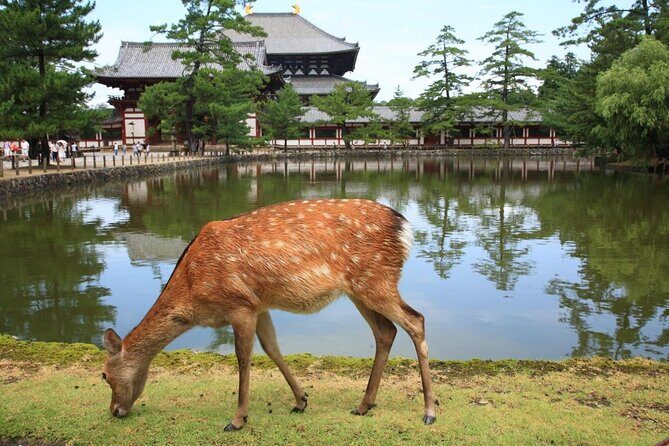
Nara is close to Kyoto, but it still has the feeling of an older world. One reason this private format works is simple: Nara’s best-known sights are clustered, yet the “what order should I do” problem is real. With a guide, you’re not just traveling between places. You’re also learning how the places connect—temples, shrines, and the city’s ancient role as Japan’s capital.
I like that the tour is framed as a full walking day (about 8 hours) with your own selection of 3 to 4 sites. That means you can protect the time you have. Instead of doing ten quick stops, you can slow down just enough to notice architectural details, temple layout, and why certain deities or Buddhist traditions are linked to specific places.
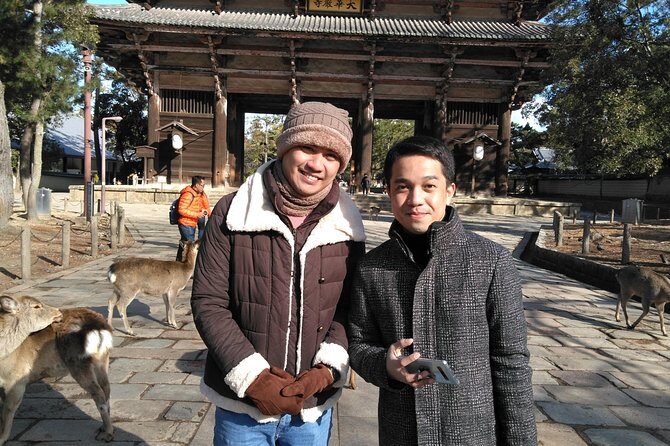
The deer factor also matters. Nara Park is famous, but the experience is more than a photo moment. If you go with a plan and a bit of caution, you get that playful, surreal atmosphere without turning the day into a chaotic snack chase.
You can also read our reviews of more guided tours in Kyoto
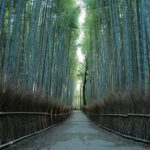

The on-foot Kyoto meetup and the public-transit reality
This is a walking tour that starts with an in-person meetup on foot in a designated Kyoto area. There’s pickup offered, but the key point is that you’re meeting near transit, not stepping into a private vehicle.
That changes how you should prepare:
- Wear shoes that handle uneven temple paths and long periods of walking.
- Bring a layer. Weather can swing fast, and one cold-day experience in the tour’s history shows that temperatures can catch you off guard.
- If you’re visiting during a busy season, assume you may spend extra time threading through crowds at major gates and halls.
Even when the day is scheduled well, you should still expect some slower moments—Todai-ji in particular can be crowded with school excursions. A guide helps you pass through efficiently and gives you a reason to look longer once you’re there.
Todai-ji: the scale, the setting, and how to not get lost in the crowd
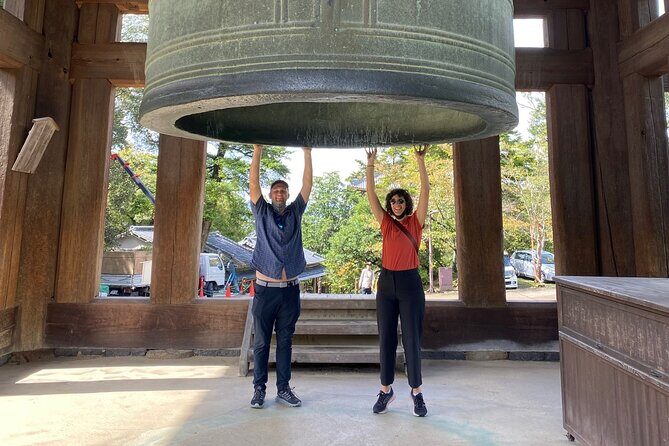
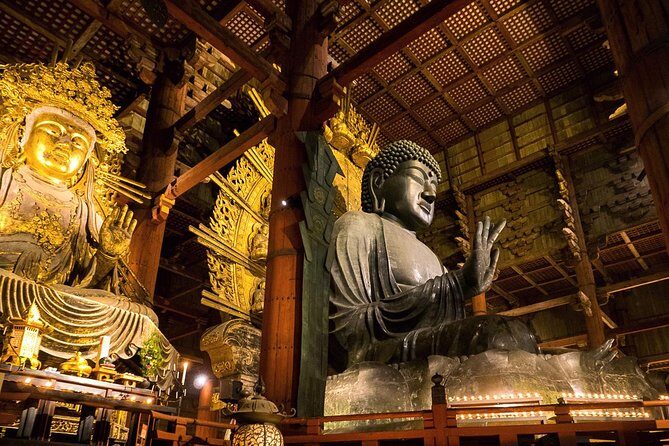
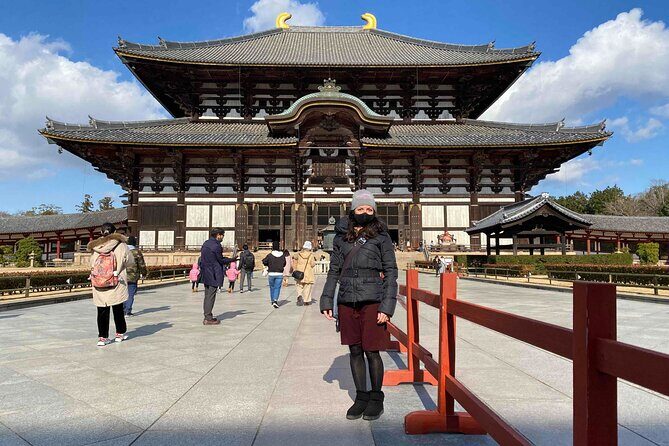
Todai-ji is usually the anchor stop because it’s one of Nara’s defining landmarks. The temple complex includes the Great Buddha Hall (Daibutsuden), where you see the colossal bronze Buddha statue at the heart of the experience.
Here’s what makes Todai-ji special in a guided day:
- Scale lands fast. The gate and hall architecture create an instant sense of importance, so you don’t need a long lecture to feel the impact.
- A good guide helps you notice what to prioritize once you’re inside, so you’re not just moving with the crowd.
- It’s also a great place to understand how Buddhism shows up in public life and temple design.
One practical caution: Todai-ji can get very busy, especially when school groups are present. If your main goal is quiet appreciation, build your expectations around that. With a licensed guide, you can still have time to look and connect the dots, but you should mentally prepare for foot traffic.
Also, many temple stops have entrance fees not included in the tour price. Plan ahead so you’re not surprised when you reach the ticket gates.
Nara Park and Kasuga Taisha: deer magic plus shrine calm
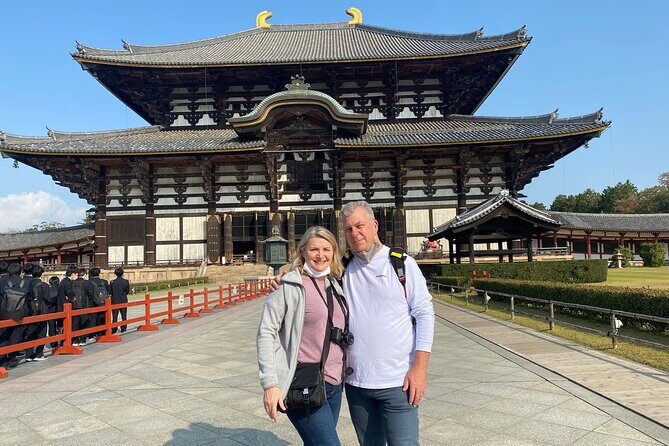
Nara Park is a major attraction zone in central Nara, and it’s free to enter as part of the park experience. Established in 1880, it sits near several big sights—so it often becomes the hinge of your day.
The deer are the headline, but the real trick is timing and attitude:
- The deer can be bold and very interested in what people are holding.
- You’ll have a better experience if you stay calm and listen to your guide’s cues.
Kasuga Taisha is the other key pairing option. It’s one of Nara’s most celebrated shrines, dedicated to a deity associated with the protection of the city. If Todai-ji gives you Buddhist monument scale, Kasuga often gives you a more shaded, ceremonial walk with a strong sense of place.
Many guides on this tour are good at explaining how Shinto shrines and Buddhist temples exist side-by-side in Japan’s cultural landscape. That context helps the day feel coherent, not like a random collection of stops.
Choosing between Wakakusayama, gardens, and viewpoint breaks
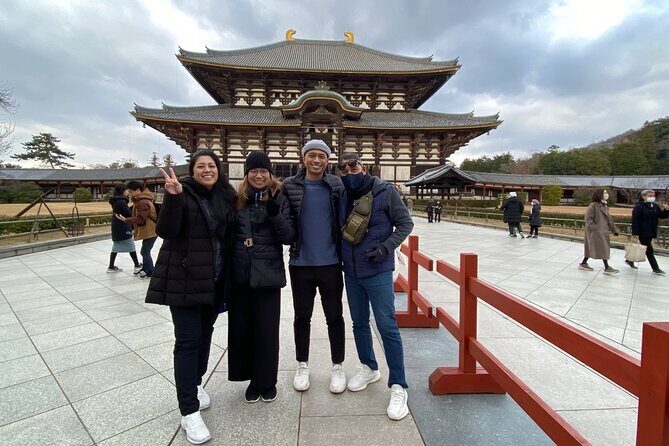
Not every itinerary has to be temples-only. Two kinds of “breather” stops show up in the available options: viewpoint time and garden time.
Wakakusayama Hill is the grass-covered hill behind Nara Park, between Todaiji and Kasuga. It’s about 350 meters tall, with open views over Nara City. If you want the city’s layout in one glance, it’s a great counterbalance to indoor halls.
Then there are the gardens:
- Isuien Garden uses a neat concept called borrowed scenery, using Todaiji’s Nandaimon Gate and Mount Wakakusayama as part of the garden’s visual composition.
- Yoshikien Garden is named after the Yoshikigawa River and built on part of the former Kofukuji priests’ residence site.
These aren’t “extra” in a good Nara day. They reset your brain. If your legs are feeling tired after temple-heavy walking, gardens and hill views can keep the day from turning into a grind.
Entrance fees for these stops are not included, so double-check what you’ll need to pay on the ground.
You can also read our reviews of more private tours in Kyoto


Horyu-ji and the oldest-stuff mindset
If you’re a “show me the earliest examples” person, Horyu-ji is one of the most compelling options. It was founded in 607 by Prince Shotoku, and it’s among Japan’s oldest Buddhist temples. This is the kind of stop where the guide’s explanation makes a big difference, because you’re seeing centuries of survival in wood and stone.
One review memory that fits this kind of day: the morning at Horyu-ji was described as a highlight because it’s known for being one of the oldest wooden buildings, with clear sky and a sense of quiet scale.
There’s a practical reason to consider it. When you pair Horyu-ji with a main Nara Park shrine or temple, you get both “monument” and “origin story” in a single day.
Kofuku-ji, Heijō Palace, and the city-wide history payoff
Not every Nara stop is about one single hall. Some are about how power and culture worked across the capital.
Kofuku-ji connects to the Fujiwara clan, an influential aristocratic family in Nara and Heian-era Japan. If you want court-level history without reading a textbook, Kofuku-ji helps bridge temple life and political importance.
Heijō Palace Site Historical Park is different. During the Nara Period (710–794), Nara served as Japan’s capital, known as Heijō-kyo. The palace covered roughly one kilometer wide by one kilometer long, and the site is now a historical park option. If your goal is to understand how Nara functioned as a capital, this stop gives you city-scale context rather than one building at a time.
You might find this is a good choice if you already feel “templed out,” but still want a strong dose of meaning.
Yakushiji, Shin-Yakushiji, and Tōshōdai-ji: when you want the temple details
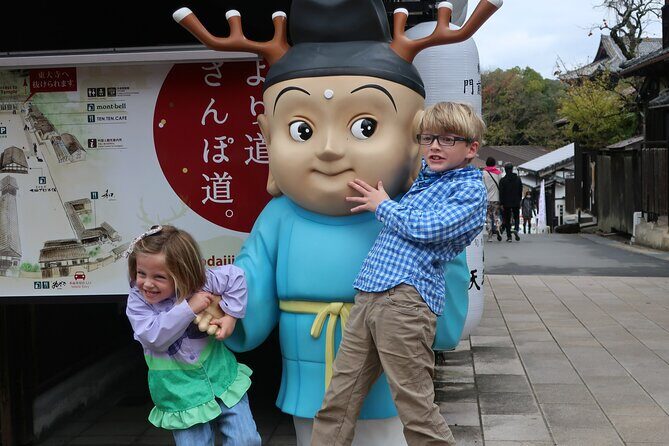
For many people, Todai-ji and deer are the first memory. But if you stick with the schedule flexibility, Nara can also deliver temple-specific depth.
Here are the options you can plug into your 3–4 site plan:
- Yakushiji: constructed by Emperor Tenmu in the late 7th century, linked to recovery from illness in the emperor’s family. It’s known for a strictly symmetric layout.
- Shin-Yakushiji: founded during the Nara Period by an empress for the sake of an ailing emperor, devoted to Yakushi Buddha, the patron of medicine in Japanese Buddhism.
- Tōshōdai-ji: founded in 759 by Ganjin, a Chinese priest invited to Japan to help train priests and improve Buddhist practice.
If you care about the “why this temple exists” angle, these stops are some of the most rewarding choices. A licensed guide can help you connect these motivations—illness, protection, practice—to the way temples were designed and supported.
Entrance fees apply, so plan your budget based on which combination you choose.
Naramachi and Nara National Museum: old town atmosphere and Buddhist art
Two options add a different texture to the day: old-town streets and museum time.
Naramachi is an Edo-era district of Nara with preserved traditional residential buildings and warehouses that you can visit. It’s also where you’ll find shops and cafes, so it’s a practical place to slow down, snack, and shop without losing the historical feel.
If you’re more art-focused, Nara National Museum is a strong option. It focuses on Japanese Buddhist art and was established in 1889. Museum time works best when your other stops are more architecture-and-crowd focused. It’s also a good “weather insurance” option if it’s raining.
If you choose museum time, remember it takes time out of walking routes. With only 3–4 sites in the day, you’ll want your guide to help decide where the museum fits best.
Gardens and neighborhoods also help your guide tailor the day
The best part of this tour is that your guide isn’t just reading off a script. You choose your 3–4 sites, and your guide customizes the flow around your priorities.
In past tours on this day trip, guides like Ken, Haru, Junichi, Yuka, Taku, Momoyo, Naomi, and Ichiro are known for steering the day based on the group’s interests. Some people care more about architecture and history details. Others want practical navigation tips, including how to use public transport during the day.
If you want your experience to feel personal, tell your guide up front:
- whether you want more temples or more town/garden atmosphere,
- if you prefer a less crowded route,
- what kind of pace feels right for you.
That’s where you get the value. You’re paying for someone who helps you choose the right time and the right order for your group, not just someone who walks you to the ticket lines.
Price and value: what $201.51 per person really buys
At $201.51 per person, the headline price can look high until you translate it into what you’re getting. You’re paying for:
- an 8-hour private day structure,
- a licensed local English-speaking guide, and
- customization of 3–4 key sites rather than a rushed sweep.
What’s not included matters for value. Entrance fees, lunch, transportation fees, and other personal expenses are on you. Since this is not a private-vehicle tour, your transit costs can also add up depending on where you start and how you connect.
So the smart way to judge value is:
- If you’re likely to spend time figuring out trains and ticket timing on your own, a guide often saves stress and hours.
- If you only care about one or two sights, you might think twice, because the tour price is for a guided, structured day.
- If your group is small and you want a tailored order and explanations, this is where the price starts to feel fair.
One theme that keeps showing up: people say they saved time because the guide knew where to go and how to connect stops efficiently.
Who should book this Nara private tour, and who might not
This tour is a great fit if you:
- want to see Nara from Kyoto in one day without turning it into a logistics puzzle,
- care about understanding the link between shrines and temples,
- like the mix of big monuments and smaller district atmosphere like Naramachi,
- prefer a guided pace where your questions get answered as you walk.
You might skip it (or at least adjust expectations) if you:
- want fully guided museum time for multiple exhibits but don’t want to pay entry fees,
- dislike walking and crowded interiors,
- are traveling during peak periods with a strong need for quiet, since Todai-ji can be busy.
Rain and cold can happen. The tour still runs, but your comfort depends on clothing and footwear.
Should you book the Nara 8-hour private tour from Kyoto?
If you have one day and you want it to count, I’d book it. The combination of a licensed guide, a custom 3–4 site selection, and the payoff of Todai-ji plus Nara Park deer is a strong “maximum meaning” approach for limited time.
Where you get the best results is when you think like a guide: pick the right mix. A classic smart pairing is Todai-ji + Nara Park, then add Kasuga Taisha for shrine atmosphere or swap in Horyu-ji/Yakushiji/Tōshōdai-ji if you want temple-focused depth. If you’re tired of temples, keep Isuien or Yoshikien in your back pocket for a calmer hour.
FAQ
How many sites can we choose for this Nara tour?
You can choose between 3 and 4 sites from the available list, and your guide customizes the route around your picks.
Is this tour walking only, or does it include a private vehicle?
It’s a walking tour. Pickup is offered as meeting on foot within a designated Kyoto area, and the tour does not include a private vehicle.
Are entrance fees and lunch included in the price?
No. Entrance fees, lunch, and other personal expenses are not included in the tour price.
Where do we meet the guide in Kyoto?
You meet the guide on foot within a designated area in Kyoto.
Are the guides licensed and English-speaking?
Yes. The tour includes a government-licensed local English-speaking guide (multilingual as described), and a guide will be designated after booking.
Can I cancel for a full refund?
Yes. You can cancel up to 24 hours in advance for a full refund, as long as you cancel at least 24 hours before the experience’s start time.