REVIEW · KYOTO
Kyoto: Nijo-jo Castle and Ninomaru Palace Guided Tour
Book on GetYourGuide →Operated by KYOTO CITY TOURISM ASSOCIATION · Bookable on GetYourGuide
One visit to Nijo-jo feels like walking through power. I love the Ninomaru Palace focus and the way a good guide makes feudal Japan click fast. The one drawback: the tour is short, so you’ll be moving—plus admission is extra and paid in cash on site.
I also like that this is built for first-timers. You get the main gates, the palace centerpiece, and the garden loop, all explained in English. If you’re the type who hates group pacing, plan your expectations for a tight one-hour route.
In This Review
- Key takeaways before you go
- Nijo Castle, in plain terms: what you’re really seeing
- The 60-minute plan: how the tour flows on the ground
- East Main Gate and the gates you shouldn’t gloss over
- Ninomaru-goten Palace: where the story becomes human
- Ninomaru Garden: the calmer ring around the power
- What makes this worth $16: value vs the cost you’ll actually pay
- Best fit: who should book this Nijo Castle guided tour
- When timing and comfort matter: closures and seasonal reality
- Should you book this Nijo Castle guided tour?
- FAQ
- How long is the guided tour?
- Is the Nijo Castle admission fee included in the $16 price?
- What language is the guide?
- Where do I meet for the tour?
- What does the tour include?
- Are earphones provided?
- Can I bring a child for free?
- Are there extra tickets if I bring more than one child?
- What if I arrive late to the start time?
- When is the tour likely to be closed?
Key takeaways before you go
- Short, high-impact route: 60 minutes covers gates, palace, and garden without wandering too long.
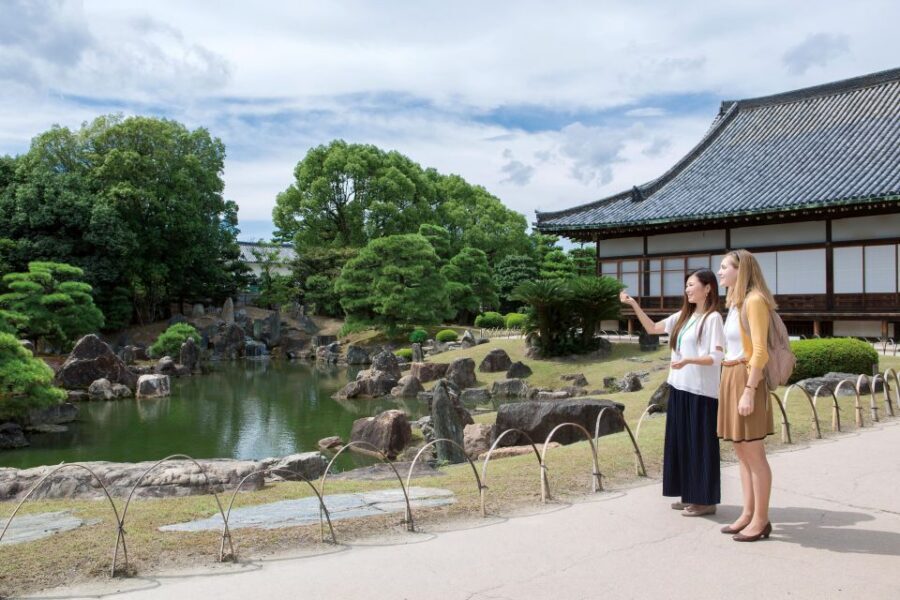
- Ninomaru Palace is the star: it’s preserved and presented as the shogun’s residence and office.
- Gates and design have a purpose: you’re not just looking; you’re learning what you’re seeing.
- You’ll go where regular visitors may not: the tour includes parts typically closed off to the general public.
- English only guides: great for clarity, but you won’t get Japanese commentary or multi-language options.
- Earphones are for paid participants: it helps in crowded palace rooms.
Nijo Castle, in plain terms: what you’re really seeing
Nijo Castle (Nijo-jo) was built in 1603 as the Kyoto residence of Tokugawa Ieyasu, the first shogun of the Edo Period. That alone matters, because this wasn’t a random “castle museum.” It was a political address—where authority was displayed through architecture, layout, and decoration.
After the Tokugawa Shogunate fell in 1867, Nijo-jo didn’t instantly fade into history. It served as an imperial palace, then later was donated to Kyoto City and opened to the public as a historic site. Today, it’s part of a UNESCO World Heritage listing (1994), and the big reason is that it preserves a top-tier example of Japan’s feudal-era castle architecture.
The castle is organized into three distinct areas. The Honmaru is the main defensive circle, the Ninomaru is the secondary defensive circle, and the gardens run around both. Your guided tour is centered on the Ninomaru side, which is where the mood shifts from fortress-like to court-and-governance energy.
You can also read our reviews of more guided tours in Kyoto

The 60-minute plan: how the tour flows on the ground
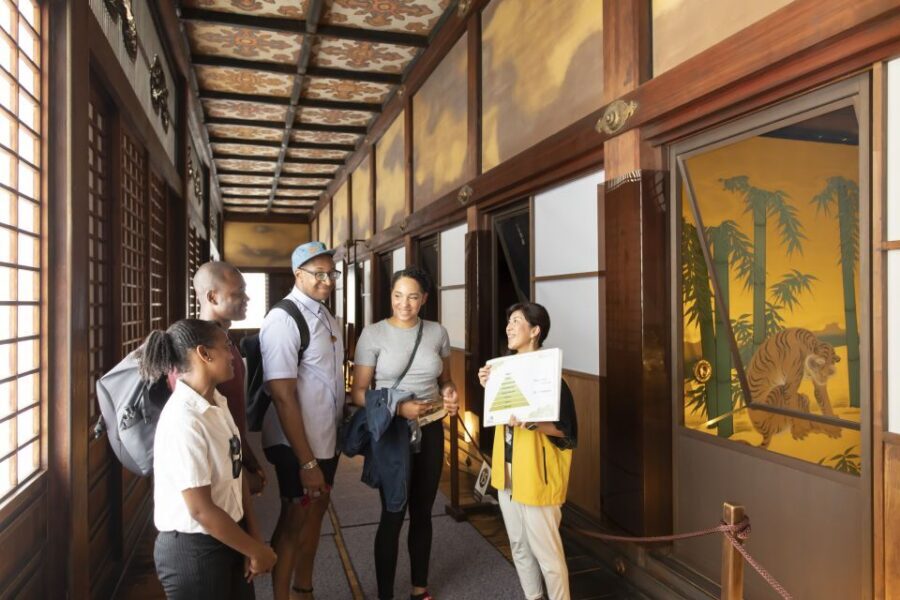
This is a fast tour by design. You’re looking at 1 hour, with a live English guide. The included stops are specific: Higashi Ote-mon Gate, Kara-mon Gate, Ninomaru-goten Palace, and Ninomaru Garden.
You’ll meet at the Nijo Castle Tour Ticket Booth, then enter through the East Main Gate. Once inside, gather at the reception area next to the General Reception on the left side after you pass through the East Main Gate. The key practical point: you won’t join if you arrive after the tour begins, so show up early enough to handle ticket lines and getting oriented.
Earphones matter here. Earphones are provided only to paid participants, which helps you hear your guide even when crowds swell around palace rooms. If you’re traveling with kids and you think they’ll need earphones too, the rule is clear: kids can’t get earphones unless they’re tied to an adult ticket setup.
Also, come ready for reality inside historic interiors. One guest noted it can be warm, and that there’s no air-conditioning, plus a no-water and no-photo setup inside the palace areas. That’s the kind of detail that affects comfort more than you’d think—so pack smart.
East Main Gate and the gates you shouldn’t gloss over
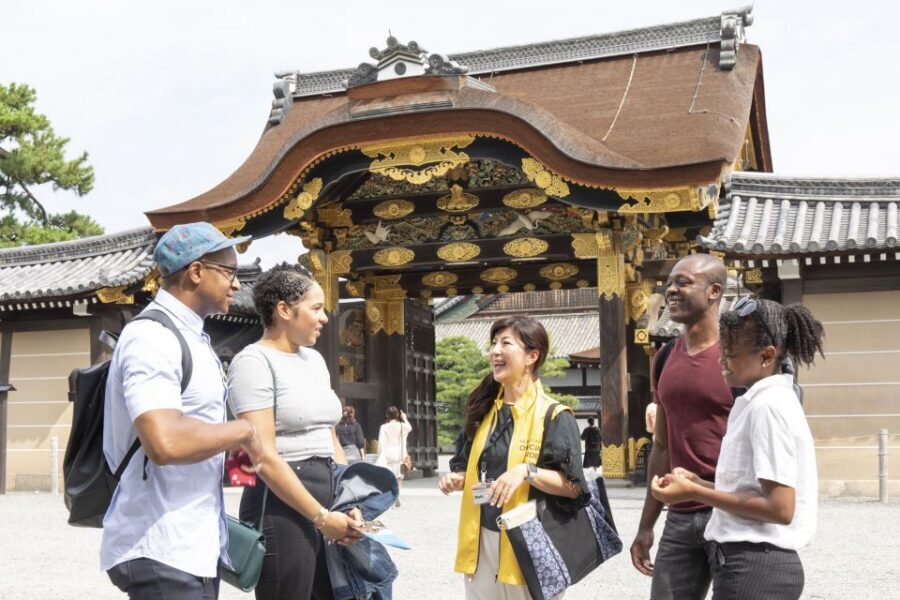
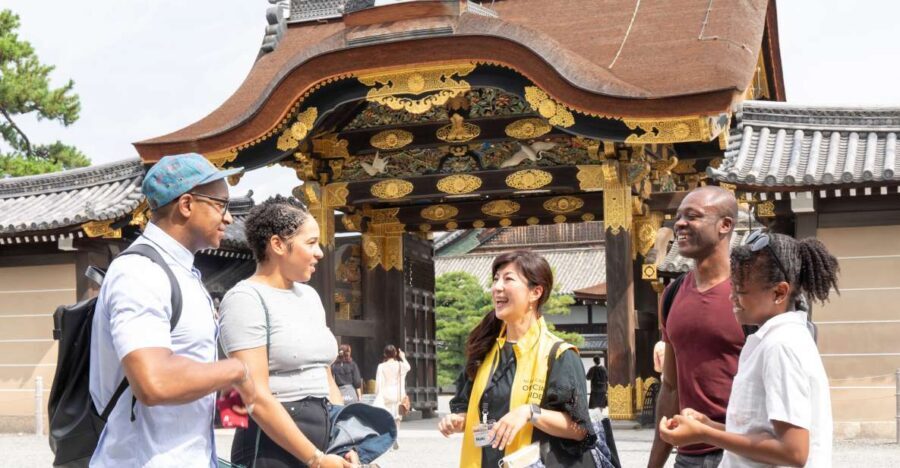
The tour starts right where the castle wants you to begin: at the gate sequence. Passing under the Higashi Ote-mon Gate is more than entry. It’s your first clue that Nijo-jo was designed for controlled movement—bringing people toward key spaces in the right order.
Then comes the Kara-mon Gate (often written as Kara-mon). This gate leads into the Ninomaru connection, and that’s important because it helps you understand the castle as a layered system. You’re not just touring buildings; you’re walking through circles of power—main defense, secondary defense, and the spaces where leadership performed its role.
In the best moments of the experience, your guide turns these gates into context: why entrances look the way they do, why certain routes matter, and how the architecture supports status. Guides like Kingo and Kaori have been praised for tying the building details to meaning, not just dates and names.
Ninomaru-goten Palace: where the story becomes human
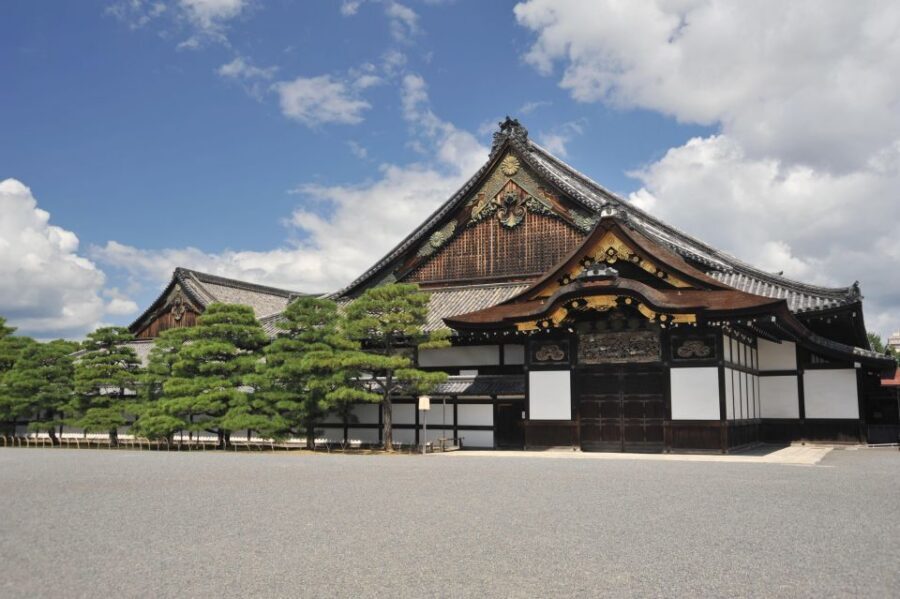
The Ninomaru Palace is the centerpiece. It once served as the shogun’s residence and office during visits to Kyoto, and it remains intact to this day. That “intact” piece is huge, because it lets you experience the palace more like a living layout than a set of ruins.
Inside, the guide’s job is to make the rooms legible. Many people specifically liked explanations about what rooms were for and how the shogun’s political life worked in practice. One guide (named Kiku in a guest account) was highlighted for connecting castle spaces to court intrigue and power dynamics. Another guest praised Kingo for explaining significance of the building and its decoration.
So what should you expect? Think of it as a guided walk through functions and symbolism:
- how rooms connect to daily governance,
- how decoration relates to status and message,
- how the palace design supports ceremony and control.
There’s also the “rare access” element that makes this tour more than a standard palace walkthrough. The experience includes access to parts normally not available to the general public. Guests described getting into restricted or closed-off areas, including additional sections beyond what they could reach on their own. That’s one reason a guide is worth it even if you like self-guided travel—castle interiors reward explanations, and restricted spaces can be hard to find without being brought in.
A quick comfort note: one review flagged that there’s no water, no photos, and no air-conditioning inside. That’s not an issue for everyone, but if you’re sensitive to heat or you rely on photos for memory, plan accordingly.
Ninomaru Garden: the calmer ring around the power
After the palace focus, you’ll move into Ninomaru Garden. The garden is part of the larger castle design: the gardens encircle both the Honmaru and the Ninomaru. That layout tells you something about intent. Even in a place built around control, nature and scenery weren’t treated as random decoration—they were integrated into the whole experience.
In practice, this stop can feel like a reset. You’ve just absorbed political architecture; now you get a slower, open-air moment where the castle stops feeling like a fortress and starts feeling like a curated residence landscape. It also gives you a chance to catch details you might have missed while listening to the guide in busier interior rooms.
Some guides also use this moment to connect the garden to the palace narrative—how sightlines and proximity reinforce the atmosphere of authority. If your guide is Ayu, Ai, or Don, you’ll likely hear plenty of “why this matters” commentary rather than just a description of what’s where.



What makes this worth $16: value vs the cost you’ll actually pay
The price listed is $16 per person, and that’s for a 60-minute English guided tour that includes:
- Higashi Ote-mon Gate
- Kara-mon Gate
- Ninomaru-goten Palace
- Ninomaru Garden
But here’s the part that changes the math: the castle admission fee is not included. You’ll pay that separately on site in cash. One guest said it came out to about 1,300 yen extra (so your all-in total will be more than $16). That’s still often reasonable for what you get—especially the palace focus and the guided interpretation—but it’s the difference between a “cheap add-on” and a “small planned expense.”
So is it good value? In my view, yes—if you like meaning and context. People praised guides for explaining symbolism, daily life, and political structure, and for doing it at a pace that doesn’t feel rushed. Several guests also mentioned their guide made them feel they were walking through history with a clear sense of purpose.
Where it might feel less worth it is if you:
- only want a quick exterior scan,
- don’t care about room functions or decorative symbolism,
- or strongly dislike structured group time.
One more practical value note: earphones for paid participants can reduce the “too loud to hear” problem inside rooms. That’s a small thing, but it affects how much you take in.
Best fit: who should book this Nijo Castle guided tour
I’d point this tour toward two types of travelers.
First: first-timers in Kyoto who want a big cultural site but don’t want to spend mental energy figuring out what everything means. The palace-focused route and English guide help you turn “wow, architecture” into “I get why this mattered.”
Second: travelers who like organized history. The castle here isn’t presented like a list of dates. The guides highlighted in guest notes—such as Ayu, Kaoru, Ai, Miki, and Don—were praised for explaining significance and keeping things engaging, with some humor and room-by-room clarity.
If you’re traveling with kids, the tour allows it: each paid participant can bring one child aged 0–12 for free. But earphone rules can complicate comfort, so plan on the kid being close enough to hear—or adjust ticket choices if earphones are required.
When timing and comfort matter: closures and seasonal reality
This tour runs based on availability of starting times and it’s subject to closures. It’s closed on every Tuesday during July, August, December, and January. There’s also a special closure window: December 26 to January 3, due to closure of Ninomaru Goten.
Also, remember the interior conditions. Historic palace rooms won’t have the conveniences you expect at modern attractions. If you’re visiting in hot months, you’ll want water outside the palace areas (since one guest noted no water inside) and clothing that works for walking and listening in heat.
Finally, this is a tour conducted only in English. If you speak other languages or prefer self-guided exploration, you might still enjoy Nijo Castle on your own—but you’d lose the interpretation and the added access.
Should you book this Nijo Castle guided tour?
Book it if you want the best payoff from Nijo-jo without turning your visit into homework. The one-hour structure is tight, but it concentrates on the parts that matter: Ninomaru Palace and the garden loop, with guides who connect architecture to meaning and daily life in the shogun world.
Skip it (or consider a self-guided approach) if you’re the type who only cares about photos, prefers unguided pacing, or you’re sensitive to warm palace interiors and the no-water/no-photo style inside.
My practical bottom line: for most people visiting Kyoto for the first time, this is a smart use of time. You pay admission separately, but the guide focus and rare access are exactly what turn Nijo Castle from impressive to actually understandable.
FAQ
How long is the guided tour?
The tour duration is 60 minutes.
Is the Nijo Castle admission fee included in the $16 price?
No. Admission fees for the venue are not included and must be paid with cash on site.
What language is the guide?
The tour is conducted only in English.
Where do I meet for the tour?
Meet at the Nijo Castle Tour Ticket Booth. Then enter through the East Main Gate and gather at the reception area next to the General Reception (left side after entering East Main Gate). You’ll need to notify staff at reception.
What does the tour include?
The included portion covers a guided visit of the Higashi Ote-mon Gate, Kara-mon Gate, Ninomaru-goten Palace, and Ninomaru Garden.
Are earphones provided?
Earphones are provided only to paid participants. If children need earphones, you’ll need to purchase adult tickets for them.
Can I bring a child for free?
Yes. Each paid participant can bring one child aged 0–12 to join for free.
Are there extra tickets if I bring more than one child?
Yes. If you want to bring more than one child, each additional child needs to purchase an adult ticket.
What if I arrive late to the start time?
You won’t be able to participate if you are not present when the tour begins. Arrive early so you can get through entry calmly.
When is the tour likely to be closed?
Nijo Castle is closed on every Tuesday in July, August, December, and January. Ninomaru Goten is closed from December 26 to January 3.