REVIEW · KYOTO
PERFECT KYOTO 1-Day Bus Tour
Book on Viator →Operated by Japan Panoramic Tours · Bookable on Viator
Kyoto in one day is a sprint. This bus tour strings together the big-name temples and shrines with just enough guidance to keep you moving. You’ll ride in an air-conditioned coach with onboard multilingual audio, so you’re not stuck translating everything on the fly.
I like that the itinerary is built around real Kyoto “zones,” not random driving stops. You get admission included for several major sites—Kiyomizu-dera, Sanjusangendo, Tenryu-ji, and Kinkaku-ji—plus optional lunch in Arashiyama if you choose it. It’s also the kind of day where you can relax on the bus and let the guide handle the timing.
The main drawback is obvious once you see the line-up: it’s a packed schedule. You’ll walk hills and stairs, and some places can get crowded, so you may feel a little rushed if you want to linger for long.
In This Review
- Key Highlights You’ll Actually Feel
- A One-Day Kyoto Route That Hits The Big Names
- Price and Value: What $129.25 Includes (And Why It Matters)
- Starting at Kyoto Avanti: How The Day Runs Smoothly
- Kiyomizu-dera First: Views, Stairs, and A Big Kyoto Name
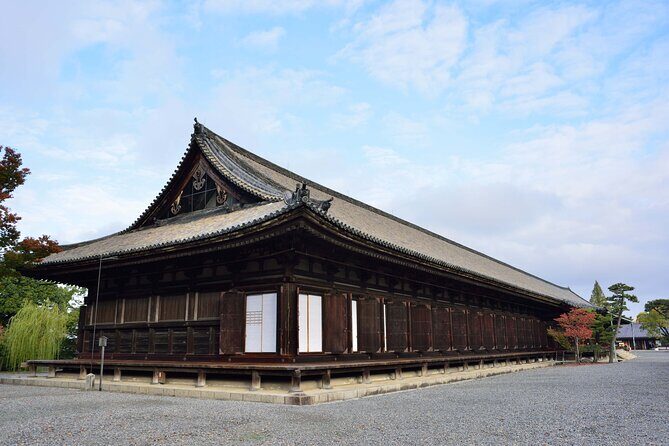
- Sanjusangendo: The 1001 Kannon Statues Experience
- Arashiyama Lunch Break Plus Bamboo Photos Without The Headache
- Tenryu-ji Garden: The Calm Between Kyoto’s Rush
- Kinkaku-ji Golden Pavilion and The Nijo Castle Drive-By
- Fushimi Inari at the End: Torii Gates and Walk-Fit Timing
- The Real Trade-Off: Fast Schedule vs. Getting Everything Done
- Should You Book This One-Day Kyoto Bus Tour?
- FAQ
- How long is the Perfect Kyoto 1-Day Bus Tour?
- What time does the tour start?
- Where do we meet, and where do we end?
- Is lunch included?
- Are admission tickets included?
- Do we get help with language?
- Is the tour mostly walking?
- Can I get a full refund if plans change?
- Should You Book Perfect Kyoto 1-Day Bus Tour?
Key Highlights You’ll Actually Feel
- Built-in “temple logistics”: admission tickets for major stops remove a bunch of front-end planning stress
- Multilingual audio + professional English guide: you’ll get the story even when groups move fast
- Arashiyama lunch break: a real mid-tour pause, with a buffet option that can work for vegetarians
- Bamboo Forest + Tenryu-ji timing: you catch the classic bamboo photos without spending the whole day on transport
- Fushimi Inari with torii gates: one full hour to wander the shrine paths (not just a quick photo stop)
- Small-ish group cap (max 42): enough structure for smooth entry, without feeling like an endless mob
A One-Day Kyoto Route That Hits The Big Names
Kyoto can be spread out. That’s the whole problem with doing it solo: you spend precious hours figuring out how to get from one “must-see” to the next. This tour fixes that by running a tight loop across Kyoto’s most famous cultural stops in one day.
What makes it interesting isn’t just the star attractions. It’s the way the day is paced: you start with classic temple views on the Higashiyama side, then shift west toward Arashiyama and the bamboo area, and finish with the torii-gate maze at Fushimi Inari. That flow makes the day feel coherent instead of chaotic.
And yes, it’s a long day—about 8 to 9 hours. Still, if you’re in Kyoto for a short stretch, this is one of the most direct ways to cover a lot of ground without juggling transit, tickets, and crowd strategy all yourself.
A few more Kyoto tours and experiences worth a look

Price and Value: What $129.25 Includes (And Why It Matters)
At $129.25 per person, this isn’t a bargain tour. But it’s priced like a day with real structure: air-conditioned transport, a professional English-speaking guide, multilingual audio guidance, and multiple temple admissions bundled in.
Here’s where value really shows up:
- Admissions included: Kiyomizu-dera, Sanjusangendo, Tenryu-ji, and Kinkaku-ji are not “free to enter” places. Having those tickets handled saves time and money.
- You avoid the ticket hunt: when you’re doing four major sites in one day, buying each ticket yourself can slow you down at the exact moments you want to be moving.
- The guide handles crowd timing: you still won’t control crowds (Kyoto crowds are real), but you’re less likely to waste time figuring out what to do next.
Lunch is optional. If you add it, you get a Japanese-style buffet lunch in Arashiyama with local foods, and the lunch is stated to be the same for vegetarians. Just note the tour warns that, for some dates, lunch may be served as a set meal instead of buffet.
One more practical point: if you’ve got limited time in Kyoto, paying a bit more for a guided schedule can actually be cheaper than spending a day piecing everything together—especially if you’d otherwise miss entrances while chasing transit.
Starting at Kyoto Avanti: How The Day Runs Smoothly

Your day starts at 7:50 am at Tully’s Coffee – Kyoto Avanti Japan (1st floor). The meeting point is near public transportation, and the tour ends back at the meeting spot. There’s no hotel pickup or drop-off, so you’ll want to plan to get there on your own.
Once you’re on the coach, you get a surprisingly useful package: WiFi on board, a/c comfort, and multilingual audio guidance in English, Spanish, French, Italian, German, Portuguese, Ukrainian (spelled Ukrainan in the info). That matters because Kyoto site names can be tricky, and the audio helps you stay oriented even during bus travel.
Also, the itinerary order can shift depending on traffic, weather, and operations. That’s normal for Kyoto, but it means you shouldn’t book the rest of your day tightly right after the tour ends.
The tour states that walking includes stairs and hills at multiple stops. Moderate fitness is the target. If you know you struggle with long uphill walks, this might feel like too much.
Kiyomizu-dera First: Views, Stairs, and A Big Kyoto Name

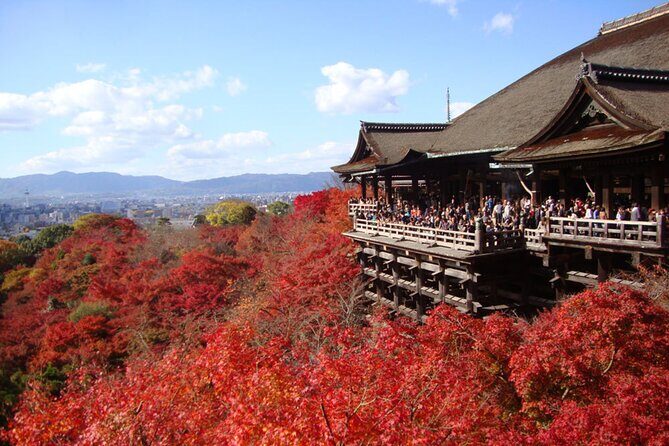
The tour’s morning starts at Kiyomizu-dera Temple (about 1 hour, with admission included). This is the kind of place where Kyoto shows off its geography. The temple sits on the Higashiyama hill, so you get that famous panoramic look around the city.
What I like about putting Kiyomizu-dera early is simple: you’re going in while the day is still fresh. You’ll see the main temple area, and you’ll also feel the walking rhythm here—short bursts of stairs and uneven footing are part of the experience.
Practical tip: wear shoes you can trust. You’ll likely be stepping around crowds on stone and changing elevations while you’re trying to take photos.
One consideration: it’s a top Kyoto attraction, so even with timing help, it won’t be empty. Plan to enjoy the experience in “glance and move” mode rather than settling in like you’re alone at a museum.
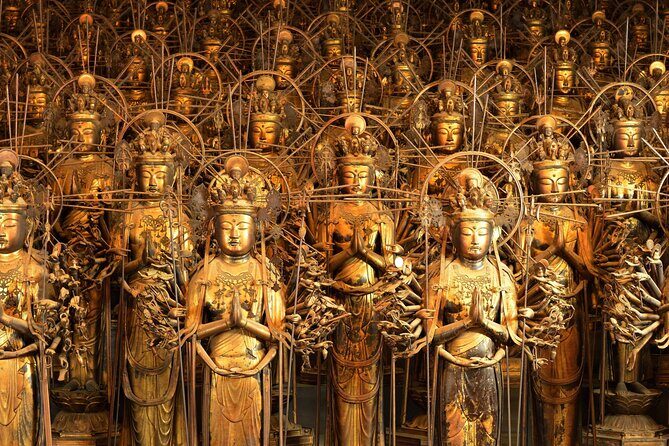
Sanjusangendo: The 1001 Kannon Statues Experience
Next is Sanjusangendo Temple (about 40 minutes, admission included). This stop is famous for the hall of statues—Senju Kannon, described as one thousand one figures in the main hall.
This is one of those interiors that changes how you look at “temples.” You’re not just seeing a building; you’re seeing a visual wall of devotion. Even in short time, it lands.
The good news: compared with some other Kyoto stops, this one is more about standing, looking, and absorbing than navigating long outdoor paths. Still, you’ll want to move efficiently because the tour is built to fit multiple major sites into one day.
If you like art, carving details, and symbolic design, this is a strong mid-morning anchor. It also gives you a break from the open-air crowds and long stair climbs—at least for a bit.

Arashiyama Lunch Break Plus Bamboo Photos Without The Headache

Then you head to Arashiyama for a break and lunch window (about 50 minutes if you chose the lunch option). Arashiyama is where people go for atmosphere, riverside vibes, and classic Kyoto scenery—and this tour gives you enough time to experience the area without pretending you’ll “do Arashiyama” like you’re there for a full day.
Lunch is described as a Japanese-style buffet with local foods, and vegetarians should be covered since the buffet is the same for vegetarians per the tour notes. One date-specific note: on April 14 and 16, 2026, lunch may be served as a set meal instead of buffet.
Here’s the realistic expectation: buffet quality depends on the venue and service style. If you’re picky about hot food temperature, you might want to add a small snack you trust (especially if you get bothered by lukewarm meals).
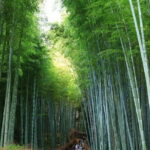
Right after lunch time, the tour moves into the Bamboo Forest Trail area (about 20 minutes, admission free). You’ll walk through the bamboo path as a lead-in to the next stop.
This is where I think this tour helps most. Instead of spending time searching for the entrance, you’re routed through a time-efficient path. You’ll still want to bring your camera, because bamboo photos are the whole point.
Tenryu-ji Garden: The Calm Between Kyoto’s Rush
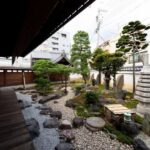
After bamboo, you visit Tenryu-ji Temple (about 30 minutes, admission included). Tenryu-ji is noted for a traditional Japanese garden, with design described as unchanged for more than 700 years.
This stop offers a different pace than Kiyomizu-dera. It’s more contemplative—less “climb and crane for views,” more “look closely at what’s arranged.” In the middle of a fast day, this feels like a reset.
Short time is still short time. Thirty minutes won’t let you fully master every corner of a famous garden. But if you want a sense of why Kyoto gardens became so influential, this is the moment to slow down a little and watch how the space is framed.
Practical tip: plan to take fewer photos and spend more time looking. Gardens reward attention, not just clicking.
Kinkaku-ji Golden Pavilion and The Nijo Castle Drive-By
Then comes Kinkaku-ji Temple (about 40 minutes, admission included). This is the Golden Pavilion: described as being magnificent and covered with pure gold leaves, and positioned as a key symbol of Kyoto.
Kinkaku-ji is one of those places where the outside scenes and the surrounding reflection points shape the entire experience. You’ll probably get some photos that look postcard-perfect, even if you don’t spend hours here.
Still, expect crowds. That’s Kyoto’s reality. This tour’s advantage is that you’re guided through the flow instead of wandering and losing time to lines and bottlenecks.
On the return leg, the tour notes you’ll pass Nijo Castle and get guide commentary. Nijo Castle is described as important in Japanese history because the Tokugawa shogunate returned political power to the emperor.
Even as a drive-by, this kind of historical context helps connect the dots. You leave with the feeling that Kyoto isn’t just temples—it’s also government, power shifts, and eras layered over each other.
Fushimi Inari at the End: Torii Gates and Walk-Fit Timing
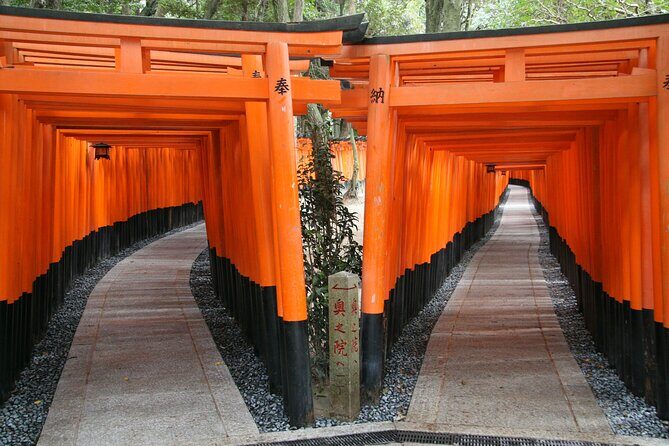
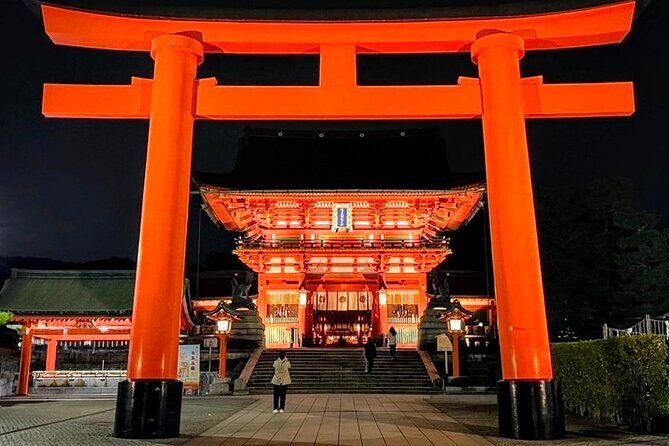
Finally, you visit Fushimi Inari-taisha Shrine (about 1 hour, admission free). This is Kyoto’s famous torii gate maze, described as having thousand torii gates.
One hour is a good length for doing the essentials: wandering through the torii paths, enjoying the changing views as you move deeper, and grabbing photos without it turning into a full hike marathon. The tour timing also helps because you’re not trying to do this as the first stop when you’re still catching your breath.
Keep in mind the tour notes that you’ll do walking with stairs and hills across stops. Fushimi Inari includes uphill walking if you continue beyond the first sections. You don’t have to go all the way to the far points to enjoy it, but you should plan to walk.
Practical approach: pick a “turnaround point” mentally. When you reach it, you’ll save energy for the walk back through the torii gates without the stress of rushing.
The Real Trade-Off: Fast Schedule vs. Getting Everything Done
This tour is built to maximize highlights. That’s why most people love it. But the trade-off is also real: some sites can feel crowded, and the time per stop can feel brief if you want to read everything, photograph every angle, and explore side paths.
You’ll also want to watch the walking load. The tour specifically warns it’s not recommended if you can’t walk long distance. Even if you’re physically fine, stairs can stack up across the day.
A final note on group energy: with a guide keeping the day moving, it tends to stay lively. Some people thrive with that structure. If you prefer slow museum-style time, you might find this tour too intense.
Should You Book This One-Day Kyoto Bus Tour?
Book it if:
- You want a high-coverage Kyoto day without planning routes, tickets, and queues yourself
- You’re okay with a walk-and-move itinerary and you want the big-name temples in one shot
- You’d benefit from English guidance plus multilingual audio during bus travel
- You value that admissions are included for major sites like Kiyomizu-dera, Sanjusangendo, Tenryu-ji, and Kinkaku-ji
Skip it if:
- You hate tight schedules and want lots of time per stop
- You don’t do well with stairs and hills
- You prefer smaller, more flexible explorations rather than moving as a group
If your Kyoto window is short, this tour is a strong way to build a first “map” of the city. You’ll come away knowing where the legends are, what the iconic sights look like up close, and what you might want to revisit later—when you finally slow down and do Kyoto at your own pace.
FAQ
How long is the Perfect Kyoto 1-Day Bus Tour?
It runs about 8 to 9 hours.
What time does the tour start?
The start time is 7:50 am.
Where do we meet, and where do we end?
You meet at Tully’s Coffee – Kyoto Avanti Japan (1st floor). The tour ends back at the meeting point.
Is lunch included?
Lunch is optional. If you select the lunch add-on, you’ll get a Japanese-style buffet lunch in Arashiyama (the tour notes vegetarian options are included as part of the same buffet).
Are admission tickets included?
Admission is included for Kiyomizu Temple, Sanjusangendo Temple, Tenryuji Temple, and Kinkakuji Temple. Fushimi Inari is listed as admission free, and the bamboo forest trail is admission free.
Do we get help with language?
Yes. There’s a professional English-speaking tour guide, plus multilingual audio guidance on the bus in English, Spanish, French, Italian, German, Portuguese, and Ukrainian.
Is the tour mostly walking?
Yes. The tour includes lots of walking, including stairs and hills. It calls for moderate physical fitness and notes it isn’t recommended if you can’t walk long distances.
Can I get a full refund if plans change?
You can cancel for a full refund up to 24 hours before the experience’s start time.
Should You Book Perfect Kyoto 1-Day Bus Tour?
If you want Kyoto highlights fast, this is a smart use of your time. The combination of a/c coach transport, onboard audio, and multiple admissions included makes it feel less like “tour chaos” and more like a guided hit list you can trust.
Just go in knowing it’s a full day with plenty of walking and limited time at each stop. If that trade-off fits your style, you’ll likely walk away with a very strong first impression of Kyoto’s most iconic sights.