REVIEW · KYOTO
Kyoto 1 Day Tour from Kyoto
Book on Viator →Operated by JTB Global Marketing & Travel Inc. · Bookable on Viator
Kyoto in a single packed day works. This one-day tour strings together some of Kyoto’s most famous temples and UNESCO-listed sights with a licensed English guide and an air-conditioned coach, so you spend less time figuring out logistics and more time looking at the real stuff. You start early and return to Kyoto Station in the late afternoon, which is ideal if you only have limited time.
I especially like how much you get done without feeling like you’re rushing alone. You’ll see major highlights like Nijō Castle, Kinkaku-ji, and Kiyomizu-dera, and admission plus transportation are built in. I also love the human side: guides such as KC, Miyuki, Yuki, Yoshitaka Harada, and Michi have been praised for keeping the day clear, funny, and easy to follow in English.
The main thing to consider is pacing. This route is packed, and you’ll do some walking, including a reported 15-minute one-way walk from a parking area to Fushimi Inari Taisha, so comfy shoes are non-negotiable.
In This Review
- Key things to know before you go
- Price and logistics: what $168.43 buys you
- Your morning run: how the route actually feels
- Nijō Castle: gold leaf stories behind the dramatic walls
- Kinkaku-ji and its pond setting: the Golden Pavilion moment
- Kyoto Imperial Palace: regal rooms and what happens when it’s closed
- Fushimi Inari Taisha: Senbon Torii in real scale
- Sanjūsangendō: 1,001 Kannon statues that don’t fit on a screen
- Kiyomizu-dera: terrace views plus the shopping lane walk
- Lunch choices: Western set menu or vegetarian Indian thali
- Comfort, crowds, and the solo-traveler reality
- Guides and the storytelling factor: why some days feel smoother
- Who should book this one-day Kyoto highlights tour
- Should you book this tour
- FAQ
- What time does the tour start, and where do I meet?
- How long is the Kyoto 1 Day Tour, and when do we get back?
- What’s included in the price?
- Are UNESCO World Heritage sites included?
- Is lunch included, and what options do I have?
- What happens if Kyoto Imperial Palace is closed on my tour day?
- What happens if Nijō Castle is closed?
- How much walking is involved at Fushimi Inari Taisha?
- Is free cancellation available?
Key things to know before you go
- It’s a “big sights” day: six major stops with scheduled time at each location
- UNESCO-listed temples and castle are part of the route (Nijō Castle, Kinkaku-ji, and Kiyomizu-dera)
- Admission and transportation are included, so you’re not hunting ticket lines all day
- Lunch is optional and has two set options only: Western-style or vegetarian Indian thali
- Tight timing means real walking between places, especially around Fushimi Inari
- Group size caps at 40, with non-assigned seats reported for some departures
Price and logistics: what $168.43 buys you
At $168.43 per person, this tour is priced like a classic one-day “Kyoto hits” package. The value comes from the fact that you’re not just paying for sightseeing—you’re also paying for a licensed English guide, air-conditioned transport, and the admission fees for multiple major sites. If you’ve ever tried to string together these top places on your own in one day, you know how quickly time gets eaten by transit and ticketing.
The day runs about 9 hours 40 minutes, starting at 8:20 am and ending around 5:30 pm back at Kyoto Station. The meeting point is the JTB SUNRISE TOURS DESK KYOTO at AVANTI, located in the basement area of the building. If you’re the type who likes to arrive 10–15 minutes early, do it here—basement meeting points can be slightly confusing at first.
One more practical note: seats may not be designated, so if you care about hearing the guide clearly, try to board early and pick a spot that isn’t stuck behind taller heads.
A few more Kyoto tours and experiences worth a look

Your morning run: how the route actually feels
The tour starts early in a climate-controlled vehicle, which is a big deal in Kyoto because temperatures can swing fast and the walk-heavy parts of the day don’t care if you’re tired. Once you’re on the bus, the guide sets context before you arrive, so you’re not just taking photos—you’re learning what you’re looking at and why it matters.
The itinerary is also flexible in the real-world way. The order and arrival times can shift due to road conditions and congestion, and there are built-in alternate stops when major sites are closed. That matters because Kyoto isn’t a theme park—crowds and weather happen.
Just be honest with yourself about your pace. Several comments point out that the day is efficiently scheduled, sometimes brisk. If you prefer to linger, you may find the day feels like a “see it, learn it, move on” rhythm rather than a slow wander.
Nijō Castle: gold leaf stories behind the dramatic walls
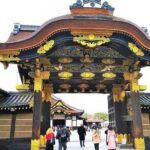
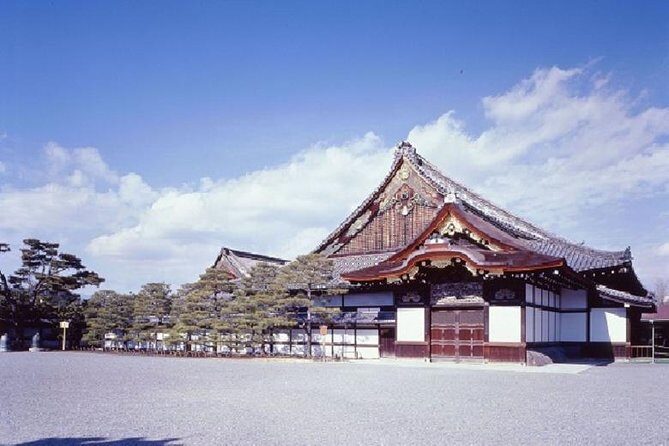
Nijō Castle is the first stop, and it’s a great opener because it gives you a feel for political power in Kyoto. The castle was completed in 1626, built to host the Tokugawa Shogun and to act as a sort of protective presence for the Kyoto Imperial Palace.
You’ll have about 50 minutes here, including the admission. What makes it special is the contrast between what you see on the outside and what’s waiting inside—opulent chambers with glittering gold leaf details and carved decorations that you can easily miss if you’re walking in without a guide. The time slot is long enough to actually notice details, not just speed through.
If you’re visiting on a day when Nijō Castle is closed (it’s specifically mentioned as closed on Tuesdays in January, July, August, and December), the tour swaps in Ryoan-ji Temple. That’s a real factor in your planning: you might not get the castle you expected, but you still get a strong historical temple stop.
Kinkaku-ji and its pond setting: the Golden Pavilion moment
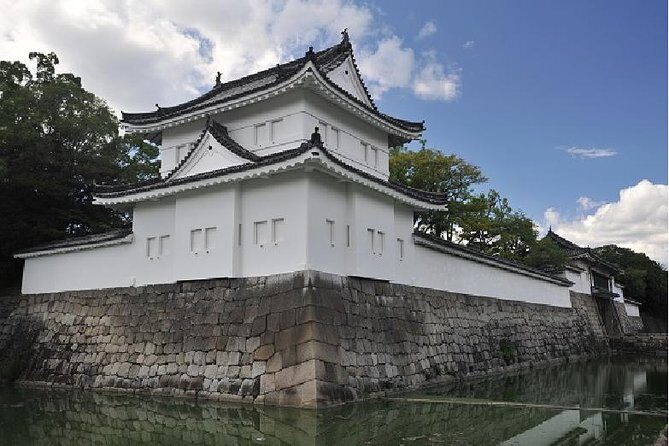
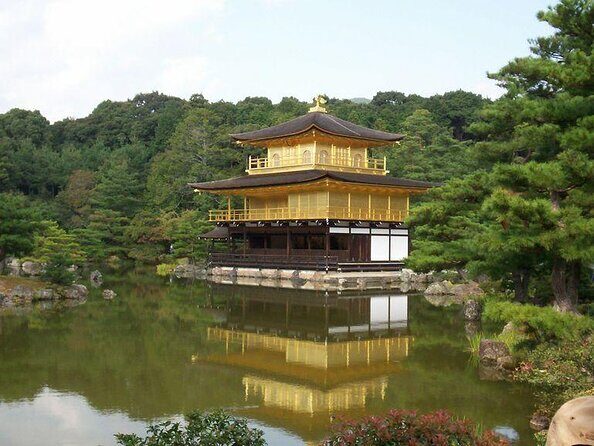
Next up is Kinkaku-ji, the famous Golden Pavilion, and yes, it earns its reputation. The temple is surrounded by a pond, and the wooden architecture is covered with thin layers of pure gold—the kind of visual impact that works best when you see it in person rather than trying to translate photos into reality.
You’ll get about 45 minutes at the site, including admission. The sweet spot here is to slow down just enough to notice the garden layout and how the pavilion sits in relation to the water. Even if you’re only a casual photographer, this is one stop where composition practically does the work for you.
This is also a moment where your guide earns their keep. Hearing the background while you stand there makes the gold feel less like spectacle and more like cultural expression.
Kyoto Imperial Palace: regal rooms and what happens when it’s closed
Kyoto Imperial Palace is one of the stops that turns the day from temples into court history. The palace served as the Emperor’s residence until about 150 years ago, and you’ll explore opulent chambers tied to ancient ceremonies that still occur within the walls.
Expect about 40 minutes here, and the admission is listed as free. It’s a good pacing balance after the more visually dramatic Kinkaku-ji.
The closure rule is important: Kyoto Imperial Palace is closed to visitors on Mondays (or the following day if Monday is a holiday) and on days when the Imperial Household Agency has an event. If that happens on your tour day, the plan changes to Kitano Tenmangu Shrine. If the closed day falls on the 25th, the tour goes to Nishi Hongan-ji Temple instead.
Two practical takeaways. First, don’t count on the palace as guaranteed if you’re traveling around Mondays. Second, the tour notes that refunds won’t be issued if it’s replaced by the alternative destination—so treat the route as a Kyoto highlights theme, not a promise to see every single exact stop every day.

Fushimi Inari Taisha: Senbon Torii in real scale
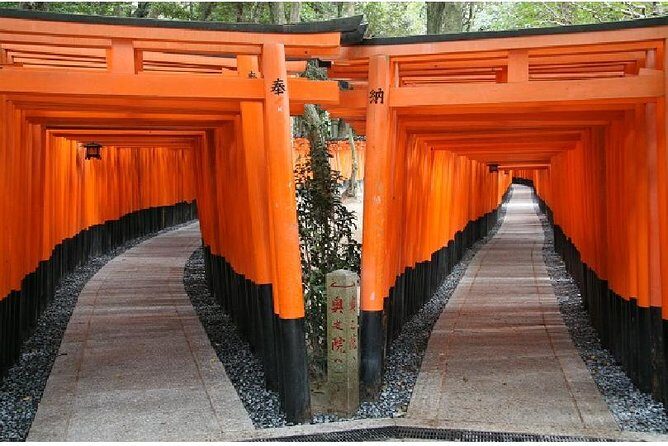
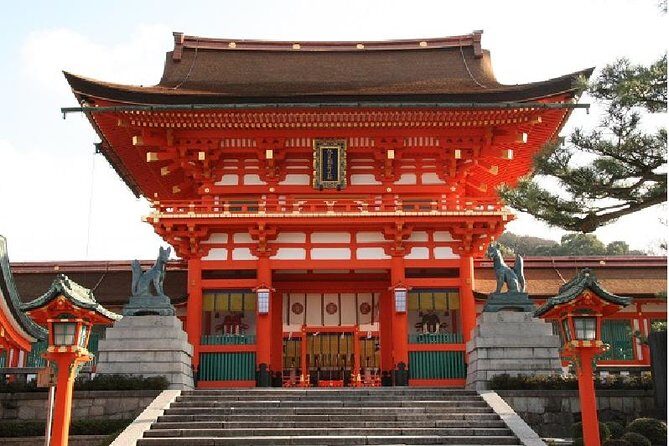
If Kyoto has a single “wow” shrine photo, it’s often Fushimi Inari Taisha. This is the head shrine of around 40,000 inari-jinja shrines across Japan, and the famous part is the bright red Senbon Torii gates.
Your time here is about 30 minutes and admission is free. The tour includes a walking segment: participants walk from the parking lot to the shrine area, listed as about 15 minutes one-way. That means your actual time inside the torii gates will depend on how fast you move and how many photo stops you make.
One reason to go with a guide anyway: you’ll get context before you enter the gate tunnel, which helps the whole experience feel purposeful rather than just scenic. Still, be realistic. The gates are long, and 30 minutes is enough to feel the place, but not enough to hike the full route to the far ends. If you want the long version, you’d need extra time on your own later.
Sanjūsangendō: 1,001 Kannon statues that don’t fit on a screen
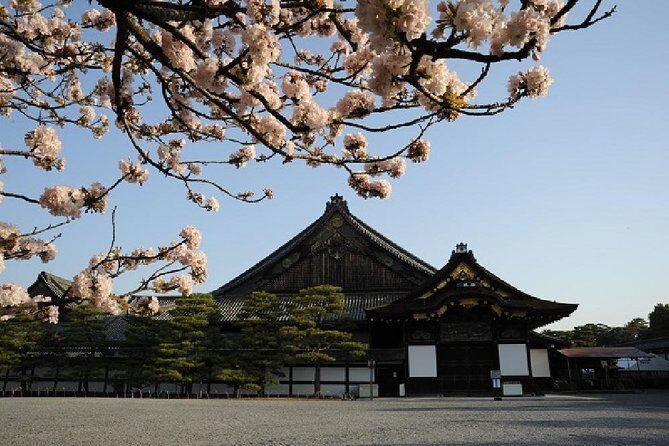
Sanjūsangendō Temple is one of those sites that feels hard to process from pictures. This temple is described as the world’s longest wooden structure, and inside there are 1,001 life-size statues of Buddhist Kannon deities, dating back to the 13th century.
You’ll get about 30 minutes here. That time is enough to get the scale and take in the hall layout. If you’ve never been in a space like this, it helps to look in layers—first the overall length of the hall, then the repetition of statues, then how the room guides your gaze.
This stop is also a nice contrast to the red torii gates. One is movement and color outdoors; the other is stillness and intense repetition indoors.
Kiyomizu-dera: terrace views plus the shopping lane walk
You wrap up at Kiyomizu-dera, and the day ends in a way that feels very Kyoto. The temple is a UNESCO World Heritage Site, and the viewpoint from the terraces is the kind of panoramic view that makes the earlier hours feel worth it.
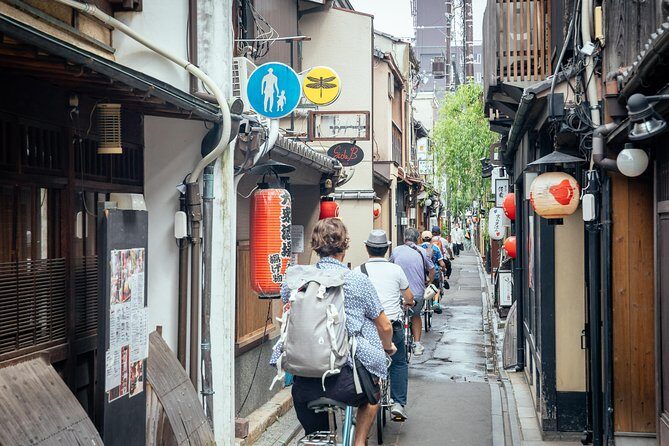
You’ll have 1 hour 10 minutes here, including admission. That extra time matters because Kiyomizu-dera isn’t just one building—it’s a whole experience, including the historic shopping lane that leads up to the temple and is lined with pottery shops.
This is also where you can reset mentally. Even if you’re not doing big shopping, the lane walk gives you a chance to slow down, grab a snack or drink if you need one, and take in Kyoto’s old-street feel before heading back to the coach.
One more timing reality: like the other major stops, the schedule can shift with congestion. If you hit heavy crowds, that terrace view might be more about patience than perfect timing.
Lunch choices: Western set menu or vegetarian Indian thali
Lunch depends on the option you choose when booking. If you select With Lunch, you’re served a Western-style set menu. Vegetarian requests can be accommodated if you inform the team at reservation time. The data also states that halal, gluten-free, and other meal requests aren’t available for this lunch option.
There’s also an Indian thali lunch option noted as suitable for vegetarians. The thali includes three kinds of curry (bean curry, vegetable curry, spinach and potato curry), vegetable pakora, plain yogurt, naan or roti, rice, salad, and one serving of a non-alcoholic drink. Again, halal and gluten-free requests aren’t available, and lunch changes on the day aren’t allowed if you chose a different lunch style.
The tour also keeps meal groups separate: Indian thali and Western-style lunch are served in separate dining areas. So if you’re traveling with someone, double-check your selections now rather than hoping to swap on the spot.
If you choose No Lunch, you’ll have free time to eat on your own in the Kyoto Station area. This can be helpful if you have dietary needs not covered by the set menu options, or if you just want more control.
Comfort, crowds, and the solo-traveler reality
This is a group bus tour with a maximum of 40 travelers. That size is large enough to feel efficient but small enough to manage. Still, your experience depends on where you sit, how fast you walk, and how your guide keeps the group together.
A couple of practical points from real-world patterns:
- Because seats may not be assigned, your ability to hear commentary can vary.
- The pacing can feel brisk if you want long, quiet temple time rather than quick context plus photos.
- Solo travelers can find it harder to connect during structured meal time, especially since lunch seating is split by lunch option.
If you’re traveling alone and you like meeting people, come prepared with a simple plan: chat in line, not just at lunch. Or keep a short list of questions for your guide so you have a reason to talk after each stop.
Guides and the storytelling factor: why some days feel smoother
The tour experience lives or dies by the guide’s delivery. The route description promises history explained by a licensed English guide interpreter, and the guide names praised in comments include KC, Miyuki, Yuki, Yoshitaka Harada, and Michi. Across those examples, the common theme is clear explanation, good humor, and group care—especially on hot or rainy days.
At the same time, there are occasional mentions of guides moving faster than some people can comfortably keep up, or being harder to hear unless you’re closer. That’s not a reason to avoid the tour, but it is a reason to choose good footwear and to position yourself well when the group is stopped.
Think of it like this: you’re buying help turning a list of famous places into understanding. When that storytelling clicks, it feels like good money. When pacing feels tight, it feels like a photos-and-facts day.
Who should book this one-day Kyoto highlights tour
This tour is a strong fit if:
- you have limited time and want a concentrated Kyoto overview
- you prefer a structured route with admission included
- you’d rather learn from a guide than spend your day building routes and buying tickets
- you want UNESCO-listed hits like Nijō Castle, Kinkaku-ji, and Kiyomizu-dera without extra planning
You might want to skip it (or add extra days) if:
- you hate fast transitions and don’t like being told when to move
- you want long, slow temple stays for atmosphere over context
- you’re sensitive to walking time, especially if you can’t comfortably do the Fushimi Inari approach walk
This is also a good tour for first-time Kyoto visitors. It gives you “what’s where” so your next day (if you have one) feels more like free choice than trial and error.
Should you book this tour
Book it if you want a high-efficiency Kyoto day with a guide, air-conditioned transport, included admissions, and optional lunch that’s already handled for you. It’s also a smart choice if you’re the kind of traveler who values getting the big iconic stops done correctly, in the right order, with context you can’t easily replicate on your own in one day.
Don’t book it if your ideal Kyoto day is quiet and unhurried. The schedule is built for coverage, not lingering. If that’s your style, plan a slower day elsewhere instead.
If you do book, pack for movement: comfortable shoes, a light layer, and a little flexibility for crowd shifts. And if you’re aiming for Kyoto Imperial Palace or Nijō Castle specifically, check the day-of-week closure pattern in the details before you get your hopes too locked in.
FAQ
What time does the tour start, and where do I meet?
The tour starts at 8:20 am. Meet at the JTB SUNRISE TOURS DESK KYOTO at AVANTI in Kyoto Station’s area (basement level), at 31 B1F AVANTI.
How long is the Kyoto 1 Day Tour, and when do we get back?
The tour runs about 9 hours 40 minutes. It ends at Kyoto Station around 5:30 pm.
What’s included in the price?
The tour includes a licensed English guide interpreter fee, admission fees for the listed ticketed sites, and transportation costs. The air-conditioned and heated bus is also included.
Are UNESCO World Heritage sites included?
Yes. Nijō Castle and Kinkaku-ji are listed as World Heritage sites, and Kiyomizu-dera is described as a World Heritage Site in the tour details.
Is lunch included, and what options do I have?
Lunch is only included if you select the With Lunch option. You can choose a Western-style set menu or an Indian thali (vegetarian) set menu. If you choose No Lunch, you’ll have free time to eat on your own in the Kyoto Station area.
What happens if Kyoto Imperial Palace is closed on my tour day?
Kyoto Imperial Palace is closed to visitors on Mondays (or the following day if Monday is a holiday) and on days with an Imperial Household Agency event. If it’s closed, the tour visits Kitano Tenmangu Shrine instead, or Nishi Hongan-ji Temple if the closed day falls on the 25th.
What happens if Nijō Castle is closed?
Nijō Castle is closed on Tuesdays in January, July, August, and December. If it’s closed on your date, the tour visits Ryoan-ji Temple instead. Refunds won’t be issued for these substitutions.
How much walking is involved at Fushimi Inari Taisha?
Participants walk from the parking lot to Fushimi Inari Taisha, about 15 minutes one-way.
Is free cancellation available?
Yes. Free cancellation is available if you cancel at least 24 hours before the experience’s start time for a full refund.