REVIEW · OSAKA
Osaka: Learn Bushido – Trial Slashing with Samurai Sword
Book on GetYourGuide →Operated by 株式会社武士の誉れ · Bookable on GetYourGuide
Samurai training in Osaka feels like a time machine. You dress in samurai clothing right away, learn core sword stances, and end with a real cutting test. It’s hands-on, not a lecture.
I also like how the coach doesn’t rush you. You practice basics like drawing and returning the blade, then you try the trial cut with guidance. One possible drawback: there’s no pickup, and this won’t suit kids under 10 or anyone with altitude sickness.
In This Review
- Why This Osaka Samurai Sword Trial Feels Different
- Key Highlights You’ll Actually Feel
- Finding Bushi no Homare (Samurai Honor) Near Osaka Castle
- Your 30-Minute-early Arrival: Why It Changes Everything
- Step 1: Changing Into Samurai Gear (Dogi and Hakama)
- Step 2: Bowing in the Dojo Shrine Routine
- Step 3: Sword Etiquette and the “Why” Behind the Motions
- Step 4: Iai Basics With Practice Swords (Battou, Chiburui, Nottou)
- Step 5: Stances and Kata Practice You Can Actually Follow
- Step 6: Trial Slashing (Tameshigiri) With a Real Japanese Sword
- The Photo Moment and How the Class Ends With a Bow
- Price and Value: Is $92 Reasonable for This?
- Who This Samurai Sword Trial Fits Best
- Practical Tips So You Get the Full Experience
- Should You Book This Osaka Bushido Sword-Cutting Experience?
- FAQ
- How long is the Osaka Learn Bushido trial slashing experience?
- What’s included in the price?
- What should I bring to the class?
- Is transportation like pickup and drop-off included?
- What languages are available during the instruction?
- What are the age and suitability limits?
- Are photos included, and can the photo time be recorded?
Why This Osaka Samurai Sword Trial Feels Different
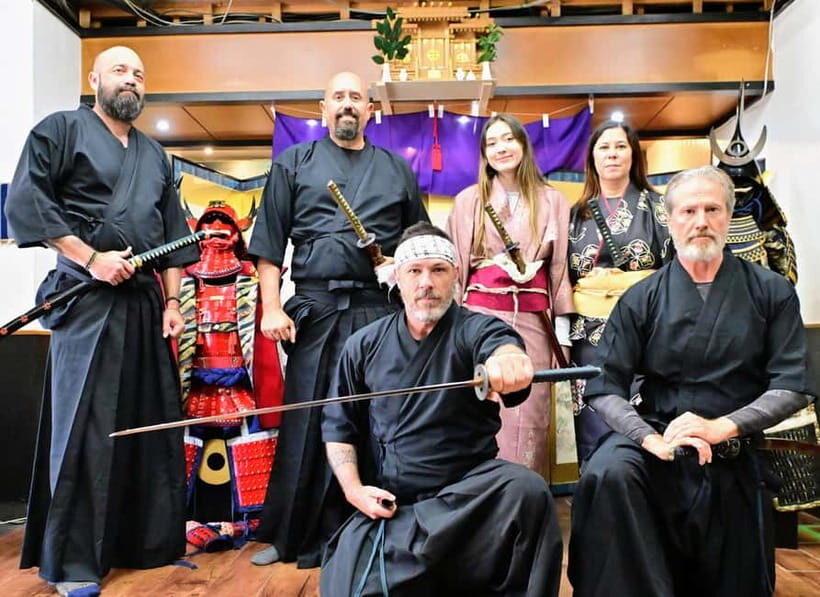
This experience is built around the idea that bushido training is more than a stunt. You’ll move through etiquette, stance work, and only then a test cut. The goal is control, not speed.
A big reason it works is the step-by-step structure. First comes changing into the dogi and hakama, then a bow-based routine in the dojo, then sword handling drills. Only after you’re taught the motions do you try the cutting portion.
Another smart touch: the group is capped at 4 participants, so you’re not lost in a crowd. The instructor can correct your stance and swing so you actually learn something you can repeat later.
Key Highlights You’ll Actually Feel
- Costume + transformation right at the start: You change into samurai gear and get into the mindset before learning any sword moves.
- A bow-and-shrine routine: Training begins and ends with a bow before the shrine in the dojo.
- Real technique vocabulary (and real practice): You work through motions like battou (draw), chiburui (symbolic blade care), and nttou (sheath).
- Stances you can name and repeat: Upper, lower, eight-phase, side, and middle stances are taught as a progression.
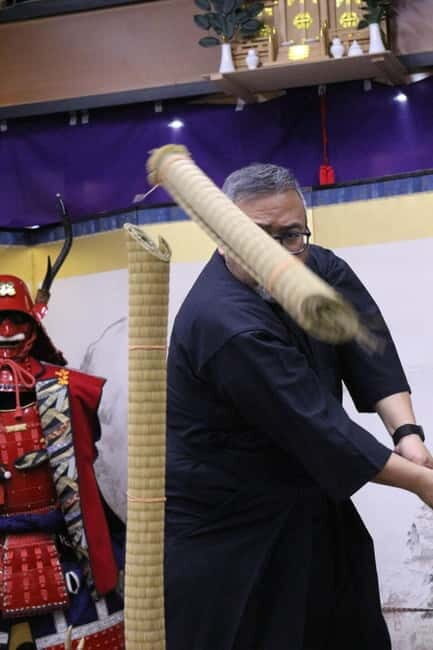
- Trial slashing with a genuine Japanese sword: You cut a target after practicing the required form.
- Photos are part of the package: You get photo shooting during your moment of test cutting, sent by email after.
You can also read our reviews of more tours and experiences in Osaka.



Finding Bushi no Homare (Samurai Honor) Near Osaka Castle
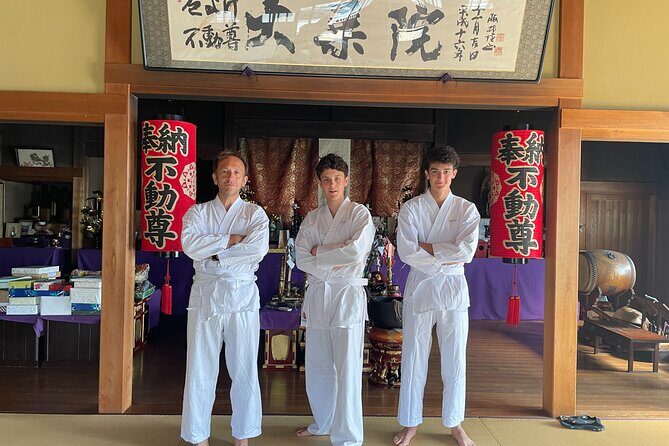
This class happens at Bushi no Homare (Samurai Honor), also tied to the “Honor of the Samurai” branding. The meeting point is easy to recognize: a wooden sign that reads Honor of the Samurai. It sits by the activity pamphlets in front of the store, and you may even see kimonos and hakama hanging up nearby.
Location details matter because there’s no hotel or train-station pickup. The address provided is:
- Excellence Takayama 1F, 2-3-19 Shiginonishi, Joto-ku, Osaka-shi, Osaka 536-0014
One practical warning: the Apple Maps address is incorrect. Use Google Maps instead so you don’t waste time circling blocks.
The setting also helps the vibe. One review mentioned the sword practice shares space with a calligraphy room, so the building feels like a broader Japanese culture studio, not just a one-room workshop.
Your 30-Minute-early Arrival: Why It Changes Everything
You’ll be asked to arrive 30 minutes before your reserved time. That’s not busywork. It’s how you get:
- time to change into your samurai costume
- time to receive instructions before the bow-and-training sequence
- time to settle your nervous system before holding a real sword
If you arrive late, you’ll feel rushed. And for martial arts and sword forms, rushing turns learning into flailing. Give yourself the slack.
Also bring a T-shirt. You’ll still wear the proper training clothing during the class, but having a simple base layer makes the changing process faster and more comfortable.
Step 1: Changing Into Samurai Gear (Dogi and Hakama)
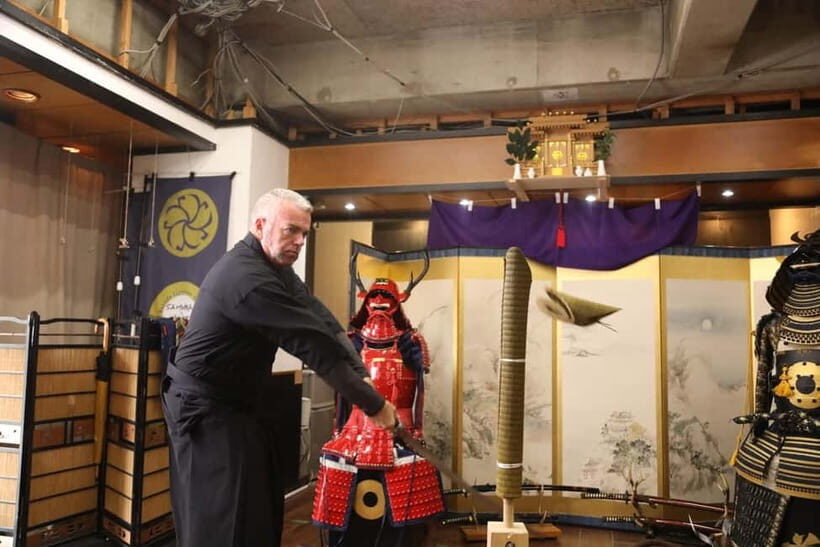
The tour starts with transformation. You’ll change into a samurai costume—dogi and hakama—then you’re guided into the training mindset.
This matters more than you’d think. Costume work isn’t about cosplay; it sets your posture. It’s also part of the experience’s teaching method. When your outfit cues the role, your brain stops treating the sword like a toy.
One reason this feels memorable: the moment you dress up, you’re no longer an observer. You’re the person practicing.
Step 2: Bowing in the Dojo Shrine Routine
You begin (and end) with a bow before the shrine in the dojo. It’s a simple act, but it frames the whole experience.
In a modern world, it’s easy to treat activities as entertainment. The bow is a reminder this is practice with discipline built in—mind, body, and technique treated as one system.
The class also explains the relationship between the Samurai and their sword. You’ll hear the idea that a sword was inseparable from a samurai’s life—even during peaceful times—and that it carried responsibility. They also cover the concept that the sword is treated as the soul of the samurai and not something to sell even in hard times.
It’s not meant to be a history textbook. It’s meant to make the sword feel weighty in your hands even before you cut anything.





Step 3: Sword Etiquette and the “Why” Behind the Motions
After the bow routine, you’ll get instruction on samurai manners and sword basics. A major theme is responsibility.
You’ll also hear how samurai learned early and could wear a serious sword belt at 15. That detail is used to highlight the seriousness of carrying a deadly weapon—training wasn’t casual.
The session even mentions samurai language and the values reflected in it, like loyalty and discipline. If you like learning how culture expresses itself through words, you’ll probably enjoy this part more than expected.
Then you’ll practice gestures of walking with the sword belt. This is one of those details that can sound silly until you do it. It teaches how body position supports safe handling and ready movement.
Step 4: Iai Basics With Practice Swords (Battou, Chiburui, Nottou)
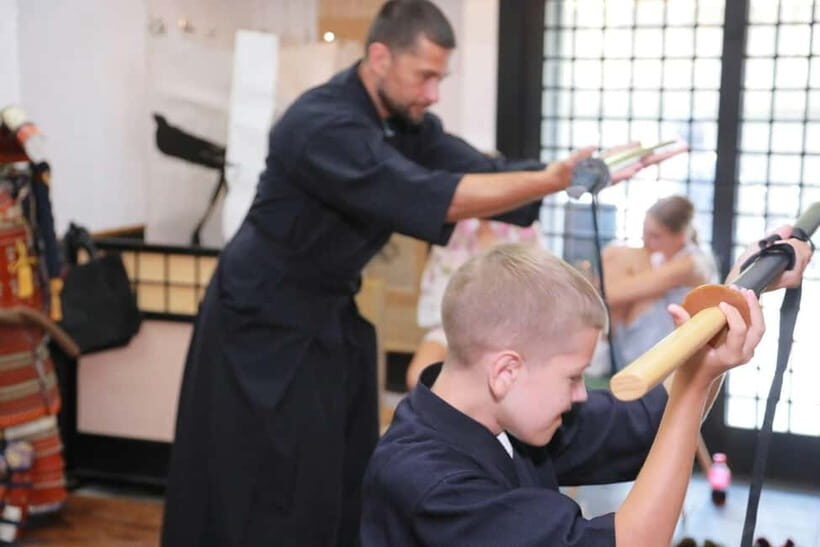
Before you try cutting, you’ll train with an iai practice sword. The lesson goes through key actions that are designed to build correct form from the ground up.
Here’s what you’re taught in order:
- Battou: pulling/drawing the sword out of the scabbard (to cut)
- Chiburui: the process of symbolically removing blood from the blade after cutting
- Nottou: returning the sword to its sheath after the action
Whether you find this poetic or practical, you should find it useful. The sequence forces you to treat the sword as an object you respect, not something you just swing.
One very specific coaching detail in the program: when you’re swinging correctly, you may hear a “hi-nari” sound from the sword. That’s a great sign to listen for because it tells you your motion has the right feel.
Step 5: Stances and Kata Practice You Can Actually Follow
Next comes sword stances and basic kata practice. You’ll drill the shapes and positioning so your body understands where to stand and how to move.
The program includes stances like:
- middle stance
- upper stance
- lower stance
- eight-phase stance
- side stance
In plain terms, you’re training your feet, hips, shoulders, and timing. And because the group is small (up to 4), the instructor can adjust what you’re doing instead of calling out only the best student.
Some sessions start you with the basics and then step up the movements once your form meets the instructor’s standard. That’s how you get real learning instead of a quick show-and-tell.
Step 6: Trial Slashing (Tameshigiri) With a Real Japanese Sword
This is the moment most people come for: trial slashing using a real Japanese sword. The program frames it as world-class cutting demonstration by a master swordsman, then you get your turn.
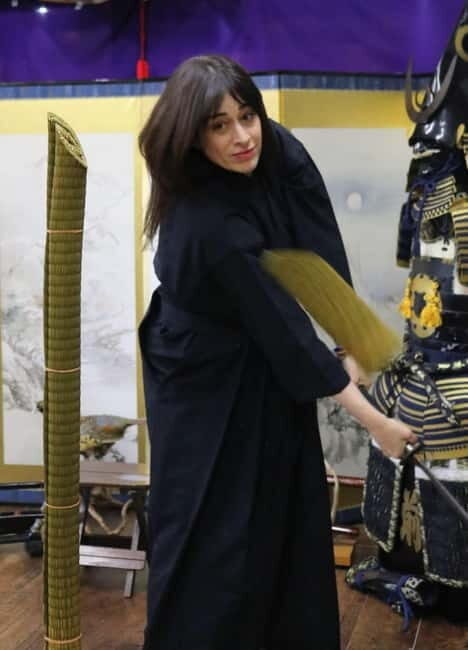
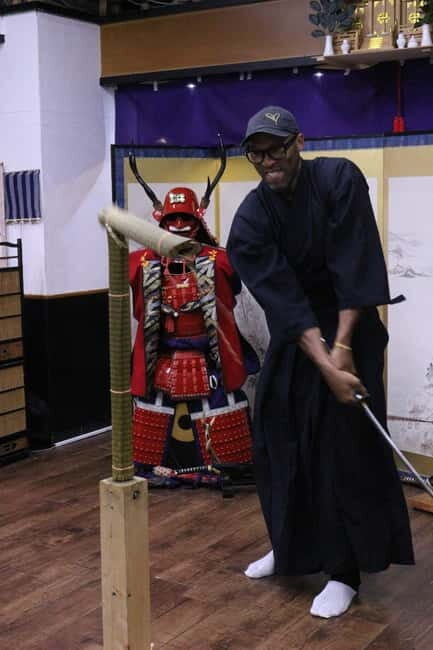
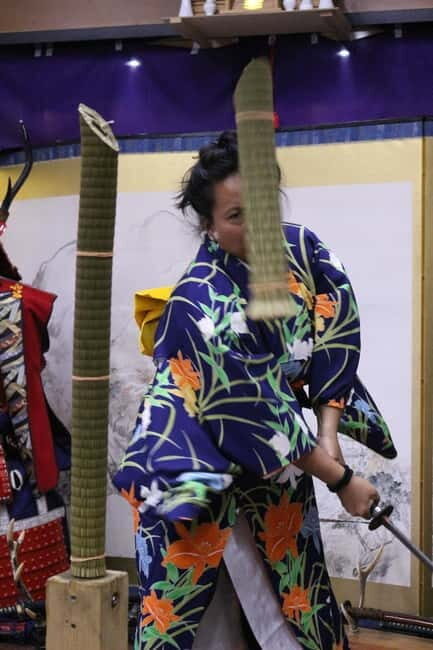
What do you cut? The overview says you cut a rolled straw for tameshigiri practice. At the same time, class outcomes can vary by what they set up in the room. Some participants describe cutting through what looks like bamboo, and clarify it’s actually a tatami mat setup. Others reference straw-on-a-stick style cutting.
So here’s the takeaway for you: expect a real, guided trial cut against a target, and expect the instructor to walk you into the correct form before letting you do it.
This part is also where the “why” becomes real. You’ll feel the difference between arm strength and proper technique fast. The swing and draw mechanics matter more than brute force. When your stance is right, the sword motion feels smoother and more predictable.
And yes, you get that adrenaline bump. But the structure keeps it from turning into chaos.
The Photo Moment and How the Class Ends With a Bow
You’ll have photo shooting during your test cut moment. The photos are sent to a designated email afterward, which is a nice practical touch. You don’t need to bring a pro camera or worry about hitting the shutter at the exact right time.
The class also ends with a bow, keeping the same discipline-based rhythm as the start. It makes the experience feel complete, not just a sequence of actions.
If you’ve ever tried to record martial arts and ended up with shaky footage, this is one place where having someone else capture the key frames is worth paying attention to.
Price and Value: Is $92 Reasonable for This?
At $92 per person for about one hour (with the expectation you’ll arrive 30 minutes early), this is not a cheap souvenir activity. But it’s also not just a costume-and-photo package.
Your cost includes:
- samurai clothing (dogi and hakama)
- a certified professional instructor
- tax and tips
- photo shooting (photos sent by email)
That mix is why the value feels real. You’re paying for instruction and a structured, hands-on training progression—not just an aesthetic experience. Several participants specifically praised the way the instructor guides sword swings and then moves to more advanced movements once you’re ready.
Two things to keep in mind when judging value:
- Transportation isn’t included, so you’ll need to factor getting there on your own.
- You’re also responsible for following the rules around food and drink, since none are allowed.
Overall, if you want something interactive near Osaka Castle that feels authentic and structured, this price starts to make sense.
Who This Samurai Sword Trial Fits Best
You’ll probably love this if:
- you want hands-on learning with a small group
- you’re curious about bushido as discipline, not just swords as weapons
- you enjoy structured practice where you repeat motions until they click
- you care about getting photos of the key moment
It’s especially good for couples, friends, and small groups who want a shared memory that’s more active than a typical museum visit.
You should skip it if:
- you’re bringing kids under 10
- you have altitude sickness concerns (this is listed as not suitable)
- you’re over 95 (also listed as not suitable)
- you want food/drink breaks during the activity (not allowed)
Also check your group setup. Party groups like bachelor and bachelorette parties aren’t allowed, and food/drinks aren’t allowed either.
Practical Tips So You Get the Full Experience
A few simple steps can make your class smoother:
- Wear a comfortable T-shirt, since that’s specifically what you should bring.
- Arrive early. The 30-minute buffer is there to help you change and settle.
- Plan to go without snacks or drinks. Bring water elsewhere for after, not for the session.
- Expect instruction in English (and Japanese). If you need another language, you have to ask about interpreter schedules before booking.
Because the group size is limited to 4, your instructor’s attention is part of what you’re paying for. Don’t waste it by showing up late or distracted.
Should You Book This Osaka Bushido Sword-Cutting Experience?
Yes—if you want a real, coached test cut and don’t mind doing disciplined practice, this is one of the most direct ways to experience samurai culture near Osaka Castle without guessing your way through a classroom.
Skip it if you’re looking for a casual show, or if sword handling isn’t your thing. Also make sure you can handle the rules (no food/drinks during the activity, no strollers, and the stated age/health limits).
If your ideal Osaka day includes costume-up fun plus actual technique practice, book it.
FAQ
How long is the Osaka Learn Bushido trial slashing experience?
The experience is listed as 1 hour. You should still plan to arrive 30 minutes early for instructions and changing.
What’s included in the price?
Included items are samurai clothing, a certified professional instructor, tax and tips, and photo shooting (photos sent by email). A default English interpreter language is supported, and other languages may depend on staff schedules.
What should I bring to the class?
Bring a T-shirt.
Is transportation like pickup and drop-off included?
No. Pick up and drop off at the train station or hotel is not included.
What languages are available during the instruction?
English and Japanese are available. If you need another language, you must inquire about interpreter schedule before making a reservation.
What are the age and suitability limits?
Children under 10 years are not suitable. People with altitude sickness and people over 95 years are also listed as not suitable.
Are photos included, and can the photo time be recorded?
Photo shooting is included, and the photos are sent to a designated email address. There is also a paid option for movie shooting, if you want that.