REVIEW · OSAKA
Osaka: Private Samurai Experience – Train with Sword Master
Book on GetYourGuide →Operated by DeepExperience, Inc. · Bookable on GetYourGuide
Sword training at a temple feels different fast. You’ll learn classic techniques with Tatsuya Watanabe, plus a rare performance and access to parts of the grounds that are usually off-limits in Minoh, Osaka.
I like two things most: the private setting inside temple grounds, and the way the instruction blends technique with the mindset behind it. When English translation is available through guides like Benoit/Ben, you don’t just copy moves—you understand why your posture and timing matter.
One drawback to keep in mind: it’s only about 3 hours total, so you’ll leave with fundamentals and a taste of the system, not mastery. If you expect a full kendo season in a day, you’ll be disappointed.
In This Review
- Key highlights I’d circle first
- Getting to Minoh and meeting your guide at the station
- Ryuan-ji or Saiko-ji: why the temple setting changes the training
- The sword master: Tatsuya Watanabe’s training path and teaching style
- The special sword performance you get before you practice
- The hands-on training: wooden sword basics first
- When the session allows real blades and paper cutting
- Time breakdown that makes sense (and why 3 hours is the right length)
- Private group benefits: more attention, less crowd noise
- Translation makes or breaks learning
- What you actually learn: technique plus the mindset behind it
- Price and value: is $158 per person worth it?
- Who this tour fits best
- Should you book the Osaka private samurai experience?
- FAQ
- Where do I meet for this experience?
- How long is the Osaka private samurai sword experience?
- How much does it cost?
- Is this a private group?
- Which temple locations might be used?
- What languages are available for the guide?
- Do I get to watch a sword performance?
- Do I train with a wooden sword?
- Can I handle real swords during the session?
- Is the cancellation policy flexible?
- Do I pay at booking or later?
Key highlights I’d circle first
- Training with a former grandmaster-level swordsman who teaches classical kenjutsu roots
- A special sword performance made for this tour group
- Restricted temple practice space that’s normally closed to the public
- Hands-on practice that starts with controlled drills and builds toward harder targets (as the session allows)
- Temple context in plain language through an interpreter like Ben or Benoit
Getting to Minoh and meeting your guide at the station
This experience starts at 箕面駅 (Minoh Station). Plan to arrive a bit early and find your guide in front of the station—your meeting point is clearly marked with a yellow DeepExperience sign.
Why that matters: this whole program runs on a tight rhythm. You’re walking into a temple area where timing, etiquette, and safety rules kick in right away. If you show up rushed, you lose the calm that makes the experience work.
The value here is that you’re not negotiating buses or figuring out temple routes while you’re trying to keep your eyes on sword practice. Your guide takes care of the handoff from city life to temple quiet.
You can also read our reviews of more private tours in Osaka


Ryuan-ji or Saiko-ji: why the temple setting changes the training
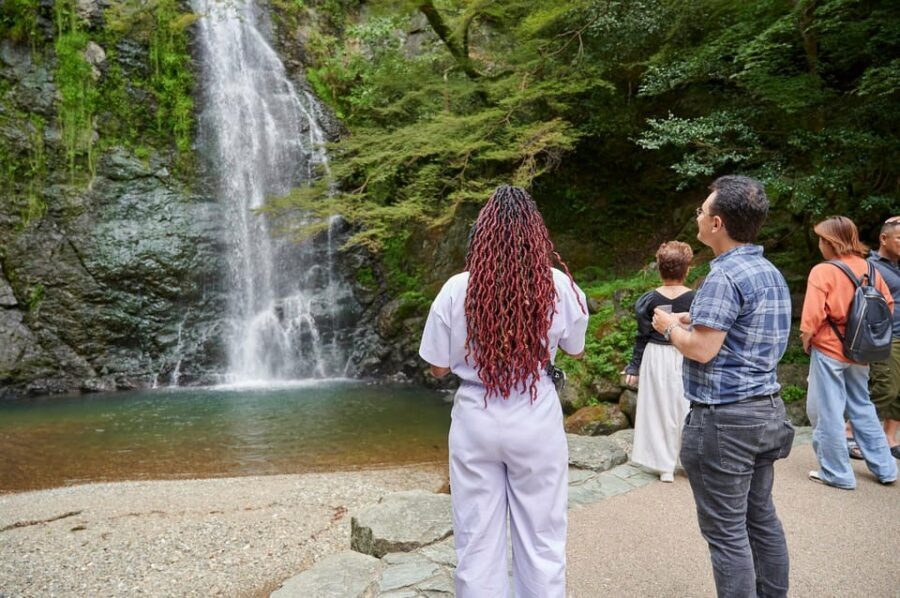
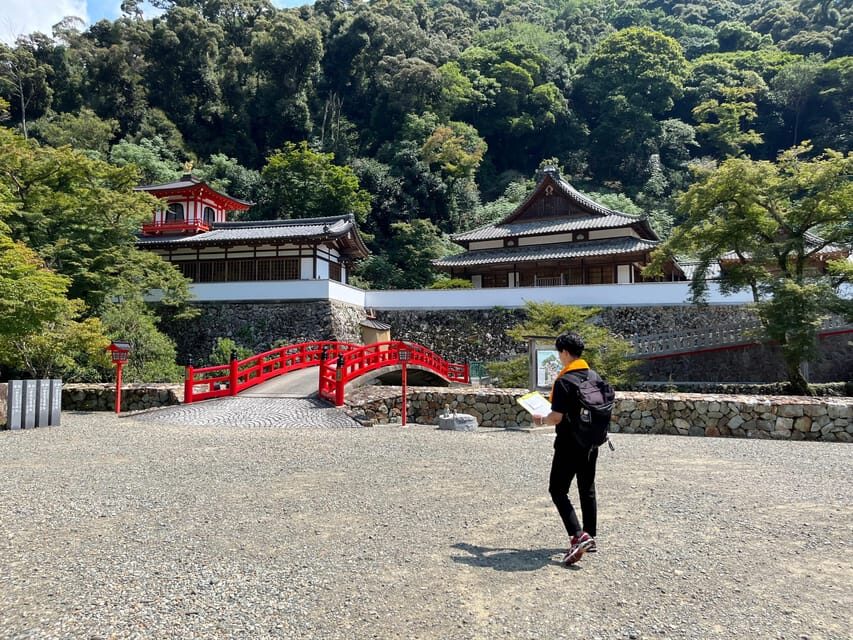
You’ll visit Ryuan-ji or Saiko-ji in the Minoh area. The key detail isn’t just that it’s a temple—it’s that the program uses secluded sections of the grounds that are typically closed to the public.
That restricted-access part is one reason this feels more “real” than typical sword demos. You’re practicing where discipline and stillness are expected, not in a studio built for tourists.
Also, the tour context is practical. You’ll get explanations of the temple area and what you’re seeing as you move through the site. In past sessions, interpreters have pointed out temple heritage and helped connect the surroundings to the sword tradition being taught.
The sword master: Tatsuya Watanabe’s training path and teaching style
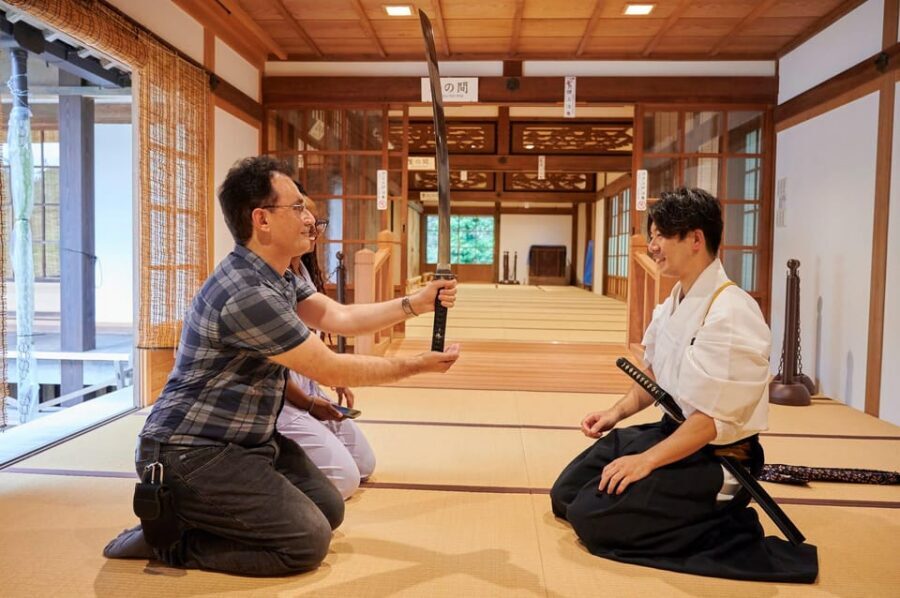
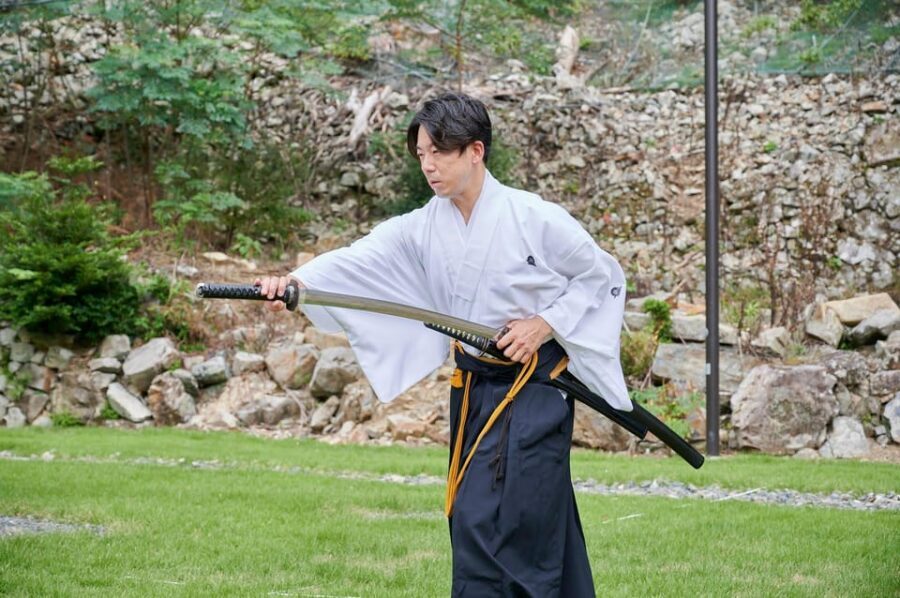
The main draw is Tatsuya Watanabe, a swordsman with serious classical background. His path includes starting with kendo in his teens, then studying Yagyū Shinkage-ryu during university. Later he trained further in other lineages, including Suishin-ryu, where he was appointed soke (headmaster) in his twenties.
What you should expect from that background is not just technique talk. He’s presented as someone who links physical training with spirit—how you carry yourself, how you manage focus, and how you treat the sword as a discipline rather than a prop.
In sessions that run with English support, interpreters like Ben or Benoit have made a big difference. The lessons land better when you can hear the meaning behind a stance, not only the action.
The special sword performance you get before you practice
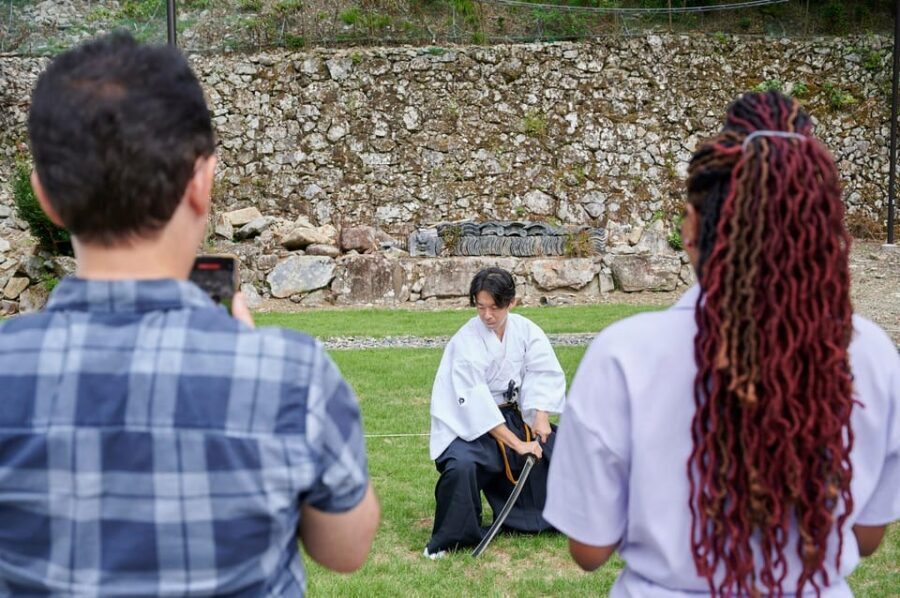
Right at the start, you’ll watch a special sword performance exclusive to this tour. This is one of the most praised parts of the program because it sets the standard for the session.
Look at what the performance teaches you, even if you’ve never trained before:
- control of distance
- calm movement under pressure
- how precision looks when it’s not rushed
It’s also useful for your own practice. After you see how the techniques are meant to look, you stop guessing and start correcting. That’s when the training time feels like it doubles.
The hands-on training: wooden sword basics first
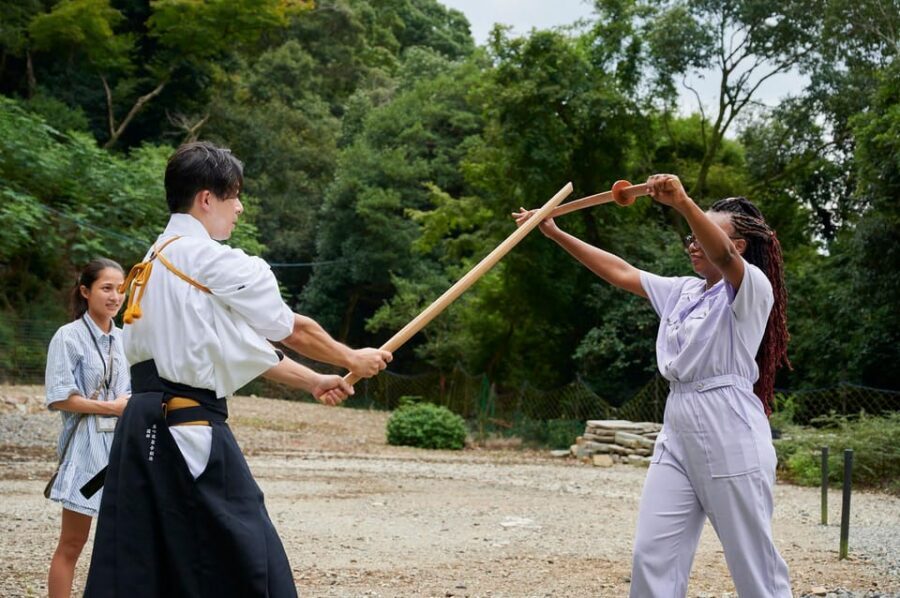
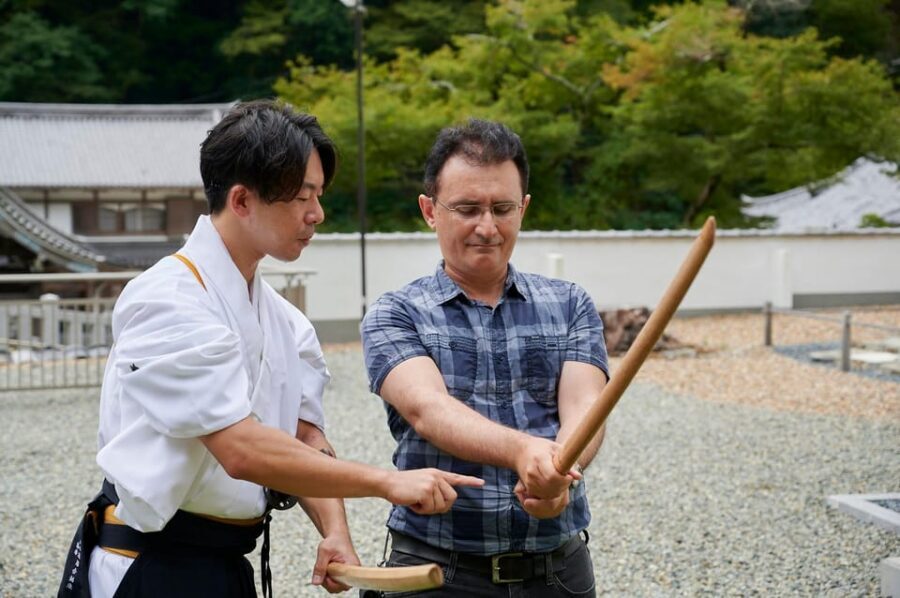
Training happens in a private area on the temple grounds. Sessions include practice using a wooden sword (bokken) first, which is the right pace for beginners and a safe way to learn fundamental mechanics.
You’ll work on core actions like:
- striking fundamentals
- posture and stance
- controlled cutting and movement
What I like about this approach is the coaching style. During practice, the sword master and interpreter help you fix small details—how you stand, how you strike, and how to align your body so power transfers cleanly. You’re not just following; you’re being adjusted.
In at least some sessions, instruction also includes techniques that historical warriors used to strengthen body and mind. That’s where the temple setting makes sense: the practice is meant to be more than exercise.



When the session allows real blades and paper cutting
Depending on how the session is structured and how you progress, you might have the chance to move beyond practice tools. Some participants have described going from wooden swords to real swords and even cutting paper.
Important note for expectations: you’re not guaranteed to perform advanced cuts. The experience is designed to teach technique within a safe, respectful temple setting. But the possibility is real enough that it adds excitement—especially if you’re learning for the first time and want to see what the discipline feels like at the next level.
If you’re sensitive to loud sounds or sharp metal, mention it early to your guide. The program includes guidance and translation, and you’ll get the session’s boundaries clearly.
Time breakdown that makes sense (and why 3 hours is the right length)
The total duration is 3 hours (270 minutes). You can think of it as:
- temple visit and guided context (about 1.5 hours)
- training session (about 1.5 hours)
This timing is smart. You don’t spend the whole day traveling and waiting, and you also don’t run straight to drills without context. The temple tour gives meaning, then the training converts that meaning into muscle memory.
For practical planning: after you finish, you’re back at Minoh Station, so you can easily fold the rest of your day into Osaka sightseeing. That matters if you’re trying to keep your Osaka schedule tight.
Private group benefits: more attention, less crowd noise
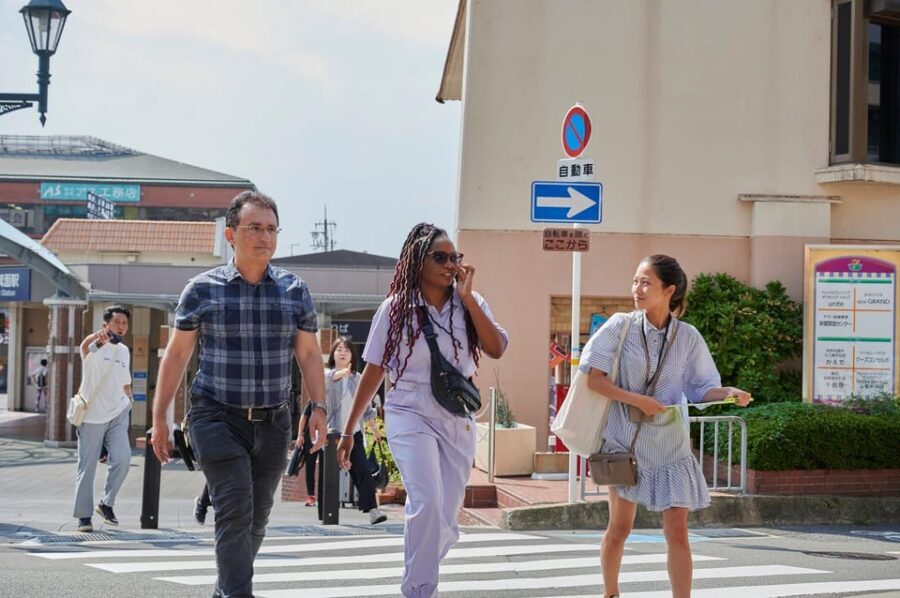
This is a private group experience. That’s not a luxury word here—it’s a real training advantage.
In sword practice, small errors compound. With private instruction, you get more targeted feedback. It’s easier for the guide and interpreter to notice what you’re doing, explain it in the language you need, and correct you before bad habits set in.
If you’re traveling with a teen, partner, or friend, this format often creates a calmer pace than a larger group class. One father-and-son pairing described it as the best day in Japan, largely because both people got real attention during practice.
Translation makes or breaks learning
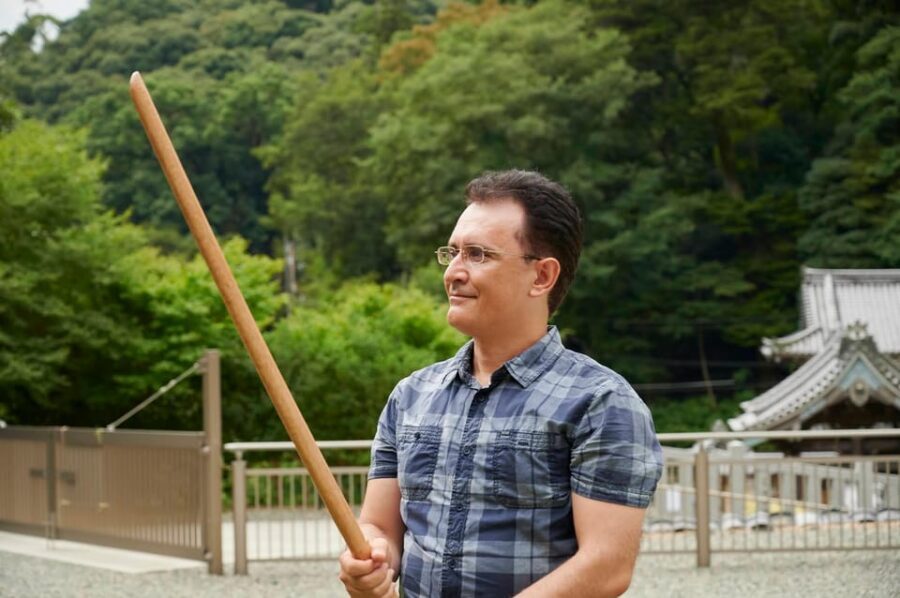
Language support is one of the quiet strengths here. The experience offers English, Japanese, and French guidance.
And in practice, having a strong interpreter like Ben/Benoit matters. Multiple sessions described translation as the difference between understanding instructions and just copying movements. When translation is good, you can ask questions, grasp the why, and improve faster during limited training time.
If you’re comfortable in Japanese, you’ll still appreciate the structured flow that an interpreter provides. If you’re not, take comfort in the fact that the coaching has been designed to work through translation, not in spite of it.
What you actually learn: technique plus the mindset behind it
This isn’t only about learning how to swing. The experience repeatedly focuses on the idea that swordsmanship is linked to mental discipline and respect.
You’ll likely leave with:
- a clearer understanding of posture and distance
- a sense of timing and control (not brute force)
- appreciation for how classical schools treat the sword as a path
In simple terms: you’ll train like you’re learning a craft with standards, not like you’re doing a thrill activity. That’s why the cultural part doesn’t feel tacked on.
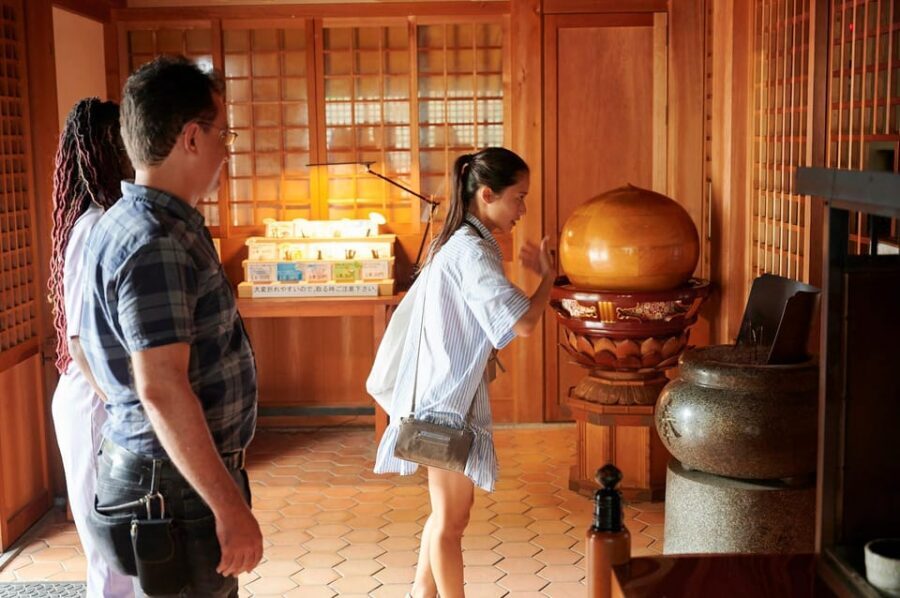
Also, you may get to see personal items or historic pieces during the visit, depending on how your session is arranged. Some participants have noted seeing a sword connected to the personal collection of the master and even a historical example dated to 1370 inside a temple house. Even if you’ve read about samurai culture before, seeing objects in context hits harder than photos.
Price and value: is $158 per person worth it?
$158 per person is not budget pricing, so you should judge it against what you get.
Here’s what’s included in the experience:
- sword instruction with the sword master
- a special sword performance
- access to temple training grounds that are not normally open
- a guided temple visit with an English/Japanese/French interpreter support
- a private group setup
In my view, the value comes from the combination. Many Osaka experiences offer a temple visit or a sword demo. This one adds genuine training time, a performance before you start, and restricted-area access. That’s three separate “upgrades,” and they don’t come cheap.
If you’re the type who wants a real skill takeaway and not only a souvenir day, the price starts making sense. If you only want a photo and a 10-minute show, you’d feel shortchanged.
Who this tour fits best
You’ll enjoy this most if:
- you’re curious about classical Japanese swordsmanship and its schools
- you want a hands-on experience, not just a spectacle
- you value culture and context as much as technique
- you’re okay with structured drills and safety rules
It can also be a great father/son or parent/teen activity. Training can be inspiring because you’re learning from someone who’s devoted to the craft every day.
If you have zero interest in physical practice, or you want a long, slow cultural day only, you might prefer a more leisurely Osaka temple itinerary.
Should you book the Osaka private samurai experience?
Book it if you want to trade generic sightseeing for a focused, well-taught session where sword culture is treated seriously. The top reasons to choose it are private temple access, instruction from Tatsuya Watanabe, and the fact that translation support helps you learn instead of just watch.
Skip it if your main goal is cheap thrills or a fast photo stop. Also skip it if you’re expecting a full deep study of kenjutsu in one visit. This experience gives you fundamentals, context, and momentum—then you decide whether you want to continue training after you get home.
If you’re on the fence, think like this: three hours is short. That’s exactly why this works. You leave with a real skill start and a story that feels tied to place, not just to a ticket.
FAQ
Where do I meet for this experience?
Meet your guide in front of Minoh Station. The guide will be holding a yellow DeepExperience sign.
How long is the Osaka private samurai sword experience?
It runs for 3 hours (270 minutes).
How much does it cost?
The price is $158 per person.
Is this a private group?
Yes, it’s listed as a private group experience.
Which temple locations might be used?
Training and the visit are described as taking place at Ryuan-ji or Saiko-ji in the Minoh area.
What languages are available for the guide?
The guide offers English, Japanese, and French.
Do I get to watch a sword performance?
Yes. The tour includes a special sword performance exclusive to this program.
Do I train with a wooden sword?
Yes. The training is described as starting with a wooden sword (bokken).
Can I handle real swords during the session?
Some sessions have described moving from wooden practice to real swords and even paper cutting, but what you do can depend on how the session runs.
Is the cancellation policy flexible?
You have free cancellation up to 24 hours in advance for a full refund.
Do I pay at booking or later?
You can reserve now & pay later, keeping plans flexible.
![[Departure from Sapporo] Noboribetsu Jigokudani, Lake Toya, Cape Chikyu by private car - The morning plan out of Sapporo (8:00 a.m. start)](https://images.thejapantraveler.com/wp-content/uploads/departure-from-sapporo-noboribetsu-jigokudani-lake-toya-cape-chikyu-by-private-car.jpg)