REVIEW · OSAKA
Kyoto & Nara Private customized tour with English speaking Guide
Book on Viator →Operated by Hamzi · Bookable on Viator
Kyoto and Nara are close, but the details can still be a headache. This private tour is built to keep your day simple while still hitting big names like Nara Park, Arashiyama, and Fushimi Inari. I like the flexibility—your guide can adjust the flow to your group—plus the language support that keeps things from turning into guesswork.
The biggest thing to plan around is crowds and pacing. Deer at Nara Park can get bold, and popular Kyoto stops can get packed depending on the day and time.
In This Review
- Key points before you go
- Why this private Kyoto-and-Nara setup makes the day easier
- Pickup from Osaka (and beyond) without the logistics headache
- Nara Park: deer up close, family fun, and real safety tips
- Todai-ji and Tenryu-ji: when UNESCO temples become a manageable stop
- Arashiyama Bamboo Grove: the green photo stop that still feels special
- Kinkaku-ji (Golden Pavilion) and the Kyoto icon checklist
- Fushimi Inari Taisha: red torii gates without the wandering
- How customization works in an 8–10 hour window
- What’s included, what’s not, and how the price can make sense
- Timing, crowds, and the small details that matter
- Should you book this Kyoto & Nara private tour?
- FAQ
- How long is the Kyoto & Nara private customized tour?
- How many people are included in a group?
- Where is the meeting point in Osaka?
- Is pickup available?
- Do you get an English-speaking guide?
- What’s included in the tour price?
- Is lunch included?
- Are temple or site entrance fees included?
- What is the cancellation policy?
Key points before you go
- Private van time beats transit stress: you avoid juggling trains and transfers for a full day across Kansai.
- Customization is real, not just a checkbox: your route can match your group’s energy and interests.
- English-speaking guide support helps with navigation, timing, and on-the-ground logistics.
- Nara Park deer are not background scenery: watch kids closely, especially with male deer.
- Temple entry costs can vary by stop: some are free, some are not included, so budget smart.
- 8 to 10 hours is a full day: you’ll cover highlights, but you’ll want to set expectations on downtime.
Why this private Kyoto-and-Nara setup makes the day easier
Kyoto and Nara are must-sees, but trying to do both on your own usually means a lot of transfers, timetable checking, and “which exit again?” moments. This is the opposite approach: you get an air-conditioned vehicle, WiFi on board, and an English-speaking guide to handle the in-between parts.
I also like that it’s structured enough to be stress-free. You’re not wandering with zero plan. You’re guided to the key sites, but you can still steer the day—so it doesn’t feel like you’re trapped in someone else’s itinerary.
The real win is the balance between “big sights” and “you time.” Even with a tight schedule, your guide can help you make tradeoffs: extra minutes where your group cares, fewer minutes where you don’t.
You can also read our reviews of more guided tours in Osaka

Pickup from Osaka (and beyond) without the logistics headache
The meeting point is Osaka Station (3-chōme-1-1 Umeda), and the tour starts and ends back at the same place. If you’re staying in Osaka, Kyoto, or Nara, pickup is offered, which matters a lot when you’re trying to beat crowds and keep the day from unraveling.
Because it’s a private tour for up to 6 people, the pacing tends to be more realistic than a group bus day. You can leave when your group is ready, stop when you need a quick break, and avoid the “everyone move now” pressure that comes with larger tours.
Practical note: the tour is scheduled during 8:00 AM to 6:00 PM. If you want temple-light crowds and nicer photo timing, aim for an earlier start time when possible.
Nara Park: deer up close, family fun, and real safety tips
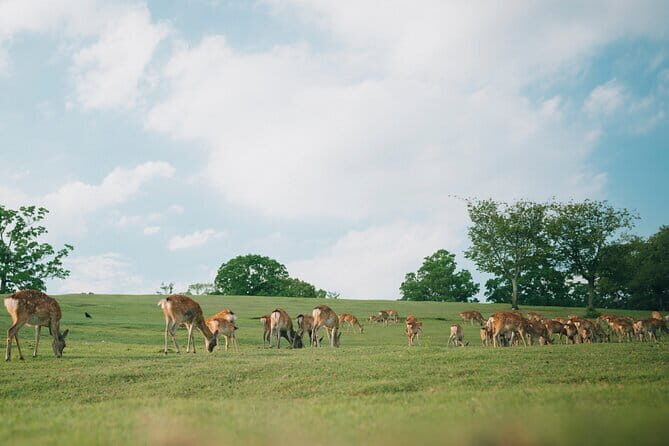
Your first stop is Nara Park, timed at about 1 hour with admission listed as free. This is the deer area—the famous one. If you’re imagining gentle, storybook deer, adjust that picture. These are wild animals used to people, and they can act pushy.
Here’s how to handle it like a pro:
- Keep a close grip on kids. The male deer can be aggressive, especially when they think food is coming.
- Don’t let anyone wander off the group perimeter to take a solo selfie.
- Keep an eye on behavior changes. If a deer starts following or blocking your path, don’t argue with it—just move calmly.
Even with crowds, Nara Park is one of those places that feels instantly “real.” You’re not just looking at a monument. You’re walking through a living setting that feels part of the park’s daily rhythm.
Todai-ji and Tenryu-ji: when UNESCO temples become a manageable stop
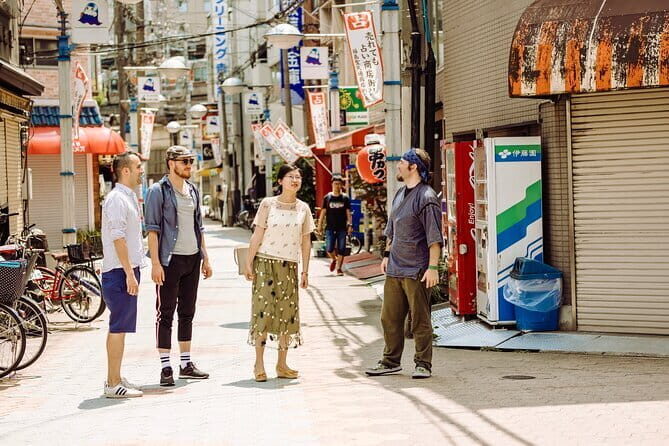
After Nara Park, you visit Todai-ji Temple (about 1 hour). This stop is one of the major historical anchors in the region, and the temple is a UNESCO World Heritage site. Admission is listed as not included, so plan to pay the entrance fee separately.
What makes Todai-ji work on a day like this is that it’s big enough to feel like a highlight, but you don’t need hours to appreciate why people come. In a private format, you can get the “see it, understand it, move on” approach without feeling rushed by a group clock.
Then the itinerary continues into Kyoto with Tenryu-ji Temple in the Arashiyama area (about 30 minutes). Tenryu-ji is also a UNESCO World Heritage site. Admission is listed as not included, so again, budget for entry fees.
Tenryu-ji is a good counterbalance after Nara. Todai-ji brings weight and scale; Tenryu-ji gives a quieter Zen feel that can reset the day. With only 30 minutes, you’ll want to pick what you care about most—temple grounds, garden views, or photo time—then let your guide help you prioritize.
Arashiyama Bamboo Grove: the green photo stop that still feels special
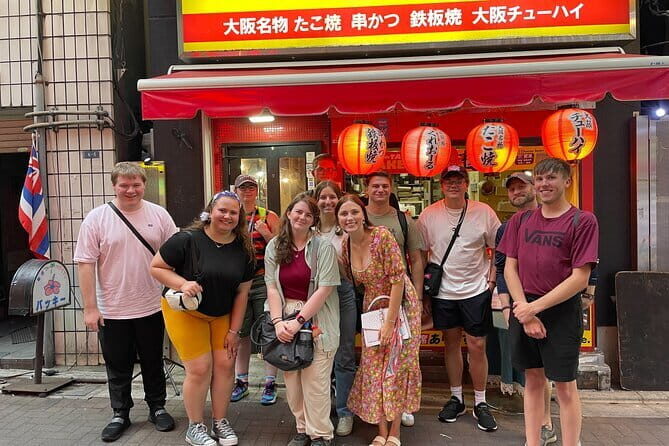
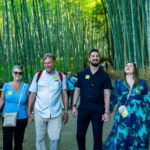
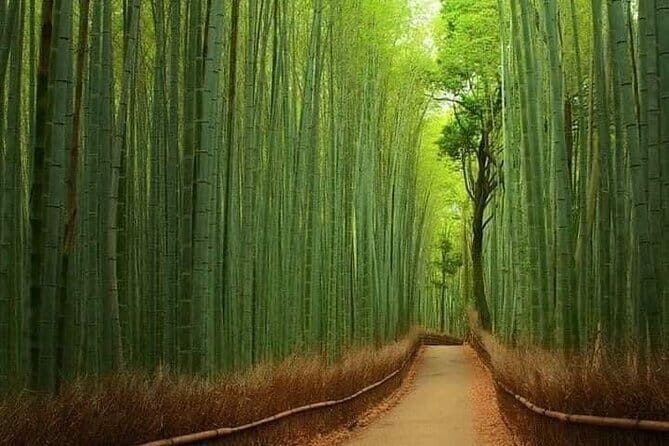
Next is Arashiyama (about 1 hour, with admission listed as free). The headline here is the Bamboo Grove, famous for those tall stalks forming a tunnel-like path. It’s the kind of place where photos are easy, but the experience depends on how you navigate the crowd.
A private guide helps because you’re not stuck waiting for the big tour wave. If you time it right and follow your guide’s routing, you can walk the grove without spending most of your hour trapped in a human bottleneck.
One caution: Arashiyama is popular. Even with private pacing, you should expect other visitors. If your group hates crowds, you’ll want to keep your expectations flexible and lean into short, focused sightseeing rather than trying to linger everywhere.
You can also read our reviews of more private tours in Osaka


Kinkaku-ji (Golden Pavilion) and the Kyoto icon checklist
Your tour includes Kinkaku-ji Temple (the Golden Pavilion) for about 40 minutes. It’s a UNESCO World Heritage site and the standout visual—golden exterior and serene gardens are part of why it’s iconic.
Admission is listed two ways in the provided details: one note says entry is not included, while the stop description says your ticket is included. Because of that mismatch, treat Kinkaku-ji as a “double-check your mobile ticket details” situation before you go.
In practice, this stop is best if you:
- go early enough to reduce crowd pressure, and
- treat the gardens as part of the experience, not an afterthought.
A private format makes sense here because it’s easy to get stuck in lines or feel rushed when you’re trying to see both the structure and the surrounding views. With a guide, you can usually get a better flow through the site.
Fushimi Inari Taisha: red torii gates without the wandering
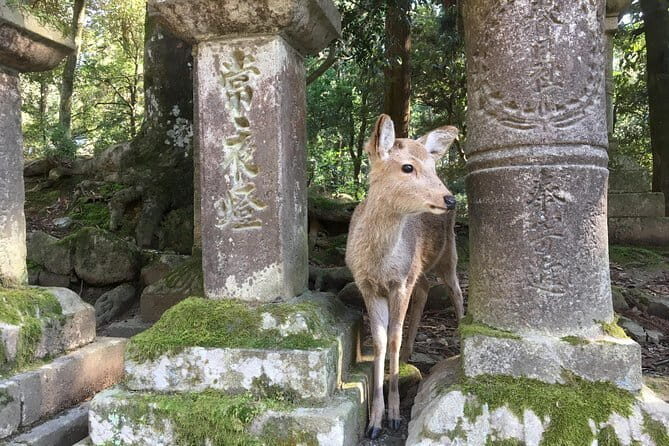
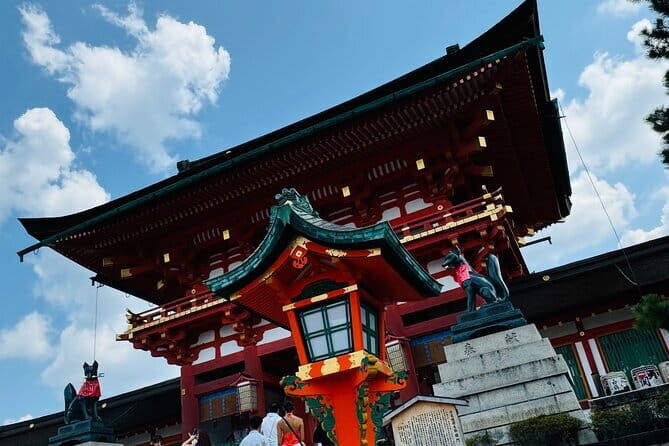
The day ends in style at Fushimi Inari-taisha Shrine (about 1 hour, admission listed as free). This is the shrine known for thousands of bright red torii gates. It creates that unforgettable tunnel effect where the shrine isn’t just something you look at—it’s something you walk through.
One practical challenge is that the route inside the shrine can tempt you to go farther than your energy allows. Since this is an 8–10 hour day that already includes Nara and Arashiyama, you’ll be happier if you set a plan beforehand:
- Decide how far you want to walk up the trails.
- Use your guide to help you choose the best turnaround point for your group.
Fushimi Inari is also a great place for photos at multiple angles. If your guide is strong at guiding timing and movement, you’ll spend more time taking pictures and less time re-positioning.
How customization works in an 8–10 hour window
The itinerary is built around six major stops, but the whole point is that you can tailor the day. In real terms, customization usually affects:
- how long you stay at each stop,
- what you prioritize when there’s crowd pressure,
- and what you add or swap if your group has a specific wish.
You’ll see the value fastest with groups that don’t all want the same pace. For example:
- Families can keep visits shorter and safer (especially around Nara deer).
- First-timers can focus on icons without needing to plan transfers.
- More relaxed travelers can request extra breaks without feeling guilty.
One thing to watch: the tour is long enough to feel full. Even with flexibility, you can’t “turn this into three separate days.” So if your group wants slow travel, choose fewer stops and ask your guide to adjust. If your group wants highlights, this route is built for that.
What’s included, what’s not, and how the price can make sense
Price is $549.00 per group (up to 6), for roughly 8 to 10 hours. That’s the part that scares people at first glance. But private van pricing changes a lot depending on how many people you pack into the group slot.
Here’s the simple math idea:
- If you book for 6 people, you’re splitting the cost six ways.
- If you book as 2 people, you’re paying most of the van cost yourself.
So the value is strongest for families, small groups, and friend groups who can share the ride.
Included features:
- Air-conditioned vehicle
- WiFi on board
- Mobile ticket
- Some stops list admission as free (like Nara Park and Fushimi Inari)
Not included:
- Lunch
- “All fees and taxes” are listed as not included, though certain stops show admission might be included. Because of that, I strongly recommend checking the day-of mobile ticket details for each temple.
In short: you’re paying for the van, the guide, and the logistics control. You’re still responsible for some entrance costs and lunch.
Timing, crowds, and the small details that matter
This itinerary touches multiple high-demand places, so crowds are not a surprise. Your job is to reduce stress, not eliminate people.
My practical suggestions:
- Wear comfortable shoes. You’ll walk through shrine areas and temple grounds.
- Plan for weather. Bamboo Grove and shrine trails are outdoors.
- Keep the group together. This matters in Nara Park the most, but it helps everywhere.
- If your guide speaks quietly or gives fewer explanations, it’s okay to ask for more context. The guide can adjust the tone to what your group wants.
A nice extra: the guide’s job isn’t just showing up at places—it’s helping you get through places. That can mean finding an easier route to the next stop and keeping you from losing time to confusion.
Should you book this Kyoto & Nara private tour?
Book it if you want two cities in one day without playing transit Tetris. It’s especially good for:
- families who need predictable pacing,
- small groups who want English support and fewer navigation headaches,
- first-timers who want the big icons without a planning spiral.
I would hesitate if:
- your group is very sensitive to crowds and wants long quiet time at only one or two sites, or
- you expect fully guided, narration-heavy temple time at every stop regardless of time constraints.
If your goal is a well-managed highlights day, this private format is a solid fit. You get the structure, the flexibility, and the comfort of an air-conditioned ride—plus the guide can help you make the day feel like it belongs to your group, not a tour schedule.
FAQ
How long is the Kyoto & Nara private customized tour?
It runs about 8 to 10 hours.
How many people are included in a group?
The tour price is per group for up to 6 people.
Where is the meeting point in Osaka?
The start point is Osaka Station 3-chōme-1-1, Umeda, Kita Ward, Osaka, 530-0001, Japan.
Is pickup available?
Pickup is offered from Kyoto, Osaka, or Nara.
Do you get an English-speaking guide?
Yes, the tour includes an English speaking guide.
What’s included in the tour price?
Included: an air-conditioned vehicle and WiFi on board.
Is lunch included?
No, lunch is not included.
Are temple or site entrance fees included?
Some stops are listed as free (like Nara Park and Fushimi Inari). Other stops list admission as not included. Check your mobile ticket details for the exact entries that apply to your booking.
What is the cancellation policy?
Free cancellation is available up to 24 hours in advance for a full refund. Changes within 24 hours aren’t accepted.
If you tell me your group size, travel month, and whether you prefer early mornings or relaxed starts, I can suggest a smart way to pace this day.