REVIEW · OSAKA
From Kyoto/Osaka: Kyoto Top Highlights 1-Day Guided Bus Tour
Book on GetYourGuide →Operated by LIMON Tours · Bookable on GetYourGuide
Kyoto in one packed day of icons. I love the air-conditioned coach with free Wi‑Fi, and I love how the English guide (people like Maki and Maria have been highlighted on past trips) adds meaning to each stop so it feels more than sightseeing. You get classic Kyoto highlights plus the timing that helps you cover big distances without burning your day stuck on local trains.
The only real catch is the pace: it’s a long 9 hours with real walking, plus crowds at the big-name sights. If you want quiet corners and slow wandering, you may find the schedule a bit tight.
In This Review
- Key Takeaways Before You Go
- Four Kyoto Icons in One Day (and why the route works)
- Meeting Point Options and Getting on the Bus Without Stress
- Fushimi Inari Taisha and the Torii Gates: the walk you’ll remember
- How to enjoy Fushimi Inari more
- Kiyomizudera: risk, waterfalls, and a view over Kyoto
- Spring and autumn reality check
- Kinkaku-ji Golden Pavilion: short visit, big wow
- The main downside: crowds
- Arashiyama and Sagano Bamboo Forest: where the day shifts into nature
- A practical tip from real-world experience
- April itinerary note (important)
- Coach Time, Wi‑Fi, and the pace you should expect
- Lunch Options: what’s included and what to bring
- The Guides: why the narration turns a bus day into something smarter
- Who This Tour Suits Best (and who might want a different plan)
- Should You Book This Kyoto Top Highlights 1-Day Guided Bus Tour?
- FAQ
- What does this Kyoto top highlights 1-day tour include?
- How long is the tour?
- Is there an English-speaking guide?
- Are entrance tickets included?
- Is lunch included?
- What are the possible meeting points in Kyoto and Osaka?
- Does the bus have Wi‑Fi?
- How much time do you get at each main stop?
- Is this tour wheelchair accessible?
- Are pets and large luggage allowed?
Key Takeaways Before You Go
- Four UNESCO-level stops in one day: Fushimi Inari, Kiyomizudera, Kinkaku-ji, plus Arashiyama’s iconic nature area
- Guides who explain more than photos: you’ll get context in English, with some guides also speaking Japanese to help everyone follow
- Comfort that matters in Kyoto: A/C coach, free Wi‑Fi, and practical time between stops
- Kiyomizudera’s stage has a story: built without nails and propped by 139 pillars (you’ll see why people came for it)
- Arashiyama/Sagano is your reset button: bamboo walking and river-area views give your feet a different kind of rhythm
- Lunch is optional, but rules apply: halal and vegan lunches aren’t available, so plan accordingly
Four Kyoto Icons in One Day (and why the route works)
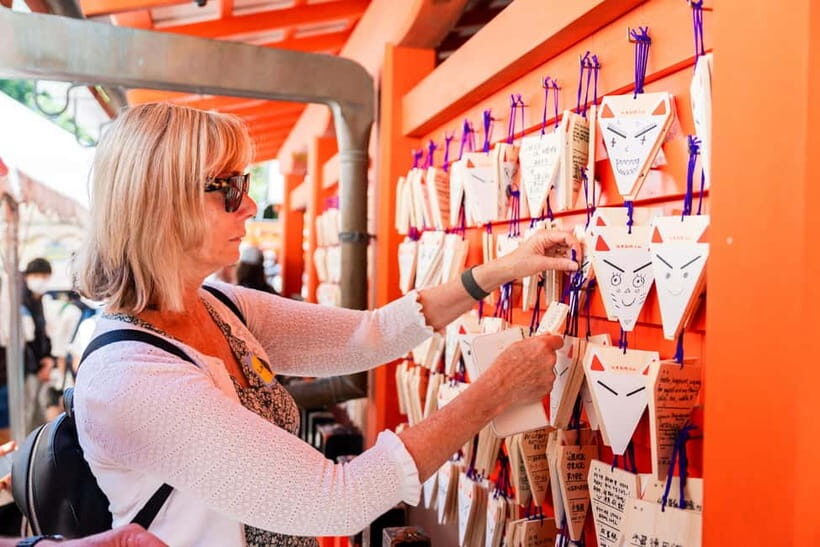
This is the kind of day trip that makes sense when your Kyoto time is limited. The itinerary strings together Kyoto’s biggest, most recognizable cultural stops—then uses coach time to connect places that are far apart.
For value, the price is easiest to understand when you compare it to what you’d likely spend solo on admissions and the hassle of coordinating transport. This tour includes entry tickets for Kinkaku-ji and Kiyomizudera, which are two of the stops most travelers don’t want to skip.
The pace is the tradeoff. You’re going to move. Still, if you’re smart with your shoes, timing, and expectations, it’s a very efficient way to see Kyoto’s greatest hits without turning your vacation into a transit project.
You can also read our reviews of more guided tours in Osaka


Meeting Point Options and Getting on the Bus Without Stress
You start from central Osaka or Kyoto, with multiple pickup spots depending on what you book. In Kyoto, one option is Kyoto Station (Hachijo Exit Tourist Bus Parking). In Osaka, options include OCAT (Osaka City Air Terminal) and Hearton Hotel Nishiumeda.
This matters more than it sounds. Kyoto and Osaka stations are big, and finding the exact meeting point can take longer than you think—especially if you arrive early or feel rushed. Show up with a little buffer and confirm which line/area you’re using.
Drop-off is to the same style of city-center locations, again depending on what you selected. So you’re not dealing with awkward end-of-day transfers back to your neighborhood.
Fushimi Inari Taisha and the Torii Gates: the walk you’ll remember
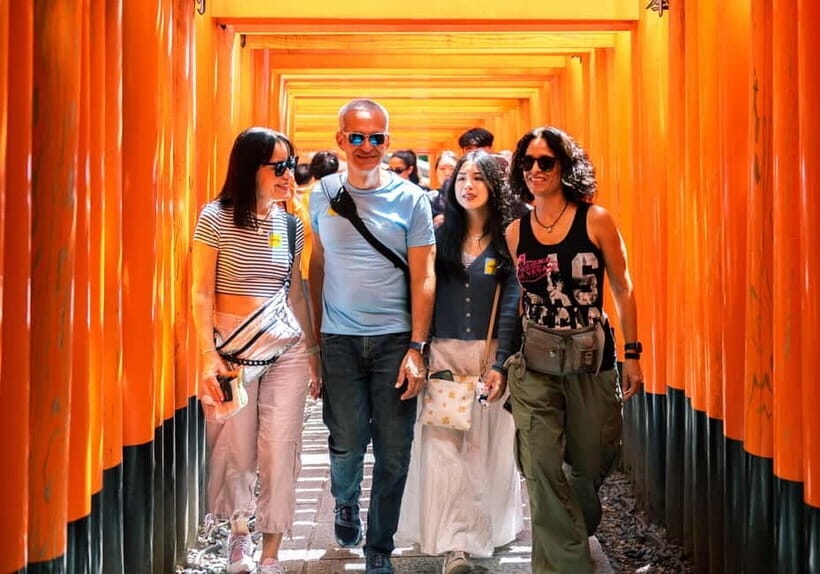
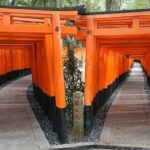
The day begins at Fushimi Inari Taisha, a Shinto shrine dedicated to the guardian deity of agriculture. The headline here is the famous tunnel of vermillion torii gates—so many that your brain starts treating them like a repeating pattern.
What I like about starting here is the energy it sets. You begin with an experience that’s visual, simple to understand, and instantly Kyoto. Plus, the walking is mostly outdoors, so you’re not trapped in a schedule where everything feels rushed and enclosed.
How to enjoy Fushimi Inari more
- Wear shoes you can walk in for a while. This isn’t a quick photo stop.
- Keep an eye on where the crowd gets dense. You’ll find quieter angles if you move deeper and climb a bit.
- Take breaks if you need them. The shrine’s layout means you can step aside without feeling like you’re holding anyone up.
If you’re the type who likes small details, notice how the torii become a geography lesson. Each stretch feels like it leads somewhere, even when you’re just moving toward the next viewpoint.
Kiyomizudera: risk, waterfalls, and a view over Kyoto
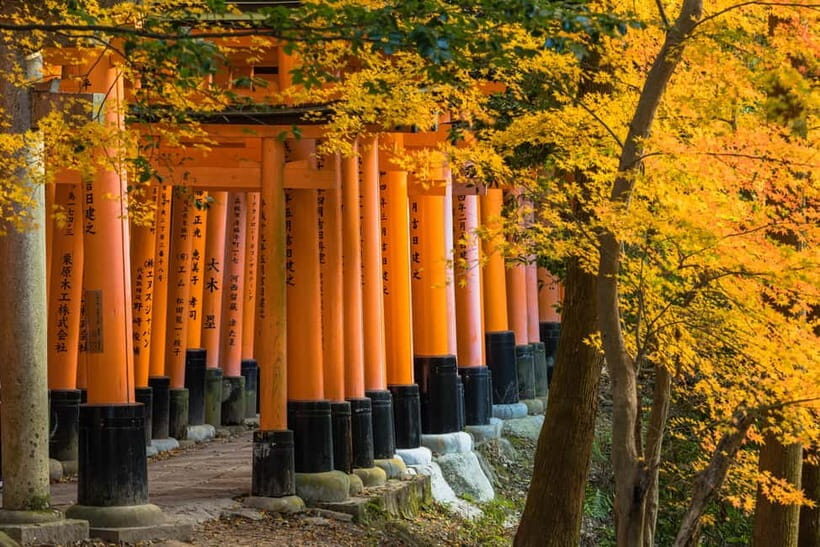
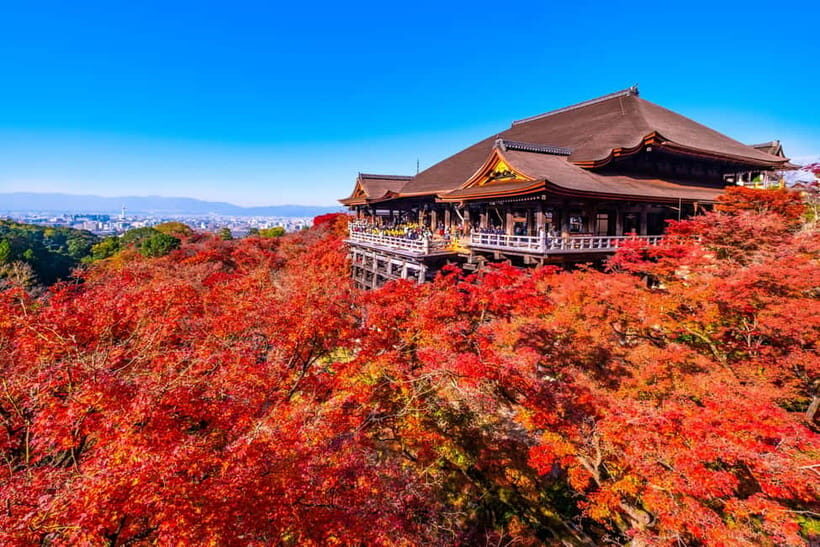
Next is Kiyomizudera, one of Japan’s most famous temple complexes. The big pull is the wooden stage that juts dramatically over the hillside. There’s a Japanese proverb tied to it—jumping off the stage at Kiyomizu—meaning to take a risk. Standing there helps the saying make instant sense.
The tour highlights the architecture too: the stage was built without using a single nail and is supported by 139 pillars. That’s the kind of detail that turns a pretty temple into a story you can repeat later.
You’ll also hear about Otowa Waterfall and its three streams, said to bring success, love, and longevity. Even if you don’t treat it as literal luck, it’s a fun tradition that gives the visit a meaning beyond the postcard view.
A few more Osaka tours and experiences worth a look

Spring and autumn reality check
Kiyomizudera is famous for cherry blossoms in spring and autumn foliage. Those seasons are also peak crowd times, so your best move is to enjoy what’s in front of you when you’re there—then let the crowds be part of the atmosphere, not a reason to be stressed.
The stop is long enough to see the main area and still wander a bit, but it’s also not a full-day “soak it up slowly” experience. You get a meaningful Kyoto temple visit in a single chunk of time.
Kinkaku-ji Golden Pavilion: short visit, big wow
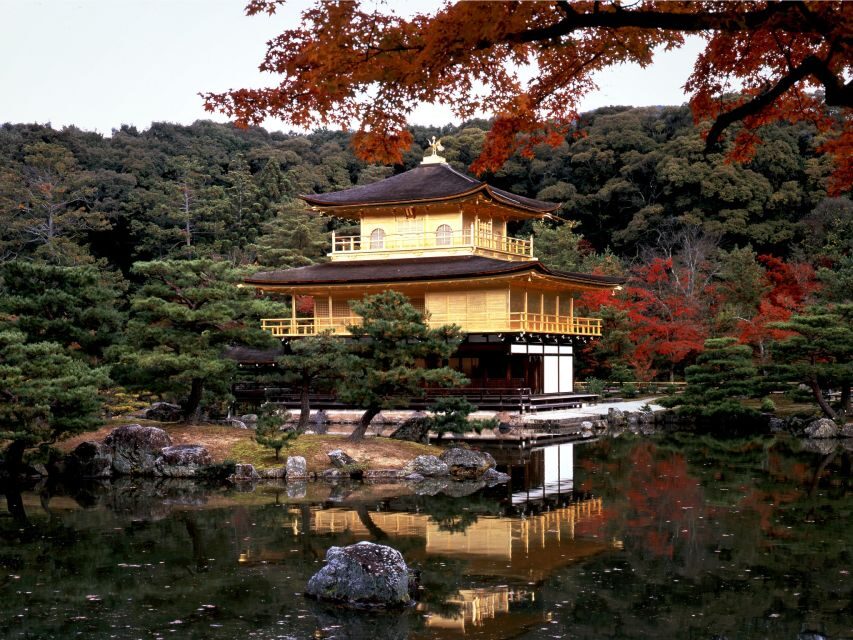
Then you roll to Kinkaku-ji, the Golden Pavilion. The exterior is covered with gold leaf, and it really does shimmer when the light hits at the right angle. The gardens around it add a quieter layer to the experience—more breathing room than you might expect at a place this famous.
This stop gives you enough time to walk the grounds and take in the visuals without feeling like you’re being rushed through a checklist. The gardens preserve original Japanese design elements traced back to the Ashikaga shogunate, which is a useful detail to know because it explains why the grounds feel intentional rather than just decorative.
The main downside: crowds
Kinkaku-ji is a magnet. Expect people. If you go in knowing that, you can focus on the pavilion, the reflections, and the angles where the crowd thins out.
Arashiyama and Sagano Bamboo Forest: where the day shifts into nature
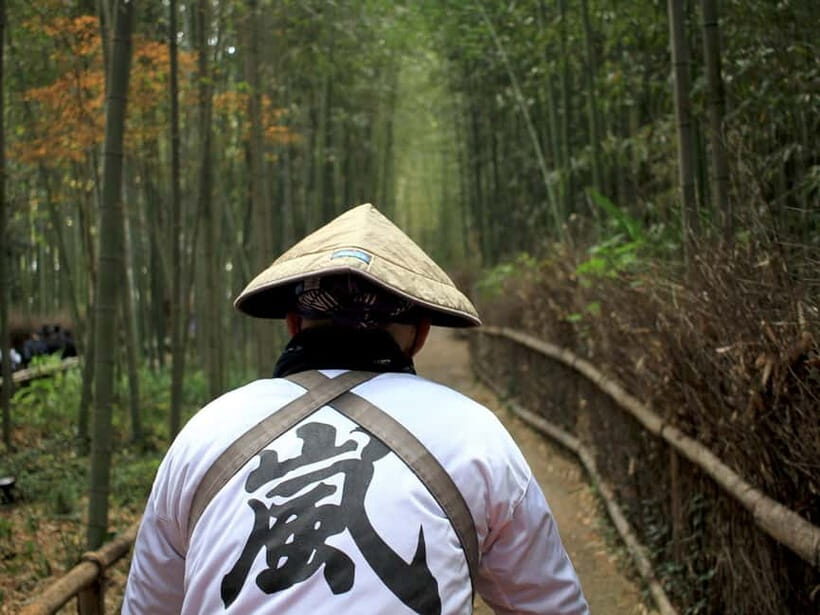
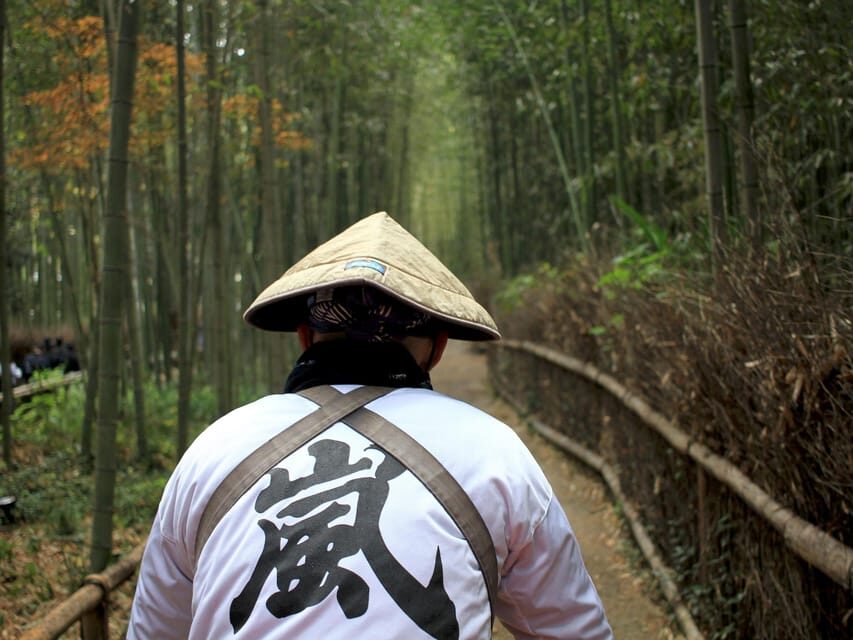
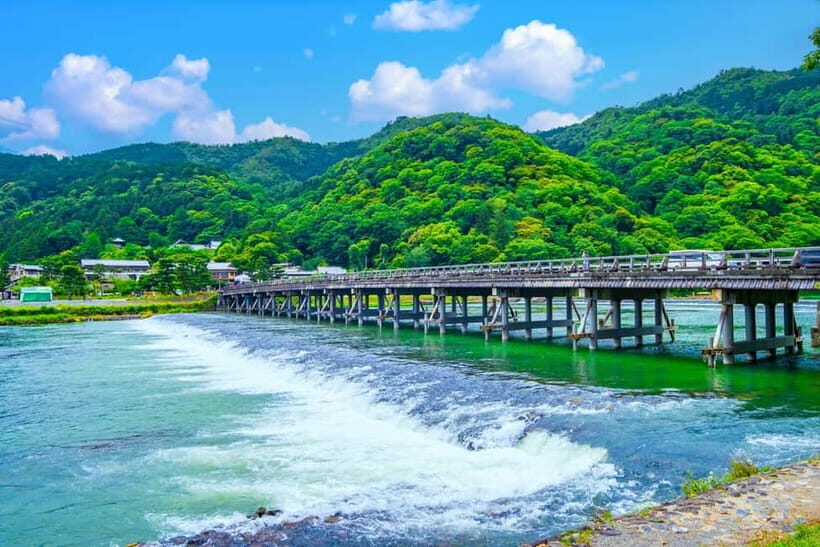
Finish the day in Arashiyama, a nature-focused area that’s been popular since the Heian Period. For many people, this is the emotional counterweight to the earlier temples—less architecture, more atmosphere.
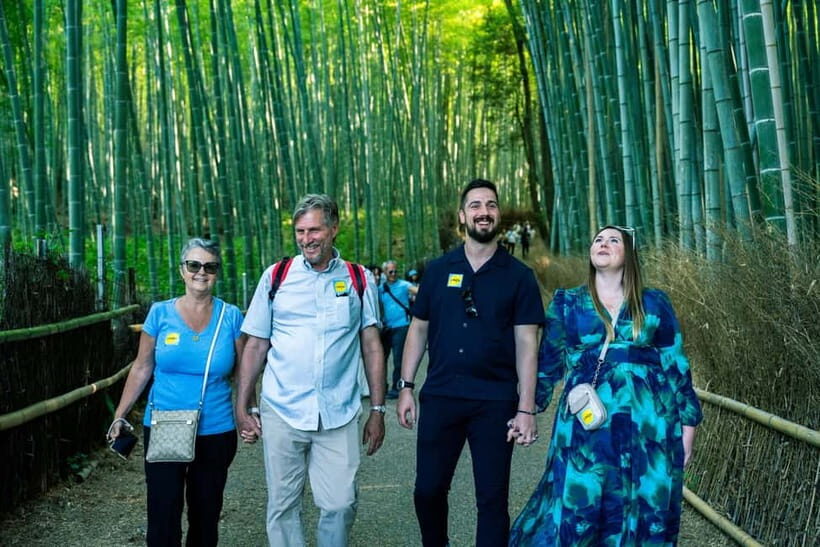
You’ll walk through the Sagano Bamboo Forest, where the sound of bamboo leaves rustling becomes part of the experience. It’s one of those spots that changes depending on how you approach it: slow steps feel different than quick photo runs.
You may also get time connected to the Katsura River area for views, especially if you’re there near sunset. The day’s rhythm can help here: after temple crowds, the open-air, green corridor feels like a reset.
A practical tip from real-world experience
The bamboo forest area can attract bugs. Bring basic protection like bug spray if you’re going in warmer months. You’ll also want water and a little snack backup, because Arashiyama walking can stretch out your energy without warning.
April itinerary note (important)
From April 1st onward, the order changes to: Fushimi Inari Taisha → Arashiyama (lunch included if selected) → Kinkaku-ji → Kiyomizudera. Same core stops, different sequencing—so don’t be surprised if your Kiyomizudera timing shifts later in the day.
Coach Time, Wi‑Fi, and the pace you should expect
This tour uses an air-conditioned coach with free Wi‑Fi. That sounds like a comfort detail, but it’s actually a quality-of-life item. Kyoto and Osaka heat and humidity can hit hard, and A/C keeps the day from turning into survival mode between sights.
Recent reports also mention you can charge devices and that Wi‑Fi is useful enough to stay connected while you’re moving. Translation: you can handle a long day without your battery living its final minutes.
Legroom can be tight for taller passengers. If you’re tall (one report mentioned knees touching the seat in front around 165 cm), consider that when you decide whether a 9-hour coach day fits your comfort needs.
Still, the timing at each stop is generally enough to see the key parts without feeling like you’re sprinting from one landmark to the next every 10 minutes.
Lunch Options: what’s included and what to bring
Lunch depends on the option you choose. If you select the traditional set lunch, it’s included. The lunch is described as traditional Japanese, and tofu shows up as a common theme in feedback, so if tofu is your thing, you’ll likely be happy.
Here’s the dietary reality you should plan around: halal and vegan lunches are not available. If you need those, choose the without-lunch option and bring your own food.
For vegetarian requests, the guidance is to contact the activity provider at least 3 days before your tour. That gives them time to see what can be handled. For everyone else, the safest move is to bring water and a snack anyway, because “not included” means you might want options beyond what’s provided.
The Guides: why the narration turns a bus day into something smarter

The biggest difference between a good highlight tour and a forgettable one is the human at the front. This tour uses an English-speaking guide, and many departures have included guides like Maki, Maria, Jewel, Masa, Yuki, and Haru—with repeated praise focused on clarity, positivity, and going beyond surface-level facts.
What that usually means in practice:
- You get context for what you’re seeing (why it matters, not just what it looks like).
- You get direction so the group doesn’t fracture into 47 tiny emergencies.
- You’re more likely to get better photos because some guides actively help with picture-taking, especially for solo travelers.
One standout real-world note: there were reports of guides waiting when someone realized a phone was left on the bus. That kind of attention to the group is worth caring about, because it can save your day when things go sideways.
Who This Tour Suits Best (and who might want a different plan)
This fits you if:
- You have one day to cover Kyoto’s top icons.
- You prefer a guide-led day where you don’t need to map transit between distant neighborhoods.
- You want a mix of shrines, temples, and nature without doing separate half-day tours.
It may not be ideal if:
- You dislike crowds and don’t want a packed itinerary.
- You need extra accessibility support (this tour is not suitable for wheelchair users).
- You’re traveling with pets (pets aren’t allowed).
Also note: oversize luggage isn’t allowed, and smoking is not allowed in the vehicle. If you travel light, the logistics are easy.
Should You Book This Kyoto Top Highlights 1-Day Guided Bus Tour?
I’d book it if you want a high-impact Kyoto day with less planning stress. The included entry tickets for Kiyomizudera and Kinkaku-ji, the A/C coach with free Wi‑Fi, and the guide’s ability to explain meaning all add up to real value at about $51 per person.
Skip it (or consider planning independently) if your priority is slow, quiet Kyoto, or if you’re very sensitive to long walking and tight schedules. This is a “see the classics efficiently” tour, not a “wander until you feel satisfied” tour.
If your biggest question is whether you’ll feel rushed: the stop times are set up so you can see the main areas and still take photos and browse a little. Just go in ready for a packed day, bring comfortable shoes, water, and a snack, and you’ll get the most out of it.
FAQ
What does this Kyoto top highlights 1-day tour include?
You’ll visit Fushimi Inari Taisha, Kiyomizudera, Kinkaku-ji, and Arashiyama (including time around the Sagano Bamboo Forest). The tour includes entry tickets for Kinkaku-ji and Kiyomizudera.
How long is the tour?
The duration is 9 hours (570 minutes).
Is there an English-speaking guide?
Yes. The guide conducts the tour in English.
Are entrance tickets included?
Yes for Kinkaku-ji Temple and Kiyomizudera.
Is lunch included?
Lunch is included only if you choose the lunch option (traditional Japanese set lunch). Halal and vegan lunches are not available, and you should pick the without-lunch option if you need those.
What are the possible meeting points in Kyoto and Osaka?
Meeting points can include Kyoto Station (Hachijo Exit Tourist Bus Parking), Hearton Hotel Nishiumeda, or OCAT (Osaka City Air Terminal). The exact meeting point depends on the option booked.
Does the bus have Wi‑Fi?
Yes. The coach has free Wi‑Fi.
How much time do you get at each main stop?
Time depends on the stop, but the plan includes about 80 minutes at Fushimi Inari Taisha, about 100 minutes at Kiyomizudera, about 45 minutes at Kinkaku-ji, and about 80 minutes at Arashiyama.
Is this tour wheelchair accessible?
No, it is not suitable for wheelchair users.
Are pets and large luggage allowed?
Pets are not allowed. Oversize luggage is also not allowed, and smoking is not allowed in the vehicle. Only foldable strollers are allowed, stored under the bus.