Osaka, but not the postcard version. This Osaka Kickstart Hotspots & Hidden Gems Tour is a guided walk through the parts of the city you usually miss, from alleyways that feel older than the city lights to markets where you can eat and ask questions without playing detective. Hozenji Yokocho, Dotonbori, and Kuromon Market anchor the route, with optional add-ons that can stretch into Osaka Castle, Shinsekai, and beyond depending on your time.
I especially like how it pairs big “I’m in Osaka” landmarks with smaller side streets that explain the city’s personality. It also feels smart on food: you get 1 drink and 1 small side dish (usually a takoyaki ball), so you start the day fed, not starving. Guides like Rahat and Knox show up in the reviews as standouts, with Rahat praised for fun, off-the-main-road picks and Knox for tailoring the day to what people wanted to see.
One consideration: this is a walking tour with a moderate fitness level, and your exact highlights depend on the length you choose. Entry fees are not included for the attraction stops that have them, so plan on a little extra if you go for the longer versions that include places like Osaka Castle or temples.
In This Review
- Key things I found most compelling
- What You Really Get From the Osaka Kickstart Walking Tour
- Hozenji Yokocho: cobblestones, character, and painted history
- Dotonbori River and Shinsaibashi-suji: big Osaka energy, guided
- New Ebisubashi and America Mura: bridges, themed streets, and Liberty (yes, really)
- Kuromon Market and the cosplay/game lanes: seafood heaven plus style and screens
- Shinsekai retro neighborhood: when you want the longer Osaka stories
- Tower Knives Osaka: a knife lesson that turns curiosity into hands-on skill
- Abeno Harukas (300m): modern height with an Osaka-branded point of view
- Shitennoji: first Buddhist temple administration in Japan
- Osaka Castle: unification years, not just a photo stop
- Osaka Ukiyoe Museum and the Housing Reconstruction (7-hour private tour)
- How to choose 3 vs 4 vs 5 vs 7 hours without wasting time
- Price and value at $31.84: where the money goes
- Guides, pace, and how to get the most out of your day
- Who this Osaka Kickstart tour suits best
- Final call: should you book Osaka Kickstart?
- FAQ
- What areas does the Osaka Kickstart tour cover?
- How long is the tour?
- Is pickup available?
- What’s included in the price?
- Are attraction entry fees included?
- Can I see Osaka Castle and Shitennoji?
- Does the tour run in poor weather?
Key things I found most compelling
- A flexible 3 to 7 hour format so you can match it to jet lag, family schedules, or how much walking you want.
- All the “classic” Osaka areas in one route, plus side streets that help the city click fast.
- Market time without the overwhelm, especially around Kuromon where small storefronts hide big seafood energy.
- Stronger upgrades on longer private tours, with Shinsekai, Osaka Castle, and even a knife lesson.
- A guide-led day that can bend to your interests, based on how guides like Meryem, Brian, and Louis worked with different groups in the reviews.
What You Really Get From the Osaka Kickstart Walking Tour
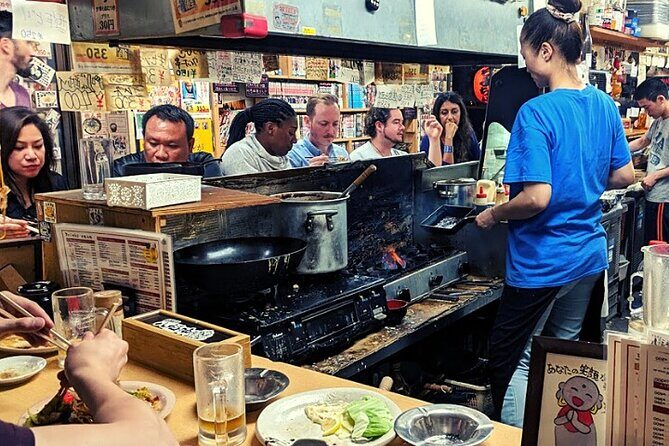
This tour works best as your first real day in Osaka. Not because it checks boxes, but because it gives you the city rhythm: where to turn, what to look for, and how local neighborhoods feel different from each other. You start and end back at the same meeting point around Namba, which makes the day easier to plan around the rest of your trip.
You can book as a private personalized tour or as a group option. In the reviews, guides were repeatedly described as friendly, funny, and willing to adjust the flow. That matters, because Osaka’s fun can disappear if you spend the day stuck in “must-see” lines and main thoroughfares only.
Price is also part of the value story. At $31.84 per person, you’re not paying for expensive entrances. You’re paying for a guided route, local storytelling, and the “how to move through this city” advantage. If you’re new to Osaka, that’s often the cheapest way to prevent bad timing, wrong subway exits, and wandering.
You can also read our reviews of more tours and experiences in Osaka.
Hozenji Yokocho: cobblestones, character, and painted history
The tour kicks off in a place that feels like a time capsule: Hozenji Yokocho. Expect hard-to-find winding cobblestone alleys where the walls carry history painted into them. It’s the kind of spot where your brain slows down for a minute, even if you’re trying to keep a brisk walking pace.
This stop is short, but it’s useful. It sets the tone that Osaka isn’t only about bright signs and food stalls. It’s also about old streets still used by people today. If you’re the type who likes photos, this is also one of the easiest places to get that “I’m really here” feeling without fighting crowds at a famous landmark.
A small drawback: because it’s an alley area, it can feel tighter if you’re sensitive to narrow spaces. If you’re traveling with kids or anyone who needs extra room, take a slower line through the cobbles.
Dotonbori River and Shinsaibashi-suji: big Osaka energy, guided

Next up is the river area that defines the city’s mood: Dotonbori. This is one of those Osaka places that’s difficult to appreciate if you only glance while passing through. With a guide, you get oriented quickly, plus you learn what the riverfront and surrounding streets are known for beyond the famous visuals.
Then you move into Shinsaibashi-suji, the shopping street where fashion, quirky gadgets, and local energy mix together. This part of the route is great if you want to window-shop without getting lost. It’s also ideal if you like browsing at your own speed, because the guide is still providing context as you walk.
Here’s the trade-off: shopping streets are more fun when you treat them like exploration, not an assignment. If you try to sprint through, you’ll miss the small details that make Osaka feel personal.
New Ebisubashi and America Mura: bridges, themed streets, and Liberty (yes, really)
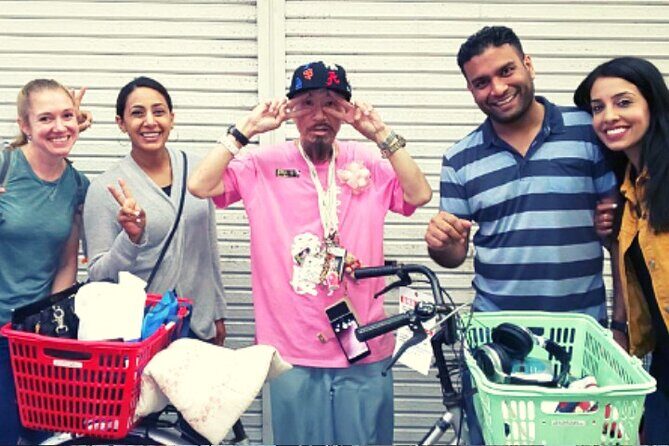
Osaka’s meeting spots are often hidden in plain sight. The tour includes New New Ebisubashi, a bridge whose story connects old and new materials: a wooden version long ago, replaced by an iron structure centuries later. That kind of detail makes landmarks stick in your memory, even if you don’t consider yourself a history person.
Then you head into America Mura. The idea here is playful: this area has Japan’s take on America, including a statue of liberty-style element placed on top of a building. It’s not “authentic America,” obviously. It’s authentic Osaka in the way the city remixes global images into something local.
If you dislike theme-heavy neighborhoods, you might find this segment a little kitschy. But if you like oddball streets and people-watching, it’s a fun break from the heavy sightseeing cycle.
Kuromon Market and the cosplay/game lanes: seafood heaven plus style and screens
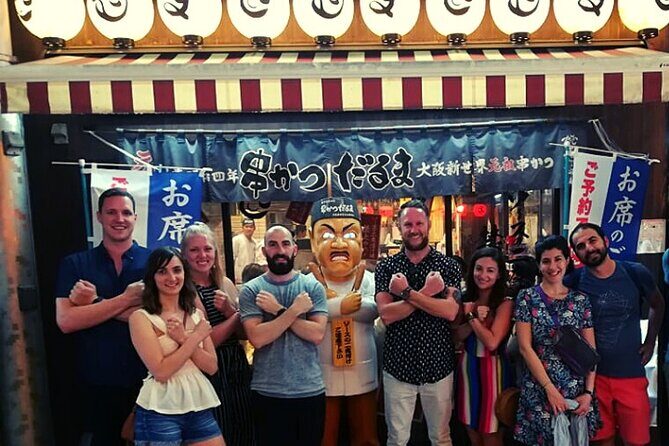
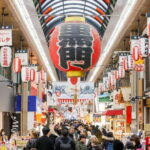
The next highlight is Kuromon Market. Even the exterior storefront look understated, while the inside can feel like seafood heaven. The tour’s rhythm matters here. It’s designed so you can actually time it well: the route notes that on a 3-hour tour, you’ll usually reach Kuromon (depending on your group’s walking pace).
You also get something practical: a guide helps you navigate tucked-away quirky shops. That’s a big deal in Japanese markets, where signage and product options can be confusing if you don’t have language support. You’re not just sightseeing; you’re learning how the market works.
After that, the route steers you toward the tucked-away gaming and cosplay zone. This is where Osaka’s pop culture side shows up in a way that feels more “lived-in” than a stage set. If you’re into anime merch, vintage game vibes, or costume fashion items, this is likely the section you’ll enjoy most.
One note: included food stops are small. The tour includes a drink and a small side dish (usually takoyaki), but food beyond that is on you. If you’re arriving hungry, consider bringing cash or using a card-friendly plan for market snacks.


Shinsekai retro neighborhood: when you want the longer Osaka stories
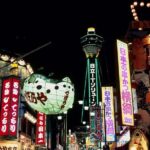
Shinsekai is only available on the 4, 5, or 7-hour private tours, so it’s an option if you choose longer time. It’s Osaka in retro mode: quirky fishing restaurants, vintage game arcades, board game shops, and old vinyl stores. Even if you think you’ve seen everything, Shinsekai has that “step sideways in time” feel.
This part is especially good at night, because the neighborhood’s neon personality tends to show more strongly after dark. Still, the key is the guide’s ability to point out what matters so you don’t just walk past storefronts without understanding the vibe.
If you’re not into arcades, shops, or older-feeling streets, Shinsekai might feel like a detour. But for most people, it’s the emotional payoff that makes Osaka feel like a place you’d return to.
Tower Knives Osaka: a knife lesson that turns curiosity into hands-on skill
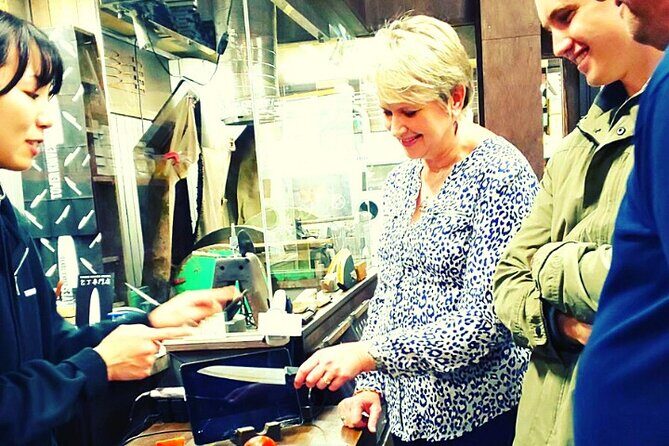
For the 4 or 5-hour private tours, the itinerary includes Tower Knives Osaka, where you get a private knife lesson. The tour notes that the process is explained, including how knives are made, with crafting happening at the rear of the building. Then you get a chance to experience cutting.
This is a different kind of souvenir stop. You’re not just buying a product. You’re understanding why Japanese knives are treated with serious respect. Even if you’re not a home cook, the lesson can still be fascinating because it turns “kitchen tool” into “craft.”
A practical consideration: if you’re traveling with kids or you have limited comfort with hands-on demos, you should check with the tour staff about how it’s paced. The tour data confirms the cutting experience, but it doesn’t specify how interactive it is for younger participants.
Abeno Harukas (300m): modern height with an Osaka-branded point of view
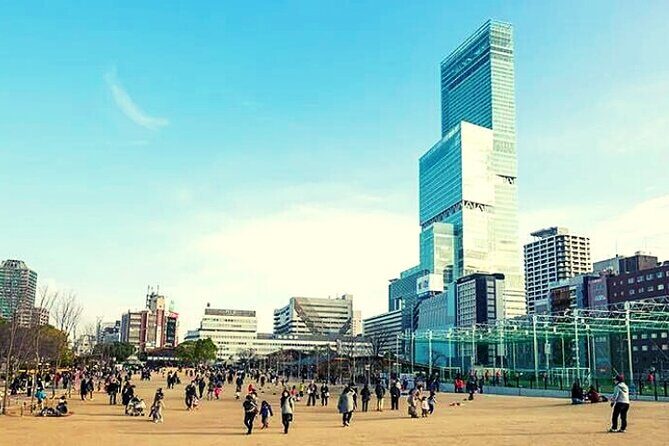
Also only on longer private tours (5 or 7-hour), Abeno Harukas is listed at 300 meters and noted as Japan’s tallest building (not structure or tower). The stop is about 20 minutes, so it’s not a long viewpoint session. Think of it as a quick “see the city from up there” moment, then move back down into street-level Osaka.
This matters because Osaka is easy to read wrong if you only experience it at street height. The skyline view helps you understand how districts connect. It also gives you a clear landmark to orient yourself later.
Shitennoji: first Buddhist temple administration in Japan
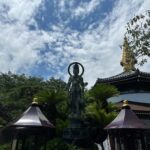
On 5 or 7-hour private tours, you’ll visit Shitennoji, noted as the first Buddhist temple and the oldest officially administered temple in Japan. The tour gives it about 30 minutes, and the tone is spiritual rather than purely “tour museum.”
If you’re not religious, you can still appreciate the place as a historic site where belief shaped architecture and daily life. If you are religious, it adds a meaningful pause in a day that otherwise moves fast through markets and shopping streets.
The main drawback is time. In a short day, temple stops can feel like they interrupt your fun. In this tour’s longer formats, it acts like a reset button.
Osaka Castle: unification years, not just a photo stop
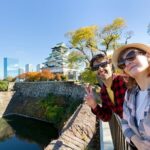
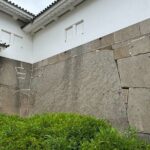
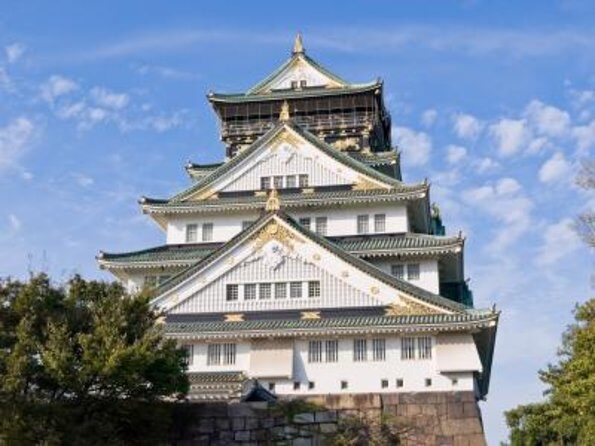
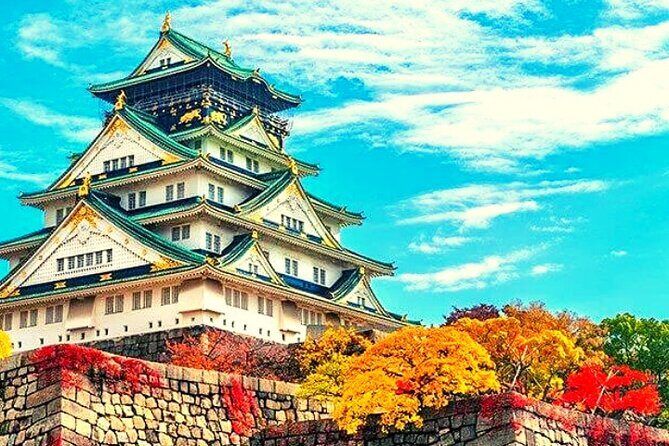
Osaka Castle appears on 5 or 7-hour private tours, with about 1 hour 10 minutes at the site area. The tour focuses on the castle’s role in Japan’s unification years ago, which is a useful framing. If you only look at the exterior and keep it at “cool castle,” you miss the story the guide is trying to tie to Osaka’s identity.
A heads-up: admission is not included for Osaka Castle. So you’ll want to budget extra for entry if it’s a must-do for you.
If you hate long walks at the end of a day, keep an eye on your energy. Castle areas tend to involve gradual movement and more space than alley streets, which can be relaxing—or draining—depending on your pace.
Osaka Ukiyoe Museum and the Housing Reconstruction (7-hour private tour)
If you choose the 7-hour private tour, you add two very different off-to-the-side experiences.
First is the Osaka Ukiyoe Museum, which specializes in ukiyoe prints. It’s described as small but welcoming, with a mix of Edo period originals and new works. This is the kind of stop that suits people who like art but don’t want a huge museum day.
Second is Osaka Museum of Housing and Living, which includes a reconstruction of an ancient Osaka town with houses, stores, and homes. The tour notes it can be surprising even if you usually skip museums. The biggest value here is how the exhibit helps you “walk through the past” in a way that feels more real than a static display.
Both of these stops involve admissions noted as included for the ukiyoe museum, while the housing and living museum is listed with admission not included. That mix means you should still expect some extra costs.
How to choose 3 vs 4 vs 5 vs 7 hours without wasting time
The biggest practical decision is time length because it determines what you’ll actually see.
- A 3-hour version is great as a fast Osaka orientation. You’ll hit core areas like Hozenji Yokocho, Dotonbori, Shinsaibashi-suji, Ebisubashi, America Mura, and you’ll usually reach Kuromon Market if the group pace stays efficient.
- A 4-hour private tour adds Shinsekai and can include Tower Knives Osaka, depending on the exact option you select.
- A 5-hour private tour expands further with Osaka Castle and includes Abeno Harukas. You can also add Shitennoji on the private longer formats.
- A 7-hour private tour is the full sampler, adding Osaka Ukiyoe Museum and Osaka Museum of Housing and Living on top of the longer city highlights.
My suggestion: if it’s your first Osaka day, go long enough that you get at least one “big landmark” moment plus one neighborhood drift. For many people, that’s the 5-hour slot.
Price and value at $31.84: where the money goes
At $31.84 per person, this tour is strong value for two reasons.
First, you’re paying for guidance through multiple districts without needing to figure out route logic yourself. You’re also getting a drink and a small side dish (usually a takoyaki ball). That’s not a feast, but it’s enough to break the ice early.
Second, entry fees are mostly the only obvious add-on. Since the walking tour includes major orientation stops, you’re not paying extra to access the whole day’s experience.
Pickup is offered, and there’s flexibility for optional train or taxi use if requested. That’s useful in a city where you can waste time if you guess wrong on transit versus walking.
One caution: if you go for the longer versions that include places like Osaka Castle, temples, and museums, expect a bit more spending for admissions. The tour doesn’t promise everything is covered.
Guides, pace, and how to get the most out of your day
The guide quality is a major theme in the feedback. Rahat gets highlighted for showing people an authentic Osaka side and for being both fun and story-driven. Knox is praised for tailoring the day to what the group wanted. Meryem, Brian, Maria, Louis, Dom, and Harry also show up in reviews as guides who share history and practical tips without turning the day into a lecture.
Here’s how you can use that advantage. Tell your guide what kind of day you want early. If you have a food preference, family needs, or photo priorities, ask quickly. In the reviews, you can see how guides adapt, including attention to dietary needs and making sure the day still flows.
Pace is another big factor. The route lengths are approximate (3 to 7 hours), and the note about timing Kuromon on shorter tours being dependent on group walking speed tells you the guide will manage momentum. If you’re quick on foot, you’ll likely fit more in. If you prefer slower, plan for a longer duration.
Who this Osaka Kickstart tour suits best
This tour fits best if you want:
- A fast, structured way to learn Osaka street geography on foot
- A mix of food areas, shopping streets, and short history stops
- A guide who can point you toward places you wouldn’t find alone
It’s especially good for first-timers because it helps you orient yourself. It also works well for families, since the pacing is set and the included snack gets kids involved early.
If you’re the type who hates walking, or you want only major indoor attractions with minimal street time, you might find the day too motion-heavy. Osaka’s charm is in the streets.
Final call: should you book Osaka Kickstart?
Book this tour if you want an Osaka introduction that feels human, not just a list of landmarks. The combination of alley charm (Hozenji Yokocho), neon-level energy (Dotonbori), and market navigation (Kuromon) makes it a solid “starter kit” for the city. If you have time, the longer private versions add the pieces that deepen the story, including Shinsekai, Osaka Castle, and the art or housing reconstructions.
Consider skipping (or booking a shorter version) if you’re not excited about walking between districts or if you’re trying to keep extra spending near zero, since admissions aren’t included for several stops.
FAQ
What areas does the Osaka Kickstart tour cover?
It covers Hozenji Yokocho, Dotonbori, Shinsaibashi-suji, New Ebisubashi, America Mura, Kuromon Market, and additional stops on longer private tours including Shinsekai, Tower Knives Osaka, Abeno Harukas, Shitennoji, Osaka Castle, Osaka Ukiyoe Museum, and Osaka Museum of Housing and Living.
How long is the tour?
It runs about 3 to 7 hours, with options for 3, 4, 5, or 7 hours.
Is pickup available?
Pickup is offered. The tour also has a listed meeting point in Namba, and it ends back at the meeting point.
What’s included in the price?
The price includes a walking tour (private personalized or group), optional train or taxi use if requested, and a flexible duration option. You also get 1 drink and 1 small side dish (usually 1 takoyaki ball). Mobile ticket and group discounts are part of the offering.
Are attraction entry fees included?
No. Entry fees to attractions are not included, except where the itinerary specifically lists an included admission (for example, Tower Knives Osaka and Osaka Ukiyoe Museum on the longer private tours).
Can I see Osaka Castle and Shitennoji?
Yes, but only on 5 or 7-hour private tours. Osaka Castle is listed for 5 or 7-hour private tours, and Shitennoji is listed for 5 or 7-hour private tours.
Does the tour run in poor weather?
It requires good weather. If it’s canceled due to poor weather, you’ll be offered a different date or a full refund.
If you tell me your trip length in Osaka and whether you’re booking 3, 4, 5, or 7 hours, I can help you pick the best option for your pace and priorities.