REVIEW · OSAKA
Hungry Osaka Street Food Tour:15 Tastings & 3 Drinks with a Local
Book on Viator →Operated by Hungry Osaka Tours · Bookable on Viator
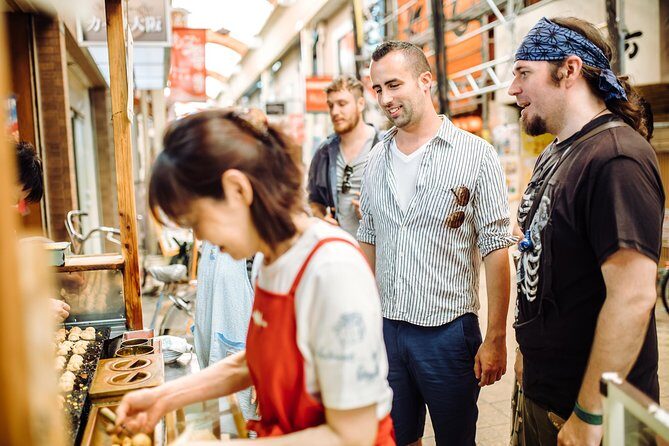
Osaka tastes better when you follow a local. This Shinsekai street food tour packs 15+ dishes and 3 drinks into about three hours, led by a guide who has lived in the area for years. I like the variety most, from karaage and yakitori to takoyaki, udon, oden, kushikatsu, and dessert, all across different kinds of spots. I also like the way you get neighborhood context while walking, so the night feels like more than just eating. One drawback to plan around: this tour cannot accommodate gluten-free, vegan, or vegetarian diets.
You’ll move at a human pace in a small group, and you get a mobile ticket for an easy start. The group limit is up to 9 people, which matters because many places in this area are small and seat-by-seat.
I also appreciate that it stays respectful of the businesses you visit, with no filming allowed during the tour. Guides you may meet include Adam, Anna, Andy, Tim, Kenzo, and Scott, and the common theme in their approach is making the whole night feel fun and organized.
In This Review
- Key takeaways
- Shinsekai by Night: Why This Osaka Area Fits Street Food
- Price and Value: What $73.29 Gets You in Real Eating Time
- Getting In and Out: Ebisucho Start and Dobutsuen-Mae Finish
- The 3-Hour Flow: How 5 Stops, 15+ Tastings, and 3 Drinks Play Together
- Stop 1 in Shinsekai: Tsutenkaku and the Story Behind the Streets
- The Foods You’ll Try: Karaage to Yakitori to Takoyaki to Udon
- Oden and Kushikatsu: The Shinsekai Staples That Need Context
- Dessert and Drinks: What’s Included and How to Pace Yourself
- What Makes the Night Feel Local: Guides, Small Counters, and Neighborhood Stories
- Dietary Limits, Kids, and the No-Filming Rule
- Who This Tour Is Best For in Osaka
- Should You Book This Hungry Osaka Street Food Tour?
- FAQ
- How long is the Osaka street food tour?
- How much does the tour cost?
- What food is included in the 15+ tastings?
- Are drinks included, and can they be alcoholic?
- Where do you meet the guide, and where do you end?
- How big is the group?
- Can the tour accommodate gluten-free, vegan, or vegetarian diets?
- Is the tour suitable for children?
- Is filming allowed during the tour?
Key takeaways
- 15+ tastings at 5 different eateries (izakaya, stalls, restaurants, and a bar)
- Shinsekai and Tsutenkaku warm-up plus local history as you walk
- Small group size (up to 9 people) for less waiting and easier seating
- 3 drinks included, with options that can be nonalcohol or alcohol
- Off-the-main-road spots that are the kind you might miss alone
Shinsekai by Night: Why This Osaka Area Fits Street Food
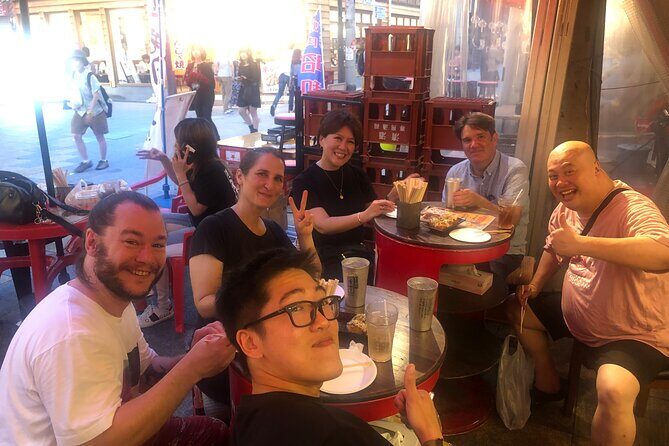
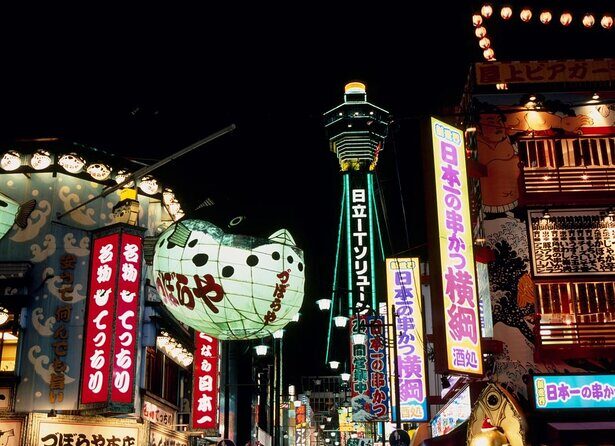
Shinsekai is the place to go if you want your Osaka night to feel like it has layers. Yes, you’ll see Tsutenkaku, the landmark tower that anchors the neighborhood. But the bigger win is the way you get pulled into the side streets where locals eat, not just where tourists drift.
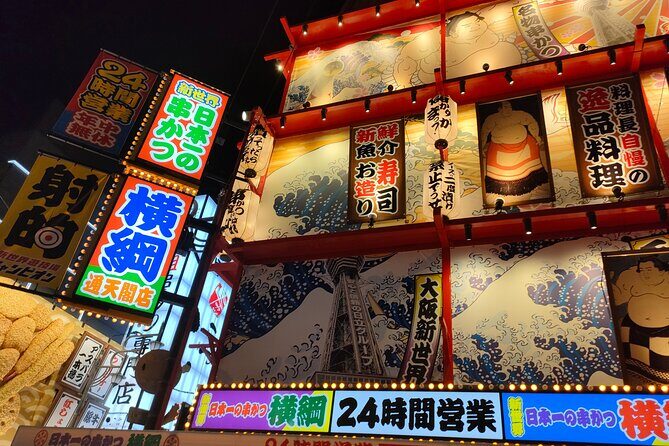
Osaka gets nicknamed Japan’s Kitchen for a reason, and Shinsekai leans into that idea. You’ll weave through arcades and alleyways with everyday energy: people grabbing food after work, families mixing in with groups of friends, and tiny counters where the food is the main event. The tour’s real value is that you’re not just walking through a cool area. You’re learning why the place looks the way it does, including the fact that streets designed over a century ago were meant to bring a Western feeling to Osaka.
This is also an area you can easily overlook if you’re only chasing the headline attractions. Here, the food culture is the headline.
You can also read our reviews of more food & drink experiences in Osaka

Price and Value: What $73.29 Gets You in Real Eating Time
At $73.29 per person for about three hours, you’re paying for structure. Street food in Osaka can be cheap, but it’s not always effortless. Ordering across multiple places, finding the right stalls, and figuring out what’s worth your stomach space takes time.
This tour gives you a concentrated plan: 15+ dishes at 5 unique eateries, plus 3 drinks included. Even if some bites are small, the total adds up fast when the stop-to-stop selection is built around variety. You’re also not stuck in one restaurant where you might only scratch the surface.
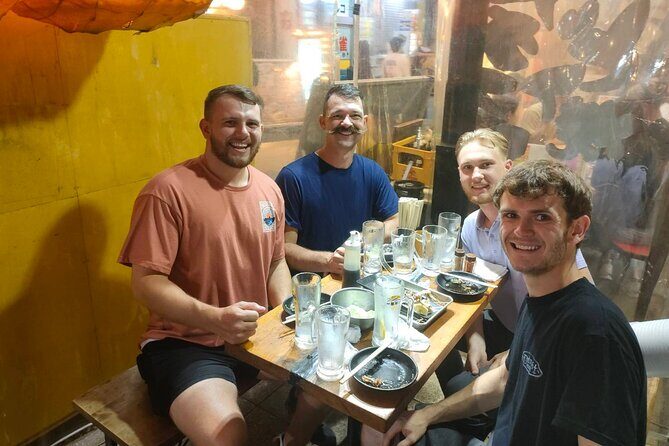
The small group size (up to 9 people) adds practical value. When seats are limited, as they often are in this neighborhood, fewer people in the group means less standing around and more actual eating time. A few reviews also highlight that guides make sure nobody leaves hungry, which tells you the portions aren’t treated like a sample tray for show.
Getting In and Out: Ebisucho Start and Dobutsuen-Mae Finish
You’ll start at Ebisucho Station (5 Chome-13 Nipponbashi, Naniwa Ward, Osaka). The tour ends with a drop-off at Dobutsuen-Mae Station (Midosuji & Sakaisuji Lines) in Nishinari Ward, so you’re not forced to backtrack across the city.
That matters on a food tour. Osaka evenings can get late, and transit can get crowded. A clean start-and-finish plan helps you stay in “eat and enjoy” mode instead of “check your map every ten minutes” mode.
You’ll also have a mobile ticket, which keeps the whole thing simple at the meeting point.
The 3-Hour Flow: How 5 Stops, 15+ Tastings, and 3 Drinks Play Together
The tour is built like a tasting crawl, not a single long meal. You’ll visit five different eateries that can include an izakaya, a restaurant, a stall, and even a bar-style stop. That mix is important because Osaka street food isn’t one “thing.” It’s a spectrum of casual dining styles that all feel local.
Between stops, your guide explains the neighborhood and food customs as you walk. That’s not just trivia. It changes how you experience the bites. When you know what you’re eating and why it’s popular here, each dish feels like a chapter instead of random snacks.
Pacing is part of the design: you’ll spend enough time at each stop to actually get a feel for the place, not just grab food and run. There is also a note to keep in mind: like any multi-stop tour, timing can feel tight in places with small seating. Still, the overall structure is clearly aimed at keeping the night fun and moving, without turning it into a rushed food sprint.
Also remember the rule: no filming is permitted. If you’re planning to bring a camera, stick to the moment and be considerate.
Stop 1 in Shinsekai: Tsutenkaku and the Story Behind the Streets
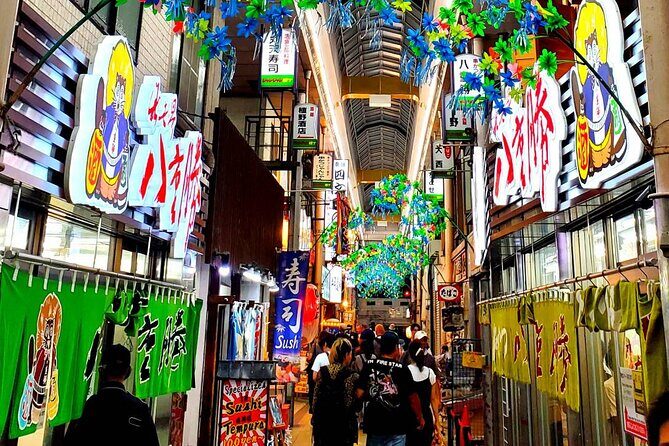
You’ll begin with a warm-up around Shinsekai. Time permitting, there’s a short stroll that helps you orient fast and sets the tone for the evening. This is where the tour earns its “local” label, because you’re not starting in an anonymous food hall. You’re starting in the neighborhood itself.
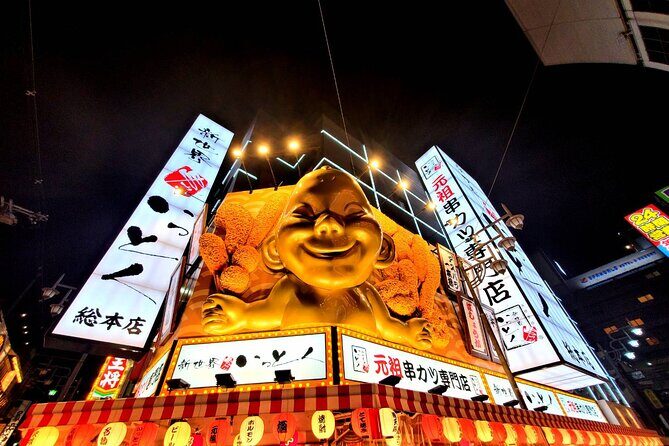
You’ll walk past Tsutenkaku, the tower that’s the focal point of Shinsekai. The guide also points out where kushikatsu is said to have begun. Whether you treat that as history fact or neighborhood lore, it gives you a reason to care about the dish before you even eat it.
One more interesting angle: the tour notes that some streets created over a century ago were designed to bring a Western feeling to Osaka. That kind of detail helps you see Shinsekai as more than a neon backdrop. It’s a slice of Osaka’s identity that has shifted over time, but still shows its original intent in the layout.
A few more Osaka tours and experiences worth a look


The Foods You’ll Try: Karaage to Yakitori to Takoyaki to Udon
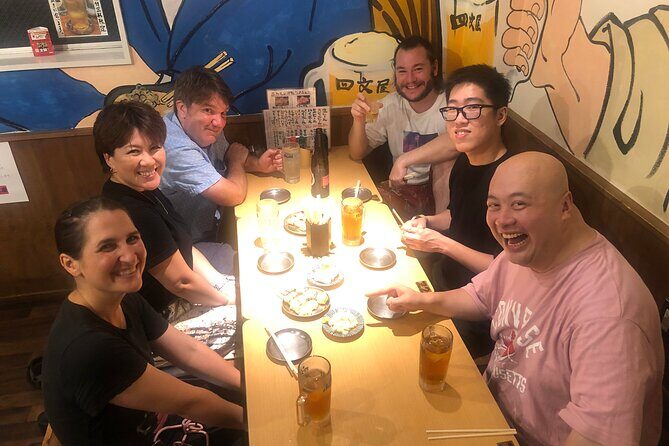
The included dishes cover a lot of Osaka’s best-known comfort zone. Here’s what you can expect from the lineup:
- Karaage: crispy fried chicken that hits fast and works as an easy opener.
- Yakitori: grilled skewers, usually simple, smoky, and very snackable.
- Takoyaki: the famous octopus balls that are a street-food icon for a reason.
- Udon: comforting noodles that balance out the fried and grilled items.
Because you’re not ordering all these yourself, you avoid a common first-timer problem: choosing only what you already recognize. The tour’s strength is that it mixes familiar favorites with other Shinsekai staples, so you leave the night with a broader sense of what Osaka street food tastes like.
If you tend to stick to one category of food at home, this tour will gently push you out of that habit without making it feel like a punishment.
Oden and Kushikatsu: The Shinsekai Staples That Need Context
Two items in the included list—oden and kushikatsu—help define Shinsekai in a way that goes beyond mainstream Osaka.
Oden is all about comfort: warm, savory, and slow-cooked. On a street food tour, it also provides a reset. After multiple fried or grilled bites, a warmer option can make the rest of the night feel more balanced.
Then there’s kushikatsu, the neighborhood signature that gets special attention in the Shinsekai walk. You’ll likely learn a few local customs around how people enjoy it. That kind of small guidance is useful, because Japanese food etiquette can be easy to miss when you’re just guessing what to do at a counter.
A key point: the tour doesn’t just hand you food. It helps you understand what you’re looking at, and that makes the bites more satisfying.
Dessert and Drinks: What’s Included and How to Pace Yourself
You get 3 drinks included, and they can be nonalcohol or alcohol depending on what you choose. This is a smart inclusion because street food can get intense. Between fried textures and rich sauces, having a drink keeps you from feeling weighed down.
Dessert is also included, which is a nice practical touch. It gives you a clear end point to the tour. Instead of stumbling into dessert somewhere else while still stuffed, you finish the planned route with something sweet.
Tip: treat the drinks as part of the pacing plan. If you take one early, you’ll have better stamina for the middle-course stops like skewers and fried items.
What Makes the Night Feel Local: Guides, Small Counters, and Neighborhood Stories
The most praised part of this tour is the human factor. Many of the guides mentioned by name—Adam, Anna, Andy, Tim, Kenzo, and Scott—show up in reviews with a consistent style: they’re funny, they talk about the area, and they help the group navigate the “how does this place work” moments.
Several reviews specifically call out family-owned spots and the fact that some places only have seating for a dozen or so people. That kind of layout makes a guided group visit feel different from wandering in on your own. The guide acts like a translator of vibe: where to stand, what to order, when it’s time to move, and how to enjoy without stressing.
You also get practical neighborhood context. One person noted that the guide shared history and customs, including life in Japan from an expat perspective. Even if you’re not an expat, that angle helps you understand what locals care about and how the neighborhood has evolved.
Finally, the vibe is repeatedly described as relaxed and not shove-food-in-your-face. For me, that matters. Osaka street food is fun, but it can turn into a chore if you feel rushed. The structure here aims to keep the laughs coming while still getting you through enough stops to feel you truly ate your way across Shinsekai.
Dietary Limits, Kids, and the No-Filming Rule
Before you book, read this section twice.
This tour cannot cater for gluten-free, vegan, or vegetarian diets. The dish list includes items that typically rely on meat, seafood, eggs, wheat-based ingredients, or broth you can’t easily swap. If your needs are strict, look for a different tour that explicitly supports your diet.
It also is not suitable for children under 7. The route involves walking between small places, and the food mix is meant for adults and older kids who can handle tasting menus.
One more rule: filming is not permitted during the tour. If you love documenting food, plan to rely on memory and regular photos rather than video.
Who This Tour Is Best For in Osaka
This is a great match if you:
- Want a street food sampler that covers the Shinsekai identity instead of only one type of dish
- Prefer a small-group plan that keeps you out of decision fatigue
- Like learning the “why” behind food, not just the menu
- Enjoy moving through arcades and side alleys where daily life is happening
It’s also a smart first-night pick if Osaka feels overwhelming. A tour like this gives you an organized way to experience a neighborhood that’s easy to miss on your own.
It’s not a fit if you have strict dietary restrictions like gluten-free, vegan, or vegetarian needs, or if you’re traveling with a young child under 7.
Should You Book This Hungry Osaka Street Food Tour?
If you eat a normal mix of foods and you want one evening that covers Shinsekai properly, I’d book it. The value is built into the math: 15+ tastings across 5 places, plus 3 drinks, all guided by someone local. It saves you time and helps you enjoy small shops without feeling awkward.
Skip it if dietary limits are non-negotiable. And if you hate walking or you’re sensitive to tight seating environments, this style may feel a little too “counter-to-counter.”
If your goal is a fun, practical, Osaka-by-night food education, this one has a strong case.
FAQ
How long is the Osaka street food tour?
The tour runs for about 3 hours.
How much does the tour cost?
It costs $73.29 per person.
What food is included in the 15+ tastings?
You’ll try items including karaage, yakitori, takoyaki, udon, oden, kushikatsu, and dessert, with 15+ dishes at 5 unique eateries.
Are drinks included, and can they be alcoholic?
Yes. The tour includes 3 drinks, which can be nonalcoholic or alcohol.
Where do you meet the guide, and where do you end?
You meet at Ebisucho Station (5 Chome-13 Nipponbashi, Naniwa Ward, Osaka) and the tour ends with a drop-off at Dobutsuen-Mae Station.
How big is the group?
The tour has a maximum group size of 9 people.
Can the tour accommodate gluten-free, vegan, or vegetarian diets?
No. The tour cannot cater for gluten-free, vegan, or vegetarian diets.
Is the tour suitable for children?
It is not suitable for children under 7.
Is filming allowed during the tour?
No, filming of the tour is not permitted.