REVIEW · OSAKA
Absolute Osaka Food Tour
Book on Viator →Operated by Arigato Japan KK · Bookable on Viator
Neon alleys make dinner feel like a game. This 3-hour Osaka food tour is built around smart pacing, four tasting stops, and an expert English-speaking guide who connects the snacks to the neighborhood. I especially like the mix of classic street foods and the way the walk steers you away from the most tourist-clogged lanes toward places that feel more local. One thing to consider: it’s not the best pick if you’re strictly gluten-free, since that’s specifically called out as not recommended.
What makes this one work is timing. Starting at 5:00 pm, you hit Dotonbori and Minami as the lights come on, when Osaka’s food streets feel most alive and when your guide can help you order without second-guessing. You also get a mobile ticket, a small group size (up to 10), and the tour’s snacks are balanced with a drink and a traditional Japanese dessert.
The itinerary includes a quieter moment, too: you’ll find a shrine tucked away from the main crowd flow. That pause matters because Osaka can feel loud and crowded fast, and a few minutes of calmer back-alley walking makes the food taste even better. Also note the practical side—good weather is required, and you should have moderate walking stamina for the evening route.
In This Review
- Key highlights to look for
- Osaka street food at 5 pm: why timing matters
- Meeting at Dotonbori and the Glico Sign story (Fortunato Catalon)
- Dotonbori and Minami: lights, smells, and steering around the worst queues
- Hozenji Yokocho: the quieter alley-and-shrine moment
- Sennichimae Doguyasuji and Kuromon Market: snack strategy meets real shopping streets
- Misono Building: finishing tastings with a sense of wrap-up
- What’s included in the $231 price (and why it can feel fair)
- How the guide experience changes everything (Asli, Melissa, Marie)
- Diet needs, alcohol rules, and the gluten-free catch
- Comfort, walking pace, and who this tour suits best
- Should you book Absolute Osaka Food Tour?
- FAQ
- How long is the Absolute Osaka Food Tour?
- Where does the tour start and where does it end?
- What does the tour cost?
- What’s included in the price?
- Are there any age or alcohol rules?
- Is it vegetarian friendly? What about gluten-free?
- Is transportation or hotel pickup included?
- Can I cancel for a full refund?
Key highlights to look for
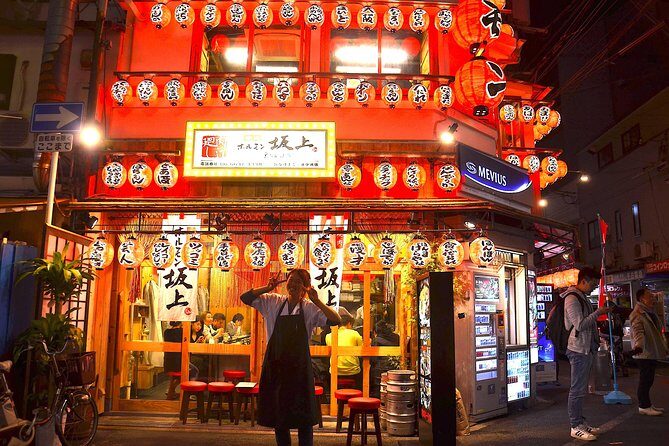
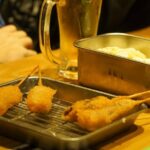
- Street-food hits on a plan: takoyaki and kushikatsu-style skewers, plus dessert and a drink
- Dotonbori with context: the Glico Sign story ties food to Osaka pop-culture
- A quieter shrine stop: you’ll get off the main drag and experience a tucked-away spot
- Small group, local guide: max 10 people, English speaking, and friendly pacing
- Real flexibility: food and stops can change with season, schedules, holidays, or weather
Osaka street food at 5 pm: why timing matters
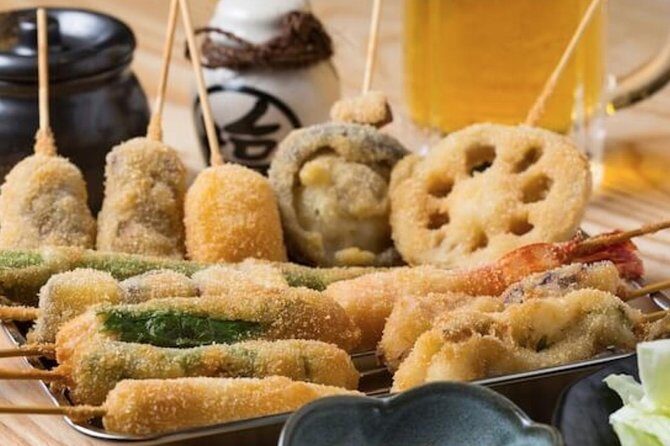
I like food tours at the edge of evening, and this one hits that sweet spot. You start at 5:00 pm and spend about 3 hours walking and eating, which means you get the neon-fueled Dotonbori atmosphere without feeling like you’re trapped in a daytime queue-fest.
This timing also helps with decision-making. When you’re hungry and everything smells amazing, it’s easy to order something that’s popular but not what you actually want. A guide sorts that out: you’re not just collecting bites, you’re getting a sequence that makes sense, with different textures and flavors—so you don’t end up with four versions of the same thing.
Another thing I appreciate: the group is capped at 10 travelers. Bigger groups can turn into hurry-up-and-watch-me-eat tours. Smaller groups usually mean your guide can slow down when someone has questions, and you’re not spending half the night stuck behind a crowd.
You can also read our reviews of more food & drink experiences in Osaka

Meeting at Dotonbori and the Glico Sign story (Fortunato Catalon)
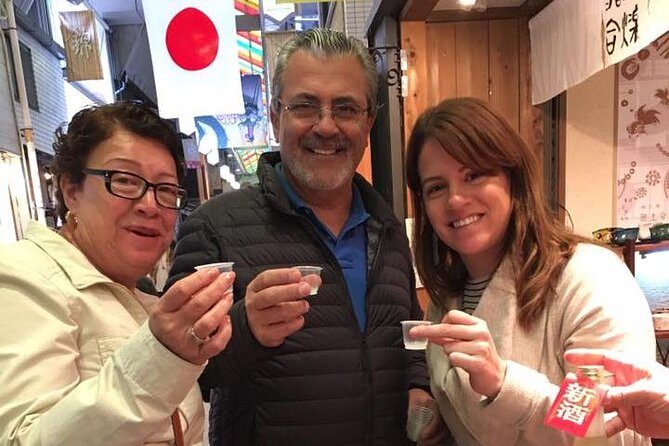
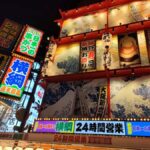
You begin right in the Dotonbori area at the address near the Dōtonbori building by the famous Glico Sign. It’s the kind of starting point that helps you orient quickly—this is Osaka’s “look up and notice everything” zone.
Here’s one of the most memorable parts of the tour theme: you learn about Glico Man and the Filipino sprinter Fortunato Catalon, who inspired a nation and a company. That detail isn’t just trivia. It’s a reminder that Osaka’s street-life branding and food culture are tied together. You’re standing in the middle of a living ad world, and the snack streets grew up right next to that energy.
If you’re the type who likes to understand what you’re seeing, this opening lands well. If you just want to eat, it still works because it gives you a reason to care about the streets—not just their menu boards.
Dotonbori and Minami: lights, smells, and steering around the worst queues
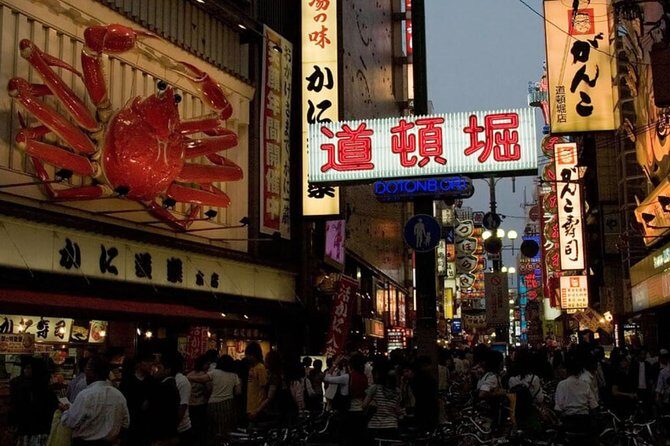
After the sign, you’ll walk through the Dotonbori district and then into Minami (Namba). This is where Osaka’s famous street food lanes can do two things at once: impress you and overwhelm you. The lights and sounds can pull you toward the most commercial spots—exactly the places that often have long lines and fewer local choices.
What I like about this tour format is the built-in “steering” idea. Your guide’s job isn’t only to translate the menu. It’s to manage your hunger and your route so you get variety without waiting in the most obvious overflow of tourists.
This part of the walk also helps you read Osaka’s rhythm. You start learning the difference between:
- places that feed quick cravings, and
- places that feel like everyday routine for locals.
That makes the rest of your trip easier, too. Even after the tour ends, you’ll know how to judge which street corner is worth your time.
Hozenji Yokocho: the quieter alley-and-shrine moment

One of the most satisfying sections is the alley stop at Hozenji Yokocho. The tour description specifically highlights finding a secret shrine away from the crowds, and this is the kind of area where that becomes real rather than just a marketing line.
Why it matters: after walking busy neon corridors, you need a small reset. This is the moment where Osaka changes texture—narrow lanes, softer lighting, and a sense that you’ve moved from “main street energy” to something older and more lived-in.
Even if you’re not a shrine-and-temple person, you’ll appreciate the break. The food tastes better when your senses aren’t overloaded, and you get a different side of the city beyond the big-name signage.
Practical note: alleys can be tighter and the footing can vary. It’s not an intense hike, but plan to walk steadily and keep your shoes comfortable.
Sennichimae Doguyasuji and Kuromon Market: snack strategy meets real shopping streets
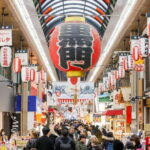
Next, the route touches Sennichimae Doguyasuji Shotengai and Kuromon Market, two spots that change the feel from “street eating” to “food culture in motion.”
Doguyasuji is the kind of shopping arcade where you can easily get distracted—small stalls, everyday goods, and a maze-like layout. I like that the tour uses this area to help you understand Osaka beyond restaurants. It’s not only about dining; it’s about how people buy, prepare, and snack as part of their normal day.
Then you reach Kuromon Market, the famous “come hungry” zone. This is where your guide’s ordering experience really pays off. Markets can be sensory chaos: lots of choices, lots of signage, and lots of people moving fast. With a plan, you get to taste without wandering in circles trying to decide.
Also, the tour emphasizes that food can change with season and availability. That’s not a downside. It’s a practical way to keep the tastings fresh and high-quality rather than forcing the same items every day no matter what the market has.
A few more Osaka tours and experiences worth a look

Misono Building: finishing tastings with a sense of wrap-up
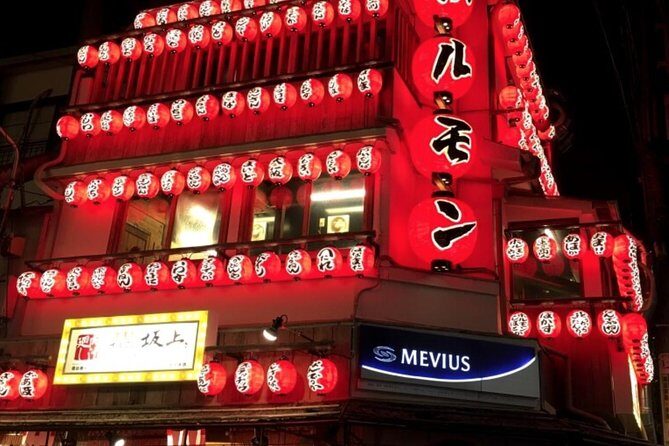
The last portion includes Misono Building. I treat this kind of endpoint as a “taste and reset” moment. By then, you’ve already built context: you’ve learned how Osaka’s food reputation shows up in different neighborhoods, and you’ve seen the difference between crowd magnets and places that feel more like local life.
A building stop also tends to mean fewer distractions and more focused eating. If you’ve ever had the experience of trying to snack while walking, you know how quickly you can lose momentum. This structure helps keep the tasting portions organized and gives you a clear end to the meal arc.
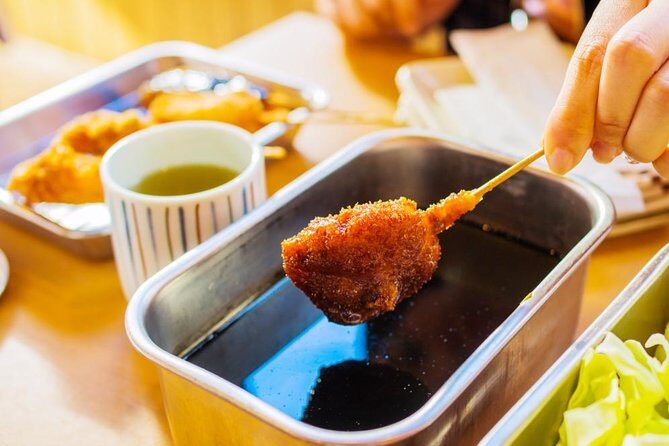
Toward the end, you’ll also be thankful for the inclusions: four food stops, one drink, and a traditional Japanese dessert. It’s enough food to feel like a real dinner experience, but not so much that you’re wobbling through the final streets.
What’s included in the $231 price (and why it can feel fair)
At $231 per person, this isn’t a budget snack crawl. But it can be good value because you’re paying for three things at once:
- A guided route through high-traffic areas,
- Four organized tastings (not just random bites), and
- Support with ordering and timing, plus a drink and dessert.
If you were planning this on your own, you’d spend time figuring out where to go, what to order, and how much to eat at each stop so you don’t end up too full—or worse, leaving hungry because you chose the wrong places.
The tour also limits the group size (up to 10), which usually means better attention and less waiting. In food-heavy neighborhoods, that attention is worth something.
Two costs to remember: transportation isn’t included, and hotel pickup isn’t included (though it can be arranged for an extra charge). So your total trip cost will depend on how you get there from your hotel.
How the guide experience changes everything (Asli, Melissa, Marie)
This is the part that consistently makes or breaks food tours, and it’s where this one has strong momentum. Guides such as Asli, Melissa, and Marie have been praised for combining food with Osaka context—history where it matters, and practical ordering where it counts.
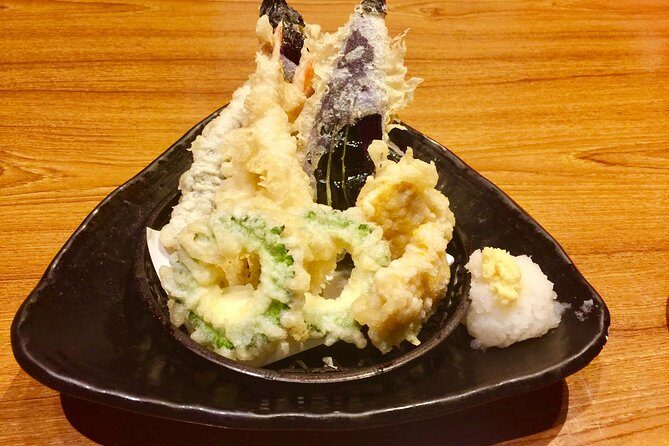
You’ll feel the difference most when it comes to choosing dishes. Osaka street food is famous, but it’s also easy to accidentally eat only the most tourist-friendly items. A good guide helps you sample different styles, not just the headline products.
It also helps if you’re traveling as a couple or solo. This tour accepts single travelers, and the small group size makes it easier to ask questions without feeling like you’re holding up a big table.
If you like learning while you eat, you’ll probably enjoy the guide’s storytelling style—especially the mix of pop-culture details (like the Glico Sign) and neighborhood explanations that give you a map in your head.
Diet needs, alcohol rules, and the gluten-free catch
The tour is vegetarian and pescetarian friendly, and that matters because many street-food tours struggle here. You should still go in with realistic expectations: “friendly” doesn’t mean everything is vegan and gluten-free, but it does mean your guide should be able to find options that work.
On the other hand, the tour is not recommended for gluten-free travelers. That’s clear enough to plan around. If gluten is a serious issue for you, you’ll want to choose a different experience or ask very specific questions in advance before booking.
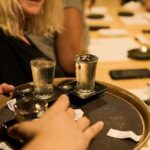
Alcohol is handled with a straightforward rule: the minimum drinking age is 21. Since one drink is included, if you don’t drink alcohol, you may still want to clarify what’s included when you book—especially if you want a non-alcohol option. The tour data doesn’t list drink types, so it’s worth checking.
Finally, the “food changes with season/availability” note is important. It means you’ll likely get what’s best at the time, but the exact items may shift. If you’re hunting one specific dish, you’ll still recognize the core Osaka classics in the tastings.
Comfort, walking pace, and who this tour suits best
This is family-friendly, and it works for a wide range of ages since it’s not described as a strenuous activity. That said, it does list a need for moderate physical fitness, which usually means you should be comfortable with steady walking and standing around during tastings.
If you’re traveling with kids, keep the admin requirement in mind. Children must be accompanied by an adult, and passport information copy is required for kids 10 and above. That’s not the kind of thing you want to discover at the last minute, so have it ready.
You also need a quick weather note. The tour requires good weather, and if it’s canceled due to poor conditions, you’ll be offered a different date or a full refund. Since it’s a walking-focused experience, weather can really change the comfort level.
This tour is especially suited for:
- people who want a guided plan through Osaka’s busiest food districts
- couples who like tasting variety without menu stress
- solo travelers who enjoy meeting a small group and moving together
Should you book Absolute Osaka Food Tour?
Book it if you want structure. This isn’t a “wander and hope” tour. It’s timed well (5:00 pm), capped small (up to 10), and built around four planned tastings with a guide who can steer you away from the worst tourist traps.
Skip it or think twice if you need gluten-free meals. The tour is explicitly not recommended for that, so you’ll want a different food plan that can handle stricter dietary requirements. Also, if you hate walking in busy areas, the Dotonbori and Minami sections might feel like too much at first—though the shrine and alley stop offer a nice counterbalance.
One last practical tip: you’ll get the most out of this tour if you come hungry and with an open mind. Osaka street food is all about variety—hot, crispy, sauced, and served fast. When you let the guide shape the order, the night feels like a real meal, not a random snack scavenger hunt.
If you’re choosing between doing Osaka street food solo and taking a guide, this one often wins on convenience and taste balance—especially in the neon-heavy lanes where it’s easy to waste time and end up waiting.
FAQ
How long is the Absolute Osaka Food Tour?
It lasts about 3 hours.
Where does the tour start and where does it end?
It starts at Dōtonbori (Chuo Ward) near the address listed at 1-chōme819 浪速道頓堀ビル and ends in the Sennichimae area (Chuo Ward).
What does the tour cost?
The price is $231.00 per person.
What’s included in the price?
You get four food stops, 1 drink included, a local English speaking guide, and a traditional Japanese dessert.
Are there any age or alcohol rules?
The tour is family-friendly, but the minimum drinking age is 21.
Is it vegetarian friendly? What about gluten-free?
It is vegetarian and pescetarian friendly, but it is not recommended for gluten-free.
Is transportation or hotel pickup included?
Transportation cost is not included, and hotel pickup is not included (it can be arranged for an additional charge).
Can I cancel for a full refund?
Yes. You can cancel up to 24 hours in advance for a full refund. If you cancel less than 24 hours before the start time, the amount paid is not refunded.
![[From Okayama] Okayama & Kurashiki Full Day Tour - Okayama Korakuen Garden: Edo-Era Design You Can Enjoy at Your Own Speed](https://images.thejapantraveler.com/wp-content/uploads/from-okayama-okayama-kurashiki-full-day-tour.jpg)