REVIEW · KYOTO
Kyoto Early Bird Walking Tour
Book on Viator →Operated by KAMNAVI Tours · Bookable on Viator
Beat Kyoto crowds before breakfast. This early-morning start hits three big sights—Fushimi Inari, Kinkaku-ji, and Arashiyama—when the light is better and the lines are shorter. I also like that the tour wraps by midday, so you get your afternoon back instead of spending it in transit or stuck behind groups.
One thing to plan for: you’ll pay extra for Kinkaku-ji admission (¥500) and local transit (¥1,220 per person), and it is a fair amount of walking.
In This Review
- Key points to know before you go
- Why the early timing matters in Kyoto
- Meeting at Kyoto Station: smoother than you think
- Stop 1: Fushimi Inari Taisha before the torii stampede
- Stop 2: Kinkaku-ji (Golden Pavilion) in soft morning light
- Stop 3: Arashiyama bamboo forest while it’s still cool
- The pace: what 5 hours 15 minutes feels like
- Price and value: where the math actually lands
- Who should book this Kyoto Early Bird tour
- Small tips that make your morning easier
- Should you book the Kyoto Early Bird Walking Tour?
- FAQ
- How long is the Kyoto Early Bird Walking Tour?
- Where do I meet the guide?
- What are the main stops on the tour?
- Is the Kinkaku-ji admission included in the price?
- Is food included?
- Do I need to pay for local transportation?
- How much walking is involved, and is it accessible?
- What if weather is bad?
Key points to know before you go
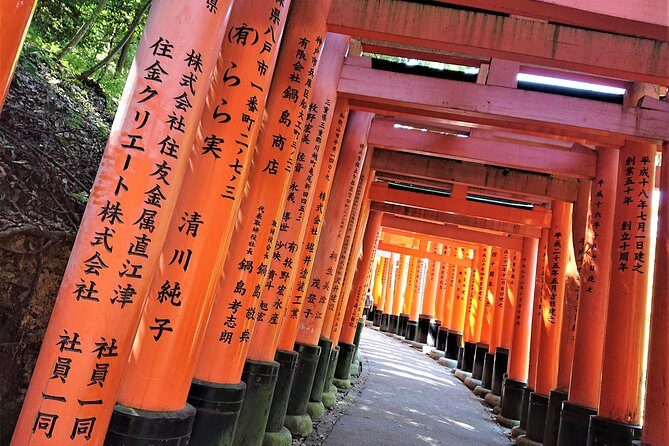
- Three iconic stops, one tight morning: Fushimi Inari, Golden Pavilion, then Arashiyama bamboo in the hours that matter.
- Morning quiet is the whole point: you’re there when it’s calm enough to actually look, not just wave at sights.
- You finish before lunch time: Kyoto in the afternoon is yours—cafes, side streets, shopping, or just wandering.
- Admission and transit are extra: Kinkaku-ji isn’t included, and you’re using local transport.
- Guides make the logistics painless: several guides in past tours helped with routes, photo spots, and even restroom timing.
Why the early timing matters in Kyoto
Kyoto is gorgeous, but it can also feel like a theme park if you arrive after the sun is up and the crowds have multiplied. This tour is built to fight that problem at the source: you start early from Kyoto Station, hit the sights while they’re still manageable, and then you’re done by around noon.
I like tours that don’t just promise early access, but actually structure your morning around it. You’re walking into quieter lanes at Fushimi Inari, seeing Kinkaku-ji before most tour buses do their usual loop, and enjoying Arashiyama bamboo while the air is cooler and the photo lines haven’t fully formed.
And here’s the underrated benefit: when you’re finished by midday, you can choose your own second act. Kyoto rewards curiosity—so you can spend your afternoon on whatever’s pulling you: temples you didn’t plan, viewpoints, or just neighborhoods with fewer mission statements and more everyday life.
You can also read our reviews of more walking tours in Kyoto



Meeting at Kyoto Station: smoother than you think
You meet at Kyoto Station Building 901. That’s a big help. Kyoto navigation can be confusing even for people who love maps, and getting on the right train or bus at the right time can take longer than it should—especially when you’re juggling site visits.
The tour also uses a mobile ticket, and you should receive confirmation at booking. In practice, I think it’s a relief to show up to one clear starting point instead of guessing where each group is gathering.
Tip that’s worth copying: if you’re traveling in Japan with an IC card on your phone (like Suica), it makes the local ride parts easier. One guest specifically called out using their smartphone IC card for train, bus, and vending machines—small thing, big time saver when you’re moving early.
Stop 1: Fushimi Inari Taisha before the torii stampede
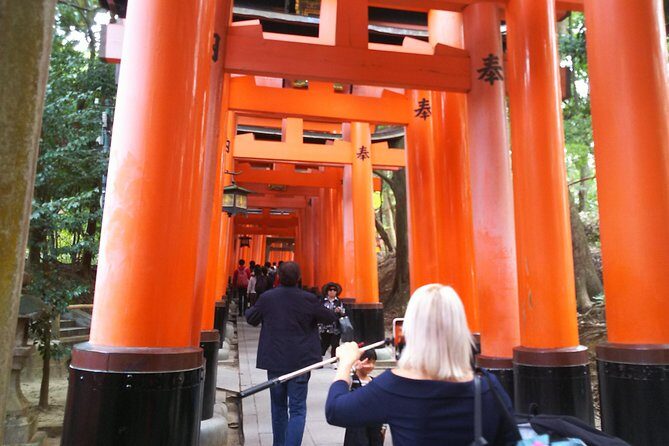
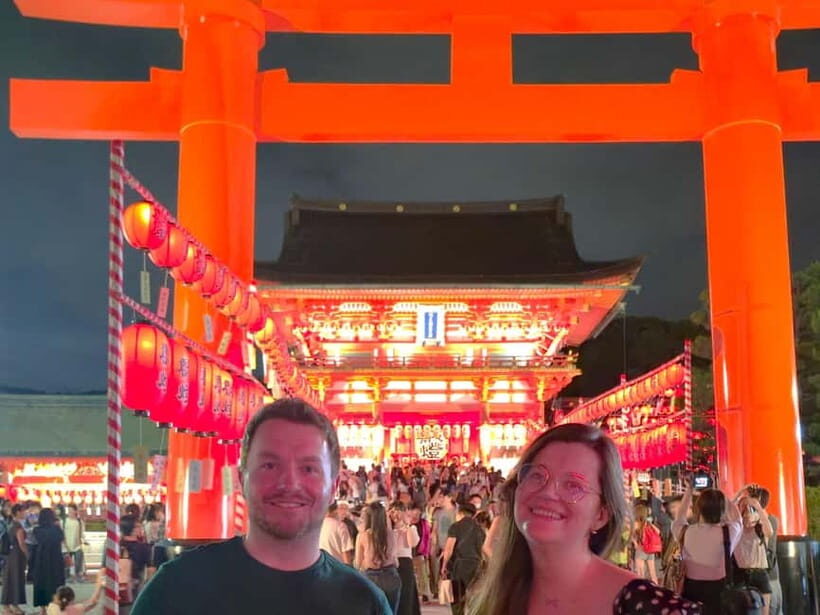
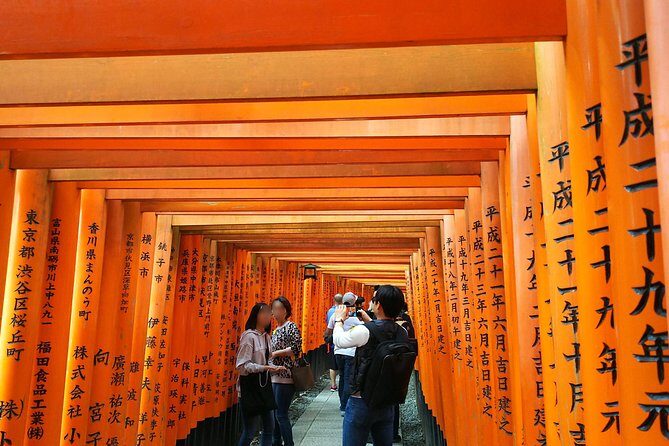
Fushimi Inari Taisha is famous for a reason. The torii gates form those long vermilion tunnels that look almost unreal—especially in the morning when the light hits them cleanly and you can see details instead of silhouettes.
This stop is designed for quiet viewing: you arrive early enough to walk through the gates before the throngs arrive. That changes the whole experience. You can actually pause for photos without feeling like you’re holding up a human conveyor belt. You can read the space—stone, stairs, small offerings, and the rhythm of the uphill path.
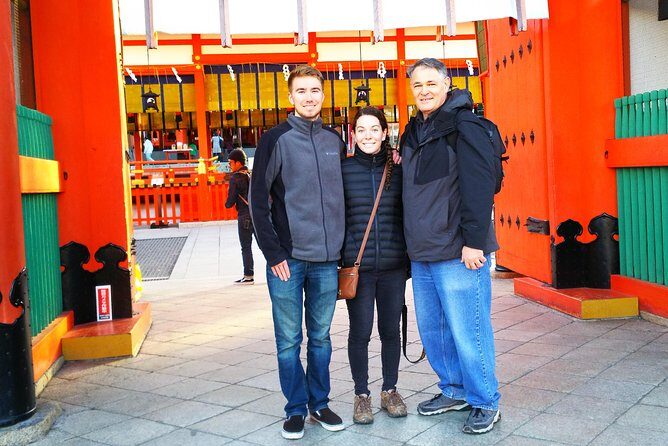
You’ll spend about 1 hour here. Admission is free, which is nice in a tour where some other costs are add-ons. The main consideration is physical comfort: even if you’re not doing a full hike to the top, you’re still moving through stairs and crowded areas that can get slippery if the morning is damp. Comfortable shoes are not optional.
Stop 2: Kinkaku-ji (Golden Pavilion) in soft morning light
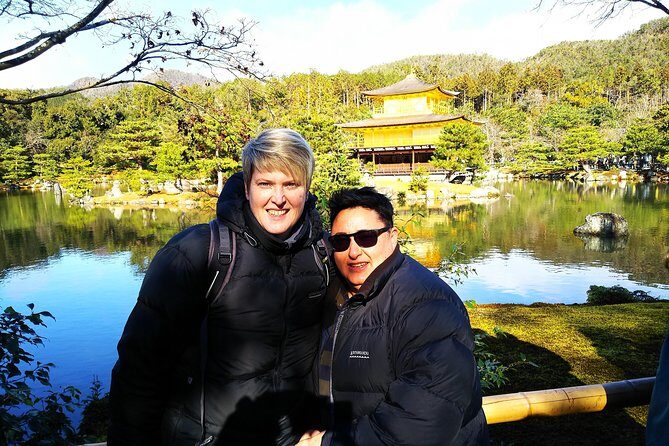
Then it’s on to Kinkaku-ji Temple, the Zen icon most people come to Kyoto for. The timing here is the secret ingredient: you enter right after it opens, when fewer people are there and the atmosphere feels calmer.
You get about 1 hour at this stop. Kinkaku-ji is not cheap to access on your own because admission is ¥500 and is not included in the tour price. Plan on it and you won’t feel surprised.
What I like about seeing it early is how the morning changes the look of the gilded building and its surrounding pond. Later in the day, it can become more about crowd management than looking. Early, you can take your time noticing how the reflections play, how the details stand out, and how the whole place feels more spacious.
One practical note: if you care about photos, pay attention to where the guide directs you. Multiple past tours praised guides for knowing good photo spots, and that’s not just about angles—it’s about timing your shots before a wave of people washes through.
Stop 3: Arashiyama bamboo forest while it’s still cool
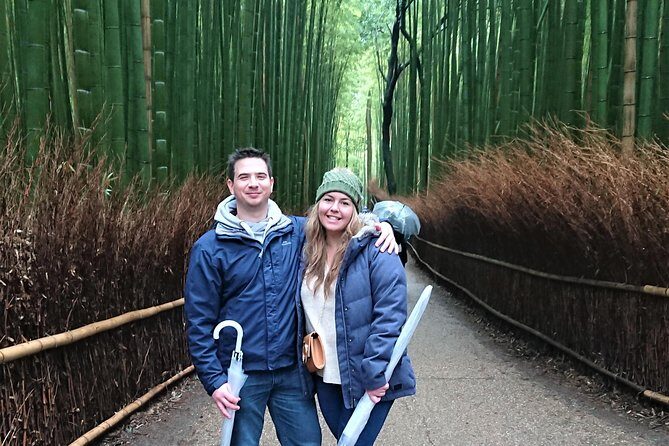
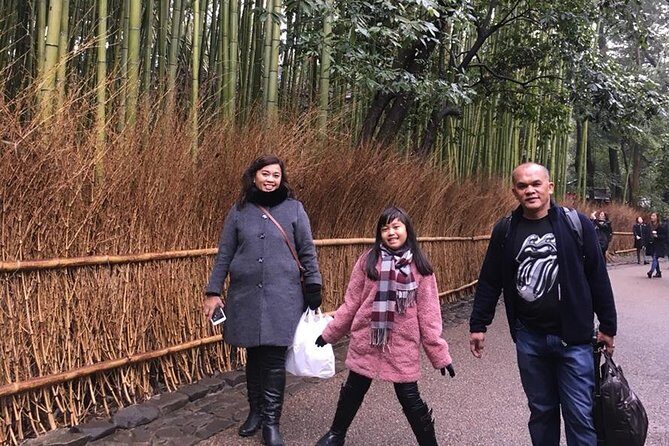
Arashiyama bamboo is one of those Kyoto experiences that can sound “touristy” until you actually stand there. Then the scale hits. The stalks rise in tight formation, and the sound of wind through the grove makes it feel less like a photo backdrop and more like a place.
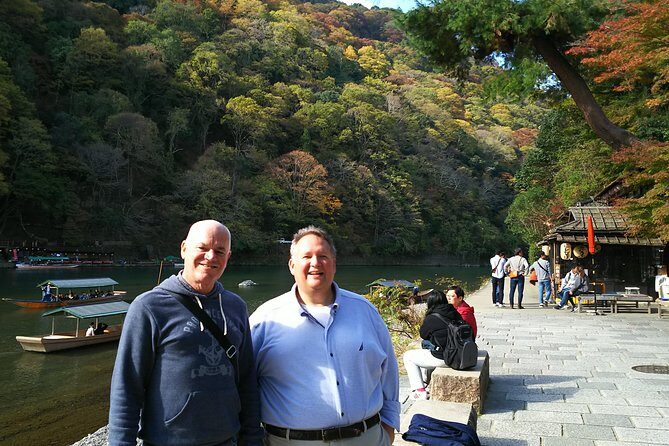
This tour gives you the best version of Arashiyama: you walk through the bamboo forest in the early morning air, before it gets busy. The stop is about 1 hour, and admission is free.
A drawback to keep in mind: bamboo areas tend to be crowded during peak hours, and even in the morning you should expect people around. Your experience depends on timing and patience. This tour’s early start helps a lot, but you still want to be ready for some foot traffic.
If you’re traveling in spring, this is also when you might catch seasonal scenery. One guest mentioned being there during cherry blossom season and finding it gorgeous. If your dates line up, you’ll likely get that extra layer of beauty—though it’s always weather-dependent and can change year to year.

The pace: what 5 hours 15 minutes feels like
The tour lasts about 5 hours 15 minutes (approx.). That’s a half-day, but it doesn’t move like a slow stroll. It’s structured. You’re going from one major site to the next, so expect walking, stairs, and short “look and learn” stops.
The good news is that several guides in past tours were praised for keeping things moving without rushing. People also noted that guides helped with transitions between stations and buses, which matters because you don’t want to waste your early window figuring things out.
What I’d tell you to do before you go:
- Wear comfortable shoes. Plan for uneven pavement and stairs.
- Bring water. It’s a morning tour, but Kyoto can still feel warm, and you’re active.
- Use restroom breaks early. Some guides were attentive to this and asked if people needed to stop.
Also, this isn’t labeled as strenuous, but it does require moderate physical fitness and it’s not recommended for people with heart conditions. If mobility is limited, it’s listed as accessible for limited mobility and limited eye sight—still, it’s smart to ask questions before booking if you have specific needs.
Price and value: where the math actually lands
The tour price is $105.45 per person. On its face, that’s not the cheapest way to see Kyoto’s biggest highlights. But value isn’t only about the sticker price—it’s about what you save.
What you’re paying for:
- A guide to help you move efficiently between far-apart areas of Kyoto during prime hours.
- A tight morning plan that reduces dead time and crowd stress.
- Local orientation that’s hard to replicate when you’re reading signs in a busy, fast-moving city.
Now the add-ons you should budget:
- Kinkaku-ji admission: ¥500 per person
- Public transportation fare: ¥1,220 per person
- Food and drink (not included)
So the tour is best thought of as a “guided morning + access timing” package. If you’d rather spend your energy actually looking at the temples (instead of tracking bus numbers), the cost starts to make sense quickly.
Also, it’s a private tour/activity: only your group participates. That can be a big value boost if you’re traveling as a family or with friends, because you’re not stuck waiting for strangers or juggling different walking speeds.
Who should book this Kyoto Early Bird tour
This is a great fit if:
- You want three major Kyoto sights in one morning without spending your precious first day figuring out routes.
- You hate crowds enough to wake up early and want to experience the calmer mood at Fushimi Inari and Kinkaku-ji.
- You like guided context—several guides were praised for explaining history and significance, and for being friendly and helpful.
It might not be ideal if:
- You want a super slow, open-ended day. The timing is efficient, not leisurely.
- You struggle with stairs and walking. The tour involves a good bit of movement.
- You have heart conditions (it’s specifically not recommended).
If you’re the type who likes photo planning, this also tends to work well. Guides in past tours were noted for being helpful with photography and knowing good spots.
Small tips that make your morning easier
A few practical things that can turn a good tour into a smooth one:
- Summer tip: Bring a sun umbrella. One review called that out specifically for summer travel in Japan.
- Rain reality: Weather matters, and the tour says it depends on good weather. Still, at least one group reported rainy conditions didn’t stop the day and the guide helped everyone navigate. If rain is in the forecast, pack a compact umbrella or light rain layer so you’re not miserable.
- Ask your guide what you care about: Some guides were praised for checking interests and adjusting the pace. If you want more culture, ask for more context. If you want photos, ask where to stand and when to take shots.
Should you book the Kyoto Early Bird Walking Tour?
If your goal is to see Kyoto’s headline attractions without losing half your day to crowds and confusion, I think this tour is an easy “yes.” The early timing is the real product here, and the way the morning is structured means you’re usually looking at the sites instead of calculating transit and waiting in lines.
Book it if you’re comfortable with walking and you want a guided plan from Kyoto Station that ends by noon. Skip it (or ask extra questions) if you need a very low-impact schedule, have heart-related concerns, or dislike structured itineraries.
If you’re ready to trade a bit of morning grogginess for calmer temples and a free afternoon, this one earns its popularity—and at a rating of 4.9 from 377 reviews with 99% recommending it, the overall signal is strong.
FAQ
How long is the Kyoto Early Bird Walking Tour?
It runs for about 5 hours 15 minutes (approx.) and typically ends back at the meeting point by around noon.
Where do I meet the guide?
You meet at Kyoto Station Building 901 in Kyoto. The tour ends back at the same meeting point.
What are the main stops on the tour?
You’ll visit Fushimi Inari-taisha Shrine, Kinkaku-ji Temple (Golden Pavilion), and the Arashiyama bamboo forest.
Is the Kinkaku-ji admission included in the price?
No. Kinkaku-ji admission is ¥500 per person and is not included.
Is food included?
No. Food and drink are not included.
Do I need to pay for local transportation?
Yes. Public transportation fare is ¥1,220 per person and is not included.
How much walking is involved, and is it accessible?
Comfortable shoes are recommended because it’s quite a bit of walking. It says it is accessible for limited eye sight and limited mobility, with moderate physical fitness required. It also notes it’s not recommended for people with heart conditions.
What if weather is bad?
The experience requires good weather. If it’s canceled due to poor weather, you’ll be offered a different date or a full refund.