REVIEW · TOKYO
East Tokyo Go-Kart Tour
Book on GetYourGuide →Operated by JAPANKART · Bookable on GetYourGuide
Tokyo sounds different from a go-kart. I love the safety briefing and the steady way guides get you ready for public roads, and I also love that the ride includes Rainbow Bridge and Tokyo Bay views you usually only see from far away.
In 90–150 minutes, you’re not just racing in circles. You roll through areas like Ginza, Nihonbashi, Akihabara, Ueno, and Asakusa, with stops for photos and a break that keeps the energy up.
The main catch is paperwork. You must bring your passport, your home driver’s license, and an International Driving Permit issued under the Geneva Convention 1949, in the correct booklet format.
In This Review
- Key takeaways before you book
- Tokyo streets, go-kart speed, and landmark views
- Price and value: is $64 actually fair?
- What you need to drive: the IDP rules that can stop you
- Before you ride: safety briefing, gear rules, and first minutes
- The 2-hour East Tokyo route: Toyosu to Asakusa in one hit
- Tokyo Bay break: a breather with skyline payoff
- Ginza and Nihonbashi: polished streets and quick-city energy
- Kanda and Akihabara: lights, tech, and fast turns
- Ueno and Asakusa: the older Tokyo chapter
- Rainbow Bridge: the viewpoint stop that makes the route feel special
- The 1-hour Skytree branch: faster, tighter, and still iconic
- How long it really takes: plan around the total start-to-finish time
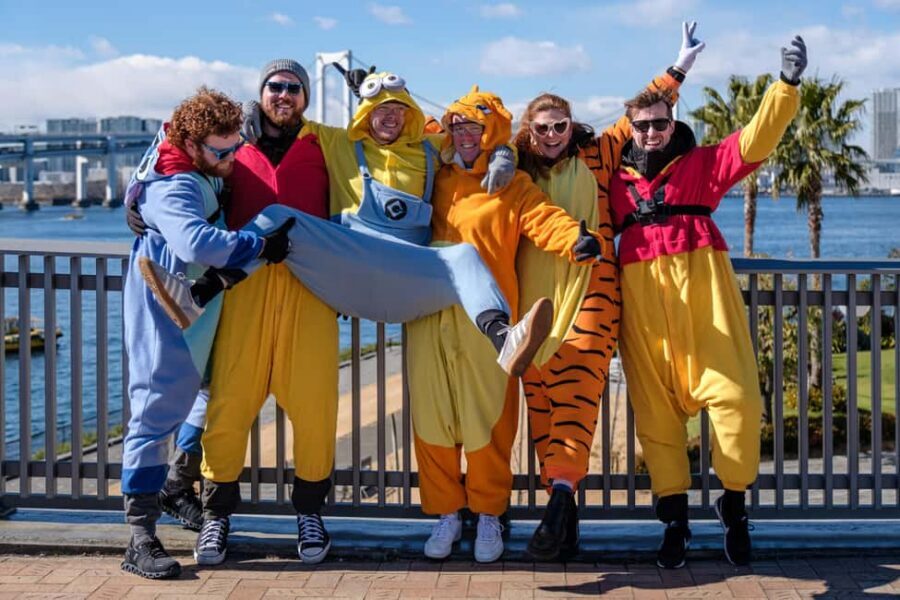
- Costumes and photos: why this feels like a complete package
- Is it scary in Tokyo traffic? The answer is: not if you listen
- When to go: rain, evening energy, and quieter streets
- Who this tour is best for (and who should skip)
- Should you book JapanKart’s East Tokyo Go-Kart Tour?
- FAQ
- How long is the East Tokyo go-kart tour?
- What does it cost?
- Where do I meet for the tour?
- Is the tour limited to small groups?
- What documents do I need to drive in Japan?
- Are Vienna Convention IDPs accepted in Japan for this activity?
- Can I participate if I forget my IDP or bring only a digital copy?
- Is alcohol allowed during the tour?
- What shoes are not allowed?
- What language are the guides/instructors?
Key takeaways before you book
- Public-road go-karting with a pro safety demo before you hit the streets
- Rainbow Bridge and Tokyo Bay viewpoint stop for photos
- Big-city sightseeing in a short time across Ginza, Akihabara, Ueno, and Asakusa
- Costumes and included photos (plus staff photo help during the ride)
- Small groups (up to 10 riders) for easier guidance and less chaos
- Strict IDP rules under Geneva Convention 1949 or you may not be allowed to drive
Tokyo streets, go-kart speed, and landmark views
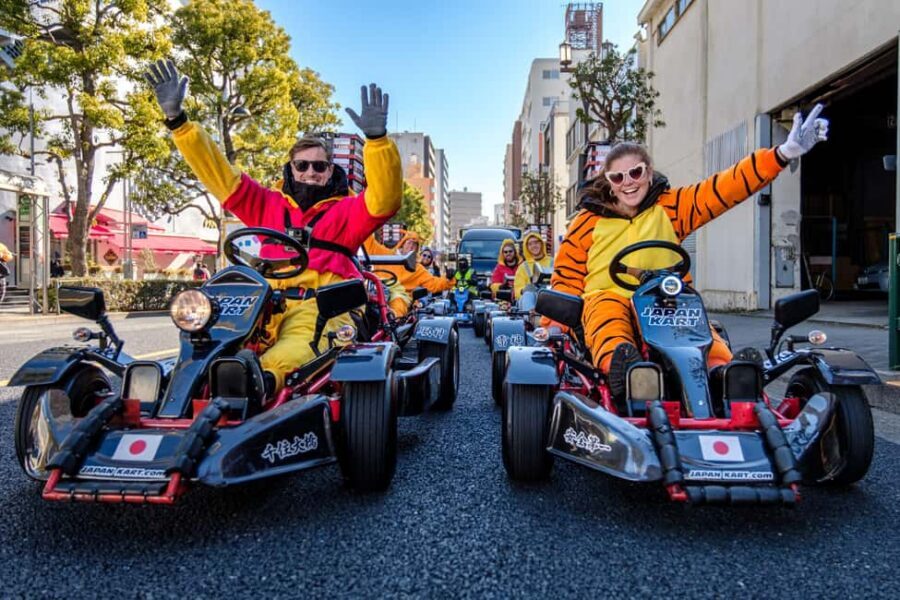
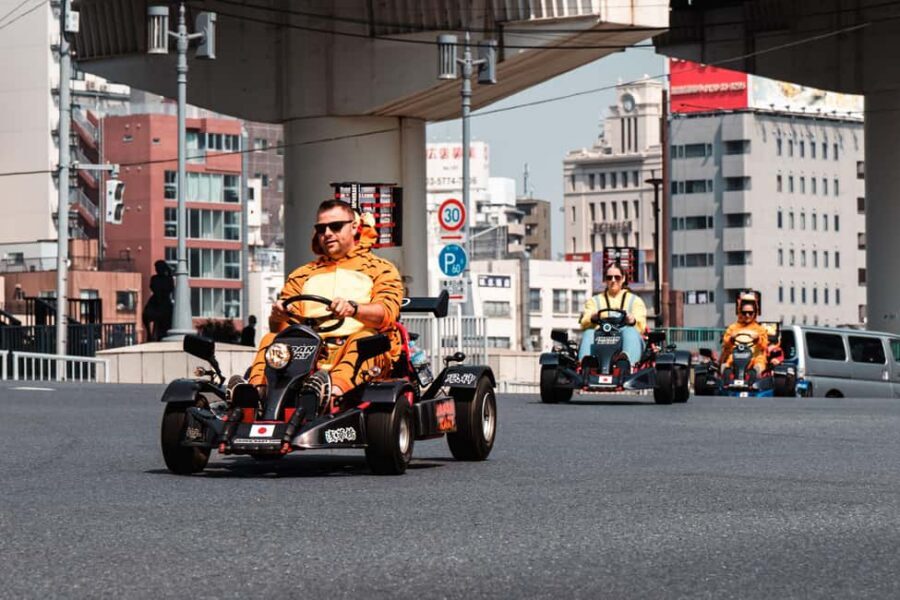
If you’re craving a Tokyo activity that feels a little ridiculous—in the best way—this is it. You’re driving on public roads, with real wind in your hair, while the city slides past behind you.
What makes it special is the mix of contrasts. You get modern Tokyo landmarks like Ginza and the Bay area, then you pivot toward the older-feeling neighborhoods around Ueno and Asakusa. In one afternoon, you get two different versions of Tokyo without needing a train-and-transfer marathon.
You can also read our reviews of more tours and experiences in Tokyo.



Price and value: is $64 actually fair?
At $64 per person, the big value isn’t speed or thrills alone. It’s that you’re paying for guided driving, the kart itself (including gas), costumes, and photos, all in a small group.
Also, you’re getting more than one “photo moment.” There’s a Bay break, a viewpoint near Rainbow Bridge for photos, and multiple landmark passes where the route is doing the work for you. For many people, that’s the trade: you’re not paying for a long guided walking tour—you’re paying to move fast through a lot of Tokyo.
The other value booster is time. Between the 2-hour option and the 1-hour Skytree branch, you can match it to your schedule. If you’re short on time, you can still enjoy the core experience.
What you need to drive: the IDP rules that can stop you
This tour is fun, but it’s also strict for driving eligibility. You’ll need:
- Your passport
- Your driver’s license from your home country
- An International Driving Permit issued under the Geneva Convention 1949, in the booklet format (not loose paper)
A key point: International Driving Permits issued under the Vienna Convention 1968 are not accepted in Japan. And you must show a hard copy on the day of the activity.
If your license is from Switzerland, Germany, France, Taiwan, Belgium, Estonia, or Monaco, you also need the original license plus an official Japanese translation by the authorized organization. If you want the simplest prep, double-check your documents before you ever head to the meeting point.
Before you ride: safety briefing, gear rules, and first minutes

This is not a jump-on-and-figure-it-out activity. You’ll get professional safety briefings/demonstrations before every tour, and you’ll be taught how to handle the kart in traffic conditions.
That matters because Tokyo traffic can feel intimidating at first—especially when you’re in a go-kart instead of a normal vehicle. The good news is that the guides keep the group together, using a lead-and-tail approach to help you stay on track.
You also need the right footwear. High-heeled shoes are not allowed, and sandals/flip flops are not allowed either. Bare feet are also not allowed. If you’re bringing a day bag, make sure you’ve got closed-toe shoes ready.
The 2-hour East Tokyo route: Toyosu to Asakusa in one hit
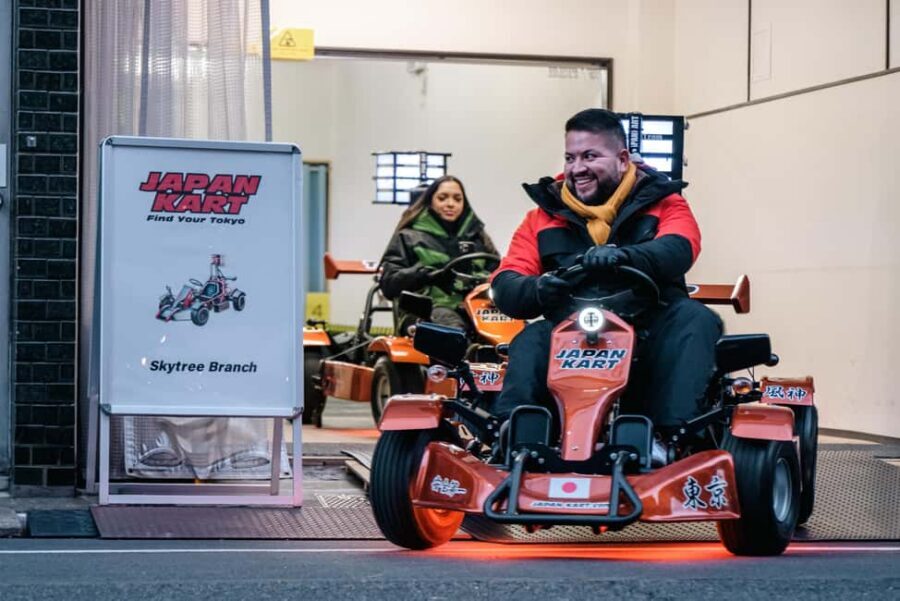
The 2-hour experience is designed to pack in a lot of Tokyo without wearing your feet down. You drive newly made go-karts on public roads and pass through several major areas—often with short moments to regroup and photograph.
Here’s how it usually feels as the day rolls:






Tokyo Bay break: a breather with skyline payoff
You’ll take a break around the Tokyo Bay area. This isn’t just downtime—it’s time to reset your brain before you hit the more dense city sections again. Expect a scenic, open-area feel compared with the tighter streets elsewhere.
Ginza and Nihonbashi: polished streets and quick-city energy
Ginza is the kind of place where Tokyo feels expensive and camera-friendly. You’ll glide through the shopping district vibe rather than standing in one spot all day.
Then you move toward Nihonbashi. This area gives you a sense of Tokyo’s long history and street rhythm—less theme park, more real daily life—while you’re still in motion on the kart.
A practical takeaway: this section is where your driving confidence starts to show. The route keeps flowing, so if you’re paying attention to the guide instructions, you’ll feel more comfortable fast.
Kanda and Akihabara: lights, tech, and fast turns
Kanda and Akihabara bring a different flavor—more neon, more youth energy, and streets that feel like Tokyo’s tech heartbeat.
This is also where you may notice how the tour balances driving and sightseeing. If you want to read every storefront, you might find yourself focusing on the road instead. On the flip side, that focus is part of what makes it feel safe and controlled.
Ueno and Asakusa: the older Tokyo chapter
Finally, you reach the older-feeling Tokyo around Ueno and Asakusa. Expect a shift in atmosphere, with more traditional street character and a chance to see how the city looks when you slow down mentally—even if the kart is still moving.
This is a great ending, because it’s the closest thing to going from modern Tokyo to a more historic mood within the same ride.
Rainbow Bridge: the viewpoint stop that makes the route feel special
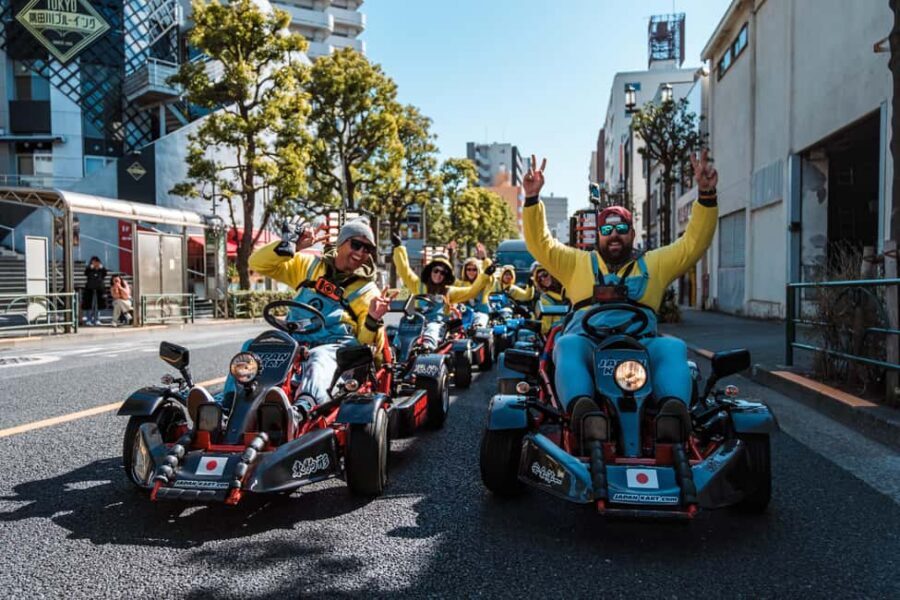
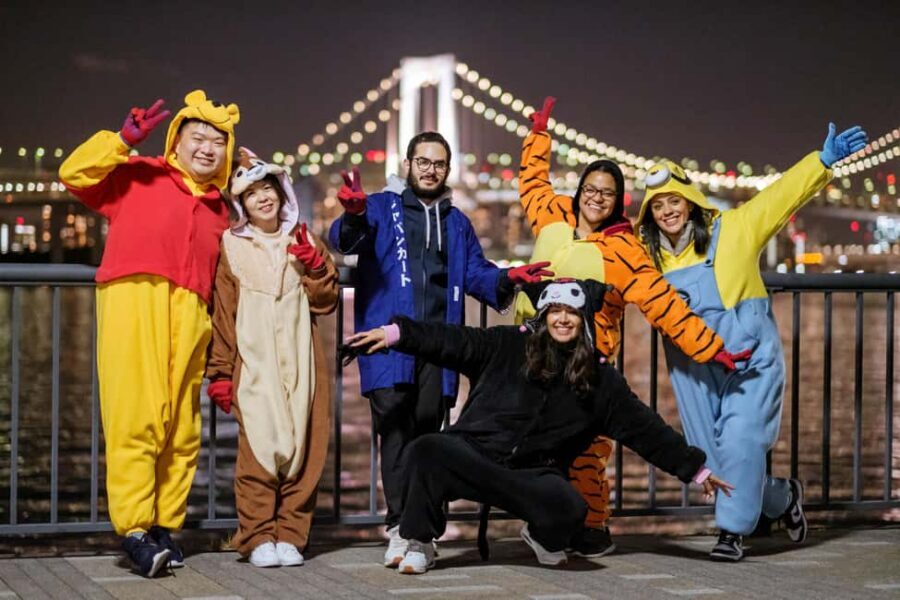
One of the most memorable moments is the Rainbow Bridge and Tokyo Bay viewpoint area. You’ll pause long enough for photos, including shots that capture you with skyline energy behind you.
This is the kind of stop that makes the tour feel more than just driving. You’re actually building a Tokyo story as you go—Bay view, then shopping streets, then neighborhoods that feel older and more layered.
If you’re a photographer, this is where you’ll be glad you brought a phone in a secure way. Some riders use harness options for phones or cameras when available, which helps keep things safe while you’re riding.
The 1-hour Skytree branch: faster, tighter, and still iconic
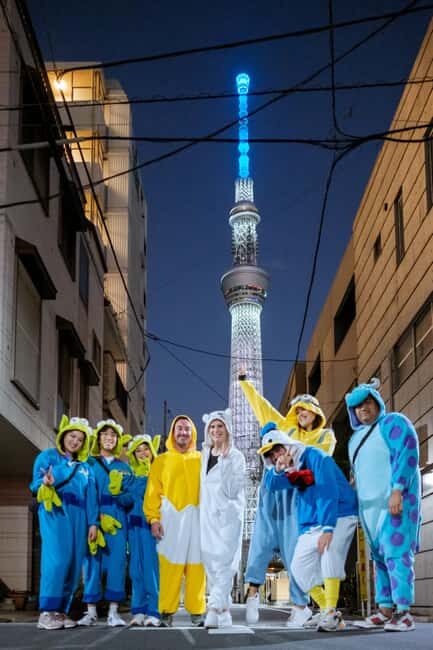
If you don’t want the full 2 hours, the 1-hour option focuses on the Skytree area and a compact slice of Central-East Tokyo.
You’ll check in at a different meeting point for this branch, close to Tokyo Skytree Tower. From there, you’ll drive past Asakusa, Ueno, Akihabara, and Ueno Park, then head through Kappabashi Kitchen Tools Street before reaching the Skytree area.
Why this works: it gives you a strong hit of Tokyo themes in a short time. You get the “old-meets-new” feel between Asakusa/Ueno and Akihabara/Skytree. It’s also ideal if you’re doing other Skytree-adjacent activities the same day.
How long it really takes: plan around the total start-to-finish time
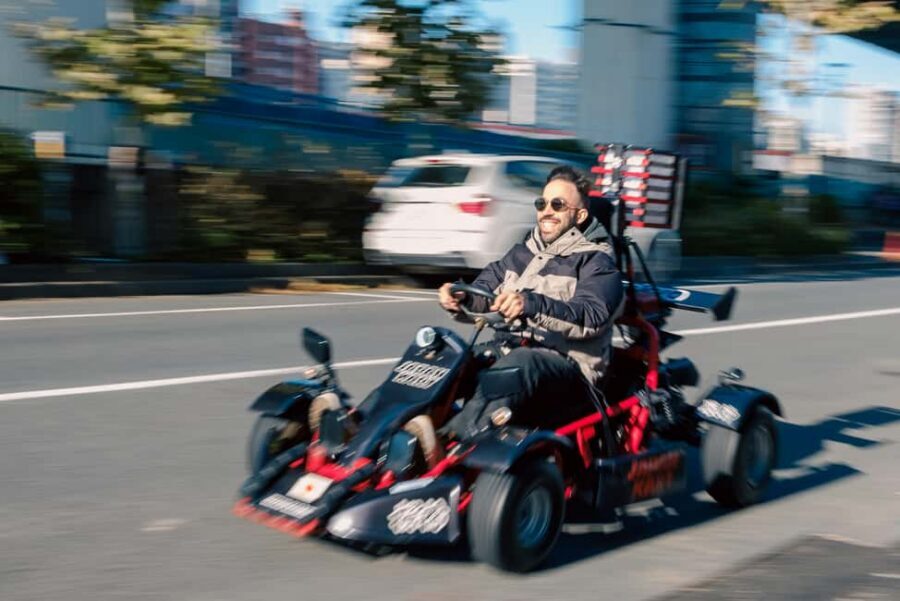
The driving time is often around the tour length options, but you should plan buffer time. Some people note that the actual riding part can be about 1 hour 10 minutes, while the full process from start time to leaving can be closer to 1.5 to 1.4 hours.
So if your schedule is tight—lunch timed, museum reservations, or a train to catch—give yourself a little breathing room around your start time. That buffer keeps you from rushing out of photos or getting stressed during the check-in.
Costumes and photos: why this feels like a complete package
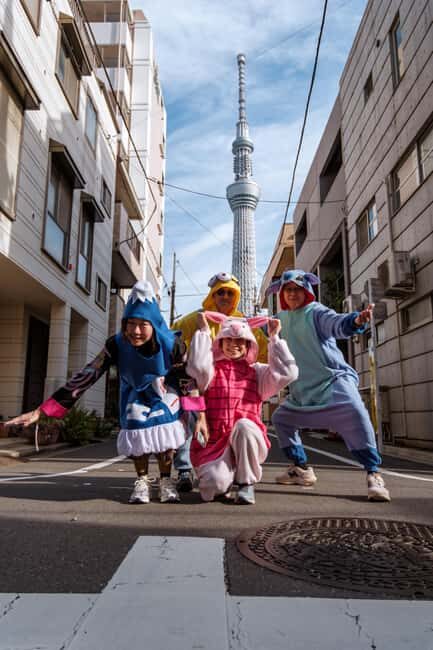
This tour doesn’t treat “fun” as an add-on. Costumes are included, and that silly touch is more useful than it sounds. It helps break the awkward first minutes when you’re learning how to steer smoothly and stay aware of traffic.
Photos are also included, and guides take photos during the ride and at key stops. Some riders report that they also receive the media after the tour, which is a nice way to keep the memories without juggling your device while you drive.
A small but meaningful detail: staff help with practical things like making sure your footwear works. That’s part of why the experience feels smoother than it might on paper.
Is it scary in Tokyo traffic? The answer is: not if you listen
The first few minutes can feel daunting. You’re in a kart, the streets are busy, and you’re learning at the same time. That’s normal.
What makes it not scary is the training + structure. You get a safety demo, you drive with guidance from the lead and tail setup, and you move as a group so you’re not scattered into the chaos.
Cars can cut in and traffic can be active, but riders consistently describe feeling confident because the pace and instructions come from the staff—not from improvising yourself.
If you’re new to driving, this is still a good first go-kart experience as long as you take the briefing seriously and don’t rush your learning.
When to go: rain, evening energy, and quieter streets
Tokyo in rain can still be a vibe. One rider did the tour in pouring rain and felt safe and happy with the experience. On a different rainy day, staff offered to reschedule—so weather can swing the plan either way.
If you want a tip for quieter streets, one rider suggested booking Thursday around 7pm for a calmer feel. Another common rhythm: evening rides can be great because the city changes color and energy as the light fades.
For best results, dress for closed-toe comfort and movement. Skip sandals, bring weather-appropriate layers, and plan to enjoy the wind anyway.
Who this tour is best for (and who should skip)
This is perfect if you want a Tokyo highlight that’s active, funny, and fast. It’s also a great fit for couples, friends, and families—especially because the group size stays small and the guidance is hands-on.
You might consider skipping if:
- You only want a deep history walk. This is primarily a driving experience with landmark passing, not a slow museum-style tour.
- You’re missing the correct driving documents. If you can’t show the required IDP hard copy, you won’t be able to participate.
It also isn’t for drivers under 18. And alcohol and drugs are not allowed, including alcohol in the vehicle.
Should you book JapanKart’s East Tokyo Go-Kart Tour?
Yes, if you match the vibe: you want real streets, real skyline breaks, and a guided experience that takes care of the stressful parts. The $64 price feels fair because it includes the kart, gas, costumes, and photos—plus the staff work that makes this safe and organized.
I’d book it when you have enough time to enjoy the full experience without rushing the check-in or the photo stops. And I’d double-check your International Driving Permit rules first, because that’s the one thing that can shut the whole plan down.
If you love hands-on travel—less standing, more doing—this is one of the most memorable ways to see Tokyo quickly. The city looks different from behind a steering wheel, and you’ll come away with photos and stories that feel uniquely Tokyo.
FAQ
How long is the East Tokyo go-kart tour?
You can choose a 2-hour tour (about 90–150 minutes total depending on the start time flow) or a 1-hour Skytree branch option.
What does it cost?
The price is listed as $64 per person.
Where do I meet for the tour?
For the main experience, check in at the activity provider’s shop near Tokyo Skytree Tower. The 1-hour Skytree branch uses a different meeting point.
Is the tour limited to small groups?
Yes. It’s limited to a small group, with a maximum of 10 participants.
What documents do I need to drive in Japan?
You need your passport, your home country driver’s license, and an International Driving Permit issued under the Geneva Convention 1949.
Are Vienna Convention IDPs accepted in Japan for this activity?
No. International Driving Permits issued under the Vienna Convention 1968 are not accepted.
Can I participate if I forget my IDP or bring only a digital copy?
No. You must show a hard copy of your IDP on the day of the activity, or you will be unable to participate without the possibility of reimbursement.
Is alcohol allowed during the tour?
No. Alcohol and drugs are not allowed, and you can’t have alcoholic drinks in the vehicle.
What shoes are not allowed?
High-heeled shoes and sandals/flip flops are not allowed, and bare feet are not allowed.
What language are the guides/instructors?
The instructor is English-speaking.