REVIEW · KYOTO
Kyoto: Samurai Kenbu Traditional Sword Dancing Show
Book on GetYourGuide →Operated by Ginbu Co. · Bookable on GetYourGuide
One hour in Kyoto can take you straight into feudal Japan. The Samurai Kenbu Traditional Sword Dancing Show turns samurai stories into graceful, dramatic stage movement, with English narration and a hands-on sword moment at the end.
I especially like the way the show teaches through performance: you get history and technique ideas between the 12th and 19th centuries, not just a random sword routine. I also love the interactive finish, where you get a short lesson that helps you understand how control and posture matter.
One consideration: this is more dance and storytelling than action-fight theatrics, so if you want a big battle demo, you might feel slightly shortchanged.
In This Review
- Key things you’ll notice
- Kenbu: why this Kyoto show feels different from a sword demo
- Arriving at Samurai Kembu Theater: small space, simple rules
- The one-hour flow: stories, demonstrations, then a photo window
- 12th to 19th century samurai culture: what they teach through movement
- Folding fans: the “extra” skill that makes it feel authentic
- The mini sword lesson: what to expect when you try holding a katana
- Price and value: is $32 worth it in Kyoto?
- Who should book this (and who might want to adjust expectations)
- Practical tips that make the experience smoother
- Should you book the Samurai Kenbu show in Kyoto?
- FAQ
- How long is the Samurai Kenbu Traditional Sword Dancing Show?
- How much does it cost?
- Where do I meet for the show?
- What languages are used during the show?
- Can I take photos or videos during the performance?
- What’s included in the ticket price?
- Is hotel pickup or food included?
Key things you’ll notice
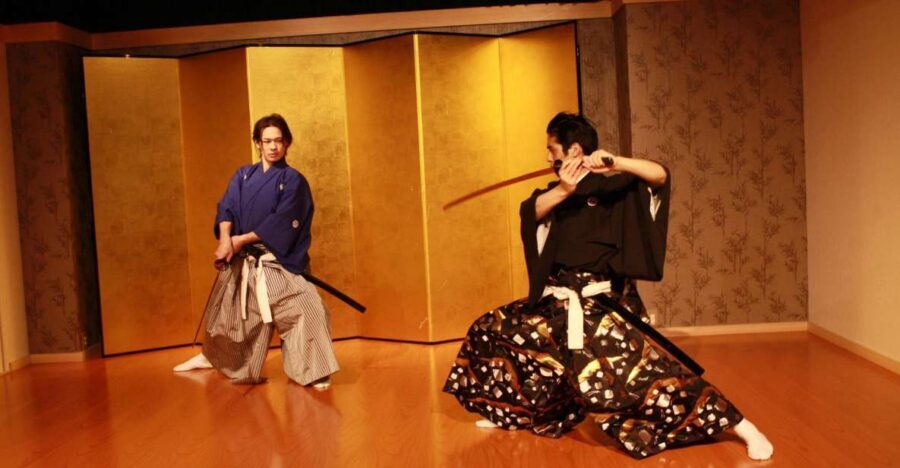
- Kenbu as a language: poems, stances, and meaning built into each sequence
- English narration: stories of samurai practice explained as you watch
- Shoes-off theater vibe: simple, traditional setup once you arrive
- Folding fan techniques: you’ll see how samurai training can include more than the sword
- No photos during the show: you get a dedicated photo moment after
- Short sword mini-lesson: you handle a katana-like sword briefly, under an instructor’s command
Kenbu: why this Kyoto show feels different from a sword demo
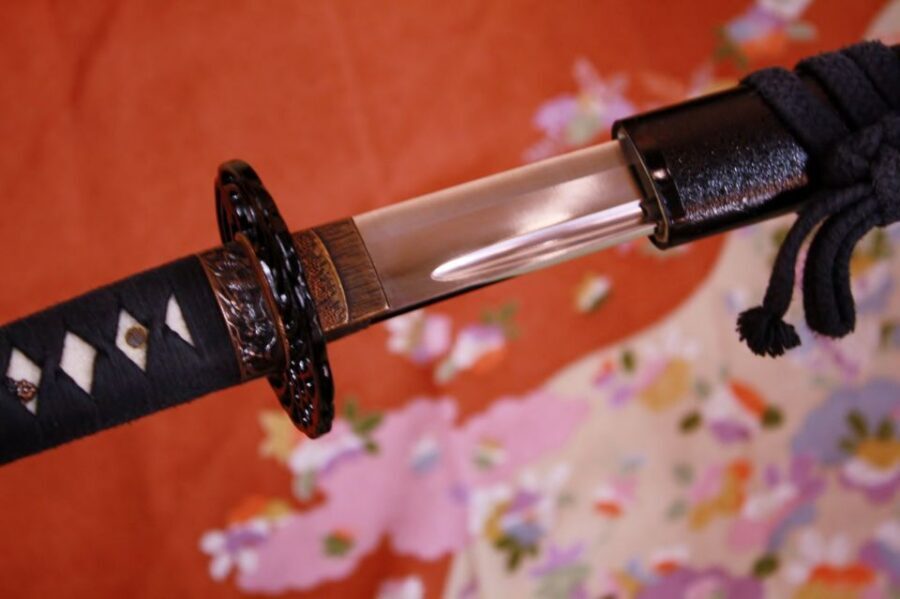
Kenbu is not just swinging a sword because it looks cool. It’s choreography built from samurai-era ideas—rhythm, discipline, and the controlled presence you’re supposed to show before anything “happens.” When you watch it as a story tool, the movements make sense fast, even if you’re not a sword person.
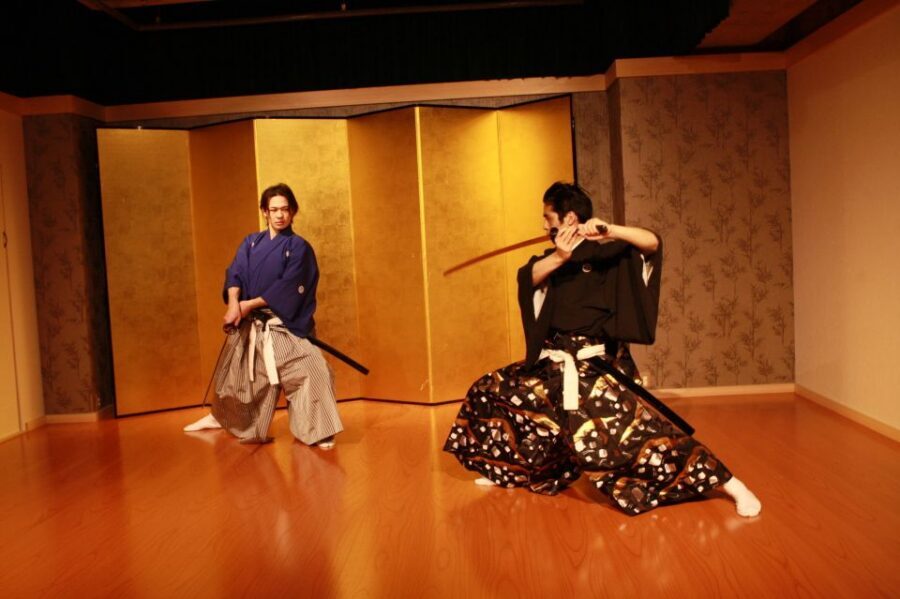
What makes this show work is the balance. You get polished stage performances that look elegant and powerful at the same time. Then you get a short lesson that translates that stage control into your body—slowly, step-by-step—so the art doesn’t stay abstract.
I also like that the program talks about responsibility. The samurai sword is treated like something serious, not a toy. That tone changes how you read every motion you see.
A few more Kyoto tours and experiences worth a look

Arriving at Samurai Kembu Theater: small space, simple rules
The show meets at Samurai Kembu Theater in Kyoto. It’s easy to find from transit: about a 4-minute walk from Subway Sanjo Keihan Station (Kyoto City Subway), or around 5 minutes from Sanjo Station on the Keihan Main Line.
Plan to arrive 5–15 minutes early. The theater does not have a waiting room, so if you’re late you may lose your spot while others are already seated. There’s also no room for large luggage or travel bags, so keep your carry-on light.
And yes, this is one of those Kyoto moments where you take off your shoes. You’ll be expected to follow the local setup right away. It takes almost no effort, but it instantly makes the experience feel more like a traditional room than a tourist stage.
The one-hour flow: stories, demonstrations, then a photo window
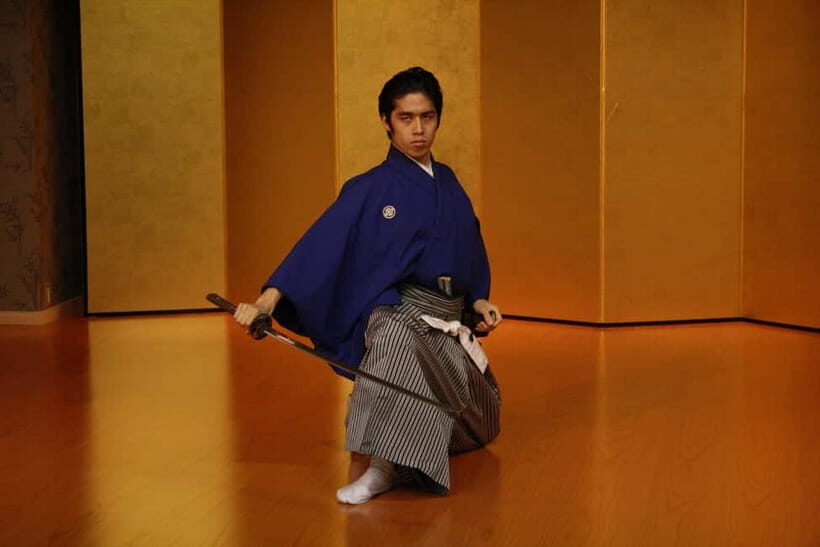
The whole experience runs about 1 hour, which is one reason it fits well on a busy Kyoto day. You’re not committing to a half-day of logistics, and you don’t feel rushed either, because the program is paced like a sequence of short scenes.
Before the demonstrations start, a performer narrates an introduction. Expect English and Japanese options, and you’ll get an overview of Kenbu history and techniques. The storytelling is staged like mini-chapters: each performance has context, then the movement follows.
After each section, you move into the next one without awkward downtime. The show includes both traditional-style and newer-style Kenbu sequences, so it doesn’t feel stuck in one mode. It’s also designed so you can follow what’s happening even if you don’t know the terminology.
Then comes the part many people remember: the photo time. While photos and videos are not allowed during the show, you do get a window afterward for pictures. Some guests also report that staff help with snapping photos, which is a nice touch if you’d rather be in the frame than only holding your camera.
12th to 19th century samurai culture: what they teach through movement
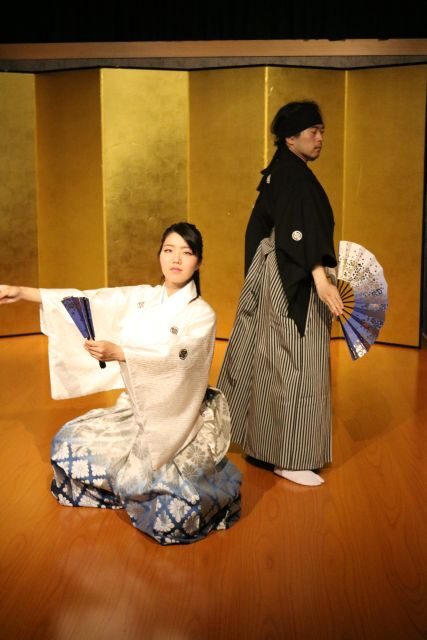
One of the most satisfying parts is that the show doesn’t treat samurai culture as one frozen image. The demonstrations connect to ideas from a wide stretch of time—between the 12th and 19th centuries—and you see how samurai life and training shaped performance.
You’ll watch sword-dancing sequences where each performer swings the sword through complex movements. The pacing matters: it’s not chaotic, and it’s not “fast for fast’s sake.” Instead, you’re meant to notice how form, timing, and intent combine into something that looks both beautiful and strong.
The show also brings in poetic or ceremonial elements—things like poems recited before heading to the battlefield. That detail matters because it frames Kenbu as more than entertainment. It’s presented like a disciplined practice, where words and movement reinforce each other.
And since the narration explains what you’re seeing, you’re not forced to guess. Even when you can’t catch every detail, the structure helps: story context first, then the movement, then the meaning lands.
Folding fans: the “extra” skill that makes it feel authentic
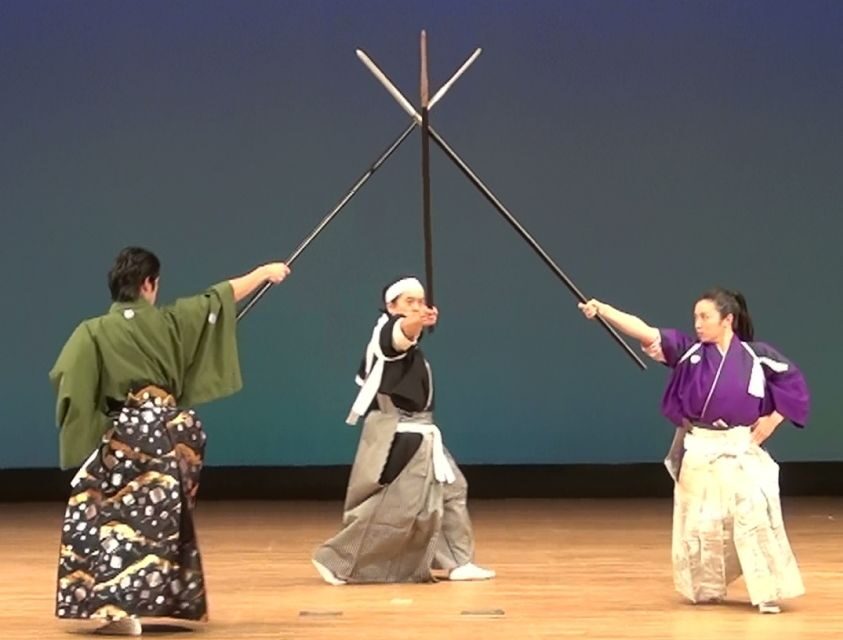
Many sword shows focus only on the blade. This one brings in the folding fan too, and that’s a smart way to broaden what you think “samurai training” means.
In the demonstrations, you’ll see techniques associated with the fan. The point isn’t that the fan replaces the sword. The point is that samurai arts used multiple tools and skills—posture, footwork, timing, and staged control—so the overall discipline shows in many forms.
You also get a chance to learn fan basics if time allows during the mini-experience. Even a small try helps you understand how different training props demand different balance and wrist control. It also keeps the experience from being purely about sword handling.
If you’re the type who likes cultural depth—small details that show craft—this part is worth paying attention to. It makes the show feel more like a tradition being kept alive than a one-note performance.






The mini sword lesson: what to expect when you try holding a katana
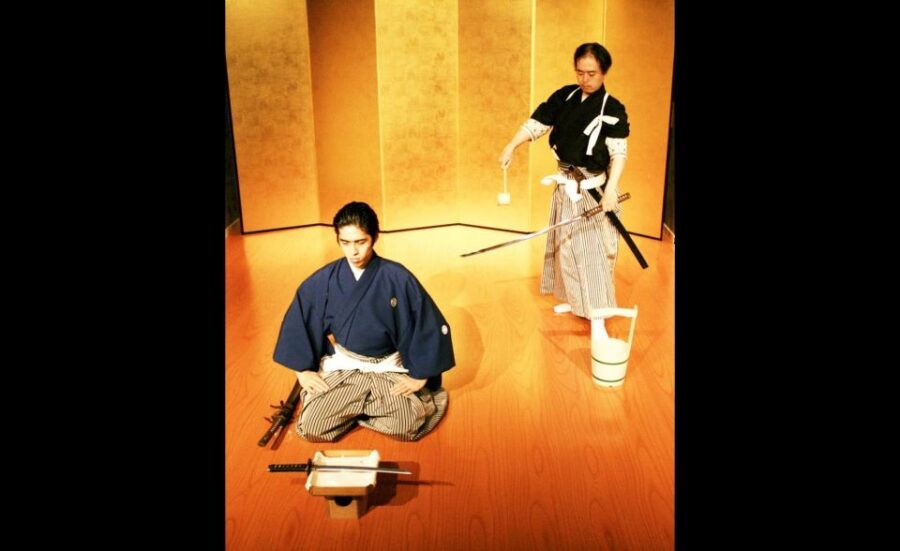
After the main show, you enter the mini-experience. This is the hands-on part, and it’s where the value really shows, because you get instruction rather than just a photo pose.
You’ll pick up a sword and follow the instructor’s commands. The sequence is straightforward: slowly pull the sword from the scabbard, then grasp the blade the right way. When you’re ready, you’ll swing gently at first, then gradually with more force.
That “start gentle, build control” approach is important. It teaches you what pros already know: power without structure is messy. Even if you’re not aiming to learn fencing, the lesson teaches how posture changes everything.
There’s also interaction with the instructor throughout, so you’re not left guessing. The show is designed so you can try it in a short window, which keeps the experience friendly for first-timers.
And if you’re worried about safety: the rules are clear, and the instructor leads you through motions. Reviews consistently highlight that the staff are attentive and help people feel comfortable during the learning part.
Price and value: is $32 worth it in Kyoto?
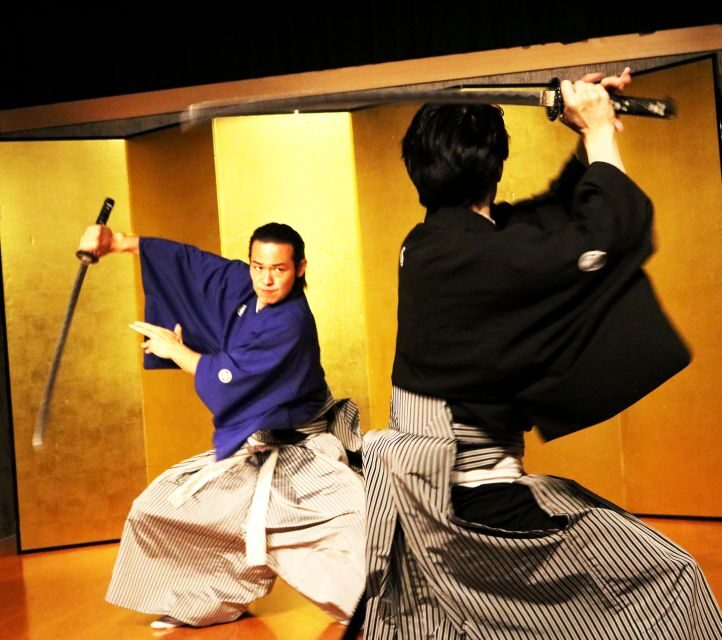
At $32 per person, this show is priced like an experience you can fit without tearing up your Kyoto budget. One-hour length matters here—you’re paying for both the stage show and the short lesson, not just a ticket for watching from the seats.
A big part of the value is the combination:
- A guided performance with narration and story context
- A chance to try holding and swinging the sword
- A photo moment after the show (since pictures aren’t allowed during)
If you compare it to “watch-only” cultural shows, the interactive finish is the difference-maker. You’re not leaving only with photos of dancers. You’re leaving with a better sense of what it means to handle the sword responsibly—because you physically feel the balance and the control required.
Is it the cheapest thing in Kyoto? No. But it competes well with other cultural activities because it gives you both understanding and participation. You get a real skill taste, not just an overview.
Who should book this (and who might want to adjust expectations)
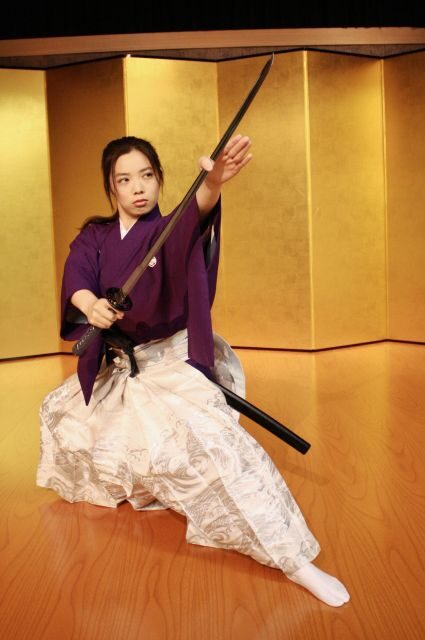
This is a great fit if you want:
- A short, concentrated cultural activity in Kyoto
- Samurai storytelling explained in English (with Japanese support)
- A chance to try holding a sword, even briefly, under guidance
- A show that blends grace, discipline, and dramatic storytelling
It’s also ideal for people who like arts that are technical but not overly academic. Kenbu can sound intimidating, but the narration keeps the experience readable.
Where expectations might need adjusting: this is not staged like a big sword battle. Several people describe it as graceful flow rather than constant fight action. If you mainly want dramatic combat spectacle—lots of impact, chaos, and choreography meant to look like movies—you may feel the emphasis is a bit more on form than action.
Also, the narration is in English and Japanese, but language comprehension can vary depending on your ear for performance speech. The good news is that the movement stays clear even when every word doesn’t land perfectly.
Practical tips that make the experience smoother
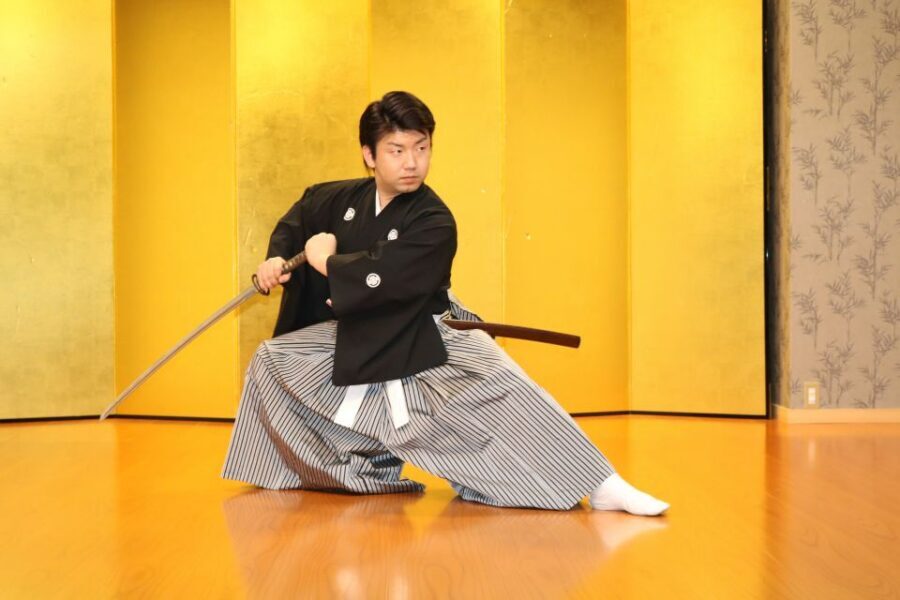
A few small things will help you enjoy it more:
- Plan your arrival window early. No waiting room means being on time matters.
- Keep your bag light. There’s no space for large luggage or travel bags.
- Skip the camera during the show itself. Photos and videos are not allowed during the performance, but there’s a dedicated photo moment afterward.
- Watch your hands during the lesson. Follow the instructor’s commands. The point is control, not speed.
- Go sober. The theater asks you not to attend under the influence of alcohol.
If you’re bringing kids, the hour length is a plus. The show is structured like short tales, and the after-lesson sword moment tends to be the part kids remember.
Should you book the Samurai Kenbu show in Kyoto?
Yes, if you want a well-paced Kenbu experience that teaches as it performs. The biggest reason to book is the combination of a staged, narrated show and a short sword lesson you can actually participate in. For $32 and one hour, it’s one of the more interactive samurai-themed activities that doesn’t require prior knowledge.
I’d skip it only if you’re specifically hunting for a full combat-style performance. If that’s your goal, look for something else in Kyoto that’s more battle-focused. Otherwise, this one is a great way to understand samurai arts through movement—and then test that discipline yourself, even for a few minutes.
FAQ
How long is the Samurai Kenbu Traditional Sword Dancing Show?
The experience lasts about 1 hour.
How much does it cost?
It costs $32 per person.
Where do I meet for the show?
You meet at Samurai Kembu Theater, Kyoto. It’s about a 4-minute walk from Subway Sanjo Keihan Station and about a 5-minute walk from Sanjo Station on the Keihan Main Line.
What languages are used during the show?
The instructor narration is in English and Japanese.
Can I take photos or videos during the performance?
No. Photos and videos are not allowed during the show. You’ll have a chance for pictures after the performance.
What’s included in the ticket price?
Included are entry to Samurai Kenbu Theater, the Kenbu show, and a short sword lesson.
Is hotel pickup or food included?
No. Hotel pickup/drop-off and food and drinks are not included.