REVIEW · KYOTO
Kyoto Private & Personalized Full-Day Tour with a Local Guide
Book on Viator →Operated by City Unscripted · Bookable on Viator
Kyoto works best when your feet set the rhythm. This private, full-day walking tour pairs a local guide with a route built around your interests, so you’re not stuck with a one-size-fits-all checklist. I like that you can shape the day in advance with a questionnaire, then adjust on the spot as the pace and priorities evolve.
Two things I really appreciate: you’ll hit major sights like Kinkaku-ji, Higashiyama, and Kiyomizu-dera in a single day, and you get street-level context on the walk between them. One thing to watch: the tour is primarily on foot, and transportation between sites isn’t included, so you’ll want to confirm expected taxi or transit costs up front.
In This Review
- Quick takeaways
- Why a private Kyoto walking day beats hopping buses
- Setting out from Starbucks Sanjo-ohashi Bridge (and why the meeting point matters)
- The modern landmark stop: rooftop gardens and big city views
- The Sugawara shrine area: plum blossoms, and a monthly market vibe
- Kinkaku-ji (Golden Pavilion): the one you plan your day around
- Higashiyama lanes: preserved streets you experience at human speed
- Kiyomizu-dera and the Otowa area: views, rituals, and that big wooden stage
- Price and logistics: is $253.22 per person worth it?
- How the route adapts to your pace (and why the guide’s style matters)
- Who should book this private Kyoto day (and who might not)
- Should you book this tour?
- FAQ
- How long is the Kyoto private walking tour?
- Is this tour mostly walking?
- Can I customize the itinerary?
- Where do we meet, and where does the tour end?
- What’s included in the price, and what isn’t?
- Is free cancellation available?
Quick takeaways
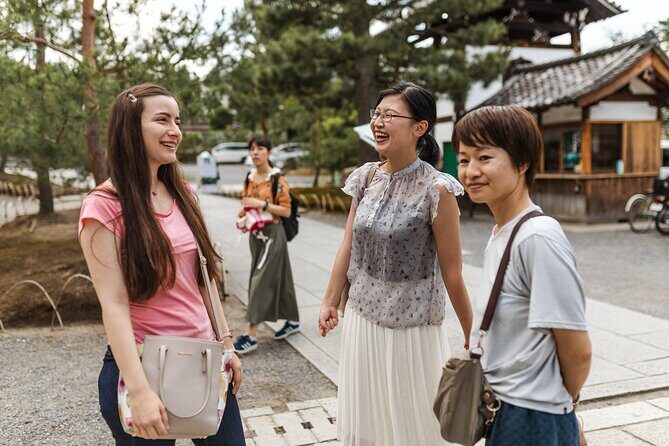
- Truly customizable route: Your pre-tour questionnaire helps your guide build a plan around your must-sees and comfort level.
- Walking gets you closer: Some streets and viewpoints are easier on foot than by bus or car.
- Top Kyoto highlights in one day: Kinkaku-ji, Higashiyama, and Kiyomizu-dera can fit—without feeling like a sprint.
- Guides with strong match skills: Names like Alex, Eko, and Juraj show up with praise for pacing, pairing interests, and handling efficient movement.
- Ask about costs early: One experience flagged surprise transportation fees, so clarify what you’ll pay for transfers.
Why a private Kyoto walking day beats hopping buses
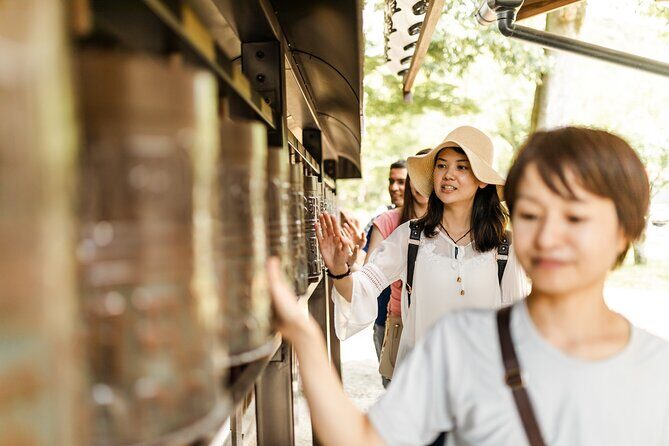
Kyoto is the kind of city where you can win big just by choosing the right pace. A bus route gets you to the monuments, but a walking route gets you the in-between stuff: the angles of old streets, the quiet corners that make you stop for photos, and the logic behind why people gather where they do.
This is a private tour, so it’s built around your group only. That matters because Kyoto’s top sights are crowded. With a flexible plan and a guide who can steer timing and movement, you’re more likely to spend time seeing rather than waiting, rerouting, or wandering.
You also get a planning layer that makes the day feel smoother. After booking, you answer a short questionnaire about interests and must-sees, and your host contacts you directly to craft the itinerary. In practice, that means you can say things like: I want temples with good photo angles, or I want more neighborhoods than museums, or I’m okay with walking uphill if the views are worth it.
You can also read our reviews of more guided tours in Kyoto
Setting out from Starbucks Sanjo-ohashi Bridge (and why the meeting point matters)
The tour starts at Starbucks Coffee – Kyoto Sanjo-ohashi Bridge in Nakagyō Ward. It’s a very “doable” meeting spot: easy to find, near public transportation, and not buried in a maze of back streets.
Since the tour ends back at the same meeting point, you’re not stuck at the far end of a day and wondering how to get home. That loop is a small thing, but it helps your brain stay calm on a full walking day.
Start times are flexible. That’s useful because Kyoto’s crowds and lighting change a lot across the day. If you can choose, I’d aim for a time that balances sightseeing energy with realistic walking stamina.
The modern landmark stop: rooftop gardens and big city views
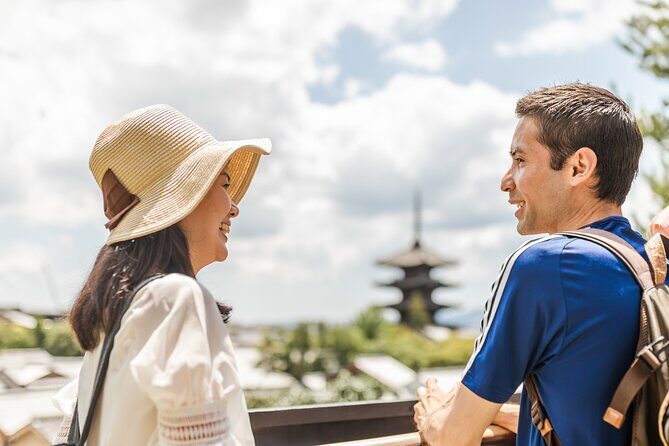
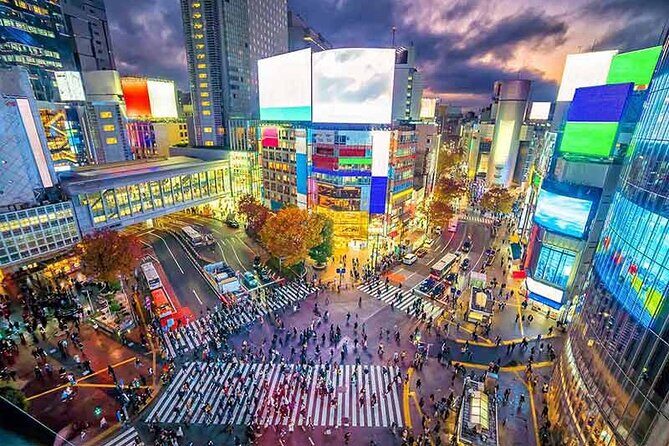
One of the early stops is a modern landmark with dramatic architecture, rooftop gardens, and panoramic city views. Even if you’re in Kyoto for temples (you are), this kind of stop is smart because it gives you orientation fast.
Here’s why it works: Kyoto can feel like a patchwork of areas with different vibes—temple district calm, shopping streets, traditional lanes, and quiet neighborhoods. A high viewpoint helps you connect the dots before you start moving through them on foot.
A potential drawback: modern stops can feel like a detour if you’re temple-obsessed. If that sounds like you, tell your guide early. The beauty of a personalized tour is that your guide can shift emphasis, pacing, and time allocation so the day still feels like it matches your travel style.
The Sugawara shrine area: plum blossoms, and a monthly market vibe
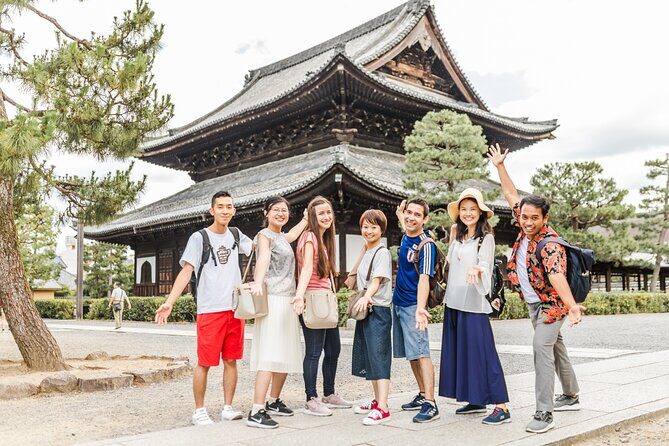
Next, the route heads north to a shrine dedicated to Sugawara no Michizane. It’s well known for plum blossoms in late winter and for a lively monthly market.
This stop is valuable because it’s not just about a single building. It’s about atmosphere and local rhythm. A market day changes the feel immediately—more everyday energy, more movement, more reasons to slow down and observe. Even if you’re not there in peak blossom season, the shrine connection still adds a layer beyond the typical guidebook “temple stop.”
Two tips for getting the most out of this part of the day:
- Ask your guide what time of day you’ll see the most market activity or the best walking flow.
- If you care about history, be direct about what you want to hear. One downside from a negative experience was that the guide spent lots of time on personal conversation while covering less temple context. A simple request—focus more on the story of the shrine and what visitors should notice—can help a lot.
Kinkaku-ji (Golden Pavilion): the one you plan your day around
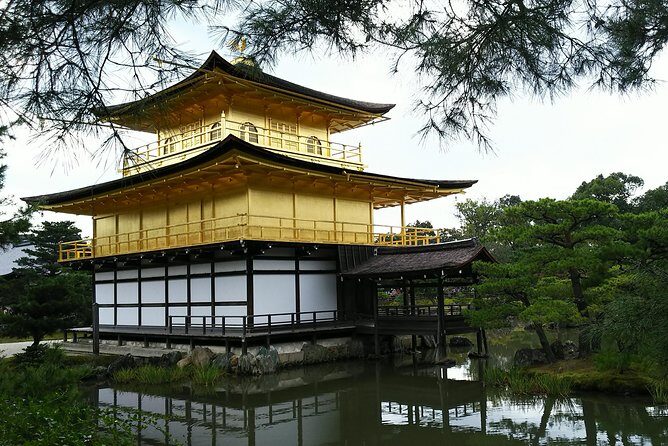
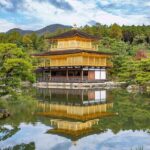
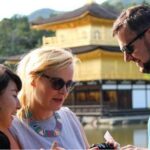
No Kyoto first-timer itinerary is complete without Kinkaku-ji Temple. This stop is described as the iconic sight with a gleaming gold-leaf exterior, and it’s a UNESCO World Heritage Site. It originally began as a shogun’s villa, then became a Zen temple in the 1400s.
What you’ll want to do here is not just look. Look twice.
1) First, take in the silhouette and the gold leaf effect from the main viewing angles.
2) Then look at the details around it—how the pavilion sits in its setting and how the approach paths shape the view.
A walking day tour helps because it’s easier to re-position than you’d think. Crowds can block sight lines quickly, and a guide can often help you manage that without turning your visit into a back-and-forth headache.
Time consideration: Kinkaku-ji is popular. On a full-day private tour, you’ll usually get more control than a standard group bus, but you should still expect peak-time crowds. Build your day around the assumption that you’ll want a little patience and some flexibility.
You can also read our reviews of more private tours in Kyoto
Higashiyama lanes: preserved streets you experience at human speed
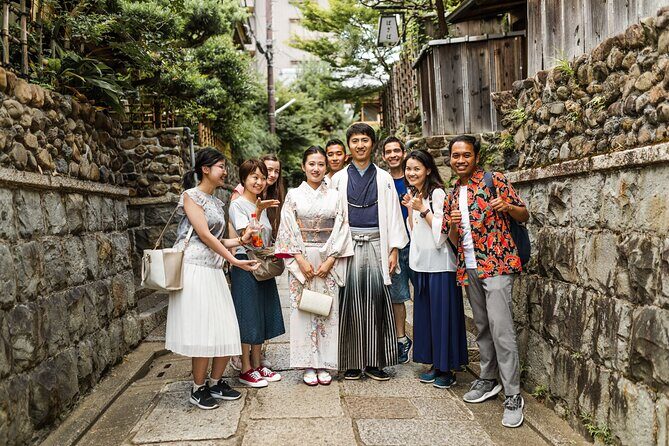
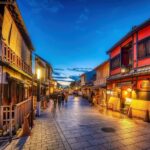
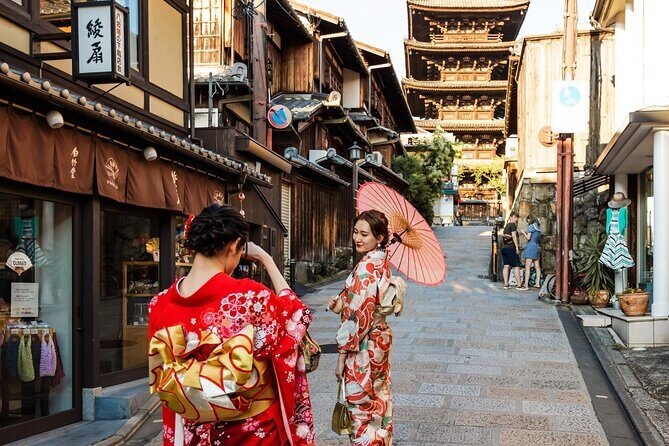
After Kinkaku-ji, the route continues south toward Higashiyama—famous for its atmospheric lanes and beautifully preserved, sloping streets lined with wooden townhouses and traditional merchant shops. You’ll also find cafés and restaurants serving Kyoto specialties.
This is the part of the day where walking earns its keep. On foot, you catch the feel of the street patterns: the way turns reveal viewpoints, the way shopfronts and side streets invite slow wandering, and the way you can spot small details you’d miss from a bus window.
Two practical reasons I love this section:
- You can slow down without feeling like you’re “wasting time.” The street itself is the attraction.
- You can connect the dots between the morning temple landmark energy and the evening temple/ceremony feel that Kyoto does so well.
Drawback to keep in mind: Higashiyama can be tight and busy depending on season and time of day. If your group prefers wide sidewalks and lots of room, you might want to ask your guide to steer you toward less congested lanes. The personalized format is helpful here.
Kiyomizu-dera and the Otowa area: views, rituals, and that big wooden stage
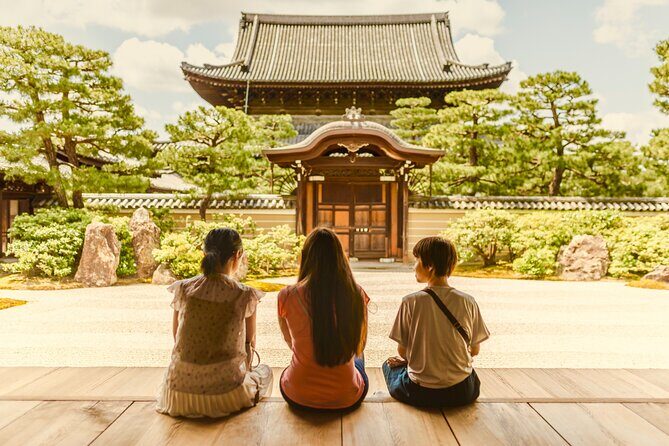
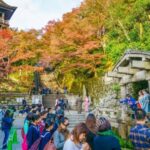
The day ends at Kiyomizu-dera, one of Japan’s celebrated temples. It’s famous for a massive wooden stage with sweeping city views, and it’s especially beautiful during autumn foliage season. Don’t miss Otowa.
This stop tends to feel like the emotional peak of a Kyoto day—part because of the stage and views, and part because Kiyomizu-dera rewards being present. The site has a “move at your own speed” quality: you can pause, look, and take in the scale without needing a scripted sequence.
The main planning trick for Kiyomizu-dera is timing your view moment. With crowds, you want a window where you can actually see the city spread out, not just the backs of other people. Since your route is flexible and walking-based, your guide should be able to help you time your moment on the stage.
Also: this is a stop where you’ll enjoy having context. If you’re interested in what to notice (symbolic meaning, architecture cues, what locals pay attention to), tell your guide before you arrive. If you’re not super into explanations, you can also ask for “quick highlights” and more time to simply experience the place.
Price and logistics: is $253.22 per person worth it?
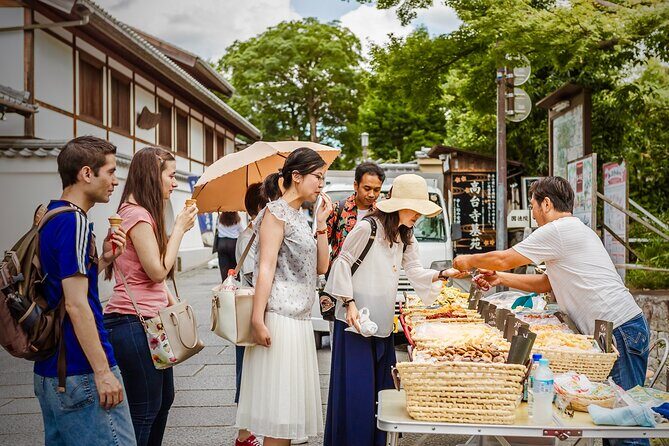
At $253.22 per person for an ~8-hour private tour, you’re paying for more than movement from A to B. You’re paying for a guide to plan around your interests, keep the day efficient, and help you understand what you’re looking at while you walk.
What you should factor in:
- Food, drinks, and attraction tickets are not included.
- Transportation is not included. Since it’s primarily a walking tour, public transport or local taxis may be used between sites, and extra costs may apply.
- Gratuities are optional.
So the real value equation is this: if you’d otherwise spend hours building a route yourself, dealing with transfers, and losing time to crowding, this can be a smart shortcut—especially for a first visit or a time-crunched trip.
One caution from a negative experience: a guide asked for extra transportation fees that were not clearly communicated as part of the plan, which created stress. I can’t predict what your day will cost, but you can control the risk:
- After booking, message your host and ask what transfer costs you should expect if taxis or transit are used.
- If you’re staying at a hotel far from the meeting point, ask whether the plan assumes you meet at the Starbucks location or whether additional transport is needed to get you there.
- If you want more temple storytelling and less casual conversation, say so early.
How the route adapts to your pace (and why the guide’s style matters)
The itinerary described here hits major Kyoto anchors: a modern viewpoint stop, a Sugawara shrine area, Kinkaku-ji, Higashiyama, and Kiyomizu-dera. But the key word isn’t those sites—it’s personalization.
This tour is designed around your interests and pace, and it’s built after you share preferences. In other words, if you want more time in Higashiyama lanes and less time on a viewpoint, your guide can shift focus. If you want a history-heavy day, you can request that emphasis.
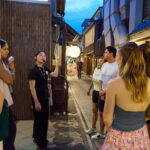
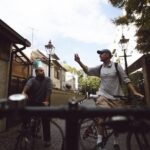
Guide styles seem to vary. Names like Alex and Eko come up with praise for quick interest-matching and efficient movement via public transit. Vanessa and Juraj are mentioned for bringing meaning to temples and tailoring the tour tempo. That pattern matters: you’re not just buying access to famous places—you’re buying how the day is paced, narrated, and photographed.
Who should book this private Kyoto day (and who might not)
This is a strong fit if:
- You’re in Kyoto for the first time and want a sane way to see top sights in one day.
- You hate the feeling of getting separated from your plan and ending up in the wrong neighborhood at the wrong time.
- Your group likes walking and can handle some urban stairs and sloped streets.
- You want local tips, not just facts.
It might be less ideal if:
- You want a fully “included” day with no extra transportation spending beyond the tour price.
- Your ideal Kyoto day is mostly indoor museums or long, sit-down breaks.
- You’re very sensitive to extra talking time that doesn’t connect directly to the sites. In that case, you’ll want to set expectations early so the guide knows what you want to hear.
Should you book this tour?
If you want a first-day Kyoto orientation that still hits the icons—Kinkaku-ji, Higashiyama, and Kiyomizu-dera—this is a promising option because the plan is flexible and walking-focused. I’d especially recommend it if you’re traveling with limited time and you’d rather pay for efficiency than gamble on self-guided navigation.
The one “before you commit” step: confirm expected transfer costs and how the day handles getting between neighborhoods. If you do that, you’re likely to end up with a smoother, more personal Kyoto day than you’d get from a fixed group tour.
FAQ
How long is the Kyoto private walking tour?
The tour runs for about 8 hours.
Is this tour mostly walking?
Yes. It’s a private walking experience, and no private vehicle is included. Public transportation or local taxis may be used to transfer between sites, and those costs are not included.
Can I customize the itinerary?
Yes. You complete a pre-tour questionnaire about your interests and must-sees, and your host communicates with you to tailor a route around your preferences and pace.
Where do we meet, and where does the tour end?
The tour starts at Starbucks Coffee – Kyoto Sanjo-ohashi Bridge (Nakagyō Ward) and ends back at the same meeting point.
What’s included in the price, and what isn’t?
Included: a private, personalized 8-hour walking experience with a local guide, flexible start times, a pre-tour questionnaire, and direct communication with the host. Not included: food, drinks, tickets to attractions, transportation, and gratuities.
Is free cancellation available?
Yes. You can cancel up to 24 hours in advance for a full refund.