REVIEW · KYOTO
Kyoto Arashiyama & Sagano Bamboo Private Tour with Government-Licensed Guide
Book on Viator →Operated by Japan Guide Agency · Bookable on Viator
One day in Arashiyama can feel like a whole storybook. This private Kyoto tour pairs a government-licensed English-speaking guide with a walking route through Arashiyama and Sagano’s signature temples, gardens, and nature scenes. You get to ask questions as you go, instead of Googling in the middle of your day.
I love two things right away: you’re not just seeing the famous spots, you’re getting context that makes the temples and gardens click. And because it’s private, the route feels pace-friendly, with time for pauses, snacks, and calmer side stops when the main areas get crowded.
One thing to plan for: most entrance fees aren’t included, and it’s a lot of walking with slopes and steps. If rain hits or it’s hot, you’ll want good shoes and a water plan.
In This Review
- Key points to know before you go
- Why this Arashiyama & Sagano tour works better than DIY
- Meeting up and walking logistics: on foot means you’ll feel the area
- Arashiyama first: Togetsukyo Bridge and bamboo forest timing
- Togetsukyo Bridge: iconic views with an easy win
- Bamboo Forest Street: why a light wind makes a difference
- Tenryuji and Okochi Sanso: UNESCO gardens and a star’s retreat
- Tenryu-ji: one of Kyoto’s five great Zen temples
- Okochi Sanso: what you see is still worth it
- Shugakuin Imperial Villa and Katsura Imperial Villa: garden rules, better results
- Shugakuin Imperial Villa: traditional imperial-style gardens
- Katsura Imperial Villa: why it needs a guided tour
- Sagano temples on hillside paths: Jojakkoji, Nisonin, Gioji, and more
- Adashino Nenbutsu-ji and Otagi Nenbutsu-ji: stone statues and emotional impact
- Kurama and Yoshiminedera: a mountain-temple contrast to Arashiyama
- Kurama-dera and Kurama Onsen: temple plus hot spring planning
- Yoshiminedera: a view-over-Kyoto temple on the western mountains
- Daikaku-ji and the imperial story: calm, pond, and historic events
- Kibune River and the Kifune Shrine water-ritual vibe
- What you should budget for: where the money really goes
- Who this tour suits best (and who should choose differently)
- Should you book this Kyoto Arashiyama & Sagano private tour?
- FAQ
- How long is the Kyoto Arashiyama & Sagano private tour?
- Is this tour private?
- What’s included in the price?
- Are entrance fees included?
- Is transportation or a private vehicle included?
- Can I choose which sites to visit?
- Does the tour allow service animals?
- What happens if weather is poor?
Key points to know before you go
- Private, government-licensed English guide who can answer questions on the spot
- 3–4 customizable sites chosen from a set list, letting you shape the day around your interests
- Arashiyama bamboo + Togetsukyo Bridge are built into the flow, not tacked on
- Imperial villa gardens (Shugakuin and Katsura) are timed and rules-based, so having a guide helps
- More than the bamboo forest: you’ll also hit hillside temple areas and mountain-temple towns
- Tickets and on-site costs vary by stop, so budget for admissions and any optional baths
Why this Arashiyama & Sagano tour works better than DIY
Arashiyama and Sagano are famous for a reason. You’ll get the bamboo imagery people dream about, the iconic bridge views, and the kind of temple-garden scenery Kyoto does better than almost anywhere else. But the smart part of this tour is that you’re not treating it like a checklist.
With a guide, you get your bearings fast. You also get cultural and historical context that helps you understand what you’re seeing: why a garden looks the way it does, why a temple sits where it sits, and what role imperial families played in shaping these spaces.
And because it’s private, your day can flex. If you’re traveling with kids, you’ll want the sights that keep their attention. If you’re traveling at a slower pace due to steps, you can ask for gentler timing. In prior experiences with guides such as Ken, Tomo, Kiyoshi, Kazuo Sumi, Satoko, and Shoji, the common theme is clear: they work to match the day to the group, not the other way around.
You can also read our reviews of more guided tours in Kyoto

Meeting up and walking logistics: on foot means you’ll feel the area
This is a private walking tour with pickup offered, but the pick up/drop off is handled on foot (so you’ll be connecting with the guide in Kyoto and then moving through the sightseeing zone).
That matters because Arashiyama and Sagano are not just “points on a map.” You experience them through streets, river edges, hillside steps, and garden paths. When you’re walking with guidance, you waste less time figuring out the route and more time enjoying what’s in front of you.
You’ll also want to go in with realistic expectations about effort. It’s not a sit-and-look tour. Plan for a solid 6 hours of moving around, including stairs and uneven ground at temple stops. If you visit in rain, paths can get slippery, so wear shoes with grip and bring a small umbrella or rain layer.
Arashiyama first: Togetsukyo Bridge and bamboo forest timing
Most days, the heart of the experience is Arashiyama. You’ll start in the district, which has been a destination since the Heian period, when nobles came to enjoy the scenery. That long timeline is why the area feels layered: a modern tourist zone, but built over older patterns of how people used the river, mountains, and gardens.
Togetsukyo Bridge: iconic views with an easy win
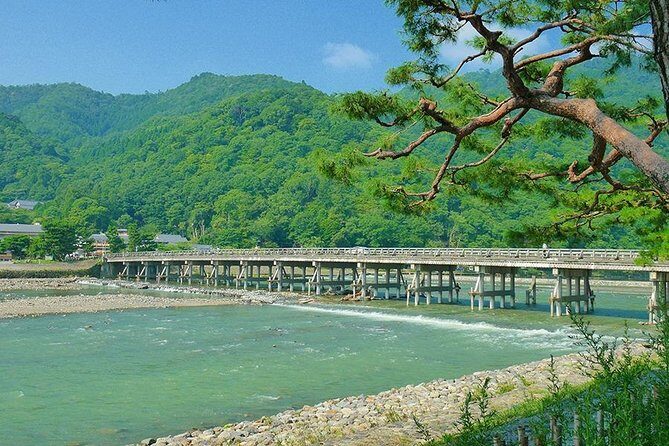
Togetsukyo Bridge is the central landmark for a reason. It’s closely connected to the look of the mountains behind it, and you’ll also find a riverside park near the bridge with cherry trees. The bridge itself has been rebuilt, including a reconstruction in the 1930s, so it’s both historic and still very much part of everyday life in Arashiyama.
Good news: this is one of the simplest wins for your day. Admission is free, and it’s an ideal “reset” stop where you can take photos, breathe, and orient yourself before you walk deeper into the bamboo lanes and temple gardens.
Bamboo Forest Street: why a light wind makes a difference
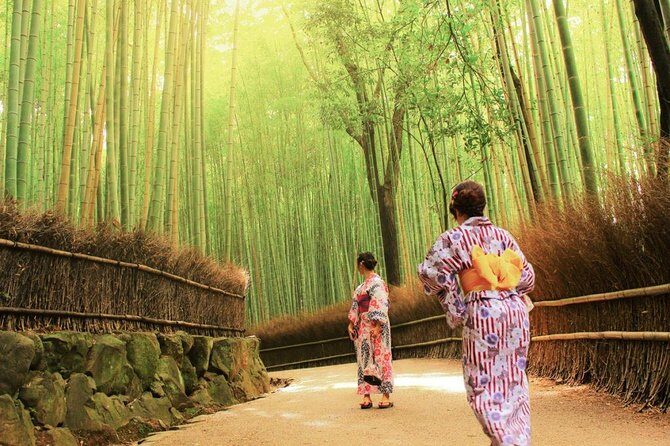
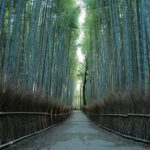
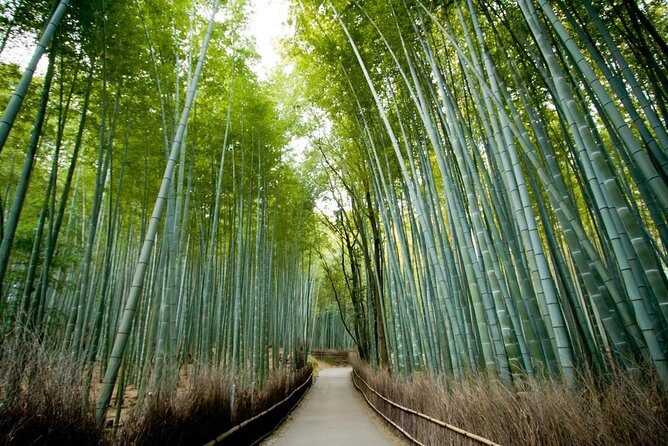
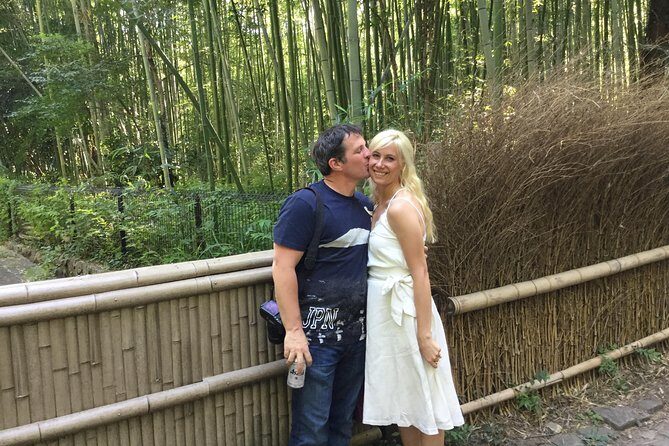
Next up is the bamboo forest street, where paths run through bamboo groves. The bamboo is tall, rhythmic, and photogenic, but the real charm is how it moves. With a light breeze, the stalks sway and the sound changes under your steps. It’s a small detail, but it’s one of the reasons this stop can feel magical even when it’s busy.
Historically, bamboo wasn’t just decoration. Local workshops have used it for products like baskets, cups, boxes, and mats for centuries. A guide can connect those practical uses to what you’re seeing, which makes the bamboo feel more grounded than just a photo backdrop.
You can also read our reviews of more private tours in Kyoto


Tenryuji and Okochi Sanso: UNESCO gardens and a star’s retreat
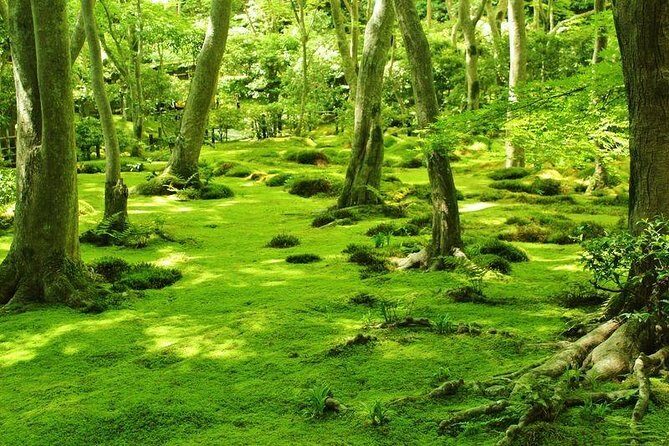
After bamboo, the tour shifts toward temple grounds and garden design, where Arashiyama earns its UNESCO reputation.
Tenryu-ji: one of Kyoto’s five great Zen temples
Tenryu-ji Temple is among Kyoto’s most important Zen temples and is also a UNESCO World Heritage Site. It’s known for impressively designed gardens and walking paths, not just temple buildings.
This stop is especially good if you want something quieter than the bamboo lanes. The gardens invite slow movement, and your guide can point out how the layout supports a calm, contemplative feel—even during peak visiting times.
Okochi Sanso: what you see is still worth it
Okochi Sanso Garden is the former villa of actor Okochi Denjiro. You can view buildings only from the outside, and that changes the rhythm of the visit. Instead of rushing for indoor rooms, you focus on gates, tea-house style structures, and the way the gardens sit behind the bamboo area.
If you like atmosphere, this is a pleasant contrast: bamboo in the foreground, a more secluded garden experience behind it.
Shugakuin Imperial Villa and Katsura Imperial Villa: garden rules, better results
If gardens are your thing, these imperial-villa stops are a major reason to choose a guided tour.
Shugakuin Imperial Villa: traditional imperial-style gardens
Shugakuin Imperial Villa (managed by the Imperial Household Agency) was built in the 17th century and includes Upper, Middle, and Lower villa areas. It’s a set of spaces rather than a single courtyard—each with garden structure and traditional imperial-style buildings.
You’ll also learn the story of how it connects to earlier religious sites on the same land. That kind of explanation makes the visit feel less like wandering and more like understanding why the gardens are arranged the way they are.
Katsura Imperial Villa: why it needs a guided tour
Katsura Imperial Villa is where rules matter. Visiting requires joining a tour, and the garden route follows a circular walking path around a central pond. Palace buildings are generally viewable only from the outside, and photography is limited to designated spots. English tours are available.
That’s exactly the kind of situation where having a guide can improve your day. You won’t waste time figuring out what’s allowed or where to stand, and you’ll keep moving at the pace the garden experience is designed for.
Sagano temples on hillside paths: Jojakkoji, Nisonin, Gioji, and more
Sagano has a different mood than central Arashiyama. Instead of one famous “lane,” you move through temple hillsides, where the approach paths, moss, and small structures create a sense of quiet.
On this part of the walk, you’ll visit several hillside temples, often including stops like:
- Jojakkoji Temple with maple trees and moss beside stair paths and viewpoints over Kyoto
- Nisonin Temple, also on a hillside, with overhanging trees that shape your approach
- Gioji Temple, known for a moss garden and an entrance gate with thatched-roof style details
These visits tend to be quick but meaningful: the guide helps you notice what matters in the setting—the way moss appears in specific spots, how trees frame view lines, and why certain areas are built for stillness.
Adashino Nenbutsu-ji and Otagi Nenbutsu-ji: stone statues and emotional impact
Two of the most memorable stops in the temple cluster are Adashino Nenbutsu-ji Temple and Otagi Nenbutsu-ji Temple.
At Adashino, you’ll find hundreds of stone statues placed for the souls of the dead. At Otagi, the grounds hold 1,200 rakan statues, each with a different expression. Many of the Otagi statues were created in the 1980s and early 1990s, which adds an unexpected modern layer to what feels like an ancient place.
If you’re the kind of person who likes to connect symbolism with place, these two will likely be the emotional anchor of your day.
Kurama and Yoshiminedera: a mountain-temple contrast to Arashiyama
Not every stop is polished into tourist flow. Some are genuinely more rural and out of the main crowds.
Kurama-dera and Kurama Onsen: temple plus hot spring planning
Kurama-dera sits in the northern mountains area, less than an hour from Kyoto’s center. It’s known for the temple and the nearby Kurama Onsen.
Kurama Onsen is a ryokan hot spring with both outdoor and indoor baths. Staying guests can use the baths for free, while daytrippers can pay for access (2500 yen for all baths or 1000 yen for just the outdoor bath/rotemburo). Your guide can help you decide if the timing makes sense for your day—especially if you’re trying to keep the full 6-hour route feeling enjoyable instead of exhausting.
Yoshiminedera: a view-over-Kyoto temple on the western mountains
Yoshiminedera is another hillside temple stop, in the Tendai sect. It was established in 1029 as a personal retreat, was destroyed during the Onin War, and rebuilt in 1621.
What you’ll likely remember here is the distribution up the mountain side and the way the temple grounds look out toward Kyoto. It offers a nice break from “temple courtyard” expectations.
Daikaku-ji and the imperial story: calm, pond, and historic events
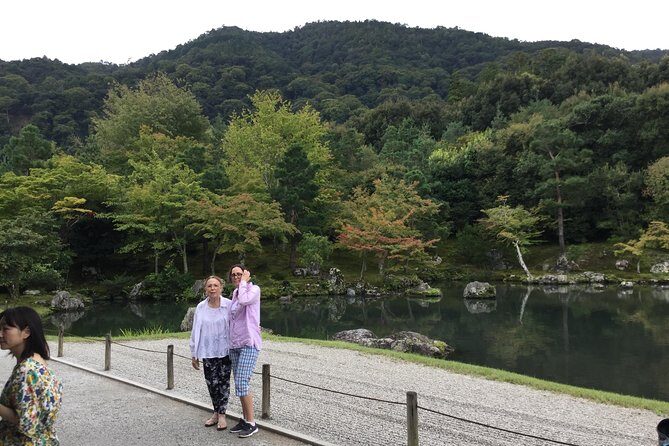
If you want a temple visit that feels tied to major historical turns, Daikaku-ji fits the bill.
Daikaku-ji was originally an imperial detached palace of Emperor Saga in the early 800s. After his death, it became a temple and grew into a high-ranked Shingon Buddhist institution. The temple has also hosted peace talks that reunited the Northern and Southern Imperial Courts after decades of conflict.
Practically, it also offers a visual centerpiece: a large pond and a pagoda near the main temple buildings. That combination—big emotional history plus a calm setting—makes it a strong choice if you want more than just scenic walking.
Kibune River and the Kifune Shrine water-ritual vibe
Near the end of the day, the tour can shift toward the mountain valley feeling around Kibune, a small town built around Kifune Shrine. Here, the landscape becomes more forested and valley-like, with a slower sense of space.
Kifune Shrine is dedicated to water and rain. You can also get a specific type of fortune (omikuji) written on paper slips that you dip into water so the message shows. There’s also the inner sanctum (Okunomiya) further up the valley with a boat stone tied to legend.
If you like traditions that feel hands-on—rather than just signage and photos—this stop adds a memorable personal touch.
What you should budget for: where the money really goes
The tour price is $157.82 per person for a 6-hour private experience. That can sound like a lot until you translate it into what you get: government-licensed English guidance, route planning, and cultural interpretation while you walk between multiple temples and garden areas.
But the key cost note is this: entrance fees aren’t included for your sights, and most of the places on the route list admissions as not included. Some areas have free entry (like Togetsukyo Bridge), but many do not. If you want to keep your day smooth, bring cash or a card for temple and garden entries.
Also remember optional add-ons can show up depending on your choices. For example, Kurama Onsen has day-use fees for baths, and Katsura Imperial Villa requires joining a tour with specific viewing and photo rules.
Who this tour suits best (and who should choose differently)
This tour is a great match if you want:
- A private guide so you can ask questions while standing in front of the real thing
- Garden and temple depth without doing research for every stop
- A day that mixes iconic views (bamboo and bridge) with hillside quiet (moss, statues, mountain air)
- Flexibility to choose 3–4 sites from the route list so the day fits your interests
It might not be the best fit if you hate walking, dislike stairs, or only want one or two major highlights. Since it’s designed as a full day, you’ll get more value by leaning into the movement.
Should you book this Kyoto Arashiyama & Sagano private tour?
Yes, if you want more than bamboo photos and you like the idea of a licensed guide shaping your route. The strongest argument is value-for-effort: multiple high-impact sights across Arashiyama and Sagano, explained as you go, in a private format where your pace matters.
If you’re going in with the right expectations—comfortable shoes, an admission budget, and a plan for heat or rain—you’ll likely feel like you spent your time well. If you’re unsure, message your guide in advance about what matters most (gardens, temples, viewpoints, or calmer side streets), because this tour is built around choosing your set of stops.
FAQ
How long is the Kyoto Arashiyama & Sagano private tour?
It runs for about 6 hours.
Is this tour private?
Yes. Only your group will participate.
What’s included in the price?
You get a licensed local English-speaking guide, a customizable walking tour of 3–4 sites from the What to expect list, and a Kyoto meet-up. Pickup and drop-off are handled on foot.
Are entrance fees included?
No. Entrance fees and admission tickets for the sights are not included for your group. Some spots are free, like Togetsukyo Bridge, but most are not.
Is transportation or a private vehicle included?
No. Transportation fees aren’t included, and there is no private vehicle provided.
Can I choose which sites to visit?
Yes. The tour is customizable, and you can choose your 3–4 sites from the provided What to expect list.
Does the tour allow service animals?
Yes, service animals are allowed.
What happens if weather is poor?
This experience requires good weather. If it’s canceled due to poor weather, you’ll be offered a different date or a full refund.