REVIEW · KYOTO
Kyoto: Private Tour with Local Licensed Guide
Book on GetYourGuide →Operated by JGA Inc. · Bookable on GetYourGuide
A Kyoto day goes best with a human map. This private walking tour is built around a nationally licensed guide who helps you move smartly between Kyoto’s biggest icons and the streets locals actually use. I like that you can customize the route using a menu of sights, instead of getting stuck on a one-size-fits-all circuit.
My favorite part is how smoothly the day can run: a guide handles the logic, the story, and the pacing, so you can focus on the places themselves. You’ll also get the kind of context that turns a photo stop into something you understand, from shrine rituals to temple design details. The only real drawback: it’s a walking day, and entrance fees and some between-site transport costs are on you (though the guide can help you plan).
In This Review
- Key things that make this tour work
- A licensed Kyoto guide turns landmarks into meaning
- Choosing 4, 6, or 8 hours: how to match Kyoto to your energy
- Fushimi Inari Shrine: torii gates with a story you can feel
- Kiyomizu-dera and the walk into Higashiyama and Gion
- Golden Pavilion (Kinkaku-ji) and Kyoto’s temple design lessons
- Nijo Castle and other “power” sites: history you can walk through
- Nishiki Market and Pontocho: the food-and-street side of Kyoto
- Arashiyama and the Kyoto river-temple combo (when you have the time)
- Transportation realities: walking first, then public transit or taxis
- What the guide experience feels like in real life
- Value check: is $106 per person worth it?
- Who should book this private Kyoto walking tour
- Should you book this private Kyoto walking tour?
- FAQ
- What duration options are available?
- Is this tour private?
- What language is the guide?
- Where do you meet for pickup?
- How many places can we see?
- Can we customize which sites we visit?
- Is food or drink included?
- Are entrance fees included?
- Is a private vehicle included?
- What if it rains?
Key things that make this tour work
- Nationally licensed guide-interpreter: you get cultural and historical context, not just directions
- 4, 6, or 8-hour options: choose how many stops you want from the sight list
- Fushimi Inari Torii Corridor and Kyoto temple icons: major must-sees plus explanatory stops that make them click
- Gion + Higashiyama strolling: shops, viewpoints, and dinner recommendations tied to where you are that day
- Guide flexibility for comfort and crowds: routes can shift to keep the day enjoyable
- Private group up to 7: more breathing room than group buses, with real conversation time
A licensed Kyoto guide turns landmarks into meaning
Kyoto looks simple on a map. In real life, it’s a puzzle of neighborhoods, elevation, shrine rules, and timing. That’s exactly why the licensed guide matters. This isn’t just someone pointing at temples. Guides on this tour hold the National Tour Guide-Interpreter certification, which signals a deep command of Japanese culture and history, plus the ability to explain it clearly in English or Japanese.
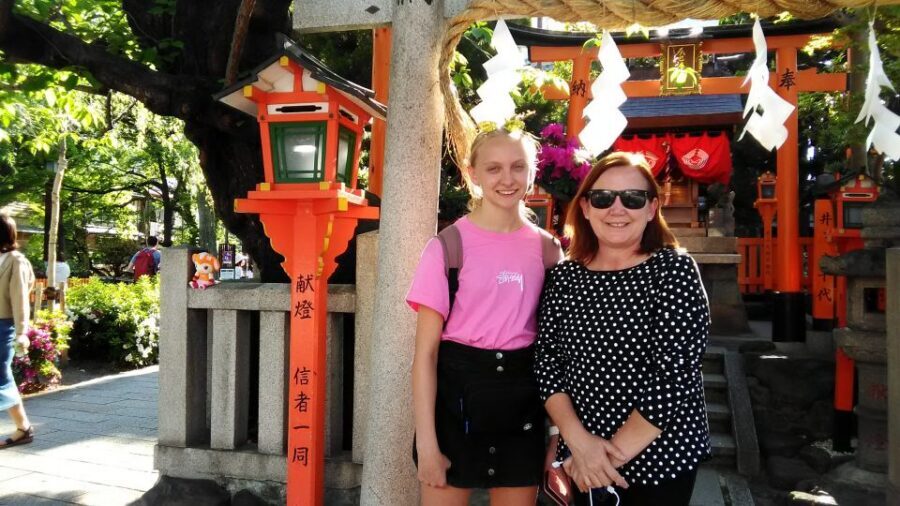
You’ll feel the difference right away in how stops are introduced. For example, at shrines, guides often connect the ritual side to the architecture. In reviews, guides like Michi were praised for explaining how to properly pray and what things like fortune readings mean. That kind of guidance helps you participate respectfully without guessing.
The other big win is navigation. A lot of Kyoto’s best places are spread out, and the route between them can change depending on crowds, weather, and your interests. Even when the tour is mainly on foot, you’re not doing it blindly. The guide plans the day’s flow and transitions so you spend less time lost and more time looking around.
You can also read our reviews of more guided tours in Kyoto

Choosing 4, 6, or 8 hours: how to match Kyoto to your energy
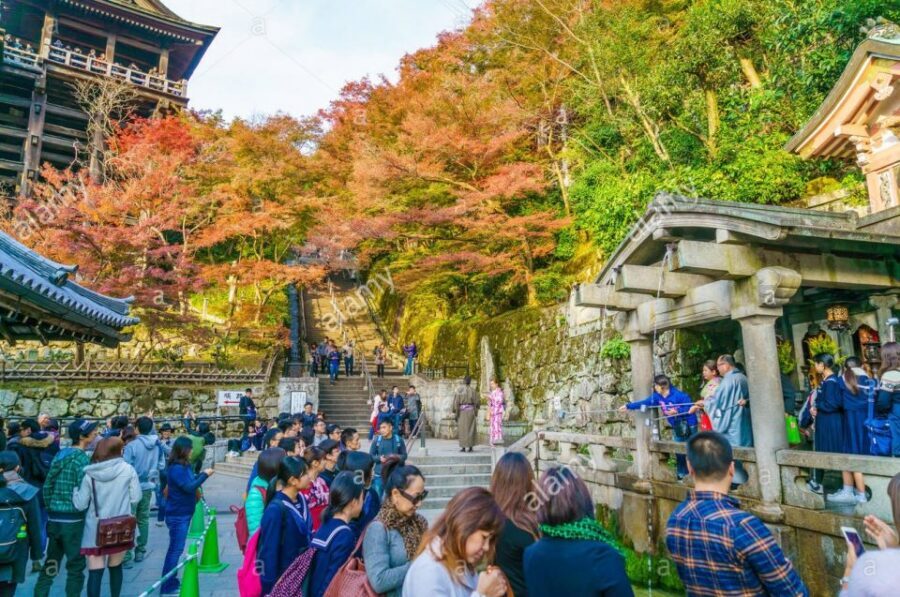
You’ll pick a duration from 4 to 8 hours, and then select how many stops you want. The tour is designed so you’re not overstuffed. Here’s the practical pacing expectation:
- 4-hour tour: about 2-3 places
- 6-hour tour: about 3-4 places
- 8-hour tour: about 4-6 places
This structure is smart. Kyoto’s famous sites are famous for a reason, but each one can take real time—especially if you want photos, questions, and a moment to just watch the place work. With a 4-hour option, you’re basically choosing your priorities: maybe a top shrine plus one major temple plus a neighborhood walk. With 6-8 hours, you can add a second temple zone (or a district like Gion/Nishiki) without the day turning into a sprint.
I’d use your duration like a mini strategy game:
- If it’s your first day in Kyoto, I’d aim for one “big shrine” stop and one “big temple” stop, then let the guide lead a neighborhood walk.
- If you already know Kyoto basics and want depth, go longer so you can include an additional area like Arashiyama or another temple cluster.
Also, remember this is rain or shine. A good guide keeps the schedule workable when weather changes, and reviews repeatedly mention guides adapting quickly for conditions.
Fushimi Inari Shrine: torii gates with a story you can feel
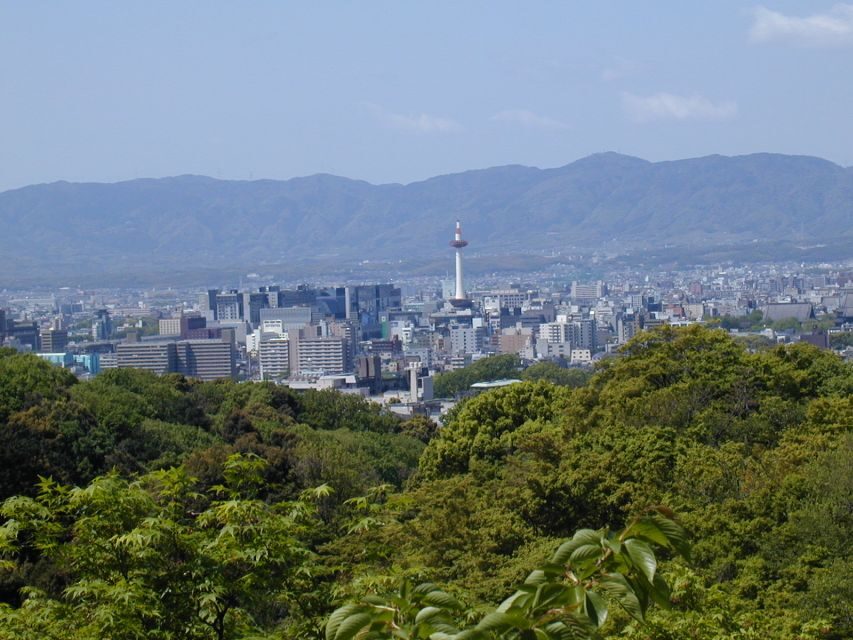
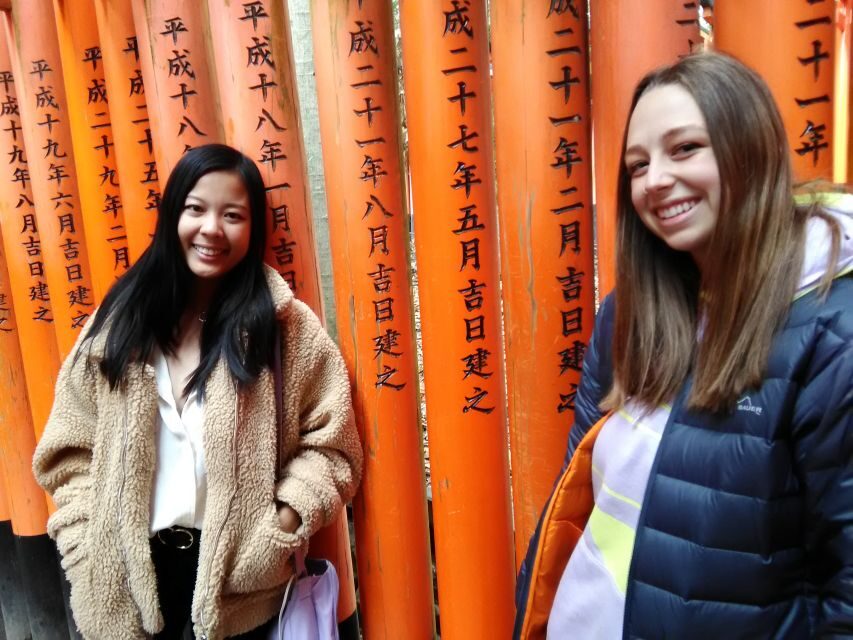
Fushimi Inari-taisha is the stop that makes people understand why Kyoto is different. The famous part is the Torii Gate Corridor, where you walk through repeating red gates and feel the scale grow. It can get packed, so your timing and pacing matter.
What makes the experience go beyond sightseeing is what you learn while you’re walking. The tour description frames the corridors as a symbolic continuing gate from the current world to the world of the dead inhabited by the gods. That gives the whole walk a sense of meaning, not just scenery.
You may also hear about pop-culture ties. The tour includes a stop connected to the filming of Memoirs of a Geisha. The description notes a colorful crimson atmosphere, which fits the look of Fushimi Inari perfectly. Even if you don’t care about movies, it’s a fun way to see how Kyoto’s visual style shows up in art and storytelling.
Practical tip: wear shoes you don’t mind for uneven stone and long paths. If you’re sensitive to crowds, ask your guide about choosing a time that keeps you comfortable. In reviews, guides were praised for routing adjustments to avoid the densest crush.
Kiyomizu-dera and the walk into Higashiyama and Gion
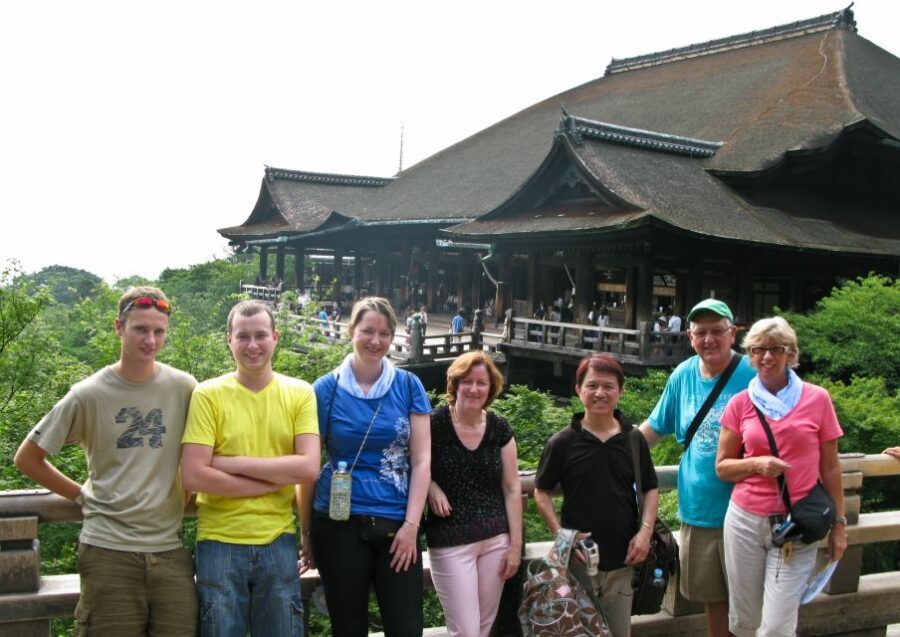
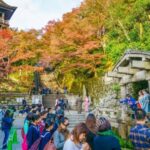
Kiyomizu-dera is the temple where the viewpoints do some of the talking. You enter an ancient complex and get access to a large veranda with panoramic city views. On a clear day, it’s the kind of view that makes you look twice; even in haze, the layout and sightlines help you understand how Kyoto’s hills and districts sit together.
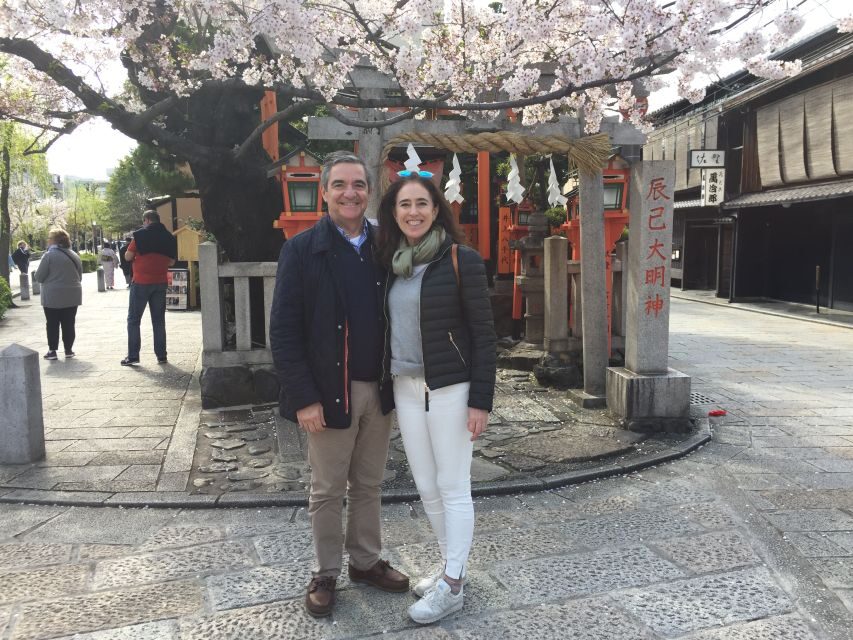
From there, the tour often turns into a neighborhood walk—exactly what you want after a big temple stop. The description specifically calls out walking from the temple along the path to Gion, where you’ll find Kyoto-style shops and souvenir stalls. This is more than shopping time. It’s how you see Kyoto’s personality in smaller doses: narrow streets, local crafts, and the feel of daily life around tourist landmarks.
Then comes Gion’s food and evening rhythm. The tour includes room for a snack or dinner in Gion, with your guide giving dining recommendations. In reviews, guides helped guests land great meals at the right moment, and one guide (Yasu) was singled out for ending the day with a personal ramen recommendation that people rated among the best in Japan.
How I’d plan this in your own day:
- If you choose Kiyomizu-dera, give yourself time after. That means don’t schedule too many heavy temples back-to-back.
- Use your guide’s shop and food knowledge to avoid the obvious tourist traps. You’ll still get the fun souvenirs, just with better odds of liking what you buy.
Golden Pavilion (Kinkaku-ji) and Kyoto’s temple design lessons
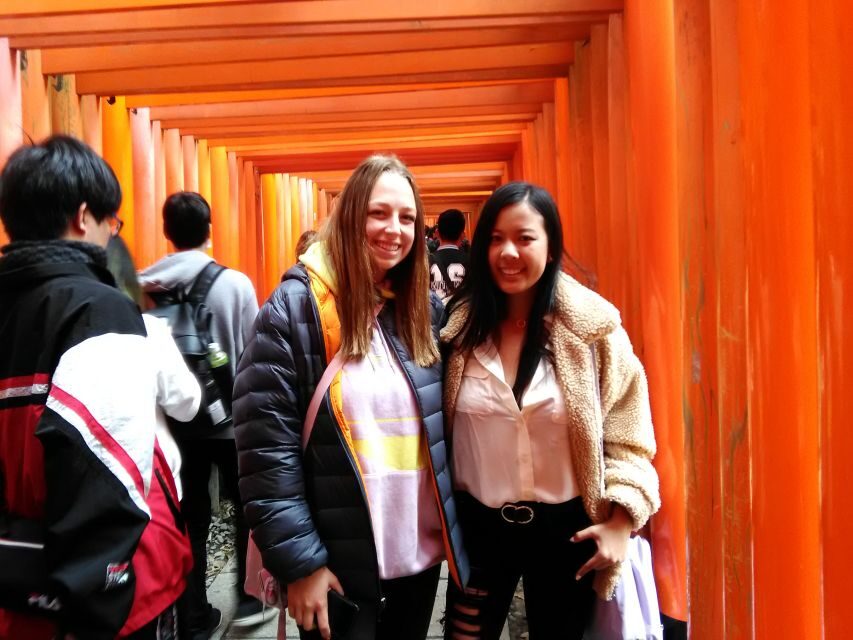
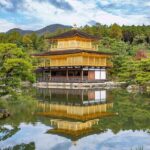
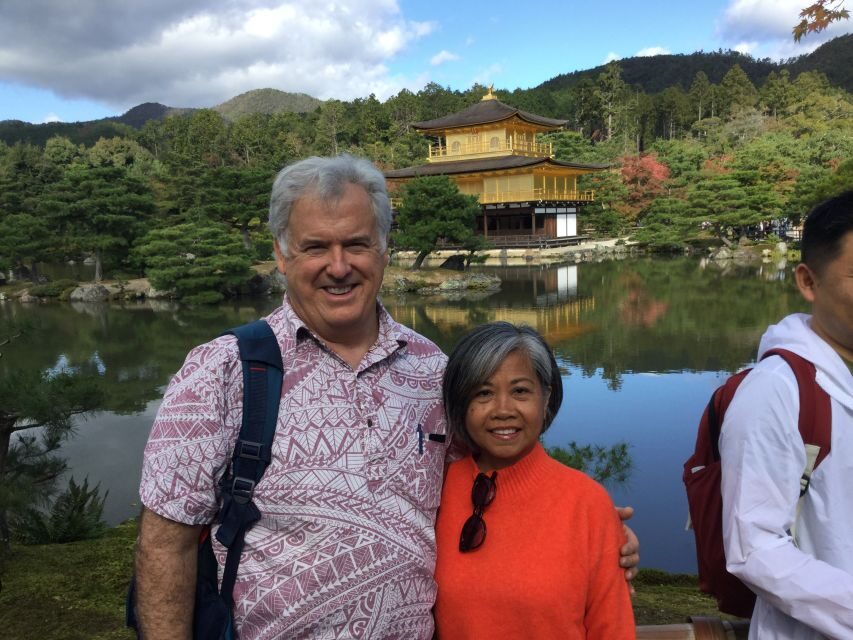
If you want one icon that delivers instantly, it’s Kinkaku-ji, also called the Temple of the Golden Pavilion. The tour experience here focuses on the structure and the way it frames the mountains in the background.
A key detail: the name comes from the golden color of its reliquary hall. That’s the kind of fact you want when you’re standing there, because it explains what you’re seeing instead of leaving you to guess. The temple is often described as simple yet bold, and the idea is that Kyoto’s great visuals are frequently built on restraint. A good guide helps you notice the design choices instead of only the surface effect.
If you have extra time, you can also include other temple icons from the list, like Ginkaku-ji (Silver Pavilion). Even if you don’t go there, Kinkaku-ji often acts like an anchor stop. It gives you something concrete—shape, material, setting—so the rest of the day lands more clearly.
In reviews, guides were praised for moving efficiently between sights and giving well-prepared explanations at each one. That matters at Kinkaku-ji, because it’s easy to arrive, snap photos, and miss the point. With a guide, you slow down at the right moment.
You can also read our reviews of more private tours in Kyoto


Nijo Castle and other “power” sites: history you can walk through
Not every Kyoto highlight is a photogenic temple. Some are about governance, power, and how ruling families expressed authority. That’s where stops like Nijo Castle and Kyoto Imperial Palace (both available on the list) help.
Nijo Castle gives you a sense of how castles functioned as living political spaces. Your guide can connect the architecture and layout to the role it played. Kyoto Imperial Palace offers another angle: the imperial presence and the broader institutional side of the city.
If you’re choosing only a few stops, I wouldn’t force a castle on everyone. But if you like history that’s tangible—places you can physically walk through—these are strong picks. Several reviews mention guides who answered detailed questions and layered in modern Japanese culture alongside the old sites. That combo works well when you include something like Nijo.
Nishiki Market and Pontocho: the food-and-street side of Kyoto
A private walking tour isn’t just about monuments. Kyoto has a strong everyday core, and two of the best ways to experience that are Nishiki Market and Pontocho.
Nishiki Market is a shopping and snack district, and it’s one of those places where you’ll see the city’s food culture in action—vendors, stalls, and local products. The tour description includes it as an option, and it’s a smart move when you have 6-8 hours and want a break from temples without feeling like you’re doing nothing.
Pontocho is different. It’s more about the alley atmosphere. Even if you only spend a short time there, it helps you understand why Gion’s reputation isn’t just about architecture. It’s also about the streets and the evening pace.
Practical note: food and drinks are not included, and entrance fees are not included. That’s normal for walking tours. The advantage is that your guide can help you choose what fits the moment—what looks good, what’s quick, and what matches your tastes.
Arashiyama and the Kyoto river-temple combo (when you have the time)
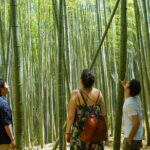
If you book longer hours, you get to add Kyoto’s western highlights. The list includes big hitters like Arashiyama, plus options such as Tenryu-ji, Togetsukyo Bridge, and bamboo areas like Bamboo Forest Street. It also lists garden and temple options like Okochi Sanso Garden.
Arashiyama can be dramatic: a bridge, a river vibe, temple scenery, and the famous bamboo walk. The challenge is crowding and timing. That’s where having a guide helps again. Reviews mention guides helping families and adjusting plans, including routing changes to reduce stress.
In practical terms, if you’re going to Arashiyama, I’d treat it as a “zone day.” Pair it with one other nearby element, not with too many scattered destinations. The tour is flexible, but your legs are the limiting factor.
Transportation realities: walking first, then public transit or taxis
This is described as a walking day tour with no private vehicle included. That doesn’t mean you never move. It means you mostly walk, with the option of using public transportation or taxis between sites if needed.
Two details matter for planning:
- Your guide will pick you up on foot if you’re within a reasonable distance, otherwise you’ll meet at your accommodation or train station. The guide will wait in the lobby or at the station you request, about 10 minutes before the pickup time.
- You should have Japanese Yen for transportation costs during the tour.
Private vehicle can be arranged, but it requires booking 5 days in advance and is limited to 7 passengers max. If you have mobility needs, wheelchair access is listed, but I’d still plan to talk with your guide about pace and route choices early.
Comfort advice that sounds boring but works: bring layers. Kyoto mornings and evenings can change fast, and you’ll be moving between shaded streets and open temple areas.
What the guide experience feels like in real life
The strongest theme in the reviews is how guides make the day feel planned without feeling rigid. People praise guides for:
- building complex logistics smoothly
- speaking excellent English
- staying flexible when routes need to change
- keeping good pacing so they can see a lot without rushing
Specific examples stand out. Kazuo was praised for organizing an entire day and handling transit. Rie and Naoki were praised for delivering local insight and interesting explanations. Akira, Haru, Shoji, and others were praised for being organized, engaging, and careful with timing.
There are also practical “human touches” that matter:
- Yuri was praised for bringing a hand-made book with written history for each place, plus Japanese notes.
- Michi was praised for sharing photo-based meeting guidance ahead of time and for answering questions while keeping timing.
- Several guides were praised for adapting to the group’s comfort level, including families and seniors.
That last part is important. Kyoto days can be tiring. The tour structure gives you a chance to keep the experience enjoyable, especially when you tell your guide what you want the day to feel like.
Value check: is $106 per person worth it?
At $106 per person for a 4-8 hour private guided walk, the value comes from two places.
First, you’re paying for time saved and stress reduced. Kyoto is not hard to reach, but it is hard to connect efficiently across neighborhoods and landmarks while also understanding what you’re seeing. A guide who can manage routes and explain sites turns a “see Kyoto” day into a “get Kyoto” day.
Second, you’re paying for personalization. You choose 2-3 places for a 4-hour visit, 3-4 for 6 hours, and 4-6 for 8 hours. That means you’re not paying for time you don’t care about. If you’re the type who hates wasting hours on random stops, this is a good fit.
What could reduce value is if your group wants to spend most of the time shopping or eating with no interest in history or structure. The tour is designed around guided walking, site interpretation, and route planning. It’s best when you treat it as a “Kyoto orientation with depth,” not a casual stroll.
Who should book this private Kyoto walking tour
This tour is ideal if you:
- want to hit Kyoto’s top highlights without building an itinerary from scratch
- care about explanations of shrines and temples, not just photos
- like asking questions during a walk
- want a private day with a small group (up to 7)
- prefer customizing from a sight list based on your interests
It’s also a solid choice for first-timers because it can give you a mental map of Kyoto’s neighborhoods quickly. For repeat visitors, it works when you go beyond the obvious, asking for less crowded pacing or adding a second temple zone.
If you’re traveling with very limited mobility, you can still consider it because wheelchair accessibility is listed. Just plan to be honest with your guide about your limits so they can adjust the route and pace.
Should you book this private Kyoto walking tour?
Yes, if you want a guided Kyoto day that’s efficient and meaningful. The biggest selling points are the licensed local guide and the ability to shape the day around the exact places you want, from Fushimi Inari to Kinkaku-ji to Gion and beyond.
I’d say book it especially if you have limited time and you don’t want to guess your way through Kyoto’s distances, crowd levels, and cultural rules. Bring good walking shoes, budget for entrance fees and local transport, and use your customization choices to avoid overload.
If that sounds like your style, this is one of the easier ways to make a Kyoto “highlight day” feel like more than a checklist.
FAQ
What duration options are available?
You can choose a 4, 6, or 8-hour private guided walking tour, depending on availability.
Is this tour private?
Yes. It’s a private group, with a maximum number of passengers listed as 7.
What language is the guide?
English and Japanese are available.
Where do you meet for pickup?
Your guide can pick you up on foot if you’re within a reasonable distance. Otherwise, you meet in the hotel lobby or at the train station you request, with the guide waiting about 10 minutes before the scheduled time.
How many places can we see?
The guide helps tailor the route, with typical averages noted as 2-3 places for a 4-hour tour, 3-4 for a 6-hour tour, and 4-6 for an 8-hour tour.
Can we customize which sites we visit?
Yes. You can inform your guide after booking of the sites you want from the provided list, and your itinerary can be customized to fit your interests.
Is food or drink included?
No. Food and drinks are not included. The guide can recommend places in areas like Gion.
Are entrance fees included?
No. Entrance fees are not included.
Is a private vehicle included?
No. This is a walking day tour without a private vehicle. Public transportation or local taxis may be used between sites, and transportation costs can be discussed with the guide after reservation. Private vehicles require booking 5 days in advance.
What if it rains?
The tour takes place rain or shine.