Nighttime in Gion turns stories into real scenes.
This small-group Kyoto Fun walk (max 10) mixes classic sights with geisha district context, so you’re not just looking at alleys—you’re understanding why they matter. I especially like the pacing (about two hours) and the way each stop has a clear theme, from geisha quarters to shrine lights. One thing to keep in mind: it’s designed for good weather, and Kyoto’s cobbles mean you’ll want proper shoes.
You’ll start with an easy landmark by Yasaka Shrine, then move through night-lit streets where geisha culture is part of the atmosphere—not a museum exhibit. I also like that the tour is built around short, focused moments (photo points, shrine prayer time, and an evening walk) rather than long, tiring detours. The main drawback is simple: if you’re hoping for a guaranteed geisha sighting, this is still a walk in a living neighborhood, so the best you can count on is the opportunity and the context, not a sure thing.
In This Review
- Key points before you go
- Why a Gion Night Walk Feels Different Than Daytime Wandering
- The Two-Hour Plan: A Simple Route with Clear Themes
- Stop 1: Miyagawacho Kaburenjo and the World Behind the Arts
- A Quick Zen Buddhism Stop to Slow Things Down
- Yasakanoto at Nightfall: Where Your Photos Actually Mean Something
- Wandering a Preserved District Stroll: The Kyoto That Isn’t a Theme Park
- Yasaka Shrine Lantern Light and a Prayer for Good Fortune
- Gion Shirakawa: Past Clubs, High-End Dining, and the Street-Level Reality
- Meeting Point, Timing, and What to Wear on Cobblestones
- Price and Value: About $33 for a Guided Night Story
- Will You Spot a Geisha (or Maiko)? How to Think About the Odds
- When This Tour Is the Right Choice
- Should You Book the Gion Night Walking Tour with Kyoto Fun?
- FAQ
- How long is the Gion Night Walking Tour?
- How many people are in the group?
- Where do I meet for the tour?
- Is the admission included for the stops?
- Do I need to bring a paper ticket?
- What ages can join this tour?
- Is the tour good for people who don’t speak Japanese?
- Is the tour dependent on weather?
- Can I cancel if my plans change?
- Are service animals allowed?
Key points before you go
- Max 10 people means quieter streets and better conversation with your guide
- Two hours, night pace keeps it manageable even when it’s chilly and dark
- Lantern-lit Yasaka Shrine plus a Shinto moment to pray for good fortune
- Free admissions are included for the listed stops (no surprise ticket fees)
- Meet by Tsuruha Drug near Gionmachi Minamigawa, with a 7-11 nearby as a helpful reference point
Why a Gion Night Walk Feels Different Than Daytime Wandering
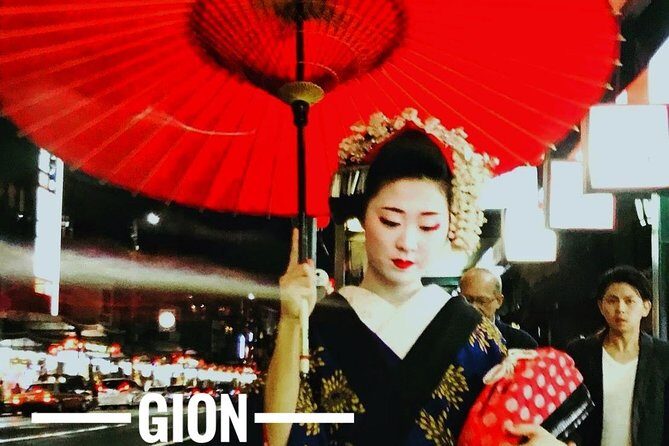
Daytime Gion is pretty. Nighttime Gion is specific.
As the sun goes down, you’re walking on cobblestones under lantern glow, and the district’s details suddenly look arranged on purpose. That’s where this tour scores: it gives you a frame for what you’re seeing. You’re guided through the geisha quarters, pointed toward major night-view moments, and taught the basics of the faith and customs around the areas you pass.
There’s also a practical reason to go at night. During the day, you can end up doing what I call sightseeing autopilot: photo, walk, photo, move on. At night, the streets feel slower. Even in just two hours, it’s easier to pay attention.
And yes, this is a geisha-focused experience. The goal is to help you notice and understand the world of geisha in Kyoto, including the way their district looks and functions after dark.
You can also read our reviews of more walking tours in Kyoto


The Two-Hour Plan: A Simple Route with Clear Themes
The schedule is built from short stops tied to culture and setting. You’re moving steadily through Higashiyama, with enough time at each place to absorb it and take photos.
Here’s the rhythm you can expect:
- A first stop tied to the geisha quarters and the arts behind them
- A quick temple-ground moment explaining Zen Buddhism
- A dedicated viewpoint stop at Yasakanoto, timed for nightfall
- A preserved-district street stroll
- Yasaka Shrine at lantern light, including a prayer moment
- A final walk through Gion Shirakawa, where you’ll pass modern clubs and higher-end restaurants on the way
Most tours feel like a checklist. This one tries to feel like a guided story you can walk through.
Stop 1: Miyagawacho Kaburenjo and the World Behind the Arts
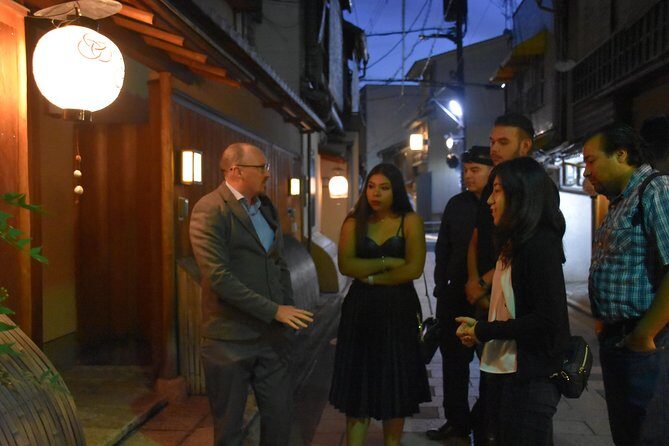
Your first major moment is at Miyagawacho Kaburenjo. You’ll spend about 30 minutes here, and the admission listed for this stop is free.
This is where the tour’s geisha focus really starts to make sense. You’re not only walking through the area—you’re getting explanations about the masters of the arts and the secretive, behind-the-doors side of geisha life. That matters because Gion can look like a set from a distance. Once you learn what the district represents and why certain spaces are kept private, the whole place reads differently.
This stop is also a good “group alignment” moment. With a max group size of 10, it’s typically the part where the guide sets expectations: how to look, what to notice, and what you’ll learn later at Yasaka Shrine and around Gion Shirakawa.
A Quick Zen Buddhism Stop to Slow Things Down
Between the first geisha-quarter segment and the next view stop, the tour includes a temple-ground walk with a brief introduction to Zen Buddhism.
The time for this part isn’t clearly timed in the details you have, but the intent is easy to understand: it’s a short mental reset. You catch your breath, learn a little context, and then head back out into the lit streets with a calmer pace.
If you like Kyoto because it isn’t only about buildings but also about beliefs and everyday practice, this moment is worth paying attention to. You’ll notice how the tour keeps switching gears—geisha culture, then Zen basics, then shrine faith—so you don’t burn out on just one theme.
Yasakanoto at Nightfall: Where Your Photos Actually Mean Something
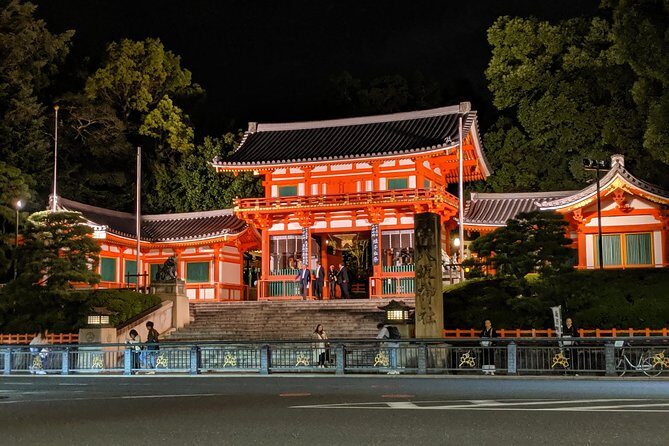
Next up is Yasakanoto, with about 15 minutes here and free admission listed for this stop.
This is the viewpoint stop: one of the most remarkable views in Kyoto, and especially magical at nightfall. It’s not just about scenery. The guide’s framing helps you understand what you’re looking at and where to stand for the best angle.
Practical tip: bring a phone strap or keep a firm grip. Night photos in Kyoto can mean you’re leaning for a shot, and the area is dark enough that footing matters. You’ll want to take your time here because the walk continues right afterward.
You can also read our reviews of more evening experiences in Kyoto


Wandering a Preserved District Stroll: The Kyoto That Isn’t a Theme Park
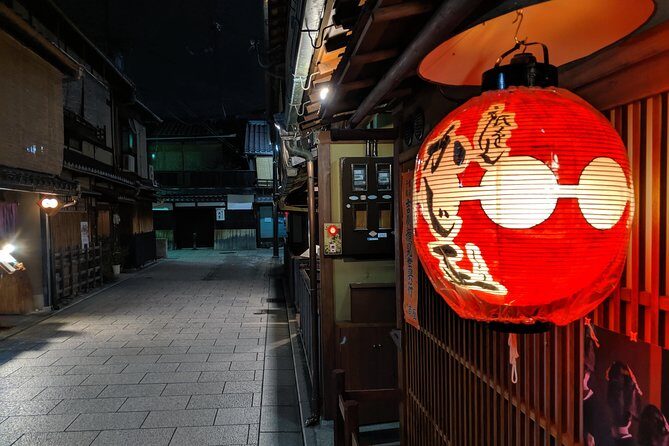
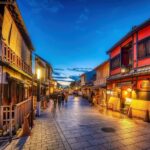
After the viewpoint, you’ll have another brief stop to wander beautiful streets of a preserved district of Kyoto.
This is one of those parts where the value is in the guide’s “how to look” coaching. Kyoto’s preserved areas are full of textures: signs, gates, narrow angles, and the sense that the street design is part of how the culture works. When you learn what to pay attention to, the preserved-street walk stops feeling like walking in a background scene.
This segment is also a nice buffer before the more spiritual stop at Yasaka Shrine. You’ll have time to enjoy the streets rather than rushing straight from one big landmark to the next.
Yasaka Shrine Lantern Light and a Prayer for Good Fortune
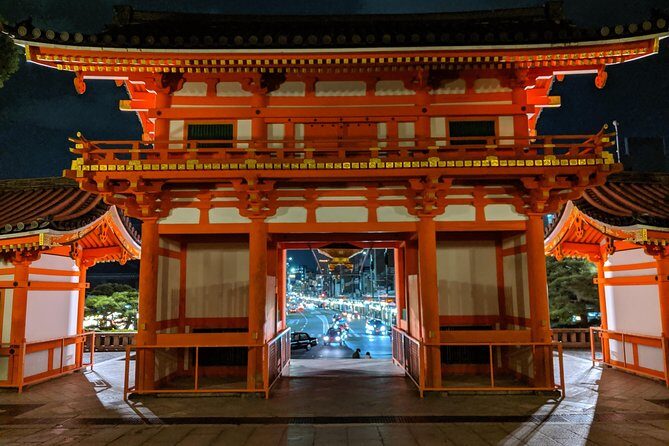
Yasaka Shrine is one of Kyoto’s most famous evenings, and this stop is planned for lantern light. You’ll spend about 20 minutes here.
What you’ll get:
- A guide explaining Shinto faith in a way that fits what you’re seeing
- A moment to make a prayer for good fortune
This is where the tour shifts from geisha-district atmosphere into something more universal: people showing up at a shrine at night, drawn in by lights and tradition. Even if your Japanese is limited, the act of praying helps you understand the place as something lived in, not just admired.
If you’ve never prayed at a Shinto shrine before, pay attention to what your guide tells you. Small steps and correct form can make the whole experience feel respectful rather than awkward.
Gion Shirakawa: Past Clubs, High-End Dining, and the Street-Level Reality
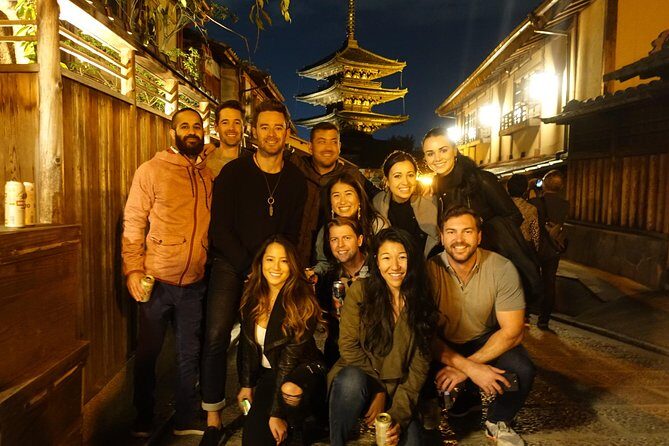
The final walk heads into Gion Shirakawa. You’ll spend about 15 minutes here, with free admission listed for the stop.
This part is especially useful if you’ve only seen Gion in cinematic terms. The tour passes modern clubs and high-end restaurants on the way. That contrast is part of why the district feels so Kyoto. It’s not frozen in time. It’s living, changing, and still connected to its arts.
You’ll walk through one of the most beautiful parts of Gion, and the atmosphere at night is the payoff: lantern glow, old street lines, and the sense that you’re seeing the district the way locals experience it.
Also, because this is near the end, you’ll likely be more tuned in by now. You’ll notice details faster, and you’ll know what to ask when your guide is answering questions about geisha culture.
Meeting Point, Timing, and What to Wear on Cobblestones
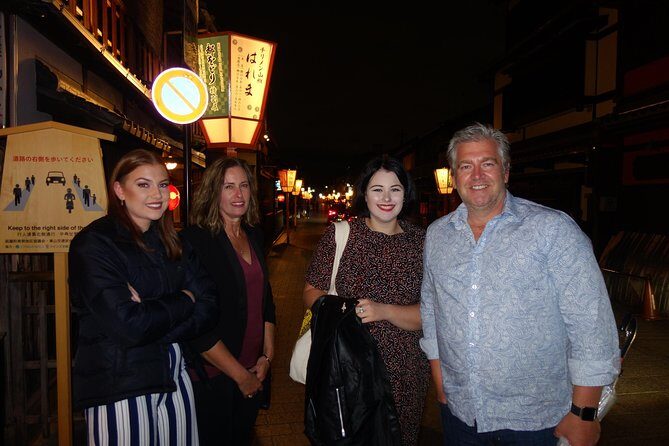
Your meeting point is at Tsuruha Drug Yasaka Shrine Store, 543番地 Gionmachi Minamigawa, Higashiyama Ward, Kyoto, 605-0074. The tour notes that there’s an easy reference point by 7-11 near Miyagawasuji, which can help you orient fast if you’re arriving by subway or walking through Higashiyama.
The tour ends back at the meeting point area, so you’re not left guessing where your evening deposit of knowledge takes you next.
What to wear:
- Comfortable walking shoes with decent grip
- Warm layers, especially if you’re doing this in colder months (Kyoto evenings can bite)
- A small camera bag or secure phone setup for night photos
This tour fits a wide range: ages 10–77. That’s usually a sign the pace is realistic, with stops that allow breaks rather than nonstop trudging.
Service animals are allowed, and the route is near public transportation, which makes it easier to fit into a busy evening plan.
Price and Value: About $33 for a Guided Night Story
At $33.03 per person, you’re paying for:
- A guided walk designed specifically around geisha culture and the Gion district
- A small group experience (max 10)
- Stops that include free admission for the listed attractions
- A mobile ticket for easier check-in
The value here isn’t just the money. It’s that you’re buying time with a guide who can explain what you’re seeing—at each stop—while you’re still standing in front of it. That turns a walk into understanding.
If you’re comparing this to bigger group tours in Kyoto, the difference is attention. With a max of 10, you’re more likely to get your questions answered and stay engaged rather than getting swept along like a human backpack.
One caution on value math: if weather is rough and the tour needs to adjust, that can affect your schedule. This experience does require good weather, so plan an alternate night in your itinerary if you can.
Will You Spot a Geisha (or Maiko)? How to Think About the Odds
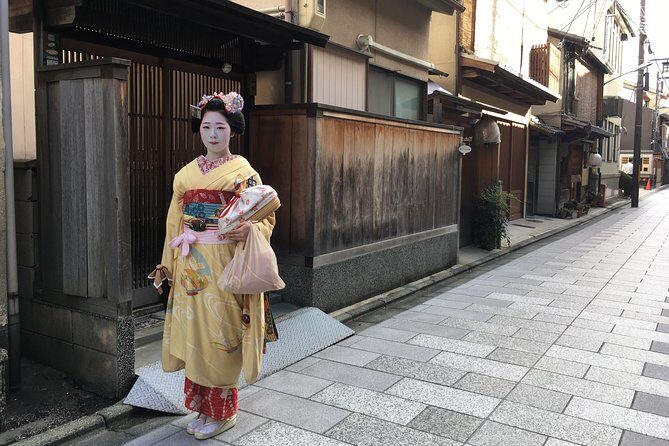
This tour is designed so you can see real-life geisha walking along alleyways in Gion. That’s the whole point of going when the streets are lit.
Still, it’s important to be honest with yourself: you’re walking through a living neighborhood. You can’t control who is out, where they are headed, or whether they pass you at the exact moment you’re looking.
So I think of this tour in two ways:
- You’re not guaranteed a sighting, but you are placed in the right areas with the right timing for the chance
- The guide helps you notice what matters, which makes any sighting more meaningful (and helps you recognize what you’re seeing)
If your main goal is a geisha sighting for photos, I’d still book this because the route is built for that purpose. Just don’t build your whole evening around one moment that must happen.
When This Tour Is the Right Choice
This is a strong fit if you:
- Want a guided night experience in Gion rather than a self-guided stroll
- Like culture explanations paired directly with what you see
- Prefer small-group travel so you can ask questions
- Are interested in the basics of geisha culture plus religion context at Yasaka Shrine and a Zen stop
It’s also a good choice for first-time Kyoto visitors who feel overwhelmed by how many neighborhoods exist. In two hours, you cover a concentrated slice of Higashiyama that ties together geisha quarters, shrine tradition, and Gion Shirakawa atmosphere.
Should You Book the Gion Night Walking Tour with Kyoto Fun?
I’d book it if you want your Gion time to feel guided, not accidental. The small-group size, the clear stop themes, and the fact that the listed admissions are free make it a solid use of about two hours at night.
Skip it or rethink it if:
- You dislike walking on uneven cobblestones
- You need a guaranteed, predictable lineup of major nightlife scenes
- Weather in your dates looks questionable and you don’t have flexibility
If your goal is to understand Gion at night—lantern lights, geisha district context, shrine faith—you’ll be glad you went.
FAQ
How long is the Gion Night Walking Tour?
Plan for about 2 hours.
How many people are in the group?
The tour is limited to a maximum of 10 travelers.
Where do I meet for the tour?
Meet at Tsuruha Drug Yasaka Shrine Store, 543番地 Gionmachi Minamigawa, Higashiyama Ward, Kyoto, 605-0074, Japan. A 7-11 near Miyagawasuji is also noted as an easy reference point.
Is the admission included for the stops?
The listed stops include admission ticket free.
Do I need to bring a paper ticket?
No. The tour uses a mobile ticket.
What ages can join this tour?
It’s suitable for ages 10 to 77.
Is the tour good for people who don’t speak Japanese?
It’s designed so most travelers can participate, and you’ll be guided in English.
Is the tour dependent on weather?
Yes. It requires good weather, and if it’s canceled due to poor weather you’ll be offered a different date or a full refund.
Can I cancel if my plans change?
Yes. You can cancel for a full refund up to 24 hours in advance. If you cancel less than 24 hours before the start time, the amount paid is not refunded.
Are service animals allowed?
Yes, service animals are allowed.