REVIEW · KYOTO
Kyoto: Beginner Knife Sharpening & Handle Fitting Workshop
Book on GetYourGuide →Operated by Japanese knife shop HIRAI · Bookable on GetYourGuide
Kyoto is famous for temples. This workshop is famous for results. In just 2 hours at HIRAI, you practice knife sharpening and then fit a handle, all with clear English support and a take-home knife you can actually use every day.
I love the hands-on structure (you don’t just watch), and I especially like that the standard options are strong: you choose a real Santoku, Deba, or Yanagi for the lesson and leave with a knife that matches the skill you learned.
One possible drawback: the handle-fitting uses fire, so you’ll want clothes you don’t mind getting a bit smoky.
Here are the key reasons this workshop is worth squeezing into your Kyoto schedule:
- Two core skills in one sitting: sharpening plus handle fitting
- Small group limit (3 participants) for real feedback, not generic tips
- Pick your knife type: Santoku, Deba, or Yanagi
- Fire + magnolia handle fitting gives you a souvenir that feels like craftsmanship
- Optional engraving in advance (up to 4 letters) so you can personalize the knife
In This Review
- Knife skills in 2 hours: what you’re really getting at HIRAI
- Choosing your blade: Santoku, Deba, or Yanagi (and why that matters)
- Sharpening on a wet stone: the technique you can repeat
- Handle fitting with fire and magnola wood: the part that surprises people
- Engraving and taking your knife home: your souvenir becomes gear
- The workshop rhythm: history, practice, then finishing touches
- English support, small group energy, and how to prepare
- Price and value: what $161 buys in real-world terms
- Who this is best for (and who should skip it)
- Final call: should you book this Kyoto knife workshop?
- FAQ
- What is the duration of the Kyoto knife sharpening and handle fitting workshop?
- Where is the meeting point?
- What knives can I choose for the workshop?
- Can I take the knife home after the workshop?
- Is English support available?
- Do I need to bring a whetstone?
- Is engraving available, and how many characters can I request?
- Is handle fitting done with fire?
Knife skills in 2 hours: what you’re really getting at HIRAI
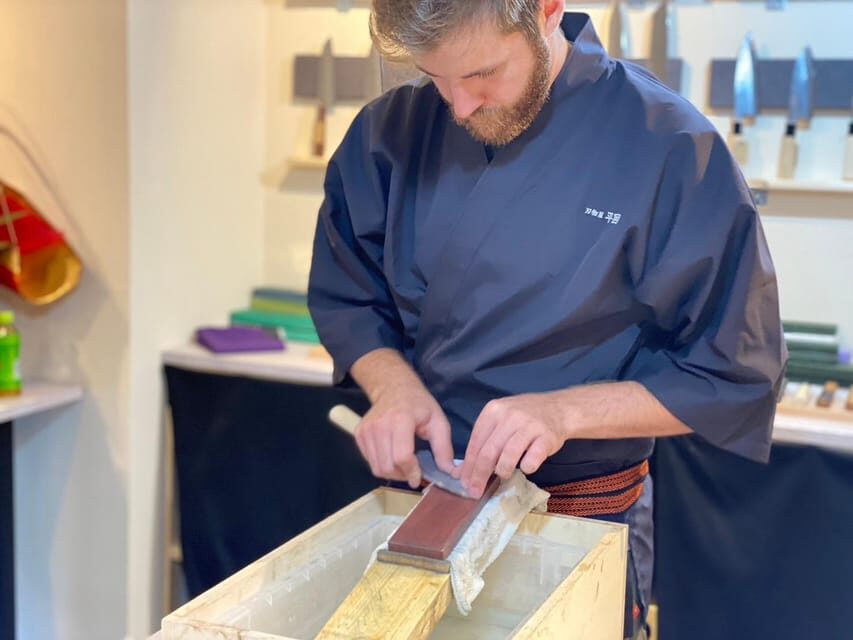
This is not a “look and leave” shopping experience. It’s built around doing the work: sharpening a knife you select, then attaching a handle using proper technique. If you’ve ever tried sharpening at home using vague videos, this kind of guided, step-by-step coaching is exactly what your kitchen needs.
The pace is tight but beginner-friendly. You’re given the tools you need (like whetstones), and you work within a small group so instructions can adjust to what you’re doing. The payoff is practical: you’ll understand what to repeat at home, not just what to copy once.
And yes, you get a knife to take home. That detail matters because you’re not paying for a class with no real output. You’re paying for instruction that ends with an object you’ll use.
Choosing your blade: Santoku, Deba, or Yanagi (and why that matters)
Before you start, you choose one knife for the workshop from Santoku, Deba, and Yanagi. That choice isn’t just cosmetic. Each style is associated with different cutting tasks in Japanese cooking, so you’re learning sharpening in the context of a blade shape that makes sense for real meals.
Here’s how to think about your pick:
- If you mostly cook vegetables and general all-purpose prep, a Santoku is the easy, everyday fit.
- If your interest leans toward fish prep and more specialized cutting, Deba makes the most sense.
- If you want the more delicate, precision vibe often linked with Yanagi, this is the one to target.
The workshop also includes a quick history element about Japanese knives, so the sharpening isn’t taught as a random technique. It’s framed as part of a bigger tradition of tool-making and kitchen use. That context helps your hands remember what your brain might otherwise forget.
A few more Kyoto tours and experiences worth a look


Sharpening on a wet stone: the technique you can repeat
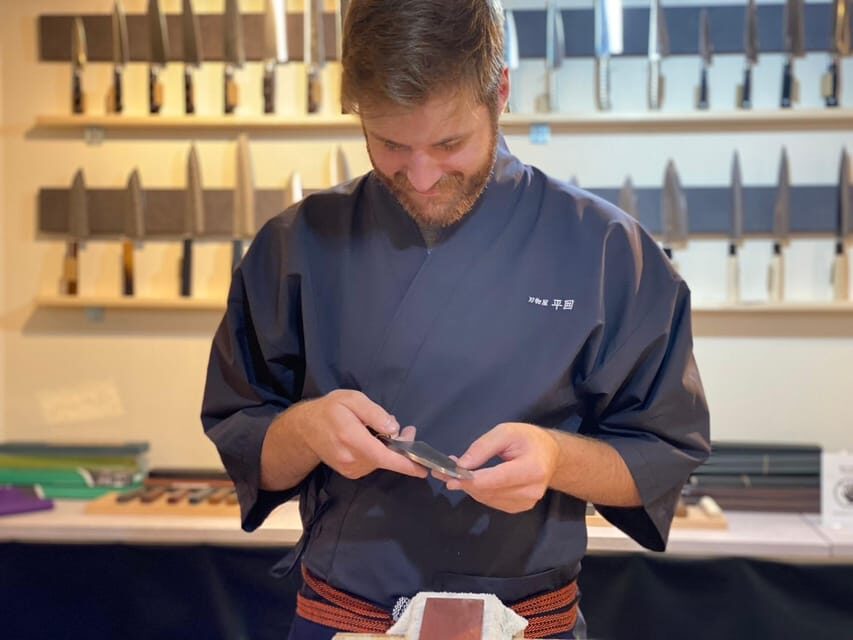
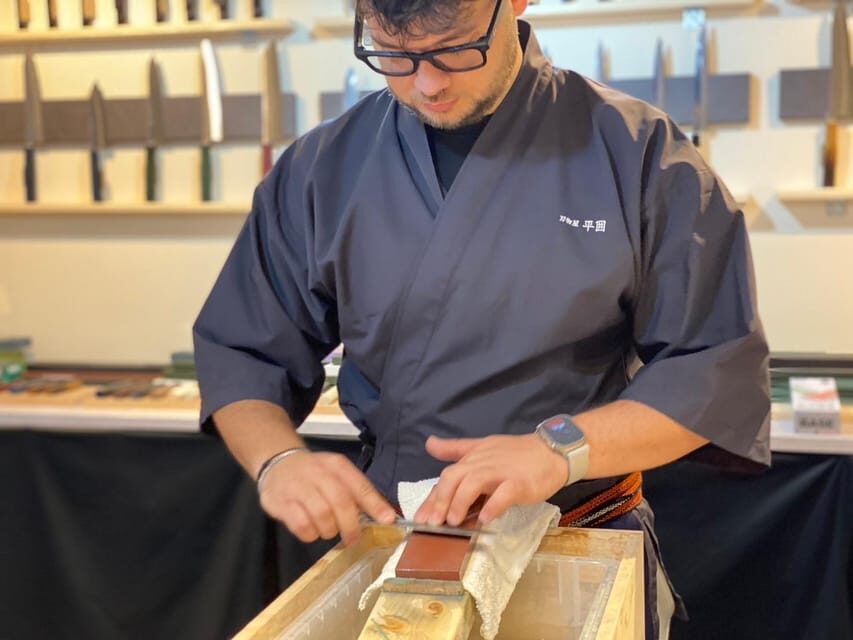
Sharpening is the heart of the class, and it’s where most people feel the difference immediately. The approach is practical: you learn how the sharpening is supposed to work, then you apply it yourself. Instead of guessing angles or speed, you get corrections while you’re doing the motions.
A key detail: the shop provides the whetstones, so you’re not forced to buy extra gear before you even know what you’re doing. That’s smart for beginners. You get to focus on technique first, and you can decide later what to upgrade if you want to.
You’ll also work with the knife you selected for the session. That makes the sharpening feel connected to something real. And because you’ll take the knife home at the end, you get to test your results in your own kitchen, using the same blade you trained on.
One small tip for your success: bring a notebook or notes app. Some people appreciate having a quick reminder of the steps after class, especially if concentration takes over while you’re learning.
Handle fitting with fire and magnola wood: the part that surprises people
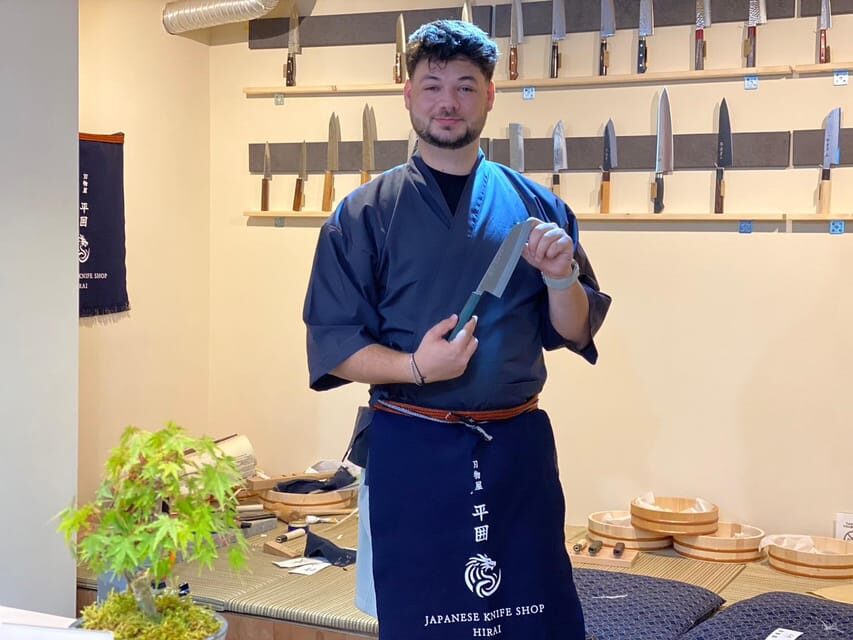
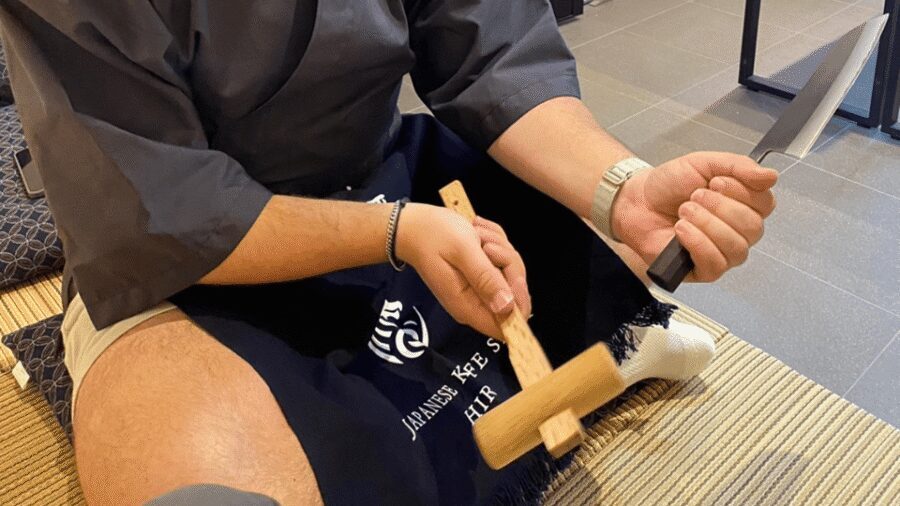
If sharpening is the “skill” part, handle fitting is the “craft” part. You choose and attach a magnolia tree handle in the workshop, and you get taught the process while the knife is literally transformed in front of you.
Here’s the practical catch: during handle fitting, the workshop uses fire, and sometimes smoke comes out. If you’re wearing clothes you love, plan ahead. Wear something you don’t mind getting smoky. It’s an easy fix, but it matters because the process is hands-on and not staged like a quiet demonstration.
You’ll learn how the handle goes on and how it’s positioned, not just that it gets attached. That’s useful because a lot of kitchen hardware issues at home come down to fit and alignment. The workshop gives you a feel for what “right” looks like.
Want a different handle than magnolia? You can. The workshop notes that you can choose other handle types with an additional fee, and the fee changes depending on what you pick. If you want customization, this is where you can go beyond the default.
Engraving and taking your knife home: your souvenir becomes gear
After the workshop, the knife is packaged so you can take it home. That’s a big deal for two reasons: you can travel with your knife without improvising packaging, and the knife is immediately part of your daily life back at home.
There’s also an engraving option. If you want letters on the knife, you need to request it in advance, with up to 4 characters/letters. The workshop lists engraving as included in the experience fee structure, so if you plan to engrave, it’s smart to do it early so your request is ready when the process happens.
This is the kind of souvenir that doesn’t sit in a drawer. It’s tied to a skill you now understand, which means you’re more likely to keep it maintained. And in the longer run, maintenance skills often matter more than buying the fanciest thing in the shop.
The workshop rhythm: history, practice, then finishing touches
The lesson flows in a simple order:
1) A short overview, including the history of Japanese knives
2) Sharpening instruction and then hands-on practice with your chosen blade
3) Handle fitting, where you attach the handle and learn the steps
4) Optional engraving planning, then packaging so you can carry the finished knife home
That structure keeps the class from feeling random. You get the meaning first, then the hands-on learning, then the finished product.
The practical value here is how the instruction supports what you’ll do later. Sharpening doesn’t help much if you never understand what you’re supposed to repeat. Handle fitting doesn’t help much if you don’t understand how it should feel when it’s correct. This workshop tackles both, which is why people come away feeling confident rather than just impressed.





English support, small group energy, and how to prepare
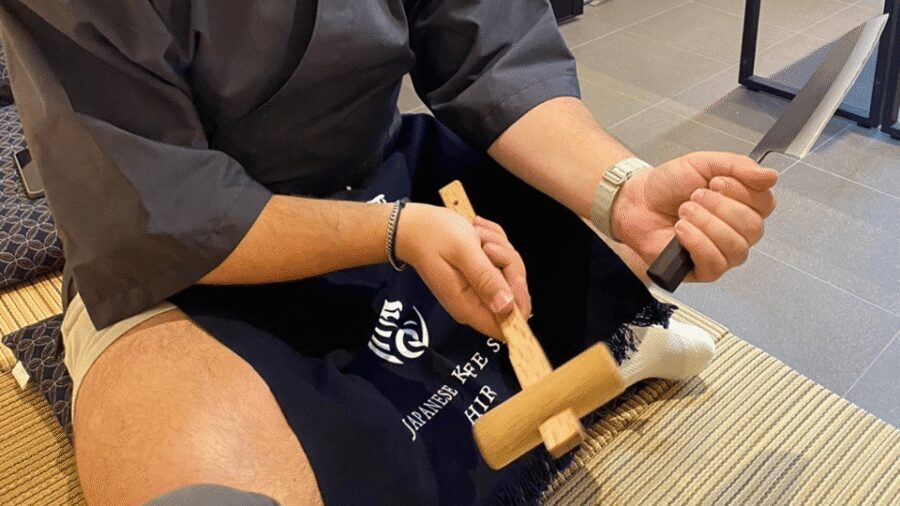
You’re not left translating on your own. The workshop provides an English/Japanese instructor setup, and the class is limited to 3 participants. That small group size is the difference between being corrected once and being corrected enough to actually improve.
It also means you can ask questions as you’re stuck. People often say the instructors are patient and attentive, and that matches what you want from a beginner workshop. When you’re learning a physical skill, you need feedback while your hands are still in learning mode.
Logistics are straightforward, but you should show up ready. You’re asked to arrive at the shop about 5 minutes early so the workshop can start smoothly. The meeting point is direct at the shop, and you can look for the white storefront curtain at the building.
Dress-wise, plan for handle-fitting. If you prefer clean, lightweight clothing, choose an outfit you can tolerate getting smoky. And remember the rules: no smoking, no alcohol and drugs, and you should keep noise low. Pets and baby strollers aren’t allowed either.
Price and value: what $161 buys in real-world terms
At $161 per person for a 2-hour workshop, the honest value question is simple: what do you take home, and how much instruction do you get?
You get:
- A knife that you sharpen during the class
- A magnolia handle fitted during the workshop
- Japanese working uniform and apron for the session
- Experience fee
- Engraving fee (if you request it in advance)
That package is why people tend to feel the class is more than a novelty. You’re not just paying for a seat. You’re paying for the opportunity to leave with a crafted knife and the technique to keep it in working condition.
A lot of classes sell upgrades after the fact. Here, the standard knife choices are already strong, and the value comes from the fact that you learn the fundamentals without needing to spend extra to get a good result. Optional handle changes exist, but you can stick with the included magnolia handle and still get a complete, satisfying outcome.
In other words, this is closer to buying a useful skill plus a tool than buying a tool by itself.
Who this is best for (and who should skip it)
This workshop is a great match if you:
- Want to learn sharpening basics you can repeat at home
- Like hands-on crafting where you build something tangible
- Care about Japanese kitchen tools, not just “a Kyoto activity”
- Want a small-group class with real feedback
It may be less suitable if you need wheelchair access. The information states it’s not suitable for wheelchair users, and it also lists age limits: children under 15 aren’t suitable, and people over 80 aren’t suitable.
Also, you should be comfortable with the physical focus required. Sharpening takes concentration, and the fire element means you’ll want to dress accordingly.
If you’re a collector type, you’ll enjoy the engraving option. If you’re a cook type, you’ll enjoy the practical angle: the knife is built through training, not just purchased and ignored.
Final call: should you book this Kyoto knife workshop?
I’d book this if you want a Kyoto memory that turns into kitchen confidence. The combination of sharpening + handle fitting is rare in a single short session, and the small group format makes it feel personal instead of rushed.
You should also book if you like the idea of learning a skill in context. Picking between Santoku, Deba, and Yanagi gives your training meaning, and the history piece helps connect technique to why these knives exist.
Skip it only if fire-smoke clothing isn’t your thing, or if the age or mobility limits apply to you. Otherwise, this is one of those Kyoto experiences that earns its space in your itinerary because it leaves you with both knowledge and a real tool.
FAQ
What is the duration of the Kyoto knife sharpening and handle fitting workshop?
The workshop lasts 2 hours.
Where is the meeting point?
You should come directly to the shop for the workshop. Look for the white storefront curtain at the building.
What knives can I choose for the workshop?
You can choose one knife type from Santoku, Deba, and Yanagi.
Can I take the knife home after the workshop?
Yes. After the workshop, your knife is packaged and you can take it home.
Is English support available?
Yes. The instructor is listed as English and Japanese.
Do I need to bring a whetstone?
No. Customers use the whetstones provided by the shop.
Is engraving available, and how many characters can I request?
Engraving is available. If you want engraved characters, you need to request it in advance, and the request allows up to 4 letters/characters.
Is handle fitting done with fire?
Yes. The handle fitting section uses fire, and sometimes smoke comes out. You may want to wear clothes you don’t mind getting smoky.