REVIEW · KYOTO
Kyoto Sword Experience – includes Museum Ticket/Ninja Experience
Book on Viator →Operated by Maikoya · Bookable on Viator
Kyoto does swords and ninjas, but this one does it in a safe, real-life way. You’ll put on samurai hakama, learn basic iaido techniques with a replica sword, then add a guided museum visit and a ninja star moment. The experience runs in a traditional dojo setting, with several daily start times so you can pick what fits your day. One thing to plan for: the flow can feel a bit rushed or split between nearby spots, especially at busy times.
If you love hands-on activities, this is one of the more memorable ways to get out of museum mode. I also like that the tour is designed around culture in plain steps, with instructors helping you understand what you’re doing, not just posing for photos. The biggest caution is that rules have shifted toward safety and legal compliance, so expect replica gear and training rather than the old-school spectacle some ads may have implied.
In This Review
- Why This Samurai and Ninja Session Feels Different
- Entering The Samurai Ninja Museum: Where Your Kyoto Story Starts
- Dressing in Samurai Hakama: Photo Moments With a Purpose
- Iaido Basics With a Blunt Replica: The Safety-First Twist
- The Sword Fight Moment: Controlled Fun, Not a Free-For-All
- Ninja Star Throwing: The Short, Sweet Finale
- Samurai and Ninja Museum Tour: Context That Makes the Training Make Sense
- When the Flow Feels Rushed: Group Size and Timing Reality Check
- Price and Value: Is $83.91 Worth It in Kyoto?
- Who This Is Best For (And Who Should Skip It)
- Should You Book Kyoto Sword Experience?
- FAQ
- What exactly is included in the Kyoto Sword Experience?
- Do you use a real katana or sharp blade?
- How long does the experience take?
- Where do I meet for the tour?
- Are children allowed?
- How big are the groups?
- Are there multiple start times each day?
- Is the ticket mobile?
- Is there any elevator outage during specific dates?
- Can I cancel for a full refund?
Why This Samurai and Ninja Session Feels Different
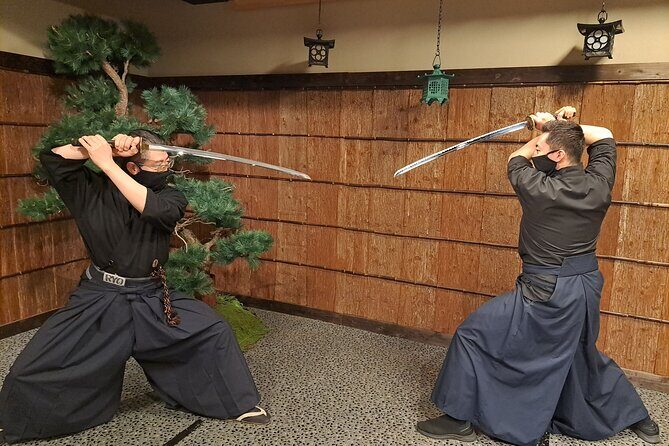
This experience is built for people who want action, but not chaos. You’re not just looking at artifacts. You’re wearing the outfit, learning stances, then practicing a controlled sword routine with guidance.
The museum ticket matters too. The dojo part gives you the feeling of training, while the museum side gives you context for why samurai and ninja practices looked the way they did. Several reviews mention that the instructors also manage to keep energy up, even when the group schedule is moving.
Still, pace is the trade-off. Even with a good class, you should assume some standing in line, photo turns, and short transitions between areas.
Entering The Samurai Ninja Museum: Where Your Kyoto Story Starts
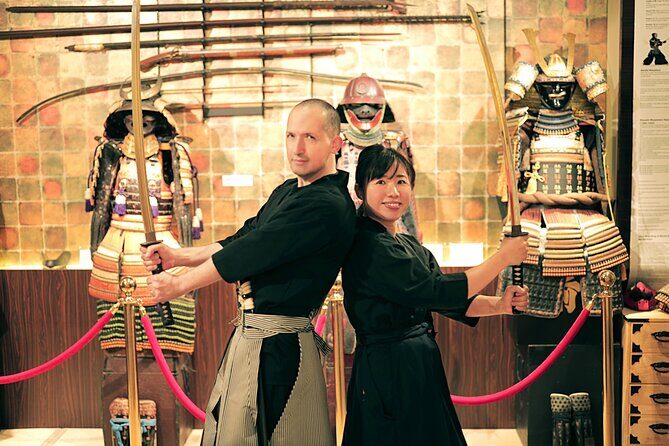
Your meetup point is at SAMURAI NINJA MUSEUM Kyoto, 109 Horinouechō, Nakagyo Ward. It’s also listed as near public transportation, which is helpful because you’ll likely want to pair this with other sights around central Kyoto.
This matters for two reasons. First, it’s easier to stay on schedule. Second, you can arrive on time without burning Kyoto time on complicated routing.
Once you’re in, you’ll shift from regular tourist mode to training mode. The setting is a traditional dojo atmosphere, and that changes how you experience the session. It’s the kind of place where even the wait feels less like standing in a lobby and more like part of the day’s routine.
A few more Kyoto tours and experiences worth a look


Dressing in Samurai Hakama: Photo Moments With a Purpose
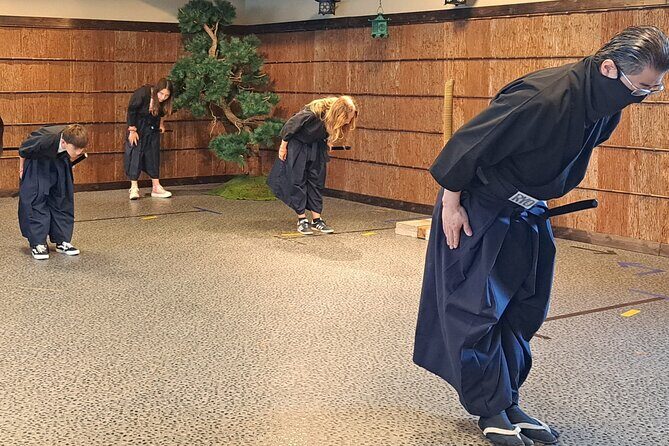
The first step is dressing like a samurai. You start by putting on samurai hakama, the iconic divided trousers worn for traditional martial arts and formal practice.
This isn’t just for photos, even if you’ll take plenty. Hakama is part of the discipline of the look and the feel. When you’re dressed, instructors can guide you into the correct posture and stance. One review praises how the experience felt like actual training rather than only costume time.
Practical tip: wear comfortable basics under your outfit. You don’t want to be wrestling with clothing while everyone else is moving to the next step.
Also note the age rule: children under 7 are not allowed to enter the samurai dojo venue. One family reported their toddler was too young for the activity but could watch from the sides. If you’re traveling with kids, plan for the fact that younger children may not be allowed inside the training space.
Iaido Basics With a Blunt Replica: The Safety-First Twist
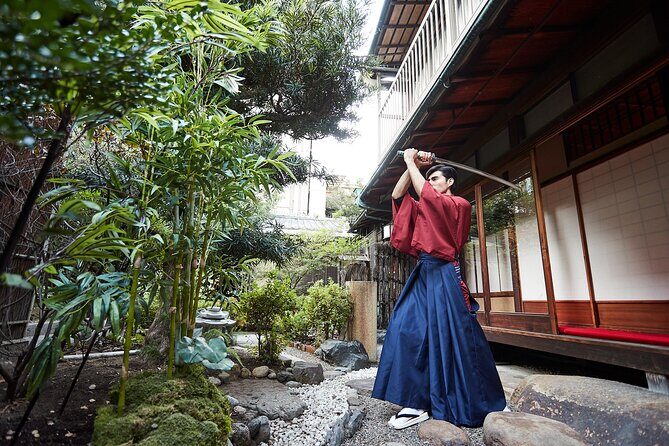
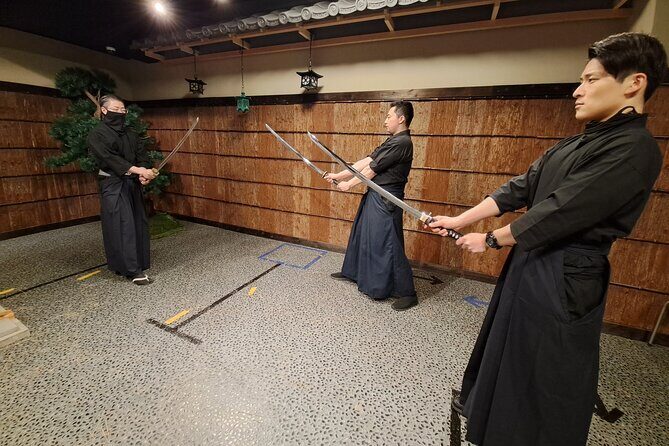
The core of the class is learning basic iaido techniques with a safe replica sword. The tour description specifically says the experience uses a blunt, safe replica sword in compliance with Japanese law, and a recent update clarifies that it does not involve a real sword or sharp blade.
That safety update is important because some older-style marketing for sword experiences can be misleading. In the current version you should expect training that looks and feels like samurai practice, but without the sharp-blade risk.
From the reviews, the standout praise here is the structure: instructors give clear instruction and keep you engaged while you practice stances. People mention feeling like they learned what it takes to be a samurai in basic terms, not just how to swing.
Also look at the instructor names you might encounter:
- Riku is mentioned in a review for giving a strong training-style experience and guiding a museum history component.
- Ken is mentioned as explaining samurai history and actions.
- Nobu is mentioned as keeping the museum tour engaging.
If you’re hoping for a lesson that teaches more than posing, this portion is where the value starts.
The Sword Fight Moment: Controlled Fun, Not a Free-For-All
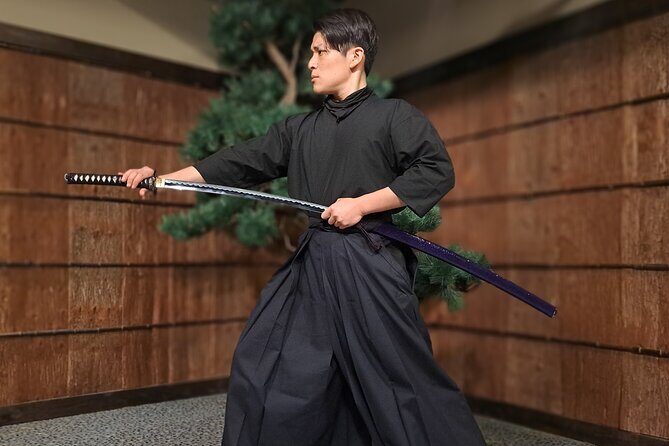
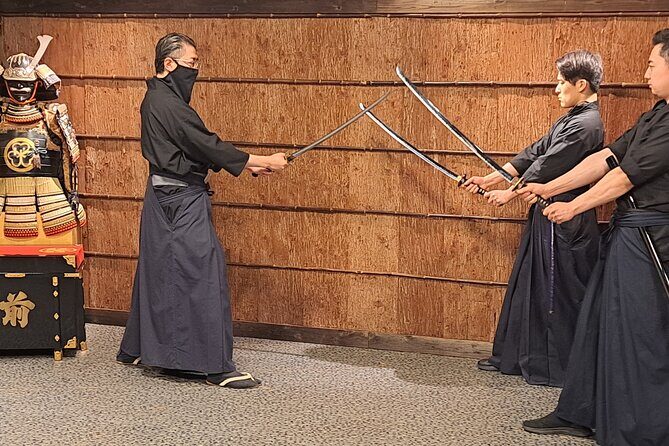
After iaido basics, you’ll take part in a simple sword-fight style activity using the safe replica sword. This is where the experience becomes less academic and more physical.
You should think of it like a guided drill with a bit of excitement. In one review, people specifically said the sword stance practice was a highlight, and that the instructor instruction made it feel authentic.
A realistic expectation: you may only get a limited number of turns, depending on group size and how your session moves. That’s normal for hands-on demos. But if you’re the type who wants lots of repetitions, plan to manage your expectations and focus on quality coaching rather than a long practice run.
Ninja Star Throwing: The Short, Sweet Finale
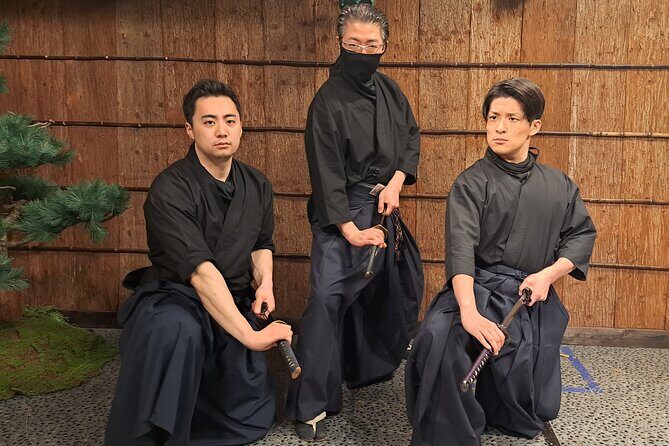
The session also includes ninja star throwing. Reviews describe it as fun and part of the overall experience, with people enjoying photo opportunities in the ninja/samurai theme.
A heads-up based on the actual on-the-ground flow: this part can be separated from the dojo area. One review notes the throwing happens in a different place that required stairs, making the full experience feel a bit disjointed.
During peak season, moving between areas can feel like a lot of transitions. Still, the star-throwing moment is often the part people remember most because it’s a clear, finish-line action.
Practical tip: comfortable shoes matter. You’ll likely be walking between nearby spots, and at least one review mentions multiple flights of stairs.
You can also read our reviews of more museum experiences in Kyoto


Samurai and Ninja Museum Tour: Context That Makes the Training Make Sense
The museum ticket is included, plus a guided history tour. This is where you get answers to questions you might not even think to ask while you’re focusing on stances.
People praised the museum portion as informative and engaging, and several reviews mention it as worth the time, especially because it ties samurai and ninja culture together. If you’re a history nerd, you’ll probably appreciate the way artifacts and explanations connect to what you just practiced.
One reviewer calls out a strong guided museum experience by Nobu, while another credits Ken for history and action explanations. Another review mentions learning through artifacts and interactions with historical material, which suggests the tour isn’t only text-heavy.
If you’re short on time in Kyoto, this museum component is a smart add-on. It gives your hands-on session a reason to exist.
When the Flow Feels Rushed: Group Size and Timing Reality Check
The tour is designed to last about 2 hours (approx.), with multiple daily start times you can choose. You’ll also see safety and group limits mentioned, including a maximum of 22 travelers in the overall activity. At the same time, other notes suggest some sessions may be limited to fewer people.
Here’s how this plays out in real life: when the group is larger or the schedule hits a busy period, you can feel a “production line” vibe. Some reviews complain that costume time, photo time, and waiting can take more space than training time. Others say the experience still felt fun and authentic.
So I recommend choosing a start time that fits your day when you’re not rushing to your next reservation. If you’re visiting during peak sakura season, expect more pressure on timing because popular areas and limited space can affect everything.
Also watch for the layout. One review says the experience involved training in one location, a museum tour in another building nearby, and then the ninja star activity up stairs. Even when staff are friendly, moving between areas can break the rhythm.
If you want to get everything you paid for, don’t be shy about asking staff if there’s anything you haven’t done yet. A clear checklist mindset will save you from feeling like you might have missed a step.
Price and Value: Is $83.91 Worth It in Kyoto?
At $83.91 per person, you’re paying for three things bundled together: dojo training with replica swords, museum admission with a guided tour, and a ninja star activity with themed photo time.
This is good value if you want a “do and learn” experience. If you only wanted museum browsing, you’d likely pay less elsewhere. If you only wanted cosplay photos, you could find cheaper options too. The reason this package earns its price is that it mixes practice, instruction, and history in one visit.
It’s not good value if you expected a long, repeated sword session like a private class. Some reviews mention only one main practice opportunity. That’s the trade-off for getting the full combo experience at a set price.
One more value note: the safety/legal update reduces the chance you’ll get a risky or sharp-blade experience. That may not sound exciting, but it’s part of why this is a safe way to enjoy the theme in Kyoto.
Who This Is Best For (And Who Should Skip It)
This works best for:
- People who want hands-on martial arts basics without needing prior experience
- Families who can accommodate the under-7 dojo rule
- Travelers who like themed experiences that still include a guided history component
It’s less ideal for:
- Anyone who wants a long training session with lots of repetitions
- People who hate moving between nearby buildings or dealing with stairs
- Travelers who assume a sword cutting show will look like old-school media footage
If you’re in Kyoto for culture and want something different from temples and markets, this gives you a hands-on break that still ties into the samurai/ninja story.
Should You Book Kyoto Sword Experience?
I’d book this if you want a structured, safe samurai day that includes both practice and history. The strongest reason to choose it is the combination: iaido-style basics, a museum history tour, and ninja star throwing, all in about 2 hours.
I’d think twice if you’re the kind of traveler who gets frustrated when sessions run like a schedule, with short turns and some waiting. If that’s you, pick a quieter time slot and come ready for transitions.
If your goal is authentic training vibes with a solid history add-on, this is one of the more fun ways to spend time near central Kyoto.
FAQ
What exactly is included in the Kyoto Sword Experience?
The experience includes a dojo sword-training component with a safe replica sword, plus admission to the Samurai and Ninja Museum with a free museum tour, and a chance to throw ninja stars.
Do you use a real katana or sharp blade?
No. The tour information includes an update stating it uses a blunt, safe replica sword and does not involve a real sword or sharp blade.
How long does the experience take?
The duration is listed as about 2 hours.
Where do I meet for the tour?
Meet at Samurai Ninja Museum Kyoto, 109 Horinouechō, Nakagyo Ward, Kyoto 604-8117, Japan. The tour ends back at the meeting point.
Are children allowed?
Children under 7 are not allowed to enter the samurai dojo venue. Children also must be accompanied by an adult.
How big are the groups?
The information lists a maximum of 22 travelers for the activity. Another note states a maximum of 4 travelers, so group size can vary by session. Confirm your specific time slot when you book.
Are there multiple start times each day?
Yes. The tour description says it has flexible start times with multiple daily start options.
Is the ticket mobile?
Yes. It’s listed as a mobile ticket.
Is there any elevator outage during specific dates?
Yes. The elevator is listed as out of service from January 24, 2026 to February 19, 2026.
Can I cancel for a full refund?
Yes, free cancellation is listed. You can cancel up to 24 hours in advance for a full refund, based on the local start time.
If you want, tell me your travel month and whether you’re with kids, and I’ll help you pick the best start time strategy for Kyoto crowds and stairs.