REVIEW · KYOTO
Kyoto : Chopsticks Making Workshop in Gion with Engraving Option
Book on Viator →Operated by Traveling Kyoto · Bookable on Viator
Kyoto’s Gion is full of charm, but this class turns it practical. In about an hour, you shape your own chopsticks from raw wood using a traditional hand plane, then finish them with sanding and natural oil. Two things I really like are how beginner-friendly the instruction is (no woodworking experience needed), and how personal the result feels when you add optional engraving. One possible drawback: the wood selection can feel a bit fixed compared with the options shown, so it’s smart to be flexible if a specific choice isn’t available.
You’re not watching a demo. You’re holding the tool, feeling the grain, and getting your hands involved in every step. The shop keeps the pace moving, and that can be great for a quick souvenir run, though some people may prefer a slower, more personal flow. Either way, the end product is a set of chopsticks you’ll actually use at home, not just something that sits in a drawer.
In This Review
- Key Things You’ll Notice in This Workshop
- Entering the ZEN Chopsticks Workshop in Gion
- The One-Hour Flow: What Happens From Start to Finish
- Choosing Wood in Kyoto: Grain, Tone, and Feel
- Shaping with a Kanna Hand Plane: The Craft Part That Sinks In
- Sandpaper and Natural Oil: Turning Wood Into Something You’ll Actually Use
- Optional Name Engraving: Making the Set Feel Like Yours
- Price and Value: How $15.25 Makes Sense Here
- Logistics in Plain Terms: Tickets, Timing, and Location Reality
- Who Should Book This Chopsticks Workshop (and Who Might Not)
- Should You Book the Gion Chopsticks Workshop?
- FAQ
- FAQ
- How long is the chopsticks making workshop?
- Where does the workshop meet in Kyoto?
- Do I need any experience with woodworking tools?
- What materials do I work with during the class?
- Can I choose the type of wood for my chopsticks?
- Is name engraving available?
- Is the ticket digital?
- How many people are in the group?
- What is the cancellation policy?
Key Things You’ll Notice in This Workshop
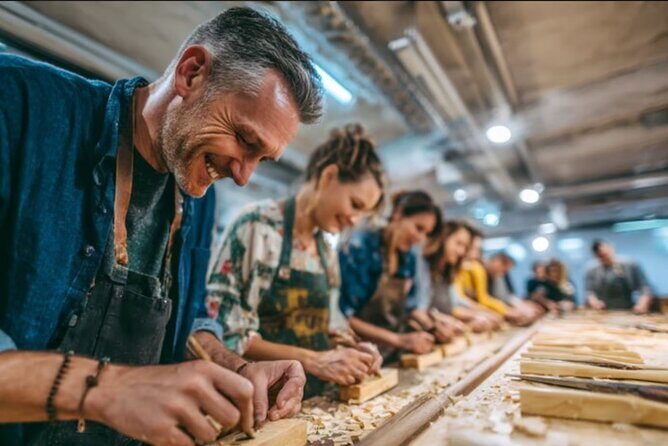
- Hand-plane carving (kanna) instead of fancy machines, so the process feels real
- Wood choice matters: color, grain, and even aroma change the vibe of your final set
- Sanding and oil finishing so the chopsticks feel smooth and comfortable
- Optional engraving in Japanese or your native language for a truly personal souvenir
- English-speaking staff support throughout, which helps a first-timer relax fast
Entering the ZEN Chopsticks Workshop in Gion
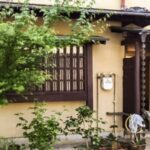
This workshop is in Gion, one of Kyoto’s most walkable and photogenic areas, so it’s easy to pair with other sights before or after class. Your starting point is 禅(ZEN) Chopsticks Making Workshop, Gion Kyoto, at Yasaka Koji South, machi-71-13 Tamamizu, Higashiyama Ward, Kyoto (605-0851). The location is described as near public transportation, which matters in Kyoto where a “long walk” can turn into an unexpected detour if you’re relying only on timing.
The shop setup is built for one-hour sessions, so you’ll want to show up ready to work. Bring a calm attitude, not a perfectionist mindset. You’re carving wood by hand, so the point isn’t making a flawless tool—it’s learning the craft and leaving with something you made with your own hands.
This is also where the vibe matters: the experience is designed to be hands-on and welcoming for first-timers. If you’ve never used woodworking tools before, you’ll still be able to follow along without feeling lost.
A few more Kyoto tours and experiences worth a look

The One-Hour Flow: What Happens From Start to Finish
The class is about 1 hour from start to finish, and it follows a straightforward sequence. That matters because it keeps your schedule from getting swallowed up by “just one more stop” in Kyoto. You’ll also like that the pace is structured—every step builds on the last one.
Here’s what the process generally looks like:
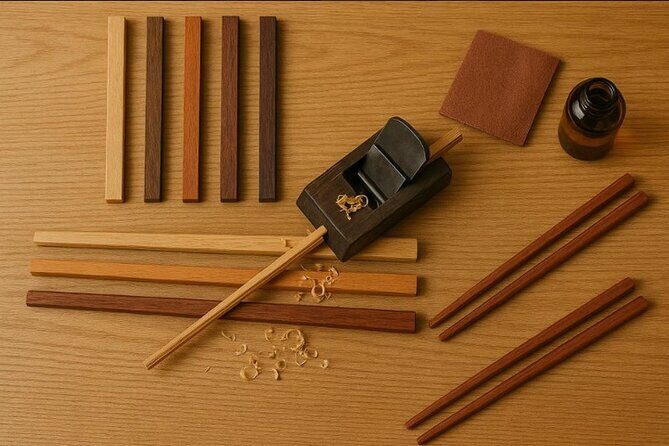
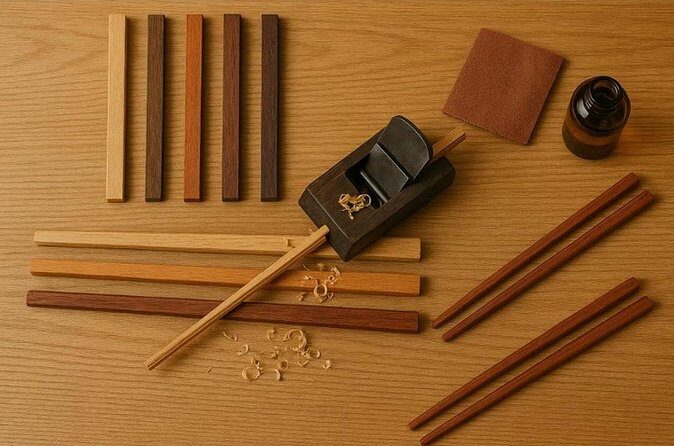
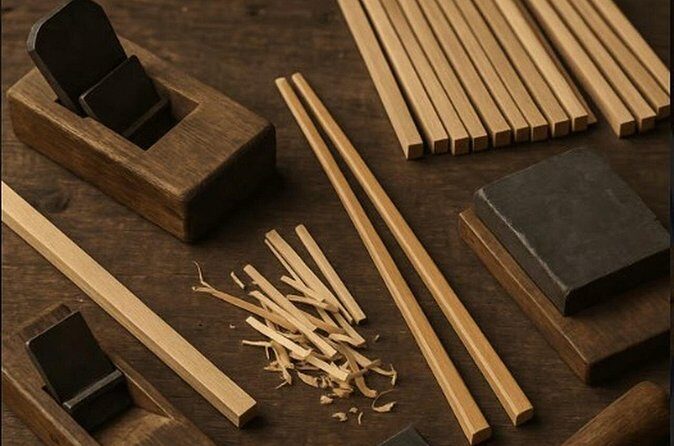
First, you’ll get a wooden blank and choose (or confirm) the wood you want. Then you’ll carve the chopsticks into shape using a traditional kanna (Japanese hand plane). After carving, you smooth everything with sandpaper so the surface feels nice in your hands. Once the shape and finish are set, you apply a coat of natural oil to protect the wood and enhance its look.
Finally, you have an optional engraving step. This is where you can add your name in Japanese or your native language, so your chopsticks stop being generic souvenir-store items and become a keepsake.
One practical note: because the activity is capped at a maximum of 32 people, you’ll be in a group setting. That’s not a bad thing—more like a sign the shop runs efficiently. Still, if you’re hoping for a super slow, one-on-one mentoring experience, you might find the overall flow feels a bit like a production line. The good news is that staff support is still there if you need help.
Choosing Wood in Kyoto: Grain, Tone, and Feel
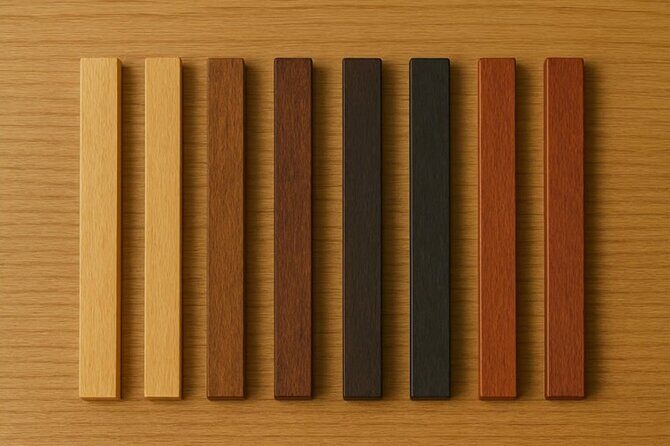
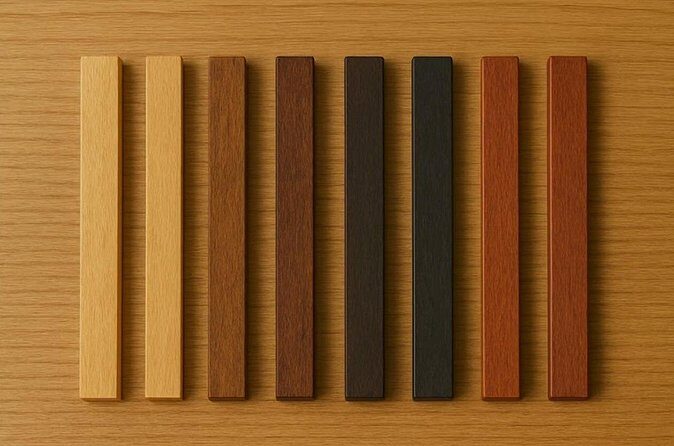
One of the most fun parts is choosing the wood itself. You’re not just picking a color swatch. Different Japanese woods come with distinct grain patterns, natural color, and even an aroma. That makes your chopsticks feel like they belong to you, because you can point to what you chose and why.
The workshop includes two wood types at no extra cost. Premium woods are available as optional upgrades if you want something more special. For value, this is a smart structure: you can keep it simple and still end up with a souvenir that looks intentional and high-quality.
A reality check: one concern you might have is that advertised options don’t always match what’s on-site. If you’re traveling during busy periods, availability can shift. My advice is to treat the wood selection like a plan, not a guarantee. If your first pick isn’t available, go with the second choice—it’s still part of the craft experience, and you’ll still get the carving, smoothing, and oil finish process.
Shaping with a Kanna Hand Plane: The Craft Part That Sinks In
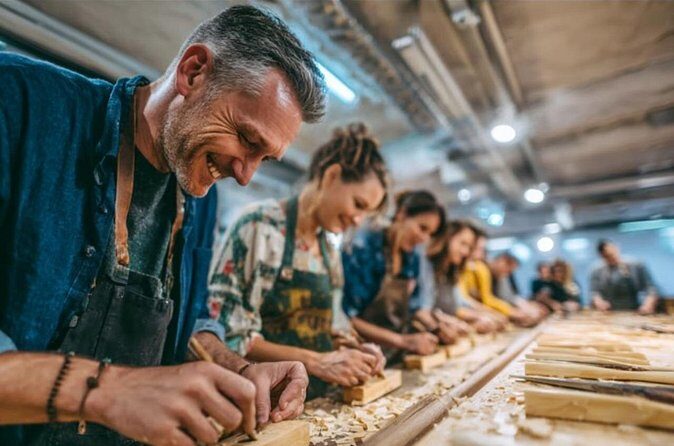
This workshop’s heart is the carving with a traditional hand plane. Instead of guessing where to start, the instruction is taught clearly and patiently for beginners. You begin with rough shaping and gradually refine the form until the chopsticks look—and more importantly, feel—right.
Why this step is so satisfying: you can feel the wood changing as you work. The plane catches the grain in a way that’s tactile and immediate. If you’ve ever wondered what “craftsmanship” means in daily life, this is the kind of activity that answers it quickly: attention, repetition, and a light touch.
You’ll also place the chopsticks on a stand during carving. That small detail matters because it helps you keep control. Your hands aren’t fighting to support an awkward piece of material while you learn the tool.
The tone you’re aiming for is smooth and even, not fast. If you go too hard too quickly, the surface can get uneven. The instructors are there to help you correct your approach. And because the class is designed for people without woodworking experience, you’re not expected to master everything on the first try.
Sandpaper and Natural Oil: Turning Wood Into Something You’ll Actually Use
After carving, you move into smoothing. Sandpaper isn’t glamorous, but it’s one of the steps that separates “made it” from “I’ll keep using it.” Your job here is to refine the surface and edges so they feel comfortable in hand. Chopsticks take a lot of everyday contact—your fingertips and lips will notice if the edges are sharp or the finish is uneven.
Then comes the natural oil. This step does two useful things:
1) It protects the wood.
2) It brings out the wood’s look and character.
You’ll see the tone deepen a bit and the grain become more visible after oiling. It’s also a quiet, calming end to the workshop—less tool work, more finishing.
The result is a set of chopsticks that feels made for daily life, not just a novelty. That’s why I think this is a better souvenir choice than most Kyoto trinkets. You get something practical and personal.



Optional Name Engraving: Making the Set Feel Like Yours
If you want your chopsticks to feel truly one-of-a-kind, add the engraving. The option is there to have your name engraved in Japanese or your native language. That means you can choose something meaningful—your name, a partner’s name, or a short phrase if allowed by the shop setup.
From the experience descriptions, the engraving is handled carefully and neatly, so it doesn’t look messy or rushed. In a souvenir class, engraving quality is everything. It’s the part you’ll show people, and it’s the part that turns a handmade set into a personal memento.
One more reason this step is worth it: it creates a story you can repeat later. At home, you’ll remember the exact moment you decided on the wood and then added the text.
Price and Value: How $15.25 Makes Sense Here
At $15.25 per person for a roughly one-hour, fully hands-on workshop with a finished product, this is strong value—especially in Kyoto where many activities cost more and still feel like you left with nothing usable.
What makes the price feel fair is that you’re not just paying for participation. You’re paying for:
- Tools and instruction (including the kanna hand plane teaching)
- Wood selection from included options
- The steps that turn raw wood into finished chopsticks: carving, sanding, and natural oil finish
- Optional customization via engraving
The included wood options (two types at no extra cost) are a good baseline. If you upgrade to premium woods, you’ll spend more, but you’ll also get the extra visual and tactile character that comes from higher-end material.
Group size also supports value. A maximum of 32 people keeps costs lower and keeps the class operating on time, which matters when you’re trying to fit activities into a day of walking.
Logistics in Plain Terms: Tickets, Timing, and Location Reality
You’ll use a mobile ticket. That’s convenient in Kyoto where paper tickets can get buried in receipts and shopping bags. You’ll receive confirmation at booking, and the activity is set up to be straightforward to find from transit.
The class meets at the ZEN Chopsticks Making Workshop in Gion and ends back at that same meeting point. That means you’re not dealing with a complicated travel puzzle during your day.
If you’re planning other stops nearby, do yourself a favor and build in a small buffer before the workshop. In Gion, you might get distracted by streets, temples, or the sheer temptation to slow down and look around. Plan for that.
Who Should Book This Chopsticks Workshop (and Who Might Not)
This workshop is ideal if you want a hands-on cultural activity that doesn’t require prior skills. It’s also perfect if you’re looking for a small, wearable souvenir—something you can take home easily and use often.
It’s especially good for:
- Beginners who want structured instruction without intimidation
- Families looking for a calm activity with a real payoff (the process is clear and staff support is emphasized)
- Anyone who likes crafts and wants something practical, not just photos
You might hesitate if:
- You want a very slow, deeply personal tutoring session (some people describe the setup as more efficient than intimate)
- Your must-have plan is a specific wood choice that might not always be available
Even with those considerations, you’re still coming away with a functional pair of chopsticks, plus the option to engrave them.
Should You Book the Gion Chopsticks Workshop?
Book it if you want a one-hour craft activity that ends with something you’ll use. The combination of a traditional tool (kanna hand plane), careful finishing (sanding and natural oil), and optional engraving makes the experience feel like more than a quick distraction.
Skip it—or at least adjust expectations—if you’re the kind of person who needs perfect certainty about wood availability or who wants a super slow, private workshop feel.
If you’re in Kyoto and you want one tangible, handmade reminder of the trip, this is a smart choice.
FAQ
FAQ
How long is the chopsticks making workshop?
The workshop runs for about 1 hour.
Where does the workshop meet in Kyoto?
It meets at 禅(ZEN) Chopsticks Making Workshop, Gion Kyoto, Yasaka Koji South, machi-71-13 Tamamizu, Higashiyama Ward, Kyoto, 605-0851, Japan.
Do I need any experience with woodworking tools?
No. The workshop is designed for beginners and teaches each step clearly, with support from English-speaking staff.
What materials do I work with during the class?
You start with simple wooden blanks and shape them into chopsticks using a traditional kanna (Japanese hand plane). You then sand them and apply natural oil.
Can I choose the type of wood for my chopsticks?
Yes. You choose from a selection of Japanese woods. Two wood types are included at no extra cost, and premium woods may be available as optional upgrades.
Is name engraving available?
Yes. You can add engraving in Japanese or your native language as an optional extra.
Is the ticket digital?
Yes. It uses a mobile ticket.
How many people are in the group?
The activity has a maximum of 32 travelers.
What is the cancellation policy?
Free cancellation is available. You can cancel up to 24 hours in advance for a full refund, and cut-off times are based on local time. If you cancel less than 24 hours before the start, the amount paid is not refunded.