REVIEW · KYOTO
Kyoto: Gion Geisha District Walking Tour – Stories of Geisha
Book on GetYourGuide →Operated by Localized Walking & Food Tours · Bookable on GetYourGuide
Kyoto turns on its lanterns and the alleys start talking. This Kyoto Gion Geisha District Walking Tour is a 2-hour nighttime route through Gion and Pontocho led by a local guide, where you’ll get stories about geiko and maiko while trying to spot them headed to appointments. I especially like the focused street-level stops like Pontocho Alley and Hanamikoji, plus the way guides such as Yukari and Yuki handle questions in plain, practical English. One drawback to know: you can’t force sightings—on some nights there may be fewer geisha out.
You’ll start at Ben’s Cookies Kyoto Shijo, then move through narrow lanes, a river crossing, and major reference points like Yasaka Shrine and the Izumo-no-Okuni statue tied to kabuki’s origins. I also like that the tour is built for conversation: you’re encouraged to ask questions as you walk, so the culture doesn’t stay stuck in a script. If you’re expecting a long, entertainment-style show, keep your expectations more like a smart, guided walk with real context.
If you’re traveling with kids, this one is not for children under 10. And do bring water—you’re outside for two hours, and the tour is strictly walking at night.
In This Review
- Key points before you go
- Nighttime Gion and Pontocho: why the evening changes everything
- Meeting at Ben’s Cookies Kyoto Shijo: where the tour starts clean and easy
- Pontocho Alley: the narrow street where the stories make sense
- Izumo-no-Okuni statue: kabuki origins in the middle of Gion night
- Gion’s lanes and Yasaka Shrine: learning the neighborhood behind the postcard
- Gion Corner: a quick stop that adds cultural texture
- Hanamikoji Street: the best place to watch for geiko and maiko
- Guides are the difference: what to expect from the storytelling
- Price and value: is $20 worth two hours in Gion?
- Practical notes I’d plan around
- Who this Kyoto geisha district tour suits best
- Should you book the Gion Geisha District Walking Tour?
- FAQ
- How long is the Kyoto Gion Geisha District Walking Tour?
- Where do I meet the guide?
- Which areas and sights does the tour cover?
- What languages is the tour offered in?
- How much does the tour cost?
- Is it suitable for children?
- What should I bring?
- Is alcohol allowed on the tour?
- Is there free cancellation?
- Can I reserve without paying right away?
Key points before you go
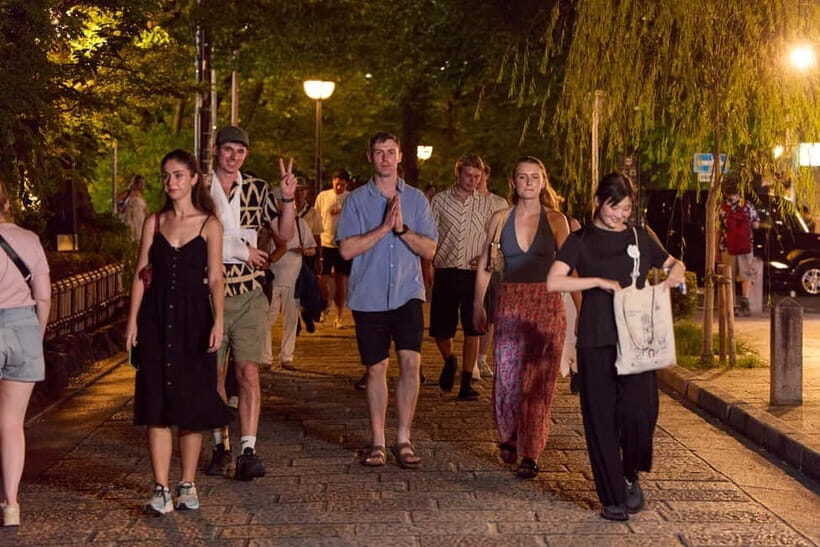
- Nighttime access to Gion and Pontocho: see the districts in their evening mood, not just daytime snapshots
- Geiko and maiko encounters on the move: you’ll watch for them en route to appointments
- Route includes classic waypoints: Pontocho, the Izumo-no-Okuni statue, Yasaka Shrine, and Hanamikoji
- Local guides who answer questions: named guides like Yukari, Nami, and Ann are praised for engaging explanations
- Great value for $20: a guided 2-hour walk with multiple stops and stories that connect the dots
Nighttime Gion and Pontocho: why the evening changes everything
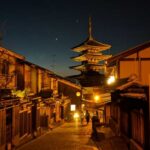
Daytime Gion is pretty. Nighttime Gion is specific. As the streets cool down, the alley lighting and narrow lanes feel closer to what you see in old photos—wooden teahouses, dark side streets, and people moving quietly with purpose.
That matters because geisha culture isn’t just costumes. It’s schedule, apprenticeship, etiquette, and performance traditions that show up in daily life. This tour leans into that with a nighttime walk and the chance to see geiko and maiko heading to appointments.
You should also know the trade-off: sightings are never guaranteed. One guest noted that not many geishas were out on their night, but the explanations still made the experience worth it. In other words, don’t book only for a guaranteed glimpse—book for the context and the walk.
You can also read our reviews of more walking tours in Kyoto

Meeting at Ben’s Cookies Kyoto Shijo: where the tour starts clean and easy
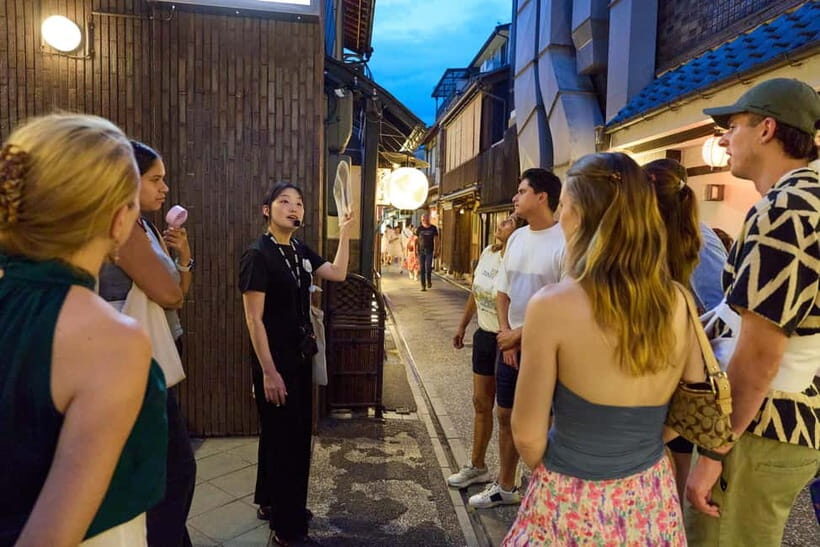
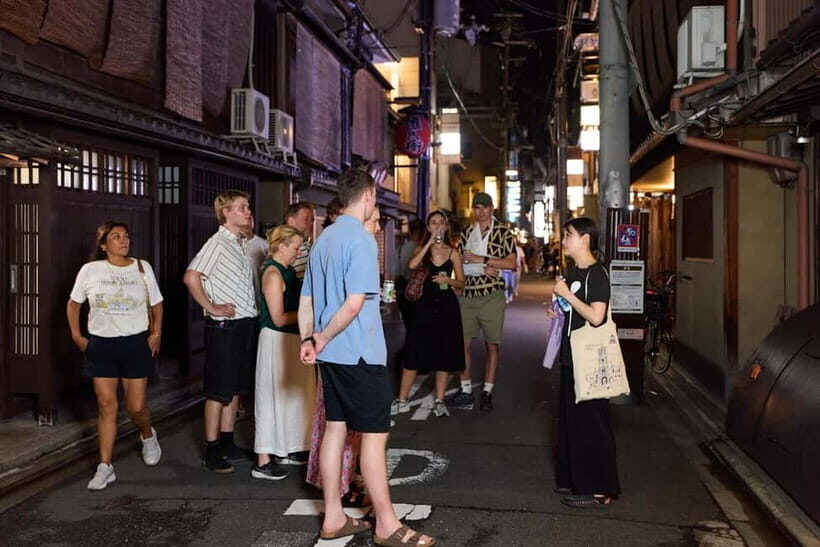
You’ll meet your guide in front of Ben’s Cookies Kyoto Shijo. Your guide will be holding a sign board, so you’re not left playing “where’s Waldo?” in a crowded neighborhood.
That initial step is more important than it sounds. Getting oriented early helps you read the street layout later—especially in areas like Gion and Pontocho where alleys branch and block views. A quick orientation also sets expectations for what you’ll see: not just buildings, but traditions tied to specific places.
Plan to arrive a bit early. The tour includes a short guided segment right at the start (about 10 minutes), which helps the evening stay smooth instead of running late.
Pontocho Alley: the narrow street where the stories make sense
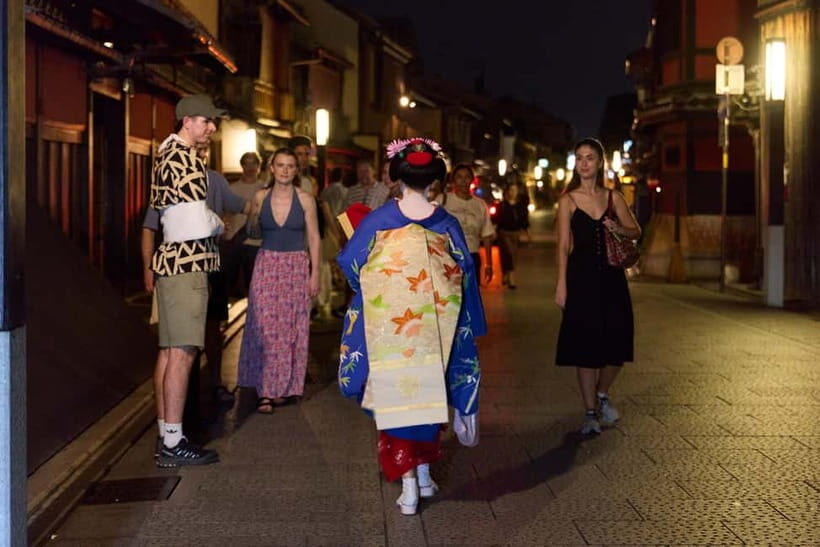
Pontocho Alley is the first real “wow” stretch. It’s a famous lane lined with traditional Japanese eateries and elite clubs, and walking it at night feels like stepping into a film set—except you’re on foot, moving at human speed.
Your guide brings in the cultural linkages as you go. This isn’t only a sightseeing walk; you’re learning how the entertainment districts worked historically and how the arts fit into everyday movement through the city.
One smart piece of tour design here is time allocation. You spend about 15 minutes in Pontocho Alley, long enough to walk slowly, ask questions, and look for details—without turning it into a long slog.
If you’re the kind of person who hates being rushed, this stop tends to work. Many guests praise guides for pacing and time for questions, and that’s especially helpful on narrow streets where everyone wants a photo.
Izumo-no-Okuni statue: kabuki origins in the middle of Gion night
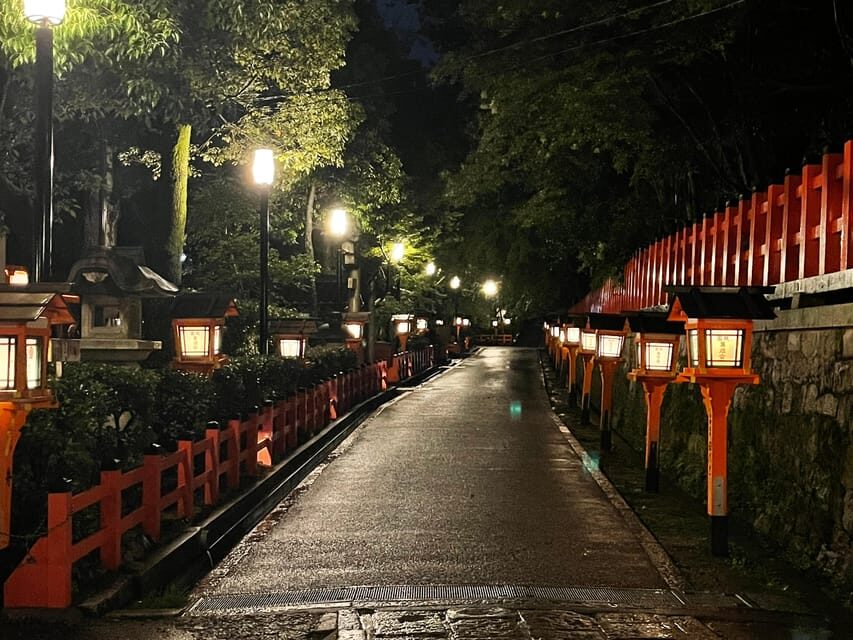
After Pontocho, you cross the river and stop at the statue of Izumo-no-Okuni. This is a clever pivot point because it connects Kyoto’s entertainment culture to something broader than geisha districts.
Izumo-no-Okuni is associated with the woman who invented the art of kabuki. The tour uses this stop to add context—why Kyoto’s arts scene has multiple threads, not just one tradition.
This part of the walk also gives you a breather. The river crossing and short stop help break up the alley intensity, so you don’t feel like you’re staring at scenery the whole time. It’s a “why it matters” moment, which makes the rest of the evening easier to understand.
Gion’s lanes and Yasaka Shrine: learning the neighborhood behind the postcard
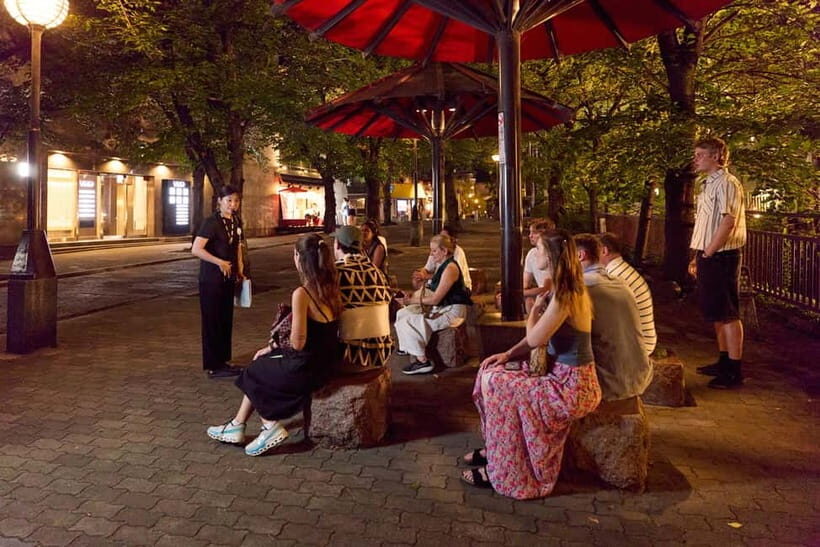
Next comes Gion. You’ll spend roughly 30 minutes walking the geisha district streets with your local guide, looking for details and hearing how the district fits into the larger culture.
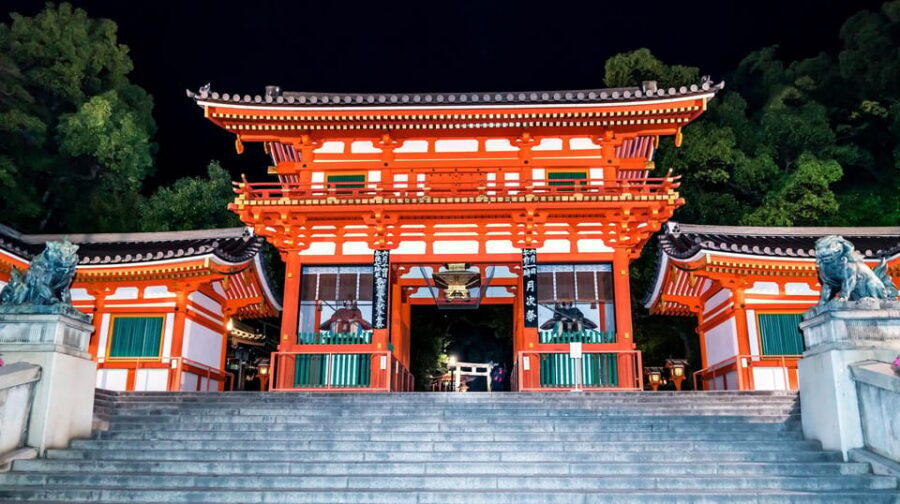
Then the route takes you to Yasaka Shrine, where the guide explains what you’re seeing as you go (about 25 minutes here). Even if you’ve seen photos of the shrine area before, the tour makes the visit feel connected to the geisha district rather than treated like a random landmark.
This is where your questions pay off. The tour is built so you can ask questions as you walk, and the best guides—guests repeatedly mention people like Yuki and Kenji—stay friendly and clear while answering.
One thing I appreciate about this segment is balance. You’re not only chasing the possibility of seeing geiko and maiko. You’re learning how people, rituals, and artistic traditions connect to the places you’re passing.
Gion Corner: a quick stop that adds cultural texture
You’ll also visit Gion Corner for about 10 minutes. The tour doesn’t treat it like a long formal show. Instead, it uses it as a short waypoint, giving you another piece of the cultural puzzle as you move toward the busiest streets.
In practice, this is the kind of stop that helps if you like structure. You get a steady rhythm: alley, story point, shrine area, then back to street-level atmosphere.
If you’re the type who likes to read a place before you take photos, this stop can be a nice reset. If you’re only interested in sightseeing, you may want to lean on your guide to explain why this particular stop belongs in a geisha-focused route.
Hanamikoji Street: the best place to watch for geiko and maiko
Finally, you head to Hanamikoji Street, spending around 15 minutes walking there. This is one of the most famous streets in Gion, and it’s also where the tour’s geisha-spotting energy ramps up.
Your guide encourages you to keep an eye out for geishas as they make their way to appointments. The reality check: you might see more one night than another. One guest even mentioned being lucky enough to see a maiko, while another said the night they went had fewer geishas out.
Still, that’s not a failure state. The real value is how the guide explains what you’re seeing—like clothing cues, social roles, and how training and tradition show up in small details.
And if photos are your thing, bring your phone. One guest mentioned that they were waiting by email for a group photo after the tour, which suggests guides may coordinate picture moments.
Guides are the difference: what to expect from the storytelling
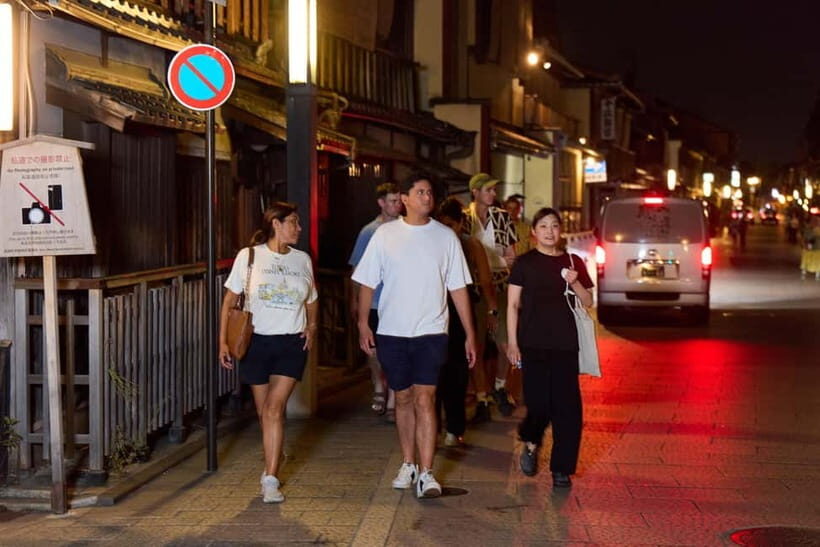
The tour is powered by the guide, and the reviews strongly point to a pattern: friendly delivery, a pace that doesn’t feel rushed, and explanations that work whether you know nothing or you already have some background.
You’ll see names repeatedly in guest feedback, including Yukari, Yuki, Nami, Ann, Kenji, Manuel, Deborah, and Adrian. Across those different guide styles, the consistent strengths show up in three areas:
- Pace: time for questions and photos without dragging
- Storytelling style: lively enough to keep you listening, structured enough to stay clear
- Local respect: a tone that’s careful about culture, not touristy sensationalism
You don’t need prior knowledge to enjoy this. The tour is designed for a “start where you are” kind of learning curve.
Price and value: is $20 worth two hours in Gion?
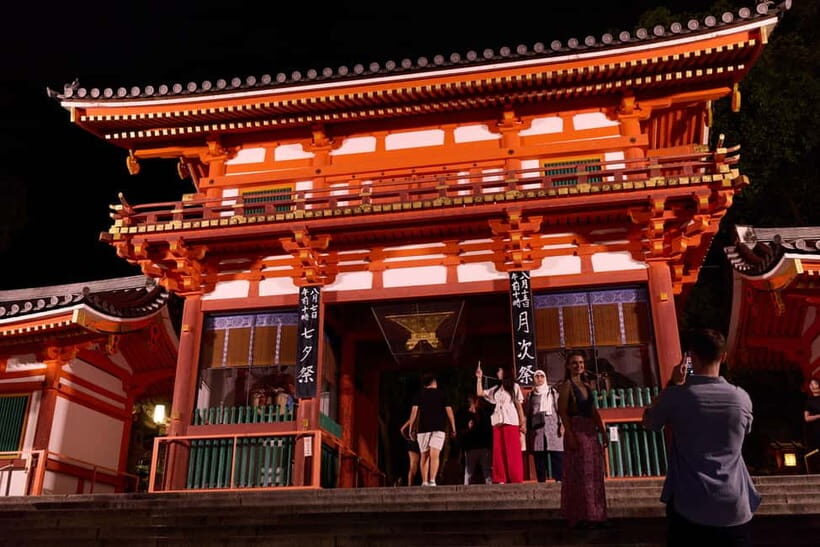
At $20 per person for a 2-hour walking tour, this is one of the more affordable ways to get a guided, culture-focused evening in Kyoto.
Here’s why it feels like good value: you’re paying for a local guide who connects multiple stops—Pontocho, the Izumo-no-Okuni statue, Gion, Yasaka Shrine, Gion Corner, and Hanamikoji—into one coherent story. That’s not just narration; it’s interpretation of what you’re seeing.
You’re also getting a “night in the right place” setup. Kyoto’s evening atmosphere can be hard to figure out on your own. This tour gives you a plan and a sequence that actually makes sense.
The main cost consideration is your expectations. If you want a long theatrical production or you’re only there for guaranteed sightings, you might feel let down. If you want a high-context walk with the chance to see geiko and maiko, it’s strong value.
Practical notes I’d plan around
This is a nighttime walking tour. You’ll want to keep the basics simple.
- Bring water (it’s specifically recommended)
- Avoid alcohol and drugs (it’s not allowed)
- Wear shoes that handle uneven city pavement and lots of street time, because you are walking for the full 2 hours
Language options are English and Spanish, and it’s explicitly a live guide experience.
Group size can vary. One guest described a small group of 6, and another mentioned their smaller group joining a larger one. Either way, the tone in the reviews points to guides managing the pacing so the walk stays enjoyable.
Who this Kyoto geisha district tour suits best
This tour is a great fit if you:
- Want a focused evening in Gion and Pontocho instead of wandering with no structure
- Like learning how traditions work, not just seeing famous streets
- Enjoy guided Q&A and appreciate a guide who can tailor explanations to your level
It’s also a good choice for short stays. In a compact 2-hour window, you cover multiple key areas tied to the geisha entertainment world.
Skip it if you’re traveling with children under 10, since it’s not suitable for that age group.
Should you book the Gion Geisha District Walking Tour?
Book it if you want an evening that turns Kyoto’s geisha districts from postcard scenery into something you understand. The price is reasonable for what you get: a live local guide, a tight route with meaningful stops, and the chance to look for geiko and maiko while hearing how training and tradition fit into the neighborhood.
Don’t book it only for sightings. Even on nights when fewer geishas appear, the route is designed to teach you why these places matter and how the culture works. If you show up curious, keep your questions coming, and expect a guided walk—not a guaranteed performance—you’ll have a very memorable Kyoto evening.
FAQ
How long is the Kyoto Gion Geisha District Walking Tour?
The tour lasts 2 hours.
Where do I meet the guide?
Meet your guide in front of the Ben’s Cookies Kyoto Shijo shop. The guide will be holding a sign board.
Which areas and sights does the tour cover?
You’ll walk through the Gion and Pontocho districts and visit stops including Pontocho Alley, the Statue of Izumo-no-Okuni, Yasaka Shrine, Gion Corner, and Hanamikoji Street.
What languages is the tour offered in?
The live tour guide offers English and Spanish.
How much does the tour cost?
The price is $20 per person.
Is it suitable for children?
It is not suitable for children under 10.
What should I bring?
Bring water.
Is alcohol allowed on the tour?
No. Alcohol and drugs are not allowed.
Is there free cancellation?
Yes, you can cancel up to 24 hours in advance for a full refund.
Can I reserve without paying right away?
Yes. The tour offers reserve now & pay later, so you can book your spot and pay nothing today.