REVIEW · TOKYO
Tokyo: Sumo Morning Practice Viewing Tour at a Real Stable
Book on Viator →Operated by Local Guide Stars · Bookable on Viator
Morning sumo hits different. This tour gives special access to a working stable for close-up morning practice, plus a guide who explains what you’re seeing. You also get a chance to take photos with sumo wrestlers and learn the rules and rituals without doing any homework first.
I especially like the pace and focus: you spend about 1.5 hours watching training up close, then your guide ties it together so it makes sense. One possible drawback: the stable has etiquette rules, so you’ll need to stay quiet during training and follow the guide’s instructions closely.
In This Review
- Key Highlights You’ll Actually Notice
- Morning Sumo Practice at a Real Stable: Not a Performance
- Kiyosumi-shirakawa Meeting Point and the Easiest Start
- What Happens During the 1.5 Hours of Training Observation
- Getting Meaning From Sumo: Rules and Rituals in Plain Language
- Photo Opportunities Without Turning It Into a Circus
- Quiet Etiquette and the Best Way to Ask Questions
- Group Size, Timing, and Why Those Details Matter
- Price and Value: Does $118.92 Make Sense?
- Who This Tour Fits Best (and Who Might Want Something Else)
- Should You Book This Sumo Morning Practice Tour?
- FAQ
- What time does the tour start?
- How long is the experience?
- Where is the meeting point?
- Is the admission ticket included?
- Can I take photos with the wrestlers?
- Will I learn about sumo rules and traditions?
- Do I need to bring a paper ticket?
- How big is the group?
- How close is the meeting point to public transportation?
- What is the cancellation policy?
Key Highlights You’ll Actually Notice
- Real morning practice at a working stable instead of a staged show
- Photo opportunity with sumo wrestlers during the tour experience
- No guesswork on rules and rituals thanks to the guide’s explanations
- Up-close viewing that lets you observe normal training rhythms
- Small-to-moderate group size with a maximum of 50 participants
Morning Sumo Practice at a Real Stable: Not a Performance
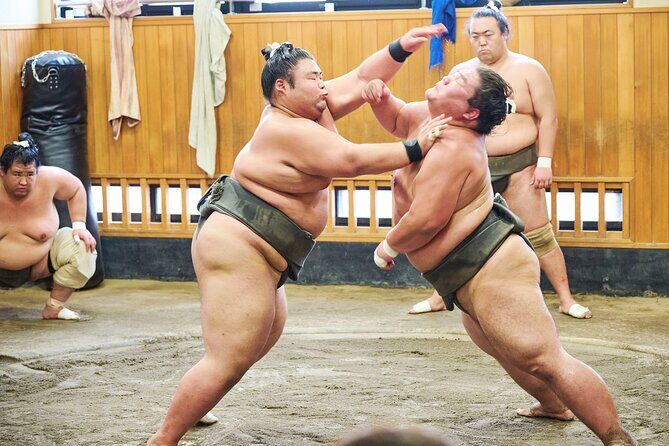
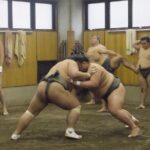
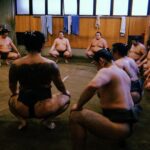
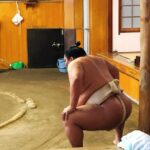
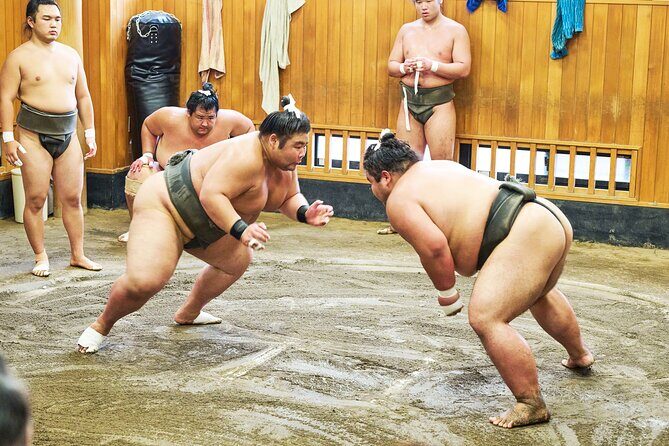
If your only idea of sumo comes from TV clips or tournament days, this is the antidote. You’re not watching a match. You’re watching training—where the mood is focused, repetitive, and very human. That difference matters, because practice shows you how wrestlers build balance, timing, and endurance over time.
The setting is part of the magic. A working sumo stable is not built to entertain tourists. It’s where routines happen. That means you get a front-row view of how serious the discipline is, from the way everyone moves to the way the session flows.
And because it’s a guided experience, you don’t have to guess what each moment means. The guide talks through sumo rules, rituals, and traditions, so the morning isn’t just visually interesting—it’s understandable.
A few more Tokyo tours and experiences worth a look


Kiyosumi-shirakawa Meeting Point and the Easiest Start
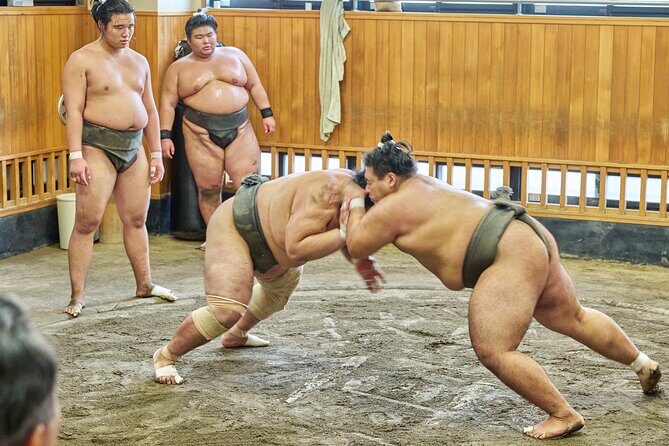
The tour begins at a specific spot near public transport: Kiyosumi-shirakawa Station, 1-chōme, at 6-13 Shirakawa, Koto City, Tokyo. It’s helpful that the meeting point is clearly described and near transit, because an early start is the one thing that can derail your day.
Start time is 8:30 am, and the whole experience runs about 2 hours. That timing is a big part of why the access feels special: you’re seeing training while the stable is in full rhythm, not after it has shifted into a tourist-friendly schedule.
When it ends, you return back to the meeting point. That’s practical. You’re not dropped into the middle of the city with no clear next step.
What Happens During the 1.5 Hours of Training Observation
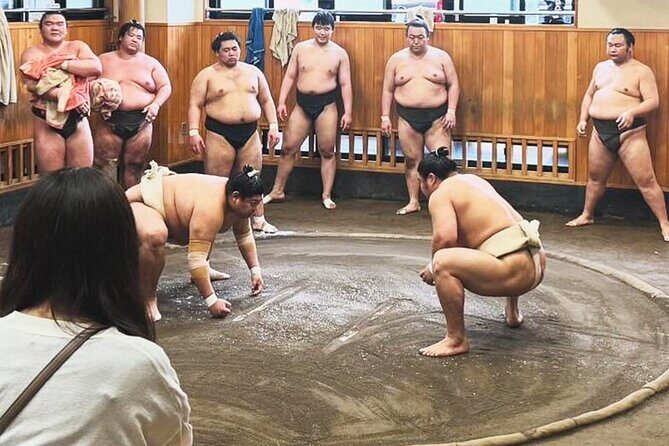
You’ll go with a knowledgeable sumo guide to observe practice at an actual stable. Expect the core time to be spent watching training closely for about 1 hour 30 minutes. This is long enough to notice patterns, but short enough that you don’t feel trapped standing still.
Here’s the main thing to understand: training has its own pace, and it’s not designed for conversation. Once the session is underway, you’ll follow stable etiquette. In other words, your job is to watch, learn, and respect the flow.
You may notice that the environment feels more like observing athletes at work than visiting an attraction. That’s exactly why this tour lands for people who want something authentic.
Also, you’re going as part of a group (up to 50 people). That means you’ll be close, but you still won’t have total freedom to roam. If you’re the type who needs your own space, lean on the guide for positioning and timing.
Getting Meaning From Sumo: Rules and Rituals in Plain Language
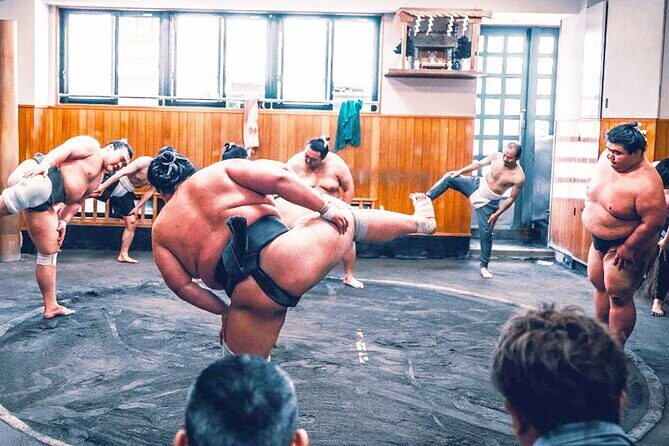
One of the best values in this tour is that you’re not left to figure things out alone. The guide explains sumo rules and the rituals and traditions around practice. That turns “interesting viewing” into “I get it.”
Even if you think you know sumo, it helps to hear it explained in a way that connects what you see (during training) to why it matters in sumo culture. You’ll likely pick up the logic behind key behaviors and the structure behind daily life in a stable—things you’d miss if you only watched highlights.
This is also where the experience becomes more than a photo stop. Sumo has status, roles, and tradition baked into the day. A good guide makes those layers visible quickly.
And if you’re a beginner, this kind of guided context is worth its weight in cold coffee. It prevents the classic problem: you stare at what looks like athletic chaos and leave with no clear takeaways.
Photo Opportunities Without Turning It Into a Circus

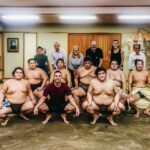
This is one of the headline perks: you get the opportunity to take photos with sumo wrestlers. That’s not something most visitors can arrange on their own.
Just keep your expectations realistic. In a working stable, safety and etiquette come first. So if you’re thinking of dramatic, do-anything photos, you’ll want to shift into follow-the-guide mode. Your best results usually come from listening early, moving when asked, and staying out of the way.
The payoff is that the photo moment feels connected to what you’re actually watching. Instead of a random souvenir photo, you’re capturing a rare, real-time encounter in the setting where training happens.
Practical tip: bring your phone/camera charged and ready. With early sessions and short windows, you don’t want to waste time fiddling with settings.






Quiet Etiquette and the Best Way to Ask Questions
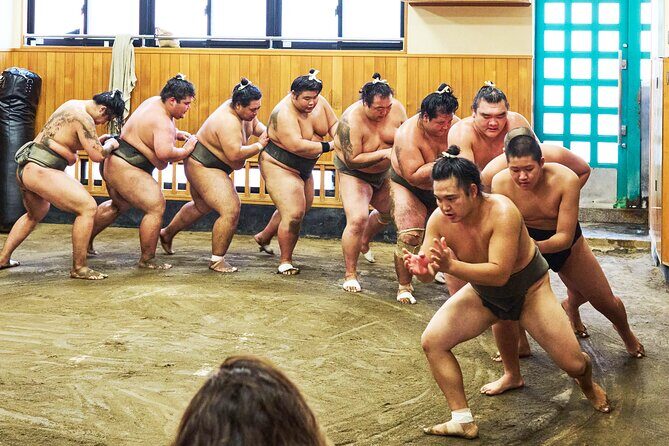
In a stable, silence isn’t a minor detail. During training, people aren’t supposed to talk, and you’ll need to follow that rule. The good news is that the experience is still interactive in other ways.
The tours are guided by Local Guide Stars, and guides like Tomo and Mao have led groups. You can count on the guide to explain what you’re seeing and to answer questions as appropriate. Some guides also set up off-to-side channels for questions when speaking isn’t allowed during the session, so you still get clarity without breaking training etiquette.
That structure is a win. It keeps the stable experience respectful, while still helping you get answers instead of just absorbing vague impressions.
If you have specific sumo questions—like how training differs from match day—this is the moment to ask. With good guidance, you’ll come away with a clearer understanding of what practice is building toward.
Group Size, Timing, and Why Those Details Matter
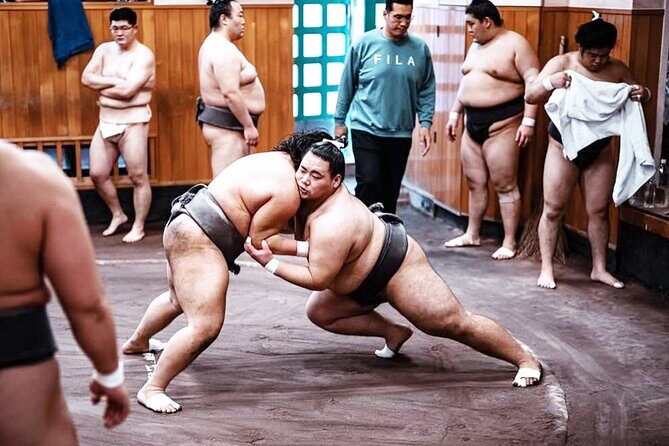
This tour caps at 50 travelers, which helps keep the experience controlled and less chaotic than bigger city-group tours. You’ll still be part of a group, but the smaller cap makes it more realistic to manage viewing and photo moments.
Timing is also key. Starting at 8:30 am means you’re viewing training during the morning session, when the stable is fully active. If you prefer slow mornings and late starts, this one will feel a little intense. But if you want sumo culture at its most real, morning is when it happens.
Duration is about 2 hours. That’s a comfortable length for an “early access” activity because it doesn’t swallow your entire day. You can watch training, learn the basics, snap your photos, and still have time to explore afterward.
Price and Value: Does $118.92 Make Sense?
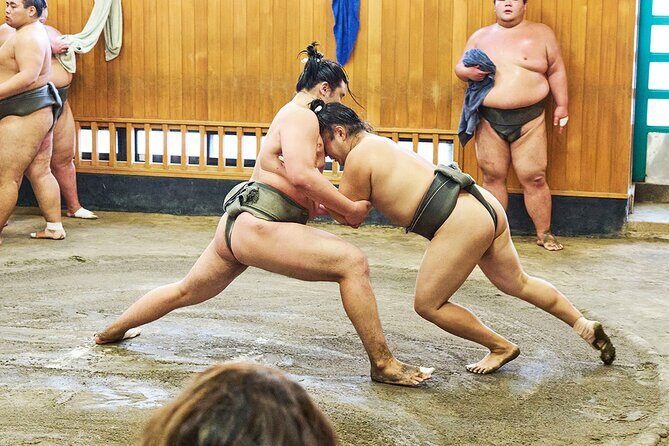
At $118.92 per person, this isn’t a budget activity. But you’re paying for access and context, not just time in a building.
Here’s what you get for the money:
- Special access to an authentic training stable
- Close observation during a morning practice session (not a performance)
- A guide who explains rules, rituals, and traditions
- An opportunity to take photos with sumo wrestlers
- A tight, focused duration of about 2 hours
For sumo fans, culture seekers, or photographers, that combo is usually where value shows up. You’re not only getting entry—you’re getting interpretation, which makes the experience feel larger than its short length.
If you’re visiting Tokyo for the first time and want to cover “big sights,” this tour might feel small. But if you care about how Tokyo works up close, sumo practice is a rare window into a centuries-old world that’s still lived today.
Who This Tour Fits Best (and Who Might Want Something Else)
This tour is ideal if you:
- Want to see sumo as training, not entertainment
- Like guided cultural explanations that make what you see make sense fast
- Want a genuine Tokyo experience that doesn’t rely on a scripted show
It can also work well for families who can handle quiet instructions. The stable setting is not built for running around. If you’re bringing younger kids, it helps when they can follow “listen and stay quiet” rules during practice.
You might choose a different option if:
- You strongly dislike early mornings
- You expect lots of talking and active participation during the practice itself
- You want a high-comfort, low-rules experience (stable etiquette is real here)
Should You Book This Sumo Morning Practice Tour?
Book it if you want the closest, most authentic slice of sumo you can fit into a Tokyo morning. The mix of working stable access, guided explanations, and a photo opportunity is exactly what makes this worth your time.
Skip it if you’re only chasing a casual sightseeing item, because this experience demands respect for training etiquette and it runs early. If you’re okay with quiet focus for a short window, you’ll likely leave with a deeper, clearer understanding of sumo culture than you could get from watching matches alone.
FAQ
What time does the tour start?
The start time is 8:30 am.
How long is the experience?
It runs about 2 hours (approximately), with about 1 hour 30 minutes for observation.
Where is the meeting point?
It starts at Kiyosumi-shirakawa Station, 1-chōme-6-13 Shirakawa, Koto City, Tokyo 135-0021, Japan.
Is the admission ticket included?
Yes. The admission ticket is listed as free for the session.
Can I take photos with the wrestlers?
Yes, there is an opportunity to take photos with sumo wrestlers.
Will I learn about sumo rules and traditions?
Yes. The guide explains sumo rules, rituals, and traditions throughout the experience.
Do I need to bring a paper ticket?
No. You’ll use a mobile ticket.
How big is the group?
The maximum group size is 50 travelers.
How close is the meeting point to public transportation?
It’s near public transportation.
What is the cancellation policy?
You can cancel for a full refund up to 24 hours before the experience start time. If you cancel less than 24 hours before, you won’t get a refund.