REVIEW · TOKYO
Tokyo: Shinjuku Bar Hopping & Night Walking Tour
Book on GetYourGuide →Operated by Local Guide Stars · Bookable on GetYourGuide
Shinjuku drinks come in tiny rooms. This Tokyo night walk strings together Omoide Yokocho and Golden Gai with real ordering know-how, plus guides who explain what you’re eating and drinking. I especially like the way the evening builds from place to place, with food you can actually taste (sushi, gyoza, kushikatsu) and sake moments where guides like Miko break down the differences so you’re not just guessing.
The main drawback is practical: the tour price is only the experience, and cash is expected for food and drinks—plus some spots have limited seating, so you may stand.
In This Review
- Quick Hits You Should Know
- Starting at Shinjuku Station: Easy to Find, Then the Real Shinjuku Begins
- Omoide Yokocho: Red-Lantern Izakayas and Getting Served Without Stress
- What you’ll likely experience here
- The realistic catch
- Kabukicho After Dark: Neon Noise With a Human Filter
- Food and drink at this stage
- What can go wrong (minor, but real)
- Golden Gai: Insider Access to Tiny Bars You’d Walk Past
- Why Golden Gai works so well on a tour
- Drink note you should take seriously
- The Food and Sake Part: More Than Just Ordering Randomly
- Budget reality: the $30 covers the tour, not the meal
- Walking, Time, and Group Energy Over a 3-Hour Night
- Vegetarian Options: Limited, So Plan Your Expectations
- Cultural and Language Barriers: Part of the Fun, Still Manageable
- Who Should Book This Shinjuku Bar Hopping Tour?
- Should You Book This Tour?
- FAQ
- Where do I meet for the tour?
- How long is the tour?
- Is the tour walking only?
- What’s included in the $30 per person price?
- Are food and drinks included?
- Do I need to bring cash?
- Can I drink alcohol on this tour?
- Is the tour vegetarian-friendly?
- What happens if I’m late?
- Will the tour run in bad weather?
Quick Hits You Should Know
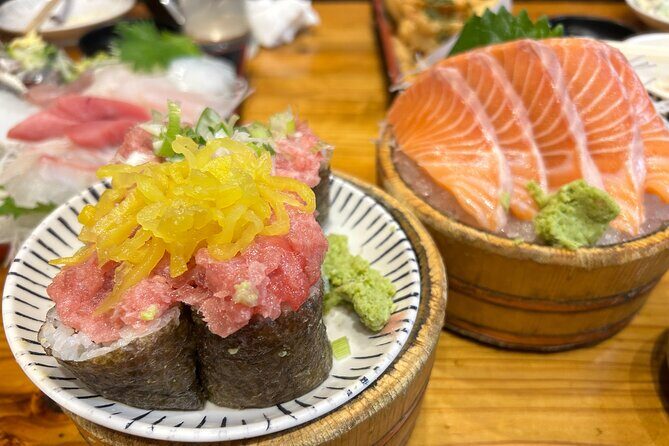
- Three distinct izakaya types in one smooth night walk, not random bar roulette.
- Sake tasting with explanations, so you understand what you’re ordering.
- Tight, character-filled neighborhoods: Omoide Yokocho, Kabukicho, and Golden Gai.
- Reservations help at small venues, where getting a table can be tough.
- Arcades and hidden alleys show you Shinjuku after dark beyond the obvious streets.
- English or Japanese guidance that keeps the night moving and answers your questions.
Starting at Shinjuku Station: Easy to Find, Then the Real Shinjuku Begins

Your evening starts at a specific, easy-to-spot landmark: the Shinjuku Police Station Shinjuku East Exit Police Box at the East Exit of Shinjuku Station (3-38-1 Shinjuku). The guide will be holding a sign that includes Local Guide Stars. This matters because Shinjuku Station is massive, and finding the group quickly lets you stay relaxed once the walk starts.
From there, the tour is mostly on foot. The pace is built for short transitions—think quick hops between neighborhoods—so you’re not burning your night standing around. Also, the tour is designed to start on time, rain or shine. If you’re even slightly late, the group moves forward, and you won’t get a refund or reschedule.
You can also read our reviews of more walking tours in Tokyo
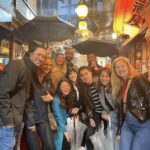
Omoide Yokocho: Red-Lantern Izakayas and Getting Served Without Stress
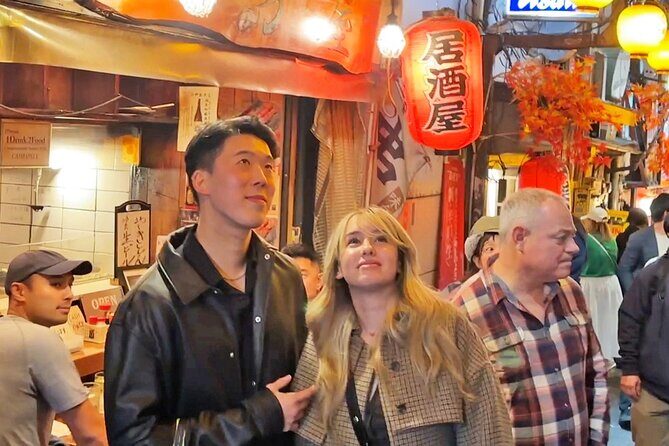
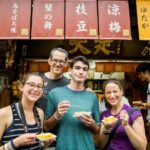
Omoide Yokocho is the warm-up act that instantly sets the mood. Picture narrow lanes lined with small, red-lantern restaurants, crowded with after-work crowds who know exactly where they’re going. This is the kind of street where a first-time visitor might wander for a while and still not feel sure what to order or how to get seated.
That’s where the tour’s value shows up. You’re not just walking in—you’re guided into authentic izakayas and helped with the practical stuff. One of the most repeated benefits in feedback is that guides handle reservations and help you avoid the awkward pause of searching for the right doorway, especially when places are full.
What you’ll likely experience here
- A meal-style start that can include items like sushi (this comes up often)
- A more traditional izakaya vibe: small tables, lively conversation, and fast evening energy
- A chance to ask questions early, when you still feel fresh and curious
The realistic catch
Because the seating is limited, don’t assume you’ll get a comfy chair for the whole time. Some spots may require standing. If you’re prone to getting uncomfortable standing in tight spaces, plan to treat this stop as a short, social experience rather than a long dinner break.
Kabukicho After Dark: Neon Noise With a Human Filter
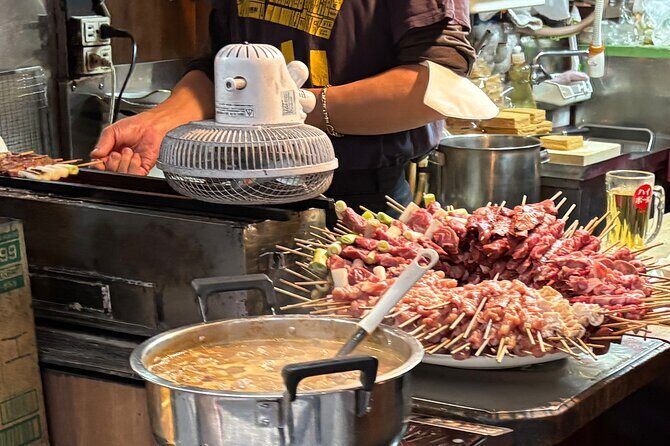
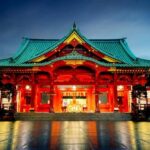
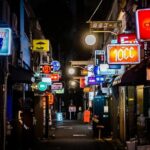
Next comes Kabukicho, Shinjuku’s famous entertainment district—bright, loud, and packed with people who are there to be seen. Without a plan, Kabukicho can feel like sensory overload. With a guide, you get structure: you walk through the area while learning what you’re actually looking at and where the “real” nightlife energy lives.
This stop tends to feel like the bridge between traditional izakaya culture and the wider Shinjuku night scene. Guides often use Kabukicho to explain local nightlife rhythms—how the area works, why certain places exist, and what makes one spot different from the next.
You can also read our reviews of more evening experiences in Tokyo



Food and drink at this stage
You may see dishes like gyoza and other bar-friendly bites, plus more sake and beer options depending on the night. One theme from guides’ picks: you’re meant to eat things you might not choose on your own, partly because the menu language can be tricky and partly because the best options aren’t always the most obvious.
What can go wrong (minor, but real)
Service can be slow at busy small places. The tour is scheduled for about 3 hours, but if restaurants take longer, the end time can slide later. The good news: if you’re already in “Tokyo night mode,” that delay usually feels like part of the experience, not a problem.
Golden Gai: Insider Access to Tiny Bars You’d Walk Past
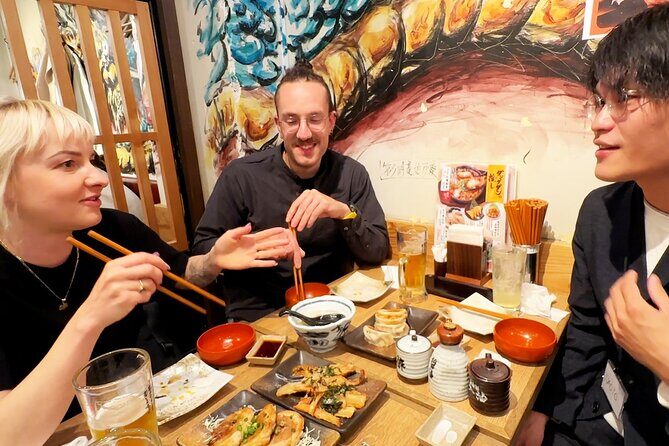
Golden Gai is where the night gets memorable in a specific, almost cinematic way. It’s a cluster of tiny bars packed into very small spaces and hidden alleys, the kind of place you can stand at the edge of and wonder how anyone ever gets inside.
This tour helps because the guide has insider connections. Access here can be the difference between seeing Golden Gai from outside and actually drinking in the kind of bar most first-timers only glimpse.
Why Golden Gai works so well on a tour
- You get the local etiquette and practical cues that make tiny spaces less awkward
- You spend time in more than one atmosphere within the neighborhood
- The guide helps you choose drinks that fit the vibe, not just what you can decipher quickly
A lot of the praise focuses on the “you wouldn’t find this alone” factor. And it’s true: Golden Gai is the kind of place where you can easily end up in a bar that’s too tourist-forward or just not the right fit for your group mood.
Drink note you should take seriously
By Japanese law, only people 20 and over are allowed to drink alcohol. If anyone in your group is under that age, the tour can still be a great way to learn and explore, but the alcohol part won’t be relevant for them.
The Food and Sake Part: More Than Just Ordering Randomly
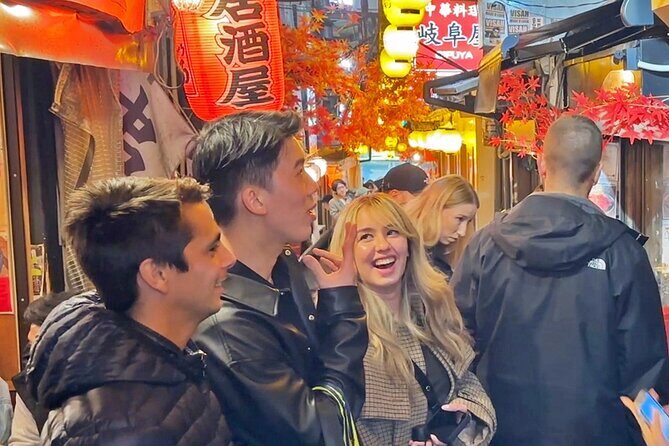
This is not a generic bar crawl where you show up, drink, and hope for the best. The structure is intentional: you visit three distinct types of authentic izakayas, and the food-and-drink experience is part of the cultural education.
From the details provided, the food focus often includes:
- Sushi
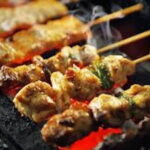
- Crispy kushikatsu
- Juicy gyoza
- Plenty of sake, plus beer and other spirits depending on the bar
And the sake is not just “try a little.” Guides have described sake-tasting explanations—how types differ—so you can connect taste to style. When someone like Miko breaks it down, it turns sake from a novelty into something you can actually order with confidence the next time you’re back in Japan.
Budget reality: the $30 covers the tour, not the meal
Price-wise, the $30 per person is a fair way to pay for the guide, the walk, and the photos. But food and drinks are not included, so you’ll need to budget extra for what you choose to eat and drink.
This is normal in Tokyo. What you’re really paying for is access and guidance: reservations handled where possible, ordering help, and the ability to try the right kinds of places instead of gambling on what might be closed, full, or not worth your time.
Walking, Time, and Group Energy Over a 3-Hour Night
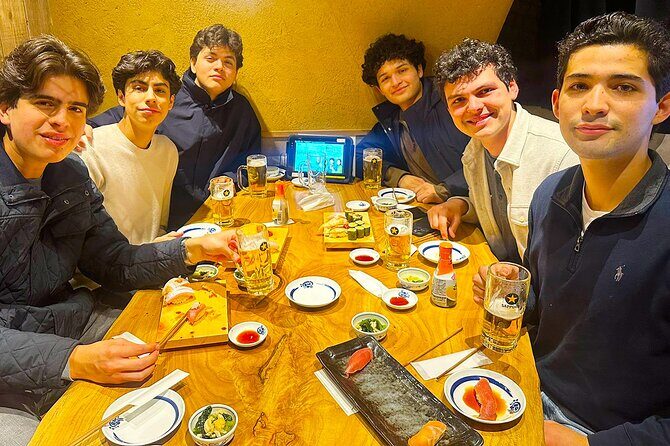
Three hours is the sweet spot for Shinjuku nightlife. Long enough to feel like you’ve actually gone somewhere. Short enough that you still have energy to wander afterward.
The schedule is built around compact transitions—about 5 minutes of walking at the start and end—plus time inside each stop. That also means you’ll be using the night efficiently, rather than losing half your evening to train delays or big walks.
Group size can vary. Some departures can be small, which tends to make the experience more personal. If your group is smaller, you’ll likely get more direct questions answered and more back-and-forth with your guide.
One small but important thing: service delays can push the evening past the planned time. If your next day has tight plans, keep that in mind.
Vegetarian Options: Limited, So Plan Your Expectations
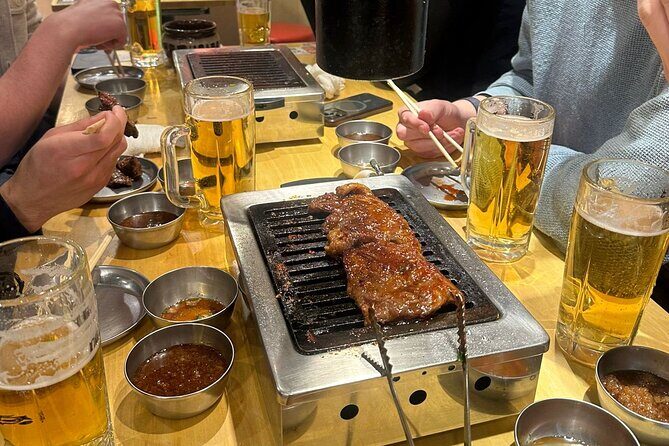
If you eat vegetarian, read this as a heads-up, not a dealbreaker. The tour information notes that most Japanese restaurants are not fully set up for vegetarian menus, and while vegetarian options exist, they can be limited.
What you can do: be upfront about dietary needs before you go. A good guide can sometimes steer you toward what’s workable, but you should expect compromises. If you’re strict (no fish sauce, no dashi, etc.), you’ll want to clarify what you can and can’t eat.
Cultural and Language Barriers: Part of the Fun, Still Manageable
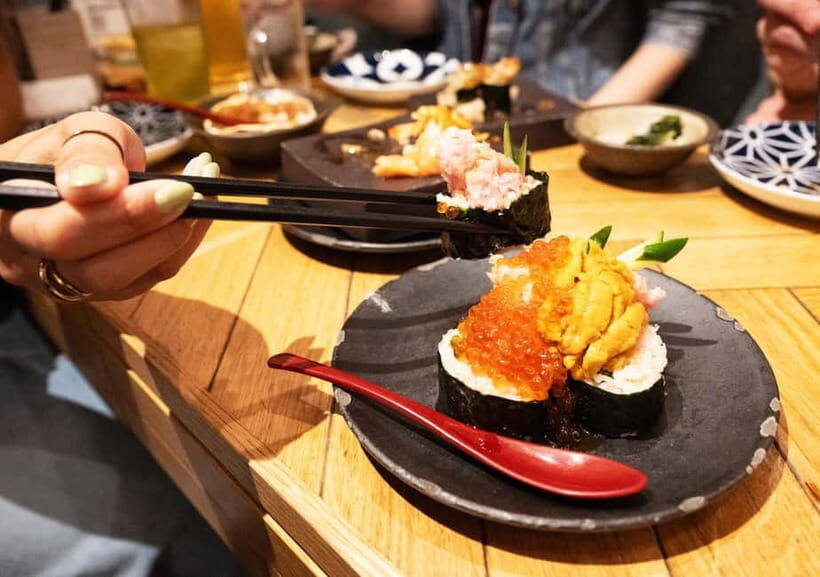
Japan’s nightlife can feel intimidating at first—menus in Japanese, tiny spaces, and locals who move fast. The good part is that the guide bridges the gap.
Because the tour is with an English or Japanese-speaking guide, you’re not left alone trying to guess your way through a tiny izakaya. Guides also bring humor and friendliness, which helps you relax when you’re in places that don’t exactly cater to English-first visitors.
And cultural barriers are treated like part of the experience rather than a failure. That’s a positive. It means you’re learning, not just consuming.
Who Should Book This Shinjuku Bar Hopping Tour?
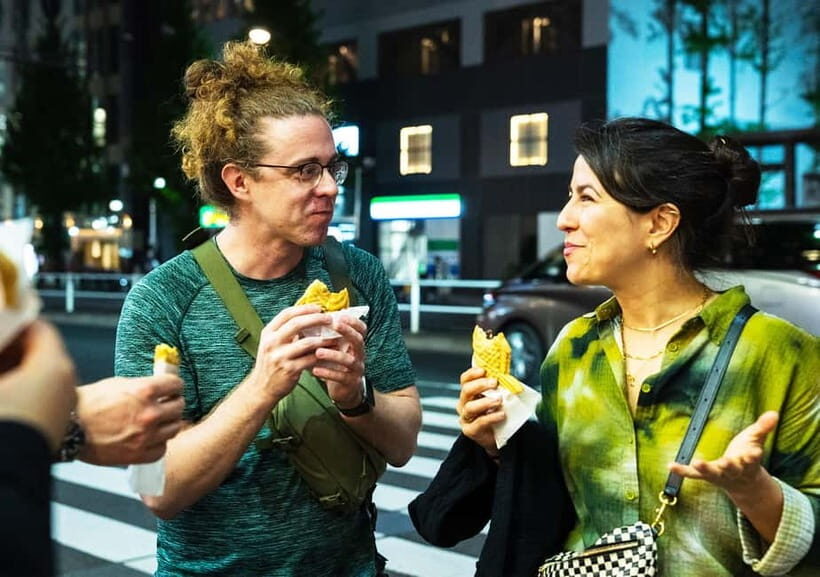
I think this tour fits best if:
- You want a local-guided Shinjuku night, not just wandering
- You enjoy izakaya food and want help ordering
- You’re curious about sake and like having someone explain what you’re tasting
- You’re social enough to enjoy conversation with your group
You might skip it if:
- You don’t drink at all. Some feedback suggests the tour is much more fun if you’re open to alcohol and the culture around it.
- You hate standing or tight seating. Golden Gai and small izakayas can be snug.
- You need fully vegetarian menus with lots of guaranteed choices.
Should You Book This Tour?
Yes, if you want the kind of Shinjuku night that feels guided but still authentic. The best value here is the combination of three different izakaya stops, the sense of access (especially around Golden Gai), and guides who make the whole thing more than just eating and drinking.
If you’re budget-conscious: remember the $30 is for the experience, not the meals and drinks. Bring enough cash and be ready to spend a bit extra for the food and sake you’ll want at each stop.
FAQ
Where do I meet for the tour?
Meet at the Shinjuku Police Station Shinjuku East Exit Police Box at the East Exit of Shinjuku Station. The guide will have a sign that includes Local Guide Stars.
How long is the tour?
The tour lasts about 3 hours.
Is the tour walking only?
Yes, it’s a walking tour through Shinjuku, with short on-foot transitions between stops.
What’s included in the $30 per person price?
The price includes a local guide, the walking tour, and photos taken during the tour.
Are food and drinks included?
No. Food and drinks are not included, and you’ll pay for them during the experience.
Do I need to bring cash?
Yes. You should bring cash.
Can I drink alcohol on this tour?
By Japanese law, only guests aged 20 and over are allowed to drink alcohol.
Is the tour vegetarian-friendly?
Vegetarian options may be available, but they are limited. Many Japanese restaurants are not fully equipped for vegetarian menus.
What happens if I’m late?
The tour starts on time. If you are late and miss the group, refunds or rescheduling are not provided.
Will the tour run in bad weather?
Yes. The tour proceeds rain or shine.