REVIEW · TOKYO
Tokyo Night Foodie Tour in Shinjuku – Seasonal Sushi, Wagyu Beef
Book on Viator →Operated by MagicalTrip Inc. · Bookable on Viator
Shinjuku night food feels like a cheat code. This Tokyo night foodie tour strings together seasonal sushi and Wagyu beef with a guided walk through the Kabuki-cho and Godzilla Road areas, so you get both bites and a sense of place. It’s built for a small group, which matters when you want real-time help figuring out what you’re eating.
What I love most is the food lineup: you start at a sushi spot known for several creations, then move into a Wagyu stop where the beef is grilled on traditional shichirin stoves. Second, I like the pacing: you’re not just eating in place—you also get a guided stroll through Kabuki-cho and a final stop for dessert or a drink to round out the night.
One consideration: the tour can’t guarantee allergy-free food or accommodate every dietary need, and substitutions aren’t always possible at each stop. If you have strong restrictions, you’ll want to plan carefully and communicate ahead.
In This Review
- Key Things to Know Before You Go
- Shinjuku at Night: Food Tour Plus a Sense of Tokyo
- Price and Value: What You’re Really Paying For
- Timing, Group Size, and the Walk Rhythm
- Start Point in Nishishinjuku: Getting Oriented Fast
- Stop 1: Sushi Haven and Seasonal Creations
- Omoide Yokocho Area: Omakase Style, Then Moving on
- Wagyu on Shichirin Stoves: The Part Beef Lovers Wait For
- Kabuki-cho Night Walk: Neon Streets with Context
- Godzilla Road and the Head: A Short Stop, Big Smile
- Nishishinjuku Finale: Dessert or a Drink to Close the Night
- What to Expect from Your Guide (Names You Might Hear)
- Dietary Needs, Smoking, and Weather: The Real-World Stuff
- A Note on Explanations: Ask for the Food Stories You Want
- Who This Tour Is Best For
- Should You Book This Tokyo Night Foodie Tour?
- FAQ
- How long is the Tokyo Night Foodie Tour in Shinjuku?
- What does the tour cost?
- Is this tour a small group?
- Where does the tour meet and where does it end?
- Can you accommodate vegetarian diets or allergies?
- What is the cancellation policy?
Key Things to Know Before You Go
- Small group (up to 7): more attention from your guide for questions and menu help.
- Seasonal sushi + omakase style option: you may get chef-chosen pieces, not a random sampler.
- Shichirin-grilled Wagyu: you’re watching the grilling method used in traditional yakiniku settings.
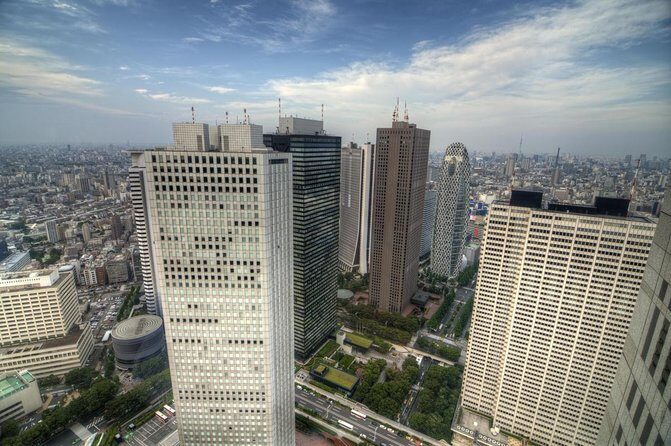
- Kabuki-cho at night: neon streets, restaurants, theaters, and nightlife energy with context from your guide.
- Godzilla Road & head photo stop: the tour points you to the fan-favorite landmark.
- Dessert or a drink finale: the end feels celebratory instead of abrupt.
Shinjuku at Night: Food Tour Plus a Sense of Tokyo
Shinjuku after dark is loud in the best way. You get neon, side streets, and that specific Tokyo feeling of food everywhere, even when you’re just walking. This tour helps you turn all that into something you can actually understand—where you’re going, why it matters, and what to order when you’re standing there with a menu in front of you.
The experience is also nicely practical. A 3-hour format is long enough to feel like a real night out, but short enough to keep you from losing the thread to exhaustion. If you’re only here for a few days, it’s an efficient way to get both flavor and orientation.
A few more Tokyo tours and experiences worth a look
Price and Value: What You’re Really Paying For
At $111.62 per person for about 3 hours, this isn’t a budget-only snack crawl. You’re paying for two big food anchors: sushi and Wagyu beef, plus the guide who handles the flow between places. It’s usually the difference between wandering into the wrong spot versus landing at small, local-feeling restaurants that fit the night’s plan.
Value is strongest if you want the experience to feel guided end-to-end. With a small group, you get time to ask questions (especially helpful for first-timers with sushi etiquette or Wagyu ordering). You also get the added benefit of the nightlife walk—Kabuki-cho and Godzilla Road—which turns what could be just meals into a more complete evening.
Timing, Group Size, and the Walk Rhythm
This tour runs for about 3 hours and caps at 7 travelers. That small number shows up in the way the evening runs: you’re not stuck waiting behind a crowd, and it’s easier for the guide to steer the group at the right pace.
One review note I’d take seriously: the pace can feel relaxed. So if you want a slow, social walk where you can absorb the scenes and not feel sprinted from stop to stop, you’ll likely like it. If you want a very fast checklist-style crawl, you might find it slightly unhurried—still enjoyable, just not hyper-rushed.
Start Point in Nishishinjuku: Getting Oriented Fast
The tour meets at 1-chōme-2-8 Nishishinjuku, Shinjuku City, Tokyo 160-0023 and ends back near the meeting point. Meeting near Nishishinjuku is a useful start because it positions you for the night’s movement without feeling like you’re crossing half the city on foot.
You’ll want to arrive a few minutes early. Japan’s public transit is excellent, but meeting times can be unforgiving when groups are small. Also, this is an outdoor-heavy night walk, so dress for the weather.
Stop 1: Sushi Haven and Seasonal Creations
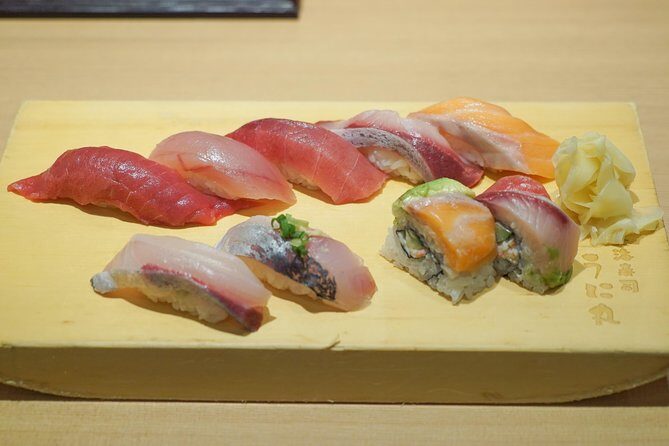
The night begins at an authentic sushi haven where the plan is to try several sushi creations. This isn’t just one set plate and a goodbye—it’s structured to give you variety, which is especially helpful if you’re new to sushi but want to learn what to look for.
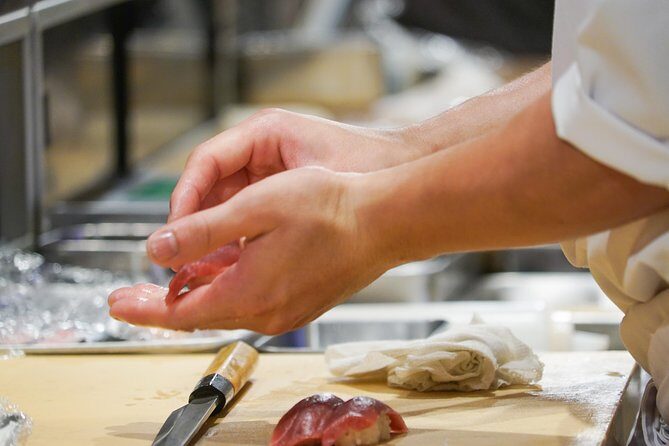
You might also notice that the atmosphere is intentionally low-key. Sushi counters like this tend to reward calm attention, and the guide’s role becomes bigger: they help translate the menu context and guide you on what to focus on while you eat. If you’re the type who likes watching a chef work, you’ll get that sense of craft here.
You can also read our reviews of more evening experiences in Tokyo


Omoide Yokocho Area: Omakase Style, Then Moving on
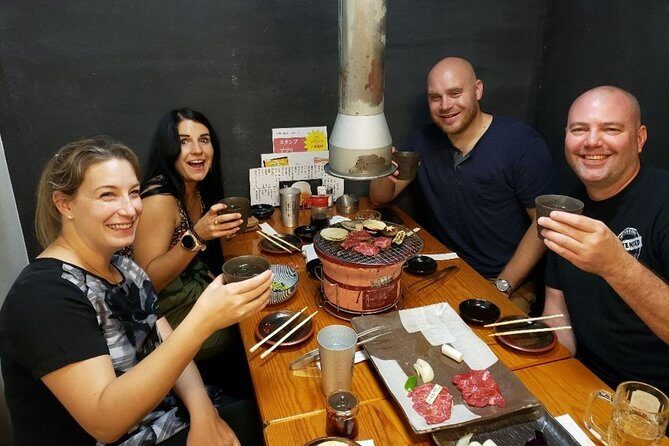
The tour includes time around the Omoide Yokocho area, and there’s an option described as omakase style, meaning the chef chooses based on what’s freshest. That’s a smart choice if you want less decision stress and more flavor confidence—especially on a first Tokyo sushi night.
One thing to keep in mind: the vibe zone and the actual eating counter don’t always mean you stay in the narrow alley lanes. In other words, don’t expect the meal to be served directly from where you meet the area’s energy. You’ll likely do some short walking before each main food moment, which is normal for Shinjuku.
Wagyu on Shichirin Stoves: The Part Beef Lovers Wait For
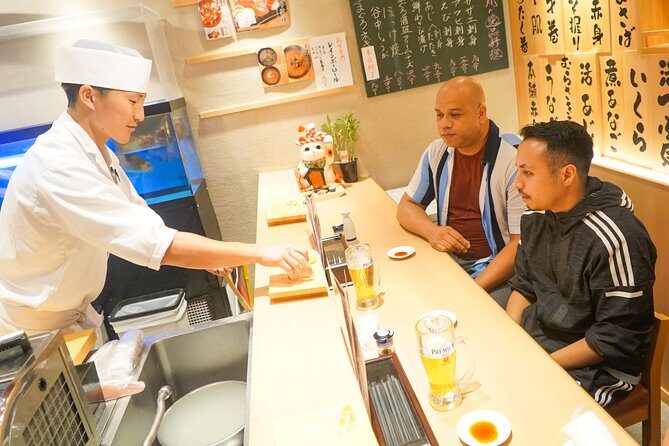
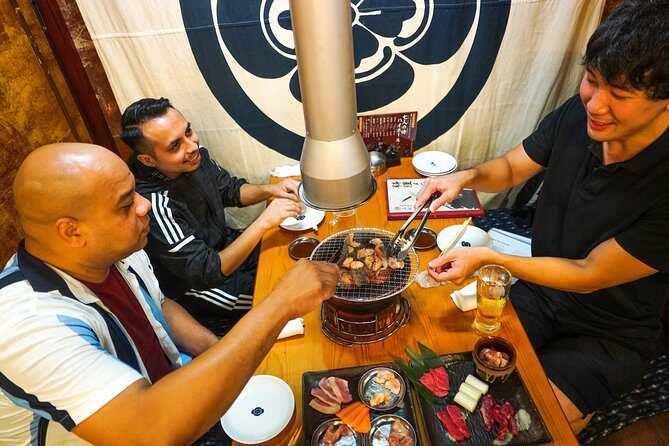
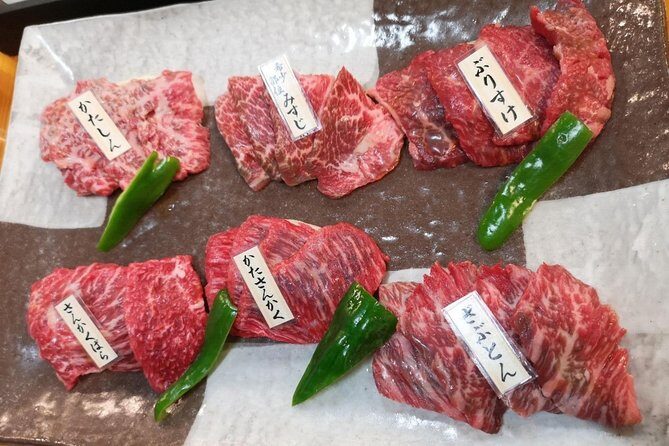
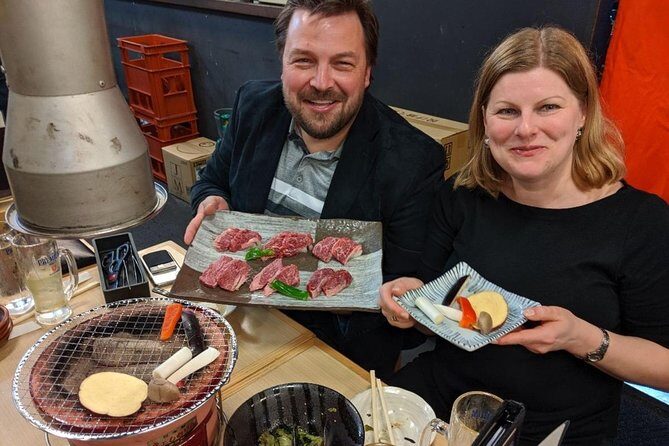
The Wagyu stop is the big ticket moment. You’ll visit a restaurant where they grill Wagyu on traditional shichirin stoves, which are tabletop charcoal setups. That matters because it changes the experience from just tasting to actually watching the cook method and heat control.
The tour’s Wagyu portion is designed to feel special, and you can tell by how often it shows up as the highlight. Several guides are described as making the evening memorable—Molly gets called out in particular for Wagyu enjoyment, and other guides are praised for explaining food in a way that makes you feel confident ordering.
Practical tip: if you’re uncertain about how Wagyu is served or what to pair it with, ask. The small group format usually makes it easy to get a direct explanation right when you need it. It’s also a good moment to ask about how the chef expects you to eat it.
Kabuki-cho Night Walk: Neon Streets with Context
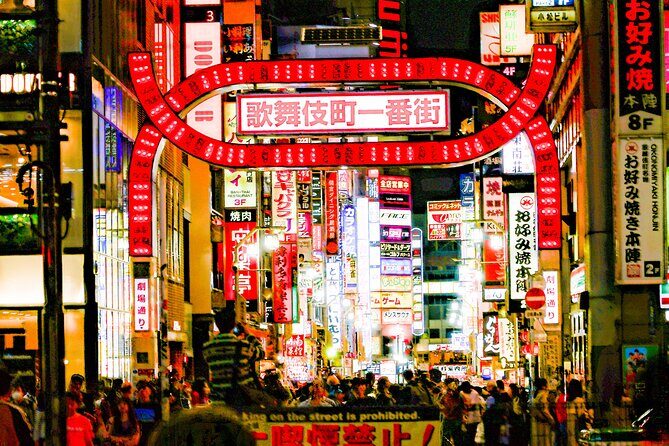
After the meat-and-fish momentum, you shift into the street side of Shinjuku: Kabuki-cho. It’s described as an entertainment district known for neon streets, restaurants, theaters, and nightlife culture that comes alive after dark.
This is where your guide earns their fee. Without explanation, Kabuki-cho can blur into one long stream of signage. With guidance, it becomes a map of what you’re seeing—what each area is known for and how it fits into the neighborhood’s rhythm. If you want a night out you can later revisit with confidence, this guided walk helps you remember where things are.
It can be more fun if you’re open to questions. Some guides are singled out for sharing cultural context, not just food talk. That turns the stroll into a mini lesson you actually remember.
Godzilla Road and the Head: A Short Stop, Big Smile
Yes, you’ll stop at Godzilla Road & head. It’s specifically described as a sacred place for Godzilla fans, with a powerful head that makes you feel like you’re in a movie world. Your guide also shares history tied to the character, so it’s not just a quick photo and move on.
This stop is short (about 5 minutes), which is perfect in the middle of a longer food plan. You get the icon moment without losing time. If Godzilla is part of your Japan story, you’ll appreciate that it’s woven in instead of left as an optional detour.
Nishishinjuku Finale: Dessert or a Drink to Close the Night
The tour ends in Nishishinjuku with a sweet finale—unique Japanese desserts or drinks—at a charming eatery/bar. This stop is designed to make the evening feel complete. You’ve eaten your savory hits, and now you get something slower and more relaxed.
Dessert options can be flexible depending on what’s available. In at least one group experience, dessert was the chosen finale, which suggests the guide will guide you through the selection in a way that works for the whole group. Either way, it’s a nice transition into the night’s last photo and final conversation.
What to Expect from Your Guide (Names You Might Hear)
Part of the tour’s strength is consistency in how guides show up. Reviews mention guides like Yuki, Molly, Yosh, Megumi, Yuma, Hiro, Aoi, Lisa, Minnie, Karen, Mimi, and Mayu. Across them, a common theme is that guides make you feel comfortable and help you figure things out on the spot.
One standout example: Yuki is praised for helping an elderly mother with menu selections. That tells me the tour is set up so the guide can handle real needs in real time, not just recite facts. Another example: some guides are described as flexible with pacing and attentive to group comfort, even in rain.
Dietary Needs, Smoking, and Weather: The Real-World Stuff
This tour has a clear limitation: it can’t guarantee allergy-free food or cater perfectly to dietary restrictions because the food is prepared in kitchens that don’t belong to the tour operator. Substitutions also aren’t guaranteed at every stop, though the guide will try to compensate at other points in the evening.
If you’re vegetarian, there is a pathway: you can request a vegetarian course in advance (by the day before). If you wait until the day of, you can’t expect it to be available.
Two more realities:
- Smoking: the tour may visit places where smoking is not prohibited, and venues can’t always be changed.
- Weather: Japan’s climate can swing hard, with summer highs around 40°C (110°F) and winter lows near -5°C (20°F). Bring what keeps you comfortable, because you’ll be walking.
If you’re sensitive to smoke or have strict allergies, this is the part you should evaluate honestly before booking.
A Note on Explanations: Ask for the Food Stories You Want
Some people love the cultural and food context their guide provides. Others wish they’d gotten a bit more food-specific explanation. The best fix is simple: ask.
When you sit down for sushi or Wagyu, ask questions like what’s seasonal, how the chef expects the meat or fish to be eaten, or what local specialty you should pay attention to. With a small group, you usually won’t be fighting for time.
Who This Tour Is Best For
This tour is ideal if you:
- want sushi and Wagyu in one night without doing logistics yourself
- enjoy a guided walk through Kabuki-cho with context, not just photos
- like the idea of a small-group night out with lots of chance to ask questions
- are open to dessert as a proper finale, not a token bite
It may be less ideal if you:
- have strict allergies or need guaranteed allergy-safe cooking
- need a fully non-smoking experience
- want a very long deep exploration of a single neighborhood (this one is spread across the main sights and stops)
Should You Book This Tokyo Night Foodie Tour?
If you want an efficient, high-impact Tokyo night that combines seasonal sushi, shichirin-grilled Wagyu, and iconic Shinjuku landmarks, I think this is a strong booking choice. The small group format is a real quality marker here, and the fact that the tour ends with dessert or a drink makes it feel like a complete evening plan.
My advice: book it early in your trip if you want ideas for where to return. Then, if you have dietary restrictions or smoke sensitivity, be upfront about it and confirm what you can realistically expect from substitutions.
FAQ
How long is the Tokyo Night Foodie Tour in Shinjuku?
The tour is approximately 3 hours.
What does the tour cost?
The price is $111.62 per person.
Is this tour a small group?
Yes. The tour has a maximum of 7 travelers.
Where does the tour meet and where does it end?
It starts at 1-chōme-2-8 Nishishinjuku, Shinjuku City, Tokyo 160-0023, Japan and ends back at the meeting point.
Can you accommodate vegetarian diets or allergies?
Vegetarian requests can be made in advance (by the day before). The tour can’t guarantee allergy-free food or cater to dietary restrictions, and substitutions may not be possible at certain stops.
What is the cancellation policy?
Free cancellation is available up to 24 hours in advance for a full refund. If you cancel less than 24 hours before the start time, the amount paid isn’t refunded.