REVIEW · TOKYO
The Dark Side of Tokyo – Night Walking Tour Shinjuku Kabukicho
Book on Viator →Operated by Localized Walking & Food Tours · Bookable on Viator
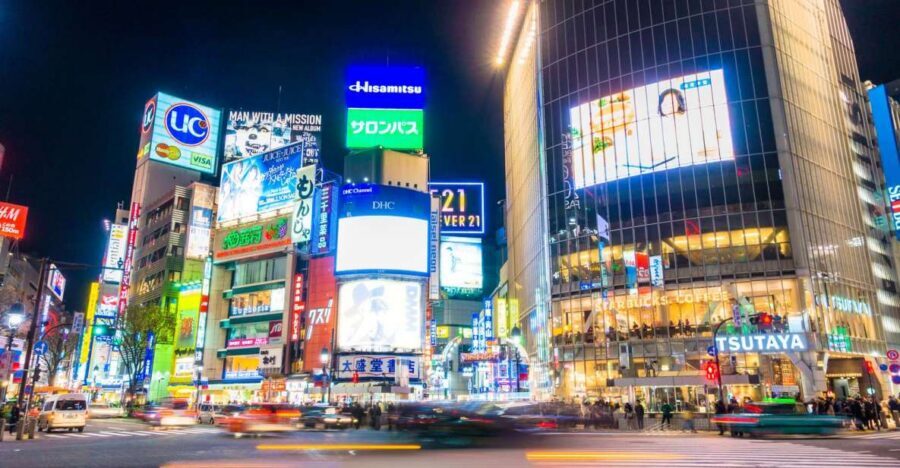
Tokyo at night can feel like a TV set. This small-group walk through Shinjuku and Kabukicho turns the neon chaos into something you can actually understand, with real context on how the area works after dark.
I especially like the small group size—it makes it easier to ask questions—and I also like that you’re guided through specific nightlife pockets on foot so you don’t have to guess where to go next.
You’re also getting a clear sense of Tokyo’s night culture beyond the obvious sights. The route includes places like Omoide Yokocho, the LGBTQI+ Gay Town area, and the Shinjuku sights around the Godzilla zone—so the walk feels like a guided tour of how neighborhoods differ.
The main drawback to consider is that food and drinks cost extra, and the whole experience depends on good weather since you’re walking for about 2 hours. If it’s raining, you may need a different date.
Key points before you go
- Small group, up to 12 people: easier questions, less stress in the crowds
- 2 hours on foot in Shinjuku: a smart start if it’s your first night out
- Multiple nightlife styles in one route: from drinking alleys to Gay Town
- Cultural context, not just sights: legal and social background for what you’ll see
- Godzilla Head stop: a Tokyo night icon you’ll spot in real time
- Food and drinks aren’t included: budget extra if you plan to snack or sip
In This Review
- Kabukicho After Dark: Why This Walk Feels Safer Than Wandering
- Your Night Route: Shinjuku to Kabukicho to Omoide Yokocho
- Starting Point at Shinjuku Station East Exit Police Box
- The Famous Drinking Alley Stop: How to Read an Unfamiliar Street
- Kabukicho: Tokyo’s Biggest Nightlife Area, Explained in Human Terms
- Godzilla Head Stop: A Pop-Culture Marker You Can Actually Locate
- The Narrow Bar District: Where Small Details Matter
- A Shinto Shrine Moment in Shinjuku: Nightlife Pauses, Reality Doesn’t
- Gay Town in Shinjuku: LGBTQI+ Nightlife With Context
- Price and Value: Why $25 Can Work If It Fits Your Night
- What to Expect: Timing, Mobile Ticket, and Small-Group Energy
- Best Time to Go (and What Weather Can Do)
- Should You Book This Night Walking Tour?
- FAQ
- How long is the tour?
- What does the tour cost?
- Where does the tour start?
- Where does the tour end?
- Is there a limit on group size?
- Is a mobile ticket provided?
- What’s included in the price?
- What’s not included?
- Is it okay if I bring a service animal?
- What happens if the weather is bad?
- Is free cancellation available?
Kabukicho After Dark: Why This Walk Feels Safer Than Wandering
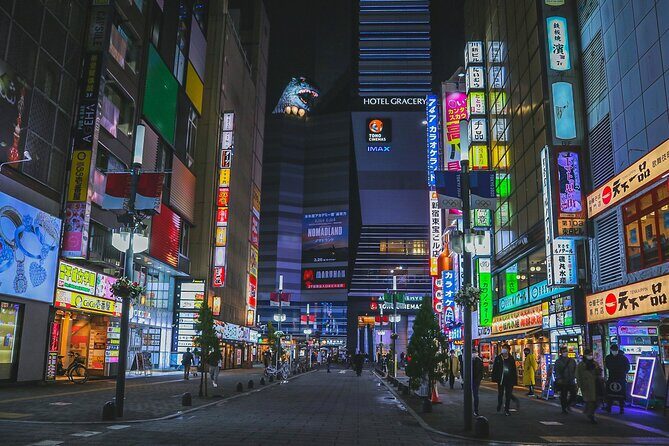
Shinjuku at night is a sensory workout. Neon signs, louder-than-you-expect streets, and alleyways that look the same until you’re suddenly somewhere completely different. This tour helps you read the neighborhood instead of just getting swallowed by it.
I like that the focus isn’t shock value. You get an explanation of how the nightlife districts function, including the legal and social realities behind what you’ll encounter. That turns the experience from I’m just seeing nightlife to I understand why it looks like this.
The other thing I appreciate is pacing. Because it’s a walking tour with a guide, you’re not trying to navigate alone while jet-lagged, hungry, and overwhelmed. People who did it early in their trip used it as a way to get their bearings fast before exploring on their own later.
One note: guides vary by group. Names I’ve seen tied to great tours include Polina, Loc, Grey/Gray, Kumi, Danny, Paulina, and Daniel/Danni. Different voices, same idea: clear explanations in a way that fits the streets.
Your Night Route: Shinjuku to Kabukicho to Omoide Yokocho
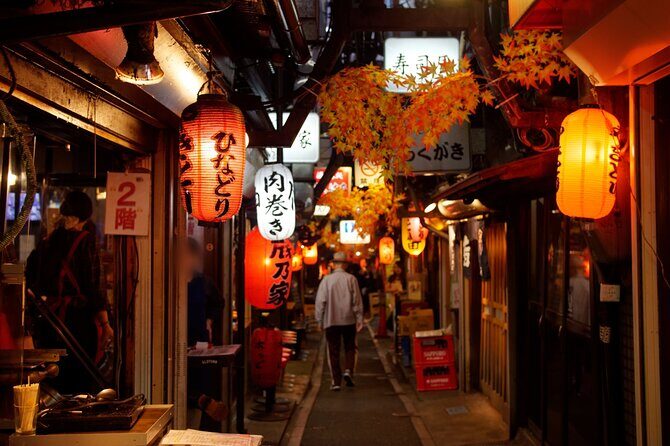
This walk concentrates on a compact section of Shinjuku rather than trying to cover all of Tokyo. That’s a big deal in practice. You get to see the neighborhood layers closely, with enough time to connect what you’re seeing to the stories your guide is telling.
You’ll move through the nightlife hub that most people associate with Shinjuku—then you’ll shift into other distinct vibes nearby. The route includes Kabukicho, the drinking alley zone around Omoide Yokocho, and additional stops that change tone from neon chaos to quieter corners.
Because the experience is on foot, you’ll also feel the differences in street width, foot traffic, and how the area transforms block by block. That kind of real-world mapping is hard to replicate from a map app.
Pro tip: plan to wear shoes you don’t mind in busy sidewalks. The tour is about 2 hours, and in this area you’ll be moving at a steady walking pace.
You can also read our reviews of more walking tours in Tokyo
Starting Point at Shinjuku Station East Exit Police Box
Meeting up is simple on paper, but it’s worth being precise in real life. The start is at Shinjuku Station East Exit Police Box, located at 3-chōme-38-1 Shinjuku. It’s near major transit, so it’s usually easy to reach.
Some people have mentioned trouble finding the exact police box because there are other street fixtures nearby. When you arrive, take an extra minute to check you’re at the East Exit police box landmark, not a nearby phone-style booth.
The tour ends around the 3 Chome Shinjuku area, so it’s convenient for continuing your night out in the same general neighborhood instead of trekking across town right after.
The Famous Drinking Alley Stop: How to Read an Unfamiliar Street
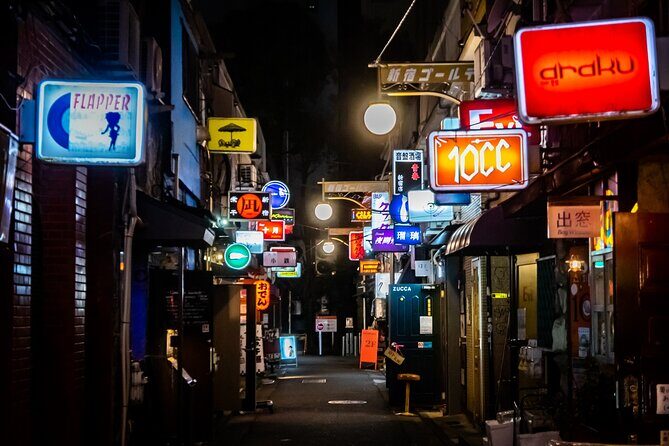
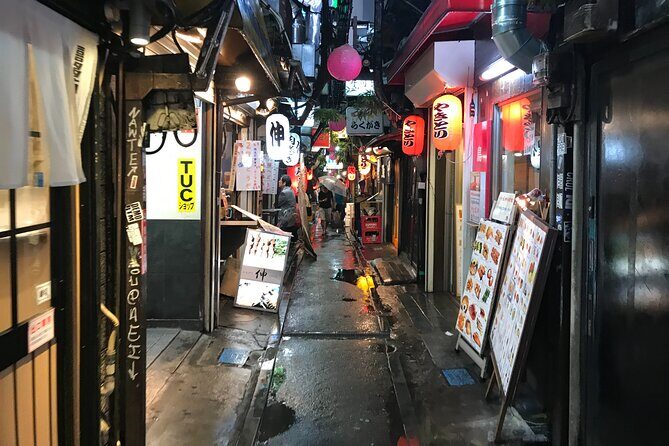
The tour includes a stop at a famous drinking alley in Tokyo. This is one of those places that can feel mysterious if you just show up and wander. A guide helps you understand what kind of venues you’re looking at, what the area tends to revolve around, and how rules of behavior are more practical than they look from the outside.
You’ll see the atmosphere close up: the signs, the doorways, the rhythms of people coming and going. The key value here is context. Instead of interpreting everything through stereotypes, your guide explains what’s going on socially and historically in the district.
If you’re a first-time visitor, this is a huge confidence boost. One of the most common reasons people love this tour is that it gives a sense of safety and direction in places where you might otherwise hesitate or feel lost.
Kabukicho: Tokyo’s Biggest Nightlife Area, Explained in Human Terms
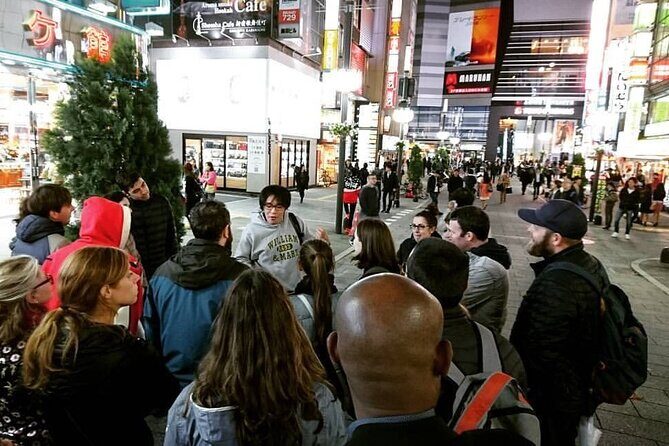
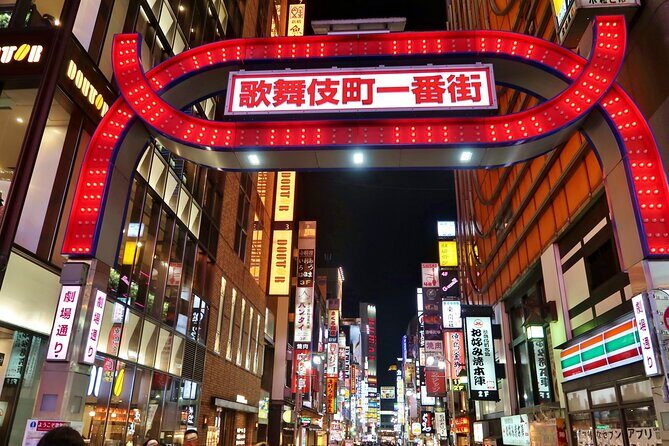
You’ll also get a stop at the biggest nightlife area in Tokyo—the Kabukicho zone. This is where neon is nonstop and the street energy can be intense. Without guidance, it’s easy to drift toward the loudest corner and miss how the area is organized.
On this walk, your guide connects what you see to real Tokyo life at night: how the district is structured, who runs what kinds of businesses, and what visitors should know to stay comfortable. The explanations are especially helpful if you’ve heard bits about adult entertainment in Japan but never understood how legality, location, and social norms play together.
I’ve found that this part of the tour works best for people who want honest context, not just photo ops. You come away feeling less like you stumbled into a mystery and more like you just learned the neighborhood’s rules.
Godzilla Head Stop: A Pop-Culture Marker You Can Actually Locate
The route includes the famous Godzilla Head stop to see his show. This is a fun break in tone. It’s not just a sight for a photo; it’s a recognizable Tokyo marker that helps you anchor the experience in a specific place.
What I like about adding a stop like this is that it gives the walk variety. After alleyways and nightlife streets, you get a clean visual landmark. It also helps you orient later when you’re walking around on your own.
And yes, it’s still part of the same night story. Godzilla in Shinjuku isn’t random. It’s part of the area’s identity.
You can also read our reviews of more evening experiences in Tokyo



The Narrow Bar District: Where Small Details Matter
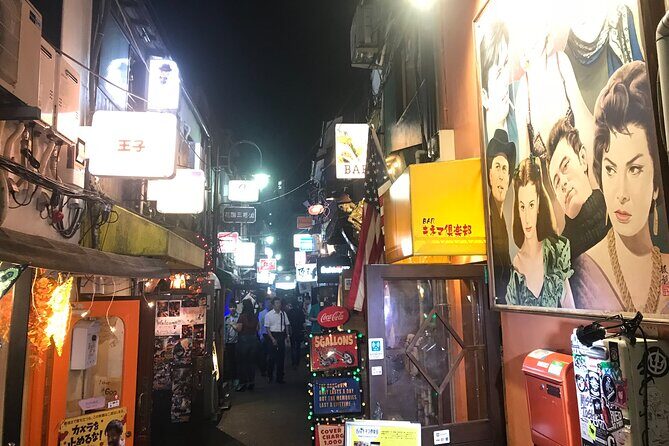
Next you’ll head toward the narrow bar district. This is the kind of place where street layout changes everything. Side streets feel intimate, and the line between main sidewalk and alley-side venues can be easy to misread.
A guide matters here because it’s not just about where to go. It’s about how to navigate the social space. Your guide explains the culture and subculture around these nightlife areas, including what to expect and how to act respectfully.
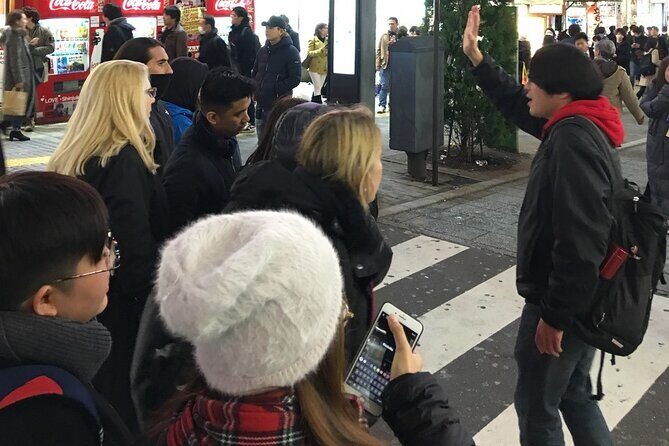
This stop is also where you’ll likely feel the value of a small group. When you move as a cluster, it’s easier to follow directions and avoid being left behind in narrow passages.
A Shinto Shrine Moment in Shinjuku: Nightlife Pauses, Reality Doesn’t
One of my favorite touches on this kind of evening walk is a contrast stop that shifts your headspace. Here, you’ll visit a Shinto shrine in Shinjuku.
It’s a change of pace. You get a quieter, more grounded moment inside an area known for loud nightlife. This matters because Tokyo night culture isn’t only neon and bars. It’s also a city where people still maintain traditions close to the entertainment zones.
Even if you’re not a shrine expert, it’s a useful pause. It helps you reset before the final nightlife portion of the walk.
Gay Town in Shinjuku: LGBTQI+ Nightlife With Context
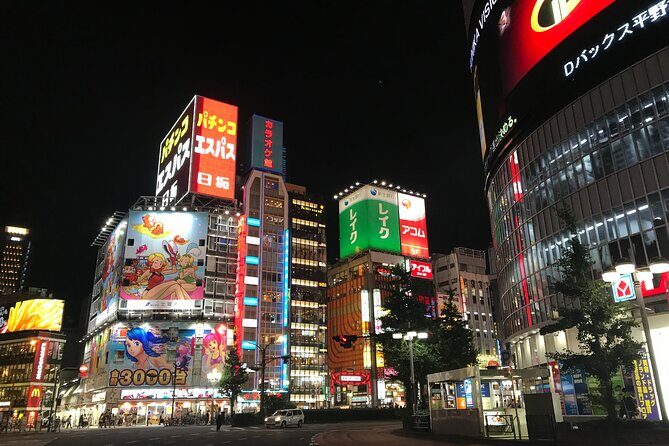
The tour includes a stop in Gay Town, described as the biggest LGBTQ town in Japan. This is one of the most important parts of the experience because the focus is on understanding culture, subculture, and community—not just sightseeing.
Your guide helps connect what you’re seeing to how the district serves people and how the area’s identity developed over time. That’s what turns it into more than a list of bars and signs.
In a city as structured as Tokyo, it’s meaningful to be shown how different neighborhoods form micro-communities. This stop adds depth to the whole walk, especially if you’re the type of visitor who wants to understand how locals organize nightlife around identity and belonging.
Price and Value: Why $25 Can Work If It Fits Your Night
At $25 per person for a small-group, 2-hour walking tour, the math mostly depends on what you want from your night. If your goal is to learn the area fast and feel comfortable exploring afterward, this is good value.
You’re paying for the guide fee and the real-world sorting of the neighborhood. Food and drinks cost extra, so you’ll want to budget if you plan to stop for a drink or snack along the way. Still, you can keep it light. Even without buying anything, the guide context makes the walk feel worth it.
Also, because the tour is limited to a maximum of 12 travelers, you’re not stuck in a huge crowd. That matters in Shinjuku. Big groups can turn into follow-the-leader. Small groups are easier to manage and more personal for questions.
What to Expect: Timing, Mobile Ticket, and Small-Group Energy
The tour lasts about 2 hours. You should expect steady walking, night street conditions, and frequent photo opportunities. Since it’s dark, comfort matters: walkable shoes, a layer for temperature swings, and a phone battery you can rely on.
You’ll receive a mobile ticket, which is convenient. You don’t need printed stuff floating around in your bag.
Small-group size is the big practical difference here. Some groups are very small in practice, and that usually makes the explanations land better because the guide can tailor answers to what you’re curious about.
Best Time to Go (and What Weather Can Do)
This experience requires good weather. If it’s canceled due to poor weather, you’ll be offered a different date or a full refund.
When you’re planning your evening, I’d aim for a night when you’re not rushed, not starving, and not exhausted. The tour is short enough to fit your schedule but active enough that you’ll enjoy it more when you can actually pay attention.
Should You Book This Night Walking Tour?
Book it if you want an easy, guided way to understand Shinjuku at night—especially if it’s your first Tokyo trip or your first time exploring nightlife districts.
Skip it if your plan is only to eat and drink and you don’t care about context. Also, if you strongly prefer to avoid adult-industry topics entirely, you may want to think carefully. This tour is built around the real story of the districts, and that includes the legal and social background behind what you’ll see.
If you go in with the mindset of learning how neighborhoods work, you’ll leave with two things that matter: confidence in where you’re standing, and a better sense of how Tokyo’s night culture fits into everyday Japan.
FAQ
How long is the tour?
It runs for about 2 hours.
What does the tour cost?
The price is $25.00 per person.
Where does the tour start?
It starts at Shinjuku Station East Exit Police Box (3-chōme-38-1 Shinjuku, Shinjuku City, Tokyo 160-0022, Japan).
Where does the tour end?
The tour finishes around the Shinjuku 3 Chome area.
Is there a limit on group size?
Yes. The tour has a maximum of 12 travelers.
Is a mobile ticket provided?
Yes, the tour uses a mobile ticket.
What’s included in the price?
Included is the tour guide fee.
What’s not included?
Dinner isn’t included, and food and drinks cost extra.
Is it okay if I bring a service animal?
Yes. Service animals are allowed.
What happens if the weather is bad?
The experience requires good weather. If it’s canceled due to poor weather, you’ll be offered a different date or a full refund.
Is free cancellation available?
Yes. You can cancel up to 24 hours in advance for a full refund.