REVIEW · TOKYO
Tokyo Tsukiji Fish Market Food and Culture Walking Tour
Book on Viator →Operated by Japan Wonder Travel · Bookable on Viator
Chase the tuna smell through Tsukiji. This 3-hour walking tour starts at Tsukiji Hongan-ji Temple and takes you through the outer market world of seafood shopping, tastings, and ingredient talk, with moments like uni stacked in boxes and vendors handling fish right in front of you. I especially like the food samples across multiple stalls—from dashi soup and green tea to fish cakes, Wagyu skewers, and seasonal fruit—so you get a real feel for how Japanese seafood culture works. One big consideration: this tour is fish-based only, and the operator says they can’t accommodate vegetarian/halal/gluten-free diets or allergy requests.
What I also like is that the market can feel like sensory overload, and the guide keeps you moving with context—history of Tsukiji, what to look for, and how chefs think about freshness. You’ll meet your guide at the main gate of Tsukiji Hongan-ji Temple, and you’ll see why top chefs visit this area daily to shop for ingredients. Guides I’ve seen leading this experience include people like Kiyo, Naz, Miky, and Kayoko, and that variety usually helps you learn different angles of the same market.
Key points to know before you go
- Meet at the main gate (not the backside): Google Maps can mislead you, and the guide leaves at the start time.
- Outer Tsukiji focus: you spend most time among market stalls and nearby wholesale spaces.
- Tastings add up: dashi, green tea, fish cakes, Wagyu skewers, plus a final sushi/seafood bowl.
- You may spot big-name ingredients: uni piles, bluefin tuna, pufferfish in tanks.
- Uogashi hours matter: the mini wholesaler market is closed on Wednesdays, Sundays, and some holidays.
- Small group feel: capped at 20, and some departures run even smaller for easier movement and listening.
In This Review
- Tsukiji Hongan-ji Temple Start: finding your guide fast
- Jogai Market: 80 years of seafood shopping in the open
- Old Tsukiji Market and snack rhythm: tasting without feeling lost
- Uogashi mini-wholesale: watching ingredients and meeting the reality of closures
- Final Tsukiji Fish Market stop: sushi or a seafood bowl, plus big flavors
- Price and what you really get for $99.49
- Pacing, walking shoes, and whether it fits your style
- Food rules and drink notes you should plan around
- Should you book the Tokyo Tsukiji Fish Market Food and Culture Walking Tour?
- FAQ
- FAQ
- How long is the Tokyo Tsukiji Fish Market Food and Culture Walking Tour?
- Where do we meet for the tour?
- What should we wear?
- Is lunch or snacks included?
- Do they accommodate vegetarian, halal, gluten-free, or allergy requests?
- What if I can’t eat fish?
- Is the final meal always sushi?
- Is the Uogashi mini wholesale market always open?
- Can I get a refund if I cancel?
Tsukiji Hongan-ji Temple Start: finding your guide fast
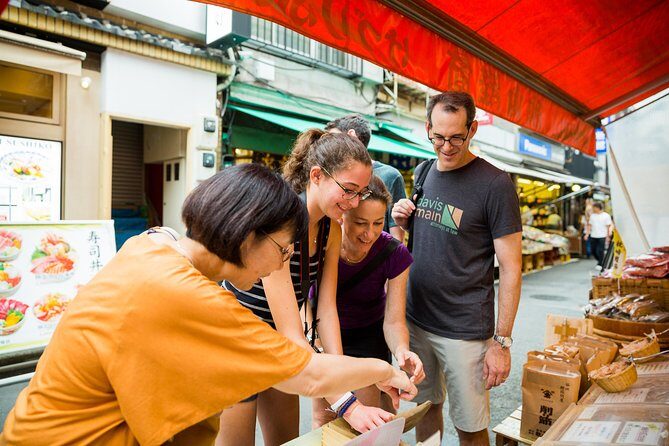
The experience kicks off at the main gate of Tsukiji Hongan-ji Temple in the Tsukiji area of Chuo City. This matters more than you’d think. The operator notes the guide leaves at the scheduled start time and can’t wait, and there’s a common trap: Google Maps can route you to the back side of the temple, while you need the front.
Once you’re there, the tour starts with a simple job: get your bearings in a place that’s not designed for slow wandering. The guide does that with a mix of practical pointers and market storytelling—why this area matters, how ingredient sourcing works, and what “fresh” actually looks like when you’re standing next to it.
If you like structure, you’ll enjoy this. The market is packed with stalls, signage, and constant foot traffic. Without a guide, it’s easy to spend your energy just trying to figure out where to look next.
Jogai Market: 80 years of seafood shopping in the open
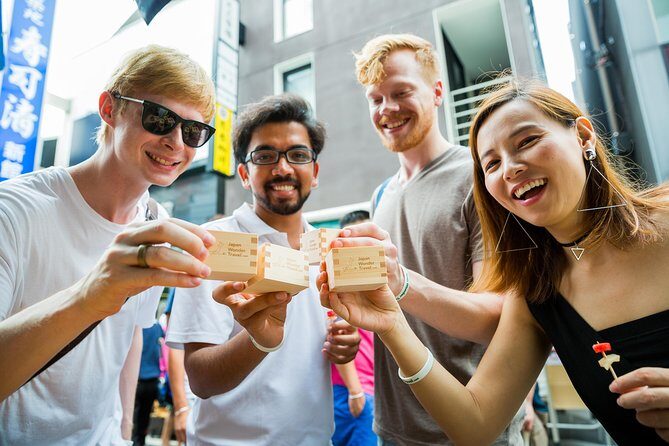
Your first major stretch is Tsukiji Jogai Market, where you’ll soak in sights, sounds, and smells while learning what Tsukiji has been known for over decades. You’re not just looking at fish. You’re seeing a working food marketplace culture—how vendors display seafood, how buyers think, and how the market’s reputation formed.
This is also where the tastings begin to do their job. You may get small samples such as dashi soup and green tea, which are more than snacks. They’re a quick crash course in how Japanese meals build flavor: mild broth, clean umami, and tea that refreshes your palate when you’re about to taste the next thing.
This stop is also where the sensory moments tend to land hardest. You might see:
- boxes of sea urchin (uni) stacked neatly
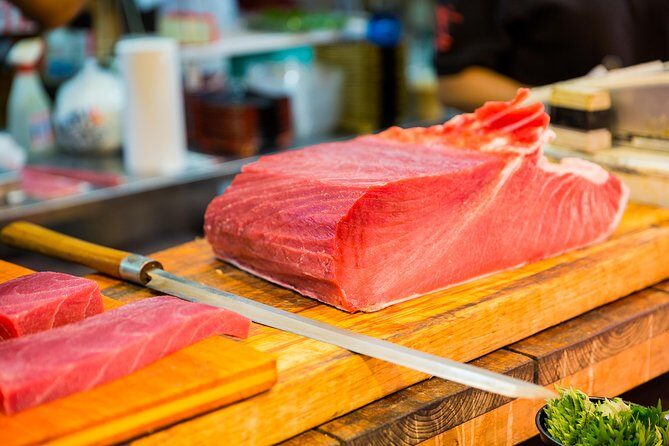
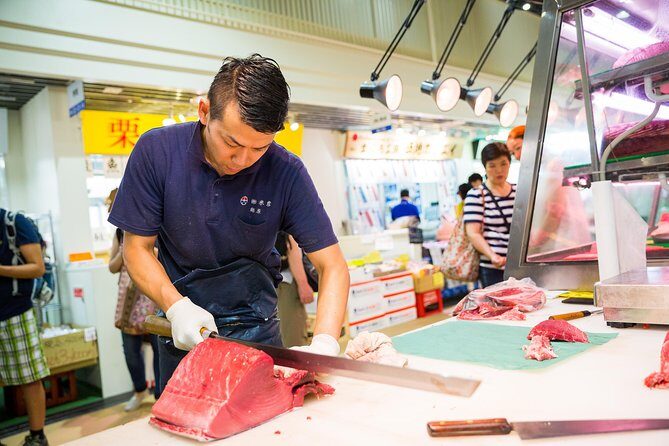
- vendors carving or handling major cuts like bluefin tuna
- fish such as pufferfish visible in tanks
Even if you don’t eat everything, these visuals help you understand why chefs talk about ingredient sourcing the way they do.
You can also read our reviews of more walking tours in Tokyo

Old Tsukiji Market and snack rhythm: tasting without feeling lost
Next comes time in the Old Tsukiji Market, billed as a food tour segment. This is the “keep your appetite working” part of the day. Instead of one big meal, you get smaller stops that keep you sampling while the guide explains what you’re seeing.
This portion is where you’ll likely notice the tour’s pacing style: short walks, quick explanations, then a bite or sips to connect the story to flavor. In some cases, you might get things like seaweed, fish cake, and other bite-size items along the way, depending on the day and what’s available.
There’s also a practical note: if you need a kitchen tool, the tour includes a stop where you can look. That’s a small detail, but it can be useful. People often leave Tokyo wanting one thing they can use at home, and a market is one of the better places to shop for cooking gear you’ll actually use.
Uogashi mini-wholesale: watching ingredients and meeting the reality of closures
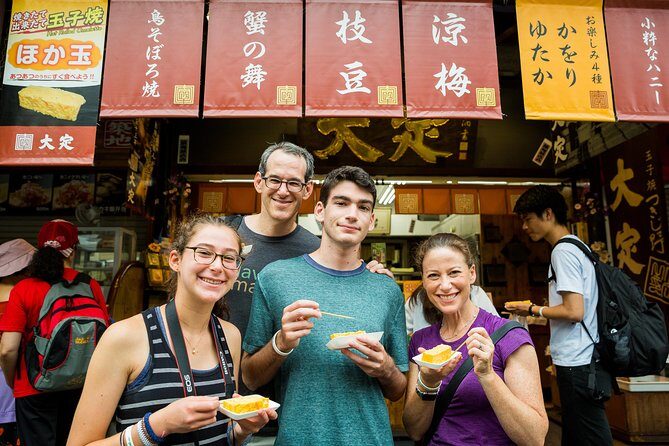
Your route then passes Tsukiji Uogashi, a mini wholesale market where you can see hundreds of kinds of fish. This is one of the tour’s best “eyes-on” sections because it’s not a stage. It’s a marketplace with real inventory and real buying energy.
Important timing detail: Tsukiji Uogashi is closed on Wednesdays, Sundays, and other closed market days. The tour data also says that on those closure days, shops may not be able to serve certain items such as Japanese omelette, fish cake, and fruits. In practice, that means your exact tasting list can shift depending on the calendar.
Still, the core value stays: you learn what to look for. Even if you don’t know the names, you’ll start recognizing patterns—how seafood is stored, how vendors present quality, and why certain ingredients show up at specific times.
If you’re the type who wants one big “wow” moment, aim your attention here. This is where you’re most likely to notice the market’s scale and the variety that supports Japanese cuisine.
Final Tsukiji Fish Market stop: sushi or a seafood bowl, plus big flavors
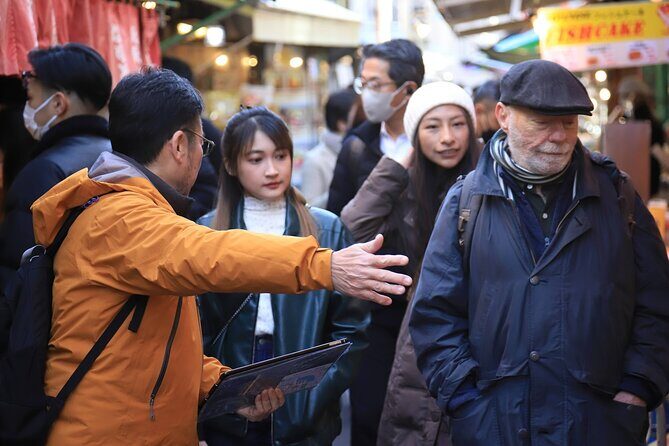
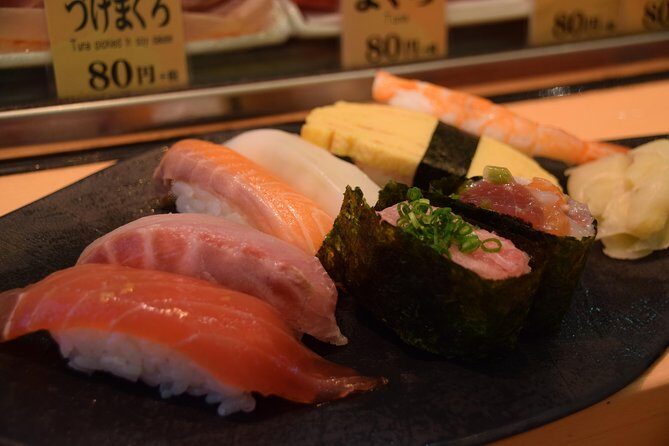
You wrap up with a meal-style finish at the Tsukiji Fish Market area. Depending on the day and time, you’ll be served either sushi or a seafood bowl. This is the part that turns the whole day from samples into a proper, satisfying finale.
What makes this stop feel worth it is the ingredient quality focus. Earlier tastings often include items such as:
- Wagyu beef skewers
- sushi or seafood bowl components
- seasonal fruit
- fish cakes and other seafood-friendly bites
Some departures also include a bit of show-and-tell around preparation. For example, one guide-led format you might encounter is watching fish preparation (like sea bass) and even getting a hands-on sushi moment. Another format you could see is a cutting-style demonstration at a lunch stop. Since the specifics can vary by day, don’t treat these as guaranteed, but they’re the kind of add-ons that make this market tour feel more than a food checklist.
If you’re a seafood lover, you’ll likely leave happy here. If you’re nervous about trying new things, you’ll also get a gentle on-ramp: the guide can help steer you toward what fits your comfort level.
Price and what you really get for $99.49
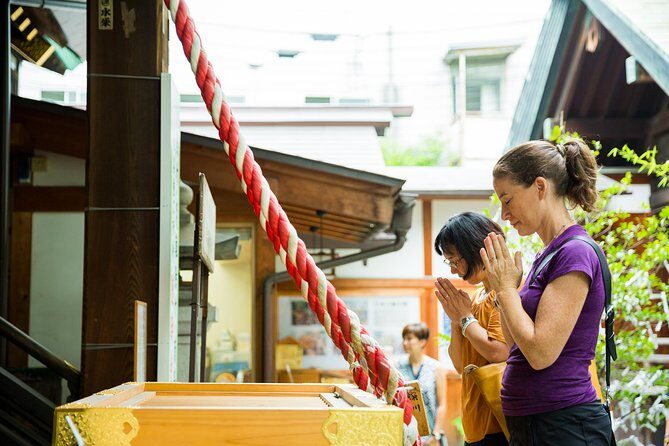
At $99.49 per person for about 3 hours, the value isn’t just the food. It’s the access—human navigation through a dense market plus a guide who connects the “what” on display to the “why” behind Japanese cooking.
Here’s what you’re paying for, in plain terms:
- Stall-to-stall tastings rather than one restaurant meal
- Context while you walk, so the market makes sense, not just noise
- A curated route that saves you time in a place that can be overwhelming
- A group format that keeps you from missing key ingredients like uni, fish cake, Wagyu skewers, and more
Also, the tour includes lunch and snack, not just a couple of tiny samples. That helps justify the price, especially if you’re budgeting for multiple bites and drinks during market time.
That said, this isn’t an all-you-can-eat operation. If you’re expecting a huge amount of food for the money, temper expectations. It’s structured tastings plus a final sushi/seafood bowl finish. You’ll likely feel full, but it’s still a market walk, not a buffet.
You can also read our reviews of more food & drink experiences in Tokyo


Pacing, walking shoes, and whether it fits your style
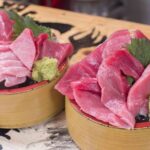
This is a walking tour with moderate physical fitness required, and the operator recommends comfortable shoes. Plan on moving through narrow aisles and standing while you taste and listen.
The small group cap (maximum of 20 travelers) is a real quality factor. In practice, smaller groups tend to make it easier to hear explanations, ask questions, and slip in a bit of extra shopping time if the guide thinks it won’t slow the group down.
One fair heads-up: pacing depends on your guide and group energy. Some departures can feel slower if there are longer waits at certain tasting or seating stops. It’s still organized, but if you prefer a fast, choose-your-own-adventure style, you may want to pair this tour with a bit of self-guided time afterward.
Food rules and drink notes you should plan around
This part is important before you fall in love with the idea of Tsukiji.
- The tour says they don’t accommodate vegetarian, halal, gluten-free requests, or allergy-related requests.
- If you can’t eat fish, the operator says you won’t be able to join.
- There’s also a minimum drinking age of 20. If you’re under 20, the tour provides another drink instead.
So come with a mindset that this is a seafood-first experience. If that matches you, great. If you have restrictions, you’ll want to skip or ask directly about alternatives—because the data provided is pretty strict.
Should you book the Tokyo Tsukiji Fish Market Food and Culture Walking Tour?
I’d book it if you want to:
- taste your way through Tsukiji without spending hours figuring out where to go
- see ingredients up close (uni piles, tuna handling, fish-in-tanks moments)
- learn what freshness means and why chefs shop here
- finish with sushi or a seafood bowl as a real meal, not a snack
Skip it if:
- you can’t eat fish, or you need dietary/allergy accommodations the operator doesn’t provide
- you want a very high-food-volume experience where every stop is a big plate
My final advice: arrive hungry enough to enjoy snacks and tastings, but also plan for a market day—stand, walk, repeat. If you’re open to trying seafood you might not order elsewhere, this tour is a strong first-time Tsukiji move.
FAQ
FAQ
How long is the Tokyo Tsukiji Fish Market Food and Culture Walking Tour?
The tour lasts about 3 hours.
Where do we meet for the tour?
You meet at the main gate of Tsukiji Hongan-ji Temple (front side).
What should we wear?
Bring comfortable walking shoes, since it’s mainly a walking tour.
Is lunch or snacks included?
Yes. Lunch and snack are included.
Do they accommodate vegetarian, halal, gluten-free, or allergy requests?
Unfortunately, they do not accommodate vegetarian, halal, gluten-free requests, or allergy-related requests.
What if I can’t eat fish?
If you can’t eat fish, you won’t be able to join the tour.
Is the final meal always sushi?
No. Depending on the day and time, you’ll be served either sushi or a seafood bowl.
Is the Uogashi mini wholesale market always open?
No. Tsukiji Uogashi is closed on Wednesdays, Sundays, and other closed market days.
Can I get a refund if I cancel?
Yes, with free cancellation up to 24 hours in advance for a full refund.