REVIEW · TOKYO
Tokyo to Kyoto 1-Full Day Private Guided Tour
Book on Viator →Operated by Ahmed Abu Tayeh · Bookable on Viator
Kyoto in one day is a sprint, not a stroll. This Tokyo to Kyoto private guided tour trades the stress of planning for a guide-led lineup that covers bamboo, Kinkaku-ji, Nishiki Market, Gion, and Fushimi Inari. I like that it’s private for your group, so you aren’t stuck in a herd, and the guide keeps you moving while explaining what you’re actually looking at.
My favorite part is how the route balances big icons with “Kyoto feels” stops. You’ll get a strong first-time Kyoto hit, guided by people like Ahmed, Midori, Mini, Yukari, and Yuka, each known for clear context and getting people where they need to be. One thing to consider up front: the tour price is only part of the total, because major transport costs are added on top in yen.
In This Review
- Key things to know before you go
- The Value Pitch: A Kyoto Day Trip That Starts in Tokyo
- Price Reality Check: Tour Fee vs Bullet Train vs Car in Yen
- How the Day Flows: What 9 Hours Feels Like
- Bamboo Forest Street + Tenryu-ji: The Calm Start You’ll Appreciate Later
- Kinkaku-ji (Golden Pavilion): Icon Status Comes With a Catch
- Nishiki Market: Kyoto’s Kitchen, Plus a Real Food Shortcut
- Pontocho + Gion: Two Different Kyoto Moods, One Route
- Fushimi Inari-taisha: Senbon Torii in a Time-Box
- Meeting Your Guide and Getting Around Stations Without Headaches
- Pace, Photos, and the Difference Between a Good and Great Guide
- Who This Tour Fits Best (and Who Might Prefer DIY)
- Should You Book This Tokyo-to-Kyoto Private Tour?
- FAQ
- Is this tour private?
- How long is the Tokyo to Kyoto tour?
- How much is the tour?
- Do I need bullet train tickets?
- Is transportation included in the tour price?
- How much is the car/driver in Kyoto?
- Is there an extra cost for Tokyo pickup?
- Are entrance fees included?
- What stops are included in the itinerary?
- What happens if the weather is bad?
Key things to know before you go
- Private group, fast pace: built for first-timers who want the highlights without group chaos
- Kyoto classics in a single 9-hour window: bamboo + Golden Pavilion + market streets + Gion + Senbon Torii
- Transport is the big cost variable: bullet train and car/driver add-ons can more than double your budget
- Some entrances aren’t included: at least a few key sites may require extra payment on the day
- Guides can be a major difference-maker: many guests rave about Ahmed/Midori/Yuka, but your experience depends on the assigned guide
The Value Pitch: A Kyoto Day Trip That Starts in Tokyo
If you only have one day (or you’re jet-lagged and don’t want to deal with logistics), this kind of Tokyo-to-Kyoto tour can make Kyoto feel doable. You’re not solving train routes, ticket counters, and station navigation while also trying to enjoy the day.
The structure is built around getting you to the right places in the right order. Instead of guessing where the day will “collapse” (usually around Golden Pavilion timing and Fushimi Inari crowds), you follow a planned flow and let the guide handle the rhythm.
And the private part matters. Even when you’re traveling with a small group, you get fewer delays than you would with a large joiner tour. You can also ask questions without waiting for a microphone handoff.
You can also read our reviews of more guided tours in Tokyo

Price Reality Check: Tour Fee vs Bullet Train vs Car in Yen
Let’s talk money like adults. The published price is $490 per group (up to 10), but transportation is explicitly not included. On top of that, bullet train tickets from Tokyo to Kyoto and back are extra, and the car/driver cost is charged in yen.
Here’s what this usually means for your budget:
- Bullet train: expect about ¥28,000 per person (depending on the ticket you choose)
- Car/driver in Kyoto or for the day’s transfers: up to ¥100,000 cash (the amount changes by group size)
- Optional Tokyo pick-up: if you want pick-up near Tokyo Station, it’s ¥60,000 cash per booking
- Lunch and gratuities: not included
- Entrance fees: the tour description is mixed—some stops list tickets as not included, and other parts note entrance fees are included—so assume you may still pay at least one site
If you’re thinking, “Wait, but it’s private,” you’re not alone. A few guests were surprised by the extra transport cash after assuming the private label meant everything was wrapped in. Private here means your group gets the guide and itinerary, not that the transport bill vanishes.
Is it worth it? For the right traveler, yes. For travelers comfortable with public transit and willing to buy tickets and navigate stations themselves, it may feel expensive for what you could DIY. The sweet spot is when you value time, convenience, and someone else handling the tight schedule.
How the Day Flows: What 9 Hours Feels Like
The duration is listed as about 9 hours, and the day is packed. That’s not a slow cultural tour with long tea breaks. It’s a highlights route designed to check key Kyoto sights off your list before the day runs out.
In real terms, you should expect:
- a morning start with travel between Tokyo and Kyoto
- a fast sequence of major sights
- a late-afternoon end that gets you back to the station on time
One useful detail: there’s some flexibility. In at least one case, a tour ran about two extra hours, with the company covering extra guide/vehicle costs. Don’t count on that, but it’s a sign they don’t always treat the schedule like a hard guillotine.
Bamboo Forest Street + Tenryu-ji: The Calm Start You’ll Appreciate Later
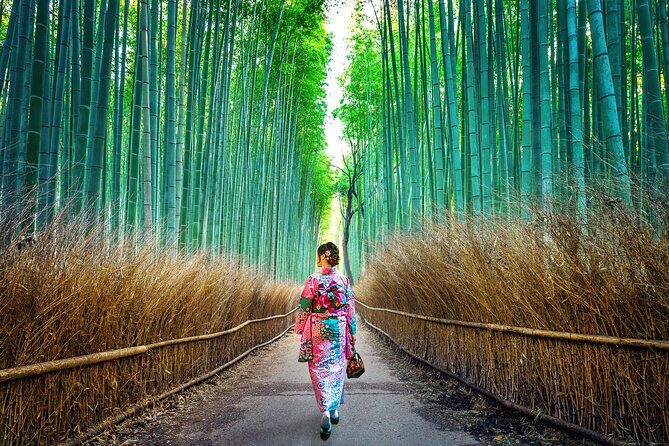
Your day kicks off with the Bamboo Forest area, plus Nonomiya Shrine and the Tenryu-ji Temple Garden. This is a smart way to start because bamboo can set the mood right away—green, quiet, and unlike the city rush of typical Tokyo sightseeing.
Why it’s worth placing first:
- You get the “Kyoto nature” vibe early, before the day gets crowded.
- The Tenryu-ji Garden portion gives you a chance to slow down for a bit, even within a day-trip pace.
Timing note: this stop is about 1 hour, and the admission is listed as free for this segment. Even if you plan to move quickly, bamboo tends to make people stop for photos and small moments.
Possible drawback: the bamboo forest area can be busy. If you’re sensitive to crowds, try to be ready to walk fast as groups swell and then settle again when it quiets down.
Kinkaku-ji (Golden Pavilion): Icon Status Comes With a Catch
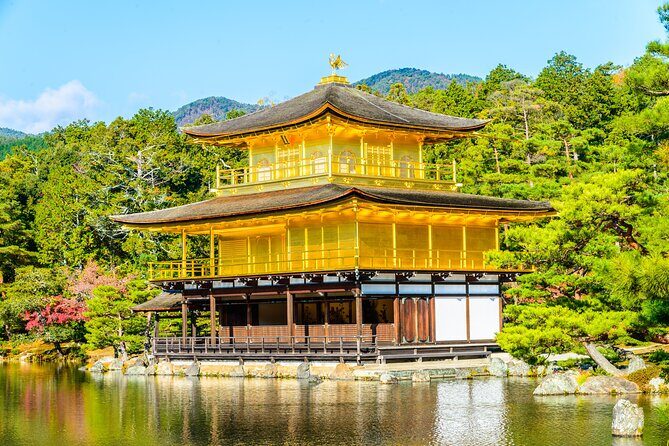
Kinkaku-ji is the one Kyoto stop most people have seen online. Up close, the effect is still strong: the Golden Pavilion reflected against the pond, with the gardens giving you that classic postcard symmetry.
The tour schedules Kinkaku-ji for about 1 hour. The important detail for planning is that admission is listed as not included in the stop notes. That means you should budget for at least that entrance cost on the day.
What to do to make this hour count:
- Arrive ready to walk the main garden paths without overthinking it.
- Take a moment to observe the pond-view angle before you start chasing side views.
Also, don’t expect a lot of “wandering time.” You’ll get the key views, then move on.
You can also read our reviews of more private tours in Tokyo


Nishiki Market: Kyoto’s Kitchen, Plus a Real Food Shortcut
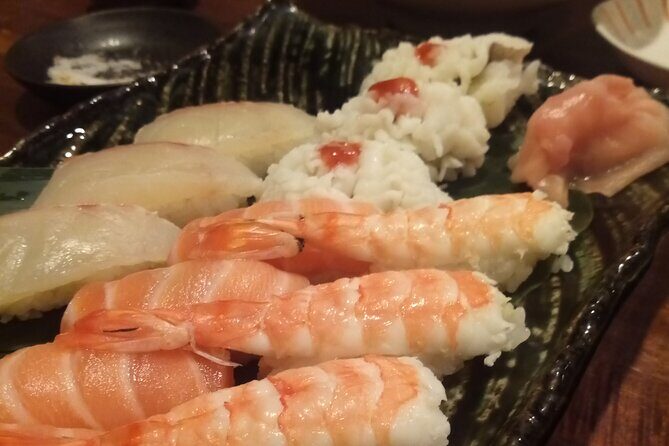
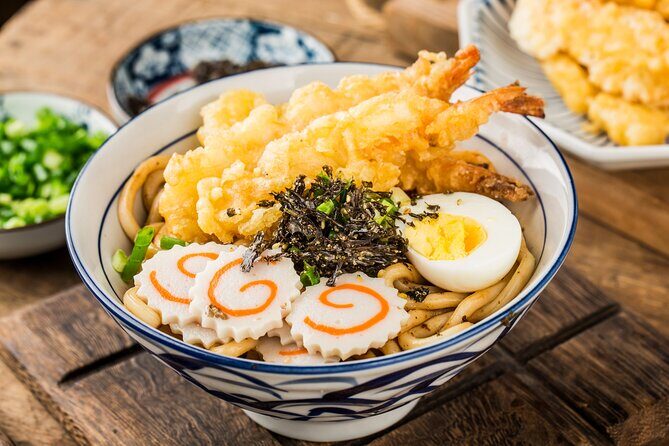
Nishiki Market is your “Kyoto smells and tastes” stop. Think of it as a compact strip of food stalls and small shops—great for quick bites and picking up snacks for later.
The tour gives you about 1 hour here, and the stop is listed as free admission. That’s good value because market time is one of the easiest ways to buy a few things without feeling like you need a full meal.
How to use this hour well:
- Don’t plan a big shopping spree. Plan a few targeted tastes.
- If you want to buy souvenirs, focus on small, travel-friendly items.
One practical perk: having a guide for this stops you from guessing what to try and how to handle tiny menu choices when your Japanese is still warming up.
Pontocho + Gion: Two Different Kyoto Moods, One Route
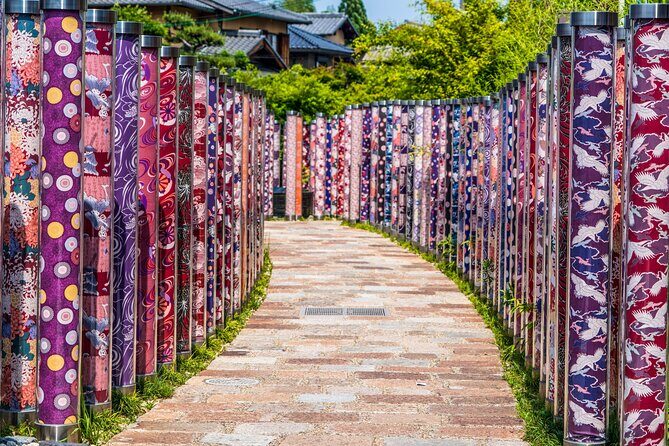
After the market, you’ll get Pontocho District for about 20 minutes. Pontocho Alley runs parallel to the Kamogawa River and is known for its narrow lanes lined with traditional buildings. It’s a quick “Kyoto at night” feeling, even if you don’t technically arrive at peak evening.
Then comes Gion for about 1 hour. Gion is the geisha district area, with traditional machiya townhouses and older teahouse streets. If you want Kyoto’s historic streetscape rather than just temples, this part delivers.
Admission is listed as not included for both Pontocho and Gion, which helps your budget stay predictable.
Possible drawback: these are popular areas. You’re not going to have them to yourself. Your best move is to enjoy the atmosphere, not try to “win” the photo contest. A guide can also steer you around the most blocked walkways and keep you from doubling back.
Fushimi Inari-taisha: Senbon Torii in a Time-Box
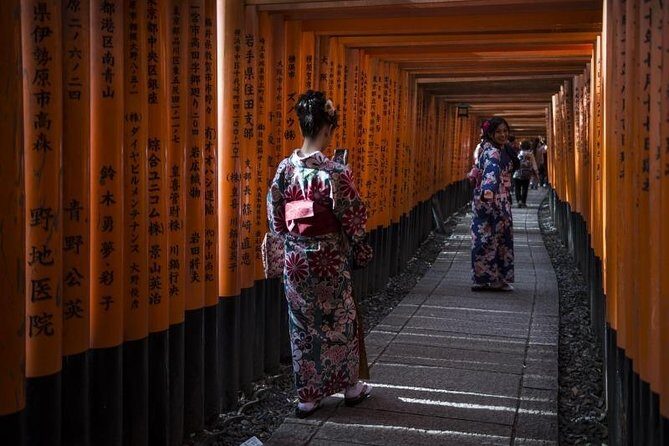
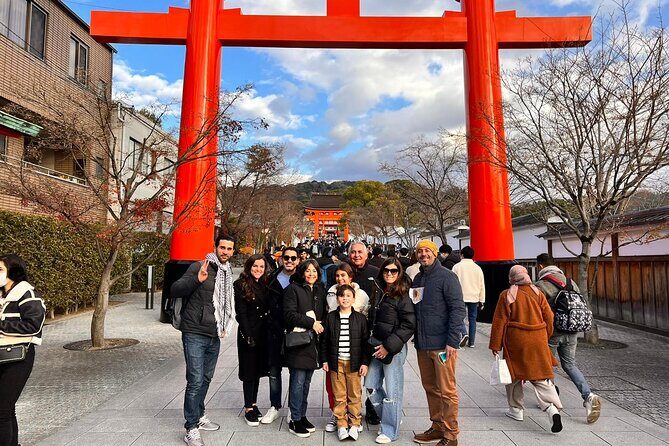
Fushimi Inari-taisha is the shrine famous for thousands of red torii gates. You’ll get about 1 hour here, which is enough for the main torii path experience but not enough for every possible side trail.
This is one of those stops where your guide’s pacing matters. If you’re moving too slowly, you’ll feel time pressure and miss your last train/transfer window. If you move too fast, you lose the “gate rhythm” that makes Fushimi Inari special.
Practical tip: wear shoes you can walk in for a real uphill-ish path. Even with an hour, you’ll cover ground.
Admission is listed as not included in the stop notes. In many cases, you may still find parts of the site accessible without a ticket, but don’t assume zero cost—your day-trip total can change based on what you pay at each stop.
Meeting Your Guide and Getting Around Stations Without Headaches
This tour is designed to take the friction out of getting started. The biggest win isn’t just the sights—it’s the station help.
Many guests describe feeling taken care of at transit points: a guide meeting you around your train schedule, helping you buy the right tickets, and then guiding you through the station to the correct platform. That kind of “you’re good, follow me” support is gold when you land in Tokyo and you haven’t learned the rail system yet.
You’ll also benefit from local transfer coordination once in Kyoto. With a day this short, delays aren’t a minor inconvenience. They can steal time from a top stop.
For language support: at least one guest mentioned the guide spoke Arabic, English, and Japanese. If you need translation help, this is a good sign, but don’t assume every guide will cover the exact same languages.
Pace, Photos, and the Difference Between a Good and Great Guide
Here’s what seems to separate the standouts from the merely fine experiences: the guide’s ability to explain just enough, then keep you on schedule.
Many guests praised guides like Ahmed, Midori, Mini, Yukari, and Yuka for:
- clear history and context tied to what you’re seeing
- keeping the group punctual
- answering questions without turning the day into a lecture
- helping with practical stuff like where to eat and how to handle shopping
- taking lots of photos and sharing them afterward
That photo sharing detail is worth noting. If you’re the person who usually ends up with blurry group shots, you’ll love having someone else take the pictures for you.
At the same time, the downsides show up when communication around costs or priorities falls apart. Some guests felt the itinerary didn’t include the transport they expected, and a few weren’t happy with guide friendliness or willingness to go deeper. You can’t control the guide assignment, but you can control how prepared you are about the day’s extra payments.
Who This Tour Fits Best (and Who Might Prefer DIY)
This tour is a strong match if:
- you want Kyoto’s key sights but don’t have time to plan rail routes
- you’re traveling as a family, couple, or small group who wants a private format
- you prefer a guide who can keep a tight schedule and help with decisions (especially around food and timing)
- you only have one day and you’d rather pay for convenience than risk a stressful day
It may not be the best match if:
- you love independent travel and don’t mind figuring out public transit
- you’re extremely budget sensitive once you add bullet train + cash transport
- you want long, slow temple time and plenty of shopping drift
Kyoto deserves at least two days for many people. This tour gives you “see it now” energy. It’s not a replacement for a longer Kyoto stay.
Should You Book This Tokyo-to-Kyoto Private Tour?
If your priority is efficiency, clarity, and a guided checklist day, this tour can be an excellent way to do Kyoto without losing time to logistics. I like that the route includes both iconic sights (Kinkaku-ji and Fushimi Inari) and the streets that make Kyoto feel like Kyoto (Nishiki, Pontocho, Gion).
Before you book, do one simple thing: plan your budget for the big extras. Treat the tour fee as the guide + itinerary, then add bullet train, the yen cash for transportation, and at least some entrance/meal spending. If you’re prepared for that reality, you’re far less likely to feel surprised.
FAQ
Is this tour private?
Yes. It’s a private experience, and only your group participates.
How long is the Tokyo to Kyoto tour?
It runs for about 9 hours (approx.).
How much is the tour?
The price is $490.00 per group (up to 10).
Do I need bullet train tickets?
Yes. Bullet train tickets are not included, and the round trip depends on the ticket you choose.
Is transportation included in the tour price?
No. Transportation costs are not included. You should review the yen amounts listed in the exclusions.
How much is the car/driver in Kyoto?
Transportation (cash) is listed as up to ¥100,000 for a booking, with different amounts depending on group size.
Is there an extra cost for Tokyo pickup?
Yes. Guide cost for Tokyo pick up is listed as ¥60,000 (cash to the guide) per booking in the Tokyo pick up option.
Are entrance fees included?
The tour includes entrance fee, but individual stops note that some admissions are not included. Expect that you may still pay for certain sites.
What stops are included in the itinerary?
The tour includes Bamboo Forest Street (with Nonomiya Shrine and Tenryu-ji Temple Garden), Kinkaku-ji Temple, Nishiki Market Shopping District, Pontocho District, Gion, and Fushimi Inari-taisha Shrine.
What happens if the weather is bad?
The experience requires good weather. If it’s canceled due to poor weather, you’ll be offered a different date or a full refund.
If you tell me your group size and your preferred departure time from Tokyo, I can help you estimate the real all-in cost range and decide if this “one-day sprint” makes sense for your trip.