REVIEW · TOKYO
Harajuku Meiji Shrine Walking Tour in Tokyo
Book on Viator →Operated by Localized Walking & Food Tours · Bookable on Viator
Harajuku feels calmer with a plan. This 2-hour walk links iconic Meiji Jingu serenity with Harajuku’s neon shopping energy, using a small group route that’s easier than self-navigating. I like that the tour keeps things practical with a guide on hand, and I also like that admission is included along the way. One heads-up: Takeshita Street can feel crowded and loud, so if you hate busy shopping streets, you may want to manage your expectations for that stop.
The shrine section is the kind of stop you can’t rush. At Meiji Jingu, you enter through towering torii gates and move along a tree-lined approach into a massive 70-hectare forest, with the guide sharing context you’ll miss if you only wing it. Guides I’ve seen singled out—like Miyu and Hiroko—are praised for clear, friendly explanations, plus answering questions without turning the tour into a lecture.
You’ll start at Harajuku Station and end at Tokyu Plaza Harajuku HARAKADO, which is handy for continuing shopping or grabbing a meal afterward. At $25, this can be a solid deal if you want the route handled and the etiquette explained, not just photos of the same three landmarks.
In This Review
- Key things to know before you go
- Why Meiji Jingu + Harajuku works better together than apart
- Stop 1: Meiji Jingu Shrine and the forested approach
- Stop 2: Takeshita Street without losing your bearings
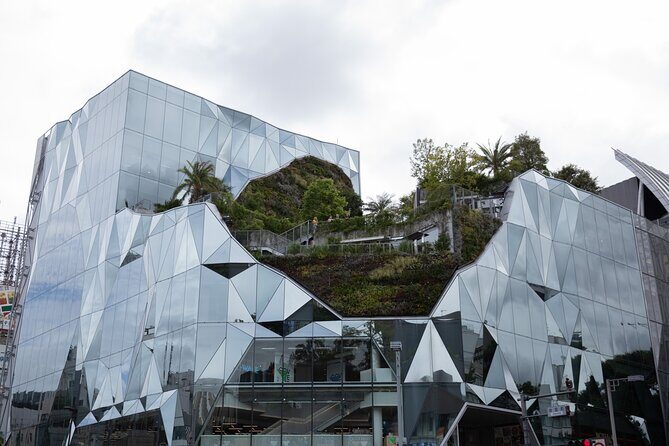
- Stop 3: Omotesando’s designer avenue and modern architecture
- The tour price: $25 and what you’re really paying for
- Guides and pacing: Miyu and Hiroko style, in plain terms
- Where you meet and where you finish (so your day stays simple)
- What to wear and how to plan your day
- Should you book this Harajuku Meiji Shrine walking tour?
- FAQ
- How long is the Harajuku Meiji Shrine walking tour?
- What stops are included?
- Is the admission fee included, and do I pay anything at the shrine?
- How big is the group?
- Where do I meet and where does the tour end?
- Can I get a refund if my plans change?
Key things to know before you go
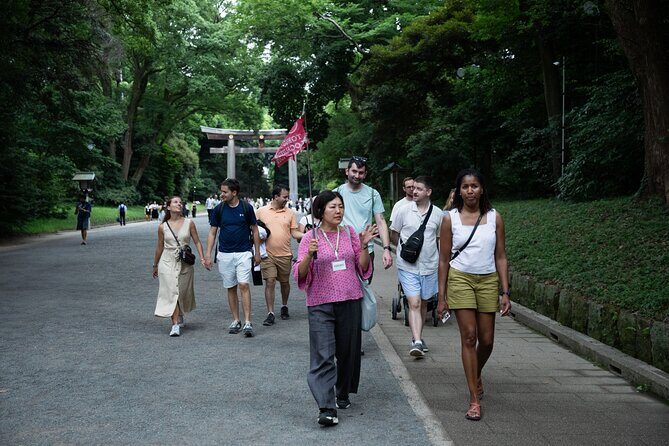
- Small-group pace (max 15) helps you move through popular spots without feeling swept along.
- Meiji Jingu first gives you a quiet reset before the Harajuku buzz—torii gates, then a forest path.
- Takeshita Street is short but intense: a 400-meter pedestrian lane packed with fashion and quirky accessories.
- Omotesando brings contrast with its stylish, tree-lined boulevard and modern architecture alongside major stores.
- Mobile ticket means less fuss when you’re meeting up and ready to start walking.
Why Meiji Jingu + Harajuku works better together than apart
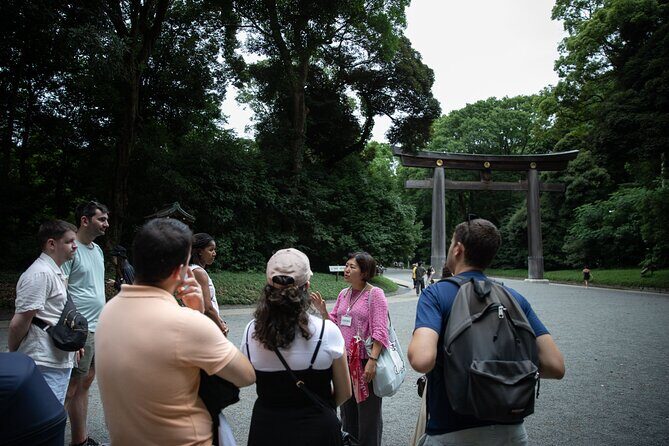
Most Tokyo itineraries split “serious culture” and “youth fashion” into separate days. This one pairs them on purpose, and that’s why it feels satisfying. You begin at Meiji Jingu, where you step into a forested Shinto space and can slow your brain down. Then you switch gears to Harajuku, where Takeshita Street compresses youth-driven creativity into a short, pedestrian-only stretch.
That rhythm matters because it changes how you experience both areas. If you hit Harajuku first, everything else can feel like an afterthought. If you start at the shrine, you get the temple setting and etiquette basics in place, so your later walk through busy streets doesn’t feel like a totally different planet.
Also, the guide route saves time. You’re not spending your energy figuring out which lanes to cross and where to stand for photos. Instead, you’re following a planned path, with stops that are close enough to keep momentum but varied enough to make the 2 hours feel full.
You can also read our reviews of more walking tours in Tokyo

Stop 1: Meiji Jingu Shrine and the forested approach
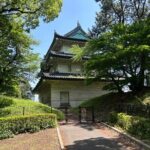
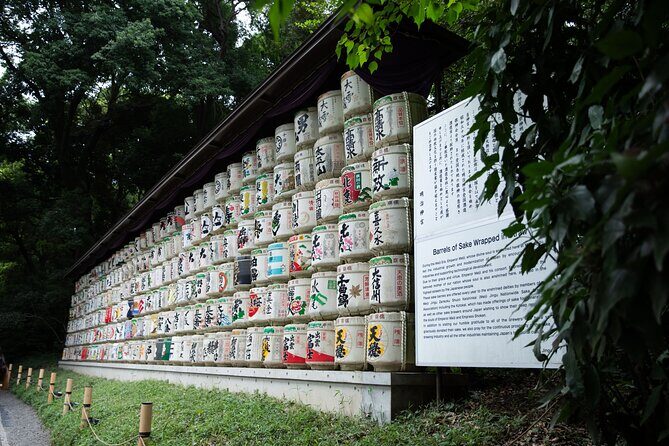
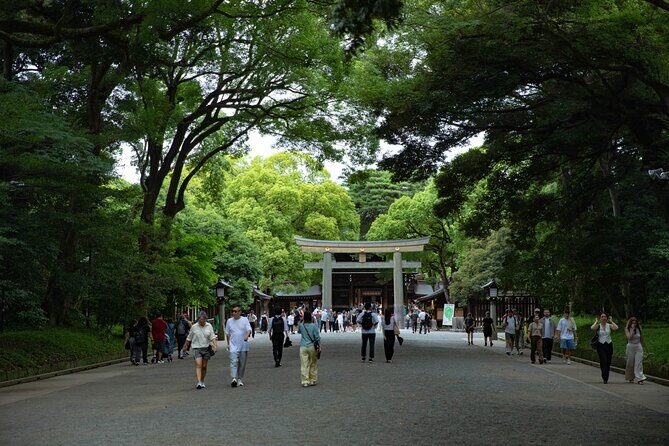
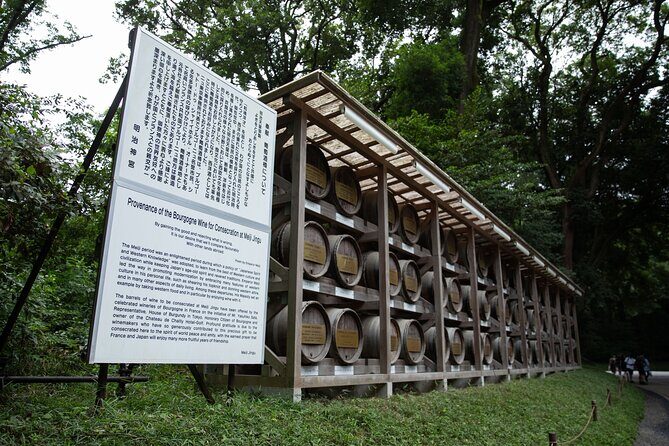
Meiji Jingu is the tour’s calm center, and the structure of the stop helps. You’ll enter through the famous torii gates and then walk along a tree-lined route that leads into the shrine’s deep, forest setting—a 70-hectare pocket of green.
What I like about this stop in a guided format is that it nudges you from sightseeing into understanding. A first shrine visit can feel like you’re guessing what’s correct. With a guide, you get practical etiquette tips, so you know how to act respectfully and what you’re looking at as you move through the grounds.
In a place designed for quiet focus, the guide also helps you slow down at the right moments. You’re given about 40 minutes here, which is enough time to experience the atmosphere without feeling rushed, but not so long that the day loses its energy.
One more plus: Meiji Jingu entry on this itinerary is free, so there’s no awkward “pay at the gate” surprise. Your cost is paying for the guided context and navigation—not a pile of add-on tickets.
Stop 2: Takeshita Street without losing your bearings
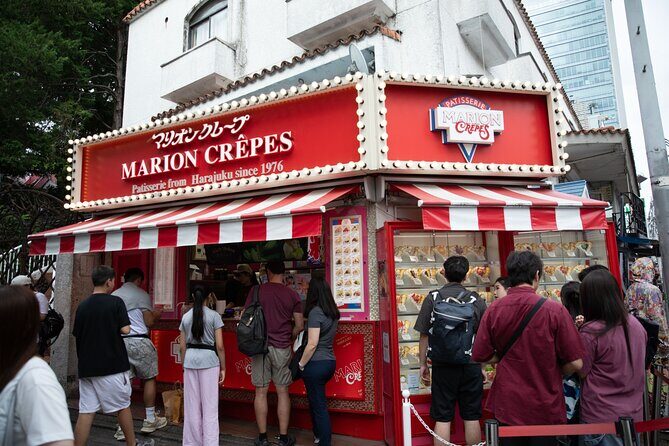
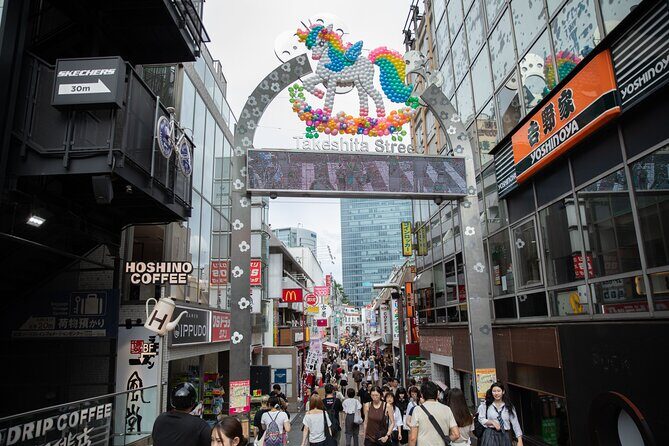
Then you pivot from forest quiet to Harajuku street-level excitement. Takeshita Street is only about 400 meters long, but it packs a lot into that space: trendy boutiques, quirky accessory shops, and that unmistakable youth-culture style.
Here’s the practical value of doing it with a guide. Takeshita Street is popular. Without a plan, you can end up standing still, slowly shuffling, or walking in circles while crowds tighten around you. With a small group and a route, you can see what’s worth noticing while still keeping your energy for browsing.
This stop is also a good reality check for your own tastes. If you’re hoping for calm design browsing, Takeshita may feel chaotic. If you want style inspiration, street fashion, and a snapshot of what’s trending among younger shoppers, this is one of the fastest ways to get that feel.
You’ll spend about 30 minutes here. That’s long enough to take in the vibe and peek into a few storefronts, but short enough that you’re not trapped in the thick of it the whole time. Admission here is free, so again, your money goes toward the guidance and the time saved.
Stop 3: Omotesando’s designer avenue and modern architecture
Next comes Omotesando, often described as a “Champs-Élysées” style boulevard. In real life, that comparison hits because it’s a broad, tree-lined avenue with a serious shopping scene and eye-catching modern architecture.
This stop works as a palate cleanser after Takeshita Street. The energy shifts from dense, playful street fashion to a more spacious, upscale look at flagship stores and contemporary buildings. You also get variety in how you experience Tokyo—less lane-to-lane wandering, more boulevard walking with architecture that’s meant to be noticed from a distance.
You’ll have about 20 minutes here. That might sound short, but for a walking tour, that’s a smart duration. Omotesando’s main value is quick orientation: you see what the street is, how it’s laid out, and what kind of shops and buildings define it. If you want to linger, you’re already in a place where you can easily continue on your own afterward.
Admission is free, so you don’t need to time anything around tickets. You just walk, look, and absorb the contrast.
The tour price: $25 and what you’re really paying for
At $25 per person for around 2 hours, the headline price is easy to digest. The real question is value: what do you get besides the walking?
You get three things that are hard to replicate quickly on your own:
- A planned route that threads together Meiji Jingu, Takeshita Street, and Omotesando without you mapping on your phone.
- Time saved from figuring out where to go next and how to pace the stops.
- Context delivered by a guide, especially at the shrine—where etiquette and meaning matter.
Also, the tour uses a mobile ticket, which cuts down on the usual “where is that paper ticket” stress. And the group stays small (up to 15), which usually means you can actually ask questions rather than speaking to a wall of headphones.
If you’re traveling on a budget and want a high-impact sampler of Harajuku and its nearby icons, this fits. If you’re someone who loves slow, independent wandering with no structure at all, you might find yourself wanting more time at specific shops. But as a first Harajuku introduction—especially early in your Tokyo stay—this is an efficient way to get oriented.






Guides and pacing: Miyu and Hiroko style, in plain terms
The tour’s reputation leans heavily on guide quality, and the good news is the feedback isn’t about fancy storytelling—it’s about clarity and friendliness.
Guides such as Miyu and Hiroko are praised for being both knowledgeable and easy to follow, with explanations that fit a wide age range in the group. People also mention that the guidance isn’t overly long-winded, which matters because you’re walking for two hours. If your guide talks like a documentary narrator, you’ll end up checking out. In contrast, the guidance here seems timed to keep you engaged while still moving.
Another repeated theme: questions get answered. That’s a big deal in Japan, where simple etiquette questions can feel awkward if you’re unsure. Having someone on the spot makes the shrine visit feel smoother and more respectful.
Finally, the tour is described as well-paced and comfortable—so you’re not sprinting between locations. For most visitors, that balance helps you enjoy both extremes: the quiet shrine side and the busy shopping side.
Where you meet and where you finish (so your day stays simple)
You’ll start at Harajuku Station at 1 Chome-18 Jingumae in Shibuya, Tokyo. Your end point is Tokyu Plaza Harajuku, specifically inside the HARAKADO area.
This matters because it keeps you anchored in the right neighborhood. Ending near shopping and transit makes it easy to keep going without backtracking. It’s also a nice setup if you want to grab food afterward—though the tour itself is a walking-and-seeing format, not a meal stop.
What to wear and how to plan your day
This is a walking tour, so dress for comfort. You’ll be on your feet across three distinct areas—shrine grounds with pathways, a pedestrian shopping lane, and a boulevard. If you can handle moderate city walking, you’ll be fine.
I’d also plan to keep your expectations flexible for Takeshita Street. The vibe is part of what you’re paying for. Even with a guide, it’s still a popular Harajuku shopping corridor, so it’s not the kind of place where you can expect quiet.
A good strategy is to treat the tour as orientation. After you finish, you’ll know which streets feel like your style and which you’d rather skip on your next pass.
Should you book this Harajuku Meiji Shrine walking tour?
Book it if:
- You want a guided route that ties Meiji Jingu, Takeshita Street, and Omotesando together in one smooth session.
- You’re interested in shrine etiquette and want the context without researching for hours.
- You prefer a small group format where you can ask questions and get a comfortable pace.
- You’re doing Harajuku for the first time and want the highlights without getting lost.
Skip or reconsider if:
- You strongly dislike busy, high-energy shopping streets and feel stressed in crowds, even briefly.
- You want a long shopping spree in one area. This tour’s strength is balance and timing, not extended free time at any single store strip.
If you’re in Tokyo for a few days and want a smart sampler that feels both respectful (at the shrine) and fun (in Harajuku), this one earns its popularity.
FAQ
How long is the Harajuku Meiji Shrine walking tour?
It runs for about 2 hours.
What stops are included?
You’ll visit Meiji Jingu Shrine, Takeshita Street, and Omotesando.
Is the admission fee included, and do I pay anything at the shrine?
The tour includes an admission fee. On this itinerary, Meiji Jingu Shrine entry is listed as free.
How big is the group?
The tour has a maximum of 15 travelers.
Where do I meet and where does the tour end?
You start at Harajuku Station (1 Chome-18 Jingumae, Shibuya, Tokyo) and end at Tokyu Plaza Harajuku HARAKADO (Jingūmae area).
Can I get a refund if my plans change?
Yes. You can cancel for a full refund if you cancel at least 24 hours before the experience’s start time.