REVIEW · TOKYO
Tokyo: Asakusa Walking Tour with Sensoji Temple Visit
Book on GetYourGuide →Operated by Localized Walking & Food Tours · Bookable on GetYourGuide
Asakusa hits you fast, with sights and street food smells right away. This is a 2-hour guided walk built around Sensō-ji and the old-market lanes of Asakusa, so you get Tokyo tradition without wandering lost in a crowd. I especially like how the tour sets context as you walk, from the Thunder Gate to the shopping streets that surround the temple.
I also love that the experience is guide-led and English-first. In the feedback I saw, guides like Keiko, Aya, Hiroko, and Loc are praised for answering questions clearly, keeping a comfortable pace, and pointing out what’s worth your attention while you still get real time to look, take photos, and enjoy the area.
The one thing to think about is timing: this is a short, structured walk. If you’re the type who wants to linger for an hour inside a temple complex or shop at every stall, you may feel gently rushed in places—especially around the temple and shopping streets.
In This Review
- Key things I’d watch for on this Asakusa tour
- Entering Tokyo’s Old Heart at Kaminarimon
- Kaminarimon to Nakamise Street: How the Walk Teaches You
- Sensō-ji Temple: Thunder Gate Views, Incense Rituals, and Real Time
- Asakusa Shrine Stop: The Shinto Side of the Same Neighborhood
- Hoppy Street and Shin-Nakamise: Old Tokyo Meets Street Energy
- Finishing at Azuma Bridge: A Good Landing Spot
- English-Guided, Question-Friendly, Pace-Managed
- What You Learn Beyond the Postcards
- Price and Value: Is $22 Worth It?
- Who This Asakusa Tour Suits Best
- Should You Book This Asakusa Walking Tour?
- FAQ
- How long is the Tokyo Asakusa walking tour?
- Where do I meet the guide?
- What places does the tour include?
- Is the tour offered in English?
- Is this walking tour wheelchair accessible?
- How much does it cost?
- Can I cancel for a refund?
- Does it offer reserve now, pay later?
Key things I’d watch for on this Asakusa tour
- Start at Kaminarimon so you see the iconic gate at the right moment, not after it’s already passed
- Nakamise Street orientation helps you spot the classic shops and snack stops quickly
- Sensō-ji free time gives you breathing room for photos and incense rituals
- Asakusa Shrine photo stop adds a Shinto stop that balances the Buddhist focus
- Hoppy Street and Shin-Nakamise show you Asakusa’s modern street energy alongside tradition
- Finish at Azuma Bridge so you can roll into lunch or keep exploring nearby
Entering Tokyo’s Old Heart at Kaminarimon
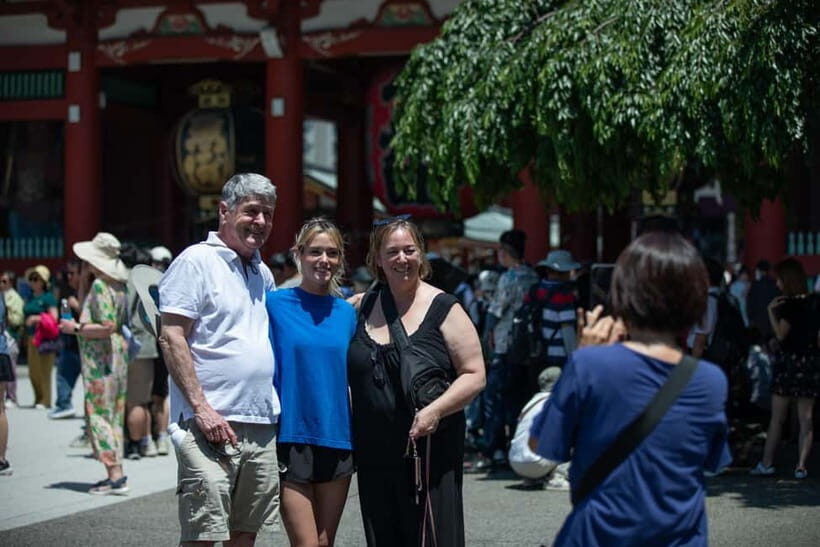
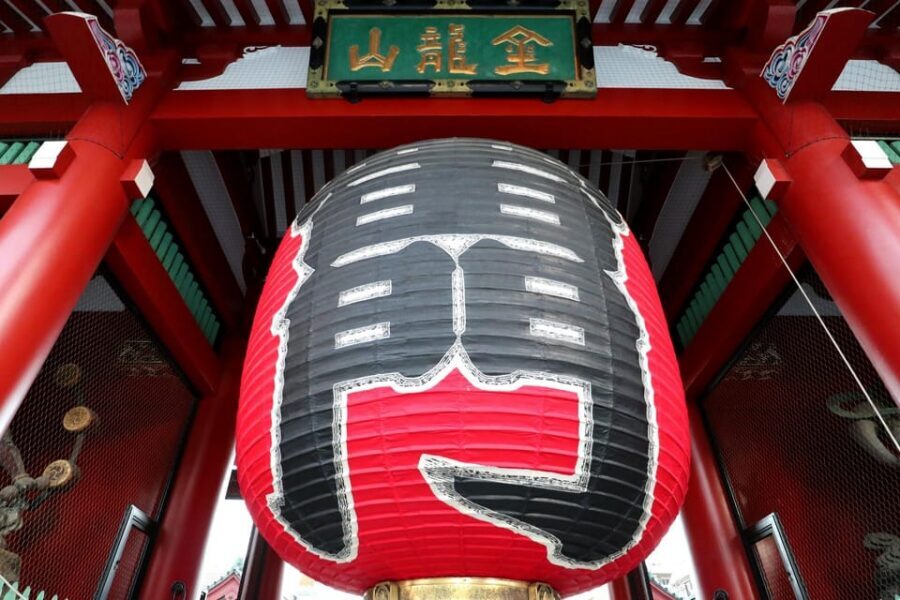
If you’ve seen pictures of Kaminarimon before, you know the vibe. Up close, the scale and the crowds make it feel like a proper starting gun for Asakusa.
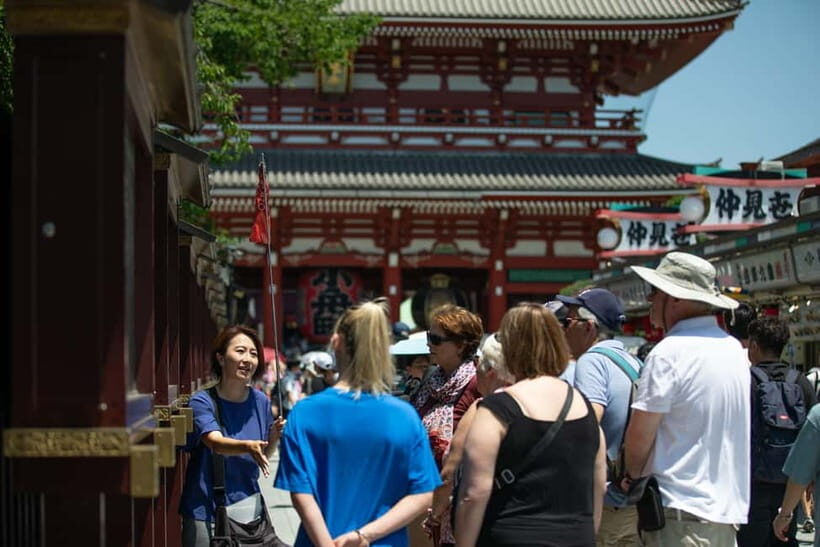
This tour begins right at the Kaminarimon area, with your guide waiting in front of the gate on the left side (near the Tokiwado Kaminari-okoshi Honpo shop). The guide holds a sign, which is a lifesaver in a place where everyone’s looking slightly in the wrong direction. You’ll also get a quick orientation before the walk really starts, so you know what you’re looking at and why it matters.
Practical tip: Asakusa can feel visually noisy. A good guide helps you pick out the meaningful details so you’re not just collecting photos—you’re understanding them.
You can also read our reviews of more walking tours in Tokyo
Kaminarimon to Nakamise Street: How the Walk Teaches You
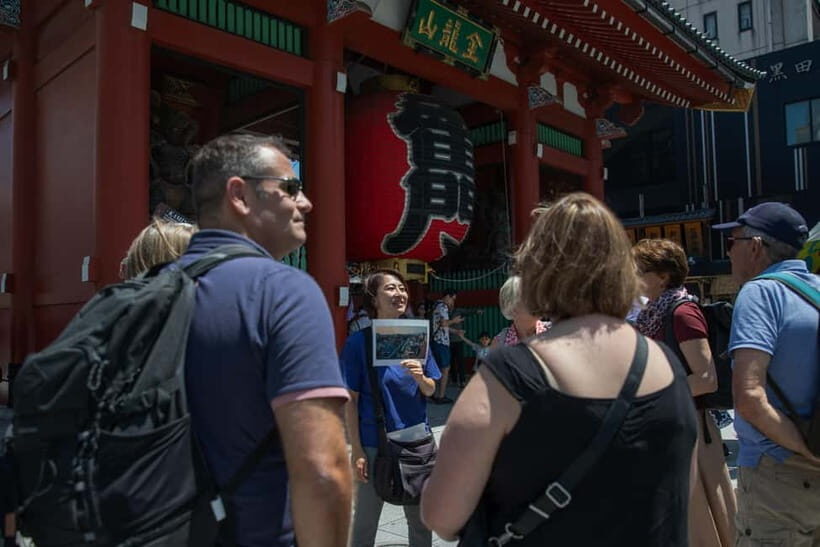
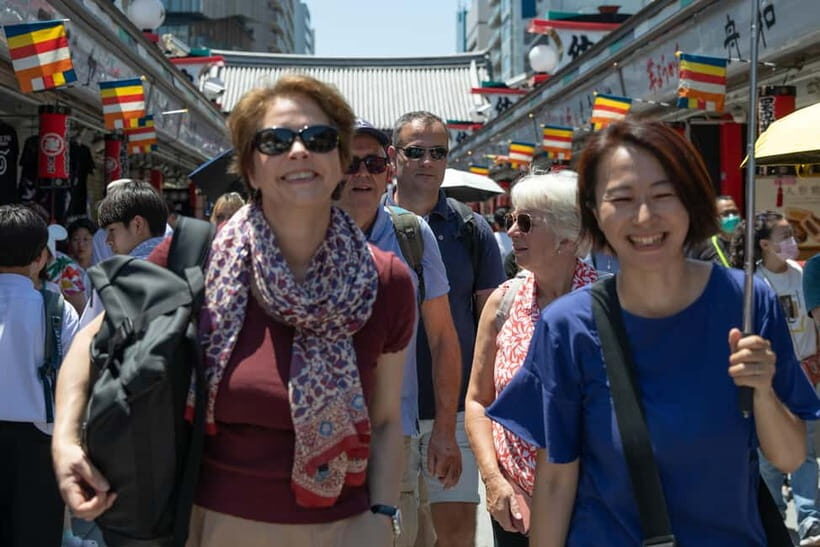
Once you leave the gate zone, the tour turns into a guided stroll through Nakamise Shopping Street, one of Asakusa’s older market lanes. This is where the trip stops being only about temples and starts becoming about daily life in old Tokyo.
You get a short guided segment along Nakamise, enough time to understand the rhythm of the street. Your guide can point you toward what’s typically sold here (and what’s more touristy), plus what to watch for as you move toward the temple complex.
One thing I like about this format is that it handles the main challenge of Asakusa: decision overload. When you’re surrounded by snack smells, souvenir stalls, and people flowing in every direction, guidance keeps you from wasting time doing random guesswork.
Sensō-ji Temple: Thunder Gate Views, Incense Rituals, and Real Time
At Sensō-ji (also called Asakusa Kannon), you get the big centerpiece. The tour includes guided time inside the temple area, plus photo stops and a block of free time so you can slow down without feeling like you’re skipping the story.
You’ll also learn what you’re seeing as you approach and move around the complex. Your guide explains the temple’s significance and helps you notice details you might otherwise miss—things like the meaning behind major features and how visitors typically experience the space.
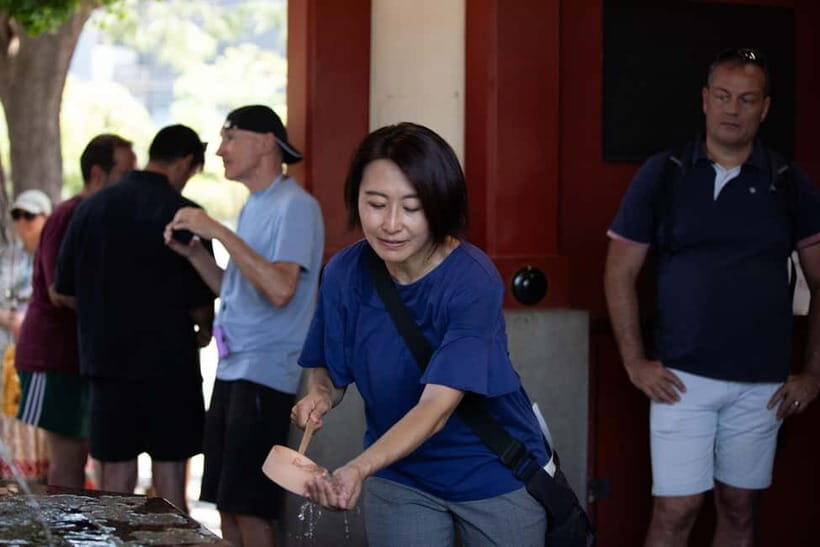
A highlight built into the experience is the chance to participate in incense-burning rituals. If you’re curious but not sure what you’re doing, bring your questions. In the feedback I read, guides such as Aya and Hiroko were repeatedly praised for being patient with questions and careful about pacing, which matters in a busy sacred setting.
Also, the tour gives you time for photos and to just be there. You’re not forced to race from one spot to the next, which is a big deal at a place with heavy foot traffic.
Asakusa Shrine Stop: The Shinto Side of the Same Neighborhood
After Sensō-ji, the tour shifts gears to the Asakusa Shrine area for a photo stop and guided visit. Even if your brain is still full of temple details, this stop adds balance—Tokyo’s spiritual life isn’t one-size-fits-all, and the shrine connection helps you understand that layering.
This is a shorter stop than the main temple visit, but it’s long enough to get the core context: what a shrine atmosphere feels like compared with a Buddhist temple setting, and how people behave differently in each place. Your guide helps translate those differences into something you can actually notice in the moment.
If you love noticing contrasts—architecture, rituals, visitor flow—this shrine stop is a smart add-on. It makes the experience feel like more than a single photo-heavy attraction.
Hoppy Street and Shin-Nakamise: Old Tokyo Meets Street Energy
Here’s where Asakusa stops being strictly ceremonial and becomes thoroughly local. The tour includes Hoppy Street, plus a visit to Shin-Nakamise Shopping Street (a newer-feeling extension that still keeps the classic shopping mood).
Hoppy Street is often associated with Asakusa’s food and drinks culture. Even if you don’t plan to snack heavily on the tour, it’s useful to see where the neighborhood’s energy concentrates. This helps later when you want to find a good meal without backtracking through crowded lanes.
Then comes Shin-Nakamise. It’s a nice contrast after Nakamise: you still get that market-street feel, but the vibe can feel less like a single concentrated souvenir corridor. In the feedback, guides were credited with giving practical pointers for what to look for and where to eat afterward—so you can treat these shopping segments as scouting trips for your own break.





Finishing at Azuma Bridge: A Good Landing Spot
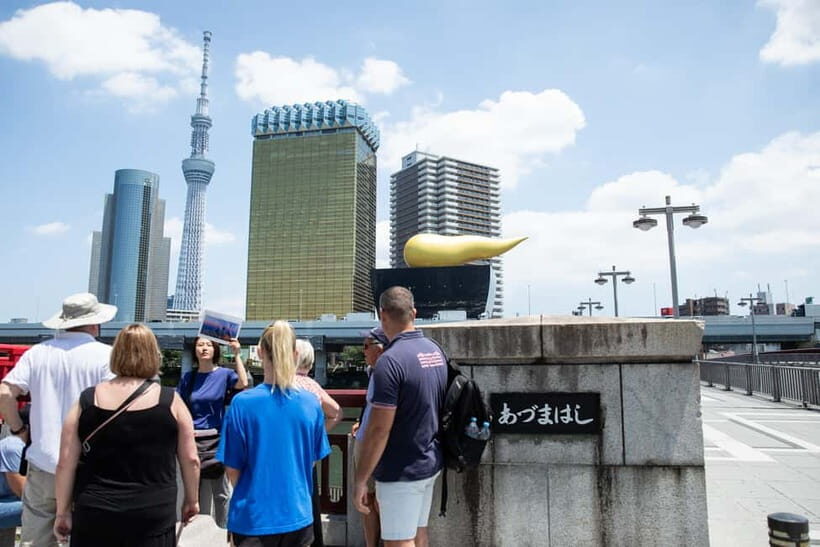
The walk ends at Azuma Bridge. That’s not just a random end point—it’s a strategic one. Finishing near a major landmark means you can orient yourself fast and choose your next move without feeling stuck in the temple crush.
This is also the part where the tour can naturally line up with lunch plans. Many people want food after a morning of walking and temple time, and Azuma Bridge puts you in a part of Asakusa where you can keep wandering or settle down.
If you’ve got time after the tour, I’d use the finish as a springboard: go for a meal, then decide if you want another temple stroll, a longer shopping wander, or a short ride back toward central Tokyo.
English-Guided, Question-Friendly, Pace-Managed
Tokyo walks can be a test. Not because the route is hard, but because you’re constantly deciding where to look and what to ask.
This tour is guided in English, and the feedback emphasizes that guides keep it understandable. People reported clear English, solid explanations, and a pace that respects different guests—including families with kids. One parent noted that the guide adapted to kids and also engaged with a teenager, which is exactly the kind of small-group strength that matters when you’re visiting a place that’s both sacred and crowded.
You’ll also see practical guidance in how the tour flows. Instead of telling you every single answer, the guide points you toward what’s worth paying attention to—then gives you the freedom to enjoy the space yourself.
What You Learn Beyond the Postcards
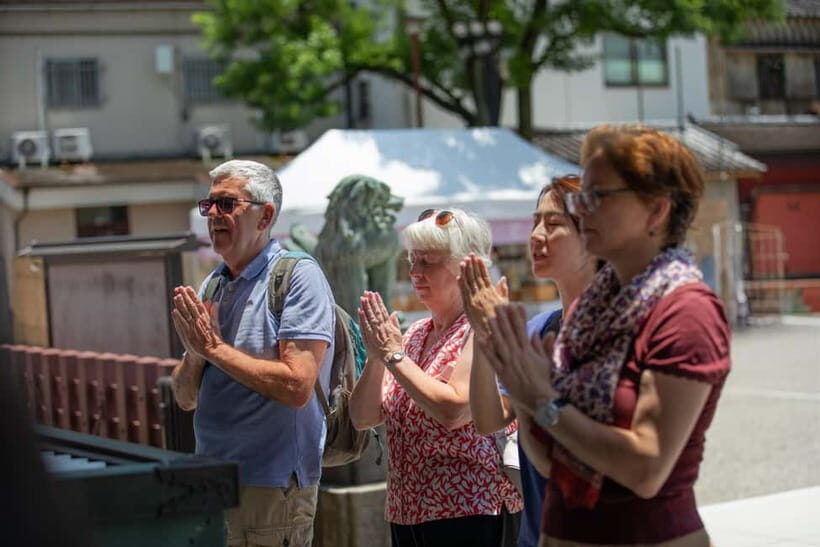
A guided Asakusa walk works best when you understand what the sights mean, not just what they look like.
Here, the structure helps you connect the dots:
- Kaminarimon and Sensō-ji give you the spiritual anchor
- Nakamise and Shin-Nakamise show you how commerce and tradition coexist
- Asakusa Shrine adds religious variety
- Hoppy Street points you toward the neighborhood’s day-to-day personality
In the feedback, guides were repeatedly praised for sharing historical and cultural context, plus modern street insight (including food vendor tips). That’s the sweet spot. You come away with a map in your head, so your next hour in Tokyo feels less like wandering and more like choosing.
Price and Value: Is $22 Worth It?
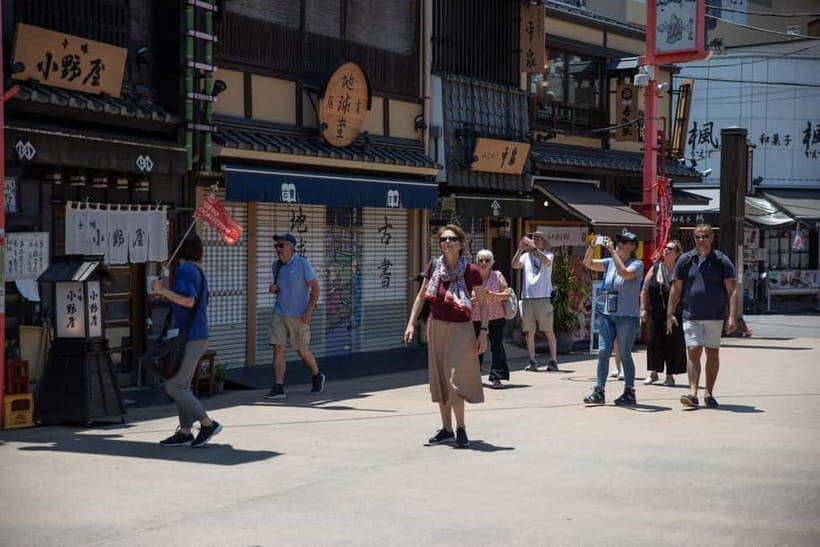
At $22 per person for about 2 hours, the value comes from two things: guided context and saved time.
Going on your own can be fun, but Asakusa is crowded and full of tiny choices. Paying for a guide helps you:
- focus on the highlights (without missing key temple features)
- understand what you’re looking at while you’re looking at it
- move through market streets with less second-guessing
- end in a landmark zone that’s easy to navigate from
It’s not a long tour. But for the time, you’re getting multiple major stops—temple, shrine, iconic gate, and two market segments—without the hassle of planning the route yourself. If you’re in Tokyo for a short visit or you want a strong first taste of the city’s older side, this price point is hard to beat.
Who This Asakusa Tour Suits Best
This is a great fit if you want:
- a clear, guided introduction to Asakusa in a limited amount of time
- help navigating a famous area where you might otherwise get stuck in the crowd
- English explanations that connect temple details to everyday street life
- a tour that ends at a landmark rather than dumping you back in the mess
It may be less ideal if you want a slow, deep temple session. Because the experience is time-structured, you’ll have to trade maximum lingering for maximum variety.
It’s also a good option if you’re traveling with mixed ages. The feedback points to guides being attentive and responsive, which helps when people want different things from the visit.
Should You Book This Asakusa Walking Tour?
Yes, if you’re looking for a smart first (or early) look at Asakusa and you want the story behind what you see. The Sensō-ji focus plus the market streets makes it feel like you’re experiencing multiple Tokyo layers in one morning, without needing to be a history buff.
I’d especially book it if:
- you want an English guide to translate what you’re seeing
- you like walking tours that end with a convenient landmark
- you don’t want to spend your precious time figuring out what matters most
If you’d rather spend your entire time inside the temple complex or you already know Asakusa well, you might enjoy doing it solo. But if you want an efficient, friendly, and context-rich overview, this is the kind of tour that makes your later Tokyo exploring easier.
FAQ
How long is the Tokyo Asakusa walking tour?
The tour lasts 2 hours.
Where do I meet the guide?
Meet in front of the Kaminarimon Gate on the left side, near the Tokiwado Kaminari-okoshi Honpo shop. The guide will be holding a sign for the tour.
What places does the tour include?
You’ll visit Kaminarimon, Nakamise Shopping Street, Sensō-ji Temple, Asakusa Shrine, Hoppy Street, and Shin-Nakamise Shopping Street, then finish at Azuma Bridge.
Is the tour offered in English?
Yes. The live tour guide speaks English.
Is this walking tour wheelchair accessible?
Yes, it is listed as wheelchair accessible.
How much does it cost?
The price is $22 per person.
Can I cancel for a refund?
Yes. Free cancellation is available up to 24 hours in advance for a full refund.
Does it offer reserve now, pay later?
Yes. You can reserve now & pay later, with no payment due today.