REVIEW · KAMAKURA
Kamakura: A Journey Through Medieval Japan
Book on GetYourGuide →Operated by Temples and Trails Tours Japan · Bookable on GetYourGuide
Kamakura turns time travel into walking. This tour strings together Engaku-ji Zen, a samurai-era political core, and the Great Buddha in one practical half-day plan. I especially like the mix of big-ticket sights with real meaning, and I love that you can try shojin-ryori, Buddhist monk food, not just admire it from afar. One drawback to plan for: it is still a walking tour, and it is not suitable for wheelchair users or people with mobility impairments.
You’ll start in Kita-Kamakura and work your way through Kamakura’s Kamakura Period legacy, when Japan’s first warrior government took root. I also like the human touch: an English-speaking local guide handles the stories, timing, and transit so you spend less time figuring out routes and more time looking closely. If you only have a short window, pay attention to which version includes Enoshima and monk lunch, because the longer option adds those.
In This Review
- Key highlights you’ll feel in your day
- Why Kamakura Works as a Half-Day Time Machine
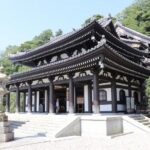
- Engaku-ji: Zen’s Big Stage and Political Power
- Tokei-ji: A Former Nunnery with a Women’s Pilgrimage Story
- Shojin-ryori Lunch: Monk Food That’s Actually Worth Waiting For
- Tsurugaoka Hachimangu: Downtown Shrine Power in a Walkable Core
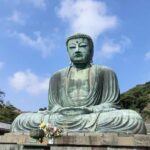
- Kōtoku-in and the Great Buddha: Scale You Can Feel
- Enoshima for the Longer Private Day: Holiness, Kitsch, and Sea Air
- Walking, Seating, and Transport: How You Actually Keep Up
- Price and Value: What $35 Covers (and What’s Extra)
- Who This Tour Suits Best (and Who Should Skip It)
- Should You Book This Kamakura Tour?
- FAQ
- How long is the Kamakura tour?
- Where do we meet the guide?
- What’s included in the tour price?
- Are entry fees and transportation included?
- Is shojin-ryori included?
- Does the tour include Enoshima?
- Is this tour suitable for wheelchair users or limited mobility?
Key highlights you’ll feel in your day
- Engaku-ji Temple: Zen’s importance shown through art, politics, and religious practice
- Tokei-ji stop: a former nunnery and a pilgrimage spot for women across Japan
- Shojin-ryori lunch: Buddhist monk-style vegetarian food, offered on the longer tour or by request
- Tsurugaoka Hachimangu: Kamakura-period center of power, right in downtown action
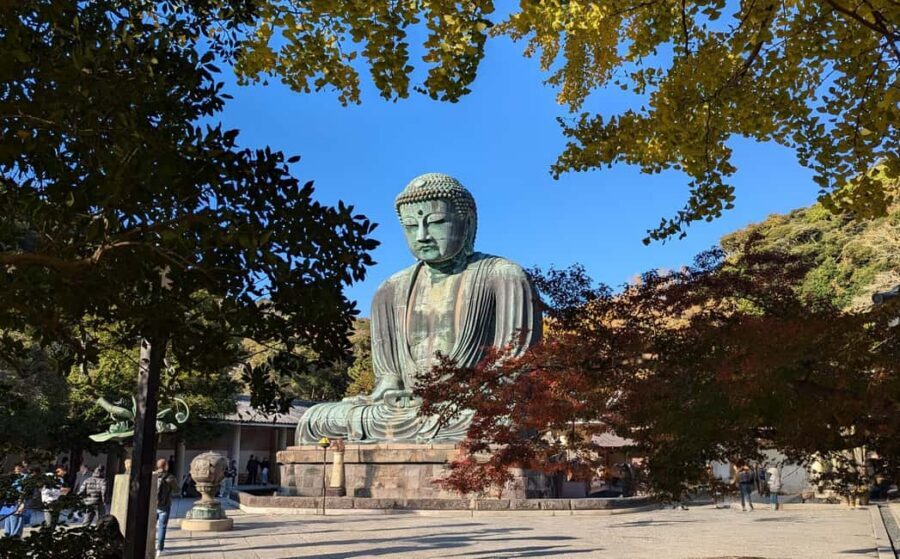
- Kōtoku-in Great Buddha: one of Japan’s largest Buddha statues, with a big sense of scale
Why Kamakura Works as a Half-Day Time Machine
Kamakura is the sweet spot if you want “old Japan” without waiting for a full day of trains. It’s close enough to Tokyo to feel easy, yet different enough that you get that exhale the moment you arrive. The city connects religion, politics, and culture in a way that feels obvious once you walk it.
This is a 4–8 hour day where you’ll hop between major sights, then slow down at the ones that deserve it. You’re not doing a marathon either. The route is designed as a walking tour, but the plan also uses public transport and includes short breaks to sit and reset.
You can also read our reviews of more tours and experiences in Kamakura.
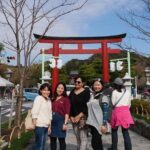
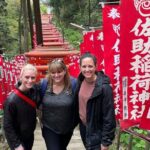
Engaku-ji: Zen’s Big Stage and Political Power
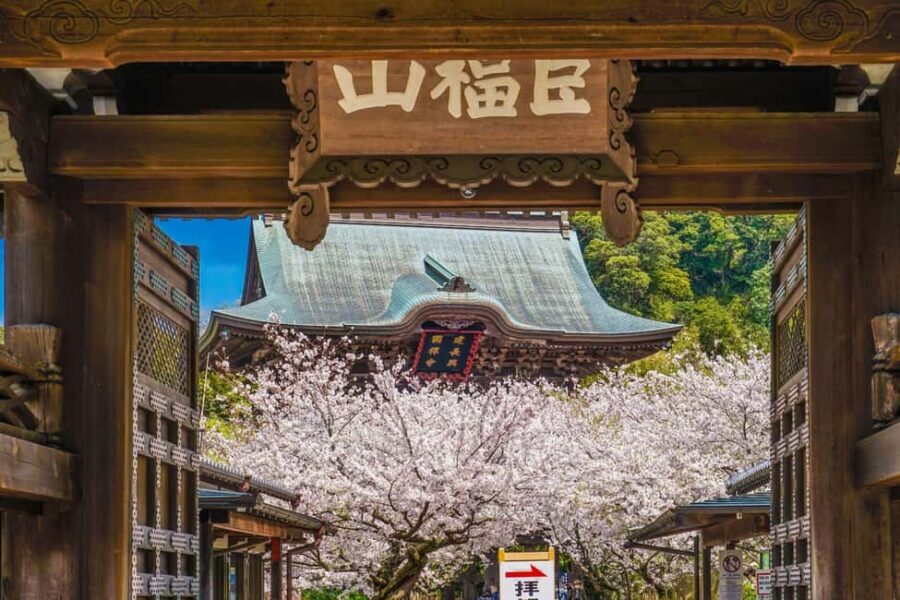
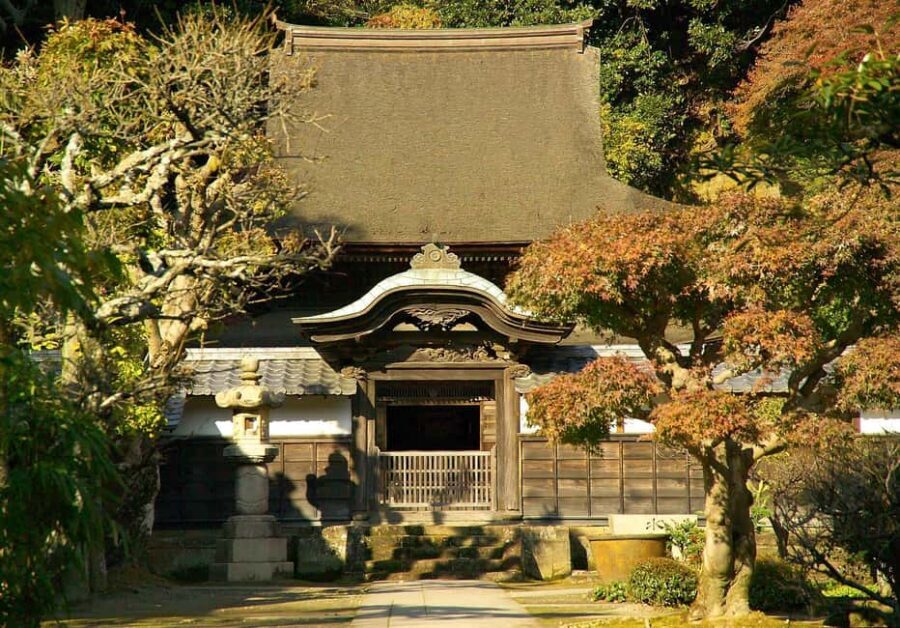
Most days start strong, and this one starts with Engaku-ji, one of Japan’s most important Zen temples. You’ll spend about an hour here, long enough to get past the “pretty scenery” stage and start seeing how Zen shaped art and everyday religious practice. The guide’s stories matter because Kamakura wasn’t just a scenic stop—it was where powerful people helped define what Zen looked like in Japan.
At a temple like Engaku-ji, the details can get lost if you’re only sightseeing. With a guide, you’re more likely to notice the relationships between rituals, spaces, and the people who supported them. You’ll also get the kind of context that makes later stops click, especially when shrines and statues start lining up with the same political/religious thread.
A practical note: temples can be surprisingly cool in the shade, then warm in open areas. Dress in layers so you’re comfortable when you’re waiting at transitions.
Tokei-ji: A Former Nunnery with a Women’s Pilgrimage Story
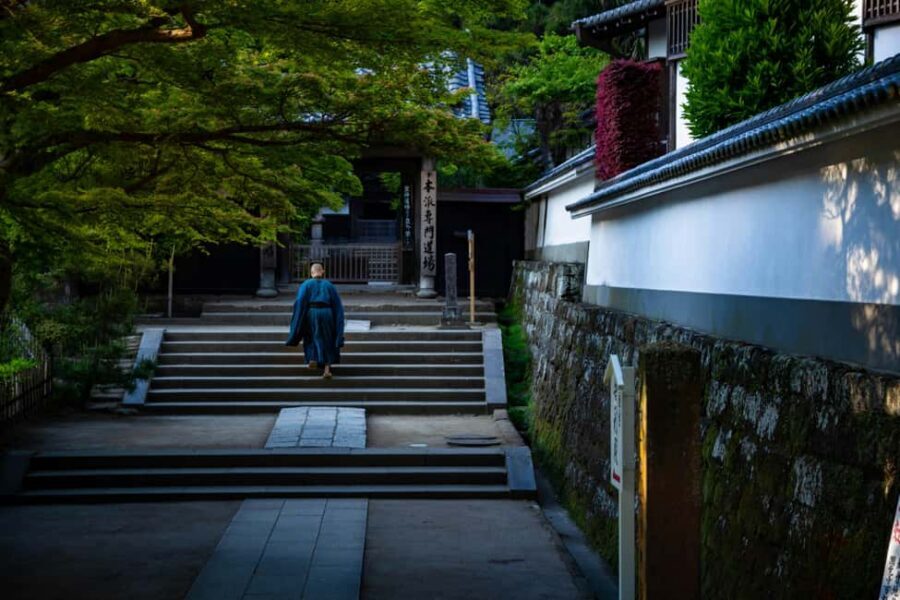
After Engaku-ji, you’ll make a quick stop at Tokei-ji. Plan around 15 minutes. It’s short by design, but it’s not filler. This is a former nunnery, and it’s tied to a pilgrimage tradition for women from across Japan.
What I like about this kind of stop is that it changes your mental picture of medieval religion. You’re not only seeing the famous male power centers. You’re also seeing how spirituality moved through women’s religious life, and how pilgrimage created connections across distances.
Don’t expect this to replace the bigger stops. Instead, think of it as a narrative hinge—something that keeps your day from turning into a checklist.
Shojin-ryori Lunch: Monk Food That’s Actually Worth Waiting For
Lunch is one of the biggest reasons to consider the longer option. You’ll have a meal of shojin-ryori, the vegetarian food Buddhist monks eat. It’s generally tied to the 8-hour tour, but it can also be available on the 4-hour option if you request it ahead of time.
This matters for value. Yes, lunch is extra (around 1,000 yen/person), and entry fees are also separate. But shojin-ryori isn’t the typical sightseeing lunch. It gives you a daily-life taste of Buddhist practice, not just a tourist-friendly set menu.
If you have dietary needs, this is a good point in the day to speak up. The tour is vegetarian and vegan-friendly, and the guide has shown flexibility for serious dietary requirements like gluten-free meals when needed. If celiac or another restriction affects you, tell your guide beforehand so they can plan the right restaurant.
One small timing tip: eat at a comfortable pace. You want your energy for the next shrine and especially for the Great Buddha area, where you’ll likely spend more time just taking in the scale and photos.
Tsurugaoka Hachimangu: Downtown Shrine Power in a Walkable Core
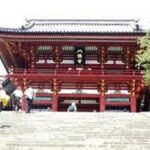
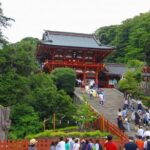
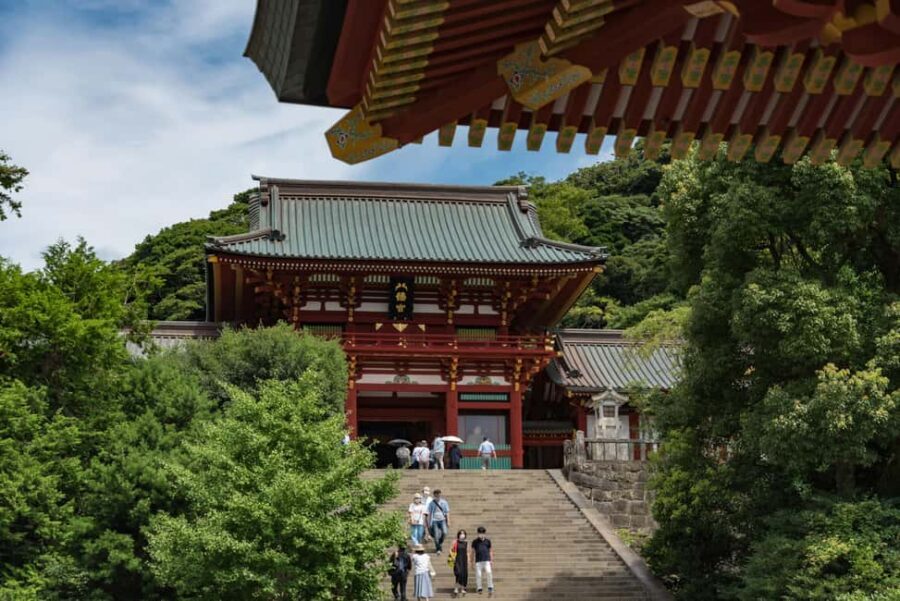
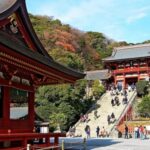
Next comes Tsurugaoka Hachimangu, a major shrine in downtown Kamakura that’s both hugely popular and central to Kamakura-period politics. You’ll spend around 30 minutes here, which is enough to absorb the big themes without rushing.
This is where the day shifts from “temples as spiritual practice” to “shrines as political and cultural hubs.” Kamakura’s warrior government didn’t rise in a vacuum. It drew legitimacy from religious institutions, and Tsurugaoka Hachimangu reflects that link.
If you go in expecting a quiet monument, you might be surprised. This shrine gets crowded because it’s central and dramatic. The guide’s job is to keep you moving with purpose—finding good viewing angles, managing timing, and helping you avoid the worst crush when possible.
Wear shoes you trust. Shrine grounds are often a mix of open paths and stone steps, and you’ll be doing more standing than you expect.
Kōtoku-in and the Great Buddha: Scale You Can Feel
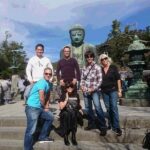
Then you’ll head to Kōtoku-in for the Great Buddha of Kamakura. This is one of Japan’s largest Buddha statues, with a reputation that’s earned. You’ll get about 30 minutes here, including time to see it from the best angles and take photos without fighting your way through.
The Great Buddha hits differently than smaller statues because of how it reshapes your sense of scale. Even if you’ve seen big religious icons elsewhere, the size here tends to make people quiet. It’s a good spot for reflection, but it’s also a great “wow” moment that keeps your day from feeling too academic.
A practical detail: plan your photos early in your time at Kōtoku-in. Light can change quickly, and the crowd flow shifts as tour groups arrive and depart. A guide who understands timing can help you catch the right moment.
Enoshima for the Longer Private Day: Holiness, Kitsch, and Sea Air
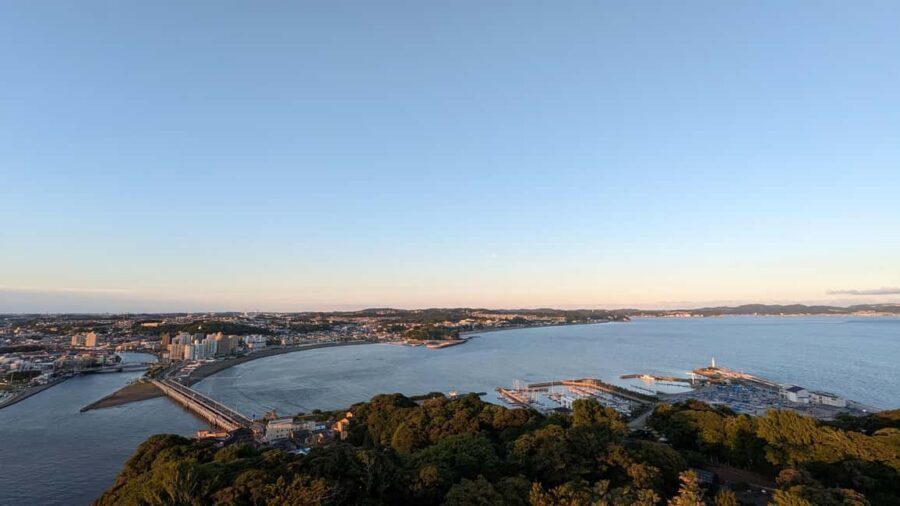
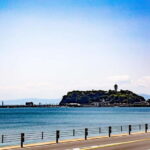
For the private 8-hour option, the tour can include Enoshima, a holy island in ancient times that now also functions as a popular seaside destination. You’ll likely spend around 2 hours here with guided time.
Enoshima is the “contrast” stop. You’re moving from temple/shrine gravity to ocean air and that mix of reverence and casual fun. If you like viewpoints, this is where you get them. If you prefer photos, this is also where you’ll want extra time, because the views and shoreline feel different from inland Kamakura.
This isn’t essential if you’re short on time. If you choose the 4-hour tour version, you’ll want to focus on the Kamakura core (Engaku-ji, Tokei-ji, Tsurugaoka Hachimangu, and the Great Buddha). But if you have the extra hours, Enoshima gives your day a lighter landing after the heavy hitters.
Walking, Seating, and Transport: How You Actually Keep Up
Yes, it’s a walking tour. Still, it’s built for real people, not tour-robot athletes. The plan uses public transport between clusters of sights, and it also gives you a chance to sit down along the way. That matters more than you think because Kamakura days can be warm and uneven in footing.
Your route includes:
- a start at Kita-Kamakura Station
- guided temple and shrine time blocks
- a bus/coach segment (about 20 minutes)
- a train segment (about 15 minutes)
Those transit breaks aren’t a disruption; they’re part of how you avoid fatigue. For many visitors, the biggest challenge isn’t distance—it’s the rhythm. With the guide handling routing, you spend less time staring at maps and more time enjoying the actual sites.
Also, the guide has experience managing pace. In practice, that means you’re less likely to feel dragged through fast stops. Instead, you get time where it counts and quick hits where it doesn’t.
Price and Value: What $35 Covers (and What’s Extra)
The headline price is $35 per person, which sounds like a deal because it is. The catch is what that cost includes. Your price covers the guide fee and the guiding service, including an English-speaking local guide. It does not automatically include most temple/shrine entry fees, local transportation, or lunch.
Here’s what you should budget for on top:
- Entry fees: roughly 800–1,500 yen/person
- Local transportation: about 400 yen/person
- Lunch: about 1,000 yen/person
So is it good value? For me, it mostly comes down to what you’re buying: a guided interpretation of Kamakura’s religious and political links. If you plan to go on your own, you’ll still face ticket costs, getting trains and buses right, and figuring out what matters at each stop. Paying the guide tends to convert that “I saw a temple” feeling into “I understood why it mattered.”
If you’re choosing between tour lengths, also compare what you gain. The longer day is where shojin-ryori and Enoshima become more likely. If those are on your list, the extra hours often feel like the real bargain.
Who This Tour Suits Best (and Who Should Skip It)
This tour is a great match if you want:
- a focused half-day to full-day Kamakura overview
- strong emphasis on Zen, shrines, and how religion connects to politics
- vegetarian or vegan-friendly dining options like shojin-ryori
- an English-speaking guide who helps you move efficiently
It’s less of a match if:
- you use a wheelchair
- you have mobility impairments that make uneven stone paths and standing difficult
If you’re traveling with family, this format can work well because it balances story stops with built-in breaks. If you’re traveling solo, you’ll still get a strong structure and won’t spend your time negotiating routes.
Should You Book This Kamakura Tour?
If your goal is to experience Kamakura as more than a list of famous sights, I’d book it. The best value is the way it connects Engaku-ji, Tokei-ji, Tsurugaoka Hachimangu, and the Great Buddha into one coherent story about religion and power. Add the chance to eat shojin-ryori and (on the longer private option) visit Enoshima, and you get a day that feels both meaningful and fun.
If you’re tight on time, choose the version that fits your stamina and your must-dos. Just remember that Enoshima and monk lunch are tied to the longer/private schedule. And if dietary needs matter, message your guide before you go—this tour is set up to handle vegetarian and vegan requests, and it has shown flexibility for gluten-free situations too.
FAQ
How long is the Kamakura tour?
The tour runs from 4 to 8 hours, depending on the option you choose and availability.
Where do we meet the guide?
Meet your guide outside the East Exit of Kita-Kamakura Station.
What’s included in the tour price?
The tour includes the guide fee and guidance from an English-speaking local guide. It is also vegetarian and vegan-friendly.
Are entry fees and transportation included?
No. Entry fees (about 800–1,500 yen/person) and transportation (about 400 yen/person) are not included.
Is shojin-ryori included?
Shojin-ryori is generally included with the 8-hour tour. It may be available on the 4-hour tour upon request.
Does the tour include Enoshima?
Enoshima is included for those on the private 8-hour option, with guided time there.
Is this tour suitable for wheelchair users or limited mobility?
No. The tour is not suitable for wheelchair users or people with mobility impairments.