REVIEW · KAMAKURA
From Tokyo: Kamakura & Enoshima 1-Day Bus Tour
Book on Viator →Operated by VIP Japan Tours · Bookable on Viator
Kamakura’s temples and Enoshima’s ocean views, in one day. This tour strings together the area’s biggest spiritual hits with real walking time and moments to wander on your own. You’ll get English/Chinese commentary on the ride and smooth roundtrip transport without juggling train transfers.
I like the balance of guided stories and free time—so you’re not stuck only following a schedule. Guides named Omar, Chen, and Yuki get repeated praise for friendly explanations and clear directions, and that matters when you’re moving between sacred sites and shopping streets. I also like the practical itinerary: start at Tsurugaoka Hachimangu, hit Kotoku-in and Hasedera, then finish with Enoshima’s shrines and sea views.
One thing to consider: it’s a long day (about 9–10 hours) and Enoshima involves lots of stairs and uphill walking. If you’re not into climbing—or you want a super-relaxed pace—plan for slow-down moments.
In This Review
- Key things to know before you go
- A one-day Kamakura and Enoshima plan that actually makes sense
- From Tokyo pick-up to Shinjuku drop-off: smooth, but don’t wing it
- Stop 1: Tsurugaoka Hachimangu Shrine and Komachi Street
- Stop 2: Kotoku-in’s Great Buddha (and the “busy equals slow” issue)
- Stop 3: Hasedera Temple and the eleven-headed Kannon
- Enoshima Island: shrines, coin washing, and sea views that change the mood
- Lunch, timing changes, and why 11am can be weird on the island
- Pacing: why people love it, and where it can feel rushed
- Value for $66: what’s included, and why that matters
- Who this tour fits best (and who should adjust expectations)
- Should you book this Kamakura and Enoshima bus tour?
- FAQ
- What time does the tour last?
- Where does the tour start and where does it end?
- What stops are included in the day?
- What entrance fees are included?
- Is lunch included?
- Do you get a guide, and what languages are offered?
- What if the weather or traffic affects the schedule?
- Is there a cancellation window and can the tour be canceled if there are too few people?
Key things to know before you go
- You’ll do two major zones: classic Kamakura shrines plus Enoshima’s seaside religious sights
- Some guides are standout communicators (Omar, Chen, Yuki show up in positive feedback)
- Admissions are partly covered: Hasedera and Kotoku-in entrance fees are included
- Lunch is on your own—and timing shifts can affect what’s open
- There’s real walking with stairs that can add up, especially on Enoshima
A one-day Kamakura and Enoshima plan that actually makes sense
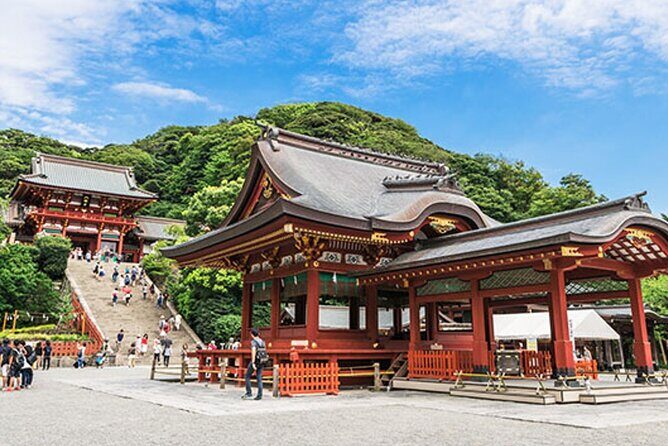
Kamakura is the kind of place where one temple can feel like a whole world—quiet gardens, big statues, and stories tied to samurai-era power. Enoshima adds the sea element: shrines, small alleys, and ocean views that feel like a different mood than central Tokyo.
What I like about this tour is the structure. You start with a major shrine atmosphere in Kamakura, then move through two iconic stops that most people come for—the Great Buddha and Hasedera—before you end on Enoshima, where sightseeing turns into strolling. It’s not trying to cram ten stops into one hour. It’s trying to give you a feel for the region without turning your day into a sprint.
And yes, the bus ride takes time. That’s part of the deal on any day trip from Tokyo. But most of the day is spent where you want to be: outside, walking, and looking at things you can’t really replicate from a photo.
A few more Kamakura tours and experiences worth a look
From Tokyo pick-up to Shinjuku drop-off: smooth, but don’t wing it
The tour starts from a central Tokyo meeting point (Shinjuku is listed for this departure) and ends near Shinjuku Station (West Exit). You’ll also want to treat the meeting time like a train: arrive about 10 minutes early. The operator is explicit that the bus and guide are based on your assigned meeting location, and late arrivals or wrong meeting points can mean missing the tour.
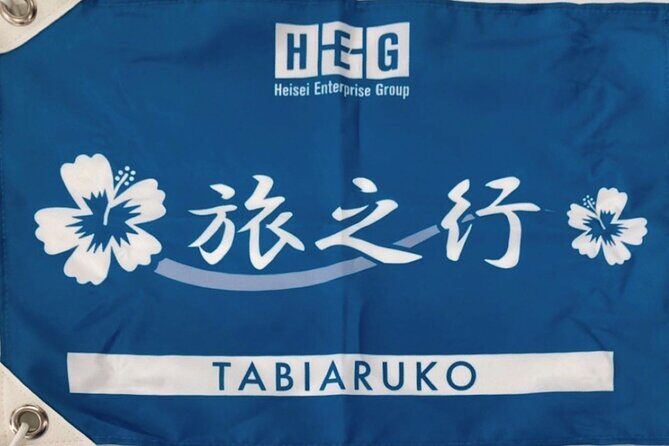
Look for the guide holding a pale blue flag at the start. The tour uses a mobile ticket, so have your confirmation/QR ready.
A few practical notes from real-world experiences help you set expectations:
- The day is designed to depart on time, weather or traffic permitting. The schedule can shift due to road conditions, and that can ripple into lunch timing.
- On some departures, the bus has practical extras like USB charging ports, which is genuinely useful if you’re navigating on your phone.
- The group size is capped at up to 90 people, so you’ll feel it as a group day, not a private car.
If you hate the idea of being “on a schedule,” this tour is still workable—just remember that the bus is the anchor. Your best move is to be ready to leave promptly at each stop so the day stays relaxed instead of rushed.
Stop 1: Tsurugaoka Hachimangu Shrine and Komachi Street
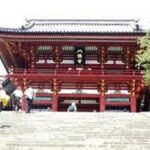
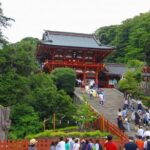
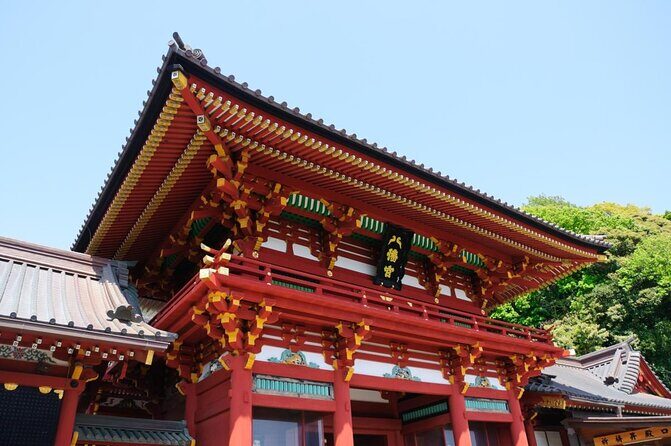
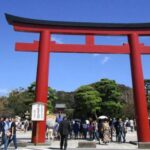
Tsurugaoka Hachimangu sets the tone immediately. You enter through a torii gate and step into a scene that feels made for slow walking: ponds, shrine grounds, and a sense that this is the spiritual heart of Kamakura.
What I appreciate here is that it’s not only about seeing. There’s a strong “arrive and orient” vibe. You get your bearings fast, and the shrine atmosphere helps you understand the rest of the day. Even if you’re not a temple person, this is the easiest place to start appreciating why Kamakura built its identity around religious sites.
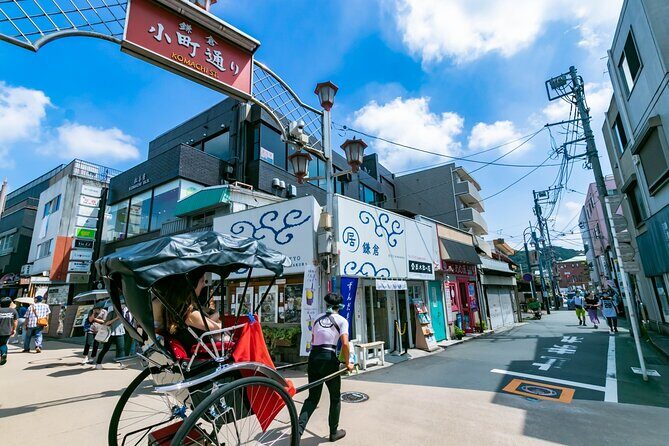
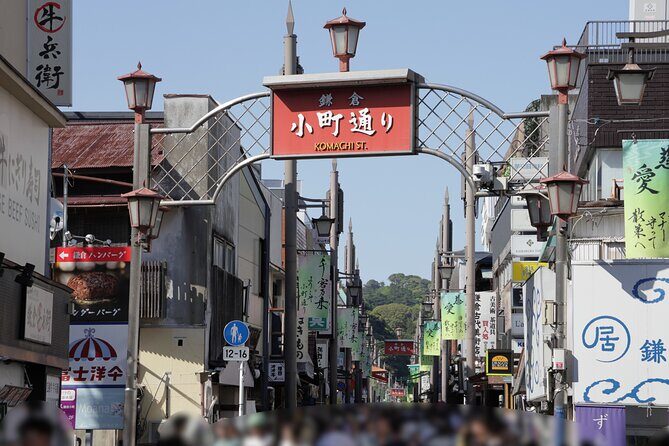
Then comes Komachi Street, the shopping spine right by the shrine. This is where your day becomes practical and fun at the same time:
- Grab snacks while you browse
- Buy small local souvenirs without needing a specific store name
- Take a breather before the bigger, more famous sights later
If you’re traveling with someone who loves food stops as much as monuments, Komachi Street is the part that often feels like a reward rather than just a transition.
Stop 2: Kotoku-in’s Great Buddha (and the “busy equals slow” issue)
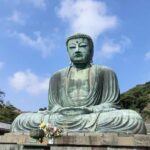
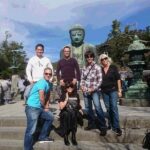
Kotoku-in is the Great Buddha stop, and it’s easy to see why it’s a headline. The bronze Amida Buddha sits outdoors and draws you in even before you read anything. This is one of those sights where silence and scale do the explaining.
You get about 30 minutes here, and that’s enough to:
- Get photos
- Walk the area at an unhurried pace
- Take in the open-sky feeling of the statue
One consideration: the site can be busy. If your personal goal includes participating in offerings or a ritual that needs time, queues can cut into your window. In one case, the crowd level affected the ability to do a go-shin (a prayer/ritual) comfortably, mainly because waiting took longer than planned. The takeaway for you: if you want extra time for rituals, aim to arrive with a calmer mindset and expect a line.
Stop 3: Hasedera Temple and the eleven-headed Kannon
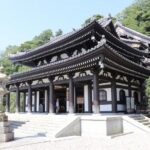
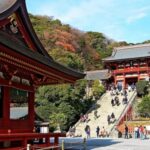
Hasedera is known for its eleven-headed statue of Kannon, the Goddess of Mercy. If Kotoku-in gives you a grand, open-air monument, Hasedera is more about temple experience—wooden statuary, landscaped grounds, and that “walk, pause, look up” rhythm that temples encourage.
You’ll have about 50 minutes, and admission is included. That timing is usually enough to see the main highlight and still feel like you’re exploring rather than just checking a box.
Here’s the practical part: temples like Hasedera often mean lots of steps and changing elevations. If you’re sensitive to stair fatigue, go slower than you think you should—because you’ll earn it later when Enoshima adds more climbing.
Also, if your weather forecast is unstable, Hasedera can still be a good choice because the temple layout gives you sheltered moments without making everything feel closed off.
Enoshima Island: shrines, coin washing, and sea views that change the mood
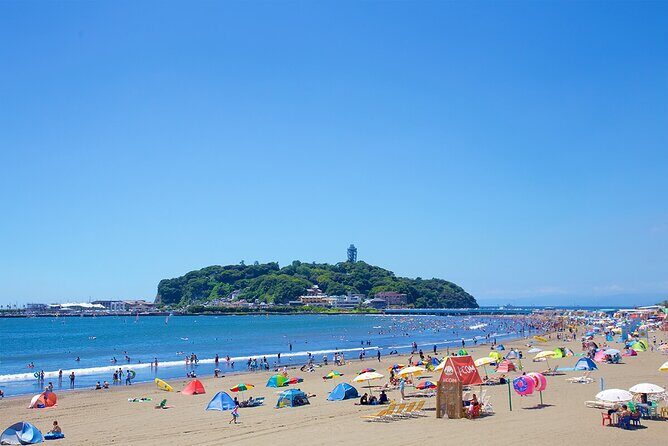
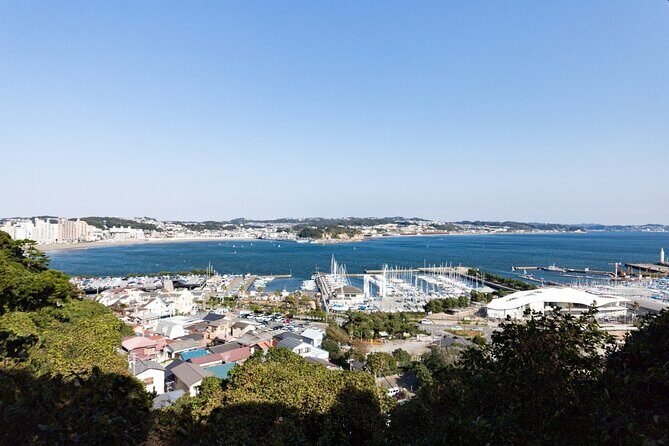
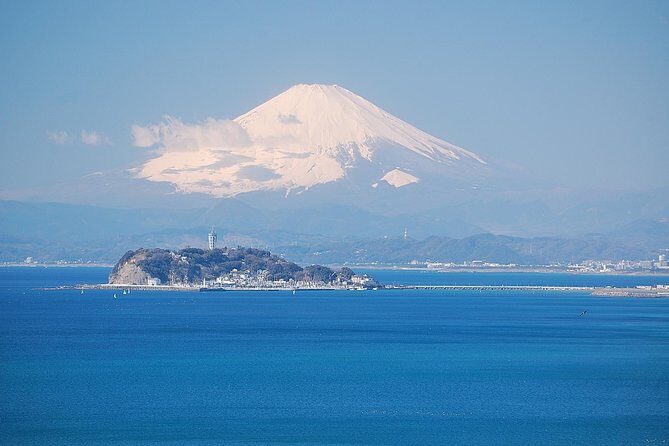
Enoshima is where the day shifts from “Kamakura temples” to “Japan by the water.” You get about two hours on the island, plus some of that time can go toward different shrine spots and scenic areas.
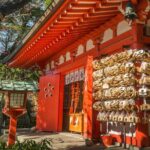
The biggest Enoshima anchor in the tour is the shrine complex dedicated to Benzaiten (the goddess of music, wealth, and wisdom). It’s laid out across multiple shrines, so it’s not just one photo stop. You wander through different parts of the complex and get a sense of how Enoshima’s religious identity connects to place—especially water and sound.
Three other Enoshima sights you may run into during your island time:
- Zeniarai Benten Shrine: famous for the idea of washing coins in the spring so your money is said to double
- Shirahata Shrine, associated with Yanagihara Pond and Minamoto-era legends
- Samuel Cocking Garden and its observatory lighthouse (reopened after renovations in 2003)
And there’s a very real “Enoshima reality check” you should plan for: walking can get intense. One person reported counting something like 600+ stairs when moving between key areas, including times where directions weren’t clear enough to avoid back-and-forth rushing in the rain. You don’t need to count stairs—but you do need to respect that the island is hilly.
If you go, use this strategy:
- Pick what matters most to you (Benzaiten shrines vs. lighthouse vs. coin washing)
- Don’t try to win every route option
- If the group pace starts to feel too fast, slow down and let your photos wait a few steps
Lunch, timing changes, and why 11am can be weird on the island
Lunch isn’t included. That’s normal for Japan tour day trips, but it becomes important because the bus schedule can change due to weather and traffic. In one feedback story, the route was flipped due to a traffic accident, which pushed lunch to around 11am in Enoshima—a time when some places may be closed or just not fully operating yet.
So what should you do?
- Treat lunch like a flexible plan, not a fixed restaurant reservation
- Bring a small snack backup if you have dietary needs or you’re picky about timing
- If you’re hoping for a specific seafood meal, give yourself a little buffer and don’t assume the first place you see is open
This isn’t meant to scare you. It’s meant to protect your expectations. Most days will feel fine. But knowing that timing can shift helps you roll with it.
Pacing: why people love it, and where it can feel rushed
A lot of the best feedback describes the day as well paced—enough time at each stop to shop, relax, and absorb. The bus ride itself provides breaks, and you also get clear instructions for where to explore and when to return.
You’ll hear compliments about guides doing the “extra care” stuff too: one guide (Yuki) was noted for proactive problem-solving, including helping with a missing coin issue at the Great Buddha area and even trying to locate people who didn’t show up during the day’s departure window.
But pacing issues do happen when people hit a few friction points at once:
- crowds (like at Kotoku-in)
- rain
- stair-heavy routing on Enoshima
- unclear navigation instructions between island areas
If you want this day to feel like a pleasant reset, plan your own energy. The easiest way is to treat Enoshima as the main “walk and explore” zone, not the place to try to do everything with zero margin.
Value for $66: what’s included, and why that matters
At about $66 per person, this tour is priced as a mid-range day trip. What makes it feel like decent value is what you’re not paying for separately and what logistics it handles for you:
- Air-conditioned bus with roundtrip transportation
- All fees and taxes
- Entrance fees included for Kotoku-in and Hasedera
- Commentary in English/Chinese (the tour notes that both languages may be covered, sometimes even on the same bus depending on how they run it)
Lunch is not included, so you still control your food budget. But the big win is that you’re paying for guided context and fewer “how do I get there?” problems in a day when you’re also walking.
How to think about value as a decision:
- If you want a guided overview plus “free-time wandering,” this price can be fair.
- If you love independent travel and know train routes already, you might do it cheaper—but it becomes more planning work.
For most first-time visitors, the included admissions and the simple transport tradeoff make it a practical deal.
Who this tour fits best (and who should adjust expectations)
This day trip works especially well if you:
- want a low-stress way to see major Kamakura highlights
- like having a guide for history context, even if you also enjoy wandering
- prefer one long day over multiple nights or complicated logistics
It’s also a good match if you’re traveling in a mixed group—people who want shrine time and people who want shopping time can both find something to do (Komachi Street is key here).
It may be less ideal if you:
- have mobility limits with stair-heavy routes
- want a strict, slow “no rushing, no lines” plan
- hate bus-based tours and prefer total independence
If you’re in that second group, you can still enjoy the places. You’d just want to pick a strategy for Enoshima and be ready to move carefully.
Should you book this Kamakura and Enoshima bus tour?
Yes, I’d book it if your goal is a structured, guided day that gets you from Tokyo to the right places without transport hassles. The combination of Tsurugaoka Hachimangu, Kotoku-in, Hasedera, and Enoshima is a strong “first visit” lineup, and the guide quality seems to make a real difference—names like Omar, Chen, and Yuki show up often in positive feedback.
Hold back if you’re stair-averse or you’re very sensitive to crowding and rain. Then Enoshima could feel exhausting instead of enjoyable.
If you do book, your winning move is simple: arrive early, find the pale blue flag, and give yourself permission to move slower than the group when Enoshima starts climbing.
FAQ
What time does the tour last?
It runs about 9 to 10 hours.
Where does the tour start and where does it end?
The start point listed is Shinjuku Post Office, and the tour ends at Shinjuku Post Office as the drop-off area near Shinjuku Station (West Exit).
What stops are included in the day?
You visit Tsurugaoka Hachimangu Shrine, Komachi Street, Kotoku-in (Great Buddha), Hasedera Temple, and Enoshima Island with additional shrine and garden areas.
What entrance fees are included?
Entrance fees are included for Hasedera and Kotoku-in.
Is lunch included?
No, lunch is not included.
Do you get a guide, and what languages are offered?
There is an English/Chinese-speaking guide, and commentary in both languages may be provided.
What if the weather or traffic affects the schedule?
The schedule may change due to weather, road traffic, or other unforeseen reasons. The tour departs regardless of weather or traffic unless the local operator notifies otherwise.
Is there a cancellation window and can the tour be canceled if there are too few people?
Free cancellation is available up to 24 hours in advance for a full refund. The tour can also be canceled if the minimum group size of 10 people is not reached, and you’ll be offered a different date or a full refund.