REVIEW · HIROSHIMA
Cultural Activities :Kimono, tea ceremony, Calligraphy and Amulet
Book on Viator →Operated by Okeiko Japan · Bookable on Viator
Three traditions, one calm temple visit. This short stop in Miyajima turns learning into something tactile: I like that you wear a kimono while you try calligraphy, and you also get guided time for a tea ceremony and amulet making. One possible drawback is the pace: at roughly two hours, it is more about doing than mastering.
The lessons happen at Tokuju-ji Temple, founded about 300 years ago, in a spot where the grounds feel quiet even on busy Miyajima days. Your teachers take photos during the activities and send them by email, so you are free to focus on your tea motions and brush strokes instead of posing. The setting is Tokuju-ji and its gardens, and the temple connection to Jizo adds meaning to the amulet you create.
You will also get some useful context about the temple’s Soto-syu background and the story of Kinseki jizo, a Jizo image said to protect children and pregnancy. If you are traveling with kids, the minimum age is 6 and they need an adult with them, and with a max group size of 10 you will not get lost in the shuffle. It is a good way to earn deeper cultural understanding in Hiroshima without hunting down three separate classes on your own.
In This Review
- Key highlights at a glance
- Why Toku-ji Temple and Miyajima fit this cultural set
- What the kimono and apron really add (beyond photos)
- Calligraphy in 30 minutes: learning strokes for your own name
- Tea ceremony timing: matcha prep and the rhythm of the ritual
- Amulet making: a small craft with protection behind it
- The full 2-hour flow and why pacing matters
- Price and value: what you’re paying for at about $171.73
- Who this Miyajima class suits best
- Should you book this kimono, calligraphy, tea, amulet day?
- FAQ
- Where does the experience start and end?
- How long does the cultural experience take?
- What activities are included?
- Do I have to bring a kimono?
- Will I receive photos from the lessons?
- What is the minimum age?
- How many people are in a group?
- Can I cancel for a full refund?
Key highlights at a glance
- Kimono + apron during every activity so you stay fully in the cultural mood
- Name calligraphy session focused on writing your name in Japanese
- Tea ceremony practice that includes preparing matcha and performing the ritual
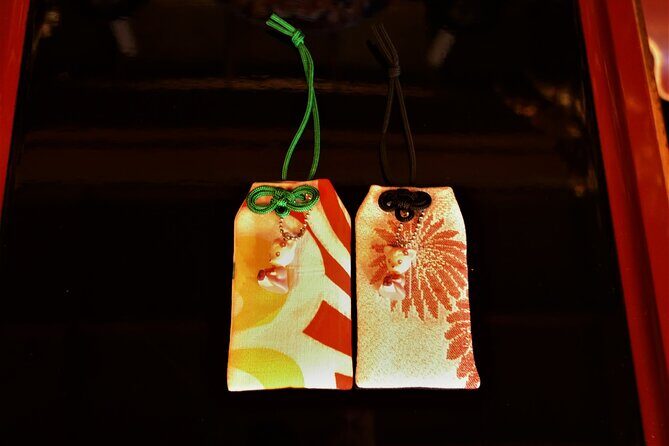
- Amulet making tied to temple spirituality and the feeling of making something for protection
- Photos taken for you during lessons, emailed afterward
- Small group format with a maximum of 10 travelers
Why Toku-ji Temple and Miyajima fit this cultural set
Miyajima has a way of making even simple things feel ceremonial. This experience uses that advantage by placing everything at Tokuju-ji Temple, a site founded about 300 years ago. In other words, you are not just learning in a classroom. You’re learning in a working religious space, where the atmosphere naturally nudges you to slow down.
You also get a specific spiritual thread to keep things meaningful: the main Buddha is called Kinseki jizo, described as a protector of children and pregnancy. The temple story tells of an old couple who prayed to Jizo for a baby, then later built the temple after wishing came true. That story matters here because the amulet you make is not just a souvenir craft. It is framed as an object with a purpose.
It also helps that the temple belongs to the Soto-syu sect. Even if you are not a Buddhism nerd (no shame), knowing the setting has a real tradition behind it makes your tea ceremony and calligraphy feel less like performance and more like living practice.
Finally, in Miyajima, temples and shrine culture overlap in ways that feel very Japanese. The info you receive notes that in the area, temples are somewhat connected in spirit to Itsukushima shrine, so you get a sense of how these sacred places relate to each other.
You can also read our reviews of more tours and experiences in Hiroshima.

What the kimono and apron really add (beyond photos)
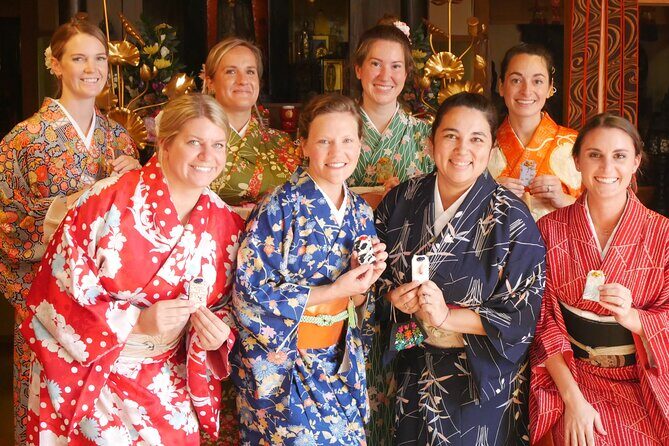
Wearing a kimono is the kind of thing that sounds touristy until you do it. Then you get it. Your posture changes. Your movements become more deliberate because clothing has structure. That is why this matters for the whole experience.
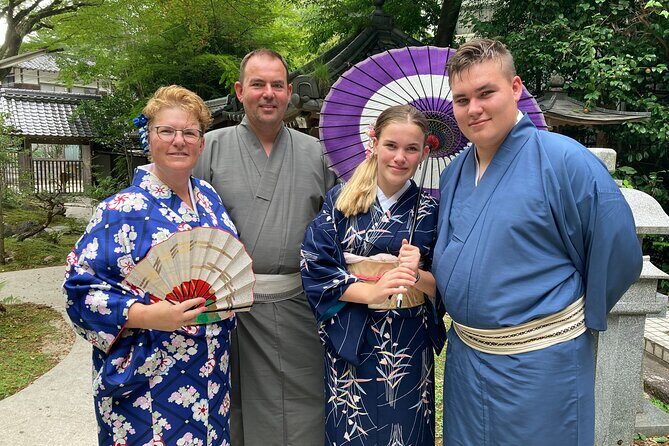
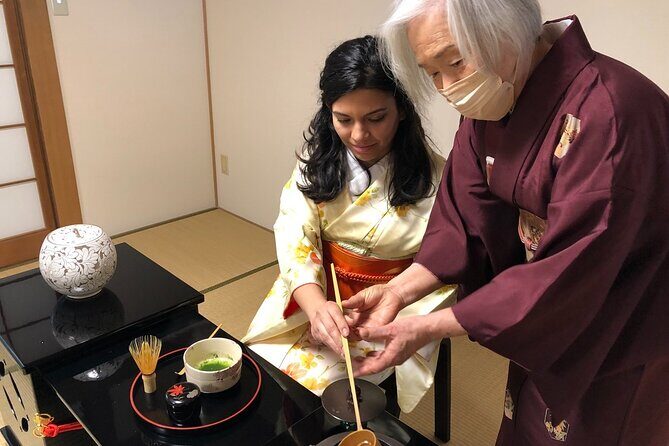
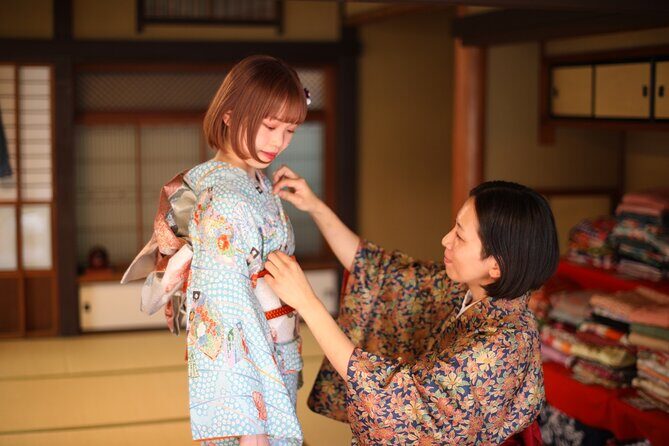
You are provided a kimono and a traditional apron during the lessons, and that means the outfit is not just a quick costume change for one activity. It stays with you through calligraphy, tea ceremony, and amulet making. That continuity helps your brain connect the dots: these are not separate crafts. They are parts of one cultural day.
There is also a practical upside. In a short, timed experience, anything that reduces guesswork is valuable. The staff helps you get dressed, and you can focus on learning instead of figuring out how to wear it.
One detail that comes through strongly is photography. Teachers take photos during the lessons and send them to you by email. If you like having visual proof of doing something hard, this is huge. You are not juggling a camera while you’re trying to hold a brush or line up your tea steps.
If you want extra time for photos, I’d plan to arrive a touch early when possible. In at least some cases, people have been able to wear kimono and take photos in the garden before the class elements start. Even without that, the fact that the instructors handle the photographing still saves you time and stress.
Calligraphy in 30 minutes: learning strokes for your own name
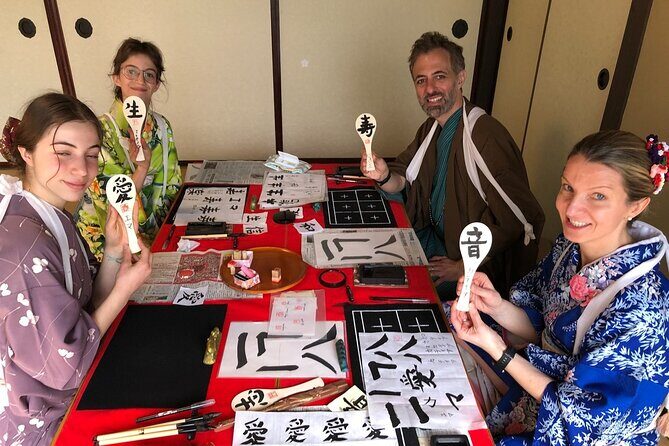
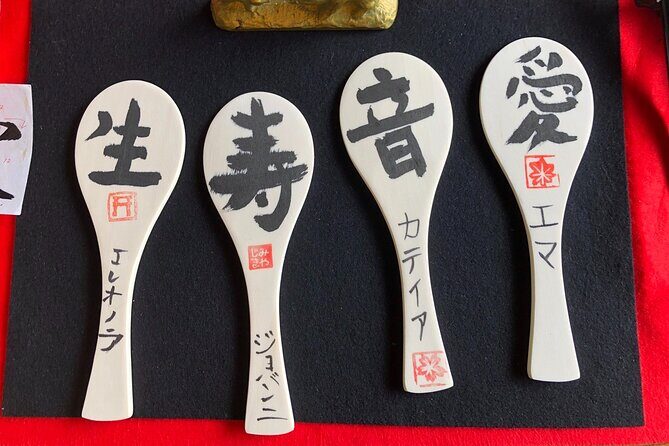
Japanese calligraphy can look intimidating from afar, but this class keeps it personal and achievable by focusing on writing your name in Japanese. That is the right target for a short session. It is also the right size for beginners: you’re not being asked to master calligraphy as an art form from scratch.
Expect the lesson to be hands-on. You get guidance on how your brush should move and how strokes come together. The goal is not speed. It is getting the logic of the characters into your muscles for a moment, then being able to recognize what you wrote.
There’s also a mindset shift that happens during calligraphy. Even if your hand is steady only in the hopes-and-prayers sense, you start noticing details: pressure, direction, and spacing. That kind of attention carries over nicely to the tea ceremony later, where the ritual is also about careful, repeatable motion.
And because you are in kimono and the teachers are taking photos, you get a record of your moment of concentration. It is a good way to make the experience feel real when you’re back in your hotel and trying to remember which character you were working on.
Best fit: this is ideal if you want a culture activity that is interactive but not overwhelming. If you love crafts, calligraphy is the part that gives you the strongest sense of personal output.
Tea ceremony timing: matcha prep and the rhythm of the ritual
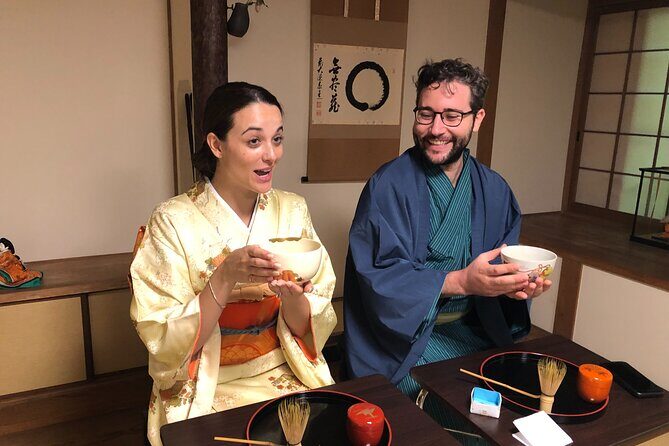
The tea ceremony slot is about half an hour, so it is long enough to feel like an actual lesson but short enough to keep the overall program moving. That matters if you have a tight Miyajima itinerary, because you can fit it between ferry schedules, temples, and dinner.
This part includes learning how to prepare matcha and perform the tea ceremony. Even if you’ve read about tea etiquette online, doing it with instruction is where it clicks. You learn the order, the rhythm, and what the ritual is trying to do emotionally: calm, hospitality, and respect for the moment.
In a centuries-old temple setting, the ceremony also picks up extra weight. You’re not just making tea. You’re practicing a small, contained way of being present. And the garden setting helps. The experience is designed so the surroundings support the slow tempo.
There’s one more practical reason this tea segment works well. In a combined package, tea ceremony can become a generic demo if the pace is wrong. Here, the emphasis on actually performing the ceremony (not just watching) is what makes the half hour feel worthwhile. Afterward, you’ll have a clearer sense of what people mean when they describe tea ceremony as more than drinking tea.
Amulet making: a small craft with protection behind it
The amulet-making class is the third cultural activity, and it is the one that often surprises people in a good way. Making an amulet is not something you see everywhere in Japan, so it tends to feel more special simply because it is rarer.
The amulet fits the temple context. Since the temple’s core figure, Kinseki jizo, is described as a protector of children and pregnancy, the whole spiritual framing makes sense. You’re not just copying a pattern. You are making an object that is tied to beliefs about safeguarding and wellbeing.
Because this is a short class inside a tight schedule, the amulet making is focused and practical. You’ll get instruction to complete the craft during your time slot, not a long studio session. If you are hoping to spend hours perfecting details, you may feel the time limit. But if your goal is understanding what the ritual is about and participating respectfully, this is a strong length.
I also like that the amulet class closes the cultural loop. Calligraphy gives you identity on paper. Tea ceremony gives you hospitality in action. The amulet gives you meaning you can carry with you as a reminder that these traditions were meant to be lived, not just observed.


The full 2-hour flow and why pacing matters
Everything runs for about two hours, with each activity roughly half an hour. That “three-in-one” structure is the whole selling point, and it can be either perfect or a little intense depending on your expectations.
Here is the rhythm you should picture:
1) Calligraphy first, so you get comfortable with the brush and the idea of writing your name in Japanese.
2) Tea ceremony next, which shifts you from ink and strokes to posture, sequence, and a calmer pace.
3) Amulet making last, which turns what you’ve learned into an object and a moment of closure.
Because you wear a kimono and apron throughout, transitions stay simple. You are not changing outfits between classes, which is a big deal in a short time frame. The group size helps too: there is a maximum of 10 travelers, so you’re not just part of a crowd.
Timing is also practical. The meeting point is Okeiko Japan Miyajima, at 741-1 Miyajimachō, Hatsukaichi, Hiroshima 739-0588. The experience ends back at the meeting point, which reduces the headache of figuring out where you’ll be dropped off.
One more “pacing” tip: this kind of activity is best when you keep your day flexible. If you stack it right before a long walk or a complicated ferry connection, you might feel rushed. But if you treat it as one core cultural stop, it becomes the anchor of your day.
Price and value: what you’re paying for at about $171.73
At $171.73 per person, this is not the cheapest thing you can do in Hiroshima. The value comes from bundling multiple guided experiences in one place, plus several extras that usually cost money on their own.
Here’s what’s included in the experience package:
- Admission ticket included
- A guided calligraphy lesson focused on writing your name in Japanese
- A guided tea ceremony experience
- An amulet-making class
- Kimono and a traditional apron provided during the lessons
- Photos taken during the activities and emailed to you
- A small-group format (max 10 travelers)
When you add that up, you’re paying for instruction, materials support, and a setting that already carries cultural weight (Tokuju-ji Temple and its gardens). The lesson time is compact, but it is not skimpy on content. You get three different disciplines, and you do them with your own hands and attention.
Also, this type of packaged experience is often more efficient than trying to book separate classes on your own while you’re moving around Japan. If you want cultural depth without losing half a day to logistics, the price can start to make sense.
One small sign of popularity: on average, this tends to be booked about 52 days in advance. That usually means it’s a smoother plan to reserve earlier rather than hoping for a same-week slot.
Who this Miyajima class suits best
This experience is listed as suitable for most travelers, and the minimum age is 6 (with children accompanied by an adult). So yes, it can work for families, as long as you go in with realistic expectations about time and attention. Two hours in kimono is not a quick activity, but it is hands-on and guided.
It’s especially good for:
- First-time Japan visitors who want a cultural experience that is not vague
- People who enjoy crafts and want a result tied to their own identity (like writing your name)
- Anyone who wants more than a museum-style visit and prefers doing the ritual steps
- Short-on-time travelers in Hiroshima who still want something authentic and structured
If you’re the kind of traveler who wants to spend hours on one craft or who dislikes being in guided groups, you might find the pace a bit brisk. But for most people, three activities in a beautiful temple setting feels like the sweet spot.
Should you book this kimono, calligraphy, tea, amulet day?
If you want a meaningful cultural day in Miyajima without turning it into a whole separate research project, I’d book this. The biggest reasons are simple: you get three traditional activities in about two hours, you wear a kimono during the whole set, and the photos taken and emailed afterward remove a common hassle.
Book it if:
- You like hands-on learning (brush, tea steps, craft making)
- You want a small-group experience in an atmospheric temple setting
- You value getting a record of what you did without worrying about photography
Skip it or reconsider if:
- You only enjoy very long, slow practice sessions
- You are worried about wearing traditional clothing for the full length of the activity
- You dislike scheduled pacing and prefer free-form sightseeing
For a Hiroshima itinerary, this is a smart “cultural anchor” activity. It pairs well with the rest of Miyajima, especially if you’re aiming to balance temples and nature with something that teaches you how traditions actually get practiced.
FAQ
Where does the experience start and end?
The experience starts at Okeiko Japan Miyajima (741-1 Miyimajimachō, Hatsukaichi, Hiroshima 739-0588, Japan) and ends back at the meeting point.
How long does the cultural experience take?
It runs for about 2 hours.
What activities are included?
You’ll do Japanese calligraphy (learning to write your name), a tea ceremony, and amulet making.
Do I have to bring a kimono?
No. You’re provided a kimono and a traditional apron during the lessons.
Will I receive photos from the lessons?
Yes. Your teachers take photos during the activities and send them to you via email.
What is the minimum age?
The minimum age is 6, and children must be accompanied by an adult.
How many people are in a group?
The group size is limited to a maximum of 10 travelers.
Can I cancel for a full refund?
Yes. Cancellation is free up to 24 hours before the experience’s start time for a full refund.